The thrilling conclusion of Slow Horses season 4 just aired, leaving fans buzzing with excitement. The finale expertly combined action and tension, offering a attracting experience for viewers.
The first half of the finale was filled with suspense and kept audiences on the edge of their seats, while the latter half focused on wrapping up storylines and setting the stage for Season 5. This balance between intense drama and character development is what has made Slow Horses a fan favorite since its inception.
Throughout its four-season run, Slow Horses has provided exceptional entertainment, attracting audiences with its blend of humor, intrigue, and complex characters. The show is based on the Slough House series of novels by Mick Herron, which has garnered a dedicated following worldwide.
One of the key elements that make this series so enjoyable is its ability to deliver a gripping narrative while maintaining a distinct tone that keeps viewers guessing.
At the center of this thrilling story is Jackson Lamb, portrayed by the talented Gary Oldman. Lamb is a gruff, unkempt, and witty character who leads the misfit team of spies at Slough House. Oldman’s portrayal of Lamb has become the backbone of the series.
His ability to balance humor with a tough exterior makes Lamb a compelling character that fans love to watch. This portrayal has led many viewers to wonder about Lamb’s past and what might have shaped him into the person he is today.
Fans Want More of Jackson Lamb
As the popularity of prequels and sequels continues to rise in television and film, it is only natural for fans to express interest in a prequel that shows Jackson Lamb’s younger years.
The idea of learning more about his backstory and how he became the head of Slough House is enticing. However, this notion raises an interesting question: would a prequel enhance the character or detract from the mystery that makes him so fascinating?
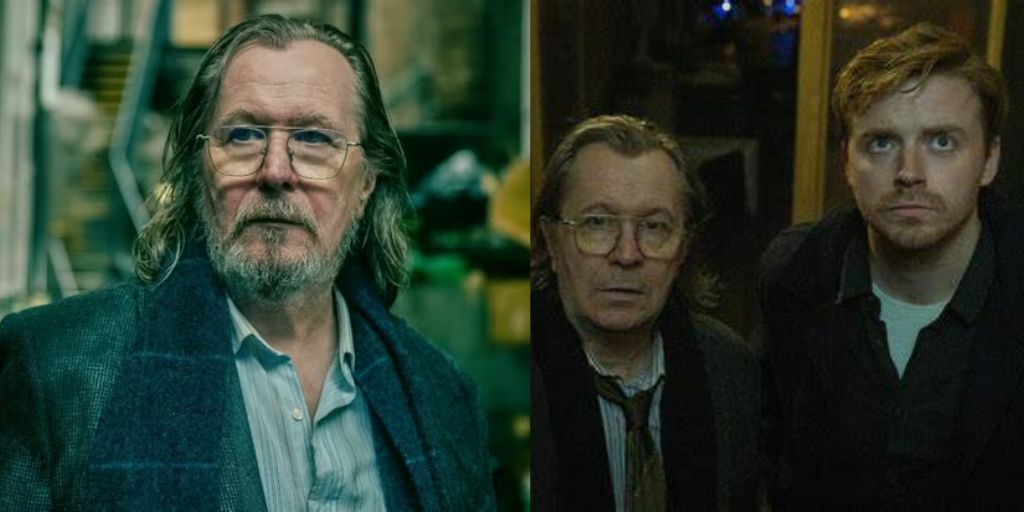
Still from Slow Horses (Credit: Apple TV)
Will Smith, the showrunner and writer of Slow Horses, recently weighed in on this debate. In an interview with The Wrap, he shared his thoughts on the possibility of creating a prequel series focused on Lamb. Smith stated, “I don’t think people would want that.”
He elaborated on the discussions he had with Mick Herron, the author of the original novels. “Early on, Mick and I used to joke about that, and he used to be quite vehemently against it. And for exactly the reasons you say: It’s the fascination with Lamb.”
The Magic of Mystery
Smith’s insights go into a critical aspect of storytelling: the importance of mystery. Sometimes, providing a character’s backstory can diminish the intrigue that surrounds them. He explained that revealing too much about a character can strip away “some of the magic.”
He believes that viewers often prefer to hold on to a sense of mystery, stating, “You think, ‘I don’t really want the explanation, because I quite like the mystery and the suspense. I like the not-knowing.’ And it loses something to explain it.” This perspective resonates with many fans who enjoy the allure of not fully understanding a character’s motivations and history.
The delicate balance of revealing just enough information to keep viewers interested, while not giving everything away, is a hallmark of successful storytelling.
Smith’s commitment to maintaining the mystery around Jackson Lamb speaks to his understanding of what makes the character and the series so engaging. Fans have come to love the unpredictable nature of Lamb, and providing a prequel could risk changing that dynamic.
The Slow Horses series has become a remarkable success, not just for its gripping plot but also for its character-driven storytelling.
The chemistry among the cast, combined with the sharp writing and engaging direction, has created a show that resonates with viewers. The complexity of each character, including Lamb, is part of what has captured the attention of the audience.
The Challenge of Casting a Younger Lamb
Another intriguing aspect of the discussion around a potential prequel is the challenge of casting a younger version of Jackson Lamb. Many fans have strong feelings about the character and how he is portrayed. Smith commented on this by stating that it would be “tricky” to tell Lamb’s backstory. He emphasized the idea that “I don’t think you could cast a different actor. You just can’t. Gary is Lamb, that’s it.”
Oldman’s performance has become so synonymous with the character that imagining anyone else in the role feels impossible for both fans and creators. Smith further elaborated, saying, “I just cannot imagine anyone doing Jackson Lamb with [a younger actor].
You have to go, okay, ‘Who’s the young Gary Oldman?’ And Gary is Gary is Gary.” This highlights the unique and irreplaceable quality that Oldman brings to the character.
The notion of casting a younger actor raises significant challenges. Not only would the actor need to capture the essence of Jackson Lamb, but they would also have to embody the spirit and complexities that Oldman has brought to the role.
The expectations for such a casting decision would be incredibly high, making it a daunting task for any actor. Smith’s acknowledgment of this difficulty underscores his commitment to honoring the character as it exists.
Maintaining the Series’ Integrity
As Slow Horses continues to gain popularity, the creators need to maintain the integrity of the series. With all seasons now available to stream on Apple TV+, the show has reached a wider audience, drawing in new fans while retaining its original viewer base.
The ongoing discussions about the future of the series and the character of Jackson Lamb demonstrate a thoughtful approach to storytelling.
The decision not to pursue a prequel series focused on Lamb seems to align with the overarching goal of preserving the show’s unique qualities. Instead of diluting the character’s mystique, the creators can continue to show the existing narrative and develop Lamb further within the current storyline.
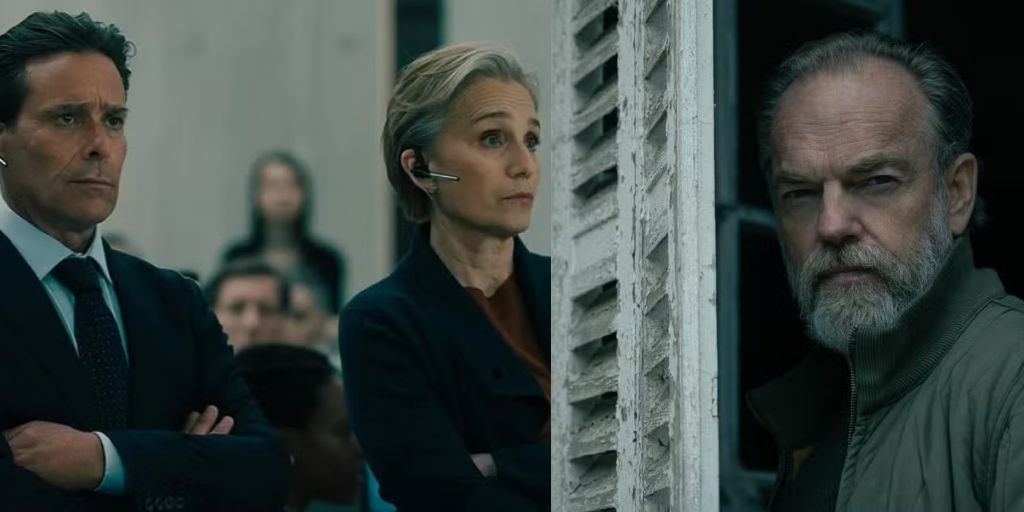
Still from Slow Horses (Credit: Apple TV)
This approach allows for rich character development without the need to go into the past, keeping the focus on the present and the challenges Lamb and his team face.
Conclusion
Slow Horses season 4 ended with a thrilling finale that attracted audiences and set the stage for future storylines. The series has thrived on its ability to combine suspense, humor, and complex character development. Gary Oldman’s portrayal of Jackson Lamb has become a cornerstone of the show, making any discussion of a prequel both fascinating and complex.
Will Smith’s insights on the potential of a prequel series reveal the importance of mystery in storytelling and highlight the challenges of casting a younger version of such an iconic character.
As the series continues to evolve, it remains focused on delivering engaging content while respecting the characters that fans have come to love. With all seasons available for streaming, viewers can continue to enjoy the thrilling world of Slow Horses and the enigmatic figure of Jackson Lamb.
As fans eagerly anticipate Season 5, the mystery surrounding Jackson Lamb will remain a vital part of what makes Slow Horses such a compelling series. The show’s ability to balance suspense with character-driven storytelling ensures that audiences will stay engaged and excited for what comes next.
In some movies, the setting is as important as the acting, writing, or directing. For example, Call Me By Your Name might not have touched audiences so deeply if it were not set in the warm atmosphere and lush greenery of Crema, Italy.
Recent films and shows are called “love letters” to certain cities, such as Once Upon a Time in Hollywood, Chungking Express, Midnight in Paris, and Steve McQueen’s Blitz. However, it is rare to see a specific place used as the main problem in the story.
Payal Kapadia’s All We Imagine as Light starts with a series of images of the people of Mumbai, who are always on the move, looking tired and unhappy. We hear voiceovers from different characters sharing their thoughts about the city. One man says, “I’m afraid to call it my home.”
Kapadia shows Mumbai as a place without hope, where people work too hard, the poor are separated from the rich, and no one can change this.
Although the film ends with some hope, it paints a rather bleak picture of Mumbai, suggesting that happiness relies on escaping the city. It tells a story about feeling disconnected and how, no matter how tough we try to be, we all need personal connections with others in some form.
‘All We Imagine as Light’ Is a Story of Human Connection
After winning the Gran Prix award at Cannes, All We Imagine as Light is a slow, serious drama about Prabha (Kani Kusruti), a reserved nurse in Mumbai. Her husband, whom she met through an arranged marriage, lives in Germany. He avoids her calls and sends a rice cooker as a gift, but with no note.
Prabha lives with Anu (Divya Prabha), a younger nurse hiding her relationship with a young Muslim man named Shiaz (Hridhu Haroon) because her parents want her to marry a Hindu man.
Their lives are tough, which makes Prabha hard and makes her lash out at Anu when she is friendly with a doctor who likes Prabha. Another colleague, Parvaty (Chhaya Kadam), faces threats from gangsters trying to turn her home into luxury apartments.
Every part of the city only brings sadness to these characters. Throughout most of the film, Kapadia shows the cast moving through the city, with the background often blurry. A voiceover mentions a constant feeling of change and loss, and themes of feeling lost appear in every scene.
Anu finds comfort in secret meetings with Shiaz, while Prabha turns away the doctor’s advances even though she feels very lonely. He tells her he plans to leave the city because he still does not know how to get home after living there for six months.
He blames the language barrier, but this supports Kapadia’s idea of Mumbai as a crowded yet lonely place that no one should call home. “It’s a city of illusions,” he says to her, suggesting that any happiness in the city is not real; this also connects to the movie’s title and the idea that people often distort their reality to find something to hold on to.
‘All We Imagine Is Light’ May Be Too Slow For Some Audiences
The movie takes a long time to build up, and many audiences may find it too slow. The first half is especially gloomy, and the loose plot makes it feel disjointed. However, it is worth watching until the end, where the change of scenery feels refreshing.
Prabha and Anu help Parvaty move to a seaside village, marking the first real sign of hope in the story. Prabha’s world opens up, and she begins to lower her walls. This change also improves her relationship with Anu, and the two women realize how much they need each other, despite their differences.
The movie shifts from a tone of despair to one of hope. When a man washes up on the beach, locals gather but feel helpless, saying, “He’s a goner,” and “He’s already dead, no?” Prabha is the only one who knows CPR. She saves the man, and they form a deep bond that Prabha did not know she needed.
All We Imagine as Light is about feeling disconnected and how people need each other, a place to belong, and a sense of community to survive. Director and writer Payal Kapadia faces many challenges in her film, some of which she overcomes, while others appear in the final cut.
Even with the praise it has received since its premiere at Cannes, All We Imagine as Light feels like a movie that one appreciates rather than enjoys. Kapadia’s camera work is amazing, making a city with over 20 million people feel like the loneliest place on Earth.
It is a thoughtful, serious film, and while many viewers might not have the patience to get through the first half hour, those who do will find their efforts rewarded in the end.
However, viewers should not expect a film that keeps them amazed and engaged from start to finish. There are rough patches that may lose some viewers’ interest, but the final act offers a smooth path to a beautiful conclusion.
Kani Kusruti and Divya Prabha Give Impactful Performances
Kani Kusruti, playing Prabha, portrays a woman who has learned to hide her feelings. She seems cold, but it is not by choice. Behind her one-word answers lies a world of complex emotions, beaten down by the belief that to live easily, one must simply keep going.
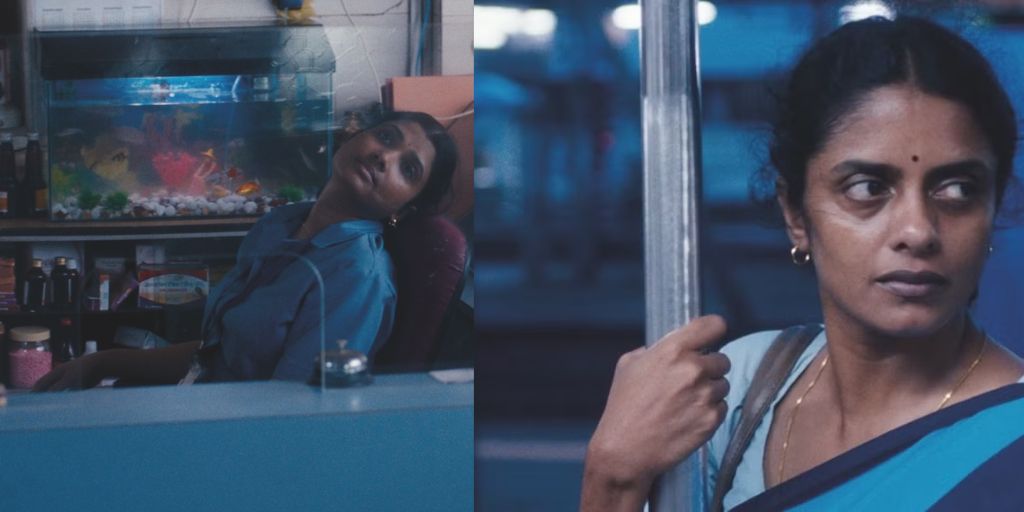
Still from All We Imagine as Light (Credit: Janus Films)
Her performance might seem too subtle to carry the film alone, highlighting the need for a strong supporting cast. Divya Prabha’s hopeful gaze searching for beauty and joy serves as a perfect balance to Kusruti’s gloom.
When the world feels too serious, a glance from Kusruti can give the audience a moment of recognition, and her love story and quest for a better life create a strong bond between the audience and the story.
It is encouraging to see a female-directed and female-led Indian film focusing on deep feelings receive so much attention from critics. This soulful film may seem cold initially but gradually reveals itself to be a touching story about some of the most basic feelings humans have.
It requires some patience. However, there are times when Kapadia seems to spend too much time on visuals, with scenes that feel too long without much plot movement.
At just under two hours, the movie could have cut 20 minutes and still delivered its emotional impact. But in the end, the journey is worth it, providing a viewing experience that feels earned.
