Sofia Falcone (played by Cristin Milioti) has become the star of The Penguin, taking attention away from Oswald (played by Colin Farrell). She is now everyone’s favorite serial killer. We first meet Sofia in Episode 1 after she gets out of Arkham Asylum.
Episode 2 shows us her time in Arkham, where she faced abuse and was a test subject for Bliss. Now, she suffers from PTSD because of her experience in prison.
Her new EMDR therapy has not helped her deal with this trauma. It is hard to feel sorry for Sofia since she is the infamous serial killer known as the Hangman. But is she really the Hangman like everyone is saying? Episode 3 suggests otherwise.
Who Is the Hangman in DC Comics?
The Long Halloween follows the downfall of the Falcone crime family as a new serial killer called “Holiday” kills major players in Gotham’s underworld. The story shows the ongoing war between the Falcones and the Maronis, introducing important characters who play a big role in The Penguin, like Sofia and Alberto Falcone (played by Michael Zegen).
In the sequel comic, Dark Victory, Sofia causes chaos in Gotham after her father’s death. After Batman thinks he has caught Holiday, he is surprised when the killings keep happening. A new serial killer called the Hangman appears, who is later revealed to be Sofia Falcone.
Sofia’s victims are all connected to the Gotham City Police Department (GCPD) or the District Attorney’s office. They also include people who helped Harvey Dent become DA. However, The Penguin changes some details about the character since Two-Face has not yet appeared in Matt Reeves’ Batman story.
Is Sofia the Hangman in ‘The Penguin’?
In The Penguin Episode 1, we learn that Sofia has just been released from Arkham Asylum after spending ten years there. Society fears her because they believe she is a ruthless serial killer. However, Episode 3 hints that she might be innocent.
When Victor (played by Rhenzy Feliz) brings up Sofia’s murders, Oz tells him, “Don’t believe everything you read in the papers.” This statement raises questions about Sofia’s guilt.
Later in the episode, Sofia has a conversation with Oz that suggests she is not the Hangman. Oz admits he knew she was innocent and that he does not regret making her take the fall so he could rise in Falcone’s crime organization.
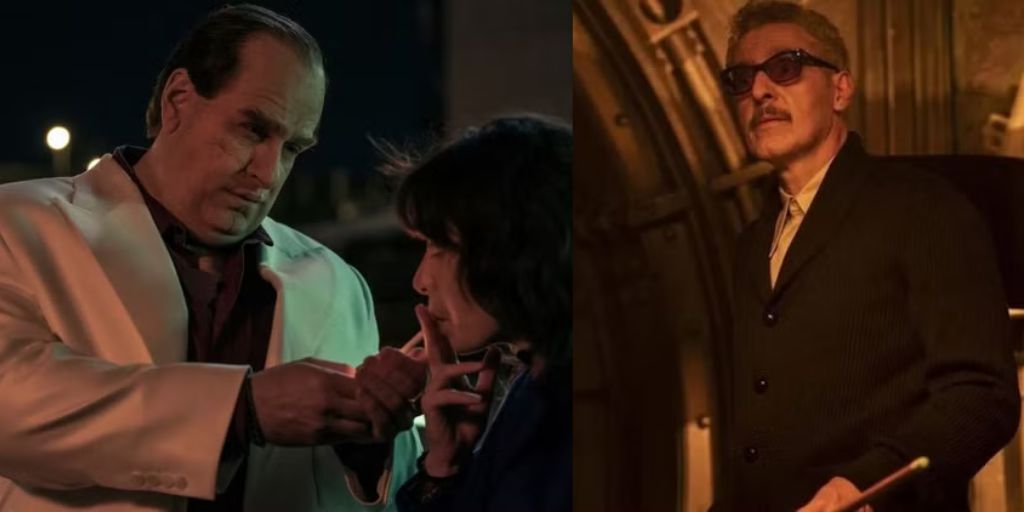
Still from The Penguin (Credit: HBO)
This adds a tragic layer to Sofia’s character. She is shunned by her family for crimes she did not commit. Instead of trying to prove her innocence, she accepts her false reputation and uses it to scare others.
If Sofia is not the Hangman, then who is the real killer?
The Real Killer Might Be Another Falcone
The real Hangman is likely not Sofia, but it may be another member of the Falcone family. In The Long Halloween, Alberto is the Holiday killer. He targets characters from The Penguin, like Johnny Viti (played by Michael Kelly) and Salvatore Maroni (played by Clancy Brown).
Episode 2 gives hints about Alberto’s past as Holiday during his wake. While Sofia watches old video clips, she sees one of Alberto wishing everyone a happy new year. This could refer to his actions in The Long Halloween, where he would kill his victims on specific holidays, which is why he is called Holiday.
However, the more likely suspect is his father, Carmine Falcone (played by John Turturro/Mark Strong). Carmine has a dark history of strangling women. In The Batman, he tries to strangle Selina Kyle (played by Zoë Kravitz) and succeeds with her girlfriend, Annika (played by Hana Hrzic), and her mother, Maria.
While the Hangman targeted law enforcement in the comics, a radio host in Episode 2 mentions that the Hangman killed at least seven women. This aligns more with Carmine’s pattern of violence.
Oz is shocked when Carmine admits Sofia to Arkham, as this seems too harsh even for him. But Carmine could have seen an opportunity for someone else to take the blame for his crimes and decided to make Sofia a scapegoat. Carmine does not hesitate to strangle Selina when he discovers she is his daughter. This fits with what we know about his character.
The Complexity of Sofia’s Character
Sofia’s character is complex and intriguing. She represents the blurred lines between good and evil in Gotham. Many characters in Gotham have dark pasts, and Sofia is no exception. Her childhood and experiences in Arkham shape who she is today. Being released from Arkham does not mean she is free from her past.
Sofia is a product of her environment. The criminal world she is a part of is ruthless, and she uses fear as a tool for survival. Instead of running from her past, she chooses to embrace it. This adds depth to her character and shows that even those labeled as villains can have their own struggles and motivations.
Sofia’s Relationship with Oswald
Sofia’s relationship with Oswald is another key aspect of The Penguin. They have a complicated dynamic. Oswald initially sees Sofia as a valuable ally. He recognizes her skills and reputation as a serial killer. However, as the series progresses, their relationship becomes strained. Oswald is a manipulative character who seeks to control those around him.
He uses Sofia’s fearsome reputation to his advantage. However, Sofia’s strength and resilience make her a challenging partner. She is not just a pawn in Oswald’s game. She has her own ambitions and goals, which sometimes clash with Oswald’s plans. Their relationship shows the power struggles within Gotham’s criminal world.
Oswald’s betrayal of Sofia at the end of Episode 3 marks a turning point in their dynamic. He uses her trust against her, leaving her in a vulnerable position. This betrayal will likely have consequences for both characters as the series continues. It highlights the theme of trust and betrayal that runs throughout The Penguin.
The Role of Trauma in Sofia’s Life
Sofia’s trauma plays a significant role in shaping her character. Her experiences in Arkham and the abuse she suffered create lasting scars. PTSD is a real issue for many individuals, and Sofia’s struggle to cope adds realism to her character.
The EMDR therapy she undergoes is intended to help her heal, but it has not been successful. This reflects the challenges many face in seeking help and recovering from traumatic experiences. Sofia’s mental health struggles make her a more relatable character. She embodies the idea that healing is not a straight path.
Despite her past, Sofia demonstrates resilience. She refuses to be defined solely by her trauma. Instead, she uses it to fuel her determination. Her character shows that even in the darkest situations, there can be a spark of strength and hope.
The Importance of Reputation in Gotham
Reputation plays a crucial role in The Penguin. In Gotham, a person’s reputation can make or break them. Sofia is aware of her reputation as the Hangman, and she uses it to her advantage. By embracing her fearsome image, she can manipulate those around her.
This theme of reputation is prevalent throughout the series. Characters must see their public images while dealing with their true selves. For Sofia, this duality creates tension in her relationships. She wants to be seen as powerful and feared, but she also longs for understanding and acceptance.
The way characters perceive Sofia impacts her actions. She grapples with the idea of being a monster versus being a victim. This internal conflict makes her a compelling character. It invites the audience to consider the complexities of identity and reputation in a city as chaotic as Gotham.
Future of Sofia in The Penguin
As The Penguin continues, Sofia’s story will likely evolve. Her relationship with Oswald has changed, and she will have to confront the consequences of his betrayal. She may seek revenge or try to regain control of her life.
The identity of the true Hangman remains a mystery, and Sofia’s journey may lead her to uncover the truth. Her quest for justice could lead to new alliances or conflicts with other characters. The series has set the stage for exciting developments in Sofia’s character arc.
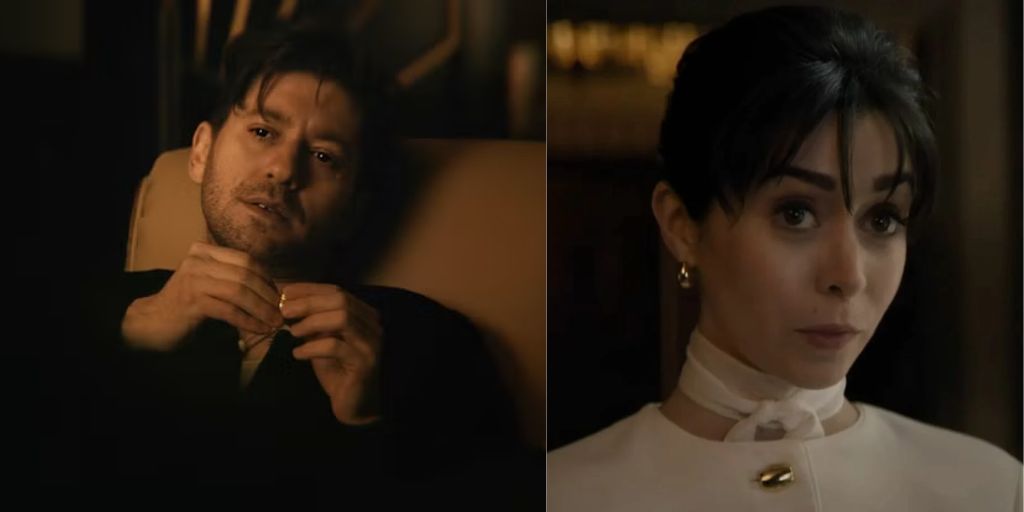
Still from The Penguin (Credit: HBO)
Additionally, the scenes of her past and mental health will likely continue. The show has established a strong foundation for discussing trauma and healing. This theme can resonate with many viewers and add depth to Sofia’s character.
Conclusion
Sofia Falcone is a fascinating character in The Penguin. Her journey from a feared serial killer to a complex individual dealing with trauma attracts the audience. The scheme of her relationships, especially with Oswald, adds layers to her story.
The mystery surrounding the true Hangman keeps viewers engaged, and Sofia’s character serves as a lens through which we show themes of reputation, trauma, and survival in Gotham. As the series progresses, it will be interesting to see how Sofia faces her past and shapes her future in a city full of danger and deceit.
Park Chan-wook is a filmmaker who often delivers shocking, thought-provoking films. When he directed Oldboy, the world was taken by its intense storyline and unexpected twists. However, his next film, Lady Vengeance, released in 2005, is just as powerful, if not more.
This neo-noir film stands out not just for its shocking plot, but for the emotions it shows. Lady Vengeance tells the story of Lee Geum-ja, a woman who was wrongfully imprisoned for 13 years for a crime she did not commit. Despite her kind appearance and demeanor, Geum-ja harbors a deep need for revenge, aimed at the person who truly committed the crime.
The film did not win the highest awards at the 62nd Venice International Film Festival, but it was still highly recognized. Lady Vengeance earned the Cinema of the Future Award, the Young Lion Award, and the Best Innovative Film Award, among others.
The movie’s story touches on important questions about justice, revenge, and redemption. It shows how far someone is willing to go to right a wrong and the ethical challenges they face along the way.
What Is Lady Vengeance About?
Lady Vengeance begins with the story of Lee Geum-ja. She is introduced through the eyes of different characters, including a church pastor and her fellow prisoners. Her angelic beauty grabs everyone’s attention, reminding people of the famous actress Olivia Hussey.
During her murder trial, her appearance caught the nation’s eye. She looked young and innocent, which made the brutal crime she was accused of even more shocking. Geum-ja has a fair complexion, long flowing hair, and a calm and peaceful attitude, which made her seem pure.
While in prison, she earned the nickname “Miss Geum-ja, the Kind-Hearted.” She comforted new inmates, helped elderly prisoners, and even donated a kidney to a fellow inmate who had chronic kidney failure. Her kindness helped her earn the respect of other prisoners and even reduced her sentence, allowing her to be released after 13 years.
But Geum-ja’s kindness was not genuine. It was all part of a plan. As soon as she was released from prison, she left behind her innocent image and transformed into a much darker and more determined woman. She replaced her modest appearance with bold red eyeshadow, red lipstick, and high heels.
This new look represented her true, vengeful self. She was no longer the kind-hearted woman everyone thought she was. Geum-ja had spent 13 years carefully planning her revenge.
Every good deed she did in prison was a way to win favors from people who could help her once she was free. Now, after years of waiting, she was ready to take her revenge on the person who had framed her for murder.
Lady Vengeance Balances Brutality and Beauty
Every scene in Lady Vengeance feels like it was carefully designed, almost like a painting. The cinematography, the use of color, and the way scenes are framed all help tell the story in a visually striking way. The film uses many close-up shots and unique angles, which bring the audience uncomfortably close to the characters.
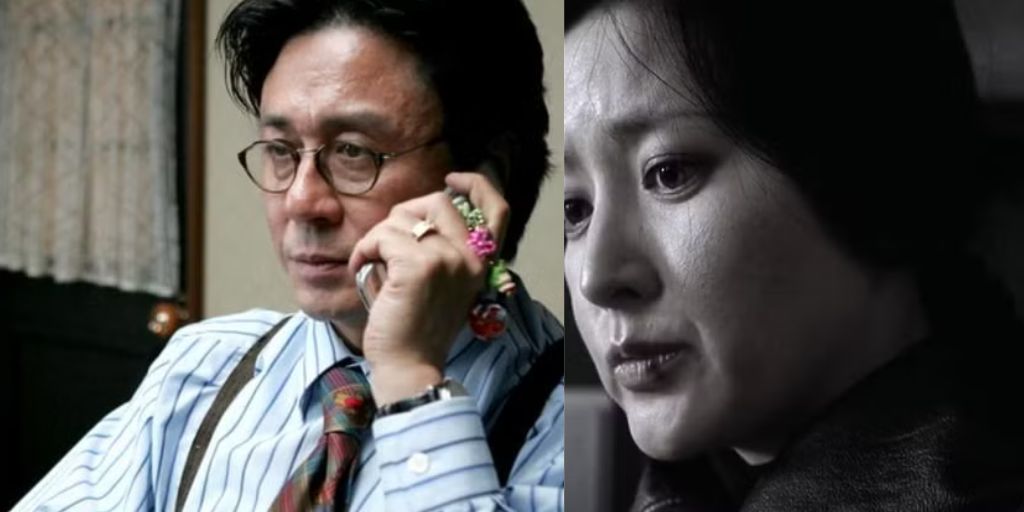
Still from Lady Vengeance (Credit: Netflix)
This technique forces viewers to look closely at the characters and decide how they feel about them. Should they feel sympathy or disgust? This is one of the central questions of the film, as each character is complex and flawed.
One of the defining visual features of Lady Vengeance is its use of white and red. Many scenes take place in winter, with snow covering the ground. The white snow represents purity, as does the white tofu that appears in the film. In one scene, a line from the film speaks to this idea: “Live as white snow and never sin again.”
But against this white, the bold red of Geum-ja’s makeup and her surroundings stands out. The red symbolizes the opposite of purity — it represents blood, anger, and the dark side of her character.
Geum-ja’s transformation from the innocent woman she once appeared to be into the vengeful person she becomes is shown through these colors.
While Lady Vengeance is not as openly violent as Park Chan-wook’s earlier film Oldboy, it still contains moments of brutal violence. The movie does not shy away from showing the dark, violent side of revenge. In the early part of the film, Geum-ja carefully keeps up her innocent act, even as she starts to show her darker nature.
She goes as far as quietly killing an inmate who had been bullying others, without revealing her true self to those around her. But the most shocking and violent part of the movie comes in its final act.
Set in an abandoned schoolhouse in the countryside, this part of the film shows a group of ordinary people carrying out acts of revenge on the murderer who ruined their lives.
None of these people have a history of violence, yet they are driven to brutal acts because of the pain and loss they have experienced. The fact that the violence comes from regular people makes it even more disturbing, leaving a lasting impact on viewers.
The Thin Line Between Revenge and Redemption
At the beginning of Lady Vengeance, Geum-ja’s goal is simple: she wants revenge on the real killer who framed her. After spending 13 years in prison for a crime she didn’t commit, she is cold, focused, and determined to make the person responsible pay.
Geum-ja is driven by hatred, and nothing seems to shake her from her mission. She is willing to do whatever it takes to get her revenge. But everything changes when she is reunited with her long-lost daughter.
Her daughter had been adopted by a family in Australia after Geum-ja went to prison, and the reunion between mother and daughter marks a turning point in the story.
When Geum-ja meets her daughter again, she starts to rethink her reasons for wanting revenge. In a tearful conversation, she tells her daughter that she doesn’t just want revenge — she wants redemption. Geum-ja blames herself for what happened 13 years earlier.
She had the chance to stop the real murderer and save future victims, but she was too scared to act. Now, she sees her revenge as a way to fix that mistake and make up for her past. While she is clearly seeking forgiveness for her past choices, her methods raise moral questions.
Is it right to seek redemption through violence? Should someone who has been wronged use revenge to find peace? These are questions the movie leaves for the audience to answer.
The movie’s final scenes show how revenge can be a double-edged sword. The people who carry out revenge on the real killer may find temporary relief, but they are left with the heavy burden of what they have done.
Geum-ja, too, finds that revenge does not bring the peace she was hoping for. The film suggests that the line between revenge and redemption is not always clear, and that seeking justice can sometimes lead to even more pain.
Geum-ja’s Transformation: From Kindness to Cruelty
One of the most interesting aspects of Lady Vengeance is the transformation of its main character, Lee Geum-ja. When we first meet her, she appears to be kind-hearted and pure. Her fellow inmates admire her for her good deeds, and her gentle appearance makes it hard to believe she could ever commit a crime.
Even during her trial, the public is shocked not just by the murder she’s accused of, but by how innocent she seems. She becomes a symbol of kindness, and people start to see her as a good person who made a mistake.
But this image of Geum-ja is only skin deep. In reality, her kindness is just part of a carefully planned act. She uses her time in prison to build relationships and gain favors, knowing that these connections will help her when she is released. Every good deed she performs is a step in her larger plan for revenge.
When she is finally released, Geum-ja sheds her innocent image and reveals her true self. She trades her modest clothing for bold fashion, with red makeup and high heels to symbolize her transformation. From this point on, she is no longer the kind-hearted woman people thought she was. She is now focused only on getting revenge.
Geum-ja’s transformation is a central theme in the film, and it raises important questions about identity and morality.
Is Geum-ja truly a bad person, or is she simply someone who was pushed to her limits by the injustice she suffered? The movie doesn’t provide easy answers, instead allowing the audience to wrestle with these complex ideas.
Visual Storytelling: Color and Symbolism
Park Chan-wook uses visual storytelling to add depth to the themes in Lady Vengeance. The use of color, in particular, is significant throughout the film. White and red are the dominant colors, each symbolizing different aspects of Geum-ja’s journey.
White symbolizes purity, innocence, and forgiveness, prominently featured in the film’s winter scenes, where snow blankets the ground. This color also connects to Geum-ja’s past, notably through the appearance of tofu in early moments. The notion of living as “white snow” and never sinning again is intertwined with themes of redemption and forgiveness.
In contrast, red represents anger, violence, and vengeance. Geum-ja’s bold red makeup, as well as the red elements in her home and surroundings, symbolize the shift in her character. The red also foreshadows the bloodshed that follows as she carries out her plan for revenge.
The contrast between white and red shows the duality in Geum-ja’s character — the innocence she once had and the darker side that emerges as she seeks justice.
The Moral Complexity of Revenge
Lady Vengeance is a film that does not offer easy answers. While the story centers on Geum-ja’s quest for revenge, it also shows the moral complexities of seeking justice through violence. The characters in the film are not simply good or evil; they are complex individuals with conflicting emotions and motivations.
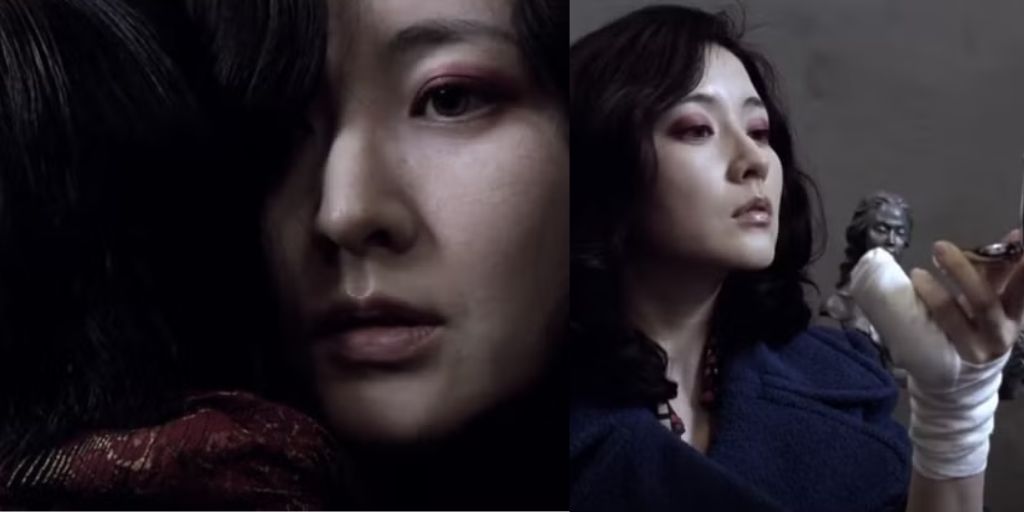
Still from Lady Vengeance (Credit: Netflix)
Geum-ja herself is both a victim and a perpetrator, a woman who was wronged but who also commits terrible acts in her search for revenge.
The film challenges the idea that revenge can bring closure or healing. While Geum-ja’s actions may seem justified on some level, the film shows that violence only creates more pain.
The people who help Geum-ja carry out her plan for revenge are left deeply affected by what they have done, and Geum-ja herself is left questioning whether her actions were truly the right way to seek redemption.
In the end, the film suggests that revenge is not a simple solution to the problems caused by injustice, and that the line between right and wrong is often blurred.
