A truly exceptional horror film can shake you to your core. The few films that achieve this keep your heart racing long after the credits roll. They make you ponder their meaning and replay the scariest moments as you lie in bed.
Many movies can make you feel this intense fear, but few recent ones have done it as effectively as the 2022 film Speak No Evil.
Directed by Christian Tafdrup, it quickly earned an English-language remake, which will be in theaters this weekend. The Blumhouse production moves the story from the Netherlands to the UK, featuring a new cast led by James McAvoy.
While it’s not necessary to compare the remake with the original, watching the first film is highly recommended. It helps you see the differences and experience the chilling story that started it all.
Even with the remake coming out, if you want to be truly disturbed by a horror film showing the darkest aspects of human nature, look no further than Speak No Evil from 2022.
Speak No Evil Introduced a New Kind of Fear
The original Speak No Evil follows Bjørn (Morten Burian) and Louise (Sidsel Siem Koch), a friendly Danish couple. They start their vacation happily in Tuscany with their daughter, Agnes (Liva Forsberg).
Their trip seems perfect until they meet another family, Patrick (Fedja van Huêt), Karin (Karina Smulders), and their mute son, Abel (Marius Damslev).
They instantly connect and travel around the Italian countryside together. Later, Patrick and Karin invite the family to their home in the Netherlands. The Danish family accepts, but soon things start to feel strange.
The film’s disturbing nature begins subtly, as the initially charming hosts become rude and disrespectful. They seem to enjoy pushing the boundaries and testing how much they can mistreat their guests without facing consequences.
These small acts of cruelty gradually build up to a horrifying climax, creating one of the most shocking endings in modern horror.
It’s uncertain how the American remake will handle the story, though the trailers suggest it may lose some of the original film’s unsettling mystery.
While Tafdrup’s version focuses on small acts of abuse leading to a sudden climax, James Watkins’ 2024 version will include intense fights and secret investigations that were missing in the original.
This isn’t necessarily bad; more action could intensify the already chilling moments. Seeing the new couple, Ben (Scoot McNairy) and Louise (Mackenzie Davis), confront James McAvoy’s menacing Paddy in a more action-packed setting could add a new dimension to the original’s psychological horror.

Still from Speak No Evil (Credit: AMC+)
How these changes will affect the film is unknown, but for the remake to be as shocking as the original, it must capture the horror of being polite.
The Real Horror of Speak No Evil Isn’t What You Think
Among the many terrifying aspects of Speak No Evil, the film’s most disturbing feature is how the main villains use social manners to ruin the lives of the central family. This method wouldn’t work on everyone; some people aren’t influenced by others’ opinions.
But many people have been taught to maintain “social peace” at all costs. They try to avoid conflict or offending anyone, often overlooking valid issues.
This mindset creates people who can be easily manipulated and allows horrible behavior to go unchecked. The antagonists understand that the protagonists will find reasons to stay even when every sign tells them to leave immediately.
Without giving too much away, viewers who have seen the film know the deeply disturbing ending.
However, the film’s terror doesn’t come just from that final fright but from the gradual psychological breakdown of Bjørn and Louise. These moments of the couple losing their respect and rights don’t seem threatening at first.
In fact, many viewers might agree with the antagonists that these early scenes are harmless. But this manipulative tactic that turns confident parents into helpless adults is the most unsettling part of the film.
The villains exploit the couple’s inability to stand up for themselves and their daughter, taking the concept of Speak No Evil to frightening extremes and showing the consequences of not speaking your mind.
This Terrifying Original Only Enhances the Remake
While the original Speak No Evil excels with its frightening story, it’s not necessary to watch it before seeing the remake. In fact, knowing too much about the first film might affect how you view the new one.
However, missing out on the original means missing the chilling story and themes that first revealed how terrifying a simple concept can be.
The original shows the dreadful outcomes of not speaking your truth and the twisted ways people manipulate you for it. While the remake may carry these themes, watching both films provides a deeper understanding of how malicious people exploit a person’s meekness.
Speak No Evil is a remarkable horror film that leaves a lasting impression with its intense fear and psychological torment.
Directed by Christian Tafdrup, the 2022 film presents a chilling story about a Danish family who faces disturbing behavior from their seemingly charming hosts.

Still from Speak No Evil (Credit: AMC+)
As the film progresses, the hosts’ subtle acts of cruelty grow into shocking moments, culminating in a terrifying finale. The movie stands out for its view of how social politeness can be used to manipulate and harm others.
With the release of an English-language remake directed by James Watkins, the story shifts to a new setting and adds more action, but the essence of the original’s psychological horror remains crucial.
Watching both versions offers a deeper understanding of the unsettling ways in which people can exploit social norms and personal boundaries to create fear and suffering.
In the ever-evolving world of My Hero Academia , fans are accustomed to thrilling plot twists, powerful battles, and emotional character arcs.
But recently, the anime stunned its audience with something even more unexpected the return of Gentle Criminal.
For those who have followed Kohei Horikoshi’s manga, this moment may have felt like a surprise, albeit a pleasant one, since Gentle Criminal’s reappearance wasn’t heavily foreshadowed in the manga either.
However, this unexpected comeback has added a new layer of depth to the series and has cemented Gentle’s place in the hearts of fans, pushing his character to the forefront once more.
The return of Danjuro Tobita, also known as Gentle Criminal, was not just a random addition to the storyline.
While the buildup to his return was minimal, the emotional impact it had on fans was immense. It’s not hard to see why.
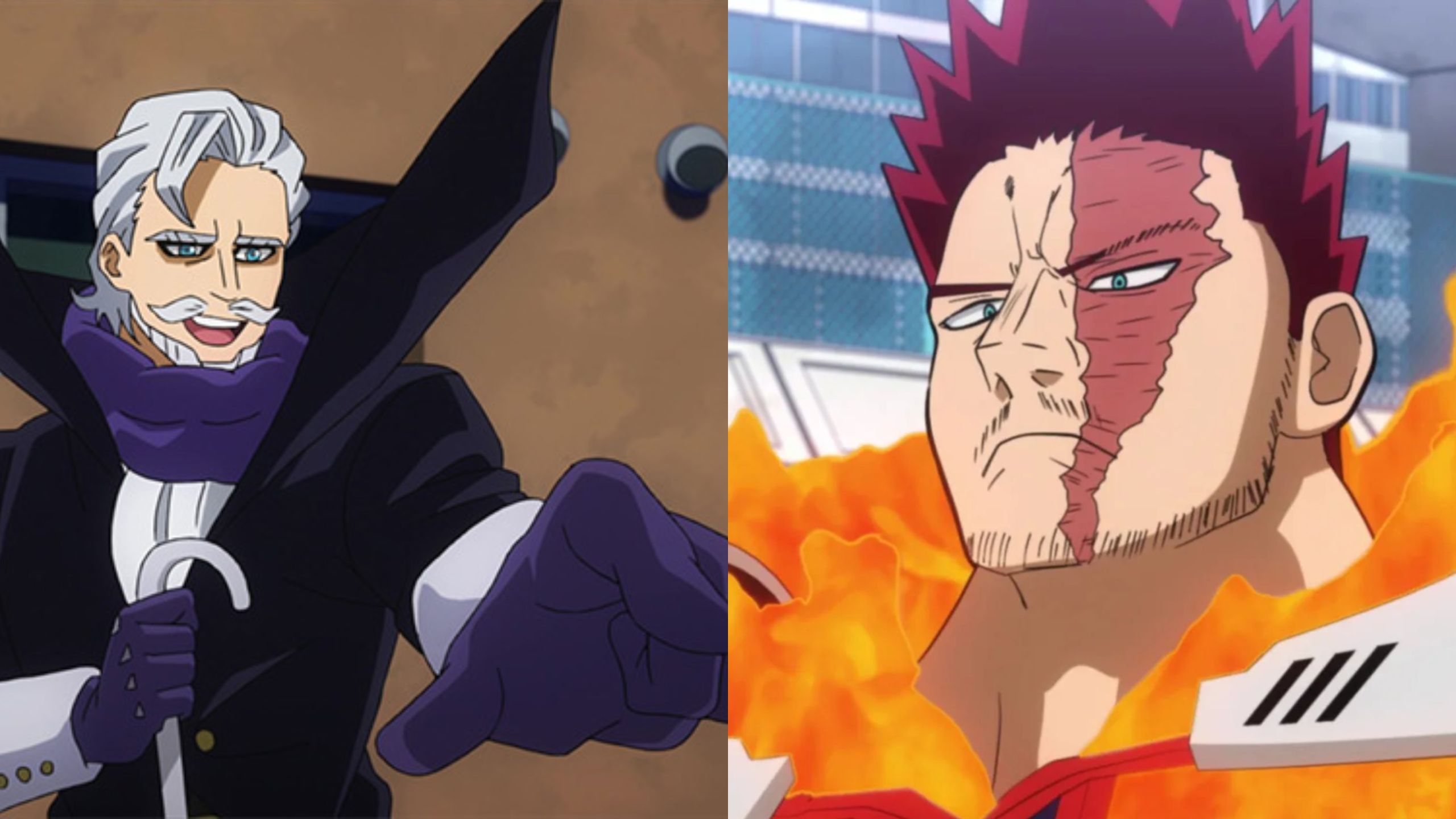
Gentle And Endeavor From My Hero Academia (Bones)
From the moment he first appeared, Gentle Criminal struck a chord with viewers. He wasn’t your typical villain. He didn’t aim for world domination, nor did he seek to wreak havoc purely for the sake of chaos.
Instead, his motivations were deeply personal and grounded in a sense of desperation for recognition and validation in a world that had largely overlooked him.
This made him a uniquely relatable figure, unlike the more traditional villains in My Hero Academia, whose ambitions were often grand and destructive.
Gentle’s return has only heightened the emotional connection fans feel toward him, and it’s immediately clear that his reappearance signals something much deeper than just another fight.
His comeback represents a journey toward redemption, a chance to right the wrongs of his past, and perhaps most importantly, to prove that even those who have walked the path of villainy can find their way back.
And in the process, Gentle’s redemption arc has emerged as the best in My Hero Academia, even surpassing the heavily explored redemption of Pro Hero Endeavor.
The complexity of Gentle Criminal’s redemption
What makes Gentle Criminal’s redemption arc stand out from the rest is how deeply personal it feels.
From the moment he is reintroduced, it becomes apparent that his motivation for seeking redemption is not driven by the need to atone for a grand betrayal or a major catastrophe.
Instead, Gentle’s desire for redemption is born from his interaction with one person: Izuku “Deku” Midoriya. In a world where villains often seek redemption for their own benefit, Gentle’s path is refreshingly different.
His motivation is rooted in a genuine desire to redeem himself in Deku’s eyes, the very person who helped him see that there could be another way to live.
When Gentle Criminal was first defeated by Deku, it was not the kind of defeat that left him humiliated or embittered.
Instead, it was a moment of profound realization for him. He came to understand that the path he had chosen wasn’t the only one available to him, and that perhaps there was a better way forward.
This epiphany was the catalyst for his transformation. He didn’t simply stop being a villain because he was forced to; he made the conscious decision to change because he saw that it was possible to live a different kind of life.
#MyHeroAcademia Gentle is such a dope and underrated character man He’s one of the first prime examples in the series of how an antagonist is capable of genuine change when they’re given the chance they never had in the past pic.twitter.com/fnjrTSY65A — ZheroG (GENTLE Edition 🤍💜) (@glennster2363) September 7, 2024
In many ways, Gentle’s redemption arc reflects the same journey that Deku has been on throughout the series.
Just as Deku was inspired by All Might to become a hero, Gentle was inspired by Deku to change his ways.
This cyclical nature of inspiration is a core theme in My Hero Academia. Heroes inspire others to become heroes, and even those who have walked down the path of villainy can find redemption if they are given the chance.
Gentle’s story is a testament to the power of inspiration and the idea that one person’s actions can have a profound impact on another’s life.
This theme of inspiration is further reinforced by Gentle’s actions during his reappearance. He is no longer the villain who sought fame and recognition through criminal acts.
Instead, he is someone who wants to prove that he can be better, that he can live a life that aligns more closely with the ideals of heroism.
While he may not have the flashy powers of some of the series’ more prominent characters, Gentle’s redemption arc is a powerful reminder that true heroism isn’t about strength or combat prowess.
It’s about the ability to change, to grow, and to inspire others to do the same.
A comparison with Endeavor’s redemption
While My Hero Academia has had several notable redemption arcs, none are as heavily explored or as controversial as Endeavor’s.
As the former No. 2 hero and later the No. 1, Endeavor’s journey toward redemption has been a central focus of the series, particularly in its later arcs.
However, while Endeavor’s story is undeniably powerful, it pales in comparison to the depth and emotional resonance of Gentle Criminal’s redemption.
Endeavor’s redemption arc is built around his relationship with his family, particularly his son, Shoto Todoroki.
As a father, Endeavor was abusive, cruel, and controlling. His obsession with surpassing All Might drove him to commit terrible acts of emotional and physical abuse against his family, and those actions have left deep scars that will likely never fully heal.
As a result, Endeavor’s journey toward redemption is largely about making amends for the mistakes he made in the past.

Endeavor From My Hero Academia (BONES)
He recognizes that he can never undo the harm he caused, but he is determined to be better moving forward.
While Endeavor’s redemption is rooted in atonement, Gentle Criminal’s redemption feels more organic and less driven by external pressures.
Gentle is not seeking redemption because he feels obligated to make amends or because he has a public image to maintain.
His motivation is far more personal and introspective. He doesn’t need to repair relationships or fix a broken public persona.
Instead, his redemption is driven by a simple desire to prove to Deku – and to himself – that he can change.
This difference in motivation is what makes Gentle’s redemption arc feel more genuine. Endeavor is trying to be better because he has to, while Gentle is trying to be better because he wants to.
This distinction may seem subtle, but it makes a world of difference in how their respective journeys are perceived.
Gentle’s redemption feels less forced, less driven by necessity, and more like a natural evolution of his character.
He has no grand public image to fix, no family to win back. He is simply a man who made mistakes and wants to be better.
Another key difference between the two redemption arcs is the emotional baggage each character carries.
Endeavor’s past is filled with abuse, neglect, and obsession, and those actions have had long-lasting consequences, particularly for his family.
While he is working to atone for his mistakes, the emotional scars he left on his family are still very much present, and it’s unclear whether they will ever fully forgive him.
Gentle, on the other hand, doesn’t have the same kind of heavy emotional baggage. While he did commit crimes, they were far less severe, and his path to redemption is much cleaner and more straightforward.
This simplicity is part of what makes Gentle’s redemption so powerful. His journey isn’t weighed down by the complexities of broken relationships or public perception.
Instead, it’s a pure and personal quest for self-improvement. This makes his redemption arc feel more accessible and relatable to fans.
In my top 10 for a reason I love both him and La Brava!!!! Just great characters — 🌟Koolkamjam💫(COMMISSIONS: CLOSED) (@KameronKKJ) September 7, 2024
While many viewers may struggle to relate to Endeavor’s story of atoning for years of abuse, Gentle’s journey of personal growth and redemption feels more universal.
Everyone can relate to the idea of wanting to be better, to make amends for past mistakes, and to prove that they can change.
Broader themes of heroism and villainy in My Hero Academia
At its core, My Hero Academia is a story about heroism. But it’s also a story about the fine line between heroism and villainy, and how people can shift from one side to the other based on the choices they make.
This theme is explored throughout the series, but it is particularly prominent in Gentle Criminal’s redemption arc.
From the beginning, Gentle Criminal was never a traditional villain. Unlike other antagonists in the series, his motivations were not rooted in a desire to cause harm or destruction.
Instead, he sought recognition and validation. He wanted to be seen, to be remembered, and to leave a mark on the world.
In many ways, his actions were driven by a deep sense of insecurity and loneliness. He wasn’t a villain because he wanted to be; he was a villain because he didn’t know how else to achieve his goals.
This makes Gentle’s story particularly poignant, as it highlights one of the central themes of My Hero Academia: the idea that people are not inherently good or evil.
Instead, they are shaped by their experiences, their circumstances, and the choices they make. Gentle chose to become a villain because he felt that it was the only way to achieve his goals.
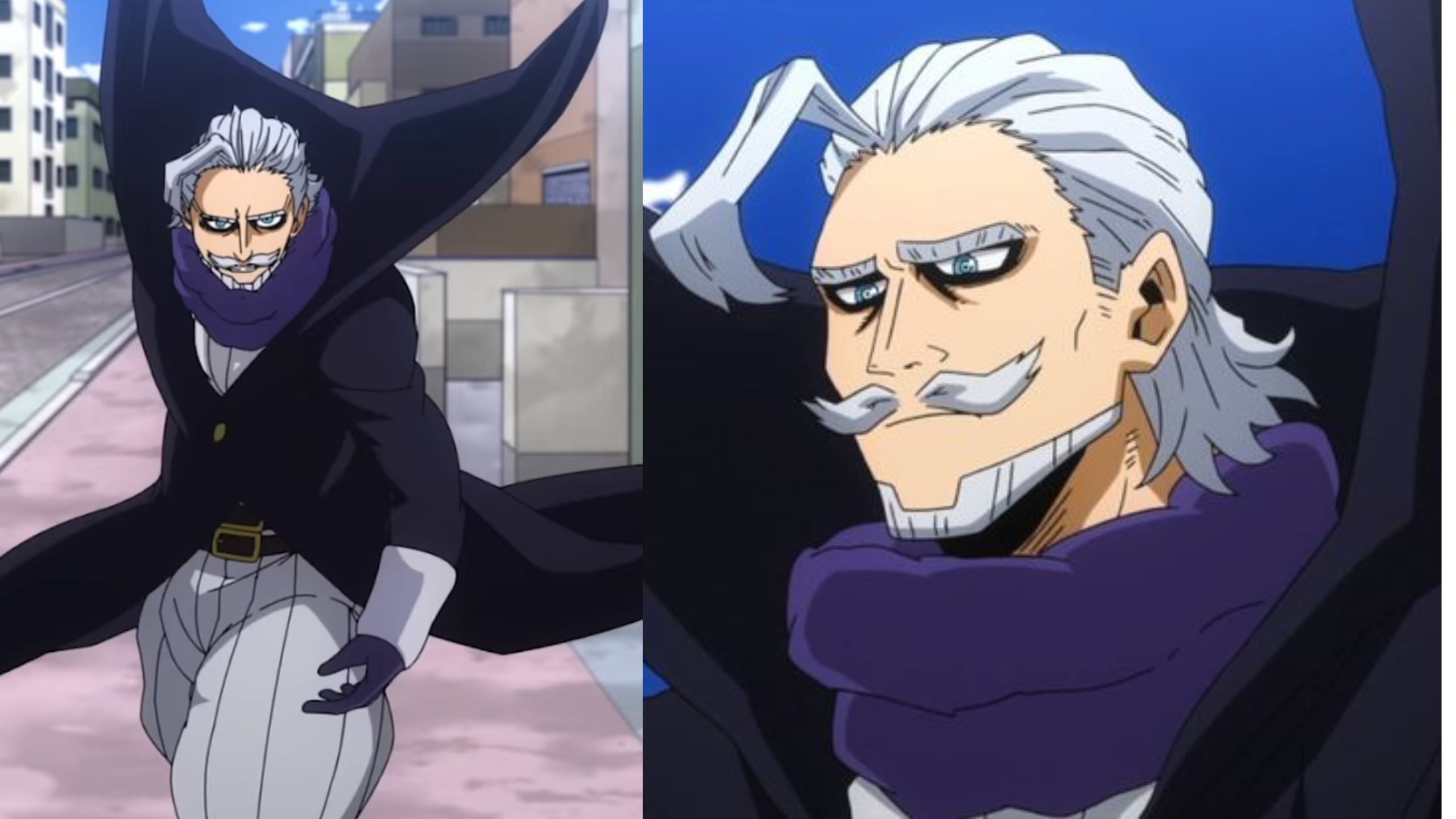
Gentle From My Hero Academia (Bones)
But when given the opportunity to change, he embraced it fully. His redemption arc serves as a powerful reminder that villains are not beyond saving, and that even those who have made mistakes can find their way back if they are given the chance.
This theme is also reflected in Deku’s character. Throughout the series, Deku has shown a remarkable ability to empathize with others, even those who are his enemies.
He doesn’t see the world in black and white. Instead, he believes in the potential for people to change and grow.
This belief is what drives his desire to save Tomura Shigaraki, the series’ primary antagonist.
Despite all the pain and destruction Shigaraki has caused, Deku refuses to give up on him. He believes that there is still good in Shigaraki, and he is determined to bring it out.
Gentle Criminal’s redemption arc is a smaller-scale reflection of this philosophy. Just as Deku believes in Shigaraki’s potential for redemption, he also believed in Gentle’s potential to change.
And Gentle, inspired by Deku’s faith in him, chose to take a different path. This cyclical nature of inspiration and redemption is one of the central themes of My Hero Academia, and it is beautifully summarizes in Gentle’s story.
The lasting impact of Gentle Criminal’s redemption
As My Hero Academia moves towards its final arcs, the themes of redemption, heroism, and personal growth are becoming more prominent than ever.
Gentle Criminal’s redemption arc serves as a powerful reminder that even in a world filled with superpowers and larger-than-life battles, the most important changes are often the ones that happen within.
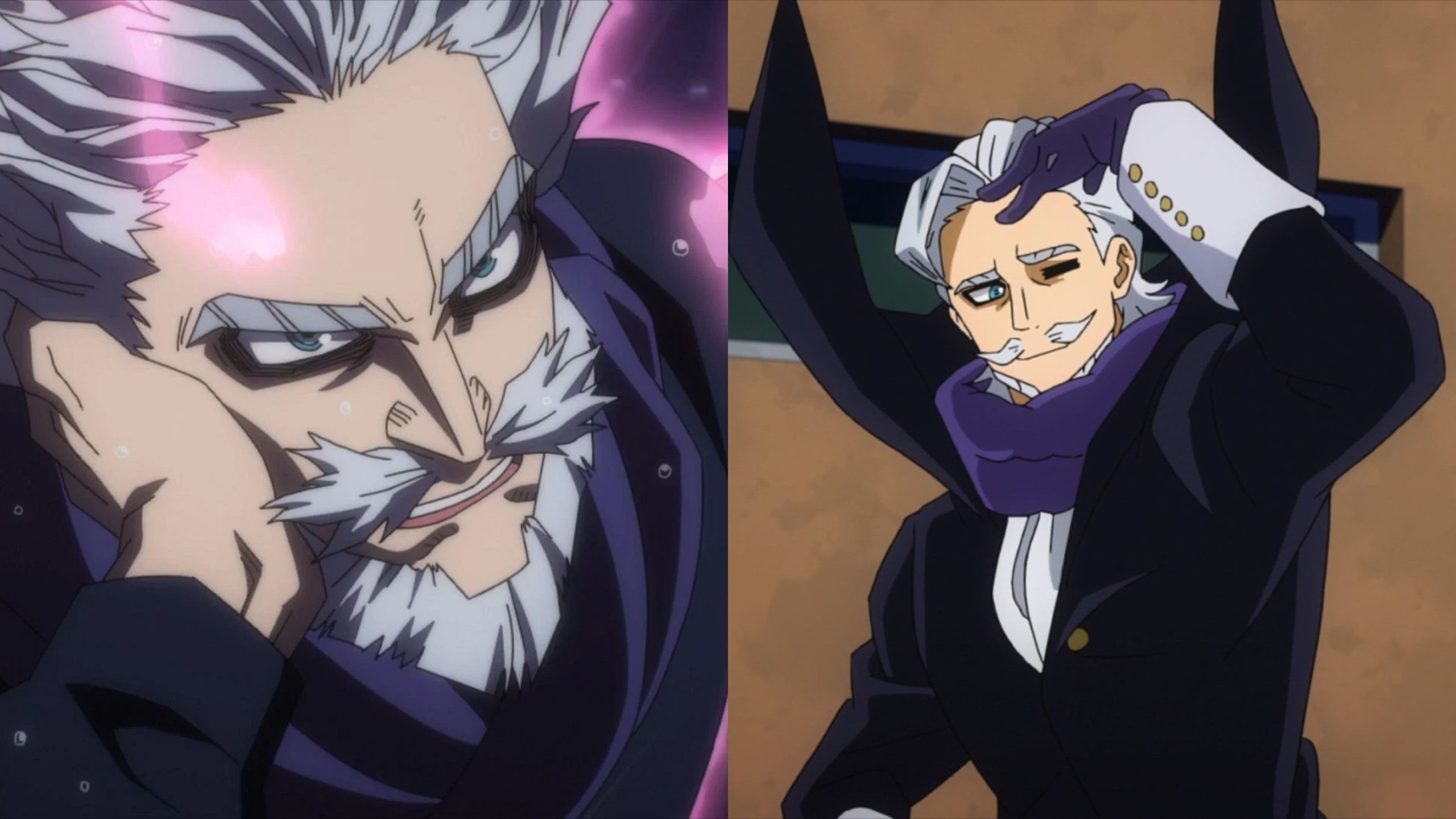
Gentle From My Hero Academia (Bones)
His story is a testament to the idea that it’s never too late to choose a different path, and that true heroism lies not in strength or power, but in the ability to inspire others to be better.
In the end, Gentle Criminal’s redemption is the most emotionally resonant and thematically rich arc in the entire series.
It may not have the same scale or complexity as Endeavor’s, but it touches on deeper, more universal themes. It’s a story about one man’s decision to change, not because he has to, but because he wants to.
And in that decision, Gentle proves that even villains can be heroes – all it takes is the willingness to grow.
