Stranger Eyes tackles a topic that is often dealt with in films today: how technology, social media, and surveillance affect our privacy and humanity. The movie examines how we watch each other’s lives and how this can lead to mysteries and thrills.
People enjoy films that show how we can sneak into the lives of others, and technology now makes this easier than ever. But, even with such an interesting topic, Singaporean writer-director Yeo Siew Hua’s Stranger Eyes does not manage to offer anything new or disturbing with its story.
At the heart of the film is the story of a kidnapped child. Her parents try to find her while dealing with how much we can learn about strangers just by watching their lives. The film also touches on how vulnerable people are because of the constant surveillance happening all over the world.
But it quickly moves towards a different angle, becoming somewhat similar to the film One Hour Photo, where a lonely man is led into invading the privacy of others due to his isolation. Though comparing a movie to One Hour Photo isn’t necessarily a bad thing, it’s not a compliment either when a movie from 20 years ago handled the same idea much better.
Stranger Eyes feels old and doesn’t seem to have anything significant to say. It would be fine if the film managed to create a chilling atmosphere to make up for its lack of a solid plot or strong social message, but sadly, this is not the case.
The movie opens with a happy scene. A couple, Junyang (played by Wu Chien-ho) and Peiying (played by Anicca Panna), are playing with their baby daughter, Little Bo, while filming a home video. The child is loved and cherished by her parents. Though the scene is joyful, it is clear that this happiness is in the past, and things have since changed.
The film then cuts to the present day. Peiying is now detached and watches the old home videos over and over, trying to find something, anything, that can give her clues about what happened. Little Bo was kidnapped while Junyang was watching her at a public playground.
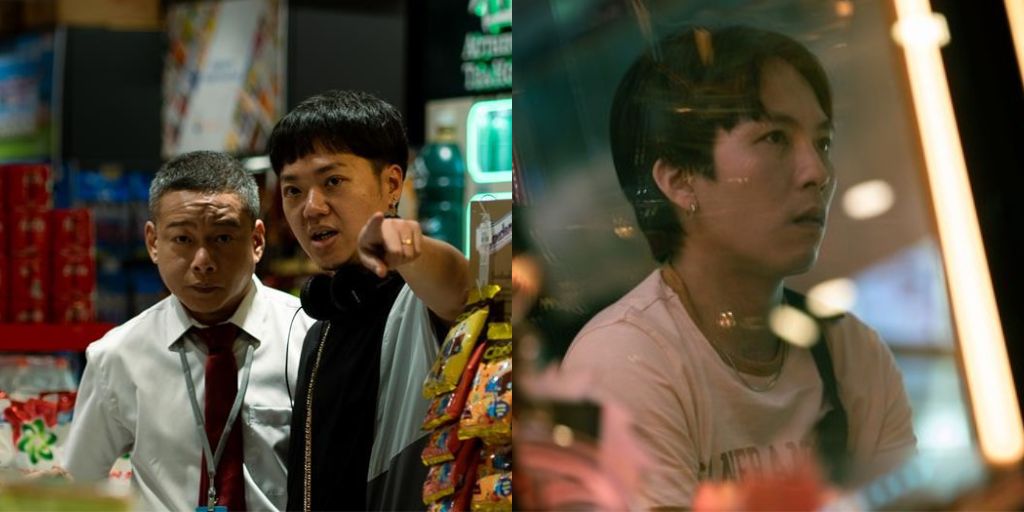
Still from the movie (Akanga Film Productions)
He got distracted by a phone call, and in that moment, Bo was taken. Peiying spends her days blankly staring at the videos, hoping for answers. Junyang, on the other hand, meets with his mother, Shuping (played by Vera Chen), who continues to hand out flyers of Bo to people, hoping someone has seen her. Shuping’s actions, while understandable, end up scaring other mothers.
The family’s despair and hopelessness are clear from the start, and it seems like all hope of finding Bo is lost. Then something strange happens. The family starts receiving DVDs that show shaky footage of Junyang shopping with Bo before she disappears.
Another DVD arrives, showing Junyang the day before Bo’s kidnapping, where he is seen following a young mother whose child looks like Bo. The family is shaken by this, as they believe the person sending these DVDs might be the one who kidnapped Bo. Soon, the person behind the DVDs is revealed—it’s the lonely grocery shop manager, Wu (played by Lee Kang-sheng).
The movie then shifts its focus to Wu, and we begin to understand why he started following and filming the couple without their knowledge. The film takes us through the lives of the various unhappy characters, and the boundary between what’s public and what’s private begins to blur.
Stranger Eyes is a film filled with sadness. Every character in the movie seems to be broken and beyond repair. This makes sense for Junyang and Peiying, who are going through the nightmare of losing their child. However, the movie’s very dark tone never changes, making it hard to watch.
While the plot seems like it could be a gripping mystery, following a detective determined to find the missing child, Bo’s disappearance takes a backseat to the movie’s focus on lonely, depressed characters. The film promises a huge, serious event— a missing child— but then drifts off into the quiet, sad lives of its characters.
By the time the movie reveals what actually happened to Bo, the audience may not care anymore, as watching the film feels like a long test of patience. The movie moves back and forth between different characters, showing their individual lives and how they are connected.
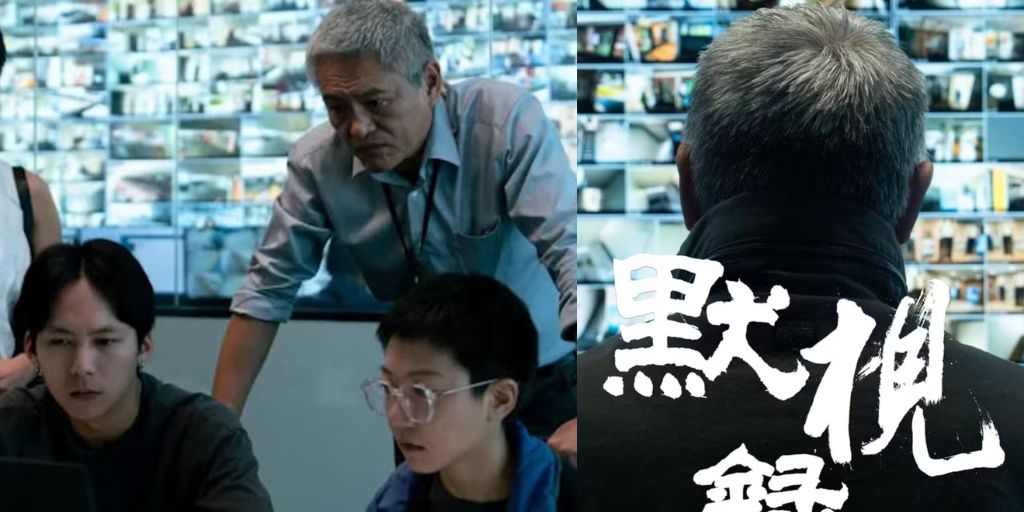
Still from the movie (Akanga Film Productions)
The film expects the audience to be deeply interested in these characters, but the problem is that most of them are only defined by their sadness and personal tragedies. The female characters, like Peiying and Shuping, are given more life and depth. They manage to break through the cold and despairing atmosphere of the movie.
But the story focuses much more on the two male leads—Junyang and Wu—who are not engaging enough to carry the film for its long two-hour run. There’s a twist in the movie’s final act, but it concerns a new character who is only introduced shortly before, another sign that the film expects viewers to care more about the characters than they do.
The theme of how interconnected our lives are, even when we feel completely alone, is interesting, especially in today’s world where social media makes it impossible to escape other people’s lives. But Stranger Eyes doesn’t do much with this idea. Instead, it drifts through its story without direction, and the plot feels far removed from the film’s beginning.
The movie seems confused about what it wants to be. It’s written like a mystery-thriller, but directed like a slow, tragic drama. This mismatch, along with the stiff direction of Yeo Siew Hua, makes for a movie that fails to grab the audience.
Since Stranger Eyes is about being watched and recorded, it takes a filmmaking approach similar to found footage rather than a big-screen thriller. Yet, as the camera follows behind the characters, it loses its connection to the story, making it feel as if there’s no clear reason or purpose for many of its scenes.
Because most of the characters are defined by their sadness and tragedy, it’s difficult to make them feel lively. Wu Chien-ho, as Junyang, is not the most engaging lead. He barely reacts to the major events in the movie, making the audience feel as disconnected as he does.
Anicca Panna as Peiying and Vera Chen as Shuping, on the other hand, bring more depth and emotion to their roles. They manage to show anger, sadness, and pain in a way that feels real, bringing some much-needed emotion to a film that often feels empty.
Lee Kang-sheng tries his best to make Wu a sympathetic character. He succeeds in showing Wu’s deep loneliness, and his performance is heartfelt and sad in every scene. But the film doesn’t find Wu’s character enough, leaving us without a clear understanding of why someone like him would invade the lives of others without being portrayed as a clear villain.
Stranger Eyes feels outdated. With a story that revolves around timely issues, like the impact of social media on our privacy, the film barely touches on the most frightening aspects of these topics. It misses out on showing how much social media lets strangers see into our lives and how watching others’ seemingly perfect lives can make people feel worse about their own.
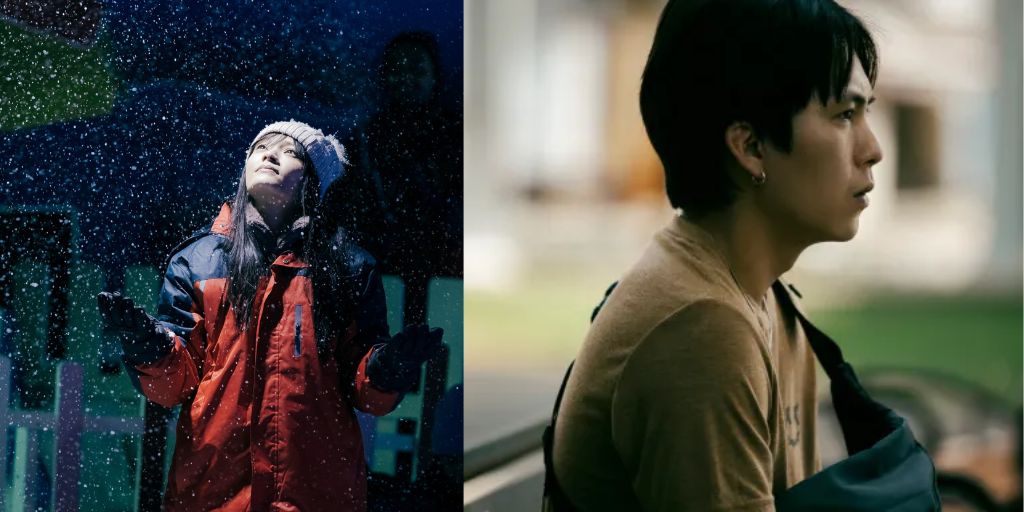
Still from the movie (Akanga Film Productions)
While there are hints of a better story here, the film’s lack of emotion and its scattered plot make it feel like a lifeless mystery thriller.
Stranger Eyes is a film that attempts to find heavy themes such as loss, surveillance, and the loneliness that can arise in a world where privacy is constantly under threat. Despite a compelling premise, the movie falls short of delivering a truly engaging or unsettling experience.
The pacing feels slow, and the characters remain detached, making it difficult for the audience to connect with their struggles. The film’s narrative jumps between the personal tragedies of its characters but fails to give them the depth needed for viewers to care deeply about their stories.
While there are moments where the film hints at the unsettling nature of being watched and recorded, it never fully embraces the psychological tension that could have made it more impactful.
The performances of Anicca Panna and Vera Chen stand out, bringing emotional weight to their roles and providing a much-needed sense of humanity in a movie that often feels cold and distant. Lee Kang-sheng also delivers a sorrowful portrayal of loneliness, but the lack of character limits the impact.
Stranger Eyes ultimately leaves viewers with a sense of missed opportunity, offering a story that could have gone deeper into the complexities of modern surveillance culture but instead remains emotionally flat and directionless.
In addition, the film’s inability to balance its dramatic elements with the thriller aspect contributes to its complete lack of momentum. Stranger Eyes teases the possibility of tension and mystery but never fully develops these aspects, leaving the audience unsatisfied.
Despite its artistic intentions and social commentary, it ultimately lacks the emotional depth and narrative drive required to leave a lasting impression.
Although the film’s melancholic tone and themes resonate with contemporary concerns about privacy and technology, they fail to be compelling enough to make Stranger Eyes an impactful experience.
In the movie Rumours, a unique story unfolds as seven world leaders find themselves acting like teenagers caught in a soap opera during a zombie apocalypse.
Charles Dance plays the U.S. President with a classic English accent. This film, created by Evan Johnson, Galen Johnson, and Guy Maddin, is nothing short of strange.
It is a blend of dark comedy, melodrama, and gothic horror themes, reminiscent of classic zombie films by George Romero. Throughout its runtime, the film delivers unexpected surprises, some of which land effectively while others fall flat.
The narrative takes a satirical aim at the foolishness and incompetence of elected officials, suggesting that they are no better at handling crises than the average person. As the story progresses, it veers too far into the bizarre, losing its direction by the climax.
However, the journey is filled with entertaining moments, making it worthwhile. The film’s greatest strength lies in its talented cast. Rumours may not appeal to everyone, but for those who enjoy a hefty serving of strangeness alongside biting political satire, there is much to enjoy.
What Is Rumours About?
The story begins with the G7 leaders meeting in Germany to address a mysterious ongoing crisis, which the film never explicitly defines.
The group consists of the Chancellor of Germany, Helga (played by Cate Blanchett), the President of the United States, Edison (played by Charles Dance), the Prime Minister of the United Kingdom, Cardosa (played by Nikki Amuka-Bird).
The Prime Minister of Canada, Maxime (played by Roy Dupuis), the President of France, Sylvain (played by Denis Ménochet), the Prime Minister of Italy, Antonio (played by Rolando Ravello), and the Prime Minister of Japan, Tatsuro (played by Takehiro Hira).
The film opens with Helga welcoming the leaders by revealing a two-thousand-year-old mummified body.
The scene is both humorous and macabre, as the leaders pose for pictures beside the corpse, which is a man with his severed penis wrapped around his neck. This darkly comedic moment sets the tone for the absurdity that will follow.
The leaders gather at a remote estate for a private dinner to discuss their provisional statement. This setting allows the dynamics between the leaders to develop. Maxime emerges as the “bad boy” of the group, a notorious flirt with a history of romantic entanglements with Cardosa.
Despite his charm, Helga also tries to flirt with him, creating a humorous love triangle. Cardosa, on the other hand, appears to be the most serious and professional among them. Meanwhile, President Edison seems more concerned with maintaining his British accent than addressing the crisis at hand.
As the evening progresses, the leaders find themselves cut off from the outside world—there is no phone service, and the waiters have mysteriously vanished. When Sylvain steps outside to retrieve some papers, he discovers that they have been completely abandoned. Suddenly, the group is attacked by “shady figures.”
The film humorously suggests a few possibilities: Have the mummies come back to reclaim their territory? Is it an alien invasion? These questions only add to the chaos as the leaders must unite to escape the estate and uncover what is happening, but not before Helga and Maxime sneak off for a quickie.
Rumours Is Camp Dark Comedy
Rumours shines when it focuses on its main characters acting like reckless fools. The film leans heavily into camp comedy, often feeling like an episode of an early 2000s teen drama.
Maxime, with his trendy hairstyle and laid-back attitude, becomes emotional as he recalls his numerous romantic conquests, while a lustful Helga is determined to become his next fling. The movie’s absurdity serves to bring powerful figures down to earth, showing them as silly and misguided.
A melodramatic score punctuates the film, amplifying its comedic elements. For example, when Maxime reminisces about a night spent with Cardosa, a sultry jazz tune enhances the scene’s romantic tension.
Conversely, when Sylvain expresses his fears about the unfolding horrors, a dizzying close-up of his face captures the frantic mood, reminiscent of classic 1960s British horror films.
As the leaders wander through the woods, enveloped by thick fog, the visuals evoke a nostalgic feel, reminiscent of old Scooby-Doo episodes or classic adaptations like The Hound of the Baskervilles. There is also a clear influence from Romero’s films, which adds to the eerie atmosphere.
While Rumours is not a traditional horror movie, it effectively conjures a sense of dread similar to the genre’s finest works. The directors’ unique style complements the wild script, which shifts between comedy, melodrama, satire, and horror at a moment’s notice.
The first half of the film thrives on the absurdity of the situation and the pure entertainment value of watching these world leaders behave foolishly.
However, things take an even stranger turn when a giant human brain appears, and a confused Alicia Vikander, portraying the secretary-general of the European Commission, warns of impending doom, yet no one can understand her message.
What starts as a well-executed and fun concept gradually loses its way as the plot becomes unfocused. The pacing falters, and the metaphor of bad leadership is overshadowed by the ridiculousness of “masturbating mummies.”
The silliness can overwhelm the viewer, making it challenging to appreciate the satire, even though the initial enjoyment of the film is undeniable.
Cate Blanchett Leads an Excellent Cast in Rumours
Despite the aimless plot, the cast of Rumours is what makes it worth watching. Cate Blanchett delivers an unforgettable performance as Helga, the German chancellor. She portrays a character who is both desperate and humorous, someone who lets her desires take over her decision-making.
Blanchett is known for her powerful dramatic roles, but in Rumours, she proves that she can also shine in comedic roles, creating a character that is hilariously relatable in her quest for affection.
Roy Dupuis also stands out as Maxime, making his character a swoon-worthy yet brooding figure. His portrayal is layered, showing a prime minister who writes poetic notes about life while struggling to fulfill his political duties. His character adds depth to the story, providing a contrast to the more outrageous behaviors of the other leaders.
Denis Ménochet, as Sylvain, plays the French President like a caricature of a classic detective, complete with exaggerated mannerisms. He delivers monologues about democracy while displaying a clear disdain for his Canadian counterpart, showcasing the film’s satirical edge. His performance is a highlight, as he embraces the campy elements without reservation.
The rest of the cast also fulfills their roles convincingly, with Nikki Amuka-Bird’s Cardosa serving as a level-headed British Prime Minister amidst the chaos. Her character adds a touch of reason and rationality, making her interactions with the other leaders even more entertaining.
While Charles Dance’s choice to don a British accent as the U.S. President raises questions, it does contribute to the film’s absurdity. The humor of the situation is enhanced by the exaggerated accents and performances of the actors, further immersing viewers in the Rumours world.
Themes of Absurdity and Political Commentary
Rumours uses its bizarre premise to show themes of absurdity and incompetence in leadership. The film cleverly mocks the political elite by showcasing their inability to deal with crisis situations.
As the G7 leaders face the threat of zombies, their reactions and interactions highlight their foolishness. The humor lies in how they approach problems, often prioritizing personal desires over the responsibilities of their positions.
The absurdity of the situations serves as a mirror to real-life political events, where leaders often seem disconnected from the issues affecting ordinary people.
By placing these powerful figures in ridiculous scenarios, the film emphasizes the gap between their actions and the needs of their citizens. The satire serves as a critique of political incompetence and the failure of those in power to address crises effectively.
In a world where real-life political leaders sometimes behave like characters from a soap opera, Rumours shines a light on the foolishness that can occur at the highest levels of government. The film suggests that, in times of crisis, these leaders are often just as lost and confused as anyone else. This message resonates with viewers, making the film both entertaining and thought-provoking.
A Mixed Bag of Humor and Horror
The blend of humor and horror is central to Rumours. While it starts strong with its comedic elements, the film eventually struggles to maintain that balance. The sudden shift from lighthearted camp to bizarre horror can leave viewers feeling disoriented. While the film manages to capture some of the tension and fear associated with classic horror films, it does so at the expense of the comedic narrative.
The moments of absurdity, such as the appearance of the giant brain and the mysterious warnings from Alicia Vikander’s character, disrupt the flow of the story.
These bizarre twists can alienate viewers who may have been enjoying the initial setup and humor. As the plot becomes more chaotic, the humor often feels overshadowed, leading to a lack of cohesion in the narrative.
Despite these flaws, Rumours still manages to entertain with its outrageous moments and humorous character interactions.
The film invites viewers to suspend their disbelief and embrace the strangeness. The enjoyment lies in the absurdity of the situation and the performances of the cast, who fully commit to their roles.
Conclusion: Embracing the Strange in Rumours
Ultimately, Rumours is a film that dares to be different. It embraces its strangeness and offers a unique take on political satire. While the plot may become disjointed and the pacing uneven, the film’s strengths lie in its performances and its willingness to push boundaries.
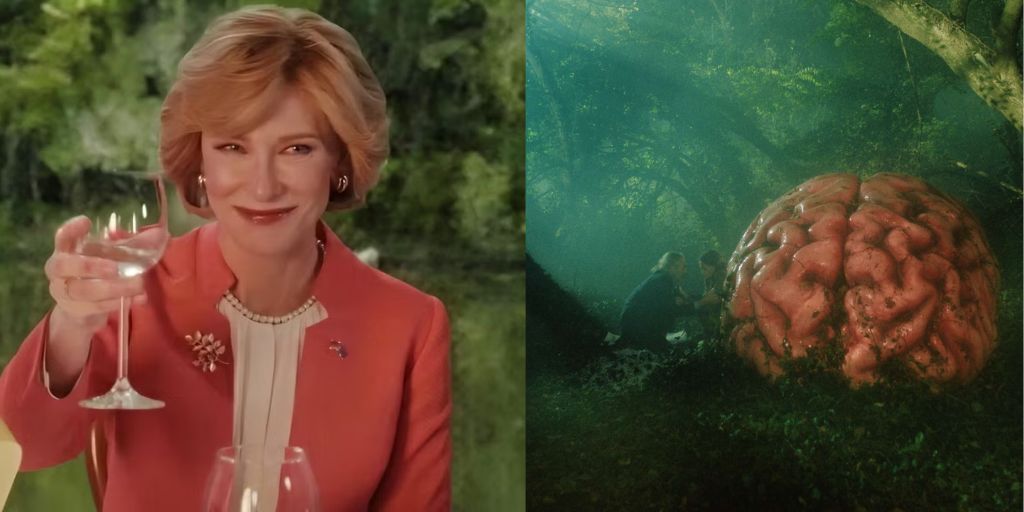
Still from Rumours (Credit: Bleeker Street)
The talented cast, led by Cate Blanchett, brings life to the absurdity of the story. Their comedic timing and commitment to their characters enhance the film’s full enjoyment.
Even though Rumours may leave viewers with a sense of confusion, it also prompts reflection on the nature of political leadership and the absurdity of those in power.
For those willing to take a journey into the bizarre, Rumours provides a wild ride filled with laughter, chaos, and thought-provoking commentary. It’s a film that challenges expectations and leaves audiences with the question: “What the hell just happened?”
Rumours is an offbeat comedy that combines the elements of political satire, melodrama, and horror. It showcases world leaders in absurd situations, highlighting their incompetence and foolishness.
While it may not satisfy everyone, its unique perspective on politics and its entertaining performances make it a noteworthy watch for fans of dark comedies and satire.
