H.P. Lovecraft’s scary stories about madness, ancient gods, and cosmic horror have fascinated readers for over a century.
Lovecraft’s deep impact on the horror genre is undeniable. His unique blend of psychological fear and unsettling ideas about losing identity and feeling insignificant continues to resonate with audiences today.
However, filmmakers find it hard to adapt Lovecraft’s eerie visions to movies. Many adaptations struggle to capture the core of his work.
They often rely too much on gore and flashy visuals, which can detract from the unsettling atmosphere and profound existential terror that define Lovecraft’s writing.
In contrast, Suitable Flesh is an exciting and successful effort to bring Lovecraft’s nightmarish world to life.
This film effectively covers the key elements of Lovecraftian horror, including themes of physical and psychological terror, along with a sense of cosmic unease that is chillingly precise.
The film stands out among other adaptations, as it honors the source material while also modernizing it for today’s audience.
Adapting Lovecraft’s stories into films is a significant challenge, especially when it comes to capturing the essence of “cosmic horror.”
Lovecraft’s tales often focus on deep dread and mysterious powers that can drive people to madness just by contact. Showing this terror on screen is inherently tough because it is often unseen and beyond human understanding.
Some films have succeeded in adapting Lovecraft’s stories. For example, The Color Out of Space does well by focusing on creating atmosphere and psychological tension rather than showing monsters.
In contrast, movies like Re-Animator emphasize grotesque horror, sometimes missing the subtle dread that is common in Lovecraft’s stories.
Suitable Flesh balances these approaches by centering its horror on a more personal and insidious threat—an ancient, evil force that manipulates identity and reality.
The film excels in portraying the indescribable horror that Lovecraft often hinted at but rarely displayed. It takes the viewer on a journey through psychological and physical horror, ensuring that the story resonates on a deeper level.
The film is a gripping adaptation of Lovecraft’s unsettling short story, “The Thing on the Doorstep.” In the original tale, a character’s body is taken over by an ancient being, erasing their identity and replacing it with something monstrous.
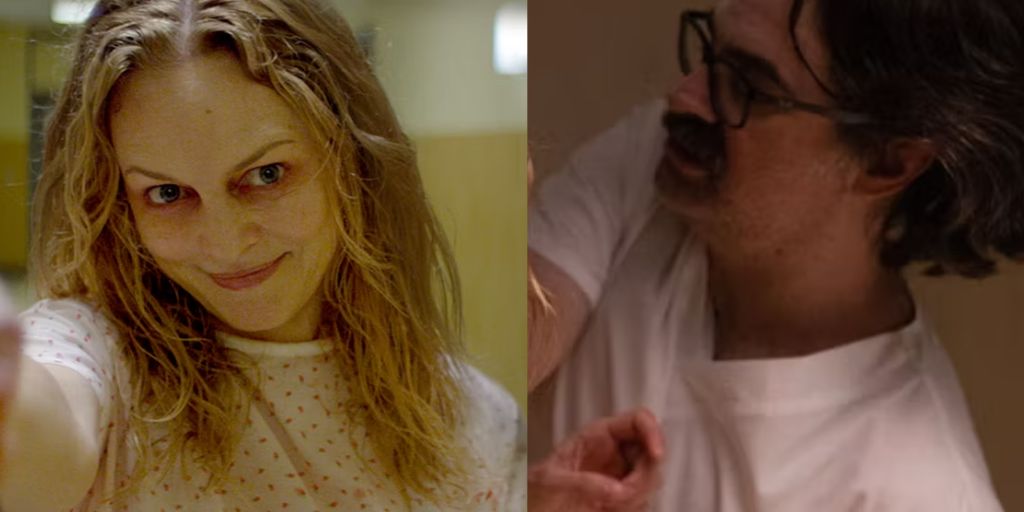
Still from the movie (Hulu)
Suitable Flesh updates this concept, telling the story of psychiatrist Dr. Elizabeth Derby, played by Heather Graham. She confronts an evil force that can swap minds and bodies.
The movie effectively portrays the unsettling idea of body-swapping, thoroughly examining the resulting identity crisis and mirroring Lovecraft’s fears of losing one’s mind or body to an insidious, invisible force.
Dr. Elizabeth Derby’s character serves as a modern protagonist who faces the fear of losing control over her own identity.
This theme is a central part of Lovecraft’s work, where characters often grapple with their sanity and their understanding of reality.
The film mirrors these struggles, showcasing how Dr. Derby’s confidence and professionalism slowly crumble as she confronts the terrifying forces at play. Her journey highlights the psychological horror that Lovecraft often dealt in his narratives.
Heather Graham’s performance plays a big role in the film’s success. She anchors the film, providing emotional weight while embracing the psychological and body horror at the story’s center. Graham skillfully navigates Elizabeth’s character arc, initially portraying her confidence and professionalism.
As the evil forces take control of her life, she seamlessly shifts to show her vulnerability and the turmoil that comes with it.
Graham shines in her character’s gradual unraveling, blending fear, confusion, and defiance as she grapples with the horrifying truth that she may never be herself again.
Her portrayal captures the horror of the unknown and makes it relatable, fitting perfectly within the framework of a Lovecraft adaptation.
By showing the character’s internal struggles, Graham allows the audience to empathize with her plight. This human connection makes the horror feel more real, as viewers can imagine themselves in similar situations of losing control over their identity and mental state.
Alongside Graham, actor Judah Lewis plays Asa Waite, the story’s antagonist. He also delivers an outstanding performance. His seamless transition between Asa’s innocence and the sinister presence of the ancient entity adds depth to the narrative.
Lewis skillfully changes his body language and tone of voice, creating a strong contrast between the terrified boy and the ancient force controlling him.
His remarkable ability to convey both vulnerability and threat in the same role heightens the film’s psychological tension and deepens its horror, enriching its Lovecraftian themes.
The interplay between Graham and Lewis creates a dynamic that is both terrifying and compelling. Their performances help to build the film’s tension, making the viewer invested in the characters’ fates.
As the story unfolds, the audience witnesses the consequences of identity manipulation, raising questions about the nature of self and the impact of external forces on one’s identity.
While the performances in the film do an excellent job grounding the story, the visual style and direction take this adaptation to the next level.
The movie uses atmosphere, lighting, set design, and camera techniques to create a strong sense of dread. This attention to detail enhances the storytelling and draws viewers deeper into the unsettling Lovecraftian horror.
The film builds horror through an unsettling environment that subtly distorts reality instead of relying on explicit violence and monsters. As Dr. Elizabeth Derby loses control over her mind and body, the lighting dims, and deep shadows move in.
This visual representation of her growing confusion mirrors the audience’s fear of the unknown, a key aspect of Lovecraftian horror.
The cinematography effectively communicates the tension and anxiety that accompany Elizabeth’s transformation.
The film’s carefully designed and claustrophobic sets are an important in creating a haunting atmosphere. From the beginning, the audience feels confined as we meet Elizabeth in a padded room of the psychiatric hospital.
The use of small, oppressive spaces enhances the feeling of entrapment, reflecting the psychological horror that unfolds.
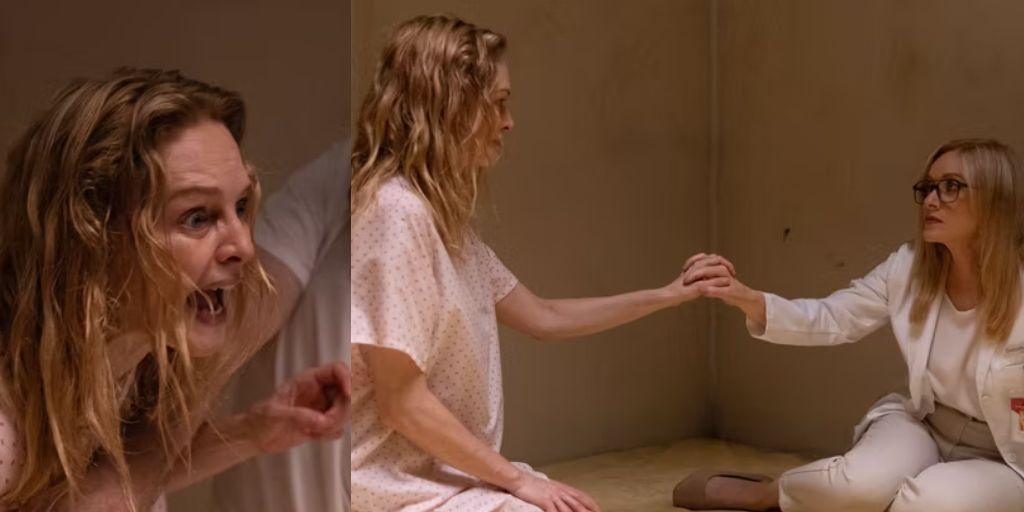
Still from the movie (Hulu)
As the story progresses, Elizabeth’s office and home become increasingly stifling, mirroring her deteriorating mental health.
The scenes in Asa’s basement serve as powerful examples of tight settings that heighten a sense of being trapped. This sensation amplifies the protagonist’s growing internal struggles and increases the tension of the film.
The camera techniques used in Suitable Flesh play an important role in improving the movie’s visual appeal. Through disorienting angles and unique compositions, the film mirrors the protagonist’s fractured mental state as the narrative unfolds.
The deliberate tilting of the camera, along with out-of-focus and shaky shots, creates an unsettling perspective, effectively showing Elizabeth’s growing mental and physical instability. These camera techniques enhance the scenes depicting the characters’ body transfer, clearly communicating cognitive, visual, and physical uneasiness to the audience.
In a time when mainstream adaptations often dilute Lovecraftian horror, Suitable Flesh is a film that truly captures the essence of Lovecraft’s original stories. Through its chilling atmosphere, disturbing body horror, and exceptional performances, the film effectively brings the indescribable terror of Lovecraft’s tales to the screen.
By focusing on the decay of self and humanity’s insignificance in the presence of ancient, incomprehensible forces, Suitable Flesh respects its source material and enhances it. This shows that Lovecraftian horror can thrive in visual media when approached with care, subtlety, and creativity.
Moreover, the film’s success lies in its ability to connect with contemporary audiences while remaining faithful to Lovecraft’s themes.
It taps into modern fears surrounding identity and the psychological effects of trauma. In a world where technology can alter perceptions of self and reality, Suitable Flesh resonates with viewers who grapple with similar issues. The film invites audiences to reflect on their own experiences of loss, identity, and the fear of losing control.
The sound design also contributes significantly to the film’s atmosphere. The haunting score and eerie sound effects amplify the sense of dread and isolation.
Sounds of whispers, unsettling noises, and dissonant melodies create an immersive experience that heightens the horror. Viewers are drawn into Elizabeth’s world, feeling her anxiety and fear as the narrative unfolds.
Suitable Flesh is not only a film for horror fans but also for anyone interested in psychological thrillers that goes into the human experience.
Its coverage of identity, madness, and the unknown offers profound themes that linger long after the credits roll. This depth sets it apart from many other horror films that rely solely on jump scares and graphic violence.
As the film concludes, viewers are left with lingering questions about the nature of self and the forces that shape our identities.
The film challenges the audience to confront their own fears and uncertainties. It serves as a reminder of the fragility of the human mind and the potential for unseen forces to disrupt our lives.
In the end, Suitable Flesh stands as a powerful testament to Lovecraft’s enduring influence on the horror genre. It successfully revives his themes and ideas, making them relevant for modern audiences.
The film highlights the importance of staying true to the essence of Lovecraftian horror while also allowing for creative interpretations.
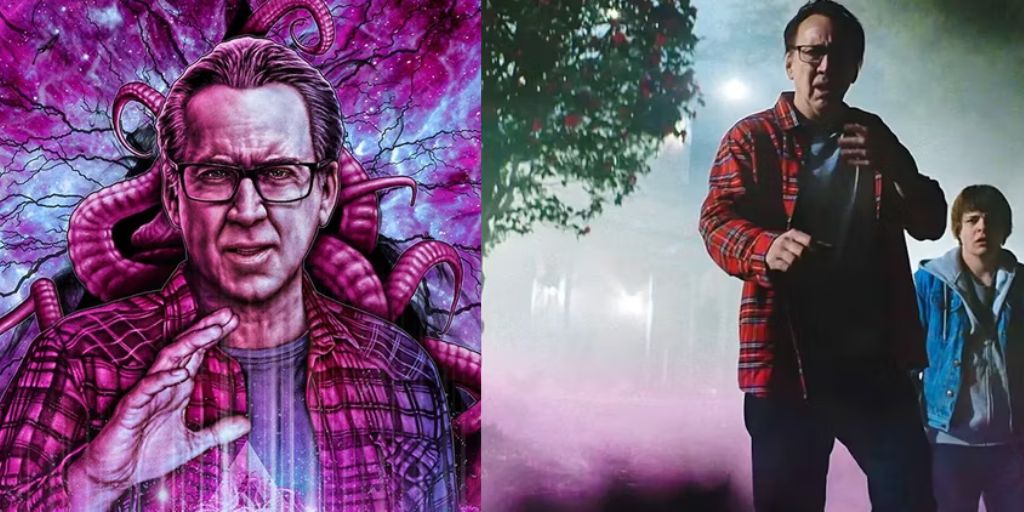
Scene from the movie (Hulu)
For genre fans, Suitable Flesh is a must-see. It reminds viewers of why Lovecraft’s work continues to inspire and influence horror storytelling. The film proves that Lovecraftian horror can thrive in visual media, especially when treated with care, subtlety, and creativity.
With its chilling atmosphere, outstanding performances, and profound themes, Suitable Flesh invites audiences to confront their deepest fears and consider the fragility of their identities.
In a world filled with distractions and superficial entertainment, Suitable Flesh offers a refreshing and thought-provoking experience.
It stands out as a film that respects its source material and provides a rich narrative that resonates with contemporary issues.
By blending horror with psychological depth, it ensures that viewers will not only be entertained but also challenged to reflect on their own experiences and fears.
Suitable Flesh is a noteworthy adaptation that successfully captures the essence of Lovecraft’s horror. With its strong performances, impressive visuals, and finding of profound themes, it revives the chilling atmosphere of Lovecraft’s work for modern audiences.
The film serves as a reminder of the power of horror storytelling to go into the complexities of the human experience and the universal fears that connect us all.
As Lovecraft’s influence continues to shape the horror genre, Suitable Flesh stands as a testament to the lasting legacy of his work.
It reaffirms that the true horror lies not in what we can see but in the unknown forces that lurk just beyond our understanding.
By finding the depths of identity and madness, the film invites us to confront our fears and embrace the unsettling truths that lie within us all.
This story of Lovecraftian horror is not just a reflection of the past but also a conversation with the present. In an age where our sense of self is increasingly challenged, Suitable Flesh serves as a powerful reminder of the importance of understanding our identities and the forces that shape them.
Through its chilling narrative and haunting visuals, the film leaves an indelible mark on the horror genre and on the hearts and minds of its viewers.
It beckons us to look deeper into the darkness and embrace the complexities of our existence, even in the face of unimaginable horror.
When it comes to survival shows, Discovery Channel’s The Last Alaskans deserves more attention. The show started in 2015 and follows the last people living in the remote Arctic National Wildlife Refuge in Alaska. These residents hunt, build, and try to survive in tough weather conditions.
While The Last Alaskans is not the first reality show in Alaska, its charm comes from being unscripted and slow-paced. Unlike other survival shows that often exaggerate drama, The Last Alaskans focuses on the daily challenges of living in one of the harshest places on Earth.
The cast of The Last Alaskans is made up of real families and individuals who have a strong bond with the land. Some cast members grew up in Alaska and follow traditions that have been passed down for generations. Others have moved to Alaska seeking peace and freedom.
While their lifestyle may seem extreme, the show is different from typical reality TV. There is no staged drama, no fights for the cameras, and no desire for fame. Because of this, The Last Alaskans highlights its people, creating a strong and engaging connection with viewers.
When I began watching The Last Alaskans, I thought the survival aspect would be the main focus. However, it is essential to understand that the show is not just about survival skills.
Finding food, water, and shelter is important, but The Last Alaskans emphasizes why the cast chooses to live this way. In the first episode of Season 1, Heimo Korth says, “This is an adventure.
This is joy. You’re bound to nature; nature directs your path.” This quote reveals a lot about his view of life. Heimo Korth and his wife, Edna, do not live in the Alaskan wilderness to show how tough they are.
Instead, they have embraced this remote lifestyle to connect with nature. After living this way for over 40 years, their lives are in harmony with the natural world.

Still from the show (Max)
For Heimo and Edna, there is no rush. They live a thoughtful life in the Arctic Circle as they prepare for the long winters. While some may think this sounds dull, I learned to appreciate what it takes to build a life in the wilderness and how fulfilling it can be.
The Last Alaskans is different from traditional survival shows because it does not focus on high-stakes or time limits.
This difference made the show more interesting for me because I could focus on understanding the cast. For instance, in Season 2, Bob Harte shares his struggle with cancer. His health becomes a significant part of the story as the show continues.
His emotional farewell in Season 3 is one of the most memorable moments, and it truly touches your heart. The fact that he chooses to spend his final days alone in the place he loves shows that the cast members of The Last Alaskans are genuine in their emotions.
The show also addresses sensitive topics, such as Harte’s illness and the tragic passing of Heimo and Edna Korth’s daughter, Coleen.
Instead of just adding drama, these emotional moments highlight what it means to be human against the beautiful yet remote Alaskan backdrop.
This authenticity adds depth to the show, allowing viewers to connect personally with the stories of the cast. By the end, there are no favorites; you find yourself rooting for everyone.
Despite these serious moments, the show also has happy times. As someone who has only seen the Alaskan wilderness on TV, I felt connected to Tyler and Ashley Selden’s journey. As first-generation homesteaders, their celebrations, like their first successful moose hunt, feel like personal victories.
The Last Alaskans is filled with small moments of joy from the daily routines of life in the wilderness, contrasting with the grand celebrations often seen on reality TV.
