We’re now halfway through “Survivor 47”, the latest season of the long-running CBS reality show. Created by Charlie Parsons, Survivor has become one of the most beloved and influential reality shows in television history. This season has already delivered more drama, surprises, and intense gameplay than most reality shows see in an entire year. And, with only five episodes aired, we’ve only just scratched the surface of what’s to come.
For those unfamiliar, Survivor is a game that challenges its contestants in many ways. Players must not only survive harsh conditions in the wild but also deal with complex social dynamics, make alliances, and engage in strategic moves to win the game. The ultimate goal? To outlast everyone else and earn the prestigious title of Sole Survivor—along with a cool $1 million prize.
This season started with a bang, and every episode has kept viewers glued to their screens. From shocking blindsides to unexpected alliances, Survivor 47 has given fans all the excitement they crave. The latest episode is no exception, leaving fans on the edge of their seats as they watch the game’s social dynamics shift dramatically.
Bonds that once seemed strong have crumbled, while unlikely friendships have formed. One contestant, Kishan Patel, was sent home after a dramatic and surprising blindside—becoming the fourth player to be eliminated from the game. The intensity of the game has left contestants exhausted and viewers enthralled, and things are only going to get more unpredictable from here.

Still from Survivor 47 (Credit: Paramount+)
Shock After Tribal Council
The episode begins with a scene that long-time Survivor fans are all too familiar with: players looking stunned and confused after a tribal council. In Survivor, tribal councils are where the drama really happens. It’s when contestants vote someone out of the game, and the outcome can change the entire dynamic of the group.
This time, the players from the red Lavo tribe are especially shaken. One of their own, Kishan Patel, was just eliminated, and the vote to send him home didn’t go the way some of them expected.
Teeny Chirichillo is one of the players most affected by the vote. Kishan was her closest ally in the game, and losing him leaves her feeling vulnerable and betrayed. Genevieve Mushaluk was the mastermind behind Kishan’s elimination, and she worked with two other players, Rome Cooney and Solomon “Sol” Yi, to make it happen.
Genevieve tries to reassure Teeny, telling her that the decision to vote out Kishan wasn’t personal—it was just a strategic move. Genevieve insists that Teeny isn’t at the bottom of the tribe’s social hierarchy, even though Rome secretly hopes Teeny feels that way. Rome wants to keep Teeny feeling insecure so that she stays loyal and doesn’t make any bold moves against him.
Despite Genevieve’s words, Teeny is still upset and confused. She’s not sure who she can trust anymore, and her position in the tribe feels shaky at best. As they prepare for the next challenge, Teeny’s mind is racing. Can she recover from this betrayal, or will she become the next target?

Still from Survivor 47 (Credit: Paramount+)
The stakes are high. The contestants are hungry, tired, and desperate for both food and a chance to secure their position in the game. They know that forming the right alliances now could make all the difference when the full merge happens. The challenge is intense, and both teams give it everything they’ve got.
In the end, the Yellow team comes out on top. This group includes Teeny, Sue Smey, Kyle Ostwald, Sam Phalen, Rachel LaMont, Tiyana Hallums, and Caroline Vidmar. While the winning team heads off to the sanctuary to enjoy their rewards, the losing team returns to their respective beaches, disappointed but still focused on the game.
Strategizing and Gossip at the Sanctuary
At the Survivor Sanctuary, the winning team enjoys their reward: hot dogs, a fun game of Survivor Cornhole, and most importantly, a chance to strategize without the distractions of camp life. The group wastes no time talking strategy, and gossip soon begins to flow. Each tribe has its own dynamics and conflicts, and the players use this opportunity to share information—and misinformation—about what’s happening back at camp.
Teeny, still feeling insecure after Kishan’s elimination, opens up about her fears of being at the bottom of the Lavo tribe. She’s worried that she could be the next to go, and she’s looking for new alliances that could help her stay in the game. Meanwhile, Sam Phalen has to defend himself against rumors that he and his close ally, Sierra Wright, are running their tribe. Sam insists that he’s not the puppet master some people think he is, but the rumors continue to swirl.
Meanwhile, Tiyana Hallums and Kyle Ostwald take advantage of the situation to stir up trouble. They tell the others that they don’t trust Gabe Ortis from the Tuku tribe, suggesting that he’s playing a sneaky and dangerous game. This news angers Sue Smey, who is Gabe’s closest ally in the game. The tension is palpable, and although the players are supposed to be enjoying a relaxing afternoon at the sanctuary, the atmosphere is anything but calm.
Chaos Back at Lavo
While the Yellow team enjoys their reward, the Lavo tribe is dealing with its own drama. Rome Cooney, who was feeling confident in his position earlier in the game, is starting to panic. He realizes that his spot in the tribe might not be as secure as he thought, and he scrambles to regain control.
Rome’s strategy is to play both sides. He goes to his closest ally, Genevieve Mushaluk, and tells her that they need to stick together. At the same time, he approaches Sol Yi, his former rival, and tries to convince him that they should work together going forward. Rome’s goal is to pit Genevieve and Sol against each other, hoping that he can stay safe by keeping both of them on his side.

Still from Survivor 47 (Credit: Paramount+)
However, Rome’s plan quickly falls apart. Genevieve and Sol compare notes, and they soon realize that Rome has been lying to both of them. They agree that Rome can’t be trusted, and they begin to plot against him. When Teeny returns from the sanctuary (humorously complaining that everyone only got one hot dog each), she joins Genevieve and Sol in their plan to take down Rome. The three of them decide that when the Lavo tribe goes to tribal council again, they will vote Rome out.
Immunity Challenge Brings More Surprises
The next challenge is the immunity challenge, which is even more critical than the reward challenge. The tribe that wins immunity gets to avoid tribal council, where one player will be voted out. For the losing tribe, tribal council means danger, as someone’s game will come to an end.
In a fun twist, the Gata tribe brings along the three chickens they won in a previous challenge. The chickens have become a valuable resource for the tribe, providing much-needed protein in the form of eggs. Before the challenge begins, the Gata tribe successfully negotiates with Jeff Probst to trade their chickens for 18 eggs, ensuring that they have food for the coming days.
The immunity challenge itself is a high-stakes race through a series of obstacles. The contestants must cut down bean bags and coconuts, dismantle a puzzle, and then put it back together—all while racing against the clock. It’s a tough challenge, and every second counts.
Unfortunately for the Gata tribe, their performance is hindered by Andy Rueda, who struggles to cut through a rope using the dull side of a knife. His mistake causes the tribe to fall behind, and even though they manage to catch up later in the challenge, their slow start costs them the win.
The Lavo tribe emerges victorious, securing immunity and ensuring that they won’t have to vote anyone out at the next tribal council. This means that the Yellow tribe will have to face the difficult decision of sending one of their own players home.
Trouble Brewing at Gata
Back at the Gata camp, tensions are rising. Sam Phalen and Sierra Wright are the tribe’s two closest allies, but even they are starting to have disagreements about how to move forward in the game. Earlier, Sam and Sierra had agreed to vote out Anika Dhar, one of their tribemates who had lost her vote in a previous challenge. With Anika unable to vote, she seemed like an easy target.
However, Sierra is starting to have second thoughts. She’s noticed that Anika and Rachel LaMont are incredibly loyal to her, and she’s beginning to wonder if it might be smarter to keep them around. On the other hand, Andy Rueda has been making mistakes in challenges, and Sierra worries that he could cost the tribe more victories in the future.
Sierra tries to convince Sam that keeping Anika might be a better move, but Sam is determined to stick to their original plan. He sees Anika as a potential threat in the long run and doesn’t want to risk letting her stay in the game.
As Sam and Sierra argue about what to do, Anika and Andy remain blissfully unaware of the drama unfolding around them. Anika feels confident in her position within the tribe, and Andy, in a private confessional, boasts that he has been strategically “burying” Anika all along. He even jokes that he plans to present her with a metaphorical tombstone at the next tribal council, fully expecting her to be eliminated.

Still from Survivor 47 (Credit: Paramount+)
A Shocking Tribal Council
When it’s time for tribal council, the tension is higher than ever. As Jeff Probst asks the players questions about loyalty and strategy, it becomes clear that not everyone is on the same page. Sam Phalen and Sierra Wright sit uncomfortably, knowing that they’re about to betray one of their closest allies.
Despite Sierra’s reservations, Sam manages to convince her to stick with the original plan. In a 3-1 vote, Anika Dhar is blindsided and becomes the fifth contestant to be eliminated from Survivor 47.
The vote leaves Anika shocked and hurt. She had no idea that she was in danger, and the betrayal from her allies stings. As she extinguishes her torch, a symbol of her elimination from the game, she glares at the remaining players, especially Sam, who takes full responsibility for orchestrating her ouster.
Andy Rueda, who was at risk of being voted out himself, steps in to claim that the vote was a group decision, but Anika doesn’t buy it. She leaves the game with a heavy heart, upset that she trusted people who turned on her.
The Merge is Coming
As the episode ends, the players know that the full merge is just around the corner. The merge is always a pivotal moment in Survivor, and this season is no different. The alliances that formed during the early part of the game will be tested, and new bonds will be created. The merge represents a fresh start for some players, while for others, it’s a moment of reckoning.
The chaos of the season so far suggests that anything could happen once the merge takes place. Anika’s blindside, especially over a player like Andy, who many felt should have been eliminated earlier, is just one example of how unpredictable this season has been. With the merge on the horizon, viewers can expect even more surprises, strategic moves, and emotional moments.
Survivor 47 continues to deliver the drama that fans love, and with the merge looming, the game is only going to get more intense from here. As the players prepare for what comes next, one thing is certain: no one is safe, and anything can happen in the wild world of Survivor. Survivor 47 airs on CBS and is available for streaming on Paramount+ in the U.S.
It continues to unfold, the intensity only grows with each episode. With blindsides, shifting alliances, and strategic gameplay at every turn, the stakes are higher than ever. As the merge approaches, fans can expect even more surprises and fierce competition in the quest for Sole Survivor.
Horror movies have always been more than just entertainment. Often, filmmakers use the genre to comment on serious social issues. Over the years, directors have hidden messages about inequality, injustice, and oppression within the scares and thrills of horror movies.
This unique method of storytelling allows creators to discuss uncomfortable topics while keeping audiences engaged through suspense. One of the best examples of this is Galder Gaztelu-Urrutia’s The Platform.
Released on Netflix, The Platform quickly grabbed the attention of viewers with its unusual story and haunting visuals. The movie is set inside a large vertical tower where prisoners live, stacked on top of each other, with a platform of food slowly moving from the top to the bottom.
This setup might seem strange at first, but it’s a clever way to represent how society works. Those at the top of the tower have more than enough food, while those at the bottom often starve. The film uses this as a metaphor for how the wealthy and powerful often take more than they need, leaving those with less to suffer.
The movie doesn’t just rely on this powerful idea; it also features several plot twists, intense performances, and a dark message about the nature of power and greed. It shocked viewers and left many thinking about how those in charge of society often ignore the suffering of the people beneath them.
With such a strong response, it’s no surprise that fans were excited when Netflix announced a sequel, The Platform 2. However, as successful as the first movie was, the sequel faces the challenge of living up to its predecessor’s high expectations.
The Platform 2: A Return to the Horrors of the Tower
The Platform 2 brings audiences back to the same terrifying tower, filled with many of the same challenges and horrors that made the first film so gripping. The movie does a good job of recreating the tension, fear, and unsettling moments of the original.
But at times, it feels like the sequel is trying too hard to repeat the success of the first film, without adding much new to the story. In some ways, this approach hurts both the new movie and the first one.
The story of The Platform 2 centers on a new main character, a woman named Perempuán (played by Milena Smit). Like the protagonist of the first movie, Goreng, she finds herself trapped in the tower and must fight to survive.
The tower still operates in the same way, with prisoners living on different levels and only having access to food as the platform descends.
The higher you are in the tower, the better chance you have of eating. As the platform moves down, there’s less and less food, leaving those at the lower levels to starve. This setup creates a brutal environment where people are forced to either fight for survival or accept their fate.
Just like Goreng, Perempuán faces impossible choices as she shows her way through this nightmarish tower. Throughout the film, we see how people turn against each other in desperate attempts to survive, reflecting how societies often pit the powerless against one another.
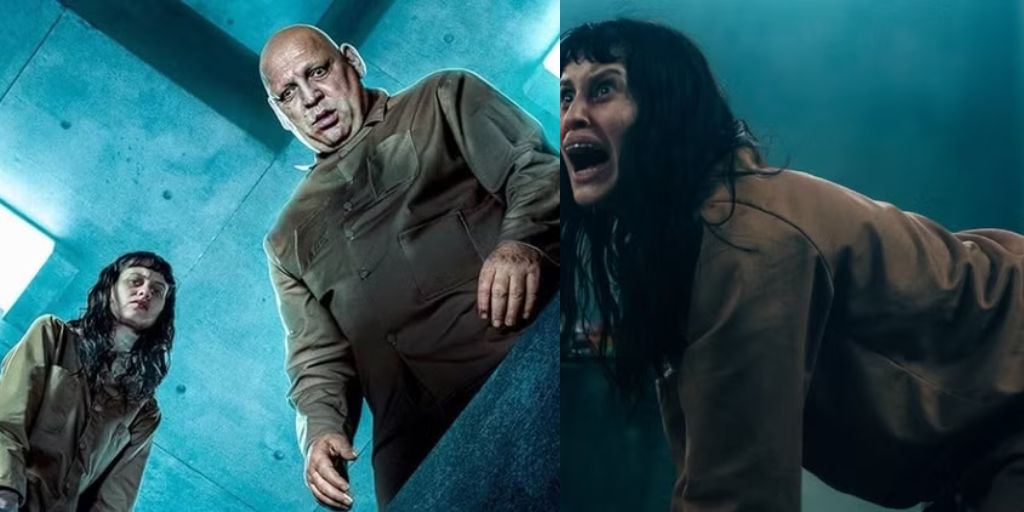
Still from The Platform 2 (Credit: Netflix)
Those at the top don’t need to worry about anything, but everyone else must either take what they can or starve. The film’s horror isn’t just in the violence or gore, but in how it forces viewers to confront uncomfortable truths about how power works in the real world.
The Problem with Repeating the Same Story
While The Platform 2 has many strengths, one of its biggest weaknesses is that it tries too hard to copy the original film’s ending. In the first movie, Goreng’s journey through the tower ends when he finds a young girl who had been sent to prison, much like himself.
In a final act of sacrifice, Goreng gives up his own life to save hers, sending her to the top of the tower on the platform.
He hopes that those in charge will see the girl and understand the suffering they’ve caused, possibly leading to change. This bittersweet ending is both tragic and hopeful, leaving viewers with a sense of how one person’s actions can inspire others.
However, The Platform 2 tries to repeat this emotional impact with Perempuán’s story, and it doesn’t quite succeed. Just like Goreng, Perempuán finds a child in the tower and sacrifices herself to save him. At first, this seems like a touching moment that reflects the same themes of selflessness and hope.
But then the movie reveals that this has happened many times before. We see a montage of other adults who have found children in the tower and sacrificed themselves in the same way.
This twist strips away much of the emotional weight of both Perempuán and Goreng’s sacrifices. Instead of being unique acts of bravery, they are shown as part of a cycle that keeps repeating without any real change.
This revelation undermines much of what made the first movie’s ending so powerful. Goreng’s sacrifice was supposed to be a symbol of hope and rebellion against the oppressive system. But by showing that many others have done the same thing before him, the sequel makes it clear that these actions have had no real effect.
The people in charge of the tower continue to ignore the suffering of those below, and the cycle of oppression continues without end. This leaves both movies feeling more bleak and hopeless than they otherwise would have.
The Ending of The Platform 2 Weakens Its Message
Despite the disappointment of its final moments, The Platform 2 still manages to shown important ideas about society and power. The film continues to shine a light on how the ruling class, represented by the unseen overseers of the tower, keeps the lower classes divided and weak.
By forcing prisoners to fight over food, the people in charge make sure that no one ever questions why they’re in this horrible situation in the first place. This reflects real-life tactics used by those in power to keep the oppressed from rising up.
The idea that the people with the least are made to fight each other while the wealthy remain comfortable is a clear commentary on the unfair systems that exist in many parts of the world today.
However, the final scene of The Platform 2 creates a problem for this message. By showing that Perempuán’s sacrifice, like Goreng’s before her, had no lasting impact, the film suggests that resistance against an oppressive system is pointless.
The audience follows both characters as they endure horrific experiences and make the ultimate sacrifice, only to find out that their efforts were meaningless in the grand scheme of things.
While this might be a realistic portrayal of how hard it is to bring about change, it also leaves viewers with a sense of hopelessness. It’s one thing to show that change is difficult, but another to suggest that it’s impossible.
The decision to repeat the same ending from the first movie, but with a darker twist, weakens the full impact of both films.
It makes it hard to care about the characters’ sacrifices when the movie itself tells us that those sacrifices won’t make a difference. Instead of building on the emotional depth of the original, The Platform 2 undermines it, leaving both films with a sense of futility that wasn’t present in the first movie.
What Could Have Made The Platform 2 Stronger?
There are many ways The Platform 2 could have improved its story and made the ending more meaningful. One option would have been to focus on a different kind of resolution. Instead of repeating the same plot twist from the first movie, the sequel could have shown new ways for the characters to challenge the system of the tower.
Perhaps Perempuán’s sacrifice could have led to a small but significant change, showing that even in the face of overwhelming power, small acts of resistance can still matter.
Another possibility would have been to goes deeper into the world of the tower itself. In both movies, we learn very little about who controls the tower or why it exists. The sequel could have expanded on this mystery, giving viewers more insight into the larger forces at play.
By revealing more about the people behind the tower, the film could have offered new perspectives on power, control, and the possibility of rebellion. Instead, The Platform 2 sticks closely to the formula of the first movie, which makes it feel repetitive rather than fresh.
Finally, the film could have made better use of its new protagonist. Perempuán is a compelling character with her own unique story, but the movie often seems more interested in mirroring Goreng’s journey than showing her as an individual.
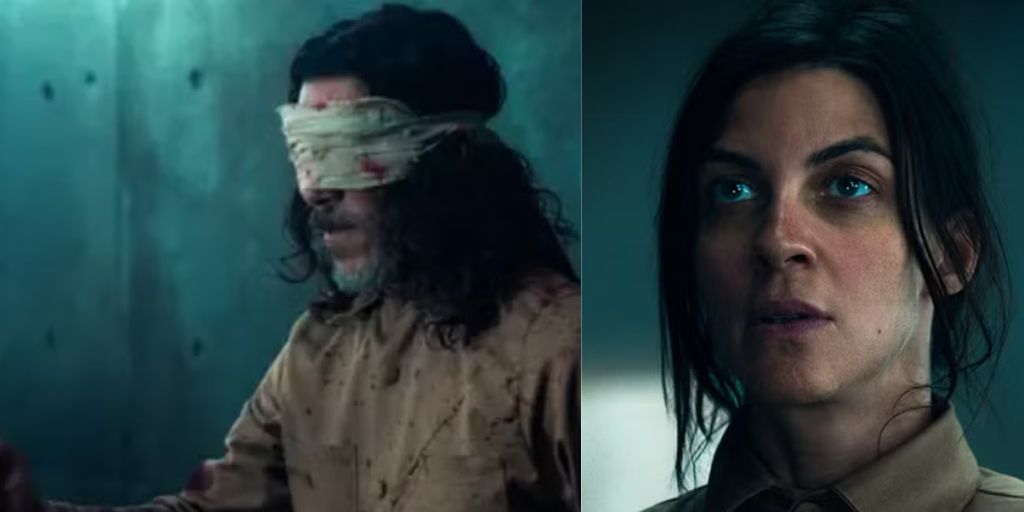
Still from The Platform 2 (Credit: Netflix)
By giving her a more distinct arc and a different kind of ending, the film could have avoided the feeling that it was simply retelling the same story with different characters.
The Platform 2: Still Worth Watching?
Even with its flaws, The Platform 2 is still a strong film that offers plenty of intense moments and thought-provoking ideas. Fans of the original movie will find much to appreciate in the sequel, from its eerie setting to its chilling portrayal of human nature under extreme pressure.
The film continues to offer a sharp critique of how those in power use fear and scarcity to maintain control, forcing people to turn on each other rather than question the system itself.
For viewers who enjoy horror with a deeper message, The Platform 2 is worth watching, even if it doesn’t quite live up to the high bar set by the first movie. It’s a film that raises important questions about inequality, sacrifice, and the struggle for change — even if it doesn’t always provide satisfying answers.
