The James Wan-produced Peacock series Teacup concluded on Halloween, leaving viewers with plenty to think about.
This science fiction horror show, created by Ian McCulloch and based on Robert McCammon’s novel Stinger, kept the audience on the edge of their seats throughout its run.
Over the course of the season, twists and shocking moments were introduced in nearly every episode, making it a thrilling experience for fans of both genres.
The story revolves around the Chenoweth and Shanley families, who find themselves trapped on a farm in rural Georgia after a dangerous alien, known as Assassin, arrives on Earth.
Assassin is searching for another alien named Harbinger, who has taken over the body of Arlo Chenoweth, the young son of the Chenoweth family.
As the series progresses, the characters are forced to confront the horror of being stuck with an alien who can inhabit other people’s bodies.
The show masterfully builds tension and keeps viewers guessing about who the alien is inhabiting and who will ultimately survive.
Throughout the series, McCulloch, along with his team of four horror directors, creates an atmosphere of fear and mystery, making the show an exciting ride from start to finish.
As the plot unfolds, viewers get a deep view into the lives of the families and the choices they must make to survive.
While the aliens and the sci-fi elements of the show are at the forefront, Teacup also touches on themes of family, loyalty, and sacrifice. This made the finale even more impactful, as the stakes became higher and higher for the characters.
The final two episodes of Teacup showcased some of the best performances of the series, particularly from Yvonne Strahovski and Scott Speedman, who delivered some of the most moving moments in the entire show.
The acting was superb, bringing to life the emotional toll the characters endured. With the first season now wrapped up, there are lingering questions about the series and what its surprising ending might mean for the future.
What Happens in the Final Episode of Teacup?
In the eighth and final episode of Teacup, the situation is looking increasingly bleak for the characters. Valeria Shanley (Diany Rodriguez), one of the central characters, has been killed by her own son, Nicholas (Luciano Leroux), who is under the influence of Assassin.
The series had previously introduced the unsettling concept that Assassin can transfer from one person to another through their eyes and mouth.
This horrifying ability is used to great effect in Episode 7, when Assassin moves from Valeria’s body to Nicholas.
In a shocking moment, Nicholas pushes his own mother past the force field that surrounds the farm, triggering a brutal chemical reaction that kills her in one of the series’ most disturbing effects.
As Episode 8 continues, the threat of Assassin grows even more intense. The alien transfers from Nicholas to Meryl Chenoweth (Émilie Bierre), which puts her parents, Maggie (Yvonne Strahovski) and James (Scott Speedman), in an unimaginable situation.
They know that the only way to stop Assassin is to drown the person it is inhabiting. In a heartbreaking and tense scene, Maggie and James are forced to drown their own daughter, Meryl, in an effort to stop the alien.
Strahovski’s performance here is remarkable as she struggles to revive her daughter afterward, her desperation clear in her actions.
However, just as it seems like Meryl has been saved, tragedy strikes again. During the drowning, James’ gas mask slips off, and Assassin takes over his body. In a moment of terrifying realization, James warns his family to run before the alien fully takes control of him.
The situation only worsens when Maggie, in a desperate attempt to protect her family, traps James in the freezer of the barn, suffocating both him and Assassin.
This grim decision marks a significant turning point in the story, demonstrating the extent of the sacrifices the characters must make to survive.
The Ending of Teacup and What It Means
With Assassin now dead, the immediate threat seems to be over. The surviving members of the Chenoweth family are Maggie, Meryl, Arlo, and James’ mother, Ellen (Kathy Baker).
Also still alive are Ruben Shanley (Chaske Spencer), Nicholas Shanley, their neighbor Donald (Boris McGiver), and the alien expert McNab (Rob Morgan).
The group decides to drink a small amount of liquid they obtained from a branch of the alien tree, which will allow them to cross back over the force field and potentially find help.
For a brief moment, it appears as if the survivors will be able to escape the horrors that have been following them for so long.
But just as the group begins to head towards safety, McCulloch introduces one final twist that leaves viewers questioning everything.
While making their way to a nearby fire station, the survivors encounter two people named Carol and Milo, who claim to know McNab from an online chat room where they discussed his alien theories.
The situation quickly turns violent when a car speeds around the corner and runs into Carol and Milo, killing them instantly.
The two people who emerge from the car, Hayden and Izzy, explain that Carol and Milo were not who they claimed to be, hinting at a sinister connection to the now-dead Assassin.
Hayden and Izzy then give the survivors a choice: they can either continue their journey independently or trust these two newcomers.
The group is left with an important decision, and in the final moments of the show, Maggie turns to the others and says, “We’re not going anywhere until you tell us what the fuck is going on.” This final line is a powerful moment, leaving the audience wondering what will happen next.
Is There Hope for a Second Season?
The ending of Teacup sets up the possibility for a second season in a way that leaves the audience wanting more. While Assassin is dead, the threat is far from over.
Harbinger, the alien that Assassin was hunting, is still alive, and the appearance of Hayden and Izzy hints at new dangers for the survivors.
The final moments suggest that the mystery surrounding the aliens and their connection to the people on Earth is far from resolved.
The presence of new characters and their cryptic motivations opens up many new questions that could be shown in a potential second season.
The series ends on a cliffhanger, with the survivors still uncertain about their future and what the mysterious newcomers want.
The group’s decision to trust or not trust Hayden and Izzy will likely play a significant role in what happens next.
McCulloch has left the door wide open for further shown of the story, and fans are eager to see how the narrative will unfold if the series is renewed.
The possibility of the group leaving the farm behind and venturing into a wider, more dangerous world adds to the excitement and anticipation for a second season.
What’s Next for the Characters of Teacup?
If Teacup returns for a second season, there are many directions the story could go. The show’s focus on the relationships between the characters, especially the families of Chenoweth and Shanley, could deepen as they faces the consequences of their actions.
The emotional toll of the events in the first season is significant, and the survivors will likely need to deal with the trauma they’ve experienced.
The ongoing mystery of Harbinger and the alien’s true intentions is another key element that could be shown.
The survival of this alien, along with the discovery of new aliens like Hayden and Izzy, hints that the story is far from over.
The fate of the survivors will be central to the show’s future, and viewers will be eager to see if they can find a way to stop the alien threat once and for all.
In the end, Teacup is a thrilling and unpredictable series that blends science fiction with horror. It excels in creating complex characters who face unimaginable choices, adding depth to the already tense and mysterious plot.
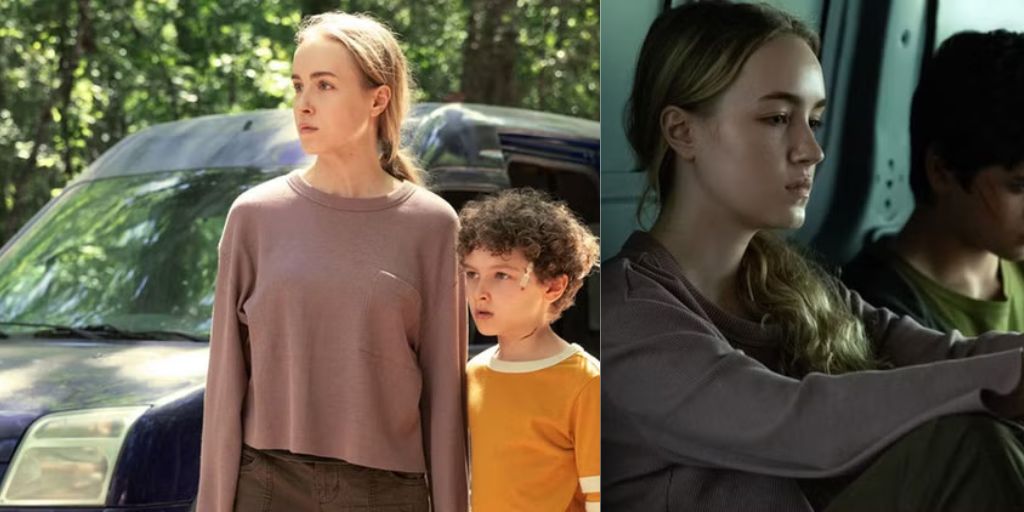
Still from Teacup (Credit: Peacock)
As the season closes, the survival of the characters feels uncertain, and the lingering questions about the aliens leave plenty of room for future shown. The intense, suspenseful finale is the perfect setup for what could be an even darker and more thrilling second season.
Fans of the show will be eagerly awaiting the continuation of this attractive tale, hoping for answers to the many mysteries left unresolved.
For now, all episodes of Teacup are available to stream on Peacock, and viewers can continue to enjoy the twists and turns of the story.
With a second season potentially on the horizon, the excitement surrounding the series is far from over.
Pedro Páramo is a film that stands out in how it shows the boundaries between life and the afterlife. While many films use the idea of life after death in their storytelling, few do so in a way that feels as innovative and intriguing as this one.
The film uses its supernatural elements not only to tell a attractive story but also to comment on the consequences of collective wrongdoing.
It’s an ambitious narrative that tackles multiple themes while managing to keep the viewer engaged without losing the plot.
The movie is based on the 1955 novel by Mexican author Juan Rulfo, which is considered one of the most important works of Latin American literature. It tells the story of Juan Preciado, a man who travels to a desolate town in search of his father, Pedro Páramo.
What begins as a simple search for his missing father turns into a deep view into the supernatural. As Juan confronts the truths about his father, he also begins to understand his own fate, moving between the past, present, and a limbo-like afterlife.
The film’s ability to blend timelines and its handling of the afterlife, or limbo, create a unique experience that attracts viewers.
Juggling Multiple Timelines Without Confusion
One of the standout features of Pedro Páramo is how it handles multiple timelines. The film takes on the challenge of presenting not just one story but several, all unfolding in different time periods.
At first glance, it might seem difficult for a film to manage this complexity without confusing the viewer. However, director Rodrigo Prieto, making his feature film directorial debut, does so with remarkable success.
Prieto uses a narrative technique that places complete trust in the audience’s ability to understand the shifting time periods.
Instead of using obvious tools, such as color grading or heavy visual cues, to mark the different timelines, the film relies on subtle changes.
Makeup, for example, is used to show characters at different ages. The use of younger and older versions of characters allows the audience to easily recognize the passing of time without being hit over the head with it.
The film’s ability to switch between different timelines without losing clarity is impressive.
There is a fine balance here, as the audience must be able to understand where and when each scene takes place. The subtlety of these transitions ensures the viewer is never confused.
It’s easy to follow the story even as it weaves through past, present, and an afterlife world. This approach is a refreshing change from other films that often rely on color schemes or specific visual effects to distinguish different time periods.
Prieto also manages to introduce the supernatural setting of the film in a gradual way. Instead of overwhelming the audience with all the information about the afterlife and its rules at once, the film takes its time.
New elements are introduced little by little, allowing the audience to get accustomed to the world of limbo and the eerie atmosphere that comes with it. The careful pacing of this transition helps keep the story fresh and engaging.
A Genre-Bending Film
As the film moves forward, it becomes clear that Pedro Páramo is not simply a supernatural story. It blends different genres, creating a unique viewing experience.
The narrative feels like a mix of Western, drama, and horror. The film also shifts in tone, from a mystery about a man searching for his father to a more philosophical meditation on life, death, and the consequences of actions.
The transition into the afterlife, which is central to the story, is handled in such a way that it feels like a genre-bending adventure. The supernatural elements don’t overpower the film but rather add to its complexity.
The movie’s atmosphere constantly shifts between tension, mystery, and surreal horror, all while remaining deeply philosophical.
This mix of genres adds depth to the film and makes it stand out from typical supernatural films that follow a more traditional narrative structure.
The cinematography plays a huge role in this shift. The visual changes in the movie reflect the changing tone, making it clear that the afterlife is not just another setting but an essential part of the story. The eerie, dreamlike quality of the afterlife world is enhanced by Prieto’s skillful cinematography.
As a renowned cinematographer for Martin Scorsese, Prieto’s expertise in creating atmosphere through visuals is on full display here.
He and his co-cinematographer, Nico Aguilar, work together to create an unsettling, haunting look that perfectly complements the film’s themes.
Cinematography That Speaks Volumes
The cinematography of Pedro Páramo is another reason why this film feels unique. The visuals are not just there to look good but to tell the story in ways that words cannot.
The cinematography highlights the dark, ominous nature of the town and the consequences of its past. The desolate, ghostly town is not just a backdrop but a character in itself. It is a reflection of the collective sins of the people who lived there, and the visuals make this clear.
In the opening scenes, the audience is placed in the perspective of Juan Preciado. This point of view helps the audience feel as confused and disoriented as the character does.
Juan doesn’t know where he is or what is happening, and the viewer is in the same position. This technique allows the audience to experience the strange and unsettling world of Pedro Páramo through Juan’s eyes, building empathy and understanding.
As the film progresses, the town and its people begin to reveal their darker nature. The setting becomes more unsettling, and the supernatural elements take on a stronger presence.
The eerie atmosphere is created not just through the story but through the visuals, which highlight the decaying, otherworldly nature of the town.
The afterlife is depicted as a bleak, sorrowful place, where the sins of the past haunt those who are stuck there.
The cinematography works in perfect harmony with the narrative, helping to establish the themes of fate, consequence, and the lasting effects of evil actions.
A Powerful Story, With A Flawed Execution
While the film does many things well, it’s not without its flaws. One of the biggest issues with Pedro Páramo is its pacing. At times, the film feels slow, especially when it moves from one part of the story to another.
For a movie that covers so much ground, it can sometimes feel surprisingly stale, especially in scenes where the audience is trying to keep track of the many characters and events.
The film introduces several characters throughout the story, and while each one has a purpose, it can sometimes be difficult to keep track of who they are and what role they play.
The story shifts between characters and timelines, and while the transitions are handled well, the sheer number of characters and plot points can occasionally be overwhelming.
This can make it hard for the audience to stay fully engaged, as it can feel like the story is moving too slowly or jumping between too many different storylines.
Another flaw of the film is the lack of focus on the female characters. While the male characters, especially Pedro Páramo, are given depth and complexity, the women of the story are often sidelined. The film does little to show their inner lives or motivations.
In many ways, the female characters are defined by their relationships to the men in the story, and their voices are not fully heard.
This is a missed opportunity, as these characters could have added a richer layer to the story. The film often treats women as mere plot devices, and while this is reflective of the social dynamics in the story’s setting, it’s still a flaw in the storytelling.
Themes of Power and Corruption
One of the central themes of Pedro Páramo is the abuse of power, especially in religious institutions. Pedro Páramo, the central character, is a man who has a ruthless, unyielding approach to life.
He’s the product of a town that has allowed its own moral decay to define its actions. Páramo’s role as a powerful figure in the town reflects a broader theme about the corrupting nature of power.
The film also critiques the way religious leaders can manipulate their power. Padre Rentería, the priest in the town, is shown as a man who makes decisions based on his own interests while claiming to act on behalf of God.
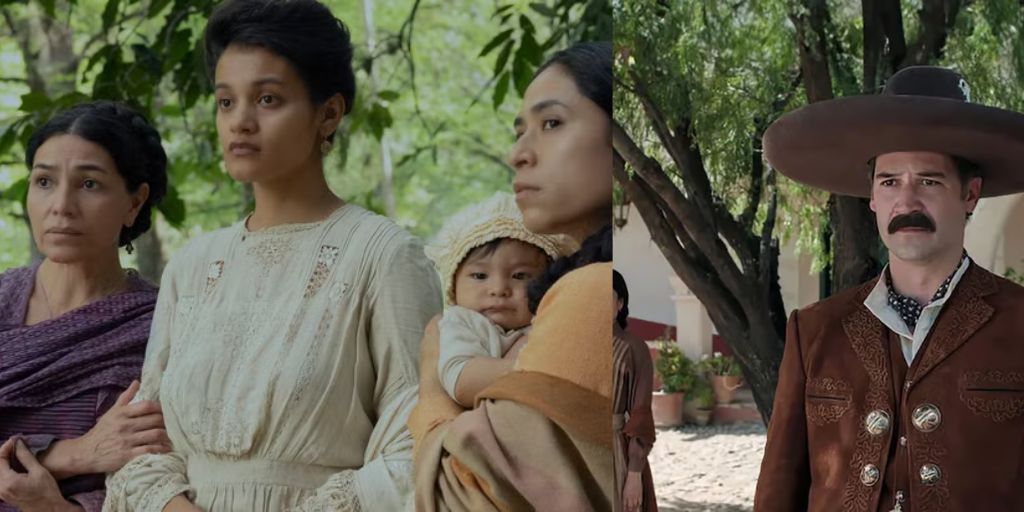
Still from Pedro Páramo (Credit: Netflix)
This character highlights the dangers of religious figures who use their influence to justify their own actions, leading to some of the most terrible consequences in the story. This theme is not unique to Pedro Páramo, but it is a key element in the narrative.
Pedro Páramo is a film that is both visually stunning and thematically rich. It tells a complex story that moves between different timelines and the afterlife while showing deep themes of power, fate, and the consequences of wrongdoing.
While the film has its flaws, such as pacing issues and the underdevelopment of its female characters, it is still a strong and engaging film.
Director Rodrigo Prieto proves that he is not only a master cinematographer but also a skilled storyteller. His work here makes us eager to see what he will do next.
Pedro Páramo is a haunting and thought-provoking film that leaves a lasting impact on its viewers.
