The Terrifier franchise has carved its place in horror cinema, featuring the infamous Art the Clown, played brilliantly by David Howard Thornton. Art is a character unlike any other. He walks around with a giant sack filled with accessories, almost like a sinister version of Santa Claus.
His bag contains a range of tools, from harmless items like a bicycle horn or a child’s doll to terrifying instruments capable of inflicting horrific pain. This collection represents endless possibilities, blending lightheartedness and gruesome violence. The same can be said about the films in this series, especially the latest Christmas-themed installment, Terrifier 3.
Throughout this cult horror franchise, which has gained immense popularity in recent years, the storyline follows a consistent pattern. Art the Clown engages in despicable and disgusting acts of murder, showcasing his unique methods.
This brutal violence is often juxtaposed against a mundane story about ordinary people who must eventually confront Art’s terrifying presence. While the budget for Terrifier 3 has increased significantly compared to the first film, the kills have become more gruesome. Still, this latest installment remains a mixed bag, much like its predecessors.
What Is ‘Terrifier 3’ About?
For those who are new to the Terrifier series, this third film begins by immersing the audience in its distinctive brand of violence and gore. It opens with Art the Clown, dressed as Santa, entering the home of an unsuspecting family during the holiday season.
As he steps inside, the viewer quickly realizes his intentions are far from friendly. He decides to murder everyone in the house. This family exists solely to serve as fodder for Art’s chaotic mayhem.
What sets Terrifier apart from other horror franchises is its unapologetic celebration of savagery. We don’t just see Art kill the parents and their child; we witness him hack away until all that remains is a pool of red goo where humans used to be.
This bloodshed is soundtracked by the heart-wrenching screams of the victims’ loved ones. It is intense and shocking, and even those who are desensitized by the first two films in this series will find plenty to make them flinch and squirm in this latest massacre.
Terrifier 3 is set five years after the events of Terrifier 2. In the previous film, Sienna Shaw (played by Lauren LaVera) and her brother Jonathan (Elliot Fullam) survived Art’s attack. They managed to decapitate him and escape to safety. However, the act of decapitation does not mean much to Art.
At the end of Terrifier 2, viewers see his alive yet severed head being birthed by his partner-in-crime, Victoria “Vicky” Heyes (Samantha Scaffidi), in a mental institution. This shocking revelation sets the tone for the chaos that follows.
Over the last five years, Sienna has been in and out of psychiatric hospitals, grappling with her understandable fears and suffering from visions of those she feels responsible for leading to their deaths at Art’s hands. Meanwhile, Jonathan is in college, trying his best to move beyond the traumatic events of the past. This has meant staying mostly away from his sister, trying to heal on his own.
Art and Vicky, however, have been biding their time. They are literally sitting in one place, covered in dust and cobwebs, waiting for their maniacal return. While there does not seem to be a clear method to their madness, director Damien Leone expands the lore within this series in a somewhat blunt manner.
Through heavy-handed Christian imagery, it becomes evident that while Art and Vicky represent extreme evil, Sienna symbolizes the good that can counterbalance them. She may be the only one capable of stopping this twisted duo.
‘Terrifier 3’s Dual Story Is Uneven and Doesn’t Work as It Should
Terrifier 3 wants viewers to revel in the vicious kills that Art engages in, presenting new unsettling methods of destruction. Like the earlier films, Art and Leone are at their peak in showcasing bloodshed. They excel in breaking bones, peeling back skin, and allowing violence to flow.
There is no question that Leone’s skill in escalating these murders has significantly improved since the first film, and the practical effects are undeniably impressive with each new death.
However, it is the manner in which these kills are executed that makes Terrifier 3 truly horrifying. Art does not simply kill his victims; he feels the need to utterly obliterate their bodies, resulting in murders that stretch on for several agonizing minutes. Each possible part of a human is broken to cause immense pain and suffering.
What is even more disturbing is that Leone often makes family members of the deceased watch as Art wreaks havoc on their loved ones. In the opening sequence, we hear a child’s murder, followed by a mother discovering her dismembered child in his bed, crying and screaming in despair.
The Terrifier series goes so far that as viewers witness yet another person being hacked to bits, one begins to wonder if there is a larger commentary in Leone’s madness.
These films shine brightest when they focus on Thornton’s performance, particularly when he plays around with his future victims, miming jokes, and, of course, embodying the role of a clown. Art the Clown is a fascinating character who deserves more than what this franchise provides.
Art often reminds us of horror icons from the ‘80s and ‘90s who became larger than their respective franchises, like Freddy, Jason, or Pinhead. With his extreme murders and grotesque antics, Art shifts from a comical presence to a terrifying figure.
It is as if Leone is forcing viewers to question why they are drawn to movie serial killers and their fondness for violence. Alternatively, and more likely, Terrifier 3 and the franchise as a whole just wants to indulge in the maximum amount of grisly scenes without worrying about any larger meaning or message.

Still from Terrifier 3 (Credit: Cineverse)
Yet, the duality of Terrifier 3’s story—a recurring problem throughout the series—does not work well, leading to films that feel tonally uneven. When the film relies on Thornton’s monstrous clown persona, it is silent, disturbing, and grotesque (in a good way).
But when Leone attempts to write real human characters, they often come across as stiff, unsatisfying, and frankly, boring. It feels as though these human characters exist solely to become dead bodies, and writing genuine people has never been a strong suit in this series.
This division in the story pulls the audience in two opposing directions. On one hand, Terrifier 3 clearly wants viewers to appreciate the new ways in which Leone and Art find to kill people. On the other hand, it also seeks to evoke sympathy for those who have witnessed this madness and escaped Art’s clutches.
The film wants its blood-soaked cake and to eat it too, and it fails to achieve this balance. While it is commendable that Terrifier 3 pushes the lore surrounding Art and Sienna into an interesting direction, it does so primarily for the sake of future releases, rather than offering a satisfying conclusion to this film.
The Mix of Humor and Horror
Terrifier 3 is an unusual film in an unusual series. Leone clearly wants viewers to appreciate the escalated gore present in this horrific world, but he also wants us to recognize the implications of such violence. We are invited to sit back and enjoy the organs and blood that spew everywhere.
Still, we are also told not to pay too much attention to the parents or children of the murdered who witness their lives being destroyed before their very eyes. Yet, we are expected to care when it serves the story at hand.
As a display of mindless killing, Terrifier 3 is impressive. The film showcases the practical effects and the artistry that goes into creating these horrific sequences. However, it also attempts to be more than just a collection of brutal scenes, and that is where the issues lie.
Like Art’s bag of tricks, Terrifier 3 often feels like a haphazard mix of elements drawn upon depending on the whims of its creator. It presents a chaotic blend of horror and humor that lacks a clear purpose, resulting in a film that feels disconnected at times.
The humor woven into the horror is another aspect that deserves attention. Art’s antics and clownish behavior create moments of dark comedy amidst the chaos. The juxtaposition of laughter and horror is a signature element of the franchise.
However, this balance is delicate, and it can easily tip into awkward territory. While Art’s humor can offer a brief respite from the violence, it can also undermine the film’s more serious moments. The shift from lightheartedness to brutality can leave viewers feeling confused about how to react.
The Importance of Practical Effects
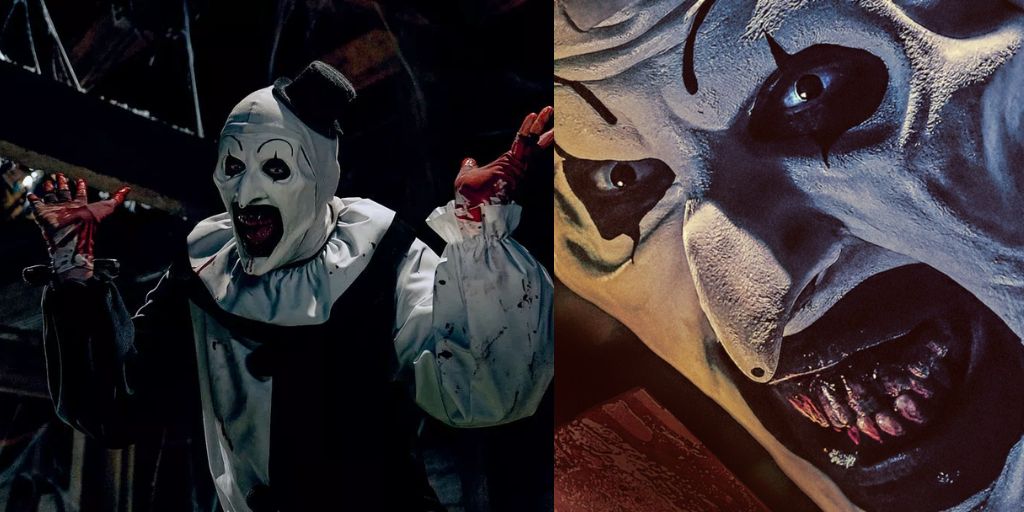
One undeniable strength of Terrifier 3 lies in its practical effects. The filmmakers have poured significant resources into ensuring that each kill looks realistic and horrific.
The attention to detail in the special effects is commendable. From blood sprays to dismembered limbs, every aspect is crafted with care, contributing to the full impact of the film.
Still from Terrifier 3 (Credit: Cineverse)
Practical effects hold a unique charm that computer-generated imagery (CGI) often fails to replicate. In a world where many horror films rely on digital effects, the Terrifier franchise stands out by embracing the visceral nature of practical effects.
The authenticity of these effects amplifies the shock value, making the horrific moments more impactful. The filmmakers have succeeded in creating a sense of realism that draws the audience into the chaos.
Character Dynamics and Development
While the practical effects in Terrifier 3 shine, the character dynamics leave much to be desired. Art the Clown is a memorable figure, and David Howard Thornton’s performance is commendable.
He brings a unique charm to the role, blending humor and horror in a way that keeps viewers engaged. However, the film’s human characters struggle to make a lasting impression.
Sienna Shaw and Jonathan, despite their traumatic backstory, often feel like placeholders rather than fully developed characters. Their experiences and struggles could be shown more deeply, providing a more satisfying emotional arc.
Sienna’s battles with her mental health and visions of the past could serve as a powerful backdrop against the chaos unleashed by Art. Unfortunately, these themes often take a back seat to the gore, leaving viewers yearning for more depth and connection to the characters.
The relationship between Sienna and Jonathan is another aspect that feels underdeveloped. They share a traumatic history, yet their interactions lack emotional weight.
The tension of surviving a horrific encounter with Art could lead to significant character growth. However, their relationship remains stagnant, primarily serving the plot rather than offering genuine character development.
The Question of Genre Expectations
As Terrifier 3 pushes the boundaries of horror, it raises questions about genre expectations. The film revels in gore, often prioritizing shock value over narrative cohesion. This approach may satisfy some fans of extreme horror, but it risks alienating others who seek a more well-rounded experience.
Horror films often show deeper themes, using fear as a lens to examine human experiences. While Terrifier 3 indulges in excessive violence, it does not fully capitalize on the potential for commentary.
The duality of its narrative—between the gruesome killings and the psychological impact on survivors—could have been a fertile ground for scheme. Instead, the film often veers into mindless brutality, sacrificing emotional depth for shock.
The franchise’s commitment to over-the-top violence can also lead to desensitization. What was once shocking may become mundane as the series progresses.
While fans may appreciate the escalating gore, there is a risk that the novelty will wear off, leaving viewers craving more than just spectacle. A successful horror film balances fear, character development, and thematic depth, creating a lasting impact that goes beyond mere shock.
The Role of Humor in Horror
Another layer to consider is the role of humor in Terrifier 3. The balance between horror and comedy is a delicate one, and the film attempts to blend these elements through Art’s clownish persona. While this can lead to moments of dark comedy, it can also create a jarring experience for the audience.
Art’s antics, from exaggerated facial expressions to playful gestures, inject moments of levity amidst the chaos. However, this humor can sometimes undermine the gravity of the situations he creates.
The juxtaposition of laughter and horror can provoke a visceral reaction, yet it can also leave viewers uncertain about how to feel. In a franchise that thrives on the extreme, the integration of humor adds complexity but also risks diluting the impact of the horror.
Setting Up for Future Installments
Terrifier 3 sets the stage for future installments in the franchise, hinting at potential developments in the lore surrounding Art and Sienna. The conclusion leaves several unanswered questions, teasing the possibility of further scenes in subsequent films. However, while these hints may excite dedicated fans, they also raise concerns about the series’ trajectory.
The film’s reliance on gore and violence may overshadow its narrative. While expanding the lore can be enticing, it is crucial to ensure that the storytelling remains cohesive and satisfying.

Still from Terrifier 3 (Credit: Cineverse)
As audiences become accustomed to extreme horror, there is a risk that the franchise could fall into a formulaic trap, relying on shock value without meaningful character development or thematic scenes.
Final Thoughts
Terrifier 3 is an interesting addition to the franchise, showcasing impressive practical effects and a commitment to extreme horror. Art the Clown remains a attractive figure, and David Howard Thornton delivers a performance that balances horror and humor. However, the film struggles with character development and narrative cohesion, often prioritizing shock over emotional depth.
The duality of its story presents an opportunity for scenes, but it frequently falls short, leading to a tonally uneven experience. While the film may satisfy fans of gore, it risks alienating those seeking a more balanced horror experience.
As the franchise moves forward, it will be essential to find a way to integrate character arcs and thematic depth alongside the brutal killings that have become its hallmark.
Terrifier 3 ultimately serves as a reflection of the challenges faced by horror films today. It invites viewers to engage with the spectacle of violence while hinting at deeper themes, yet it often misses the mark.
The franchise has the potential to push boundaries and show new territory, but it must strive for a balance that keeps audiences engaged and invested. The legacy of Art the Clown is only just beginning, and the path forward will determine whether he becomes an enduring icon or simply another fleeting horror trend.
The end of Big Brother 26 is near. As the show approaches its finale, every player still in the game wants to be in one of the two chairs on finale night. This night is very important, and every player wants to be there.
To make it to the end, they need to win competitions or count on an ally to take them to the finale. With two alliances battling for control this week, the majority helped ensure that their alliance will have all its members present on finale night.
Big Brother is hosted by Julie Chen Moonves and has been a popular summer show on CBS since it began in the year 2000. This reality program brings together a group of Houseguests who live together in a house and compete for power, safety, and advantages.
There are cameras and microphones everywhere in the house, so there is no place to hide. Every moment is captured, making it exciting for viewers. With unexpected twists and turns happening throughout the season, Big Brother 26 has provided fans with one of the best seasons in recent years.
When is ‘Big Brother 26’ on TV?
Viewers should prepare for surprises because the schedule for Big Brother can change based on the viewer’s time zone. The show usually airs multiple times a week, and as the season goes on, the schedule may shift to fit CBS’s programming.
Currently, the upcoming schedule is different since the CBS fall season has started. Big Brother 26 will air on Sundays at 10:00 PM and Thursdays at 8:00 PM. It is important to note that there will be NO episode on Wednesday nights during this part of the season. This means that viewers must pay attention to the schedule to not miss any exciting moments.
Fans should also check their local listings to ensure they are watching at the correct time, as special events and changes may affect when Big Brother airs. This is important because sometimes other shows or events can change the planned schedule. Fans should stay informed so they do not miss any crucial episodes leading up to the finale.
Where Can You Stream ‘Big Brother 26’?
Fans who want to watch Big Brother 26 can catch it live on CBS. The show is also available for streaming. Viewers can watch live and on-demand episodes on Paramount+. This streaming service offers two options. Paramount+ Essential costs $7.99 a month, while Paramount+ with Showtime costs $12.99 a month.

Still from Big Brother (Credit: CBS)
Where Can You Watch the ‘Big Brother’ Live Feeds?
The prices for Paramount+ are the same as mentioned before: $7.99 a month for Paramount+ Essential and $12.99 a month for Paramount+ with Showtime. Both services allow viewers to try Paramount+ free for a week, so they can show all the content before making a financial commitment.
For fans who prefer free options, Pluto TV is available to viewers at no cost when they set up a profile. This means that fans can stay connected to the action without spending any money. This is a fantastic opportunity for fans who want to keep up with their favorite contestants and events in the house.
Who Won HoH Week 11?
After an exciting and somewhat predictable Double Eviction, five players remained in the running to win Big Brother 26. The competition is fierce, and every week brings new challenges. This week, the players had the chance to compete for the Head of Household (HoH) title, which gives the winner power and safety for the week.
Unfortunately, Chelsie Baham could not compete in the HoH competition. This put her in a tough spot as she hoped that her ally, either Makensy Manbeck or Cam Sullivan-Brown, would win HoH. Winning this title is important for all players because it can protect them from being nominated for eviction.
The competition was called the Tiny Stack competition. In this challenge, players had to build a tiny puzzle in the shortest amount of time.
This type of competition tests both speed and skill, making it an exciting event for viewers. When the competition ended, the winner of the Head of Household was Makensy Manbeck. Her victory gave her a lot of power and set the stage for the week ahead.
Who Was Nominated Week 11?
With only five players left in the game, the focus was on numbers. In Big Brother, the number of players can often determine who stays and who goes. With Makensy Manbeck now in power as the Head of Household, she had already formed a strong bond with Chelsie and Cam. Because of this, it made sense for her to keep both of them safe from eviction.

Still from Big Brother (Credit: CBS)
However, Makensy faced a difficult decision. She needed to think about who to nominate for eviction. If one of her potential nominees won the Power of Veto, they could save themselves from being evicted.
This would force her to replace them on the block with another nominee. Rubina Bernabe tried hard to convince Makensy to change her mind. Rubina tried to make Makensy believe that Chelsie wanted to target her.
Makensy went back to Chelsie with this information. Chelsie explained that if she really wanted to get Makensy out of the game, she would have done so during the Double Eviction. This conversation helped Makensy feel more secure in her alliance.
Ultimately, Makensy focused on her remaining alliance members. She decided to place Kimo Apaka and Rubina Bernabe up for nomination. This decision was crucial as it shaped the game moving forward. With nominations set, the stage was ready for the next Power of Veto competition.
Who Won the Power of Veto?
The classic BB Comics Power of Veto competition made a return this week. This competition is a fan favorite, as it brings a fun twist to the game. In this challenge, players must select the right images as quickly as possible. Each Houseguest, both evicted and remaining, is represented in cartoon form as their superhero alter ego.
This season, the BB Comics characters included a variety of fun and creative names. Cedric Hodges was represented as “Young Cedric,” Chelsie Baham was “The Micro Chip,” Tucker Des Lauries was “The Instigator,” T’Kor Clottey was “Cro-Slay,” Rubina Bernabe was “The Roller Rebel,” Kimo Apaka was “Vol-Kimo,” Makensy Manbeck was “Mech-Kensy.”
Cam Sullivan-Brown was “Cam-eleon,” Leah Peters was “The Chubby Chaser,” Quinn Martin was “Quinnsanity,” Matt Hardeman was “Crazy Eyes,” Angela Murray was “The Atomic Mom,” Brooklyn Rivera was “The Charcuter-Thief,” Lisa Weintrub was “The Glitter Critter,” Joseph Rodriguez was “Rewind,” and Kenney Kelley was “Sweet Kenney K.”
In the end, the winner of the BB Comics Power of Veto was Makensy Manbeck. Winning this competition gave her more control over the game and allowed her to influence who would stay and who would go. After her victory, there was a lot of discussion among the players.
There were concerns that Cam Sullivan-Brown might be throwing competitions because of his poor performance this season. This worried some players, leading them to consider putting him on the block instead of Rubina. However, in the end, Makensy decided not to use the Power of Veto. This marked the first time this season that the Power of Veto was not used, ending a historic streak for the show.
With this decision, Kimo Apaka and Rubina Bernabe remained the final nominees on eviction night. Their fates rested in the hands of the other Houseguests, and the atmosphere in the house grew tense as eviction night approached.
What Happened in the Jury House?
Every season, the Big Brother jury is kept in a special house after they are evicted from the game. This jury watches the game unfold from a distance and has the power to vote for the winner at the end of the season. This week gave fans a first look into the jury house and how the current jury members felt about the game and the remaining players.
As the evicted Houseguests arrived one by one, they joined the first juror, Quinn Martin, in the jury house. The first to arrive was T’Kor Clottey, who was excited to tell Quinn about what happened during their time in the game. T’Kor shared stories about the drama and alliances that took place in the house.
A week later, the two players evicted during the Double Eviction arrived at the jury house. Leah arrived first, and Quinn was thrilled to see her. Their friendship in the house carried over into the jury. Shortly after Leah, Angela Murray joined them.
During their time together in the jury house, many of the jurors expressed that they believed Chelsie was playing the best game. However, they were divided on whether they wanted to see her win. Some jurors admired her gameplay, while others felt she had played too hard.
One of the most surprising moments came when Quinn and Leah confessed their crush on one another. This unexpected twist led to a budding romance, often referred to as a “jurymance.” Fans of the show enjoyed watching their relationship develop as they shared their thoughts about the game.
Who Was Evicted Twelfth from the ‘Big Brother’ House?
As eviction night arrived, Kimo and Rubina were on the block. Their fate came down to two crucial votes. The tension in the house was palpable, and every decision could change the course of the game. Cam Sullivan-Brown found himself in a tough situation. After hearing a rumor that he could save Kimo and evict Rubina, he had to make a choice.

Still from Big Brother (Credit: CBS)
However, this plan meant that Makensy Manbeck would be the tie-breaking vote. Cam knew that this could work against him, so he decided to stick with the original plan. Ultimately, Kimo Apaka was evicted by a vote of 2-0. Cam and Chelsie voted to evict Kimo, and he became the twelfth person to leave the Big Brother house.
This eviction was significant as it marked another shift in the game. With Kimo gone, the remaining players had to adjust their strategies and alliances. The competition grew even fiercer as players prepared for the next rounds of gameplay.
What May Happen Next?
And then there were four players left in the game. This is one of the most crucial moments in Big Brother history. The winners of the upcoming Head of Household and Power of Veto competitions will help determine the endgame. Their choices will dictate who makes it to the finale and who goes home next.
The winner of the final Head of Household competition will automatically secure a spot in the final three players. This is a critical advantage that can shape the entire outcome of the game. The winner of the Power of Veto will have the sole power to decide who gets evicted on eviction night, further increasing the stakes for everyone involved.
With only four players left, each decision carries a heavy weight. Friendships and alliances will be tested as players fight for their chance at the title of Big Brother champion. Viewers are on the edge of their seats, eagerly waiting to see how the game unfolds.
As the season progresses, anything can happen in the Big Brother house. Every player knows that one wrong move can cost them their chance to win the grand prize. The pressure is high, and the excitement is palpable as fans gear up for the final stretch of Big Brother 26.
The finale is just around the corner, and everyone is anxious to see who will walk away with the title and the cash prize. As the tension rises and alliances shift, viewers will be glued to their screens, wondering who will ultimately emerge victorious in this thrilling season of Big Brother.
