In the Marvel Cinematic Universe (MCU), Thanos is one of the most compelling characters, particularly in Avengers: Infinity War and Avengers: Endgame. Portrayed by Josh Brolin, Thanos is introduced as a powerful being with a mission to collect the Infinity Stones.
He believes that wiping out half of the universe will create balance, and he expects that the remaining half will be thankful for his actions. While this is a central theme in the films, it only scratches the surface of Thanos’ character.
The MCU does not go deeply into Thanos’ background, leaving many questions about his motivations and history unanswered.
The character’s complexities are better shown in the comics, where his upbringing, family dynamics, and experiences shape a much darker figure than the one we see in the films.
This article shows Thanos’ story in depth, highlighting how his traumatic childhood, desire for immortality, and connections to the Eternals contribute to his persona as the Mad Titan.
Thanos: A Product of His Environment
Thanos’ origins are rooted in tragedy. Born on Titan, one of Saturn’s moons, he is the son of A’lars, also known as Mentor, and Sui-San.
A’lars belongs to the Eternals, a race of superhumans created by the Celestials. His family lineage gives him immense power, but it also sets the stage for his struggles.
Unlike his brother, Eros, who possesses a charming and attractive appearance, Thanos is born with a deviant gene. This genetic anomaly causes his purple skin and unusual features, making him an outcast from the moment he enters the world.
In the comic series Thanos Rising, Thanos’ appearance is a significant factor in shaping his identity. Being different in a society that values beauty and conformity creates a deep sense of isolation. This isolation is compounded by the treatment he receives from his own mother, Sui-San.
Rather than welcoming her son, she despises him for his appearance. Sui-San’s hatred is irrational, driven by societal standards and her inability to accept Thanos for who he is.
Instead of naming him Dione, as she initially intended, she names him Thanos. This name, often associated with death and destruction, foreshadows his dark future.
Sui-San’s rejection reaches a horrifying peak when she attempts to kill her son. This act of violence leaves a lasting scar on Thanos, planting the seeds of his future rage.
At the age of 12, Thanos ends up killing his mother, a significant event that illustrates the depth of his pain and the beginning of his violent tendencies.
The lack of maternal love and support profoundly impacts his psychological development. Thanos’ childhood is filled with trauma, resulting in a character unable to form healthy emotional connections.
The Development of a Dark Personality
The loneliness and rejection Thanos experiences foster a sense of rage that will define him. As he grows older, this rage turns into a desire for power and control. In the comic saga Infinity, Thanos goes on a violent spree across the universe.
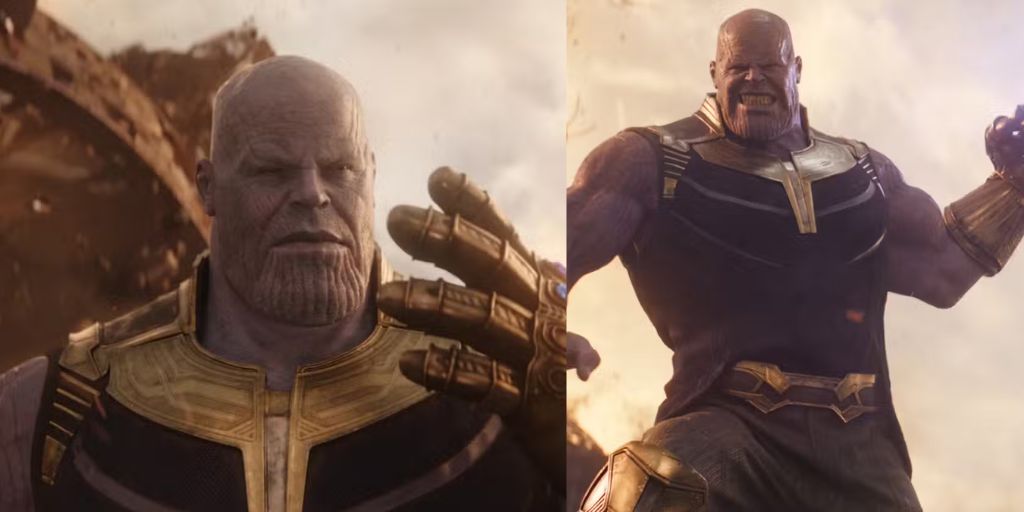
Still from Thanos (Credit: MCU)
He seeks to distract from his plans to kill his son, a shocking twist that reveals the depth of his madness. This pattern of violence is not random; it is deeply rooted in his experiences of isolation and rejection.
Thanos’ inability to connect with others further exacerbates his feelings of anger and vengeance. His relationships are superficial, and he fails to bond with anyone. He sees others as tools or obstacles rather than individuals worthy of empathy.
This lack of empathy is a crucial aspect of his character and influences his decisions as he seeks to achieve his goals.
The MCU portrays Thanos as a villain with a misguided sense of purpose, but the comics paint a more complex picture. His motives are driven not just by a desire for balance but by a deep-seated need for revenge and recognition.
A Quest for Immortality
One of Thanos’ central motivations is his obsession with immortality. As a being with immense cosmic power, he believes he can transcend death itself. This obsession leads him down a dark path, as he is willing to make sacrifices for the sake of achieving eternal life.
Thanos’ relationship with his brother Eros reflects this obsession. He chooses to spare Eros’ life, but this mercy is deceptive.
In Guardians of the Galaxy #6, it is revealed that Thanos implanted a failsafe in Eros’ mind to protect his own interests. This action highlights Thanos’ tendency to manipulate those around him, even when he appears merciful.
In the comics, Thanos’ quest for immortality culminates in his desire to court Death, the personification of death itself. This desire is not just an abstract concept; it manifests in his actions and decisions.
He wants to impress Death by committing acts of destruction, believing that if he can prove his worthiness, she will reciprocate his feelings. This relationship with Death is a significant departure from the MCU portrayal, where Thanos’ motivations are more focused on balance.
The Russo brothers, who directed Infinity War and Endgame, opted not to include Death in the films. They believed that introducing her would complicate the narrative and take the story to a “plane of existence” that the MCU was not ready for at that time.
While this decision makes sense in the context of the films, it also omits a key aspect of Thanos’ character from the comics.
Thanos: The Bloodthirsty Titan
Thanos’ quest for immortality is intertwined with his bloodthirsty nature. He views destruction as a means to an end and is willing to eliminate anyone who stands in his way. In the comic Infinity Gauntlet, his desire to impress Death leads him to wipe out half of the universe.
This act is not motivated by a sense of balance; rather, it is a twisted expression of love for Death. Thanos’ actions illustrate a profound misunderstanding of love and connection, as he equates destruction with power and control.
This darker interpretation of Thanos presents him as a villain who thrives on chaos and bloodshed. His childhood experiences of rejection and violence have left him emotionally scarred, and his quest for immortality amplifies his destructive tendencies.
The character’s complexity lies in this duality: he is both a tragic figure shaped by his past and a ruthless antagonist who will stop at nothing to achieve his goals.
Thanos’ Connection to the Eternals
Thanos is not only a member of the Deviants but also has strong ties to the Eternals. His grandfather, Kronos, was the leader of the Eternals, which explains Thanos’ cosmic powers.
This connection to the Eternals is an essential aspect of his character, as it gives him a background that is rich with history and lore.
The Eternals are tasked with assisting the Celestials, cosmic beings responsible for creation and destruction across the universe. Thanos’ lineage plays a significant role in his ability to wield such immense power.
Despite his connections, Thanos feels like an outsider among the Eternals. His deviant gene sets him apart, and he is constantly reminded of his differences. This rejection further fuels his anger and desire for power.
The MCU has only touched on this aspect of Thanos’ character, but with the introduction of Eros in Eternals, there is potential for future scheme of this family history.
Eros, played by Harry Styles, is Thanos’ brother and represents a connection to the Eternals that could be further developed in upcoming stories.
Thanos in the Comic Book Universe
In the comic book universe, Thanos’ character is even more layered. His history includes various arcs where he confronts cosmic entities, battles superheroes, and shows the depths of his own madness.
The comics depict Thanos as a character who is both powerful and deeply flawed. His relationships with other characters, including heroes and villains, provide insight into his psyche.
One notable storyline is the Infinity Abyss, where Thanos faces clones of himself. This arc shows the concept of identity and what it means to be Thanos. The clones serve as a reflection of his own darkness and the consequences of his actions.
The idea of cloning adds another layer to his character, suggesting that even in death, Thanos’ influence can persist. The potential for his return through cloning or other means remains an intriguing possibility for future MCU stories.
Even though Thanos is dead in the MCU, the concept of the Celestial World Forge offers a potential pathway for his return. Arishem, a character from Eternals, discusses the World Forge and its ability to create and program beings like the Eternals.
This element opens the door for Thanos to come back in some form, possibly as a clone or through other cosmic means. Although the chances of this happening are uncertain, it remains a fascinating avenue to show, especially considering Thanos’ lasting impact on the MCU.
The Impact of Thanos on the MCU
Thanos’ character has left a significant mark on the MCU. His actions in Infinity War and Endgame have repercussions that resonate throughout the entire franchise.
The emotional weight of his choices affects not only the heroes he battles but also the universe itself. The idea of sacrifice and the moral dilemmas faced by the Avengers come to the forefront due to Thanos’ relentless pursuit of power.
The Russo brothers crafted Thanos as a villain with a twisted sense of purpose, making him both terrifying and tragic. His journey from an outcast to a feared titan captures the audience’s attention, prompting them to question the nature of good and evil.
While many villains in the MCU have been portrayed as one-dimensional, Thanos stands out as a character whose motivations are deeply rooted in his past. The scheme of his family history adds depth to his character, making him more than just a villain seeking power.
The Legacy of Thanos
Thanos’ legacy is complex. He is remembered as one of the most formidable foes in the MCU, but his story goes beyond that. His family history, traumatic experiences, and quest for immortality create a multifaceted character that continues to fascinate fans.
As the MCU evolves, there is potential to show Thanos’ story further, especially with the introduction of characters like Eros and the possibility of his return.
The lore surrounding Thanos offers a wealth of material to examine. His connections to the Eternals and the Celestials can lead to new narratives that deepen the understanding of his character. Additionally, the scheme of his psychological struggles and motivations can shed light on the nature of villainy in the MCU.
Thanos is a character defined by his struggles and experiences. His traumatic childhood, obsession with immortality, and connections to the Eternals create a rich scheme of lore that shapes his identity. While the MCU provides a view into his character, the comics offer a more nuanced portrayal.
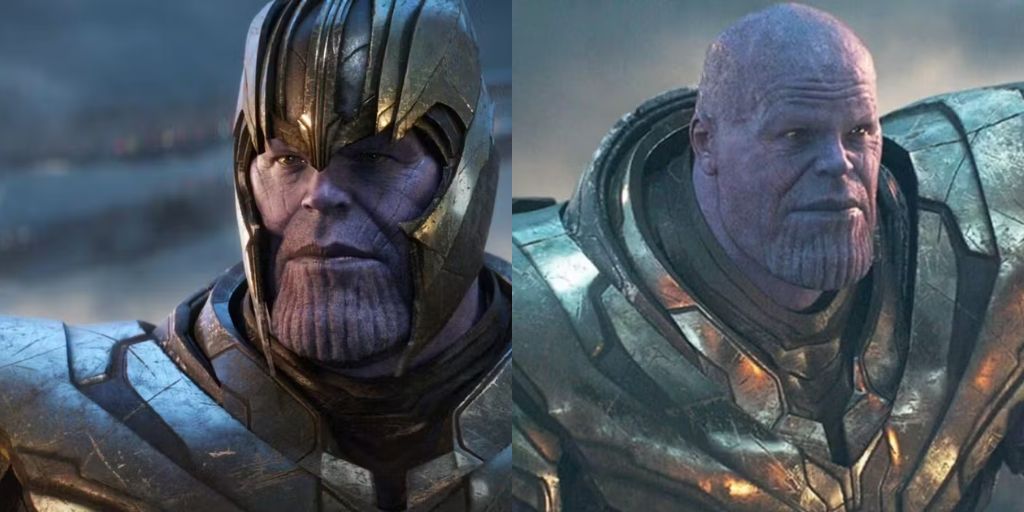
Still from Thanos (Credit: MCU)
Thanos is not just a villain seeking to destroy the universe; he is a tragic figure shaped by rejection, anger, and a desire for power.
As the MCU continues to expand, there are endless possibilities for showing Thanos’ story. Whether through flashbacks, new characters, or potential returns, his legacy will remain a crucial part of the Marvel narrative.
Thanos’ family tree and the consequences of his actions are ripe for scheme, providing a deeper understanding of the Mad Titan and the universe he inhabits.
Avengers: Infinity War is streaming on Disney+ in the U.S.
In From season 3, episode 6, titled “Scar Tissue,” the story takes several intriguing turns as characters face their past, grapple with haunting visions, and struggle to survive.
This episode follows Tabitha Matthews’ (Catalina Sandino Moreno) return to the Town after her harrowing escape and shows how this affects both her family and the other trapped residents.
From terrifying nightmares to unexpected revelations, “Scar Tissue” continues to build the sense of mystery that has surrounded the Town since season 1. Here, we will go deeper into the episode’s key moments and analyze how they tie into the overarching narrative.
Tabitha’s Nightmares: A Childhood Connection to the Town
One of the most startling revelations in From season 3, episode 6 comes from Tabitha’s chilling confession about her childhood nightmares.
When she sees Jade’s (David Alpay) drawings of wooden statues in the woods, Tabitha is reminded of an eerie recurring dream she had as a child.
In this nightmare, she would encounter three large red stones arranged in a circle, along with the same wooden statues that have appeared in the woods around the Town.
This revelation is not just a throwaway line but a significant piece of the puzzle that suggests the Town does not randomly choose who gets trapped.
Tabitha’s connection to the Town dates back decades, long before her family’s tragic arrival. This is a disturbing idea for both the characters and the audience, raising the question of whether certain individuals are predestined to become part of the Town’s web.
The idea that Tabitha had these nightmares long before she ever stepped foot in the Town points to something much larger at play. It seems that some of the Town’s current residents were drawn into its mysteries well before they physically arrived.
Victor’s mother, Miranda, is another example of this, as she too saw visions of the Town before getting trapped. Both Tabitha and Miranda’s connections hint at a deeper force pulling certain people in. But why these individuals? This remains unclear.
What is certain, though, is that the Town is not a random trap. There’s an intentionality behind who gets pulled in, and the mystery of why Tabitha and Miranda were chosen still looms large.
Could it be that others trapped in the Town also had similar premonitions? This possibility makes the nightmare even more terrifying, as it suggests the Town’s reach extends far beyond its physical boundaries.
Tabitha’s visions also connect to her more recent encounters with the “anghkooey” children, a group of ghostly figures who seem to be watching her every move.
There’s a clear sense that Tabitha’s relationship with these children and her childhood nightmares are linked. These children may hold the key to understanding why Tabitha, and perhaps others, were drawn into the Town.
The wooden statues and red stones form an important part of the Town’s mythos, and their recurring presence suggests they hold some greater meaning. But what is their purpose?
Are they symbols of the Town’s power, or are they relics of an even older force? With so many questions left unanswered, Tabitha’s nightmares offer a tantalizing hint at what may come next in the series.
Jim and Tabitha’s Marriage: The Cracks Begin to Show
In addition to the mystery surrounding her nightmares, Tabitha is also dealing with a different kind of conflict—one much closer to home.
Her relationship with her husband, Jim (Eion Bailey), has been on shaky ground ever since they arrived in the Town, and in “Scar Tissue,” these cracks become even more pronounced.
Before they became trapped in the Town, Jim and Tabitha’s marriage was already in trouble. They had been on the verge of divorce, unable to cope with the immense grief of losing their young son, Thomas.
That pain had fractured their relationship, and while the immediate danger of survival in the Town had put their marital problems on hold, they were never fully resolved. In this episode, those old wounds are reopened.
Jim tries to offer empty reassurances, telling Tabitha that everything will be okay, but she pushes back, frustrated with his inability to accept the reality of their situation.
Their argument quickly escalates, with Jim accusing Tabitha of wanting a divorce so she could run away from the trauma of their son’s death instead of working through it with the family.
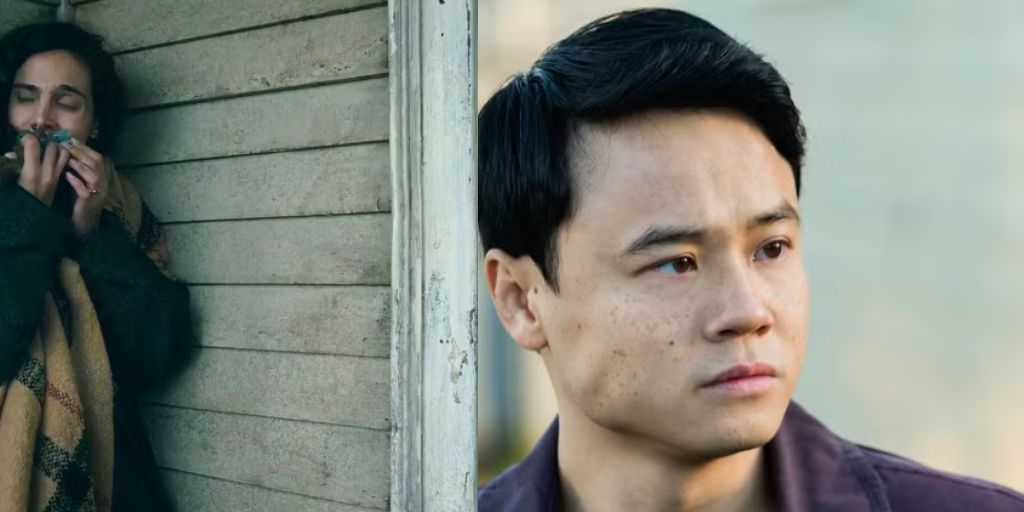
Still from From Season 3 (Credit: MGM)
It’s clear that Jim and Tabitha’s emotional baggage runs deep. Their arguments are not just about their situation in the Town but also about their inability to process their shared trauma.
Jim feels abandoned by Tabitha, especially after she left him at the end of season 2, and now that they’re back together, that resentment is boiling over.
This scene highlights one of the central themes of From: the way trauma affects not only individuals but also relationships.
In a place as strange and dangerous as the Town, it’s easy to focus solely on the external threats—monsters, disappearances, and the Town’s strange power—but the internal struggles of the characters are just as critical to the story.
Jim and Tabitha’s marriage is a microcosm of that theme. Their relationship reflects the way people can be torn apart by grief and how surviving together doesn’t always mean healing together.
The argument also ties back to the mysterious phone calls Jim received earlier in the season, where a voice claiming to be their dead son, Thomas, contacted him.
Whether or not the voice was really Thomas, it’s clear that the couple’s unresolved grief over his death will continue to shape their interactions in future episodes.
Fatima’s Cravings: A Dark Twist in the Story
Fatima (Pegah Ghafoori) and her partner, Ellis (Corteon Moore), have been hopeful that her pregnancy would bring some light into their lives. However, things take a dark turn when Fatima begins to experience bizarre cravings, including a desire for rotten crops and even human blood.
These cravings are disturbing enough, but the situation becomes even more shocking when Kristi (Chloe Van Landschoot) and Marielle (Kaelen Ohm) perform an ultrasound and discover that Fatima is not pregnant after all.
This twist raises many questions about what is happening to Fatima. Could she have been infected by something within the Town?
The idea that the Town itself could alter or infect its residents is not new—there have been many instances of strange occurrences that seem to defy explanation. Fatima’s cravings and the fact that she is not carrying a human child suggests that something far more sinister is at play.
One possible theory is that Fatima’s body is being affected by the Town’s influence, and whatever is happening to her is beyond the realm of normal medicine.
This raises the stakes for her character, as she may be facing a danger that neither Kristi nor Marielle can help her with. If Fatima is indeed infected by the Town, it’s unclear what her fate will be.
There’s also the chilling possibility that Fatima is pregnant, but not with a human child. The Town’s supernatural elements could mean that something more terrifying is growing inside her.
This idea adds a layer of horror to the storyline, as it suggests that the Town can manipulate even the most personal and intimate aspects of the residents’ lives.
Fatima’s story serves as a reminder that the Town’s dangers are not just external—there are unseen forces at work that can invade the characters’ bodies and minds. Whatever is happening to her, it’s clear that this development will have significant consequences for her and Ellis in the episodes to come.
Kenny’s Search for a New Home: Moving to Colony House
Kenny Liu (Ricky He) has been one of the most resilient characters in From, but in episode 6, we see him grappling with a profound sense of loss.
The death of his mother, Tian-Chen Liu (Elizabeth Moy), has left him adrift, and the home they shared no longer feels like a place of comfort. With his family house now devoid of its warmth and purpose, Kenny makes the difficult decision to leave it behind.
Kenny’s decision to move to Colony House is symbolic of his need to find a new beginning. Without his mother, he feels disconnected from the past, and Colony House offers a chance for him to start fresh in a new environment.
His move also highlights the theme of community in From. The Town’s residents must rely on each other to survive, and Colony House has become a hub of that communal support.
Donna (Elizabeth Saunders) welcomes Kenny into Colony House, assuring him that there is always space for him.
This gesture of kindness underscores the importance of having a place to belong in such a dangerous and unpredictable environment. Kenny’s move is also marked by a moment of levity when he jokingly asks if they still throw sex parties at Colony House—a nod to the more carefree moments the residents once shared.
However, Kenny’s decision to move into Colony House is not just about physical survival; it’s about emotional healing as well. He has spent much of the series working closely with Boyd Stevens (Harold Perrineau), Jim, and Jade, all of whom live outside of Colony House.
Now, he will have the opportunity to build deeper connections with Donna, Elgin (Nathan D. Simmons), Fatima, Ellis, and others who live there.
Living in Colony House could be a crucial part of Kenny’s journey toward healing after the immense losses he has faced. It gives him a chance to rebuild his sense of belonging and community, both of which are essential in the face of the Town’s dangers.
Jade’s Obsession with the Bottle Tree: A Haunting Encounter
Jade’s quest for answers has been a driving force throughout From season 3. In episode 6, his search takes him to a second bottle tree in the woods, where he experiences a haunting encounter with Tom (Patrick Garrow), the deceased former bartender from the Town.
Jade has been obsessed with finding connections between the Town’s symbols and the world outside, and this moment adds a new layer to his investigation.
When Jade sees Tom standing near the bottle tree, he is initially shocked but quickly realizes that this might not be a real physical encounter.
Instead, it could be a manifestation of Jade’s subconscious, driven by his overwhelming need for answers and his guilt over Tom’s death. Tom’s appearance serves as a warning to Jade, telling him to stop drinking and to take his quest more seriously.
This encounter raises the question of whether the bottle trees themselves hold some deeper meaning.
These strange structures have appeared multiple times throughout the series, often in conjunction with moments of heightened tension or discovery. Are they simply markers, or do they have some connection to the Town’s supernatural forces?
Jade’s determination to understand the Town’s mysteries has often put him at odds with the other residents, but his intelligence and persistence may yet prove vital to unraveling the truth.
The appearance of Tom at the bottle tree is a reminder that there are still many layers of the Town’s mystery that remain unexplored.
Whether Jade will heed Tom’s warning and sober up remains to be seen, but this moment is sure to have a lasting impact on his character’s arc.
The Anghkooey Children: Returning to Haunt Tabitha
The ghostly children, known as the “anghkooey,” made a chilling return in From season 3, episode 6. These children first appeared in season 2, and their presence has been one of the most unsettling elements of the series. In “Scar Tissue,” they reappear to Tabitha, who has had multiple encounters with them.
Tabitha’s relationship with the anghkooey children is complicated. She is both drawn to them and terrified of them, as they seem to hold some knowledge of the Town’s secrets.
The fact that they repeatedly seek her out suggests that they have a specific interest in her—possibly tied to her childhood nightmares.
Jade, in particular, has speculated that the children may not want to harm Tabitha, but rather, they are trying to communicate something important. This theory adds another layer of complexity to the Town’s mysteries. If the children are not purely malevolent, then what do they want from Tabitha?
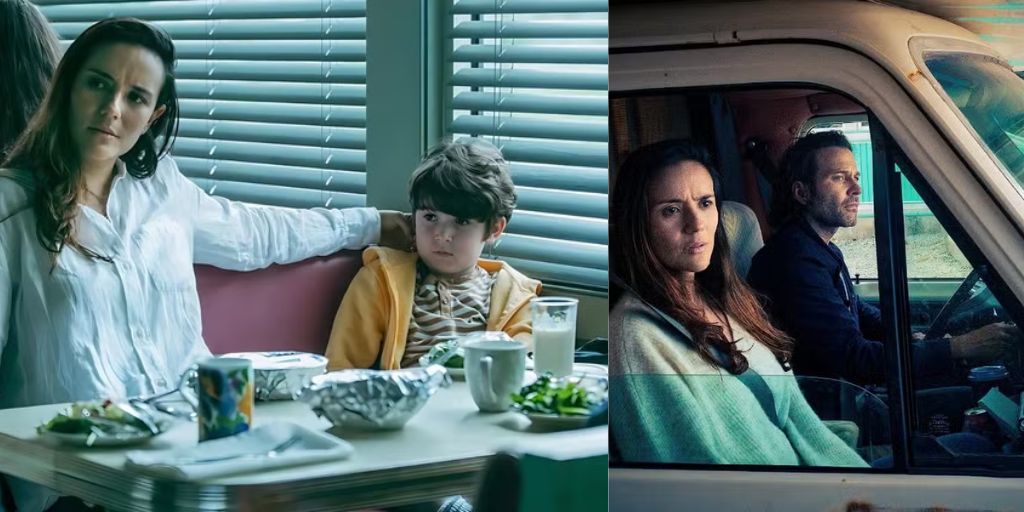
Still from From Season 3 (Credit: MGM)
These ghostly figures may also be connected to the Town’s history. The recurring theme of lost or abandoned children suggests that they might represent a form of innocence corrupted by the Town’s supernatural forces.
Victor’s Journey into the Tunnels: A Dangerous Search for Jasper
Victor (Scott McCord), one of the most enigmatic characters in From, continues his dangerous journey into the Town’s underground tunnels in episode 6.
His goal is to retrieve Jasper, the ventriloquist doll belonging to Christopher, a young boy who once lived in the Town. Victor’s connection to the tunnels—and to the Town’s monsters—makes his journey particularly perilous.
The tunnels have been a recurring theme throughout the series, representing the Town’s hidden and often deadly secrets. It’s within these dark passageways that many of the show’s most terrifying moments have occurred, including confrontations with the monsters that lurk there.
Victor’s determination to find Jasper is tied to his deep sense of guilt over the loss of the children he once cared for. His journey into the tunnels is not just about survival—it’s about redemption.
In this episode, Victor comes face to face with his father, Henry (played by guest star Richard Harmon), a figure from his past who has haunted him for years.
Henry’s discovery of Miranda’s clothing in the tunnels adds yet another layer of mystery to this storyline. Miranda has been missing since season 2, and it’s unclear whether she is still alive or has succumbed to the Town’s malevolent forces.
The discovery of her clothes suggests that she may have ventured into the tunnels herself, either in search of answers or as a result of the Town’s influence.
The monsters that inhabit the tunnels continue to be one of the show’s most terrifying elements, and Victor’s encounter with them in this episode is no exception. Their presence serves as a constant reminder of the dangers lurking just beneath the surface of the Town.
Victor’s storyline is one of the most emotional arcs in From. His guilt, his determination to protect the children, and his connection to the monsters all make him a compelling and complex character.
As the series continues, it’s likely that Victor’s journey into the tunnels will reveal more about the Town’s dark history and the forces that control it.
Randall’s Move to the Clinic: A New Start
Randall (A.J. Simmons), a character who has struggled with hallucinations and trauma since his arrival in the Town, takes a significant step in his personal journey by moving into the clinic.
Marielle’s offer to let Randall stay at the clinic is an act of compassion that may help him find some stability after his terrifying experiences with the monsters.
Randall’s hallucinations have been one of the show’s more unsettling elements, and it’s clear that his mental state has been deteriorating since he arrived in the Town.
Living in the clinic, under the care of Kristi and Marielle, offers Randall a chance to heal, both physically and mentally.
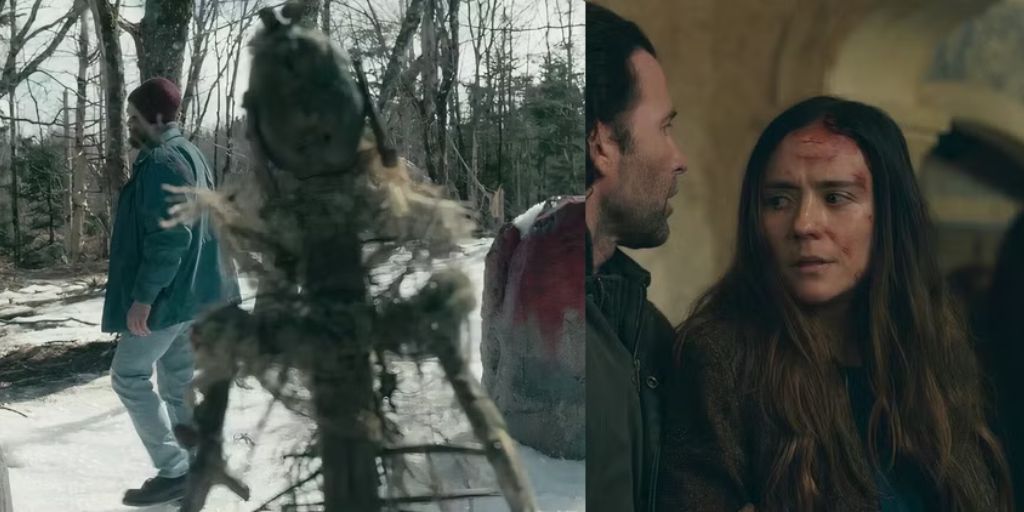
Still from From Season 3 (Credit: MGM)
This move also has the potential to create new dynamics within the clinic, as Randall’s presence will affect Kristi and Marielle’s relationship.
Both women have been dealing with their own personal challenges, and Randall’s arrival adds a new layer of complexity to their situation.
It remains to be seen whether Randall’s move to the clinic will lead to his redemption, but it’s clear that his journey is far from over. His ability to survive and find peace in the Town will likely depend on his relationships with those around him.
Elgin’s Pictures: The Ghostly Woman in the Kimono
Elgin (Nathan D. Simmons), a resident of Colony House, has been trying to bring some normalcy to the Town by taking pictures of its residents.
However, his attempt at community building takes a chilling turn when he captures an image of a ghostly woman in a kimono standing in the background of one of his photographs.
The woman’s appearance is not just a fleeting moment—her presence has been felt throughout the series, and her connection to the Town’s supernatural forces is becoming increasingly clear.
In this episode, her connection to Fatima is particularly significant, as it seems that the woman is somehow linked to the mysterious cravings Fatima has been experiencing.
Elgin’s role in this storyline is still developing, but it’s clear that his ability to capture moments in the Town may play a crucial role in uncovering its secrets. The woman in the kimono, who has appeared in various forms throughout the series, could be a key to understanding the Town’s power.
Unraveling the Mysteries in From’s Most Chilling Episode Yet
From season 3, episode 6, “Scar Tissue,” continues to build on the mystery and tension that has made the series so attractive.
Tabitha’s childhood nightmares, Jim and Tabitha’s strained relationship, Fatima’s bizarre cravings, and the ghostly woman in the kimono are all pieces of a larger puzzle that is slowly being revealed.

Still from From Season 3 (Credit: MGM)
Each character’s journey is filled with emotional depth and psychological complexity, and the stakes continue to rise with every new discovery. As the series progresses, the mysteries of the Town—and the dark forces that control it—are sure to become even more terrifying.
For now, the residents of the Town are left grappling with their own fears, haunted by their pasts and uncertain of what lies ahead. But one thing is certain: the Town has not yet revealed all of its secrets, and the answers may be far more horrifying than anyone could have imagined.
