Filming Locations of The African Queen
The name Konigin Luise is based on a German steam ferry that was first operated from Hamburg. There are several scenes in the movie that got shot in Uganda and Congo. Both of these places are located in Africa.
The places where the production crew was shooting were not hygienic, due to which, except for Huston and Bogart, all the crew members got sick. You must have remembered the scene where Hepburn was playing the organ, during shooting, she was continuously vomiting due to the water available there.
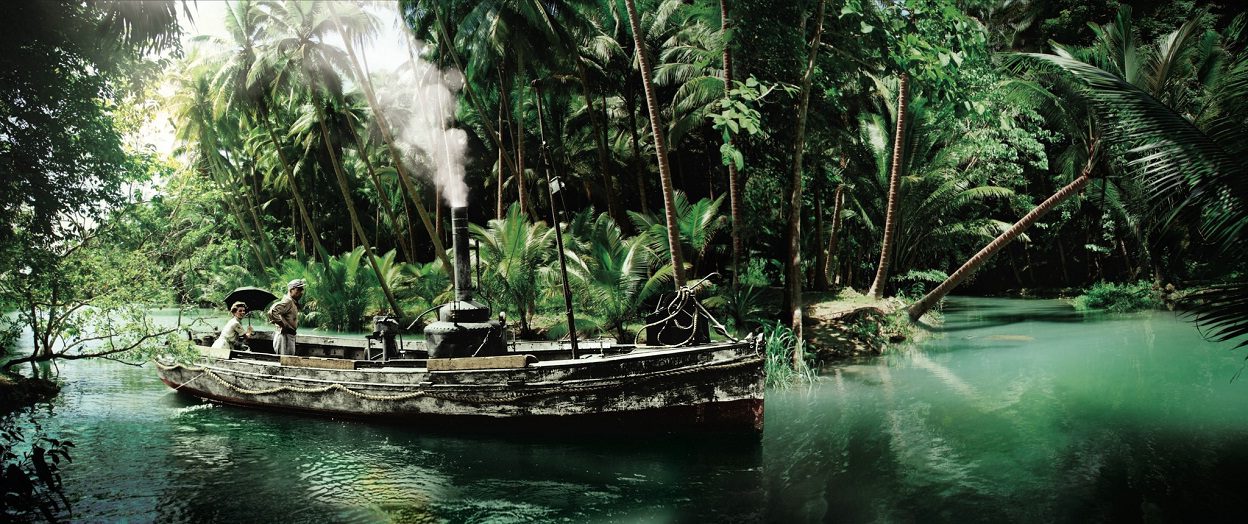
African Jungle was one of The African Queen filming locations
The scenes where Hepburn and Bograt had decided to destroy the German ship, and after that, they set to travel in water, were all shot in the United Kingdom as the shooting of these scenes in Africa was very challenging and dangerous.
The water scenes were shot in the studio tanks at Isleworth Studios, located in Middlesex.
Also, read – Teletubbies Filming Locations: Where is the Famous Kids Show Shot?
The African Queen Summary
The African Queen was a boat whose owner was Charlie. He used to deliver food items to Sawyer and his sister Rose in it. The village where Sayers was living got attacked by the Germans during World War I.
Samuel Sayer died while protesting the war. Taking his sister Rose, Charlie flew from there. They were in The African Queen when Charle told her that Britain could not fight until Konigin Luise was there.
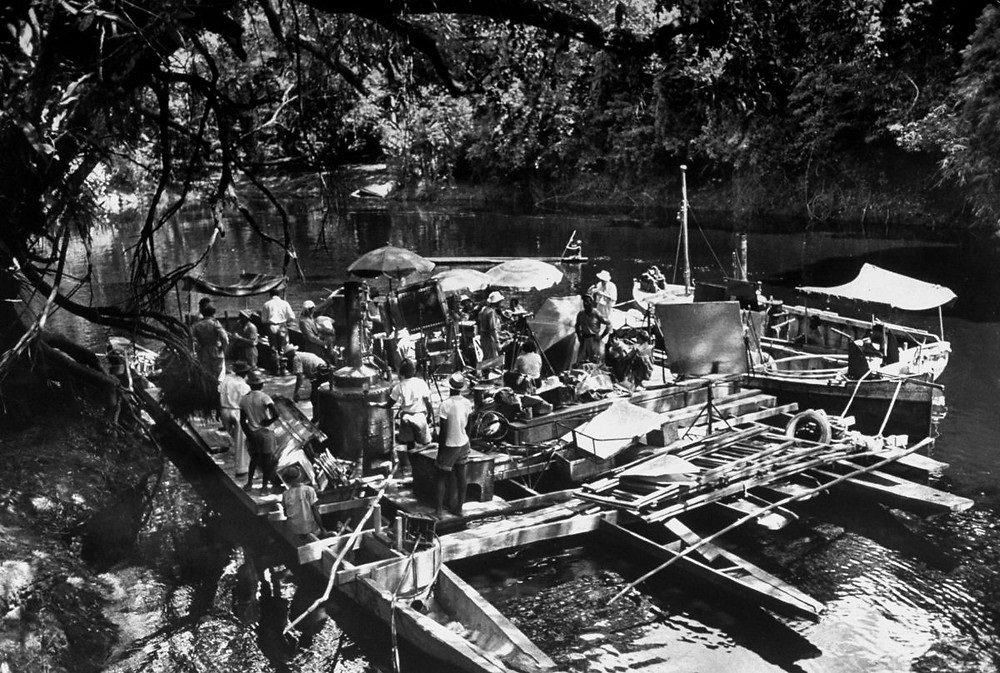
The African Queen
Listening to this, Rose made a plan to destroy Konigin Luise. After some argument between Rose and Charlie, Charlie finally got ready to destroy the German ship. For that, they had to pass the three sets of rapids.
When they passed the German fortress, the soldiers started firing on them, but due to their temporary blindness (because of sunlight), they were unable to cause any damage. In the middle of the scene, Charlie and Rose fall in love and kiss each other.
At the end of The African Queen, they got caught by the crew members of Konigin Luise while they were drowning. Charlie told everything about their mission, unaware of the fact that Rose was not dead.
Later they came up with Rose and started interrogating her. She answered all their questions fearlessly and said yes, they were set to damage Konigin Luise. The Captain then ordered the death sentence for both of them. Charlie then presented his last wish to marry Rose to which the Captain got ready.
Eventually, Konigin Luise faced a series of explosions, which made the ship quickly overturn from its initial position. Rose and Charlie then swim to a safe place together.
Cast and Character of The African Queen
The list of casts that were involved in the filming of The African Queen and their character goes as given. Humphrey Bogart played the character of Charlie Allnut, Katherine Hepburn played the character of Rose Sayer, and Robert Morley played the role of Reverend Samuel Sayer, who was the brother of Rose Sayer.
Then comes Peter Bull, who played the character of Captain of Konigin Luise. Theodore played the character of the first officer of Konigin Luise, Walter Gotell was the second officer of the Konigin Luise, Richard Marner was the second officer of the Shona (fort), and Peter Swanwick played the character of the fort Shona’s first officer.
Also, read – What Is Mads Mikkelsen’s Net Worth In 2022? All About The Fantastic Beasts Star’s Work & Earnings
The Hateful Eight has a bloody and betraying ending, as one would expect from a Quentin Tarantino film, but it wasn’t the original ending — here’s why he rewrote it. Tarantino has experimented with a variety of genres throughout his career; while he is most known for his crime films such as Reservoir Dogs and Pulp Fiction, he has also ventured with martial arts in both the Kill Bill flicks and the dark humor Once Upon a Time in Hollywood. In addition, he’s collaborated on The Hateful Eight and Django Unchained, the latter of which had several issues and creative modifications even before it started filming.
The Hateful Eight, directed by Quentin Tarantino, is set in 1870 and features eight strangers who eventually wind up in a traveling cabin after seeking protection from a blizzard. Major Marquis Warren, Chris Mannix, Daisy Domergue, English Pete Hicox, Marco the Mexican, Grouch Douglass, and Sanford “Sandy” Smithers are the characters. As the Tarantino film’s finale grew closer and closer, all of the Hateful Eight characters had strong personalities and varied plans, culminating in great tension between them, resulting in a true blood fest within the stagecoach lodge.
The Hateful Eight Ending Explained
John “The Hangman” Ruth, a rough bounty hunter in post-Civil War Wyoming, risks an incoming blizzard to carry his chained prisoner, Daisy Domergue, to Red Rock to face trial for murder. With the incoming blizzard, John and his new unpleasant traveling companions, Major Marquis Warren, a fellow bounty hunter, and Chris Mannix, Red Rock’s eventual sheriff, would have no choice but to take shelter in Minnie’s Haberdashery. But there was another unwelcome encounter in store when four more mysterious individuals join this already chaotic group. The cruel eight must suffer each other till the storm calms, trapped in this unforgiving white hell.
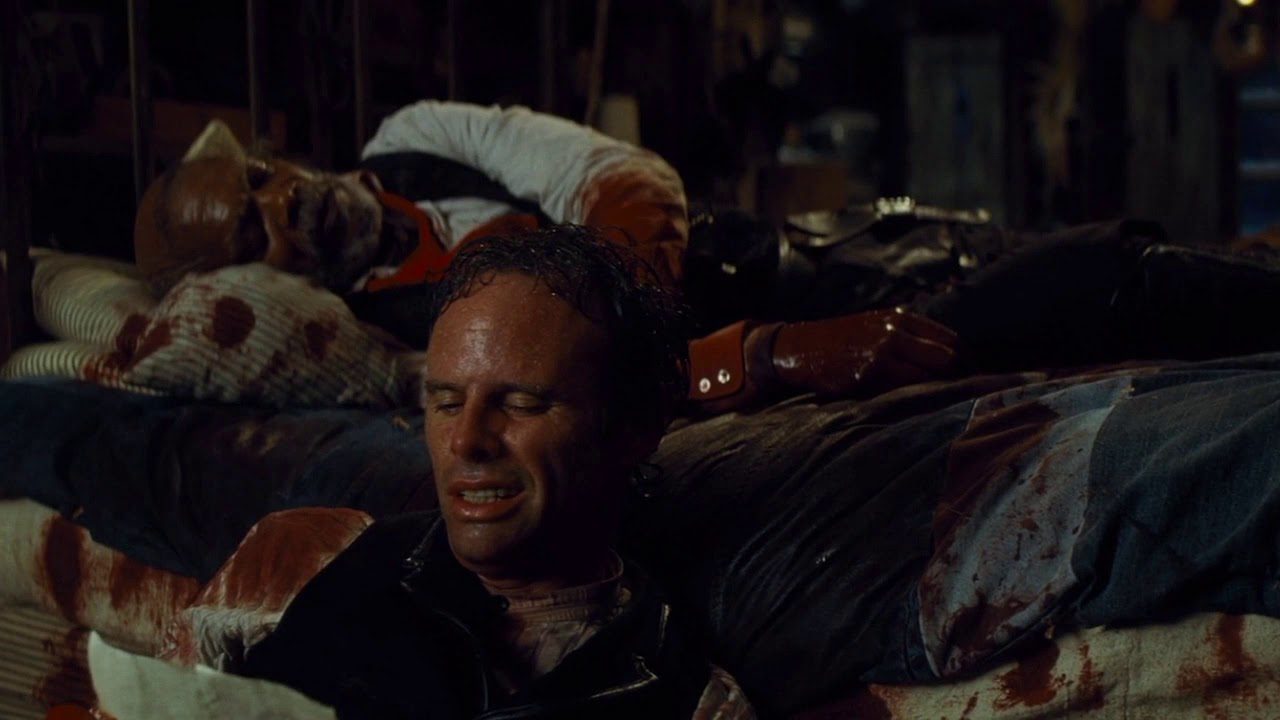
The Hateful Eight Ending
Daisy’s accomplices, Hicox pretending as Oswaldo Mobray, Douglass pretending as Joe Gage, and Marco pretending as Senor Bob, arrived at the cabin hours earlier with Daisy’s brother, Jody, according to the ending of The Hateful Eight. They arranged this to set the stage for Daisy’s rescue once she arrived with Ruth. Douglass poisoned the drink, killing Ruth and O.B., while Warren killed Marco and was shot by Jody from the underground, and Mannix shot Mobray.
Gage is later murdered by Mannix and Warren, and after failing to reach an agreement with Mannix, Daisy is hanged from the rafters in Ruth’s honor, leaving Mannix and Warren to suffer. Of course, it’s now known that Tarantino’s initial script for The Hateful Eight seemed to have a different ending, leading many fans to speculate on what the ending might have been and why he changed it.
The Original The Hateful Eight Ending
The whole script for The Hateful Eight was leaked online in January 2014, nearly preventing the film from being made. Tarantino decided against continuing with the project and instead discussed publishing it as a novel. After directing a table read of the leaked script a few days later, he went on to write a new one, which became the movie we all know today. Warren was shot numerous times by Jody from beneath the floorboards until he slumped to the floor, incapacitated, in the original conclusion of this Quentin Tarantino western. Daisy, now free, shot him three times in the eyes to wipe him off. Instead of enjoying their dying moments together during The Hateful Eight as Daisy hanged from the rafters, Mannix was the sole member left alive but wounded.
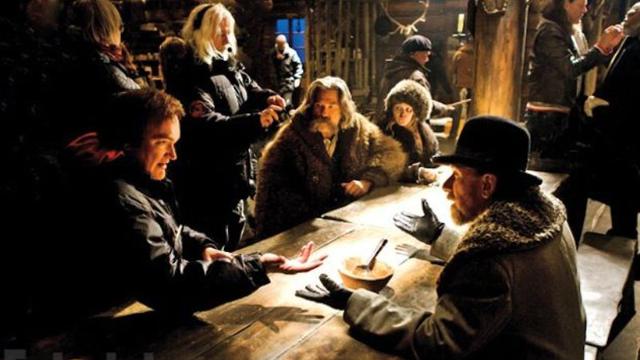
The Hateful Eight Ending – Ranch
In The End Final, The Hateful Eight Ending Was Better
The initial ending was far more brutal and bloody, with each character, including Daisy, killing someone. The finished result, on the other hand, was far superior. Tarantino created greater tension between the Hateful Eight characters by letting each kill happen on its own time rather than in a massive gunfight. This allowed Daisy to explain a little more about her group and try to push Mannix into killing Warren. There’s also another reason why the adjustments to this Quentin Tarantino film’s original ending were so helpful.
The initial version doesn’t seem to allow for the exploration of deep social and racial political concerns in the same manner that Mannix and Warren interact throughout the third act. Rather than the typical violence followed by one-man-left-standing plot, Tarantino’s alterations are arguably for the better. Despite all of their gore and bloodshed, Tarantino’s films are significantly more than just mindless violence. In his films, he carefully crafts characters and narratives, and he incorporates and revisits important subjects on a regular basis.
People being killed one by one has more meaning, depth, and total value than in the original draft, as previously said. Not only that, but the final draft of The Hateful Eight’s climax flips a “traditional” western film concept on its head and defies crucial historical facts in a way that smacks audiences in the face. It’s simple to see why some of Quentin Tarantino’s film and directing choices were adjusted before The Hateful Eight was released, especially with the result fans now and love in mind.
