Being a parent is challenging, and making mistakes is part of learning. There’s no real way to know if someone is ready to raise a child until they face the test. In a not-too-distant future, a new world has emerged.
In this future, people must decide if they want to stay in the old world, ruined by climate change, or move to a new world where they can live forever and breathe clean air without oxygen masks. However, in this new world, they must give up the right to own pets and have children.
For Mia (Elizabeth Olsen) and Aaryan (Himesh Patel), the only way to start a family is by passing a week-long evaluation, which is a nightmare of a test. Director Fleur Fortuné, in her debut film, leads the couple through the trials of proving their parenting skills and their loyalty to each other.
What Is ‘The Assessment’ About?
“We would be really good parents,” Mia confidently tells Virginia (Alicia Vikander), their strict assessor. From the outside, Mia and Aaryan seem like the perfect couple to have a child. Aaryan works as a tech-savvy genetic researcher, and Mia is an expert in botany.
They live in a modern, spacious home, full of bright colors, where a child could easily play. Their marriage is strong, filled with love and care for each other. With everything going well, what could go wrong during their test?
Over the next few days, the couple is closely observed by Virginia, their picky evaluator. Things take a strange turn when Virginia starts acting like a child herself, throwing food at the walls and asking for piggyback rides. She becomes the type of child that would test the patience of any parent.
Determined to prove themselves, Mia and Aaryan watch every word they say and keep their tempers in check. They try to meet Virginia’s ridiculous demands, even when they seem impossible.
Alicia Vikander Shines as Both a Tough Assessor and a Mischievous Child
Like Emma Stone in Poor Things, Alicia Vikander plays a character who changes her behavior to match the age she’s pretending to be.
Since her behavior is tied to the assessment stages, it’s amazing to see Vikander shift between being a strict evaluator and a wild child. Her dedication to playing both roles is clear in every scene. Without a doubt, this is Vikander’s best performance yet.
Although Vikander is a supporting actor here, she stands out among the cast. Olsen and Patel also deserve praise for their roles as the hopeful parents.

Still from The Assessment (Credit: Number 9 Films)
Aaryan shows tenderness towards Virginia and is often more patient with her mood swings than Mia, who is quick to discipline but also caring. Both actors capture the complex emotions of parenthood, showing that they don’t always know the right way to handle every situation but are willing to give their best effort.
‘The Assessment’s Worldbuilding Stands Out
Beyond the performances, the film excels in creating its futuristic world. The story is set in a society divided between the old world and the new. The film does a great job of highlighting the contrast between the two worlds, drawing the viewer into this intense and sometimes uncomfortable journey.
Mia and Aaryan’s home represents the new world—it’s luxurious, decorated with bright, primary colors, resembling something out of a Pedro Almodóvar movie. It feels vibrant, warm, and ideal, whereas the old world is desolate, polluted, and a far cry from the richness of the new world.
Fortuné’s background in art design shines through in her ability to show the good and bad sides of both worlds, helping viewers understand why different characters might choose one over the other.
Fortuné’s Directorial Debut Features a Haunting Score and Clever Script
Another aspect that draws the audience in is the eerie music score by Emilie Levienaise-Farrouch, who also scored All of Us Strangers and Living.
The dark, haunting sounds keep viewers hooked on the tense, nerve-wracking experience of Mia and Aaryan’s assessment. As things become more twisted, the music makes the audience feel the tension and excitement of the scenes.
As Mia and Aaryan try to prove they deserve to pass the test, the story raises questions about why they want to have children in the first place. It also shows whether bringing more children into the world will cause the new world to fall into the same traps as the old one.
Fortuné’s debut film is a success, but it isn’t meant for viewers looking for something light and easy to watch. The film is intense, thought-provoking, and will keep you on edge until the very last moment.
It will leave viewers amazed by the sensory and emotional experience of the film and excited to see more creative, unconventional, and disturbing films like this in the future. The Assessment premiered at the 2024 Toronto International Film Festival.
In The Assessment, couples must pass a grueling week-long test to earn the right to have children in a futuristic world. Mia and Aaryan face an intense evaluation by Virginia, their unpredictable assessor. With outstanding performances, haunting music, and sharp writing, the film shows themes of parenthood and societal change.
If you look at any list of the best films from 2021 or even from the 2020s, you will almost certainly find “Drive My Car” among the top picks. This film, directed by Ryusuke Hamaguchi, is not just another movie; it’s a real piece of art.
It tells the story of an actor and playwright dealing with deep grief. Even though watching a three-hour film about life and death might seem like a lot, “Drive My Car” is both honest and simple.
This makes its deep themes accessible to everyone. Anyone watching the film will feel something and be inspired to think about their own life.
Ryusuke Hamaguchi’s View of Grief in ‘Drive My Car’
Ryusuke Hamaguchi is a Japanese writer and director who first became known internationally for his films “Happy Hour” and “Asako I & II.”
His films have a unique way of showing human emotions without any pretension. “Drive My Car” is a powerful example of his work.
It tells the story of a famous stage actor and director who is struggling with the death of his wife while working on a production of Anton Chekhov’s play “Uncle Vanya” in Hiroshima. The film received significant recognition at the 94th Academy Awards.
It was nominated for four Oscars, including Best Picture (making it the first Japanese film to be nominated in this category), Best Director, and Best International Feature (which it won). This recognition shows that the Academy is working to broaden its range of films and voices.
The main character, Yusuke Kafuku, is portrayed by Hidetoshi Nishijima. Yusuke is an artist living in Tokyo whose creativity is guided by his emotions. After being intimate with his wife, Oto (played by Reika Kirishima), Yusuke’s mind is filled with new ideas.
However, tragedy strikes when Oto suddenly dies from a brain hemorrhage. This leaves Yusuke in a state of deep grief. He becomes lost and starts driving aimlessly. In a striking move, Hamaguchi introduces the opening credits 40 minutes into the film, signaling that Yusuke’s journey is just beginning.
Moving to Hiroshima, Yusuke takes a job directing a multilingual version of “Uncle Vanya.” His contract requires that he be driven in his own car by a chauffeur, Misaki Watari (played by Toko Miura). During these car rides in his red Saab, Yusuke learns his lines by listening to tapes of Oto reading “Uncle Vanya.”
Ryusuke Hamaguchi’s Mastery of Slow-Burn Drama in ‘Drive My Car’
Ryusuke Hamaguchi is known for his long, slow-paced dramas. For instance, “Happy Hour” runs for more than five hours.
“Drive My Car” is another example of his skill in handling sensitive topics and human growth. Some Western viewers may wrongly believe that international films are dull and not for them.
However, those who watch “Drive My Car” will discover a deeply moving and poetic view of dealing with intense loss.
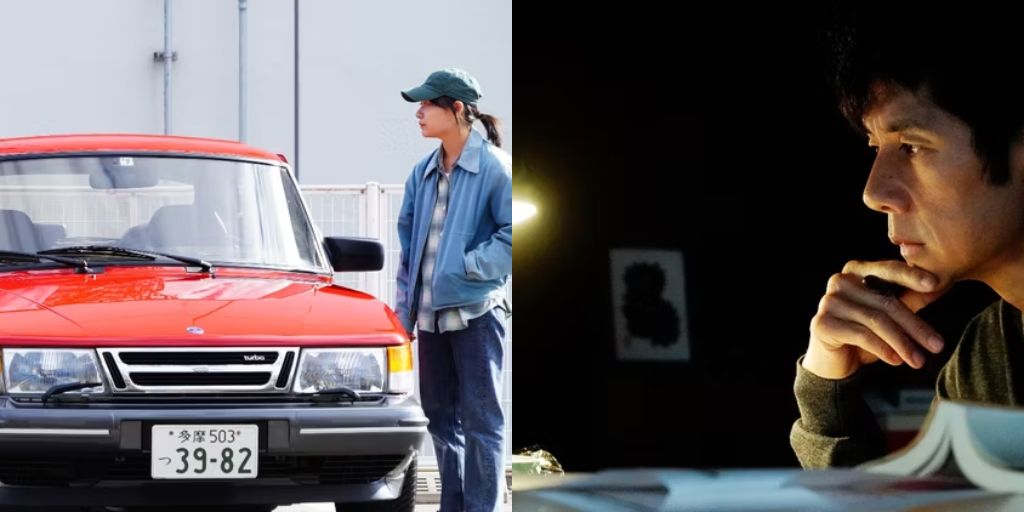
Still from Drive My Car (Credit: Max)
Even though the film’s plot—a reserved playwright working on a Chekhov play without a clear ending—might seem complex, Hamaguchi tells it with genuine emotion. The intricate feelings that Yusuke experiences are universal and relatable to people from any culture.
“Drive My Car” is a prime example of slow-burn cinema, a genre that can sometimes fall into predictable patterns. However, Hamaguchi’s confident direction allows the film’s lengthy runtime to reveal new aspects of Yusuke’s character throughout the “Uncle Vanya” production.
The film’s deliberate pacing draws viewers into Yusuke’s perspective, where his surroundings become a stage for showing his personal struggles. His life and his art are shown as interacting elements that both reflect and challenge each other.
‘Drive My Car’ Highlights Simple Yet Poetic Storytelling
When talking about a powerful film like “Drive My Car,” it is tempting to use grand language. Yet, it’s important to appreciate the film’s simple and beautiful approach. The story involves everyday tasks like making appointments, driving to work, and preparing for a play.
It presents these routine aspects of life in a thoughtful and reflective way. The relationship between Yusuke and his driver, Misaki, develops naturally during their time together in the car. As they spend time in the confined space of the car, they share deep secrets and Misaki helps Yusuke step out of his emotional shell.
Hamaguchi’s storytelling is clear and effective, showing that empathy is crucial in going through life’s difficulties. The film uses the metaphor of Misaki driving Yusuke to symbolize his need for guidance in his repetitive life.
Losing a loved one can be so overwhelming that it’s hard to see reality clearly. For Yusuke, the sudden death of Oto makes life feel like an unsolvable puzzle. This is why the multilingual production of “Uncle Vanya,” which includes Japanese, English, Mandarin, and Korean Sign Language, fits his state of mind.
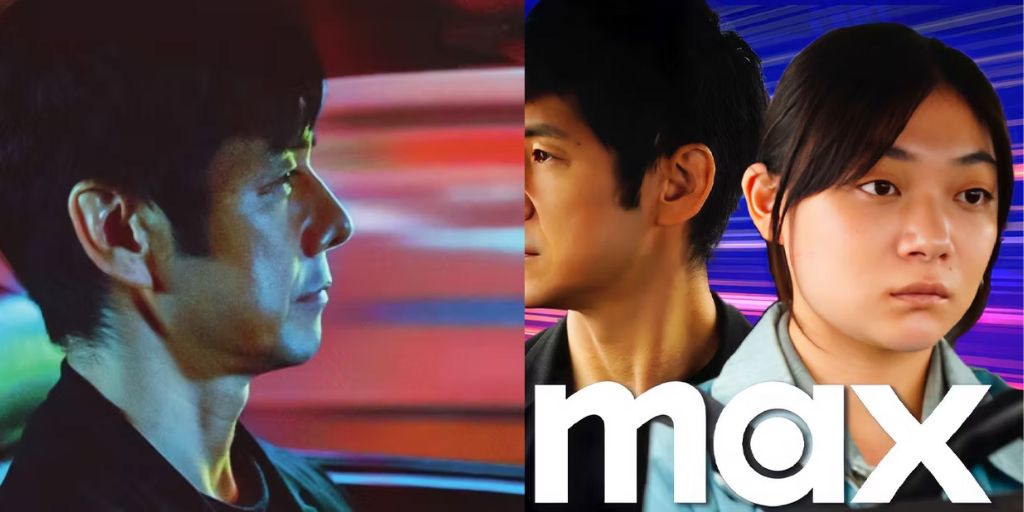
Still from Drive My Car (Credit: Max)
The film’s view of life and grief through different languages reflects Yusuke’s struggle to understand his sorrow. “Drive My Car” is not just a raw portrayal of grief; it is also a testament to the power of art to express and process deep emotions.
Ryusuke Hamaguchi’s film is essential viewing, providing a poetic insight into the act of mourning and the value of artistic expression. “Drive My Car,” directed by Ryusuke Hamaguchi, is a profound film about a grief-stricken actor and playwright dealing with his wife’s death while directing “Uncle Vanya” in Hiroshima.
Known for its slow-burn storytelling and emotional depth, it shows universal themes of loss and healing through art and personal reflection. “Drive My Car” is available to watch on Max in the U.S.
