The Elves, also known as Quendi, are fascinating and mysterious beings in J.R.R. Tolkien’s stories. They play key roles in The Lord of the Rings, The Hobbit, and the TV show The Rings of Power. Compared to Men and Dwarves, the Elves stand out because they are almost immortal.
Among them are Sindarin Elf Legolas and Calaquendi High Elf Galadriel. Both belong to the same family, but their ancestral histories divide into different branches.
The Creation of Elves and Men
The book The Silmarillion tells us more about how Eru Ilúvatar, the supreme being of the Universe, created the Elves and Men, who are called the “Children of Ilúvatar.” The Avari are a group of Elves who chose not to follow the call of the Valar to Valinor, a land of peace and eternal light. Their decision to stay in Middle-earth makes them different from the Eldar, who accepted the Valar’s invitation and journeyed to Valinor.
The story of the Avari begins with the awakening of the Elves, the Firstborn of Ilúvatar. They awoke by the shores of Cuiviénen, a remote and mythical place in Middle-earth.
The Elves were the first beings to awaken in the world. The Valar, powerful beings responsible for shaping and governing the world, learned about the Elves and wanted to protect them from Melkor, the first Dark Lord, later known as Morgoth.
The Valar believed the Elves were special creatures and invited them to Valinor to keep them safe from Morgoth’s evil. In the section “Of the Coming of the Elves and the Captivity of Melkor” from The Silmarillion, Tolkien highlights that this invitation was a key moment in Elven’s history. It caused a division, both physically and culturally, between those who accepted the call (the Eldar) and those who refused (the Avari).
The Avari, whose name means “The Unwilling” in Quenya (the Elvish language), decided to stay in Middle-earth. They made this choice for several reasons: some were afraid of the long journey, others were content with their lives, and some did not trust the Valar.
The Choice of the Avari
Because Tolkien wrote little about the Avari, they remain mysterious. What is known is that they stayed scattered across Middle-earth and, over time, changed in language, culture, and appearance from their kin in the West. Since they chose to stay, the Avari did not gain the same knowledge and wisdom that the Eldar gained from their interactions with the Valar. As a result, their kin viewed them as more rustic or uncivilized.

Still from The Lord of the Rings The Fellowship of the Ring (Credit: Prime Video)
One of the most interesting aspects of the Avari is their relationship with other peoples of Middle-earth, especially with Men. In Tolkien’s works, it is suggested that the early Men who awoke in the eastern parts of Middle-earth first met the Avari.
These early encounters helped Men form their first impressions of the Elves. However, as time passed, the Avari became more secretive and hidden. They faded into obscurity as the more powerful Elven kingdoms of the Eldar and Sindar became more dominant.
The Avari’s Life in Middle-earth
The Avari’s life in Middle-earth was marked by both beauty and struggle. Unlike the Eldar, who enjoyed the light and safety of Valinor, the Avari faced the dangers of a world plagued by darkness and evil. They lived in various places across Middle-earth, including forests, mountains, and valleys. Their homes were often hidden and hard to find, which added to their mystery.
The Avari were known for their unique cultures and traditions. They developed their own languages and customs, separate from those of the Eldar. These differences made them interesting but also created misunderstandings with other Elves. The Avari held onto their way of life, focusing on living in harmony with nature.
The Avari had a strong connection to the land. They respected the natural world and saw themselves as part of it. This relationship with nature influenced their art, music, and stories. They created beautiful songs about their surroundings, celebrating the beauty of Middle-earth. However, their isolation also meant that they could not easily share their culture with others.
The Threat of Darkness
Though they were often overlooked in Tolkien’s narratives, the Avari played an important role in the larger story. Their choice to stay in Middle-earth came with tragic consequences. As they remained behind, the land began to change. Darkness and corruption grew stronger due to Morgoth’s influence.
Morgoth’s rise to power brought suffering to all free peoples, including the Avari. While the Eldar found safety in Valinor, the Avari faced the full impact of Morgoth’s evil. They witnessed the devastation he caused and the chaos that followed.
One idea in Tolkien’s lore is that Orcs were originally Elves who were corrupted by Morgoth. Because the Avari remained in dangerous areas of Arda, far from the protection of the Valar, they were vulnerable to Morgoth’s attacks. He captured many of them, subjecting them to torture and dark magic. This dark sorcery twisted their bodies and minds, transforming them into creatures that served Morgoth.
In The Two Towers, Treebeard tells Merry and Pippin about Trolls, saying, “…Trolls are only counterfeits, made by the Enemy in the Great Darkness, in mockery of Ents, as Orcs were of Elves.” This connection between the Avari and the Orcs highlights the tragic fate of those who remained behind.
The Evolution of the Avari’s Story
Throughout his career, Tolkien revisited the origins of Orcs multiple times. One major concern he had was how High Elves could become such twisted forms as Orcs. In later writings, he considered the idea that Orcs might have been created from Men instead of Elves, as Men were more easily corrupted. This ongoing scheme of the Avari and Orcs adds depth to the story of Middle-earth.
The Avari’s story is complex, filled with themes of choice, consequence, and resilience. While they may not be central to The Lord of the Rings, they contribute to the richness of Tolkien’s mythology. Their experiences show the impact of decisions and the challenges of living in a world filled with darkness.
The Legacy of the Avari
The Avari’s legacy continues to resonate through Tolkien’s works. Their choice to stay in Middle-earth serves as a reminder of the strength found in remaining true to oneself, even in difficult circumstances. The Avari embodies the spirit of independence and the importance of choices in shaping one’s destiny.
Despite their tragic fate, the Avari represent hope and endurance. They survived in a world filled with threats and maintained their identity even as darkness surrounded them. This resilience adds depth to the full mythology and highlights the varied experiences of the Elves.
A Different Perspective on Elves
The Avari also provides a different perspective on what it means to be an Elf. While the Eldar experienced enlightenment and growth in Valinor, the Avari lived in a more primitive state, facing the raw realities of Middle-earth. This contrast allows readers to see the complexity of the Elvish experience, showcasing different paths and outcomes.
The interactions between the Avari and other peoples of Middle-earth, especially Men, illustrate how choices and relationships shape identities. The Avari’s early encounters with Men influenced their understanding of the Elves and contributed to the myths and stories that emerged in later generations.
The Role of Nature
The Avari’s close relationship with nature stands out in Tolkien’s stories. Their deep respect for the land and its creatures highlights the importance of harmony with the natural world. The Avari saw themselves as part of the cycle of life and believed in living sustainably. This connection to nature influenced their way of life, art, and traditions.
As custodians of the land, the Avari understood the value of preserving the environment. Their songs and stories reflected their appreciation for the beauty of Middle-earth, celebrating the forests, rivers, and mountains that surrounded them. This deep bond with nature serves as a powerful reminder of the importance of caring for the Earth.
The Mystery of the Avari
The mystery surrounding the Avari adds intrigue to Tolkien’s legendarium. Because little is known about them, readers are left to ponder their lives and experiences. This ambiguity encourages imagination and invites fans to create their own stories about Avari.
Tolkien intentionally left many details about the Avari open to interpretation. This choice allows readers to engage with the material and show the themes of choice, consequence, and the complexities of existence. The Avari embodies the idea that not all stories are fully told and that some mysteries remain.
Conclusion: The Avari’s Place in Tolkien’s World
In the grand scheme of Tolkien’s world, the Avari hold a unique and essential place. Their story illustrates the richness and complexity of Elven’s life, emphasizing the themes of choice, consequence, and resilience.
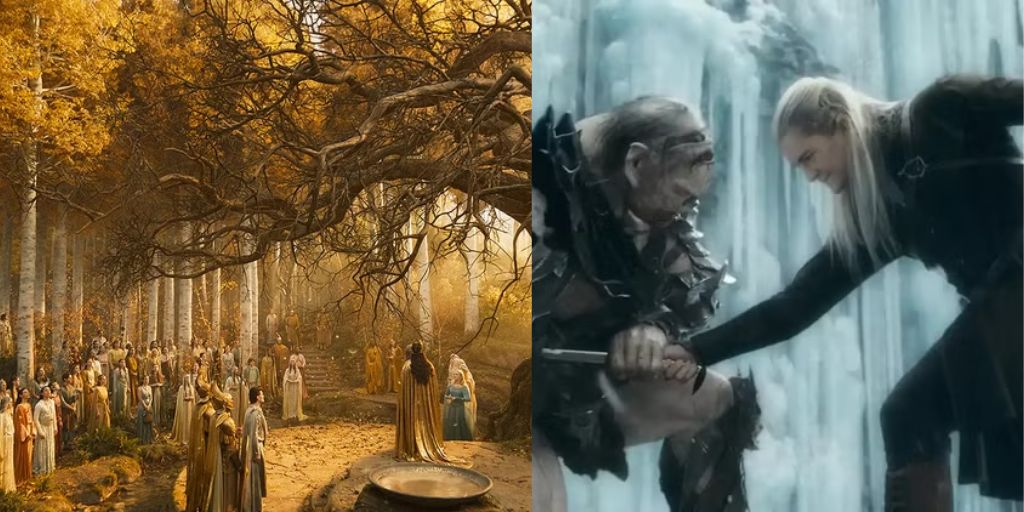
Still from The Lord of the Rings The Fellowship of the Ring (Credit: Prime Video)
While they may not be as celebrated as the Eldar, the Avari contribute to the depth of Middle-earth, reminding us of the strength found in embracing one’s identity and the lasting impact of choices.
The Avari serves as a testament to the diverse experiences of the Elves and the importance of their role in the wider mythology.
Their connection to nature, relationship with other beings, and tragic fate enrich Tolkien’s storytelling. The Avari reminds us that every choice shapes our path and that even in darkness, there can be beauty and strength.
Great art invites people to think deeply. It does this not by being confusing, but by encouraging viewers to think about new ideas in a unique way. Alex Garland’s sci-fi film, Annihilation, is great art because it makes its audience feel uneasy. The story takes unexpected turns, especially for viewers who expect a typical sci-fi action movie.
This unpredictability can frustrate viewers who want clear answers and a straightforward story. The movie goes into the unexpected, but it does so intentionally. For example, scenes like Tessa Thompson growing leaves and people being attacked by a bear that screams like a human are both frightening and specific.
Alex Garland’s Journey as a Filmmaker
Alex Garland first became known for his writing. His screenplays for movies like 28 Days Later and Never Let Me Go received much praise and attention. 28 Days Later, which came out in 2002, changed how people viewed zombie films. It was not just about the horror; it also had themes of survival and human nature. This film showed that Garland had a talent for creating stories that made viewers think.
In 2014, Garland made his directorial debut with Ex Machina. This film about artificial intelligence was both thrilling and thought-provoking. It shows what it means to be human and how technology affects our lives. Ex Machina was a success, and it proved that Garland could also be an accomplished director. He continued to gain recognition in the film industry for his unique storytelling style.
His latest film, Civil War, takes a different approach. It is more grounded in reality, focusing on themes that are more relatable. However, it still carries deeper meanings, typical of Garland’s style. Before Civil War, all of Garland’s films leaned heavily into abstract ideas and complex themes. Annihilation, in particular, is filled with metaphor. It aims to put viewers in a dreamlike state similar to the characters in the film.
What Is Annihilation About?
So, what is Annihilation really about? In simple terms, it’s a film about cancer. The movie does not directly say, “It’s about cancer,” but it becomes clear very quickly. Within the first 15 minutes, the film sets up a premise: “What if the Earth — that is, the planet itself — got cancer?”
This idea is central to the plot. The story follows a biologist named Lena, played by Natalie Portman. Lena goes into The Shimmer, a mysterious area that seems to be a portal to another dimension.
She joins a team of scientists, including Dr. Ventress (Jennifer Jason Leigh), Thorensen (Gina Rodriguez), Sheppard (Tuva Novotny), and Radek (Tessa Thompson), to uncover what is happening inside The Shimmer.
Lena is motivated to enter The Shimmer after her husband, Kane (Oscar Isaac), returns from there changed. He is not the same person she knew. His transformation raises questions about what happened inside The Shimmer and what it means for their relationship.
The movie’s metaphor about cancer is further developed through Lena’s first lecture at Johns Hopkins University. In this scene, she talks about cell division and how cells can rapidly divide and mutate. This explanation connects to the idea of cancer.
The film then cuts back three years to when a strange event struck a lighthouse in the Southern Reach, leading to the expansion of The Shimmer. This event represents how cancer begins.
At first, everything seems normal, but then something changes. In place of normalcy, there is something that mutates and expands. This imagery mirrors how cancer can suddenly strike, even in people who are otherwise healthy.
Inside The Shimmer: Discovering Mutations
Once Lena and her team enter The Shimmer, they start noticing various mutations around them. These mutations serve as representations of cancer, with the tumor at the center of The Shimmer affecting the surrounding cells. Garland takes a biological phenomenon and presents it in a way similar to the classic film Fantastic Voyage, but with a twist. Instead of scientists shrinking down to show a human body, they investigate the Earth itself as if it is a living organism.
The movie portrays how mutations affect the environment inside The Shimmer. Everything becomes distorted. As Radek explains to the group, they are essentially inside a prism, which means that everything they see is refracted in unusual ways. This idea reflects how cancer affects a healthy body. Minds, bodies, and the very fabric of life can become twisted and altered, just as cancer does to those who suffer from it.
Garland presents these ideas with care. Unlike other films, such as The Cloverfield Paradox, where anything can happen without explanation, Annihilation maintains consistency. It shows mutations as they would occur in a living body, and Garland does not simply depict everything as grotesque or beautiful.
There is a thoughtful balance. Life grows and mutates, leading to both striking images and disturbing creatures. For example, viewers see a beautiful white deer with branches for antlers, alongside the frightening mutant bear.
Symbolism and Themes in Annihilation
Although Garland loosely adapted Jeff VanderMeer’s novel of the same name, certain details in the film strengthen the metaphor of cancer. One key aspect is that the expedition team consists entirely of women. This choice has a plot-based explanation, as the film suggests that previous teams were all male.

Still from Annihilation (Credit: Netflix)
This shift could potentially change the results of their mission. However, it also resonates with the fact that breast cancer is the second-most common form of cancer, affecting many women.
In addition to the team’s gender, all the characters are doctors in some capacity. However, the only character referred to as “Doctor” is Dr. Ventress. Although she is a psychologist, her role in the story goes beyond her profession. She watches as people enter The Shimmer, often without returning.
This situation parallels an oncologist who loses many patients. The connection between knowledge and cancer is a vital theme in the film. Dr. Ventress has cancer herself, showing that even with knowledge, there is no defense against this disease.
The Emotional Journey of the Characters
Throughout Annihilation, the characters experience deep emotional struggles. Lena’s journey is not only physical but also emotional. She is searching for answers about her husband and herself. Her relationship with Kane becomes central to her motivations.
When he returns changed, Lena is forced to confront her feelings of loss and confusion. She grapples with the fear of losing someone she loves and the uncertainty of what has happened to him.
The other characters also deal with their own issues. Dr. Ventress, for instance, faces her own mortality as she battles cancer. Her experience highlights the theme of acceptance. As the team ventures deeper into The Shimmer, they each confront their fears and regrets. This journey reflects how people deal with grief and the inevitability of change.
The Impact of The Shimmer
The Shimmer itself is a powerful symbol in the film. It represents the unknown and the chaotic nature of life. Just as cancer can strike without warning, The Shimmer expands and mutates everything it touches.
The environment inside The Shimmer is constantly shifting, reflecting how unpredictable life can be. It challenges the characters to confront their fears and the unknown aspects of themselves.
As the team goes through The Shimmer, they encounter various dangers and wonders. Each encounter reveals more about themselves and the nature of existence. The beauty and horror of the mutations they witness serve as a reminder of the fragility of life. It forces them to question their understanding of reality and what it means to be human.
The Conclusion of the Journey
As the film progresses, the characters reach a climax in their journey. The emotional and physical challenges they face culminate in a powerful confrontation with the central themes of the film. Lena must confront the ultimate manifestation of The Shimmer and what it represents. This moment brings together the ideas of transformation, loss, and acceptance.

Still from Annihilation (Credit: Netflix)
The ending of Annihilation leaves viewers with many questions. It does not provide a clear resolution, which can be both frustrating and thought-provoking. The ambiguity encourages the audience to reflect on their interpretations of the film.
Just like cancer, some aspects of life remain unanswered and complex. The film’s open-ended conclusion mirrors the unpredictability of life and the journey of understanding ourselves and the world around us.
Annihilation’s Reception and Legacy
Annihilation received mixed reactions from audiences and critics. Some viewers praised its bold approach to storytelling and its scheme of complex themes. Others found it confusing and frustrating, especially those who preferred straightforward narratives. This divide highlights the film’s artistic intention to challenge viewers and encourage them to think deeply about the concepts presented.
Despite the mixed reception, Annihilation has left a lasting impact on the sci-fi genre. Its unique blend of horror, science fiction, and metaphor has sparked discussions about its themes and meanings. The film’s scheme of cancer as a metaphor resonated with many viewers, prompting conversations about health, change, and the human experience.
Annihilation is not just a film about a mysterious phenomenon. It is a deep showing of life, death, and the human condition.
Through its characters, symbols, and metaphors, the film encourages viewers to reflect on their own experiences with change and loss. It invites them to confront the unknown and to think about what it means to be human in a world that can be both beautiful and terrifying.
By using a unique narrative style and thought-provoking themes, Alex Garland has created a film that challenges audiences. Annihilation serves as a reminder that great art invites interpretation and introspection.
It leaves viewers unsettled, pushing them to think about ideas that are often hard to face. The movie’s ability to provoke thought and emotion is what makes it a significant work of art in modern cinema.
Alex Garland’s Annihilation is a visually stunning and thought-provoking film that goes into themes of self-destruction, identity, and the human condition. At the heart of this narrative is Lena, played by Natalie Portman, whose story serves as an emotional anchor amidst the chaos of The Shimmer, a mysterious and deadly environment.
Central to Lena’s journey is the metaphor of cancer, which permeates the film in various ways. This article shows how cancer relates to Lena’s story, examining her struggles with self-destruction, the impact of her strained marriage, and the overarching themes of transformation and mortality.
Lena’s Journey: The Heart of Annihilation
Lena’s story is the emotional core of Annihilation. If you remove her complex relationship with her husband, Kane, her guilt over cheating, and her desperate desire to find a way to save him, you strip away the film’s emotional depth.
Without these elements, the narrative would become a detached scheme of five characters facing The Shimmer, lacking the personal stakes that make the story compelling. Lena’s flashbacks reveal the humanity that ties individuals to their past, highlighting our regrets, hopes, and dreams. Her quest for redemption is underscored by the weight of her actions, particularly her infidelity.
When Lena talks about rescuing Kane, she does not simply express love; instead, she states, “I owe him.” This phrase encapsulates her guilt and the burden she feels for betraying him. Her journey becomes one of self-discovery, where she seeks not only to confront the unknown within The Shimmer but also to come to terms with her own choices and their consequences.
The Role of The Shimmer: A Metaphor for Cancer
The Shimmer is not just a backdrop for the narrative; it symbolizes a malignant entity that transforms everything it touches. Throughout the film, Garland uses imagery associated with cancer to convey the idea of uncontrolled growth and mutation. The environment inside The Shimmer changes rapidly, reflecting how cancer cells proliferate and disrupt healthy tissue.

Still from Annihilation (Credit: Netflix)
As Lena and her team venture deeper into The Shimmer, they begin to experience the effects of this environment on both their physical and mental states. The mutated creatures they encounter—such as the bear that mimics human screams—serve as a representation of the horror of cancer.
The bear, a once-familiar creature, becomes a monstrous reflection of fear and the invasive nature of the disease. This theme of mutation extends beyond the physical; it speaks to the emotional and psychological changes that come with grappling with cancer, both for the individual and their loved ones.
The Characters’ Fates: Confronting Death
As Annihilation progresses, the fates of the characters become increasingly apparent. The deaths of Sheppard and Thorensen are foreshadowed early on, allowing viewers to reflect on the nature of mortality. Garland doesn’t sensationalize their deaths; instead, he presents them as inevitable outcomes of their journey.
Radek’s observation that Ventress “wants to face it” while Lena “wants to fight it” encapsulates the different ways individuals confront death. Yet, ultimately, Lena’s journey leads her to acceptance.
Each character’s encounter with The Shimmer results in a form of death—whether literal or metaphorical. Ventress’s journey culminates in her acceptance of annihilation, while Lena’s path is marked by a struggle against the inevitable.
The film captures the various responses to mortality: some confront it head-on, while others try to fight against it until the end. This scheme of death echoes the experience of cancer patients and their loved ones, who often face complex emotions and varying responses to the disease.
The Metaphor of Cancer: More Than Just Death
While cancer is often associated with death, Annihilation expands this metaphor to show the deeper implications of self-destruction. The film captures the essence of cancer as a condition that not only leads to physical demise but also disrupts relationships and identities. As viewers witness the mutations within The Shimmer, they are reminded that cancer can also mean a gradual change in one’s sense of self.
The visuals throughout the film emphasize this concept. For example, the dead soldier found in the swimming pool has disintegrated and expanded, resembling how cancerous cells invade and destroy healthy tissues. The Lighthouse, a key location in the film, takes on the appearance of a tumor, symbolizing the invasive nature of The Shimmer.
If Garland had wanted to depict death merely, he could have used more conventional imagery, such as blood or ashes. Instead, he chooses to represent death through mutation, illustrating how cancer changes not just the body but the very essence of a person.
Self-Destruction: A Literal Interpretation
In interviews, Garland has described Annihilation as a film about “self-destruction.” On a metaphysical level, this concept resonates throughout the narrative. The characters’ experiences inside The Shimmer reflect their internal struggles, often leading to self-destructive behaviors. Ventress and Lena have a conversation that highlights the distinction between self-destruction and suicide, emphasizing that self-destruction can manifest in various forms.
When viewed through the lens of cancer, self-destruction takes on a more literal meaning. Cancer represents the body turning against itself, a process that is both biological and metaphorical. As Lena confronts her alien mirror in the Lighthouse, the visual representation of cancer becomes stark.
Cancer is not an external threat; it is a part of the self that has gone awry. The only way Lena can confront this alien aspect of herself is through destructive means, such as the phosphorous grenade—an analogy for chemotherapy. This representation speaks to the dual nature of cancer treatment, which can save lives but also inflict pain.
The Grand Finale: Garland’s Signature Style
Garland is known for crafting powerful finales, and Annihilation is no exception. The film’s climactic sequence unfolds as Lena enters the Lighthouse and descends into its depths.
The score by Geoff Barrow and Ben Salisbury envelops the viewer, creating a surreal atmosphere that blurs the lines between time and space. As Ventress delivers her final monologue before dissolving into light, the themes of annihilation and transformation come to a head.
This sequence is a stunning culmination of Lena’s journey. When her drop of blood floats into the chasm beneath the Lighthouse and rapidly mutates into her mirror version, it serves as a potent visual metaphor for the inescapable nature of cancer. Just as cancer cells can replicate and transform, Lena confronts a version of herself that embodies her fears, regrets, and the consequences of her actions.
The mirror self represents the fragmentation of identity that often accompanies personal crises. It forces Lena to confront not only her past but also the choices she made that led her to this moment. The intense dance with her mirror self becomes a haunting scheme of self-acceptance and the confrontation of one’s inner demons.
The Cryptic Ending: Reflections on Change
The film’s conclusion leaves viewers with more questions than answers. When Lena reunites with Kane, it becomes clear that he is not the same person she once knew. Their relationship has been irrevocably altered by their experiences in The Shimmer.
This transformation reflects the broader themes of change and loss that permeate the film. The characters, like cancer patients, cannot return to their former selves after facing the harrowing journey.
The ending also ties back to the idea of cancer being more than just a medical condition. It prompts viewers to consider how humanity, in its quest for progress, can sometimes act in ways that are cancerous to the environment. The film invites reflection on the ways humans can disrupt nature, drawing parallels between the invasive qualities of cancer and the impact of human actions on the planet.
Divergence from the Source Material
Annihilation diverges significantly from Jeff VanderMeer’s novel, while still capturing its essence. In the book, the characters lack names and are referred to by their professions, which creates a sense of distance and anonymity.
The narrative is primarily presented through the biologist’s journal, offering a limited perspective on events. While the film retains elements of this structure, it allows for a deeper scheme of Lena’s emotional journey and relationships.
Garland’s adaptation succeeds because it embraces the core themes of the novel while expanding on them. The film shows the inner workings of The Shimmer and its effects on the environment, allowing for a more nuanced interpretation of the cancer metaphor.
The government’s inability to comprehend or control The Shimmer mirrors the struggles faced by those dealing with cancer—an ailment that can evade understanding and defy treatment.
The Broader Implications: Humanity and Cancer
Garland’s decision to use cancer as a central metaphor invites deeper contemplation about humanity’s relationship with the environment. As the film progresses, viewers are prompted to reflect on how humanity can become a destructive force.
The mutation of the show and its inhabitants within The Shimmer raises questions about environmentalism and the consequences of human actions. Are we, in our pursuit of progress, becoming cancerous to the Earth?
The film offers a critique of governmental intervention and impotence in the face of environmental crises. Just as the characters are unable to fully comprehend The Shimmer, society struggles to confront the complexities of its own impact on nature. This allegorical reading extends beyond cancer, urging viewers to consider broader themes of identity, transformation, and the interconnectedness of all living beings.
The Nature of Alienation in Annihilation
While the film presents itself as a sci-fi narrative, it simultaneously reflects the deeply human experience of grappling with change and alienation.

Still from Annihilation (Credit: Netflix)
As Lena confronts the alien aspect of herself, the film shows the psychological toll of self-destruction. The fear of becoming unrecognizable—both to oneself and to others—resonates with the experience of those grappling with illness, loss, or trauma.
The alien elements within Annihilation serve to amplify the emotional and psychological struggles faced by the characters. Just as cancer can alienate individuals from their bodies and identities, The Shimmer distorts reality and creates a sense of disconnection. This scheme of alienation speaks to the broader human experience, highlighting the vulnerability that comes with confronting the unknown.
Conclusion: The Legacy of Annihilation
Annihilation transcends its genre to deliver a profound scheme of cancer, self-destruction, and the complexities of the human experience.
Lena’s journey serves as a lens through which viewers can reflect on their own struggles with identity, loss, and the inevitability of change. The film’s rich symbolism and haunting imagery invite multiple interpretations, encouraging ongoing discussion and contemplation.
In a world where cancer remains a prevalent and devastating reality for many, Annihilation confronts the cold, uncaring horror of it all. By portraying the invasive nature of cancer as a metaphor for personal and environmental transformation, Garland creates a film that resonates long after the credits roll.
As viewers grapple with the film’s ambiguous ending, they are left to ponder the intricate relationship between humanity, self-destruction, and the enduring impact of their choices.
Through Lena’s story, Annihilation ultimately reminds us that the fight against cancer—whether in a literal sense or as a metaphor for personal struggles—is an ongoing journey filled with complexities, challenges, and the potential for transformation.
