After a lot of teasing and a long wait, we finally see the Balrog in action in the Season 2 finale of The Lord of the Rings: The Rings of Power. In the episode titled “Shadow and Flame,” King Durin III (played by Peter Mullan) continues to dig deeper into the mithril mines of Khazad-dûm.
He does this under the influence of his own Ring of Power. While digging, a fiery glow catches him and his son, Prince Durin IV (played by Owain Arthur), by surprise. The Balrog, awakened by the digging, climbs up the shaft to confront the two Durins. However, he is ultimately buried in an epic fight with Durin the Elder.
We know from Peter Jackson’s The Lord of the Rings: The Fellowship of the Ring and J.R.R. Tolkien’s novel that this particular Balrog is known as Durin’s Bane. He is responsible for the downfall of Khazad-dûm, the wealthiest of all Dwarven realms.
His story is directly tied to the discovery of mithril, which brought the Dwarves a whole age of wealth and prosperity. However, it also awakened something dark, both within themselves and in the mountain.
As the Dwarves dug deeper to extract more of this miracle ore, they discovered that the depths were home to endless riches and this ancient evil, a servant of Morgoth himself.
A Balrog Is an Evil Spirit That Predates the World Itself
Balrogs are described by Gandalf (played by Ian McKellen) in The Fellowship of the Ring as demons of the ancient world. This description is essentially correct. Galadriel (played by Morfydd Clark) says in her very first line in The Rings of Power, “nothing is evil in the beginning,” and this was also true for the Balrogs.
They first came into being as Maiar, angelical beings created by Erú Ilúvatar, the equivalent of God in Tolkien’s Legendarium. They were once powerful spirits who served the Valar and helped them shape the world of Arda and Middle-earth.
When Melkor, a particularly rebellious Valar later known as Morgoth, broke away from his peers, many of the Maiar followed him into Arda. They became corrupted by the Dark Lord and turned into his evil minions. The transformation from good to evil is a significant part of their story.
Balrogs are extremely powerful and wield many forms of dark magic. They are present at many important events of the First Age under Morgoth’s orders. The Dark Lord rarely leaves his fortress of Angband in the far North. Instead, he sends his Balrogs to carry out his orders, and they usually accomplish these tasks excellently.
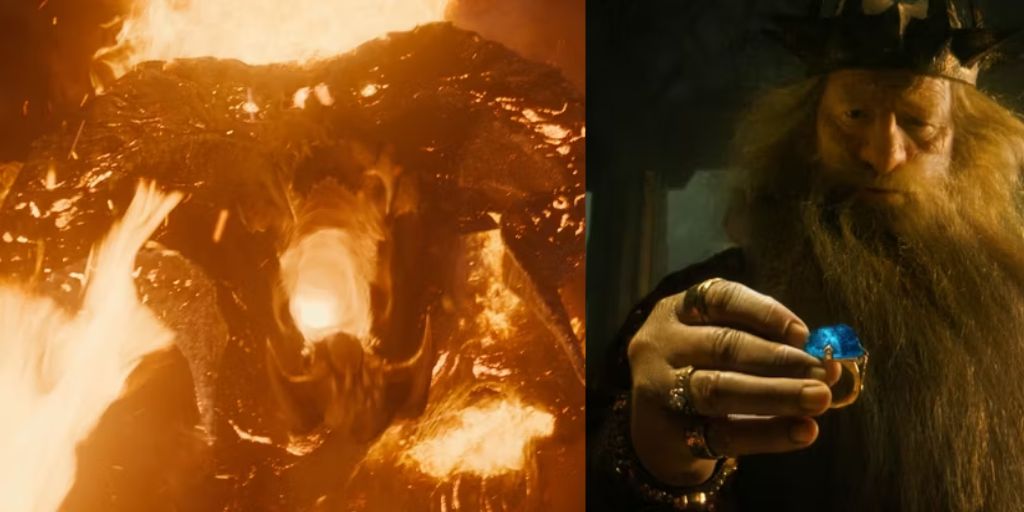
Still from The Rings of Power (Credit: Prime Video)
Balrogs first appear to the Elves when Feänor, who is the grandfather of Celebrimbor (played by Charles Edwards) and the creator of the Silmarils, attempts to attack Angband directly after the Dagor-nuin-Giliath, or “Battle Under the Stars.”
Feänor manages to fight multiple Balrogs at once, but he ultimately dies from a wound inflicted by one of them. This battle highlights the Balrogs’ formidable strength and the risk that comes with confronting them.
Later on, during the fall of the hidden Elven realm of Gondolin, another epic tale unfolds as the Elf Glorfindel battles a Balrog by himself. He does this to allow his kin to escape the destruction of their home. Glorfindel perishes in this duel, but his heroic acts impress the Valar.
They decide to reembody him with greater powers and send him back to Middle-earth during the Second Age. A version of his tale is told in The Rings of Power when Elrond (played by Robert Aramayo) and Gil-galad (played by Benjamin Walker) discuss the Song of the Roots of Hithaeglir in the fifth episode, “Partings.”
Slaying a Balrog is so difficult that it ultimately earns Glorfindel a strong reputation. In the novel The Fellowship of the Ring, he is the one Elrond (played by Hugo Weaving) sends to take Frodo (played by Elijah Wood) to Rivendell instead of Arwen (played by Liv Tyler). This decision is made because they know the Nazgûl would fear him.
The appearances of Balrogs have also changed from the books to the screen. There are many descriptions of these demons throughout Tolkien’s writings. They are usually around twice the size of a grown man and have a flaming mane on their backs but do not have wings.
However, Peter Jackson’s portrayal of Durin’s Bane is iconic. He is depicted as a being made of pure darkness, with his eyes and silhouette only visible because of the fire that permeates his skin. If The Rings of Power portrayed the Balrog differently, it would feel strange to many viewers.
According to Tolkien, Durin’s Bane Reveals Itself Only in the Third Age of Middle-earth
Somehow, one Balrog survives all the battles fought in the First Age and the War of Wrath, which is depicted in the prologue of The Rings of Power.
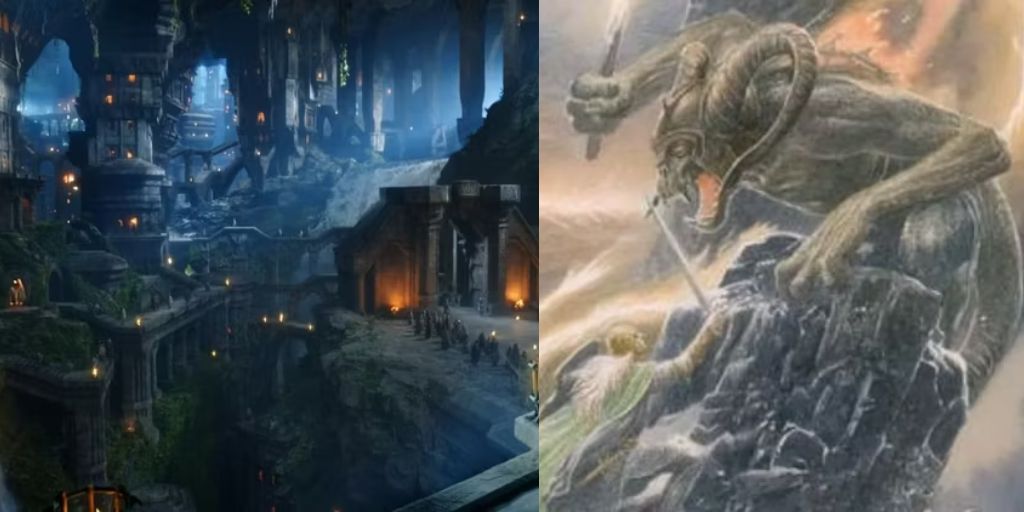
Still from The Rings of Power (Credit: Prime Video)
These events happen millennia before the events of the Prime Video series, which is why Gandalf describes the demon as ancient. It is also unclear how he finds his way into the deep roots of the Misty Mountains, where he takes residence.
Around the year 1600 of the Second Age, the Dwarves of Khazad-dûm—where the Mines of Moria are located, under the peak of Caradhras—discover a new ore called mithril. The Dwarves trade mithril mostly with the Elven smiths of Eregion. This trade creates a period of friendship between these two races and also brings economic prosperity to the Dwarves.
According to the books, this friendly relationship lasts until the Third Age. In the year 1980 of the Third Age, the Dwarves awaken the Balrog from his age-long sleep. When that happens, the Balrog wreaks havoc on Khazad-dûm, forcing the Dwarves to flee their homeland.
He also kills King Durin VI, which earns him the title Durin’s Bane. After this incident, Khazad-dûm is left in ruins and becomes the demon’s lair. In the following centuries, it is infested by Orcs.
There are two failed attempts to recolonize Moria during the remainder of the Third Age. The first attempt is made by Dáin Ironfoot (played by Billy Connolly) after the Battle of Azanulbizar, which is quickly depicted in The Hobbit: An Unexpected Journey.
The second attempt is by Balin (played by Ken Stott). This second attempt is referenced in both the movie and the novel of The Fellowship of the Ring. Both attempts fail, and Balin’s tomb is discovered by the Fellowship of the Ring during their passage through Moria.
The Balrog and the Dwarven Rings May Spell Doom for Khazad-dûm Very Soon
The Balrog made a brief appearance in Season 1, Episode 7, titled “The Eye.” However, this appearance was only a glimpse. It served as an omen of the dark fate awaiting Khazad-dûm. It is only in “Shadow and Flame” that the demon fully reveals himself.
The Balrog may have only taken Durin the Elder with him to the depths of the mountain, but he is also seen by Durin the Younger, his wife Disa (played by Sophia Nomvete), Narvi (played by Kevin Eldon), and another unnamed Dwarf.
In their final scene of the episode, the Dwarves do not mention the Balrog; instead, they talk about Durin the Elder’s death. However, there will likely be repercussions in Season 3 because of the Balrog’s awakening.
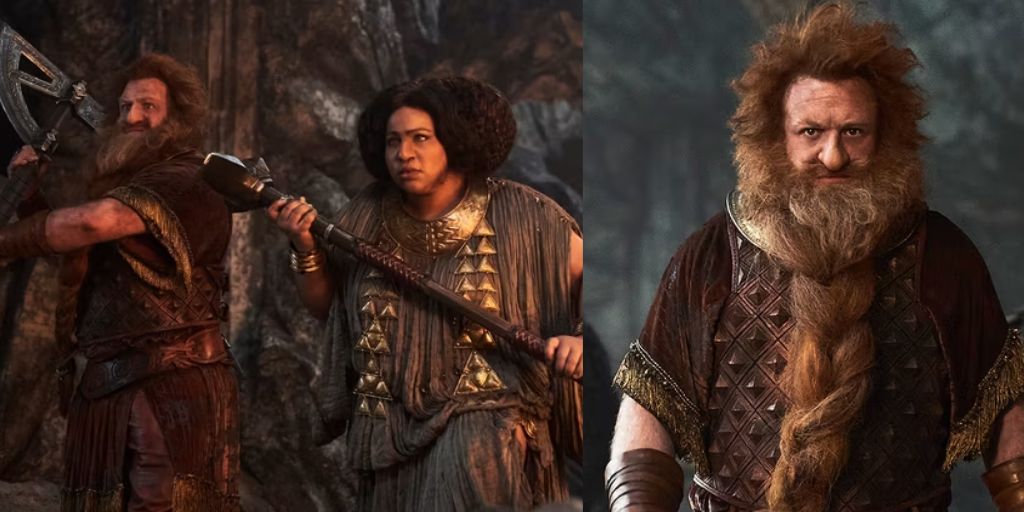
Still from The Rings of Power (Credit: Prime Video)
The Rings of Power has made many significant changes to the timeline of Tolkien’s original writings. Tolkien’s notes in the appendices of The Lord of the Rings state that the Balrog slept throughout the entire Second Age. However, the series shows him fully awake, which is a deviation from the original lore.
The show has been taking a lot of creative liberties, usually for the better. Teasing the awakening of Durin’s Bane without following up on it would seem like a waste. Still, the timeline inconsistencies are significant, and it would not make much sense for the Balrog to destroy Khazad-dûm this early in history, a full age before it happens in the books.
Without His Father, Durin IV Must Take the Throne With a Ring of Power
The Dwarves’ final scene in Season 2 shows Durin the Younger, Disa, and Narvi staring at Durin the Elder’s Ring of Power. They discuss all the problems that await the new king.
A possibility is that the Balrog serves as a necessary narrative device to remove Durin the Elder and force Durin the Younger onto the throne, allowing his character to develop further.
He has been openly critical of his father’s use of the ring, but now he is put in a position where he does not have much choice, especially since the other Dwarf lords all wear their own rings.
Durin the Younger is already a beloved character in The Rings of Power. He fights for the Dwarves, is deeply in love with Disa, and has a beautiful friendship with Elrond. However, it is high time he faces some internal struggles, which may come in the form of his father’s ring.
Being aware of the Balrog, he would use it to know the limits of his control over the mountain until the beast’s existence fades into legend. This way, the Balrog can still wake up in the Third Age, with the Dwarves having forgotten all about it.
An interesting detail about Tolkien’s writings is that there are no stories about Durin IV and Durin VI. They are mentioned in passing, but no proper stories are told about them. This gap in Durin the Younger’s story is already being filled by the show.
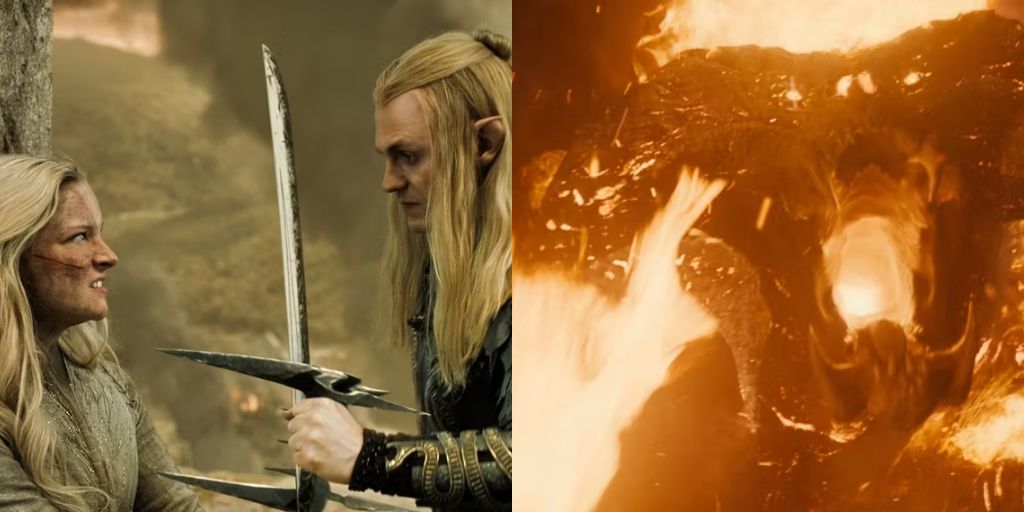
Still from The Rings of Power (Credit: Prime Video)
However, it seems likely that his narrative could lead to a tragic fate for his namesake, Durin VI, millennia later. With Durin the Younger under pressure, Khazad-dûm will likely have to dig even deeper into the roots of the mountain. Durin’s Bane is already awake and angry at the Dwarves. Unfortunately, he will probably become the bane of a different Durin.
Season 2 of The Lord of the Rings: The Rings of Power is now available to stream on Prime Video.
Set nearly 200 years before the events of the highly successful Game of Thrones, House of the Dragon takes viewers on a journey through the history of the Targaryen bloodline, which once ruled the Seven Kingdoms of Westeros for many years.
Game of Thrones fans will already know the Targaryen dynasty’s eventual fate, but this prequel provides a look into a time when the Targaryens were the most powerful family in Westeros. The show shows their strengths, weaknesses, and mistakes, showing how they eventually caused the events that unfolded in Game of Thrones.
The first season of House of the Dragon was crucial in introducing the characters and conflicts that are developed further in the second season, which was released during the summer of 2024. Now that viewers have had time to process the exciting twists and turns of the first season, it is worth taking a look back at each episode and its contributions to the full story.
Episode 2: “The Rogue Prince”
Six months after the events of the first episode, King Viserys faces increasing pressure from all sides as tensions rise across Westeros. Lord Corlys Velaryon urges him to act against the Triarchy, who is causing havoc in the Stepstones.
Meanwhile, Daemon seizes control of Dragonstone and announces his plan to marry his mistress, Mysaria. He even steals a dragon egg, intensifying his conflict with Viserys.
As the King, Viserys must balance personal desires and political demands, leading him to consider marrying Laena Velaryon. However, he shocks everyone by choosing Alicent Hightower instead, straining his relationship with Corlys and Princess Rhaenyra.
A key moment in this episode is a conversation between Rhaenyra and Rhaenys, where Rhaenys bluntly tells Rhaenyra that as a woman, she will never be truly accepted as ruler. This conversation highlights the ongoing power struggle women face, a theme that will resonate throughout the series.
Episode 3: “Second of His Name”
Three years have passed since Viserys married Alicent, and tensions are high as Rhaenyra struggles with the pressure to marry, feeling overshadowed by her half-brother, Prince Aegon. During a royal hunt celebrating Aegon’s second nameday, Rhaenyra argues with her father while rejecting a proposal from Lord Jason Lannister.
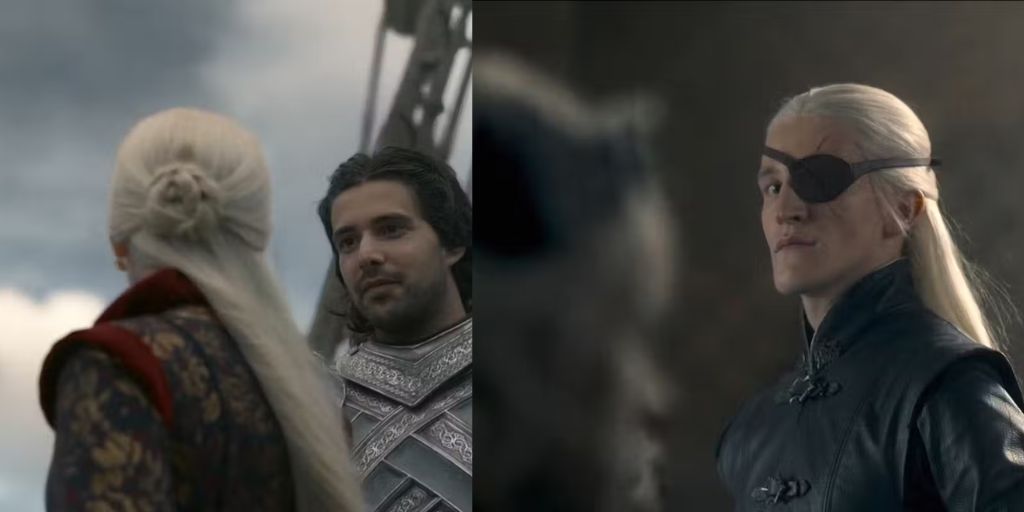
Still from House of the Dragon (Credit: HBO)
Meanwhile, in the Stepstones, Daemon and Corlys fight against the Triarchy. Daemon, driven by the need to prove himself, defeats the Triarchy’s Craghas Drahar with the help of Corlys’ son Laenor and his dragon.
This episode deepens the complex relationship between Rhaenyra and her former best friend turned stepmother, Alicent.
The birth of Aegon introduces uncertainty about Rhaenyra’s claim to the throne, creating tension between the two women. Additionally, the battle scenes remind fans of the epic moments from Game of Thrones, delivering high-stakes action.
Episode 1: “The Heirs of the Dragon”
The story begins with King Jaehaerys presiding over the Great Council at Harrenhal, where Viserys is chosen as his successor instead of Princess Rhaenys. Fast forward eleven years later, and Viserys is now the King of Westeros.
He is eagerly awaiting the birth of a male heir and hosts a tournament in his unborn child’s honor. This episode introduces us to Rhaenyra, who reconnects with her uncle, Daemon, the Commander of the City Watch.
Tragedy strikes when Queen Aemma dies during childbirth, and their newborn son dies shortly after. In the midst of mourning, Viserys declares Rhaenyra as his heir, a bold move that sets the stage for future conflicts in the Targaryen family.
The episode provides a public declaration of the heir to the Iron Throne, and while it may seem like progress after Rhaenys was overlooked, this act only opens the door to challenges Rhaenyra must face.
Episode 6: “The Princess and the Queen”
Ten years after Rhaenyra’s marriage, she gives birth to her third son. However, Queen Alicent immediately becomes suspicious of the child’s parentage. Tensions between the two women are at an all-time high, and their sons’ rivalry adds to the strain. As Alicent’s son Aemond struggles to bond with a dragon, rumors of Rhaenyra’s sons being illegitimate spread throughout the court.
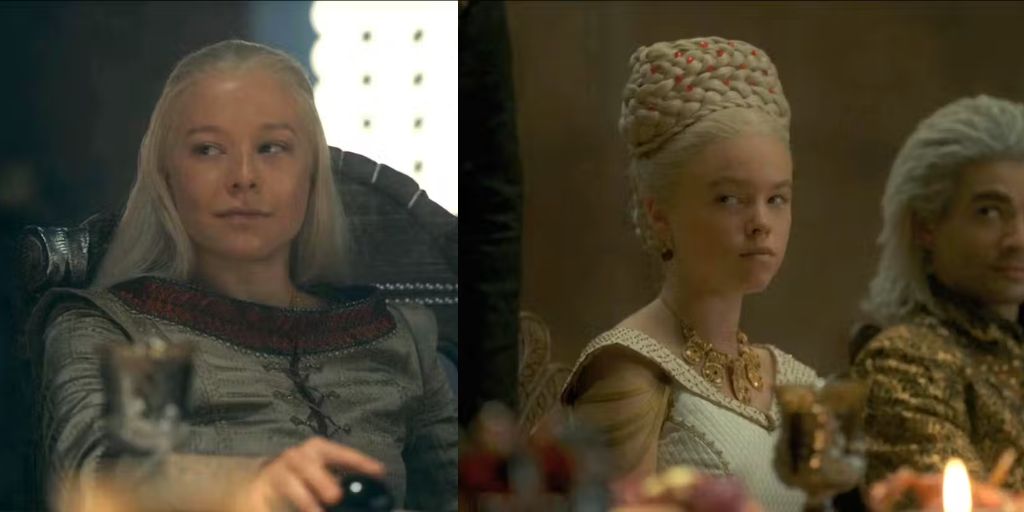
Still from House of the Dragon (Credit: HBO)
This episode marks a transition in the characters. Both Rhaenyra and Alicent have grown older and more bitter, reflecting the decade of unresolved tensions that have passed since their youthful days.
Episode 5: “We Light the Way”
Daemon kills his estranged wife, Rhea Royce, to free himself for another marriage. Meanwhile, Viserys travels to Driftmark to arrange a marriage between Rhaenyra and Laenor, uniting the Targaryen and Velaryon houses.
Both Rhaenyra and Laenor agree to a mutual understanding, allowing them to pursue other relationships while fulfilling their duties. However, Alicent uncovers Rhaenyra’s secret affair with Ser Criston Cole, setting the stage for tension and betrayal. During a pre-wedding feast, Cole, angered by rejection, murders Laenor’s lover, Joffrey Lonmouth.
This episode shows a darker side of Criston Cole and establishes him as one of Rhaenyra’s enemies. His actions, driven by hurt and jealousy, foreshadow further conflict as he aligns himself with Alicent.
Episode 4: “King of the Narrow Sea”
Rhaenyra begins a tour of Westeros to find a potential husband, as ordered by Viserys. Daemon returns to court, mending his relationship with Viserys. However, Daemon soon leads Rhaenyra into a scandal when they sneak out to the Street of Silk, where Rhaenyra experiences a new sense of freedom.
Although Daemon starts to seduce her, he abruptly abandons her, leaving Rhaenyra to seduce Ser Criston Cole. This leads to a series of events where Otto informs Viserys of Daemon and Rhaenyra’s rumored affair. As a result, Daemon is exiled once again, and Viserys orders Rhaenyra to marry Laenor Velaryon.
The choices made in this episode have long-lasting consequences. Cole’s betrayal and Rhaenyra’s strained relationships with Alicent and Viserys create fractures that will only grow deeper as the story unfolds.
Episode 9: “The Green Council”
Following Viserys’ death, Alicent and Otto Hightower move swiftly to place Aegon on the throne. Alicent believes Viserys’ final words meant he wanted Aegon to be king, despite his long-standing support of Rhaenyra.
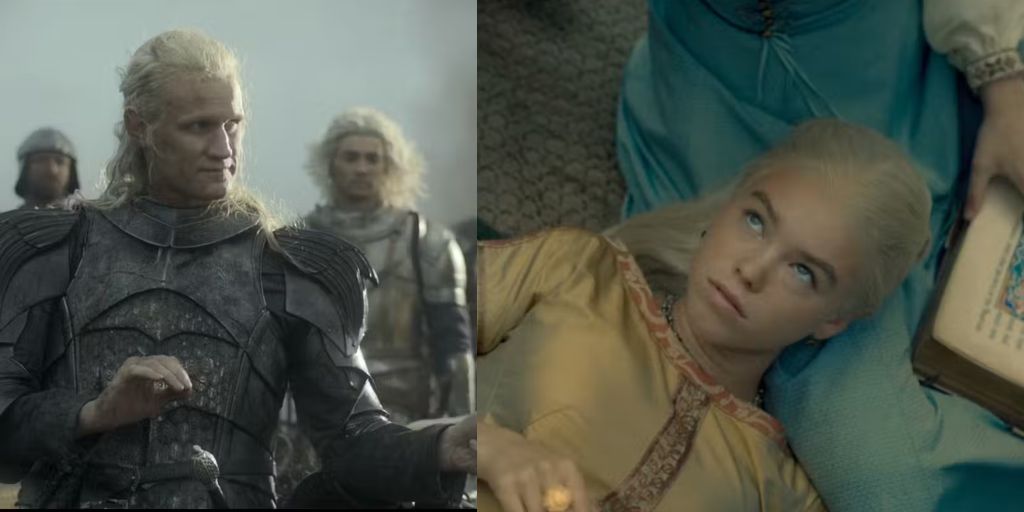
Still from House of the Dragon (Credit: HBO)
A struggle for power unfolds, with Aegon reluctant to accept his role. During Aegon’s coronation, Rhaenys interrupts the event on her dragon, Meleys, but chooses to spare the Greens, instead fleeing to warn Rhaenyra.
This episode highlights the growing fractures within the Greens, particularly between Aegon and Aemond, setting the stage for future internal struggles.
Episode 10: “The Black Queen”
Rhaenyra faces the devastating loss of her father, Viserys, and learns of her half-brother Aegon’s usurpation of the throne. Amidst her grief, Rhaenyra endures premature labor and loses her baby.
She is crowned queen, and her council gathers to plan for war. Rhaenyra’s sons are sent to rally support from the great houses of Westeros. However, tragedy strikes when Aemond’s reckless pursuit of Lucerys on Vhagar leads to Lucerys’ death.
The season ends with Rhaenyra’s heartbreaking transformation from a reluctant ruler to a queen determined to fight for her family and birthright.
Episode 7: “Driftmark”
At Laena Velaryon’s funeral, tensions between the Targaryens and Velaryons continue to simmer. The children clash violently, resulting in Aemond losing an eye after stealing Laena’s dragon, Vhagar.
Viserys attempts to calm the situation by urging reconciliation, but the damage is done. Meanwhile, Rhaenyra and Daemon plot together, and Daemon arranges for Laenor’s death to be faked, allowing him to marry Rhaenyra.
This episode shows how Aemond’s actions shape him into a more formidable character. His newfound bond with Vhagar, the largest dragon, adds to the complex power dynamics of the families.
Episode 8: “The Lord of the Tides”
As Corlys Velaryon falls gravely ill, a battle for succession begins. Vaemond challenges Lucerys’ claim to Driftmark, but Rhaenyra and Daemon return to King’s Landing to defend Lucerys’ legitimacy.
A frail Viserys intervenes, reaffirming Lucerys’ claim. After an intense confrontation where Vaemond insults Rhaenyra, Daemon kills him, and the families attempt a brief reconciliation. However, Viserys’ death soon plunges the realm into chaos.
Viserys’ final act of love for Rhaenyra, defending her children’s right to Driftmark, marks a touching and powerful moment in the show. His death, however, leaves the realm on the brink of war.
House of the Dragon season 1 shows the power struggles within the Targaryen family, set nearly 200 years before Game of Thrones. The story follows Princess Rhaenyra, who is named heir to the Iron Throne, but faces opposition in a male-dominated kingdom.
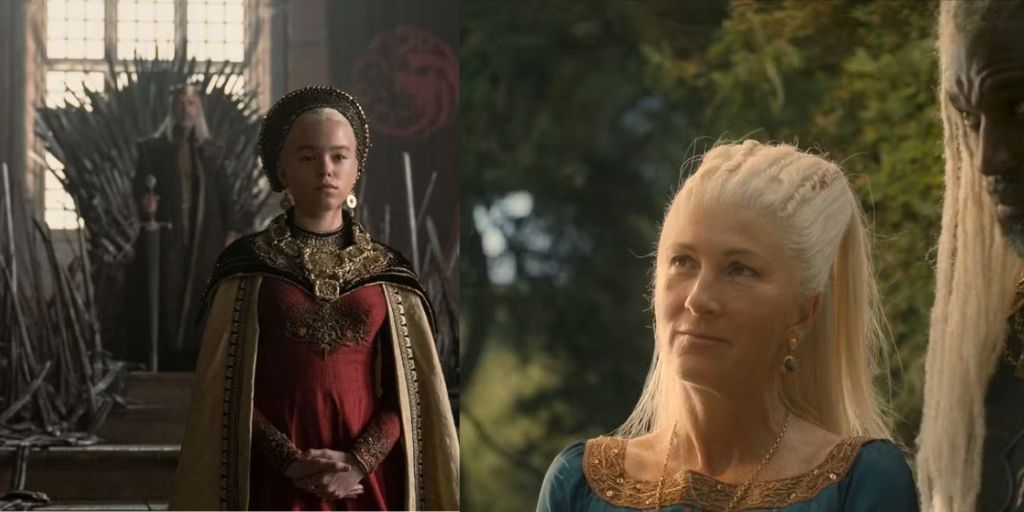
Still from House of the Dragon (Credit: HBO)
King Viserys’ decision to make her his successor causes family tensions, especially with his brother, Daemon, and second wife, Alicent Hightower, who pushes her own son, Aegon, for the throne. As rivalries grow, the families become embroiled in political and personal conflicts, leading to betrayals, tragic deaths, and shifting alliances.
The season culminates in Aegon’s coronation and the devastating death of Rhaenyra’s son, setting the stage for a looming civil war. Throughout the season, themes of power, loyalty, and the high cost of ambition are highlighted, with dragons playing a central role in both warfare and family dynamics.
