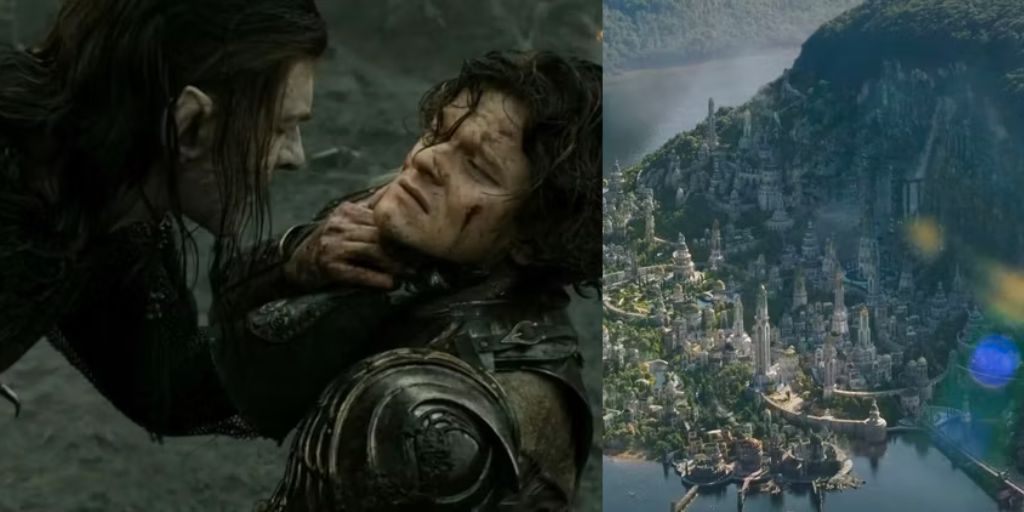
The Season 2 finale of The Lord of the Rings: The Rings of Power ends with a huge battle, bringing big changes to Middle-earth. The Elves suffer a terrible defeat, with the loss of their stronghold, Eregion, and one of their greatest leaders, Celebrimbor (Charles Edwards).
Sauron (Charlie Vickers) emerges as a powerful force, taking control of Mordor and leading the Orcs. Meanwhile, the Nine Rings of Men are lost, and Sauron’s grip over Middle-earth tightens.
The destruction of Eregion in the series differs significantly from J.R.R. Tolkien’s original legendarium. In the books, the events surrounding Eregion’s fall are more complex and detailed, involving characters and events that the series has altered or left out.
For instance, Adar (Sam Hazeldine) does not exist in the books, and Sauron is already well-established in Mordor. In the books, Sauron has already forged the One Ring by this time and is likely wearing it during the battle, though the show doesn’t mention it explicitly.
The Rings of Power gives a slightly different interpretation, but the general story of Sauron attacking Eregion for the Rings of Power remains the same.
In Tolkien’s version, after creating the One Ring, Sauron discovers that Celebrimbor secretly made the three Elven Rings. Realizing he’s been tricked, Sauron immediately moves to take control of the Rings.
He launches an assault on Eregion, aiming to seize the Rings of Power. At the same time, the Elves feel the One Ring’s power and understand that they have been betrayed.
Sauron’s forces overwhelm the region. Gil-galad, the High King of the Elves, doesn’t personally join the battle but sends Elrond (Robert Aramayo) with reinforcements.
However, Sauron’s army is too large, and Elrond is blocked from reaching Eregion. He is forced to retreat north with his forces, unable to help the Elves still defending Eregion.
The defense of Eregion falls to Celeborn, who leads the last Elven forces. Celeborn, husband of Galadriel (Morfydd Clark), is fighting to save the kingdom, but it is too late. He and his troops also have to retreat to the north. Sauron’s army wins a crushing victory.

Still from the show (Prime Video)
They destroy Eregion, kill Celebrimbor after torturing him for information about the Rings, and learn that the three Elven Rings have been hidden in Lindon.
Sauron, furious at not finding the Rings he sought, uses Celebrimbor’s body as a gruesome banner during the battle.
Although The Rings of Power changes some of these details, it still captures the essence of Sauron’s victory and the destruction of Eregion. In both the books and the series, Sauron’s forces ultimately prevail, and the Elves are forced to flee.
The Dwarves of Khazad-dûm help the Elves escape, much like they do in the series, though their assistance does not last long.
Sauron moves on from Eregion and begins to lay waste to Eriador, a region that remains under his control for a long time. Eventually, Gil-galad, with the help of Númenor, launches a counterattack, driving Sauron back to Mordor.
The adaptation may have taken liberties with some of Tolkien’s lore, but the changes serve to enhance the story’s emotional and dramatic weight.
For example, the introduction of Adar, a character not present in the original works, adds complexity to the narrative. Adar is a dark, yet compelling character. As the leader of the Uruks, he is driven by a desire to free himself and his Orcs from Sauron’s control.
His internal conflict, knowing that true freedom is impossible as long as Sauron exists, adds an extra layer of tension to the storyline.
His right-hand Orc, Glüg (Robert Strange), worries that Adar has lost sight of his original goal. Glüg thinks that if the Orcs are doomed to die fighting Elves, they might as well join forces with Sauron, who could offer them a chance at controlling Middle-earth.
This betrayal of Adar by his own Orcs echoes the sadness of Celebrimbor’s death. It also brings back memories of the opening scenes of Season 2, when Adar led the Orcs in rebellion against Sauron in Forodwaith, early in the Second Age.
This act of defiance created an intriguing character arc for Adar, as someone who, though evil, seeks a form of independence from an even darker force.
In both the books and the series, the fall of Eregion has a lasting impact on Middle-earth. Elrond and his forces are driven north by the Orcs, eventually finding refuge in a secluded valley on the western side of the Misty Mountains. This place is known as the Valley of Imladris, or Rivendell, which becomes Elrond’s new seat of power.
In the original lore, Rivendell replaces Eregion as the key Elven stronghold in the region, alongside Lindon.
Meanwhile, Galadriel and Celeborn cross the Misty Mountains to establish Lothlórien, where they will rule for most of the Second Age.
At the same time, Sauron consolidates his power. In The Rings of Power, Sauron seizes Morgoth’s crown and claims the Nine Rings of Men. In the books, he gains control over the seven Rings of the Dwarves and the Nine Rings of Men.
With these Rings, Sauron sets his plan into motion to dominate Middle-earth. Only the Elves and Númenor stand in his way, with Númenor being the force Sauron fears the most. Over the years, Sauron gives the Rings to their bearers, knowing that they will eventually fall under his control.
Still from the episode (Prime Video)
The series has made some significant changes to the story of the Rings of Power, but it remains true to the central themes of Tolkien’s work.
The story of Sauron’s rise to power, the fall of Eregion, and the scattering of the Rings is one of tragedy, betrayal, and the slow, inevitable domination of Middle-earth by the Dark Lord. These elements are present in both the books and the show, even if the details differ.
Adar’s character brings an interesting new perspective to the lore, especially as he struggles to break free from Sauron’s influence. His tragic downfall, betrayed by his own Orcs, adds emotional depth to the series.
The relationship between Adar and his Orcs also introduces a fresh dynamic, showing the internal struggles of even the “evil” characters in the story. These changes and additions enrich the narrative and provide new layers of meaning for viewers, even if they deviate from Tolkien’s original text.
In the end, the Sack of Eregion is a turning point for Middle-earth. The loss of Eregion and Celebrimbor, the rise of Rivendell, and the looming threat of Sauron’s control set the stage for the conflicts that will follow.
As the series continues, viewers can expect to see even more of Sauron’s plan unfold, as he moves closer to his goal of dominating the Free Peoples of Middle-earth.
The devastating fall of Eregion marks a significant shift in the power dynamics of Middle-earth. The Elves, who once wielded great influence, are now on the defensive. As Rivendell rises from the ashes of Eregion, it becomes a refuge and a new center of Elven strength.
Meanwhile, Sauron’s conquest of Eriador brings a wave of darkness that spreads throughout the land. The creation of the Nine Rings for Men sets his plans into motion, as he seeks to corrupt and control the rulers of Middle-earth, inching closer to his ultimate goal: complete dominion.
We might have lost two old men last week, but a third re-enters the scene as the tension ramps up for Dan Chase (Jeff Bridges), Harold Harper (John Lithgow), and their families.
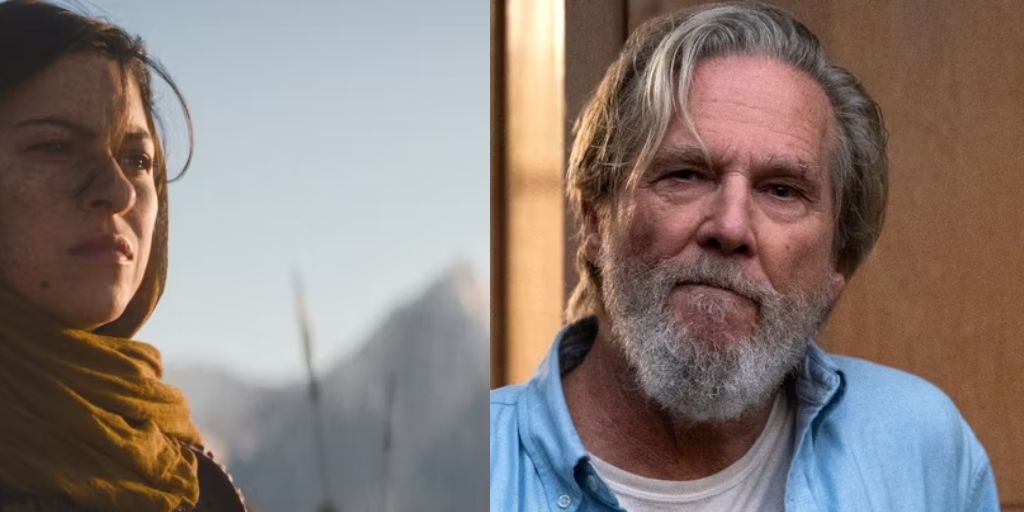
Emily Chase (Alia Shawkat) is still in Afghanistan, and Chase and Harper’s hopes of getting the Taliban off her back hinge on a plan that has already gone wrong.
A key ally is dead, and Suleyman Pavlovich (Rade Serbedzija) is now targeting their lives. As Episode 5 of The Old Man progresses, the stakes are rising, and every character is pushed to their limits.
The latest episode of The Old Man ramps up the intensity as the show pushes into the second half of Season 2.
It focuses on Dan Chase (Jeff Bridges), Harold Harper (John Lithgow), and their families facing an increasingly dangerous set of circumstances.
As the pressure mounts, viewers are treated to emotionally charged moments, suspenseful sequences, and an eerie atmosphere reminiscent of Season 1.
The episode starts off not in the U.S. but in Afghanistan, where Emily Chase (Alia Shawkat) is attending Faraz Hamzad’s (Navid Negahban) funeral.
Emily, who barely knew her biological father, expresses her grief and thoughts through an internal monologue that feels poetic and reminiscent of the show’s earlier episodes.
This inner dialogue takes the form of a letter she is writing to her father, a way for her to say goodbye in her own way. As she struggles with her emotions, she also reflects on how she never truly got to know her mother either, despite growing up with her.
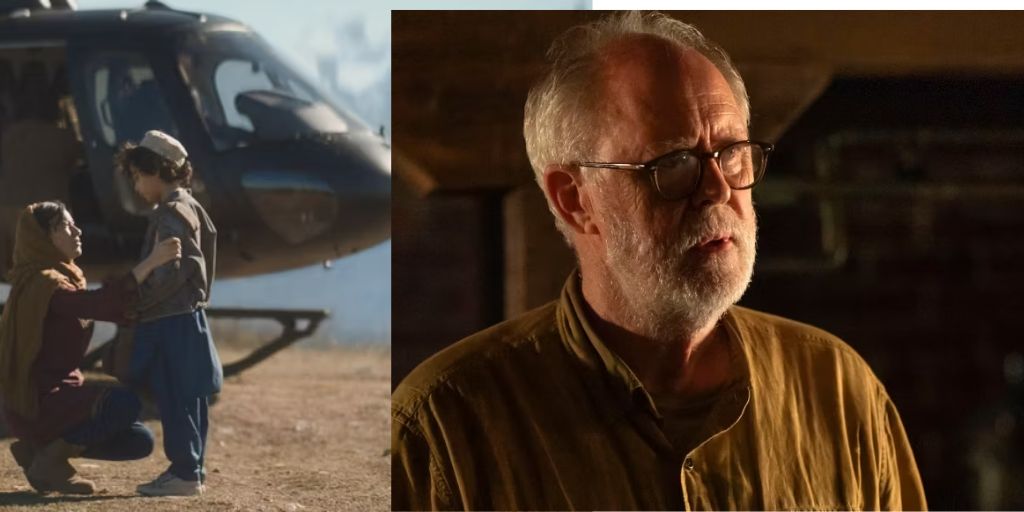
After the quiet, introspective funeral, Emily finishes her letter and burns it, symbolizing closure. Though she has decided to remain in Afghanistan for now, her companion Tarik (Amir Malaklou) boards a helicopter bound for the U.S., taking with him Farouk (Michael Sifain), a young boy who represents hope for their family’s future.
Emily warns Farouk that his new life will feel lonely and scary at first, but Tarik will protect him because he loves him. This is a comfort Emily herself never received when she left her home, making this goodbye even more bittersweet.
Still from the episode (FX)
She later explains to Khadija (Jacqueline Antarmian) that she wants to avoid any bitterness between them when they meet again, though Khadija isn’t sure there will even be a next time since the Taliban have just arrived.
The tension only grows from there, as the scene shifts back to the U.S., where Harold Harper suddenly returns home. His wife Cheryl (Jessica Harper) is dealing with a mundane issue—a busted pipe and a plumber she can’t get ahold of.
Yet this plumbing problem is far from Harper’s biggest concern. Harold informs Cheryl that despite his long-held promise to keep his work away from home, things have changed.
He urges her to pack a bag for herself and their grandson Henry so they can stay in a hotel, only to be hit with a bombshell: Henry no longer lives with them.
This moment illustrates the level of chaos and disconnection in Harper’s life, as he can’t even keep track of where his grandson is living.
Before Harper can fully process this news, Dan Chase and Zoe (Amy Brenneman) arrive unannounced. They need to contact Emily and warn her about the danger she’s in now that Suleyman Pavlovich (Rade Serbedzija) is after them. The suspense ramps up as the trio waits in Harper’s house during a raging storm outside, creating a sense of unease.
The show uses minimal lighting, haunting music, and well-placed camera shots to heighten the tension, drawing viewers in despite the slow pacing.
As the camera lingers on an empty driveway just a little too long, the ominous atmosphere deepens, reminding fans of the style they loved in Season 1.
Meanwhile, Dan raids Harper’s closet for a change of clothes—he’s finally getting a long-overdue outfit change—and tries in vain to reach Emily.
She doesn’t pick up, her phone likely unable to receive calls due to her location. Despite Emily’s insistence on staying in Afghanistan, Chase remains determined to get his daughter out of danger.
Zoe, on the other hand, is more concerned with Morgan Bote’s (Joel Grey) body and speculates about the real reason behind his death. Chase suggests that Bote may have gotten too close to some inconvenient truths—possibly related to Pavlovich’s interest in a lithium mine—but cautions that the situation is likely more complicated than just a mine.
Back at home, Harper finally gets some time alone with Cheryl. He explains that Emily’s alter ego, “Angela Adams,” was entirely fabricated, and admits many of the truths he’s been hiding. Cheryl reveals that she didn’t want Henry to live in a house full of uncertainty, especially with the possibility that both Harold and Emily might never return.
This moment of honesty brings some relief to Harold, who desperately needs someone to confide in about the mess they’re in. For a man who’s carried so many secrets, this conversation feels like a much-needed release.
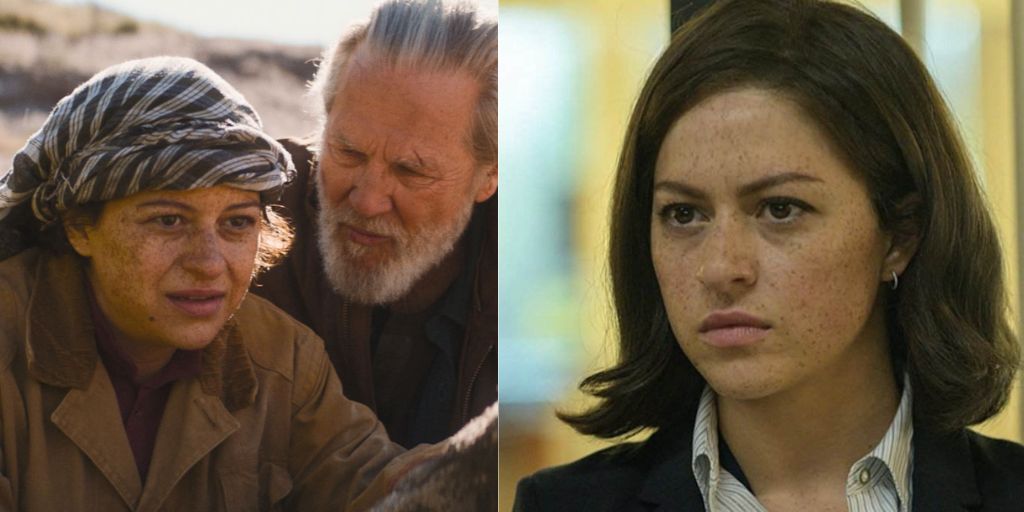
Zoe, while wandering around Harper’s house, notices that Emily was essentially part of the Harper family. She even appears in family photos, despite her complicated relationship with them. Zoe raises the point that this arrangement must have been difficult for Chase, but he brushes it off.
Still from the episode (FX)
Their conversation is interrupted when the power goes out—a classic thriller moment that cranks the tension even higher. Though the house is plunged into darkness, the show cleverly uses lighting to make sure viewers can still follow the action. This visual technique is effective, keeping the suspense alive while allowing Chase’s growing anxiety to bubble up.
The pivotal moment of the episode comes when Chase’s call to Emily finally goes through. Chase tells her about Bote’s death and urges her to leave Afghanistan immediately. Emily, however, explains that it’s too late—the Taliban have arrived.
She informs her father that Hamzad is dead and that only a few families have been evacuated, with many children left behind. The Taliban are moving through the pass, and it seems inevitable that they will overrun the village.
Emily’s farewell to her family is heartfelt and filled with tension. She says goodbye to both Harold and Cheryl, and privately tells her father that finding a family in Afghanistan was not a rejection of him or her mother.
She asks Chase to accept that her choices were her own, but before she can finish her thoughts, gunfire erupts. The line goes dead, leaving Chase and Harper stunned and devastated.
What makes this scene especially powerful is the fact that viewers never actually see Emily during the phone call. The fear and sadness are conveyed solely through her voice and the reactions of Chase and Harper.
This approach mirrors the suspense of classic horror films, where the scariest moments often come from what we don’t see. It’s a subtle but effective way to make the audience feel the weight of the characters’ emotions.
Back in the basement, Chase distracts himself from his grief by trying to fix the leaking pipe, while Zoe offers him some words of comfort.
Although her role in the season has sometimes felt uncertain, here she serves as an emotional anchor for Chase, giving him a much-needed shoulder to cry on.
In a rare moment of vulnerability, Chase breaks down completely, letting out his grief in a raw, unfiltered way. Jeff Bridges’ performance in this scene is a standout, showing that even the toughest men can—and should—allow themselves to express their pain.
Still from the episode (FX)
Just when it seems like Chase might get a moment to grieve, the power comes back on, and Harper joins him in the basement. The men decide it’s time to leave, but Chase wants to stay and get answers.
Both he and Harper overheard something strange on the phone: the attackers were speaking Russian, not the local languages they expected. This revelation points to a deeper conspiracy, likely involving mercenaries.
Harper begins to connect the dots, suspecting that Morgan Bote had been sending critical information to someone before his death. Before Harper can fully explain his theory, Chase reveals that the hitman they’ve captured knows nothing about Pavlovich or Afghanistan.
However, he does reveal one crucial detail—the hitman had two other targets: Marcia and Henry Dixon, the alter egos used by Chase and Zoe when they first went on the run.
The episode ends on a chilling note. Harper says goodbye to Cheryl, who plans to check into a hotel while he “cleans up” after the hitman’s death—a grim reference to the fact that Harper is about to dismember the body.
It’s a disturbing but fitting conclusion to an episode filled with dark, unsettling moments. The eerie tone, suspenseful pacing, and emotional weight make this one of the standout episodes of The Old Man so far.
With the stakes higher than ever, the characters are left to deal with grief, betrayal, and looming threats. As the show heads into the final episodes of the season, viewers can expect even more twists, as old alliances crumble and new dangers emerge.
