TurtleMe’s The Beginning After the End (TBATE) has garnered immense popularity with its compelling story of reincarnation, growth, and an overpowered protagonist (OP). The manhwa follows Arthur, a reincarnated ruler, who possesses vast magical abilities but must still grow emotionally and personally. This combination of a powerful protagonist and deep character development has won readers’ hearts, earning TBATE a massive fanbase. With an anime adaptation set to premiere in 2025, fans are excited to see how the story will be translated into the medium.
While the series has been widely appreciated, it hasn’t been without its criticisms. The use of the overpowered protagonist trope and reincarnation in an isekai world has led some readers to see the series as predictable. Despite this, TurtleMe has shared his thoughts on these elements, revealing how he used them to explore more profound themes and add complexity to the narrative.
According to the creator, his love for fantasy and isekai stems from the freedom these genres provide in creating vast worlds and complex characters. In TBATE, TurtleMe sought to challenge reader expectations by combining these tropes with deep character growth and emotional arcs.
The Beginning After the End: A OP Protagonist and Upcoming Anime Adaptation
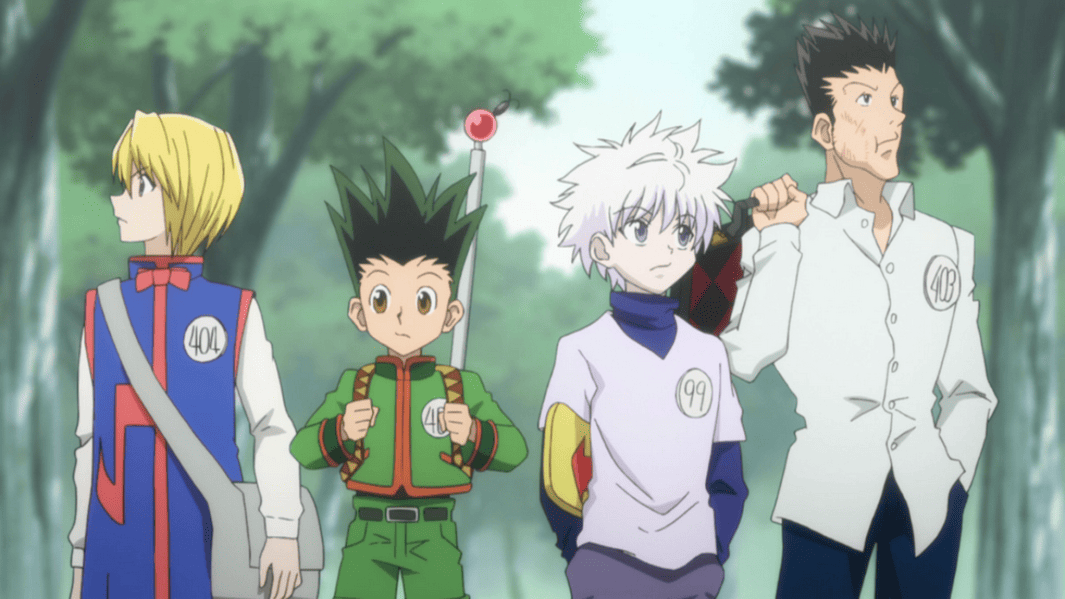
Kurapika, Gon, Killua, and Leorio (Credits: MadHouse)
TurtleMe has been candid about his inspiration behind the use of an overpowered protagonist in TBATE. Drawing from works such as Fullmetal Alchemist, Hunter x Hunter, and Western fantasy novels like Eragon and The Name of the Wind, he sought to focus on growth and choices rather than just power.
The trope of a character reincarnating as an infant has been explored many times in isekai stories, but TurtleMe took a unique approach by delving into the protagonist’s family dynamics and exploring how a mature individual would navigate their new life as a child. This focus on growth, maturity, and personal development sets TBATE apart from other works in the genre, adding depth to the standard OP protagonist formula.
TurtleMe also wanted to highlight how Arthur’s immense power does not overshadow his emotional and personal growth. In an interview, he explained that while Arthur has access to a vast library of magical abilities, the story still focuses on his struggles and challenges, making the character relatable. This exploration of power versus personal development is a core theme in TBATE, setting the series apart from others that lean heavily on the protagonist’s overwhelming strength.
TurtleMe’s Involvement in the Anime Adaptation
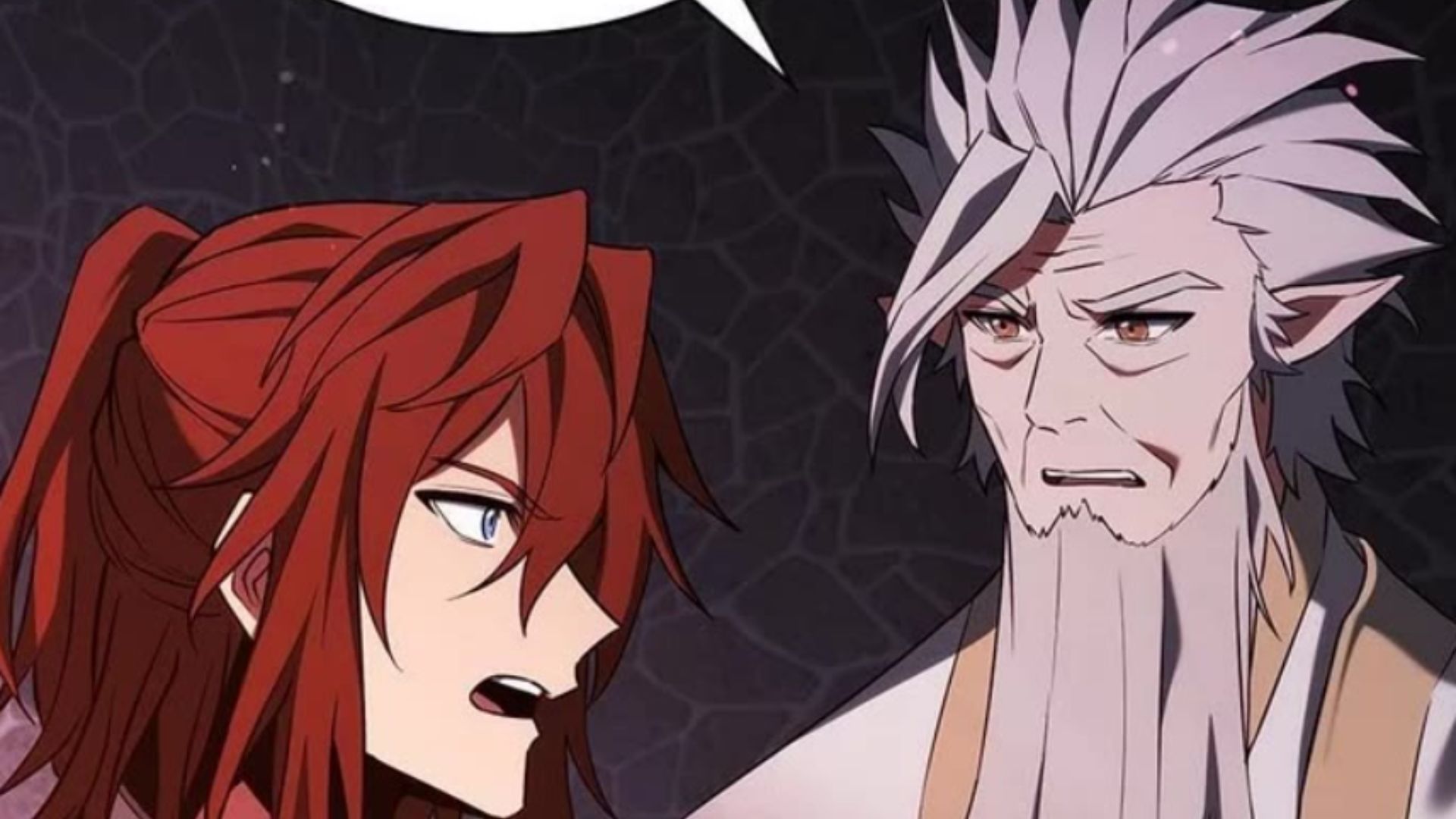
The Beginning After the End
The anime adaptation is being produced by Studio A-Cat, and TurtleMe has been working closely with the studio to ensure that the anime captures the essence of the original story. He has praised the studio for its careful consideration of his feedback, particularly when it comes to maintaining the tone and depth of the story.
The anime will be streamed on Crunchyroll after its release, allowing a global audience to experience TBATE in a new form. TurtleMe’s involvement ensures that the adaptation will remain faithful to what made the manhwa a hit, balancing the excitement of action sequences with the emotional depth that fans love.
Dandadan Episode 10, titled “Have You Ever Seen a Cattle Mutilation?”, continues the series’ unique blend of irreverence, outlandish humor, and emotional depth. The episode takes a hilarious detour into satirical commentary on censorship laws, particularly those in China.
Through the absurd subplot involving Mr. Mantis Shrimp, the show effortlessly blends sci-fi tropes with real-world issues, offering both humor and a deeper critique of societal norms. While the episode primarily focuses on Okarun and Momo’s evolving dynamic, it also introduces the bizarre Dover Demon subplot, proving once again why Dandadan is so beloved by fans.
The Satirical Edge: Censorship Critique and Bold Choices
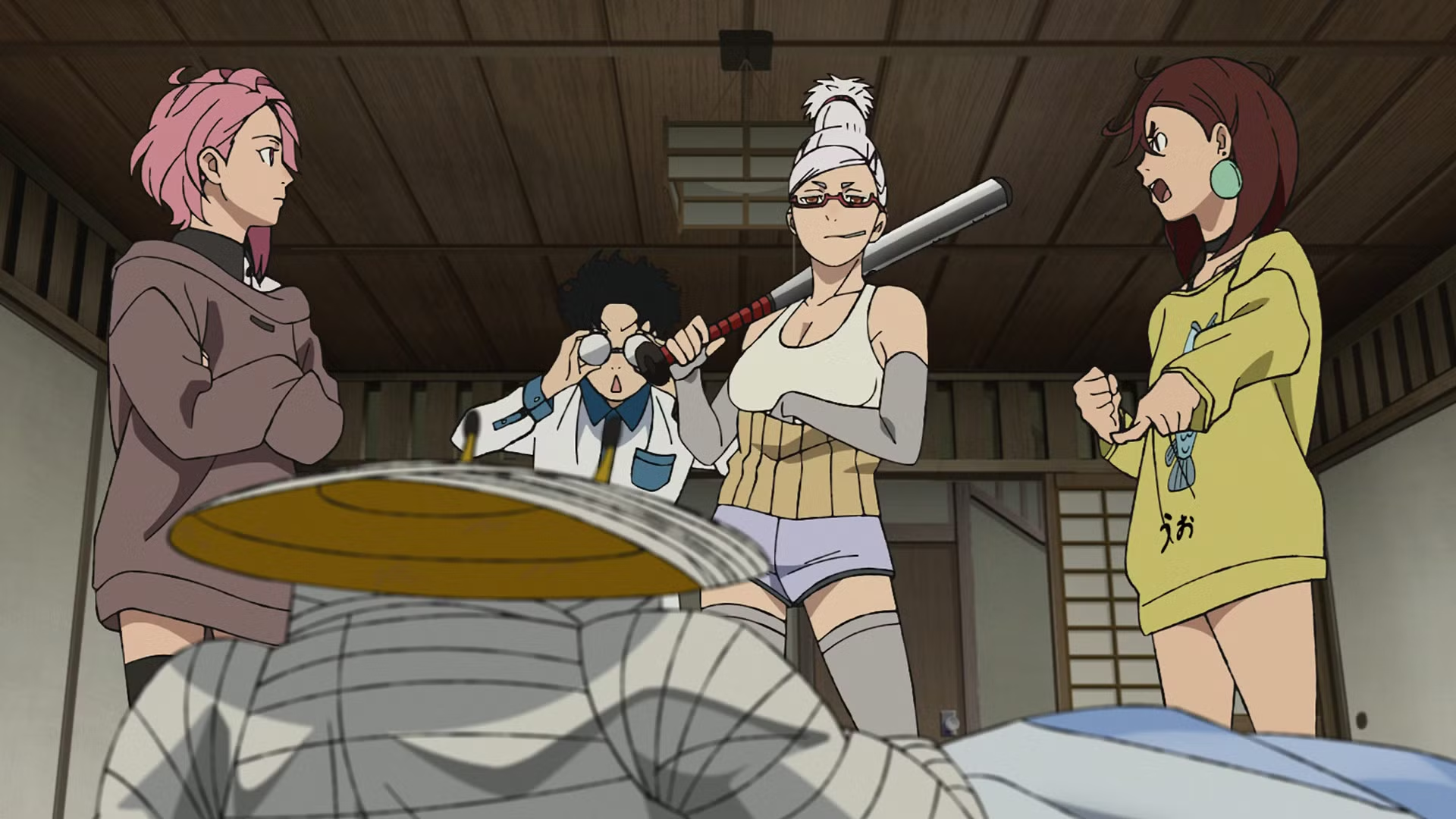
Dandadan Episode 10 Still
In this episode, viewers are introduced to Mr. Mantis Shrimp, a demon working with the Serpos. The demon’s tragic backstory is revealed as Seiko, another character, uncovers that the liquid Mr. Mantis was drenched in earlier wasn’t blood but cow milk. In a hilarious twist, Seiko solves the problem by offering him a neighbor’s cow, allowing Mr. Mantis to leave happily.
The bizarre nature of the subplot is a clever nod to UFO and cow-abduction tropes in science fiction. However, this episode’s absurdity has a deeper layer: it’s a sly critique of China’s censorship laws, which often require anime to replace red blood with white liquid or blurred-out imagery to meet broadcast standards.
Dandadan’s choice to incorporate cow milk instead of blood directly satirizes the absurdity of censorship practices in anime. The show makes a bold, cheeky statement by turning the censorship issue into a plot point, poking fun at the real-world challenges faced by creators when adhering to censorship laws. This unexpected twist invites fans to reflect on the absurdity of such regulations while laughing at the ridiculousness of the demon’s milk-blood situation. The inclusion of this satire only adds to the show’s already irreverent nature, further solidifying Dandadan’s reputation for pushing boundaries.
The Fandom Reacts: Memes, Laughter, and Praise
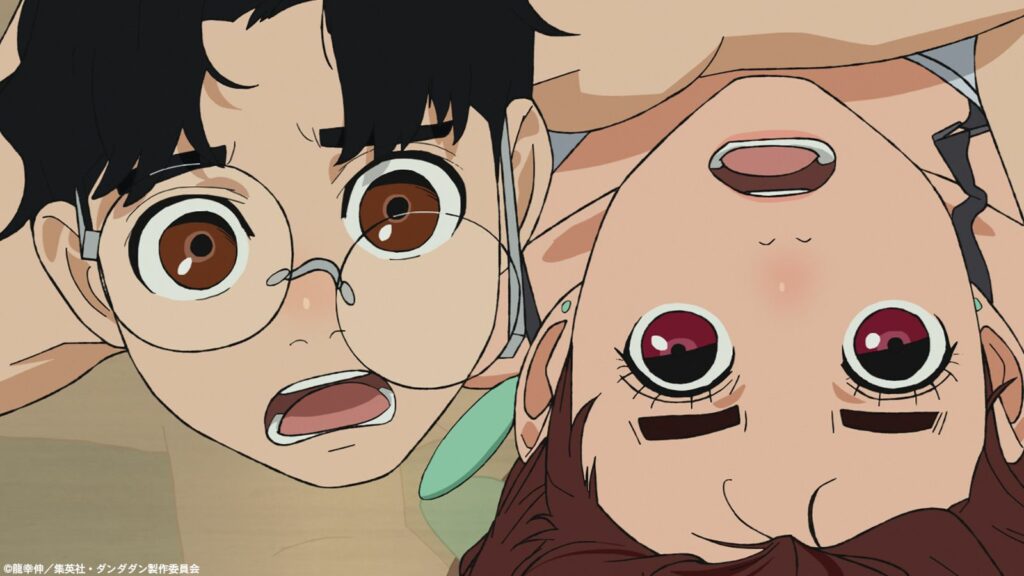
Dandadan Episode 10 Still
The episode’s humor, however, is not limited to the absurdity of the milk-blood concept. Fans quickly flooded social media with memes mocking the milk-blood and comparing it to China’s censorship laws. But beyond the humor, the show also emphasizes Mr. Mantis’ complex motivations. It’s revealed that he is working with the Serpos to pay for his son’s blood transfusions, adding a poignant and tragic dimension to his character. This combination of humor and heartbreak demonstrates Dandadan’s ability to seamlessly balance outrageous comedy with emotional depth.
Dandadan’s fanbase quickly embraced Episode 10’s chaotic blend of satire and humor. The milk-blood plotline became an instant meme sensation, with fans drawing connections to the series’ playful critique of censorship. The episode’s ability to combine lighthearted absurdity with serious undertones is one of the reasons why Dandadan has gained such a dedicated following. Fans have praised the series for its fearless creativity and willingness to address controversial topics while keeping the tone light and entertaining.
