Few films from 2024 have received as much praise, speculation, and analysis as The Brutalist, a 215-minute film directed by Brady Corbet. Set in the 20th century, the movie follows László Tóth (played by Adrien Brody), a brilliant architect and Holocaust survivor who immigrates to America.
The film shows his complex relationship with Harrison Lee Van Buren (played by Guy Pearce), a powerful industrialist, and how László’s past and art are manipulated by those around him.
László is eventually able to reunite with his wife, Erzsébet (Felicity Jones), and his niece, Zsófia (Raffey Cassidy), but he grows increasingly frustrated as he watches Harrison take control of his tragedy for his own gain. The movie ends with a shift in time, showing how the relationships in the story have changed.
The Structure and Epilogue
The movie is divided into two distinct parts, with an intermission between them. After the second act ends, the film presents an epilogue titled “The First Architecture Biennale.” The second act, named “The Hard Core of Beauty,” shows how László becomes more upset and disheartened after Harrison sexually assaults him.
In a panic, László tells Erzsébet about the assault while under the influence of heroin. In a moment of shock and anger, Erzsébet accuses Harrison of being a rapist in front of his family. This leads to a dramatic shift in their relationship.
The epilogue takes place in 1980 when László is honored with a retrospective of his architectural work in Venice. By this time, Erzsébet has passed away, and Zsófia is presenting the gala. She talks about László’s art and relates it to his experiences during the Holocaust, which he went through at the end of World War II. However, László is very old and physically immobile, unable to speak for himself.
Zsófia tries to honor her uncle by repeating a phrase he once told her: “No matter what the others try and sell you, it is the destination, not the journey.” She recalls this saying from when she was younger.
However, the phrase was something László said when he was justifying his work with Harrison, even though he felt uneasy about how his own suffering was being used for a larger purpose.
László had often been forced to suppress the painful memories of his past to please Harrison, and the idea of focusing only on the “destination” instead of the “journey” was a way to cope with this.
But the movie shows that the journey is just as important as the destination. In trying to build a new life in America for himself and his family, László went through years of emotional and physical abuse. The Brutalist does not suggest that making art will heal all wounds or make the suffering worthwhile.
Instead, the film shows that László’s work was constantly hijacked by others, including Harrison, who used his tragedy for his own benefit. This makes it very difficult for László to keep his art true to his own beliefs.
There is a deep irony in the way László’s work is now being presented in Venice. At the retrospective, someone else is speaking for him, denying him the chance to explain his art and his life. This is a powerful statement about how people’s suffering is often taken away from them by those in power, who rewrite the narrative to suit their own needs.
Harrison Lee Van Buren’s Role
The character of Harrison Lee Van Buren is crucial to the story, but his whereabouts are never confirmed after he is accused of assaulting László.
He disappears after this, leaving his fate unclear. It is suggested, however, that Van Buren could not understand a world in which he no longer had power over László. For much of the movie, Van Buren is shown as a man who is used to getting what he wants and controlling those around him.
Van Buren had tried to shut down the construction of a community center designed by László, after the project became too expensive and a train carrying materials was derailed. He also sexually assaulted László while they were in Carrara to obtain marble.
Even though Van Buren envisioned the center as a tribute to his late mother, he did not realize that László had created it as a tribute to Holocaust survivors. László even added a secret passage to the design, a hidden element that no one else knew about.
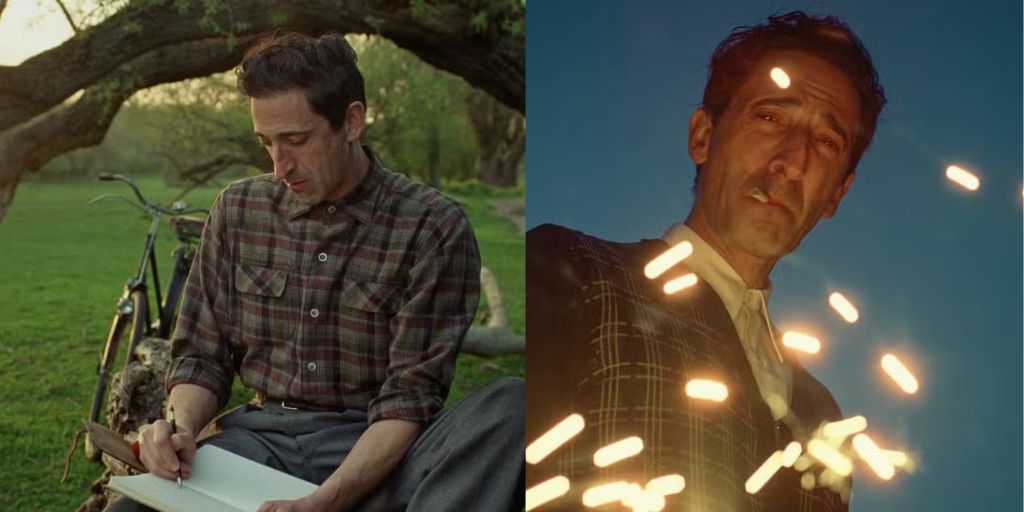
Still from The Brutalist (Credit: A24)
Perhaps, by the end of the movie, Van Buren recognizes that, despite all the pain he caused László, the community center will outlive both of them. Van Buren had made many crude remarks about Zsófia, which eventually caused her to leave America. But László stays behind, trying to make the most of his life despite everything he has endured.
The Critique of the “American Dream”
One of the central themes of The Brutalist is its criticism of the “American Dream.” It is unclear by the end of the film how László feels about his own legacy or how Zsófia has framed his life’s story. What is clear is that Zsófia and her husband eventually move to Jerusalem, even though László had wanted them to stay in America.
This decision suggests that Zsófia values her own independence and capitalistic success more than her uncle’s wishes. Her decision to restart her life in Israel could be seen as a betrayal of László, who has become fearful and powerless after years of torment at the hands of capitalism.
Zsófia’s belief that the destination is more important than the journey represents a misunderstanding of her uncle’s life. László’s journey was filled with suffering, and he was forced to endure a great deal of pain. Zsófia’s interpretation of his words shows how easy it is for people to misunderstand the experiences of others, especially when they come from different backgrounds.
In the final scene of the film, the song “One for You, One for Me” plays. The lyrics suggest that all artists are eventually rewarded with a personal project after years of sacrificing their own desires to please those in power. However, László is never able to achieve this “one for me.”
His work is always taken from him, first by Harrison, who abuses him, and later by Zsófia, who misinterprets his beliefs and life’s work. This shows that the pursuit of power and success in a capitalistic society never truly satisfies one’s deeper needs. László’s life is marked by loss and exploitation, and his artistic legacy is tainted by the forces that shaped it.
The Brutalist’s Message
Ultimately, The Brutalist shows that greatness does not equal justice. László will certainly be remembered for his architectural accomplishments, but his personal story and the pain he endured will not be fully understood. His true legacy, the deeper meaning behind his art, will be lost in the efforts of others to rewrite his history.
The film paints a dark picture of how power, abuse, and capitalism shape the lives of individuals, especially artists. László’s work, which could have been a meaningful tribute to his own experiences and the suffering of others, is instead hijacked by people who want to use it for their own purposes.
The film ends with a sense of unresolved tension, leaving the viewer to wonder whether László will ever be able to reclaim his narrative and find peace.
The Brutalist is a poignant and thought-provoking film that critiques how power and wealth can distort the truth. It tells the story of a man who, despite his immense talent and achievements, is forever shaped and hurt by the forces of capitalism and abuse. It challenges the notion that success in the world is a measure of justice, showing instead that true justice is often denied to those who suffer the most.
Summary
The Brutalist is a 2024 film directed by Brady Corbet, following the life of László Tóth (Adrien Brody), a brilliant architect and Holocaust survivor who immigrates to America. The story revolves around his complex relationship with Harrison Lee Van Buren (Guy Pearce), a powerful industrialist who exploits László’s past and uses his tragedy for personal gain.
László’s artistic integrity is compromised as he is forced to work for Harrison, and his suffering is overshadowed by those seeking to benefit from his pain. The film culminates in an epilogue set in 1980, where László, now elderly and immobile, is honored for his work at a retrospective in Venice.
His niece, Zsófia (Raffey Cassidy), presents the event but misinterprets his beliefs, quoting a phrase he once said to her that dismisses the importance of the journey. The movie critiques how capitalism distorts art, with László’s legacy hijacked by others, leaving him unable to speak for himself.
The Brutalist highlights the harsh realities of power, abuse, and exploitation, questioning whether greatness truly equals justice. Ultimately, the film portrays how László’s achievements are overshadowed by the manipulation of his art and personal tragedy.
Directed by Park Chan-wook, Oldboy (2003) is a neo-noir thriller regarded as one of the finest Korean films ever made. Loosely based on the manga by Garon Tsuchiya and Nobuaki Minegishi, this film is the middle installment of Park’s vengeance-themed trilogy. The plot follows Oh Dae-su, a man imprisoned for 15 years in a small hotel room, who embarks on a mission to find the person responsible for his captivity after being mysteriously released. Over the years, Oldboy has garnered admiration for its unforgettable action sequences, brilliant direction, and a plot full of twists.
Although the 2013 American remake by Spike Lee didn’t match the brilliance of the original, Oldboy has remained an influential cinematic landmark. The movie’s ending, however, can be perplexing even to long-time viewers. If you’ve recently watched it, your mind may still be trying to piece together the complexities of the final scenes. Here’s a thorough breakdown to help make sense of the ending.
Oldboy Ending Explained
The intricacies of Lee Woo-jin’s plan can be overwhelming, especially considering how it profoundly alters Oh Dae-su’s life. After Dae-su is freed from captivity, his sole purpose becomes finding and killing the man who locked him away—Lee Woo-jin. The two men share a past that is more complicated than mere animosity. In their school days, Dae-su unknowingly ignited a rumor about Woo-jin and his sister. This rumor, once spread, led to the tragic death of Woo-jin’s sister, the driving force behind his desire for revenge.
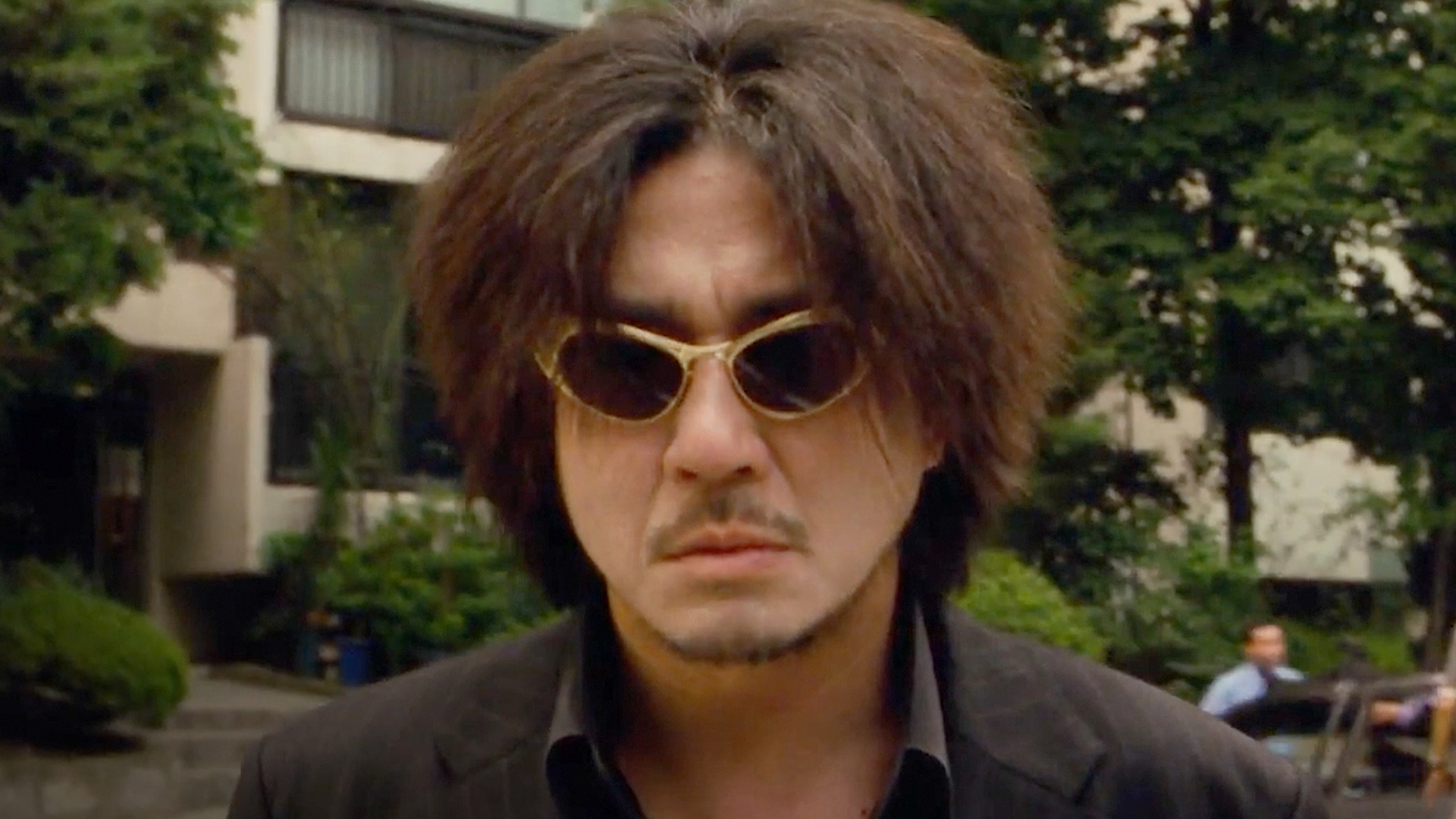
Dae-su (Image via Getty)
Woo-jin doesn’t simply want to ruin Dae-su’s life; he seeks to make him experience the same suffering and shame that he has endured. Woo-jin traps Dae-su in a prison, preventing him from witnessing his daughter growing up. He uses hypnotism to manipulate Dae-su into unknowingly sleeping with his own daughter, Mi-do, believing it will bring them to an equal level of suffering. In the end, despite Woo-jin’s death and Dae-su’s newfound freedom, it becomes clear that Woo-jin’s plan was successful from the very beginning.
How Did Lee Woo-jin Fund His Plot?
The question of how Lee Woo-jin managed to fund his elaborate plan seems secondary in light of the film’s other developments. But, it’s undeniable that an operation of this magnitude—keeping a man imprisoned for 15 years, employing a hypnotist, and orchestrating complex surveillance—would require substantial financial resources. The film does not provide a direct explanation of how Woo-jin accumulated his fortune, but subtle clues suggest he was an astute businessman.
Interestingly, both Woo-jin and Dae-su come from corporate backgrounds, with Dae-su potentially having been successful had he not been imprisoned. In a cruel irony, Woo-jin’s financial success enabled him to execute his plans, and in his pursuit of vengeance, he may have not realized how much he and Dae-su had in common.
What Happened to Oh Dae-su’s Wife?
The night of Oh Dae-su’s kidnapping was supposed to be a celebration of his daughter’s birthday, but Dae-su was intoxicated and out on the streets. His wife, as the film establishes, wasn’t fully part of his life, and his failure as a father is clear. Fifteen years later, upon his release, Dae-su learns of his wife’s death and that his daughter was adopted by a Swedish family. He seems almost unfazed by this news, which is unsettling, suggesting that he might have subconsciously accepted that this was the truth.
The film never directly explains what happened to Dae-su’s wife, but the assumption is that she likely passed away naturally during his imprisonment. While it’s tempting to think that Woo-jin orchestrated her death, there’s little evidence to support that theory. Killing Dae-su’s wife didn’t serve Woo-jin’s plan, and thus, it’s more likely she died of natural causes, with Woo-jin exploiting her death as a further step in his revenge scheme.
Was Park Cheol-woong Really Lee Woo-jin’s Ally?
Park Cheol-woong operates the secret prison where Oh Dae-su is kept for 15 years. Though the prison has multiple clients, Dae-su is clearly the longest-serving prisoner, making Woo-jin his biggest client. Park Cheol-woong is involved in several tasks for Woo-jin throughout the film, including attacking Mi-do and delivering a crucial box to her. Despite his frequent involvement, Park is more of a hired criminal than a full-fledged co-conspirator.
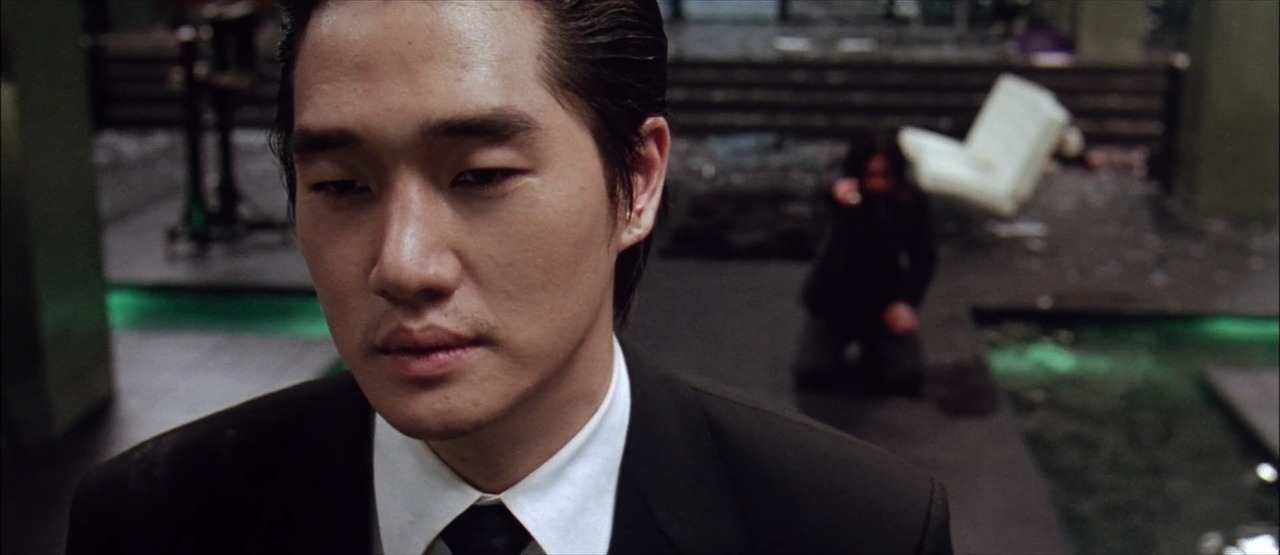
Lee Woo-jin (Image via Getty)
At the start, Park is presented as an opportunist, willing to do whatever he’s paid for. He has no personal stake in Dae-su’s suffering. When Dae-su attacks Park after his release, the prison warden willingly gives up all the information he has, revealing his role as a mere contract worker for Woo-jin. Though he occasionally assists Woo-jin, Park never contributes creatively to the plot and remains a neutral, self-serving figure.
Was Lee Woo-jin’s Sister Really Pregnant?
At the heart of Woo-jin’s resentment toward Oh Dae-su is his sister, whom Dae-su once saw in a compromising situation. Dae-su inadvertently spread a rumor about them being involved, leading to his sister’s tragic death. Woo-jin’s confrontation with Dae-su years later is both cryptic and unsettling. Woo-jin explains that the rumor, which spread after Dae-su’s departure, led his sister to believe she was pregnant with Woo-jin’s child. But is that the truth?
There are two potential explanations for this disturbing revelation. It’s possible that Woo-jin’s sister was truly pregnant, and he convinced himself that Dae-su’s rumor was to blame. Alternatively, she may have suffered from pseudocyesis, or false pregnancy, which causes the person to believe they are pregnant, experiencing symptoms without a fetus. This tragic confusion becomes the catalyst for Woo-jin’s revenge, turning the incident into one of the most intense acts of vengeance ever seen in cinema.
Why Didn’t Lee Woo-jin Kill Oh Dae-su?
Throughout the film, Lee Woo-jin has numerous opportunities to kill Oh Dae-su, yet he never does. Even when Dae-su is freed and vulnerable, Woo-jin spares his life. This apparent contradiction arises because, despite all the torment Woo-jin inflicted upon Dae-su, he never intended for him to die. Woo-jin’s plan was always about making Dae-su share in the same suffering and shame that haunted him for years.
Woo-jin’s ultimate goal was to put Dae-su in a position similar to his own, experiencing the agony that Woo-jin had lived with since his sister’s death. This is why Woo-jin reveals the horrifying truth to Dae-su but does not kill him. In his mind, Dae-su’s suffering would be the ultimate punishment.
Why Did Lee Woo-jin Kill Himself?
Despite achieving his revenge, Woo-jin’s final act is to take his own life. After revealing the full extent of his plan and breaking Dae-su, Woo-jin steps into an elevator and commits suicide. His death is not merely a means to escape punishment, though it is likely he would have faced consequences. Instead, Woo-jin’s suicide stems from the realization that his entire existence had been consumed by his quest for vengeance. With Dae-su ruined, he had no reason to live anymore.
Woo-jin’s life, built around a singular pursuit, left him with no meaningful connections or goals outside of his revenge. His guilt and grief over his sister’s death, compounded by the culmination of his twisted revenge, drove him to despair. His suicide, in essence, is the final release from his own torment.
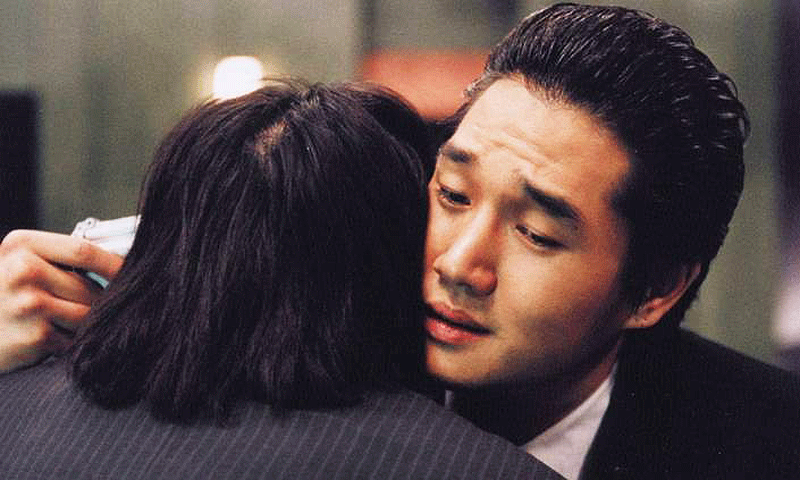
Dae-su and Lee Woo-jin (Image via Getty)
Did Oh Dae-su Really Forget Everything?
After Woo-jin’s death, Dae-su is free, but the knowledge of his relationship with Mi-do is unbearable. Seeking peace, Dae-su tracks down the hypnotist who had manipulated his memories earlier and asks her to erase his memories once again. Through this manipulation, Dae-su aims to forget the truth about his daughter.
The hypnotist alters Dae-su’s mind, and the audience is left to wonder what exactly was erased. Did Dae-su forget that Mi-do is his daughter, or did he forget the events of their illicit relationship? The film leaves this open-ended, allowing the audience to speculate about the extent of Dae-su’s memory loss and the tragic cost of his emotional relief.
Does Mi-do Know the Truth?
By the film’s end, Mi-do is shown comforting Dae-su in the woods, but we are left uncertain whether she knows the truth about their relationship. Woo-jin had planned to reveal this truth to Mi-do but ultimately spared her from learning it. Despite her pivotal role in the film, Mi-do’s knowledge remains ambiguous.
Director Park Chan-wook has stated that Mi-do was “not privy to the truth,” suggesting that she remains unaware of her true relationship with Dae-su. This uncertainty adds to the film’s unsettling atmosphere, leaving the audience to wonder if Mi-do will ever learn the truth or if she will continue her life without ever realizing the dark reality.
What Happened to the Hypnotist?
The hypnotist, a mysterious and enigmatic character, plays a crucial role in manipulating the minds of both Dae-su and Woo-jin. Throughout the film, she remains an almost supernatural figure, using her powers for her own amusement. She works for Woo-jin, but her true allegiance is unclear, as she also helps Dae-su in the end. After altering Dae-su’s mind, the hypnotist disappears without a trace, leaving only an empty chair behind. Her presence, like her actions, is fleeting and mysterious, as she moves on to her next victim, continuing her unpredictable path of manipulation.
What Happens to Oh Dae-su and Mi-do?
The ending of Oldboy leaves much to the imagination. After everything they’ve been through, Dae-su and Mi-do are reunited, but Dae-su is broken—his mind altered and his body damaged. They may not be able to live “normal” lives, but they will likely try to move on in whatever way they can. Their future is unclear, and the film ends with them holding each other in the snow, perhaps unaware of the truth of their relationship.
The film concludes with an unsettling ambiguity, leaving viewers to imagine how Dae-su and Mi-do will navigate their lives after the horrors they’ve endured. Whether they choose to live together as caregivers or enter into a doomed romantic relationship, Oldboy ensures that their future will forever remain marked by the tragic events that transpired.
