The Dark Lord is a common figure in fantasy stories, and one of the most famous examples is Sauron from J. R. R. Tolkien’s The Lord of the Rings. Sauron was originally the most powerful servant of the first Dark Lord, Morgoth.
After Morgoth was defeated, Sauron decided to take over his role and aimed to unite Middle-earth under his rule. He believed he could bring order to a world he saw as chaotic. To achieve this, he made the One Ring, a powerful object containing his essence, which gave him the power to control all life.
Even though Sauron had great power, he couldn’t be everywhere at once. So, he relied on many dark creatures and allies to assist him in his quest for conquest.
Some of these beings were completely under his control, while others had more freedom and chose to work with him because it benefited them. From lowly underlings to powerful allies, Sauron’s companions were some of the most dangerous beings in The Lord of the Rings.
Thuringwethil and Draugluin (From The Silmarillion)
During Morgoth’s war against the Valar, who were angelic beings, he created many evil monsters, including werewolves and vampires.
Sauron was given control over these creatures and kept them on Tol Sirion, an island he took from the elves and renamed Tol-in-Gaurhoth. The strongest of these creatures were Draugluin, the first werewolf who fathered the giant wolf Carcharoth, and Thuringwethil, a vampire who acted as Sauron’s messenger.
Though they only appear briefly in The Silmarillion, Thuringwethil, and Draugluin show the evil that Sauron and Morgoth were capable of. It’s unclear where they came from, but because Thuringwethil could change from a vampire to a bat, it’s possible she was a fallen Maiar, a being like Sauron himself.
Both were eventually killed by Huan, a powerful hound who served the Valar of the hunt, Oromë. Their skins were later used by the heroes Beren and Lúthien in their quest to steal a Silmaril from Morgoth’s crown.
Corsairs of Umbar (From The Silmarillion and The Return of the King)
In the Second Age, the kingdom of Númenór set up colonies in Middle-earth, including one in Umbar. After Númenór’s fall, the rebel group known as the King’s Men, or Black Númenóreans, took control of Umbar, while the Faithful formed the kingdom of Gondor. The pirates of Umbar became known for raiding Gondor’s coastline.
The Corsairs of Umbar already hated Gondor, so they didn’t need much convincing to join Sauron. They sent a fleet to help him take Minas Tirith, but Aragorn and the Dead Men of the Mountains ambushed them.
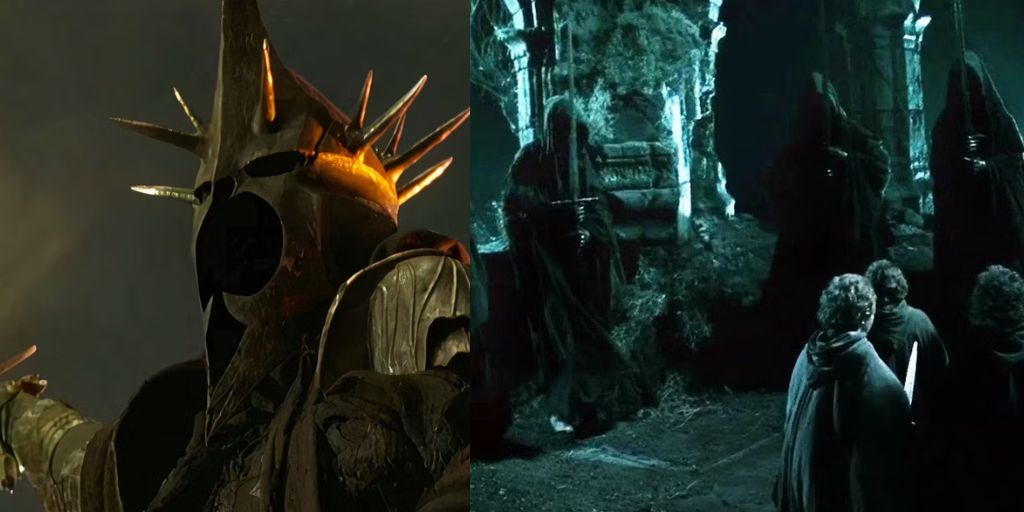
Still from Lord of the Rings (Credit: Prime Video)
Their ships were then used to transport Gondor’s reinforcements into battle. Because of this, the Corsairs ended up contributing the least among Sauron’s human allies.
Easterlings (From The Silmarillion, The Two Towers, and The Return of the King)
When humans first appeared in Middle-earth, Morgoth found them and convinced some to join him. These people became known as the Easterlings.
They helped Morgoth in his battles against elves, dwarves, and other men, but after Morgoth’s defeat, they fled to the eastern lands of Rhûn. There, they built new kingdoms, swore loyalty to Sauron, and fought many wars against the West.
The Easterlings were feared as fierce warriors, and their numbers were much greater than the forces of the West. However, by the time of the War of the Ring, the Easterlings were divided in their support of Sauron due to the influence of the blue wizards.
This division weakened Sauron’s ability to fully use their strength, and their forces were further reduced by losses in battles near the Lonely Mountain and Minas Tirith.
Haradrim (From The Silmarillion, The Two Towers, and The Return of the King)
When the Númenóreans started setting up colonies, they encountered the Haradrim, a people from the south. They taught the Haradrim many skills, but when the Númenóreans became bitter about their mortality, they began demanding tribute from the Haradrim.
Sauron also made the Haradrim worship him as a god-king. Over time, the Haradrim became his servants, although some were able to rebel thanks to the efforts of the blue wizards.
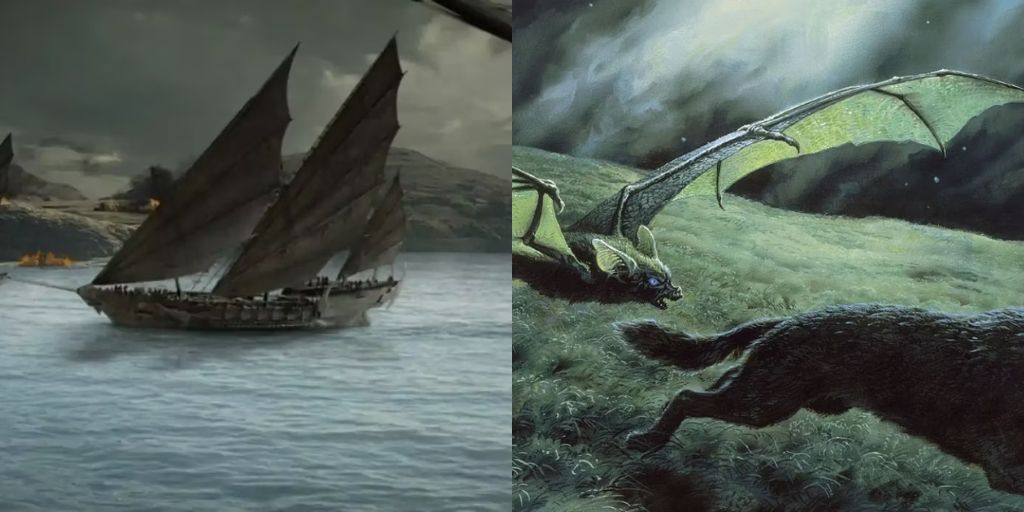
Still from Lord of the Rings (Credit: Prime Video)
The Haradrim’s story is a tragic one. Their history is filled with oppression from different forces. They are known for their massive war elephants, called Mûmakil. In one of the most famous battles, the Battle of the Pelennor Fields, the Haradrim rode their Mûmakil into battle against the Riders of Rohan, led by King Théoden.
Shelob (From The Two Towers)
Shelob, the last and greatest child of the ancient spider Ungoliant, made her home in the mountains of Cirith Ungol long before Sauron took control of Mordor. She preyed on anything that wandered into her lair, including orcs and men. Sauron didn’t mind her presence and even called her his cat because she acted as a natural guardian for the area.
Shelob was one of the most dangerous creatures in Middle-earth. Her tough skin made her nearly invulnerable to most weapons, and her venom could paralyze her victims, allowing her to eat them at her leisure.
However, she was nearly killed when Samwise Gamgee, armed with the elven sword Sting, wounded her so severely that the orcs believed she had fought an elven prince.
Orcs (From The Silmarillion, The Hobbit, The Fellowship of the Ring, The Two Towers, and The Return of the King)
Morgoth created orcs from captured elves and used them as his main soldiers in his attempts to take over Middle-earth. Though weaker than men, elves, and dwarves, orcs were able to reproduce quickly and create crude but effective war machines.
After Morgoth’s fall, the orcs were so corrupted by evil that they became slaves to Sauron and followed his command in many wars against the free peoples.
Tolkien used orcs to show the horrors of war and how it could turn people into something monstrous. Even when they weren’t fighting the free peoples, orcs often fought among themselves over trivial matters.
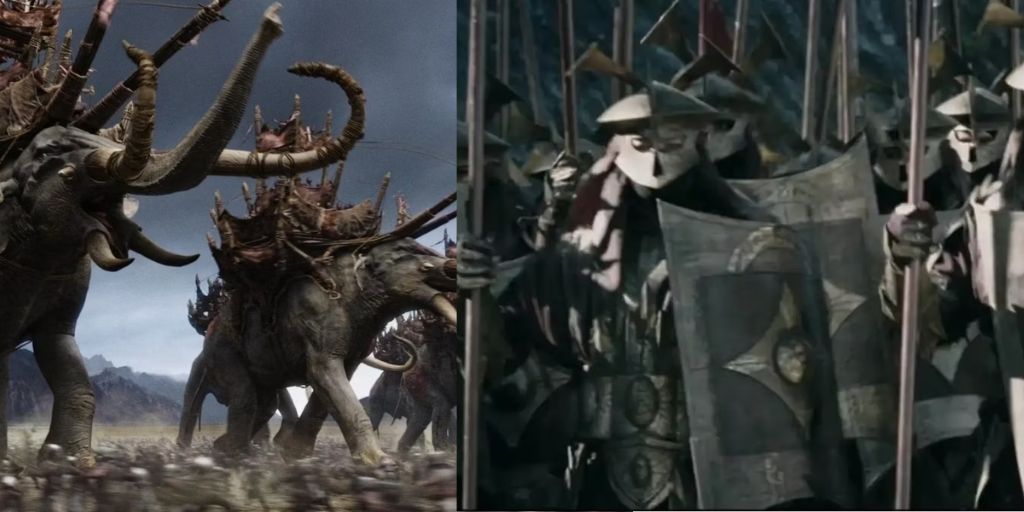
Still from Lord of the Rings (Credit: Prime Video)
They also took pleasure in destroying anything beautiful or good. Under Sauron’s control, they became a disciplined, fearsome force, more afraid of their master than their enemies.
The Mouth of Sauron (From The Return of the King)
The Mouth of Sauron was one of the few Black Númenóreans who survived after Númenór’s fall. He worshipped Sauron as a god and proved to be more intelligent and cruel than the orcs, which earned him the position of Lieutenant of Barad-dûr.
He became Sauron’s main messenger and was sent to meet the armies of Middle-earth at the Black Gate. There, he offered them harsh terms of surrender to distract them while Sauron searched for the One Ring.
Although he wasn’t as powerful as some of Sauron’s other servants, the Mouth of Sauron is remembered for his special status. He was one of the few who spoke directly to Sauron and knew his master’s plans in great detail. His cruelty is evident when he presents Frodo’s possessions to the other heroes to taunt them about the hobbit’s fate.
Saruman (From The Silmarillion, The Fellowship of the Ring, The Two Towers, and The Return of the King)
Five powerful beings known as Maiar were sent to Middle-earth in human form to fight Sauron. Saruman the White was their leader, and he was supposed to lead the fight against Sauron.
However, after spending much time studying ancient knowledge, Saruman became fascinated by Sauron’s dark magic and eventually sided with him. He raised armies of orcs to attack Rohan.
Saruman was the leader of the wizards and an unmatched sorcerer, second only to Gandalf after Gandalf’s return as Gandalf the White. He used his knowledge to create stronger orcs, known as Uruk-hai, who could move in daylight, and he developed powerful explosives.
However, his most dangerous weapon was his ability to manipulate people with words. Even when cornered, he could use his speech to exploit others’ weaknesses, making him one of Sauron’s most valuable allies.
Nazgûl (From The Silmarillion, The Fellowship of the Ring, The Two Towers, and The Return of the King)
Sauron, disguised as Annatar, the Lord of Gifts, convinced the elf smith Celebrimbor to forge 16 rings of power. Sauron intended to control these rings through the One Ring.
Nine of these rings were given to human kings, and over time, these kings became slaves to Sauron, losing their humanity and turning into the Nazgûl, or Ringwraiths.
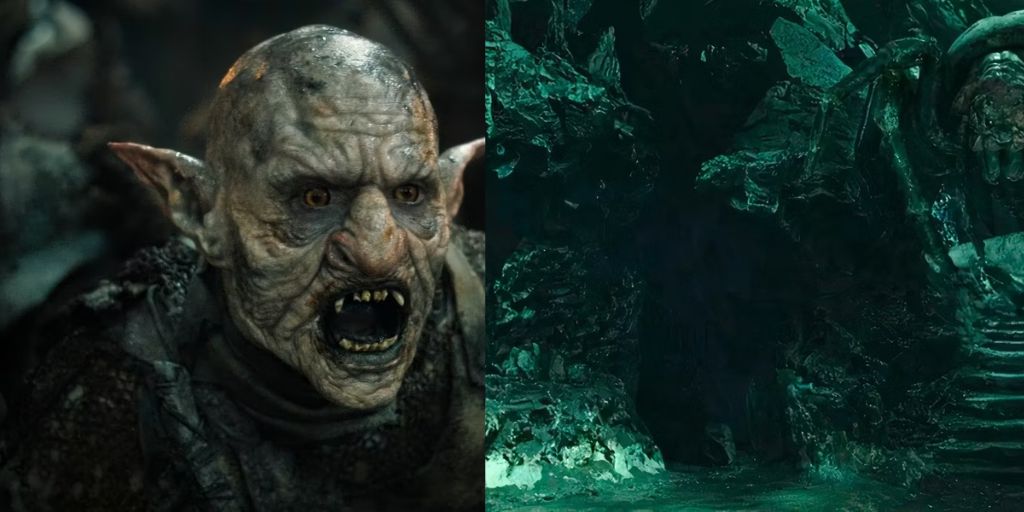
Still from Lord of the Rings (Credit: Prime Video)
The Nazgûl were terrifying creatures. They were not fully alive, and they had no free will, acting only as extensions of Sauron. Their physical presence and their piercing cries could instill terror in anyone who heard them. Even though they could be defeated in battle, they would return as long as the One Ring existed, making them nearly invincible.
The Witch-king of Angmar (From The Fellowship of the Ring, The Two Towers, and The Return of the King)
The leader of the Nazgûl, the Witch-king of Angmar, was once a human king, but his identity was lost when he became a Ringwraith. He led Sauron’s forces in many battles, including the attack on Minas Tirith. He was known for his powerful sorcery, which could shatter walls and demoralize his enemies.
The Witch-king’s most famous moment came during the Battle of the Pelennor Fields. He confronted King Théoden and killed him, declaring that no man could kill him.
However, Éowyn, a shieldmaiden of Rohan, revealed herself and struck him down with the help of Merry Brandybuck. With his defeat, the Nazgûl lost their leader, and Sauron’s forces began to fall apart.
Sauron’s allies were some of the most dangerous beings in Middle-earth. From powerful sorcerers to terrifying monsters, they helped him wage war against the free peoples and nearly brought an end to all that was good in the world.
However, despite their strength and cunning, they were ultimately defeated by the courage and determination of those who stood against them.
Benjamin “Bibi” Netanyahu is one of the most resilient politicians of the last century. From his time as a well-spoken ambassador fluent in both English and Hebrew to becoming Israel’s longest-serving Prime Minister, he has remained a central figure in Middle Eastern politics for decades.
His strong-willed nature is well-known, as is his ability to turn difficult situations to his own advantage, repeatedly building political coalitions despite narrow margins to maintain power. Ironically, it wasn’t a massive security failure that almost toppled him but rather the seemingly insignificant act of accepting lavish gifts from a famous Hollywood producer.
What is ‘The Bibi Files’ About?
Alexis Bloom’s film The Bibi Files is not a cure-all for those hoping for peace. For many Israelis, the interviews from 2018 shown here will not be surprising. The idea that Bibi is corrupt is nothing new to those who oppose him.
The leaked material has already been widely shared, and seeing Bibi and his family react to the investigation may have a greater impact than simply reading transcripts, but it is unlikely to change any minds. The film does not offer instant solutions to remove him from office, despite ongoing protests for his resignation.
Unfortunately, the film is unlikely to affect those who want the total destruction of Israel and see every Israeli action as suspicious. This increasingly vocal group advocates for dismantling the nation entirely, no matter who is in power.
Their rhetoric has been hostile for decades, helping those who use confrontations to strengthen their own positions. For Netanyahu’s supporters, though fewer in number, this film might appear to be yet another attack from liberal filmmakers that favors terrorists while undermining a nation at war.
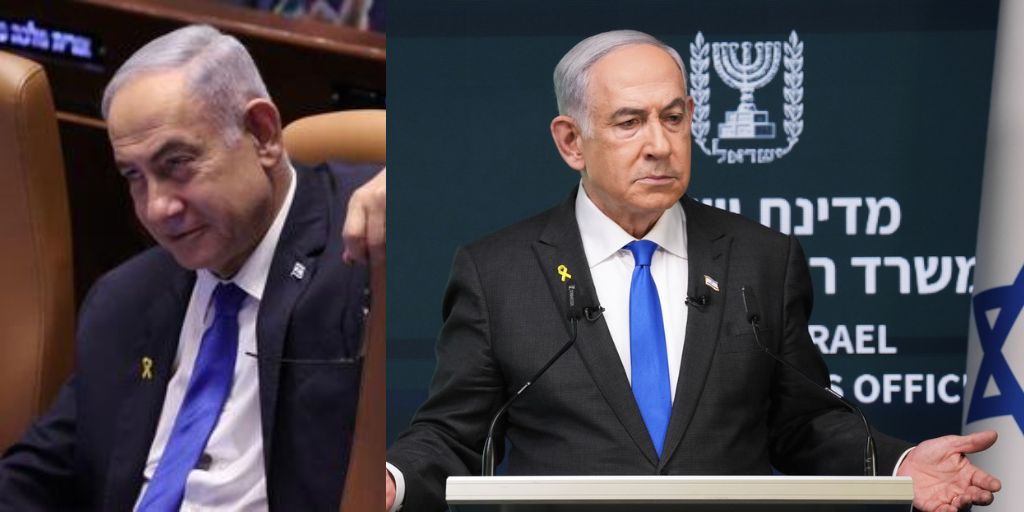
Still from the series (Goodfellas)
Who Will Benefit from The Bibi Files?
The film is aimed at those with a general sense of the chaos and corruption in Israeli politics but lacking in details. With today’s oversimplified slogans, the film highlights an important point: Israelis are not a single, unified voice, and Netanyahu and his coalition do not represent the majority. Many Israelis, including participants in the film, are calling for an investigation into his actions.
The Bibi Files reveals that millions both inside and outside Israel want to end Netanyahu’s reign, tying the horrific events of October 7, 2023, to the policies of his administration. They argue that the ongoing war is less about securing the people and more about advancing an ideological agenda and avoiding accountability for clear instances of bribery and corruption.
A prominent voice in the film is Raviv Drucker, a journalist who has spent years exposing corruption in Israeli politics. Along with former allies of Netanyahu, like his former spokesperson Nir Hefetz, the film features interviews that provide context for the leaked footage.
The footage shows Netanyahu alternating between cold calculation and fiery outbursts, banging the table in anger or claiming to forget key events. He often repeats phrases like, “I don’t know” or “I can’t recall.” His keen awareness of the camera, even under stress, shows his skill as a politician. His emotional outbursts may be partly staged, but seeing the footage is essential to fully grasp its impact.
Netanyahu’s wife, Sara, and their son Yair, are also central to the story. Sara is portrayed almost like a villainous figure, similar to Lady Macbeth, manipulating her husband while demanding luxury gifts in return for political favors. Yair is even more extreme than his father, using modern media to push his far-right agenda.
The Film’s Supporting Voices
The film also features figures who describe the pressure they felt to comply with requests for favors. One of these is Arnon Milchan, an Israeli-born billionaire and producer behind popular films like 12 Years a Slave and Birdman. Milchan’s ties to Netanyahu include providing luxury goods, while others in the film discuss his involvement in attempts to influence U.S. visa requirements. Some even claim, though not confirmed, that Milchan once played a James Bond-like role in helping Israel’s nuclear program.
Other key figures include the Adelsons, American billionaires with strong ties to both Netanyahu and former President Trump. The film also goes into the testimony of Nir Hefetz, whose revelations are supported by additional interviews.
The score is at times overwhelming, and the use of an actor to reenact testimony due to Israeli privacy laws may feel out of place. However, the film does a good job of weaving these various elements together into a coherent narrative.
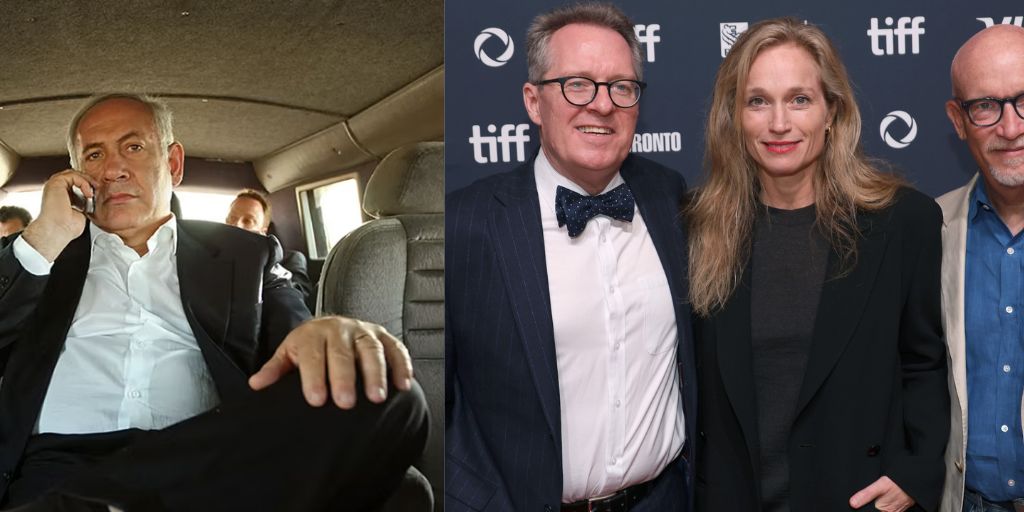
Still from the series (Goodfellas)
The film includes footage of massive protests in Israel against Supreme Court reforms, which many believe Netanyahu is pushing to protect himself. It also shows footage of the terrorist attacks on October 7, 2023, reminding viewers of the horrors faced by the people.
Alongside these images are scenes from Gaza, showing the suffering caused by Netanyahu’s policies. The film argues that the administration is funding Hamas to prevent the establishment of a Palestinian state.
Will The Bibi Files Make a Difference?
For those who feel Netanyahu and his family will never face justice, the film may offer a sense of release, though others may worry that the leaks will harm future legal action. Still, the film makes a clear case that these supposedly small acts of corruption are tied to the larger disaster now unfolding in the region.
Netanyahu’s move to ally himself with the most extreme elements of Israeli politics, trading national security for political power, is leading the country down a dangerous path.
The Bibi Files presents a strong case without becoming overly political. In addition to the voices of those within the administration or media, the film features a young woman who survived the attack on the Be’eri Kibbutz near the Gaza border. Her testimony is a powerful call for truth and reconciliation, offering a glimmer of hope for the future.
The film goes beyond recounting interviews, calling for immediate action—from bringing hostages home to seeking a ceasefire. Above all, it urges Israelis to reject this reactionary government and find a way forward, even in the face of overwhelming challenges.
