There’s not a lot of TV I keep up with anymore, mainly because it now takes more than two years to make new seasons.
You’d think that being a TV critic would give me the time and energy to watch everything, but even with all the time in the world, it’s getting harder to care about most shows.
The threat of cancellation always hangs over them (looking at you, Netflix). Not only that, but after such a long wait for the next season, I often find that my excitement has faded. A lot can change in two years, and by the time a show returns, I might no longer be interested.
This is what makes a show like The Devil’s Hour such a rare and delightful exception. When the first season of this thriller from Prime Video came out two years ago, I was gripped by its tense atmosphere and smart storytelling.
So, when it was announced that the show was coming back for a second season, I wasn’t sure what to expect. Could it recapture the magic of the first season? Or would the long break make it hard for me to care anymore?
As it turns out, Season 2 of The Devil’s Hour managed to pull me right back in, just as the first season had done. That, to me, is a huge success. For a show to return after such a long time and still have the same emotional impact, that’s rare in today’s world of TV.
The first season of The Devil’s Hour was some of the best television I’ve seen in years. The show managed to mix a deep, slow-building mystery with moments of real terror, and its characters were fully developed, each of them feeling like real people.
The plot was centered around a woman named Lucy Chambers, who was trying to understand a series of strange events happening in her life.
Her son Isaac behaved strangely, waking up every night at exactly 3:33 AM – the so-called “devil’s hour” – and speaking of things that were beyond his years. At the same time, Lucy started having terrifying dreams that seemed connected to a series of murders.
Season 1 ended with several big questions unanswered, and when Season 2 starts, it picks up right where the first one left off.
Lucy, played by Jessica Raine, is now a single mother after her divorce, and she’s dealing with the fallout from her near-death experience in the previous season.
At the end of Season 1, she had a life-changing encounter with a mysterious serial killer named Gideon, played by Peter Capaldi.
He’s not just any killer though; Gideon has lived hundreds of lives and seems to have access to knowledge beyond what normal people can comprehend.
After this encounter, Lucy starts remembering things from what appears to be a past life. These memories come flooding back after she makes a deal with Gideon to save her mother’s life in exchange for stopping a catastrophe. But now, she finds herself in a dangerous situation.
Not only is she trying to protect her son Isaac, who still exhibits strange and eerie behavior, but she’s also left wondering if she can trust Gideon or if he’s leading her into further danger.
The relationship between Lucy and Gideon forms the core of this season’s story, as she tries to figure out how much of what he says can be believed and how much of it is just manipulation.
A New Tone for Season 2: Less Mystery, More Action
If Season 1 of The Devil’s Hour was about slowly unraveling a deep mystery, then Season 2 shifts gears into something a bit different. Instead of the slow-building suspense of the first season, Season 2 moves at a much faster pace.
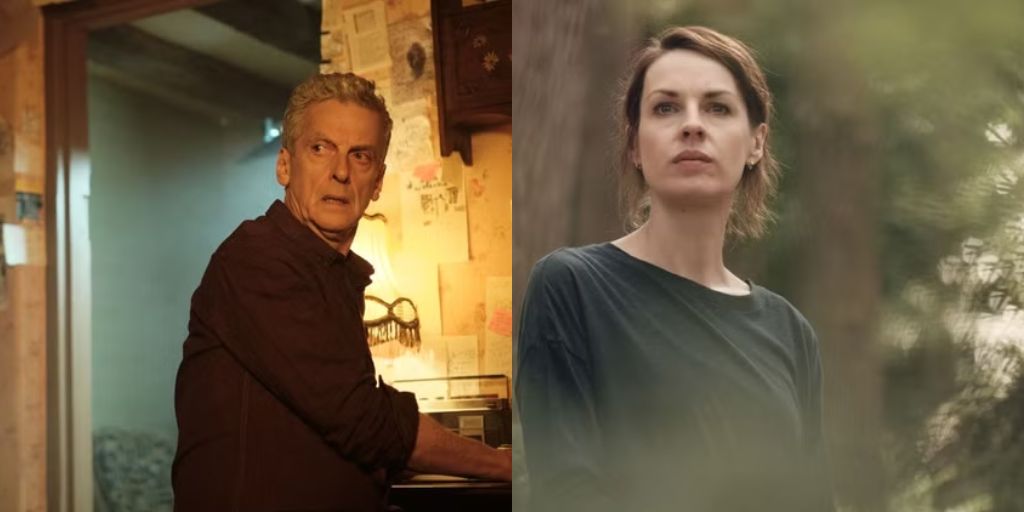
Still from The Devil’s Hour (Credit: Prime Video)
It becomes more of a race against time, with Lucy and the others trying to prevent a disaster from happening. This change in tone might be surprising for some fans who loved the atmospheric feel of the first season, but it doesn’t mean the show has lost its edge.
In fact, the new, faster pace brings its own kind of excitement. While the show still has the same dark, moody feeling, it’s now more of a step-by-step process to prevent something terrible from happening.
The tension is still there, but it’s driven more by the urgency of the situation rather than by a slow buildup of dread.
Lucy finds herself pulled into a dangerous game where every move counts, and she has to stay one step ahead to keep herself and her loved ones safe.
Some viewers might find the shift in tone confusing. If you’re expecting Season 2 to be an exact copy of Season 1, you might walk away feeling a little lost. Prime Video’s marketing hasn’t exactly helped either.
Despite the shift, the core elements that made Season 1 so engaging are still present. The story remains tightly focused on Lucy and her journey, and the new direction of the plot makes sense in the broader context of her character’s development.
Creator Tom Moran clearly has a plan for how this story will unfold, and it never feels like the show is just making things up as it goes along.
Even when the plot becomes complex and a bit hard to follow at times, you get the sense that all the pieces will eventually come together.
A Puzzle of a Show: Keeping Track of the Details
One of the things that makes The Devil’s Hour stand out is how much attention it demands from its audience.
This isn’t a show you can just casually watch while doing something else. The plot is full of twists and turns, and it requires you to pay close attention if you want to keep track of everything that’s happening.
Personally, I found myself taking notes as I watched, trying to make sense of the different layers of the story. And even then, I still had questions by the end of some episodes.
This complexity is part of what makes the show so rewarding. It’s not just a straightforward mystery or thriller. It’s more like a puzzle that you have to figure out alongside the characters.
As Lucy tries to piece together the fragments of her past and present, you’re right there with her, trying to make sense of the clues and figure out what’s real and what’s not.
The show plays with your expectations, leading you down one path only to reveal something unexpected later on.
In many ways, The Devil’s Hour is a show that challenges its audience. It doesn’t spoon-feed you answers or neatly wrap up every storyline.
Instead, it leaves you with lingering questions, encouraging you to think critically about what you’ve just watched. Some viewers might find this frustrating, but for those who enjoy a show that makes them think, it’s one of the series’ biggest strengths.
Peter Capaldi Shines as Gideon
Peter Capaldi’s performance as Gideon is one of the highlights of the show. Capaldi has always been an actor who brings depth and complexity to his roles, and his portrayal of Gideon is no different. Gideon is not your typical serial killer. He’s not driven by the usual motives of greed or revenge.
Instead, there’s something almost otherworldly about him. He speaks in cryptic riddles, and it’s clear that he knows far more than he lets on.
Capaldi’s performance gives Gideon a sense of mystery and menace that keeps you guessing about his true intentions. Is he trying to help Lucy, or is he manipulating her for his own purposes? Even after two seasons, it’s still not entirely clear.
Capaldi plays the role with a quiet intensity, making Gideon both terrifying and oddly sympathetic at the same time. You get the sense that he’s seen and experienced things beyond human comprehension, and that makes him both fascinating and frightening.
One of the best aspects of Capaldi’s performance is how he balances Gideon’s cold, calculating nature with moments of real vulnerability. There are times when you almost feel sorry for him, as if he’s trapped in some kind of cosmic game that he can’t escape from. It’s this complexity that makes Gideon such a compelling character and keeps you invested in his story, even as you question his motives.
Strong Supporting Cast Upgrades the Show
While Capaldi steals the spotlight, the rest of the cast also delivers strong performances. Jessica Raine is excellent as Lucy, bringing a mix of strength and vulnerability to her character.
Lucy is a woman who’s been through a lot, and Raine does a great job of showing the emotional toll that these events have taken on her.
She’s not just a victim of circumstance; she’s actively trying to understand what’s happening to her and take control of her life, even when the odds are stacked against her.
Nikesh Patel also deserves praise for his role as DI Dhillon. In Season 2, his character takes on a more prominent role, and Patel rises to the occasion with a performance that’s both charismatic and grounded.
Dhillon is a no-nonsense detective, but he’s also compassionate, and Patel brings out both sides of the character. His chemistry with Raine adds another layer to the story, especially as their characters’ relationship becomes more complicated.
Young actor Benjamin Chivers, who plays Lucy’s son Isaac, continues to impress as well. Isaac’s strange behavior and eerie wisdom make him a key figure in the story, and Chivers handles the role with maturity beyond his years.
His performance adds an unsettling quality to the show, reminding you that there’s something much bigger and darker at play.
A Complex, Thought-Provoking Thriller
By the end of Season 2, The Devil’s Hour leaves you with more questions than answers, but that’s part of its charm. This is not a show that gives you easy solutions or neat conclusions.
Instead, it forces you to think about the choices the characters have made and the consequences of those choices. It’s a show that doesn’t shy away from the messiness of life, and that makes it all the more engaging.
Even though the plot can be difficult to follow at times, the show never loses sight of its central themes. At its core, The Devil’s Hour is about the choices we make and the ripple effects those choices have on our lives and the lives of others.
It’s a show that asks big questions about fate, free will, and the nature of reality, and it does so in a way that feels both entertaining and intellectually stimulating.
The Devil’s Hour Season 2 is available to stream on Prime Video starting October 18. Whether you’re a fan of the first season or new to the series, this is a show that’s worth your time. Just be prepared to pay close attention — you won’t want to miss a single detail.
Conclusion
The Devil’s Hour Season 2 successfully builds on the tension, mystery, and dark atmosphere that made its first season so attracting. By shifting the tone to a faster, more action-driven pace, the show keeps things fresh while still maintaining the core elements that drew viewers in initially.
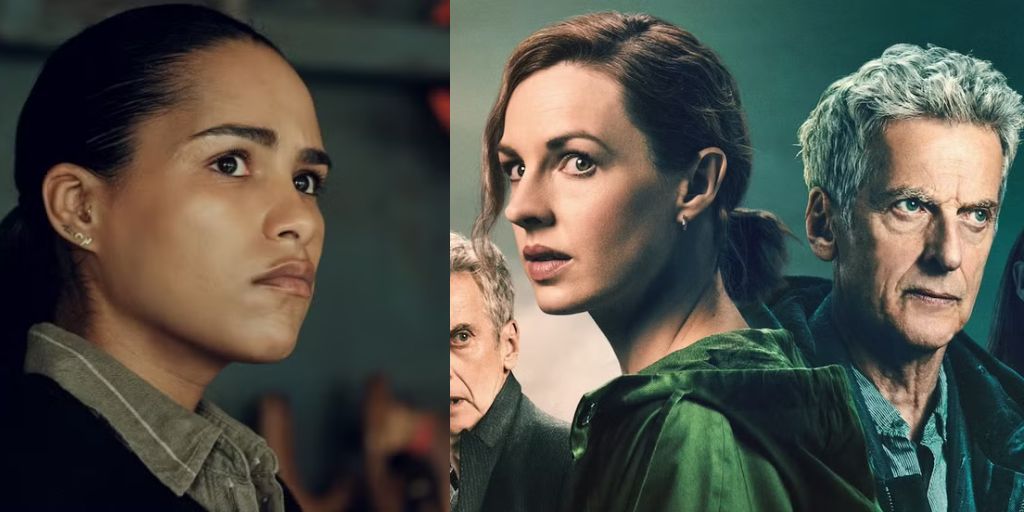
Still from The Devil’s Hour (Credit: Prime Video)
The characters, especially Lucy and Gideon, continue to evolve in fascinating ways, and the performances, particularly from Peter Capaldi and Jessica Raine, keep the audience invested in their fates.
Although the plot can sometimes feel overwhelming with its complexity, this only adds to the show’s appeal for those who enjoy layered, thought-provoking storytelling.
The twists and turns force you to pay attention, and even when the story leaves you with questions, it never feels like it’s lost its direction.
The emotional depth and philosophical questions about fate, choices, and consequences make it more than just a thriller – it’s a show that stays with you long after the credits roll.
In a TV show where many shows fade away after a long hiatus, The Devil’s Hour manages to return stronger, more engaging, and more daring than before. It’s a rare and rewarding watch for fans of gripping, smart television.
While there haven’t been any Halloween episodes in Only Murders in the Building, the Arconia trio has found themselves in several eerie situations throughout the show.
From grave-robbing escapades to a serial-killer-themed party game, and even showing the creepy halls of Arconia’s West Side, the series has not shied away from spooky encounters.
The show’s third season takes these elements to a new level, showcasing the talents of Meryl Streep and featuring an original Broadway musical.
However, amidst all the excitement, it is the recent episode that stands out as the most chilling the series has offered yet. The episode introduces a new suspect in the murder of Paul Rudd’s character, the spoiled and obnoxious Ben Glenroy: a ghost!
A Ghostly Encounter in a Haunted Theater
In this intriguing episode, Oliver, played by Martin Short, directs his play-turned-musical, Death Rattle Dazzle!, in the elegant Goosebury Theater. Like many old buildings, this theater has a rich and sometimes dark history, which adds to the suspense of the story.
In his opening narration for Season 3’s “Ghost Light,” Howard (played by Michael Cyril Creighton) states, “Theaters are known for their ghosts.”
This acknowledgment sets the tone for a season themed around musicals, making it clear that the scheme of haunted theaters will add depth to the storyline.
The episode cleverly weaves in real-life tales of theater curses, particularly the infamous “Macbeth” curse, which often sends shivers down the spines of actors.
In the theater community, it is believed that it is safer to refer to this play as “The Scottish Play” to avoid invoking its notorious superstition. This element of theatrical lore brings a sense of authenticity and excitement to the episode.
In Only Murders in the Building, the series introduces its own version of a curse that starts with a tragic incident.
A performance by Gideon Goosebury, played by Quentin Pardee Collins, takes a deadly turn when a sandbag falls and crushes his head. This shocking moment sets the spooky tone for the episode.
The scene is presented in a stylized black-and-white flashback, creating a haunting atmosphere that engages viewers right from the start.
As the stormy weather rages outside the Arconia, Howard becomes frantic. He confesses to Charles (played by Steve Martin), Mabel (played by Selena Gomez), and Oliver that he angered Gideon’s spirit by failing to follow a ritual meant to appease the dead.
This supernatural plotline doesn’t feel out of place in a series that works hard to add depth and realism to its characters, both main and supporting.
Ghosts Are Everywhere in ‘Only Murders in the Building’
The presence of death is a constant in Only Murders in the Building. Characters frequently encounter the Grim Reaper, whether it’s a childhood friend or a grumpy tenant president.
However, after these characters lose their lives, they do not simply vanish; they linger on, especially through the podcast and the Arconia trio’s emotional attachments to them.
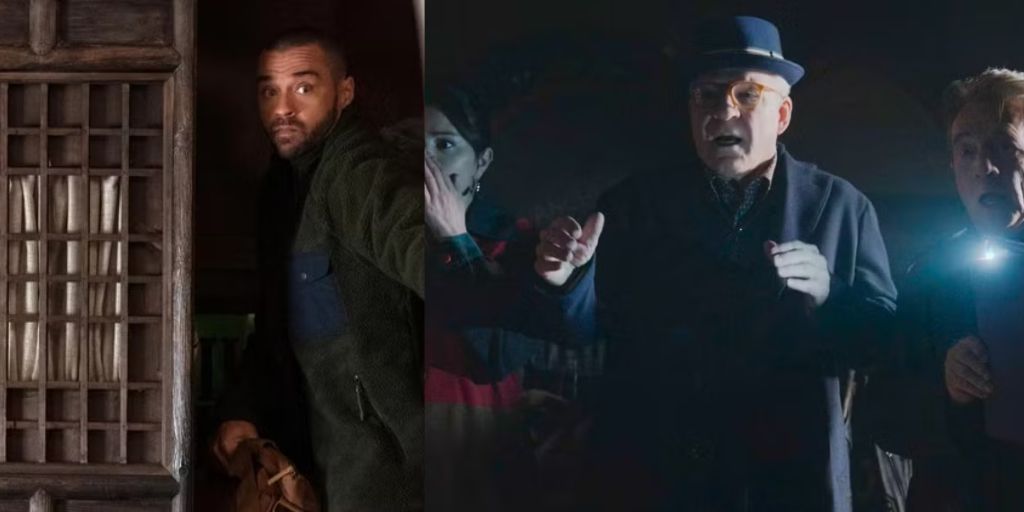
Still from Only Murders in the Building (Credit: Hulu)
This unique approach allows a grieving Charles to connect with Sazz (played by Jane Lynch) in Season 4, creating an interesting dynamic that shows the aftermath of loss.
What sets the episode “Ghost Light” apart from previous encounters is the supernatural twist. The Arconia trio, alongside Howard, investigates whether the reported “haunting” is real.
Could they find themselves in the role of ghost hunters? The possibilities are intriguing and add another layer to the narrative.
In Season 2’s “Hello Darkness,” the trio ventured into the secret, maze-like hallways behind their apartment walls during a city-wide blackout, pursued by a knife-wielding killer.
While that episode had multiple storylines intertwined with the main characters, the setting of the Goosebury Theater in “Ghost Light” creates a more confined and ominous atmosphere.
The characters are trapped in a dimly lit theater, which heightens the suspense. During this episode, Howard witnesses a ghostly figure, and the stage’s ghost light shuts off.
This ghost light is traditionally meant to ward off restless spirits. Moreover, falling sandbags nearly injure Charles, adding to the tension.
Before “Ghost Light” becomes too chilling, it includes moments of levity that keep viewers engaged.
The Cozy Mystery Series Can Get Spooky
Unlike The Phantom of the Opera, where a disfigured character haunts the theater, Only Murders in the Building takes a different approach.
Oliver discovers that the ghost Howard saw is Jerry Blau (played by Peter Bartlett), an old friend and former director who has been squatting in the attic.
Jerry has been keeping himself busy by cooking rats or creating paper puppets. His intentions are not malicious; he simply loosened the sandbags to scare Charles and the others away, without meaning to cause any real harm. This quirky character adds a layer of humor to the eerie storyline.
In the midst of the ghost subplot, Charles has brought along his pet fish, President McKinley, as a source of comfort following his recent breakup with Joy (played by Andrea Martin).
The presence of the fish serves as a light-hearted element, reminding viewers that even during spooky times, there can be moments of warmth and humor.
The episode concludes with Howard gaining confidence when he realizes that inviting Gideon Goosebury into the production is a more effective strategy than trying to appease his spirit.
This character growth is a key theme in the series, demonstrating that even in the face of supernatural challenges, there are opportunities for personal development.
Although “Ghost Light” might feel like a filler episode that allows characters to breathe and show their stories, the ending carries a darker tone.
After years of being single, Oliver becomes increasingly anxious about Loretta (played by Meryl Streep) potentially being Ben’s killer.
In a moment of frustration, he tries to get rid of a clue, leading to a confrontation with Charles and Mabel that strains their friendship.
The grim face Oliver sees looking back at him from a mirror starkly contrasts with the flamboyant energy he usually exudes.
As the moody score by Siddhartha Khosla plays, there may not be any supernatural activity occurring at the Goosebury Theater, but Oliver’s inner turmoil gives him a sense of feeling cursed nonetheless. This scheme of character emotions is one of the show’s strengths, balancing humor and drama effectively.
A Unique Blend of Horror and Humor
One of the standout qualities of Only Murders in the Building is its ability to mix various tones and themes seamlessly. The show knows how to create poignant storylines while injecting humor to avoid becoming too dark or heavy.
Whenever the series incorporates horror-themed situations, it manages to keep them from becoming overly sinister. “Ghost Light” is undeniably the spookiest episode of this cozy mystery series, but earlier seasons also featured chilling moments.
For instance, in Season 1, the characters encountered a grave-robbing conspiracy that left viewers on the edge of their seats. In Season 2, Oliver orchestrated a card game called “Son of Sam,” all while set to the tune of Talking Heads’ “Psycho Killer.”
Season 4 promises even more excitement, as fans can look forward to a jump scare from Jan (played by Amy Ryan) and the unsettling implications surrounding Sazz’s murder cover-up.
All these elements combined create a strong case for the need for a proper Halloween episode in Only Murders in the Building. With the show’s ability to balance mystery and humor, a Halloween special would offer the perfect opportunity to full deeper themes while keeping the spirit of the series alive.
The Evolving Dynamic of the Arconia Trio
As Only Murders in the Building continues to develop, the dynamics between Charles, Oliver, and Mabel remain a focal point. Their friendship faces challenges, especially when personal conflicts arise amidst their investigations.
In “Ghost Light,” viewers see how these tensions manifest as Oliver grapples with his feelings about Loretta and her potential involvement in Ben’s murder.
This internal struggle affects his interactions with Charles and Mabel, leading to moments of friction that remind audiences that even the closest friendships can be tested.
The scheme of these relationships adds depth to the narrative. It allows viewers to connect with the characters on a personal level, making their triumphs and struggles feel more relatable.
The show highlights the importance of communication and understanding within friendships, particularly during stressful times.
As the season progresses, fans are likely to witness further growth in the characters’ relationships, leading to both comedic and heartfelt moments that keep audiences engaged.
The Arconia trio is a lovable group, and their journey through mysteries and personal challenges will continue to resonate with viewers.
The Charm of the Arconia Setting
The Arconia itself plays a vital role in the series, serving as both a character and a setting that adds to the full atmosphere.
Its beautiful architecture, combined with its quirky residents, creates a unique environment that enhances the storytelling. The building feels alive, with its history and secrets unfolding with each episode.
The choice of the Goosebury Theater as a setting for the spooky episode is particularly fitting. The theater not only provides an eerie backdrop but also serves as a reminder of the world of performance and art.
This duality emphasizes the blending of reality and the supernatural, making the storyline all the more compelling.
Furthermore, the attention to detail in the set design and cinematography contributes to the full experience. The dark, moody lighting and the stylized presentation of certain scenes enhance the tension and atmosphere, immersing viewers in the Only Murders in the Building world.
Each episode feels like a carefully crafted piece of art, drawing viewers into the narrative and keeping them invested in the characters’ journeys.
The Future of Only Murders in the Building
As the series progresses, fans eagerly anticipate what’s next for the Arconia trio. With each new episode, the show continues to surprise viewers with unexpected twists, engaging character arcs, and a perfect balance of humor and mystery.
The combination of a haunted theater, ghosts, and the complexities of friendship keeps audiences entertained and guessing.
Only Murders in the Building has proven to be a breath of fresh air in the mystery-comedy genre, offering a unique blend of clever storytelling and relatable characters. The show’s ability to tackle serious themes while maintaining an full lighthearted tone is a testament to its skillful writing and direction.
As viewers continue to watch the Arconia trio show their way through spooky encounters and personal challenges, they are sure to find themselves laughing, gasping, and reflecting on the deeper meanings behind each episode.
Ultimately, “Ghost Light” exemplifies the show’s charm. It not only entertains but also encourages viewers to show themes of friendship, grief, and the unknown.
With its engaging characters and cleverly woven storylines, Only Murders in the Building remains a delightful addition to the television show. As the series continues to unfold, audiences can expect even more thrills, laughter, and surprises in the episodes to come.
In a world where mystery series often lean toward darker themes, Only Murders in the Building stands out by offering a fresh perspective that intertwines humor with horror.
The ghostly escapades in Season 3’s “Ghost Light” provide a delightful mix of spookiness and character schemes, leaving viewers eager for more. As the Arconia trio tackles mysteries, reveals supernatural elements, and shows the complexities of their friendship, the series continues to attract audiences.
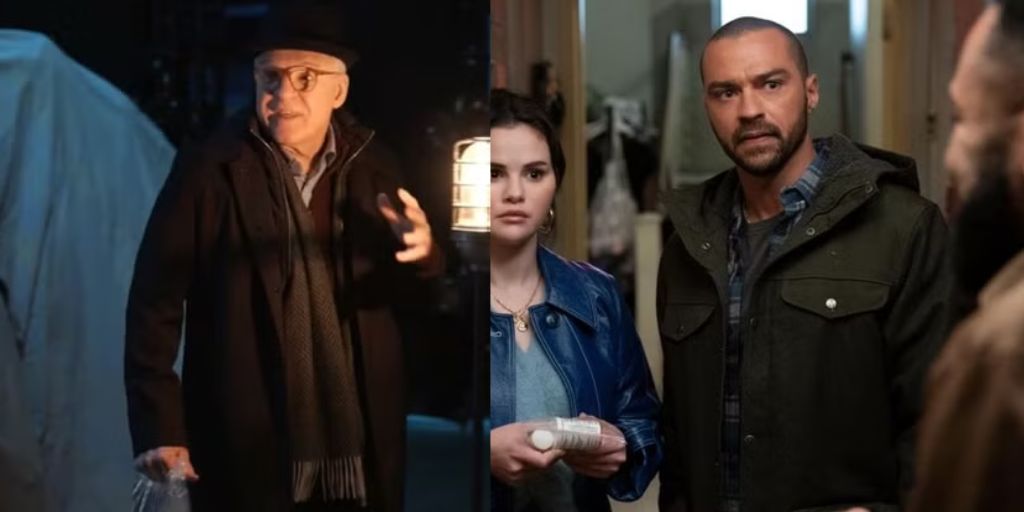
Still from Only Murders in the Building (Credit: Hulu)
What makes Only Murders in the Building truly special is its ability to evoke genuine emotions, from laughter to suspense to poignant moments of reflection. Each episode invites viewers to ponder not just the mysteries at hand but also the underlying human experiences that connect us all.
The Arconia itself, with its rich history and quirky residents, serves as the perfect backdrop for these schemes, making every twist and turn feel personal and relatable.
As viewers tune in to see what lies ahead for the Arconia trio, they can be assured of an entertaining journey filled with laughter, suspense, and a touch of the supernatural.
The anticipation for future episodes, along with the hope of a Halloween special, keeps fans engaged and excited about what new adventures await in this enchanting world.
