One of the best things at an award show is when a favorite nominee loses, and a surprise winner comes out on top. This happened at the Oscars when “Parasite” won Best Picture over the popular war film “1917.”
Fans were happy with this unexpected result. Similarly, at the Emmy Awards, “Hacks” won Best Comedy Series, surprising many who thought “The Bear” would take the prize.
After a surprising win for Lamorne Morris for “Fargo,” the Emmy Awards were mostly predictable. “Baby Reindeer” and “Shōgun” won many awards in the miniseries and drama categories, except for Elizabeth Debicki in “The Crown” and Jodie Foster for “True Detective: Night Country.”
At first, it looked like “The Bear” would win in the comedy categories after it picked up three acting wins and a directing win. However, “Hacks” ultimately took home the top prize, which was great news for the Emmys and the TV industry.
“Hacks” is an amazing comedy about comedians. It features Deborah Vance, played by Jean Smart, a long-time comedian who relies on her QVC products and her Vegas show. She teams up with Ava Daniels, played by Hannah Einbinder, a young comedian who is very honest and strong-willed.
Together, they create great comedy but also face personal struggles. The show deals with how comedy changes and what it takes to succeed in the competitive world of entertainment. It is very funny, with quick jokes that come from different situations and character interactions.
While “Hacks” has not won every Emmy, Jean Smart has won for Best Actress in a Comedy three times. The creative team behind the show has also received awards for writing and directing. However, Hannah Einbinder has not yet won, despite her growing talent.
During its run, “Hacks” has competed against the powerful show “Ted Lasso,” which won Best Comedy Series twice. Since “The Bear” beat “Ted Lasso,” many thought it would win again, leaving “Hacks” without recognition. This would be unfortunate because “Hacks” is one of the best comedies on TV. If “The Bear” won, it would not be for being a comedy, as it is more complex.
Defining comedy can be tricky. For instance, “Barry” is a dark comedy, but other shows like “Transparent,” “Cobra Kai,” and “Wednesday” also have humor.
“Orange Is the New Black” started as a comedy but later became a drama. “The Bear” fits into this confusing category. It has funny moments, but the show focuses on serious topics like obsession, restaurant culture, trauma, ambition, family, and identity.
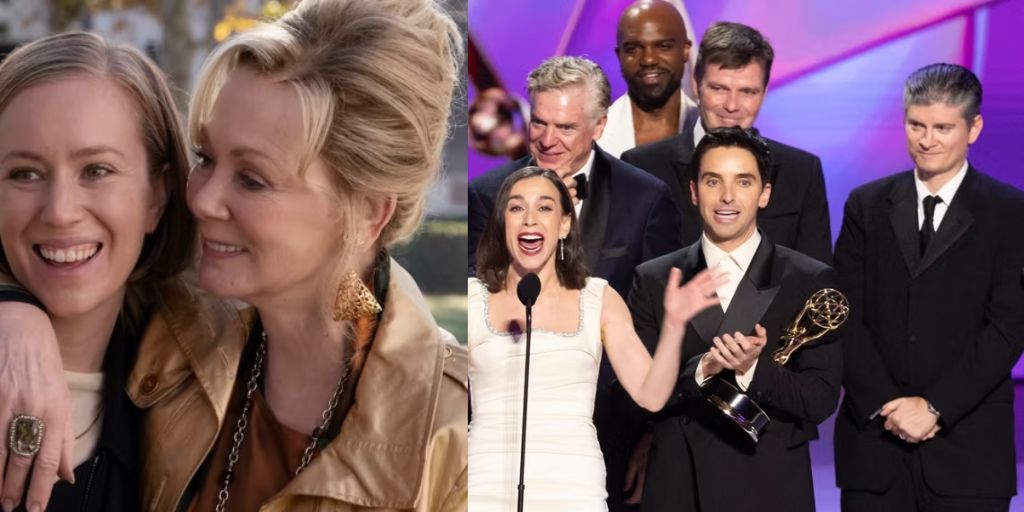
Still from the show (MAX)
Emmy host Eugene Levy mentioned that “The Bear” lacks jokes. It does have humor that arises from situations and character interactions, but this is not the main focus. “The Bear” could still work well without the humor, which makes it different from “Hacks.”
“Hacks” prioritizes comedy in its storytelling. The characters always find funny ways to deal with challenges, while “The Bear” can skip the jokes and still tell its story. “Hacks” is funny, emotional, and surprising, but it is undeniably a comedy from start to finish.
In conclusion, the Emmy Awards delivered an exciting surprise by recognizing “Hacks” as Best Comedy Series over the heavily favored “The Bear.” While both shows excel in their own right, the distinction between them lies in their approach to comedy.
“Hacks” thrives on its fast-paced humor, character-driven jokes, and a clear focus on the comedic elements that push the story forward.
In contrast, “The Bear,” while containing humorous moments, is driven by more serious themes. “Hacks” winning the top prize is a well-deserved acknowledgment of a show that remains consistently and authentically funny while tackling deeper emotional moments.
Frida Kahlo wrote that poignant entry in her diary just days before her passing. The quote reads:
“I hope the exit is joyful – and I hope never to return – Frida.”
This line reflects her complex relationship with life and death, shaped by her physical suffering and emotional turmoil, but also her deep connection to Mexican culture, which often views death as a natural and sometimes even celebratory transition.
Frida’s health had been declining in the years leading up to her death in 1954, and she faced immense physical pain, yet she maintained her passionate spirit until the end.
The official cause of Frida Kahlo’s death was recorded as a pulmonary embolism, but, no autopsy was conducted. This has led to various theories and speculations regarding the actual cause of her death.
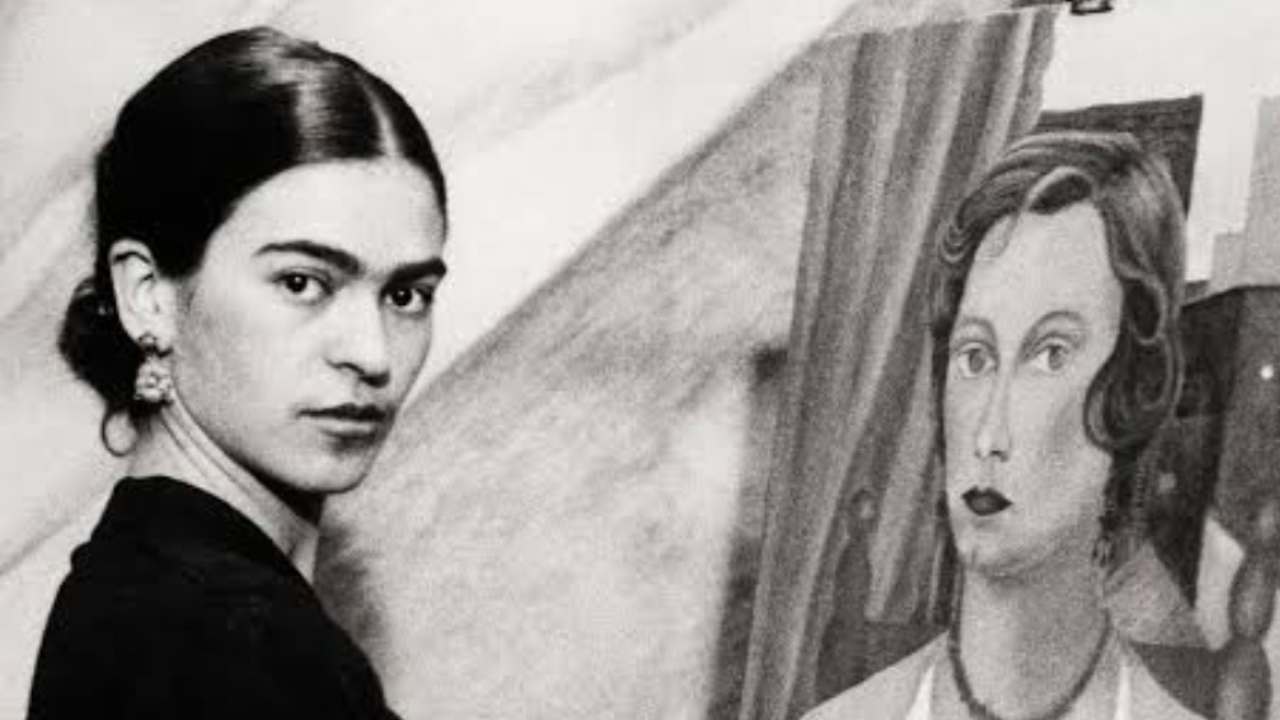
Frida Kahlo (Credit: X)
Given her history of chronic pain, multiple surgeries, and lifelong health issues, along with her known dependence on painkillers, some have speculated that she may have intentionally overdosed on medications as a means to end her suffering.
These conspiracy theories gained traction because of the ambiguity surrounding her final days and her increasingly frail condition.
Additionally, Kahlo’s personal struggles with both her physical and emotional health, as well as her provocative and unconventional lifestyle, fascinated the public.
As with many iconic figures, Kahlo’s mysterious death continues to fuel discussions, but without conclusive evidence, the theories remain speculative.
Just days before her death, Frida Kahlo did attend a political rally in her wheelchair, demonstrating her enduring commitment to activism despite her declining health.
The rally was in protest of the CIA-backed coup d’état against Guatemala’s democratically elected president, Jacobo Árbenz, in 1954.
Frida Kahlo had long been an outspoken advocate for Marxism, communism, and revolutionary causes, and her participation in this protest exemplified her unwavering political spirit, even as her physical condition worsened.
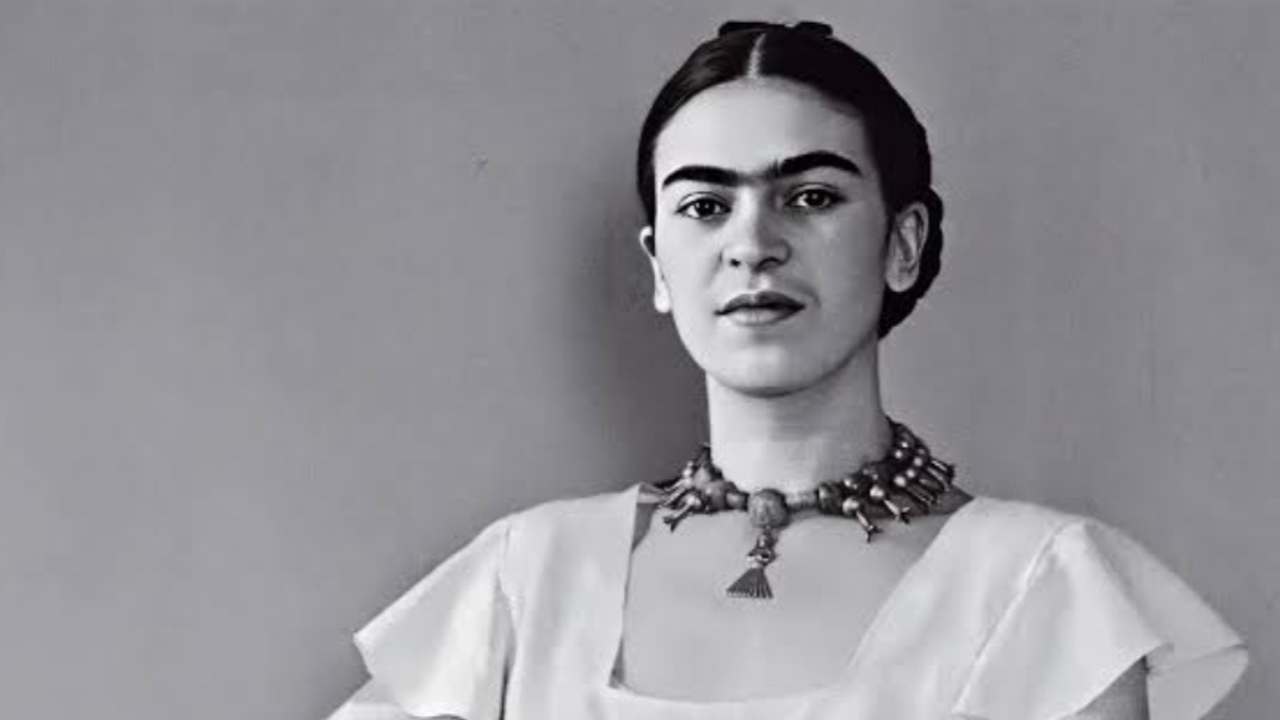
Frida Kahlo (Credit: YouTube)
She passed away on July 13, 1954, at the age of 47. Her attendance at the rally, so close to her death, is often seen as a testament to her dedication to political activism, a major aspect of her life alongside her art.
Despite her pain and frailty, she remained engaged with the world around her, advocating for the causes she believed in until the very end.
This poignant moment of defiance against injustice has become a key part of her legacy as both an artist and a political figure.
The theory that Frida Kahlo may have died by suicide stems from both her deteriorating health and her emotional state during her final days.
In the months leading up to her death, Frida was suffering from extreme physical pain due to complications from numerous surgeries, the amputation of her right leg, and her battle with lifelong illnesses.
The diary entry, where she expresses frustration and draws a black angel, is often interpreted as a sign of her emotional and physical exhaustion, and some see it as a possible indication of suicidal thoughts.
Kahlo’s immense zest for life, her vibrant personality, and her artistic energy are well-documented, but as her health declined, her quality of life diminished significantly.
The absence of an autopsy and the suspicion of an overdose have given rise to the belief that she may have taken her own life to escape her suffering.
The uncertainty surrounding Kahlo’s death, combined with her enigmatic life, inspired playwright Odalys Nanin to explore these themes in her work Frida: Stroke of Passion, which premiered in February 2020.
Nanin, a queer Mexican artist who feels a personal connection to Kahlo, delves into the complexities of Kahlo’s eccentric life and the mystery of her death.
The play offers a unique exploration of Kahlo’s final days, portraying both her passion and her possible struggle with the idea of death as an escape from her suffering.
While the true cause of Kahlo’s death remains uncertain, the ambiguity has only deepened public fascination with her life and legacy.
