When compared to major events like World War II and the Vietnam War, fewer movies focus on the American Civil War. This could be because the Civil War did not attract as many viewers from other countries. Additionally, the conflict had some very ugly motivations that make it harder to portray.
Showing slavery in films can be difficult, as filmmakers must treat the topic with great sensitivity and respect. It is tough to find something positive in such a dark time in history. However, the powerful Civil War movie Glory brought an important true story to life. This film helped Denzel Washington win his first Academy Award for Best Supporting Actor.
Glory is based on the true bravery of the 54th Massachusetts Infantry Regiment. This group became one of the first all-Black divisions in the Union Army during the Civil War. The regiment was commanded by Captain Robert Gould Shaw, played by Matthew Broderick. Shaw’s job was to train the new soldiers, including John Rawlins (Morgan Freeman), Jupiter Sharts (Jihmi Kennedy), Silas Trip (Washington), and Thomas Searles (Andre Braugher).
Shaw motivates the soldiers by informing them that the Confederacy plans to execute any Black men who try to escape slavery in response to President Abraham Lincoln’s Emancipation Proclamation. Despite this motivation, Trip begins to feel uncertain about his service. He struggles with the idea of supporting a country that does not see him as a citizen and does not allow him to vote.
Glory is known for some of the most impressive Civil War battle scenes in film history. This is largely due to the talent of director Edward Zwick. While Zwick may not be as famous as directors like Martin Scorsese or Quentin Tarantino, he has a special ability to showcase real-life conflicts dramatically. He later directed movies like Legends of the Fall and The Last Samurai.
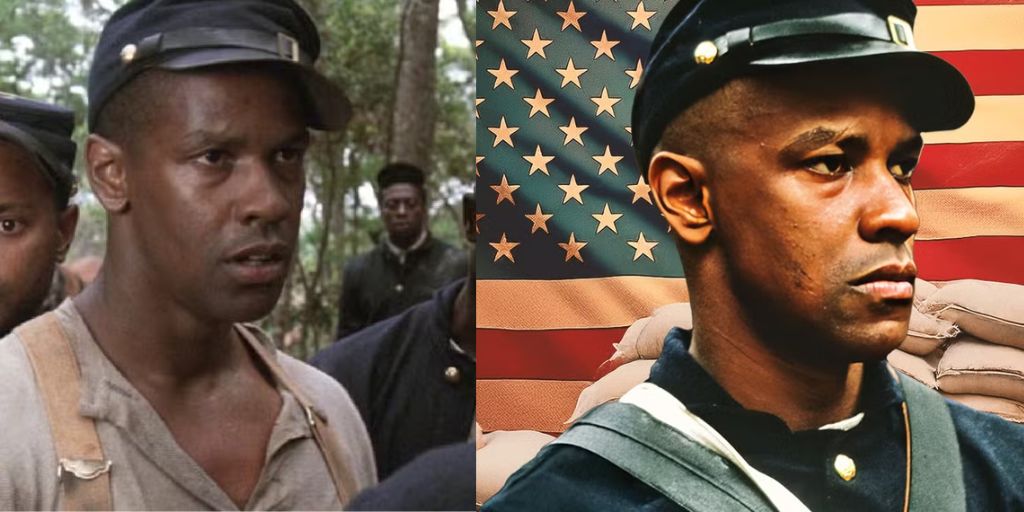
Still from the movie (Prime Video)
Glory effectively shows the harshness of the Civil War. The invention of new types of ammunition meant that battles lasted for many days, which was tough for soldiers in the 54th Regiment. These soldiers received fewer resources and supplies compared to white divisions.
The film highlights the complex experiences of Black soldiers during the Civil War and does not shy away from addressing the racism that the 54th Regiment faced. Even soldiers like Shaw, who believe they are honorable, still see the Black men under their command as lesser citizens. They can never fully understand the suffering that these men have experienced.
The film does an excellent job of illustrating the different perspectives within the Black experience. For example, Searles is a free man who feels a stronger loyalty to Shaw. In contrast, Trip is more skeptical and even refuses to carry the regiment’s flag at first because he is upset about how former enslaved people are treated.
A heartbreaking scene shows Trip getting flogged for what seems like an attempt to desert, which is one of the most disturbing moments in war films. Despite its strengths, Glory has received some criticism. For instance, film critic Roger Ebert pointed out the problem of using a white protagonist, Shaw, as the main focus of the story.
Additionally, some viewers might find it hard to feel inspired by the movie’s ending. While there is a powerful moment when Trip rallies his fellow soldiers during a battle, the film does not address the harsh treatment that many Black men who fought for the Union faced after the war ended.
Still, Glory marked a significant turning point in Washington’s career. He had already received praise for his role in Cry Freedom, but Glory established him as a major star of his generation.
The story of Glory goes beyond just the characters and their experiences in battle. It serves as a reminder of the struggles faced by Black soldiers during the Civil War and the ongoing issues of racism and injustice. The film highlights how the heroes of the 54th Massachusetts Infantry Regiment bravely fought for a country that often treated them poorly.
The struggles of soldiers like Trip and Searles are central to the film’s message. They show how the fight for freedom and equality was not just about the battles they faced on the battlefield but also about the recognition and respect they deserved as individuals. The film brings to light the sacrifices made by these men and the difficult choices they had to make.
In the context of history, Glory plays an essential role in representing the contributions of Black soldiers. It helps viewers understand that their participation in the Civil War was significant in shaping the future of the United States. The bravery and resilience shown by the 54th Massachusetts Infantry Regiment are honored through the film’s storytelling.
While some critics question the film’s perspective, many agree that it effectively portrays the emotional and physical challenges faced by Black soldiers. The combination of thrilling battle scenes and deep character development makes Glory a standout film in the war genre.
The cinematography and score enhance the movie’s impact, immersing viewers in the Civil War experience. The film’s attention to detail, from the uniforms to the weaponry, helps create a realistic portrayal of the era. These elements combined with powerful performances from the cast bring the story to life.
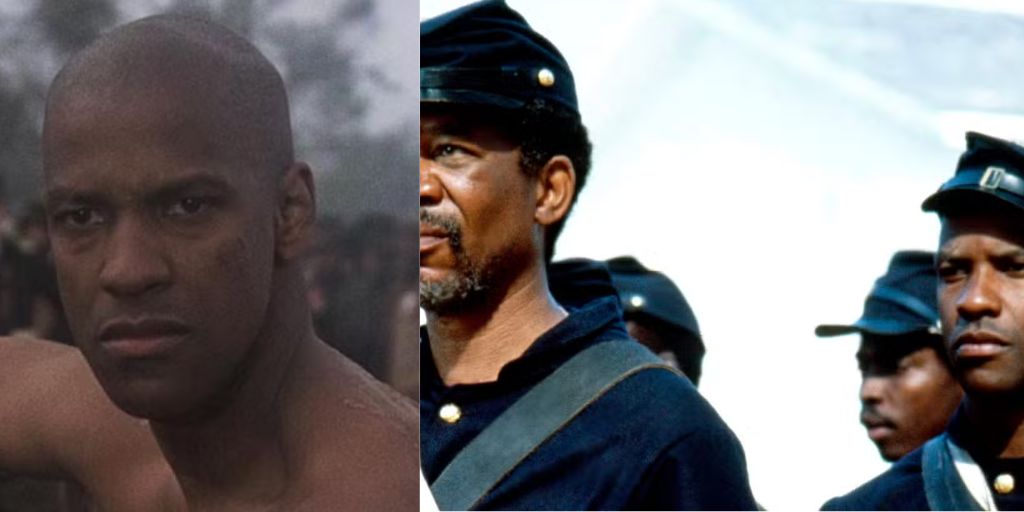
Still from the movie (Prime Video)
The relationship between Shaw and his men is important to the narrative. Shaw’s initial naivety transforms as he learns more about the realities his soldiers face. He begins to recognize their struggles and the importance of their fight for freedom. This character development adds depth to the film, showcasing how understanding and empathy can grow through shared experiences.
The moments of camaraderie and friendship between the soldiers provide a counterbalance to the harshness of war. They show that even in the midst of conflict, strong bonds can form. These relationships emphasize the importance of community and support during difficult times.
Glory also examines the theme of honor in battle. The characters grapple with what it means to fight for a country that does not honor them. This moral conflict is especially poignant for Trip, who struggles with the notion of loyalty and sacrifice. His journey throughout the film highlights the personal battles soldiers face alongside the physical ones.
In the end, Glory stands as a powerful reminder of the sacrifices made by Black soldiers in the fight for freedom. The film shines a light on their courage, resilience, and the ongoing struggle for equality. By telling this important story, Glory helps to ensure that the legacy of the 54th Massachusetts Infantry Regiment is not forgotten.
As Glory continues to be recognized and celebrated, it serves as a source of inspiration for future generations. The film encourages viewers to reflect on the past while considering the ongoing challenges related to race and equality in society today. The stories of courage and determination from the soldiers of the 54th Regiment remain relevant as we continue to strive for justice and understanding.
Glory is more than just a war movie; it is a vital piece of history that captures the spirit of an important moment in the fight for freedom. The film’s powerful storytelling, emotional depth, and historical significance make it a must-see for anyone interested in the complexities of the Civil War and the role of Black soldiers in American history.
Through its engaging narrative and unforgettable characters, Glory leaves a lasting impact on its audience, encouraging reflection and discussion about the past and its relevance today.
Glory serves as a profound coverage of the sacrifices and struggles faced by Black soldiers during the American Civil War. By telling the true story of the 54th Massachusetts Infantry Regiment, the film not only honors their bravery but also sheds light on the complexities of their experiences.
It captures the dual fight these soldiers faced: the physical battles on the battlefield and the emotional turmoil of fighting for a country that often did not recognize their humanity or worth.
The film’s portrayal of Captain Robert Gould Shaw’s growing understanding of his men underscores the importance of empathy and awareness in leadership. Shaw’s journey reflects the broader societal challenges of recognizing and respecting the contributions of marginalized groups.
Through powerful performances, particularly by Denzel Washington, the film evokes deep emotions and invites viewers to reflect on the ongoing issues of race and equality in America.
Moreover, Glory plays a critical role in educating audiences about the significant contributions of Black soldiers in shaping U.S. history. It challenges viewers to confront the painful realities of racism and injustice that persisted during the Civil War and continue to resonate today.
The film serves not just as a reminder of past injustices but also as a call to action, urging society to acknowledge and rectify historical wrongs. Glory is more than just a war film; it is a poignant narrative that emphasizes the need for recognition, respect, and understanding of the sacrifices made by Black soldiers.
As we reflect on their courage, we are reminded of our responsibility to continue advocating for equality and justice. The film’s legacy endures as it inspires future generations to engage with history and strive for a better, more inclusive society.
With The Bachelor franchise’s regular programming postponed until 2025, and The Golden Bachelorette winding down after a season that introduced a fresh twist to the usual format, loyal fans might find themselves craving more of the addictive reality TV chaos and romantic drama the shows offer. But don’t worry, there’s something that can fill the gap: Burning Love.
This side-splitting parody, produced by Ben Stiller, brilliantly pokes fun at The Bachelor franchise while showcasing a star-studded cast and plenty of laugh-out-loud moments.
Created by Erica Oyama, who also wrote for the hit show Never Have I Ever, Burning Love will have you laughing at how it exaggerates all the absurd yet entertaining elements of the reality dating series everyone knows so well.
If you’re unfamiliar with Burning Love, it’s a comedic web series that was originally made for Yahoo! Screen, a streaming platform that unfortunately didn’t stick around for too long. While the platform didn’t last, it did give us some hidden gems, including Burning Love, the sci-fi comedy Other Space, and even the final season of the cult-favorite show Community.
Burning Love became one of Yahoo! Screen’s greatest contributions to online entertainment, serving as a masterful parody of the dating show genre, especially focusing on The Bachelor series.
The show didn’t just create an amusing take on the reality show; it took the most exaggerated, wild elements and turned them into a full-on comedy while still keeping the romantic drama at the center of the narrative.
Burning Love Season 1: The Bachelor Role with a Twist
Burning Love follows a similar format to The Bachelor, but with an even funnier, sometimes absurd, twist. Ken Marino plays Mark Orlando, a firefighter who’s in the central “bachelor” role. Mark is looking for love — or at least that’s what he tells everyone — while a group of quirky women compete for his affection.
Each contestant has an exaggerated personality that plays on the familiar types you see in dating shows, from the overly dramatic to the emotionally unstable, and even the ones who are clearly there for any reason other than love.
Marino’s portrayal of Mark is both charming and hilariously clueless. He’s sincere yet utterly unaware of how ridiculous the entire setup is, which is what makes his performance so funny. He takes everything seriously, even when things spiral into chaos, which only adds to the absurdity of the show.
Mark Orlando’s journey is filled with romance, misunderstandings, and plenty of over-the-top drama, all crafted to poke fun at how these shows often play out in real life.
Each episode in Season 1 of Burning Love is packed with hilarious moments, often mimicking the exact formula The Bachelor uses — rose ceremonies, emotional breakdowns, dramatic exits, and shocking twists. But instead of the heartfelt romance we see on The Bachelor, Burning Love turns these into opportunities for laugh-out-loud moments.
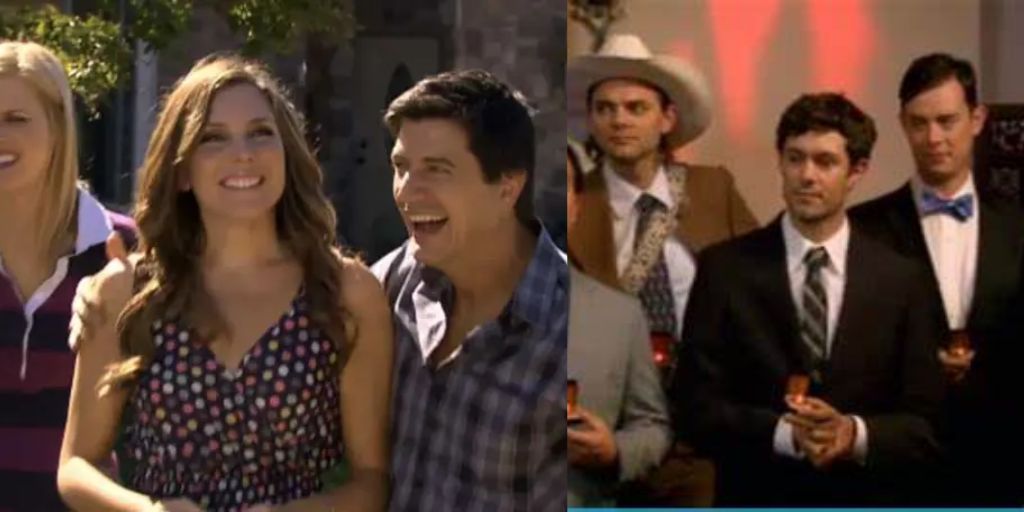
Still from Burning Love (Credit: Prime Video)
One of the stand-out elements of the parody is how it exaggerates the “suspense” and drama that reality dating shows rely on, stretching out moments to comedic lengths that perfectly mirror what we see on The Bachelor but with a humorous twist.
Burning Love Season 2: The Bachelorette Gets Her Time to Shine
In Season 2, Burning Love changes things up by flipping the roles. This time, June Diane Raphael takes center stage as Julie Gristlewhite, the bachelorette who’s now on the search for love. Julie is a completely different type of lead from Mark Orlando, but just as clueless and desperate in her own way.
Her desire to find love borders on obsession, and it’s clear she’s willing to do just about anything to get it. Like Mark in Season 1, Julie is surrounded by a cast of male contestants who each bring their own unique, and often ridiculous, personalities to the show.
What makes Season 2 especially interesting is how it satirizes the format of The Bachelorette, highlighting some of the key differences between the two shows.
While The Bachelor is often centered on a man choosing between women, The Bachelorette focuses on a woman being pursued by men, and this shift in dynamics offers plenty of new comedic opportunities. One of the most noticeable differences is how many of the male contestants don’t seem to take the process seriously at all, which leads to plenty of hilarious moments.
Oyama, the creator of Burning Love, has shared that she believes dating shows like The Bachelorette are often less believable because it’s clear that many of the men are more interested in being on TV than actually finding love. This insight is reflected in the way the male contestants behave in the show, particularly Ryan Hansen’s character, Blaze.
Blaze, played by Hansen (who previously worked with Ken Marino on Party Down), is one of the standout characters in Season 2. Blaze is a carefree womanizer who clearly isn’t there for the right reasons, but Julie can’t seem to see past his good looks and charming demeanor.
Their “situationship” provides some of the funniest moments of the season, particularly in scenes where Julie tries to confront Blaze about his lack of commitment, only to melt into a mess the moment she sees him.
The ongoing tension between Julie and Blaze parodies the way reality shows like The Bachelorette often frame physical attraction as a stand-in for emotional connection, and it’s always funny to watch Julie try (and fail) to keep her composure around him.
June Diane Raphael’s physical comedy skills are on full display in these scenes, as she often finds increasingly ridiculous ways to touch Blaze or press her body against him while trying to act natural.
Her awkwardness is something many Bachelorette viewers will recognize, as it mirrors the kind of forced chemistry that’s often seen on these shows.
Julie’s desperation for love is exaggerated for comedic effect, but it’s also rooted in a very real dynamic that’s often present in reality dating shows — the idea that contestants are constantly searching for “the one” while being distracted by superficial attractions.
Burning Love Season 3: A New Spin on Bachelor Pad
By the time Season 3 rolls around, Burning Love changes up its format again, this time parodying another popular spin-off from The Bachelor franchise, Bachelor Pad. In this season, the show takes on a competition-based format, with past contestants returning to compete for cash prizes instead of love.
This shift allows for even more ridiculous moments, as the contestants are now motivated by money rather than romance. While the previous seasons focused more on the emotional drama of dating, Season 3 leans heavily into the competitive nature of reality TV, creating new opportunities for hilarious situations.
One of the highlights of Season 3 is Kumail Nanjiani’s character, who develops an unrequited crush on another contestant, Carly (played by Janet Varney). Kumail’s character is awkward and desperate, and his attempts to win Carly over provide some of the funniest moments of the season.
His character arc, while played for laughs, also touches on the idea that reality dating shows often create unrealistic expectations about love and relationships, something that Burning Love frequently highlights in its parody.
Carly’s relationship with Julie also mirrors real-life moments from The Bachelor: Vietnam and The Bachelor: Australia, where contestants developed feelings for each other rather than for the lead. This twist adds another layer to the parody, as it plays on the idea that love can be unpredictable and doesn’t always follow the expected path, even in the highly structured world of reality TV.
Spot-On Parody of Reality TV Tropes
One of the things that makes Burning Love so successful as a parody is how well it understands the reality shows it’s making fun of. Every aspect of the show, from the rose ceremonies to the confessionals, is designed to mimic The Bachelor franchise, but with a comedic twist.
The exaggerated emotions, the forced drama, and the constant twists all feel familiar to anyone who’s watched The Bachelor or The Bachelorette, but they’re heightened to an absurd degree that makes them even funnier.
For example, in Burning Love, one contestant, played by Malin Akerman, is clearly only on the show for the free food and a place to stay, a detail that’s hilariously exaggerated but not entirely unbelievable.
The show frequently plays with the idea that many contestants on reality dating shows aren’t really there for love, but for other benefits, like fame or attention. This idea is a recurring theme in the show, particularly in Season 2, where many of the male contestants seem more interested in the cameras than in Julie herself.
Another recurring gag in Burning Love is the constant references to past seasons that don’t actually exist. Ben Stiller, who produces the show, even plays the bachelor from these imaginary seasons, sometimes showing up with his wife, Symphony (played by Christine Taylor), to give advice to the contestants.
These fake backstories add to the feeling that Burning Love is a massive franchise in its own right, despite only having 42 episodes in total.
The show also includes plenty of nods to real moments from The Bachelor franchise. For example, in one of the funniest moments of Burning Love, Jennifer Aniston makes a cameo appearance that now feels eerily similar to a contestant from The Bachelorette who showed up with bandages covering his face, claiming to have had facial reconstruction surgery.
Aniston’s scene is brief but memorable, and it’s clear that the show’s creators knew exactly how to use her star power for maximum comedic effect.
A Star-Studded Cast That Elevates the Comedy
One of the things that sets Burning Love apart from other parodies is its incredible cast of comedic actors. For fans of shows like Childrens Hospital or Party Down, many of the actors in Burning Love will be familiar faces.
In addition to Ken Marino and June Diane Raphael, the cast includes a number of big names from the world of comedy, including Michael Cera, Adam Scott, Kristen Bell, Adam Brody, and even Paul Rudd and Seth Rogen in brief guest roles.
Adam Brody’s character, Max, stands out in Season 2 as one of Julie’s suitors. Max is a Jewish contestant who feels conflicted about the fact that Julie isn’t Jewish, leading to some hilarious moments where he tries to reconcile his feelings in the confessional.
In one scene, Max murmurs, “It’s not that big a deal to me, and then, at the same time, it is the most important thing ever.” Brody’s deadpan delivery makes this one of the funniest moments in the show.
Jennifer Aniston’s cameo, while short, is another highlight. Aniston, who has worked with Burning Love producer Ben Stiller on several projects, was brought in for a quick scene that perfectly plays off the absurdity of reality dating shows. Although her appearance is brief, it’s one of the most memorable moments in the series and shows how well the creators of Burning Love were able to utilize their guest stars.
Burning Love Is Made with Love for The Bachelor
Despite how absurd and cartoonish Burning Love can be at times, it’s clear that the creators of the show have a genuine affection for the reality shows they’re parodying.
The attention to detail, the spot-on imitation of The Bachelor format, and the careful exaggeration of the show’s most ridiculous elements all point to a deep understanding of what makes reality dating shows so compelling, even when they’re at their most outlandish.
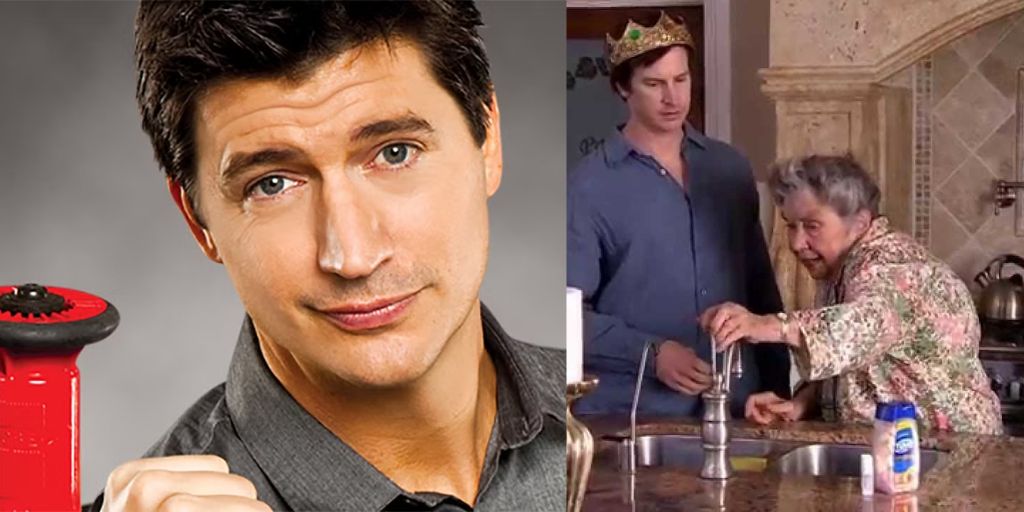
Still from Burning Love (Credit: Prime Video)
This affection is perhaps best summarized by The Bachelor host Chris Harrison, who presented Burning Love with a Webby Award. In his acceptance speech, Harrison said, “It’s said that imitation is the highest form of flattery, and that’s something I have to remind myself each time I watch an episode of Burning Love.”
It’s clear that while Burning Love is poking fun at The Bachelor franchise, it’s doing so from a place of genuine appreciation for the show and its fans.
Whether you’re a die-hard Bachelor fan or just someone who enjoys a good comedy, Burning Love is a must-watch. With its hilarious cast, clever writing, and pitch-perfect parody of the reality dating genre, it’s a show that will keep you laughing from start to finish.
And while The Bachelor might be on a break until 2025, Burning Love is available to rent or purchase on Prime Video in the U.S., giving you the perfect way to pass the time until your favorite reality dating shows return.
