In Episode 5 of The Franchise, titled “Scene 16: Eric’s Hospital Scene,” things get even worse for Eric than before.
At first, I didn’t realize that Eric is really the main character. His fall from being a creative filmmaker to a miserable ad man shows how the production of Tecto is wearing him down. There’s a shot in this episode where Eric gives up completely, and it’s funny, but also a bit sad.
His breakdown shows how much the production is taking from him. It’s hard not to feel for Eric, as he’s just trying to make something meaningful, but everything keeps getting worse for him.
Eric’s situation in The Franchise reflects the reality of big-budget comic-book movies. While the show exaggerates these situations for comic effect, it’s clear that there is a real satirical edge to the story.
In the premiere, it wasn’t clear if The Franchise would be able to keep things fresh and engaging.
However, it turns out the show can. The key is personalizing the challenges each character faces, which is what makes this show stand out.
While most of the issues in a movie set might seem small, the impact on Eric is always significant, and that’s what keeps the story moving.
The Breakdown of Eric’s Character
In the opening scenes of Episode 5, Eric’s collapse is clear. He’s no longer the hopeful visionary he once was. He’s no longer fighting for his artistic vision but trying to save his job, his reputation, and any ounce of dignity he has left.
He is forced to accept one ridiculous decision after another, and with each one, it’s clear that the studio’s manipulation is wearing him down.
The script he is given is full of compromises, forced changes, and products that do not belong in the film. Yet, he keeps going, trying to make something that he can still believe in.
Eric’s role as the protagonist is vital because his decline shows us just how difficult the production of Tecto is.
While some of the absurd decisions and compromises might seem far-fetched, they’re very much grounded in the everyday challenges faced by filmmakers working on big-budget blockbusters.
At the core of this episode is the question of how much a person is willing to sacrifice for their work, their reputation, and their dreams. Eric is someone who has already given up so much, and yet, the show continues to push him further.
In The Franchise, Eric’s journey is one of slow, painful unravelling. From the beginning, he was presented as a talented and ambitious filmmaker, but as the series has progressed, we see him become more and more beaten down.
In Episode 5, his desperation reaches new heights as he is forced to transform a deeply personal and emotional scene into a corporate tool for Chinese farming equipment.
His willingness to keep going, despite the absurdity of the situation, is both tragic and darkly comedic.
The Ridiculousness of the Product Placement
One of the most ridiculous elements of Episode 5 is the product placement. The episode takes a deep view into the world of corporate decisions in filmmaking. While product placement is nothing new in big movies, the way it’s handled here is absolutely absurd.
Eric, who has spent his career creating something personal and meaningful, is now asked to insert a tractor into a movie that takes place almost entirely in space.
Not just any tractor, but one that represents Chinese farming equipment, which is apparently the best in the world.
The reason for this bizarre request is simple: the Chinese government is demanding it in exchange for allowing the movie to be released in their market.
The tractor is a symbol of the government’s influence on the production, and Eric has no choice but to work it into the scene.
This leads to one of the most absurd moments in the entire series, where Eric is forced to figure out how to include a tractor in a space hospital scene.
Even worse, Eric’s scene, which he’s most proud of, is going to be cut from the final film anyway. This makes the situation even more painful for him, as he knows that this important moment is being altered for no reason other than corporate greed.
The producers don’t care about the integrity of the film; they only care about the money they can make by getting into the Chinese market.
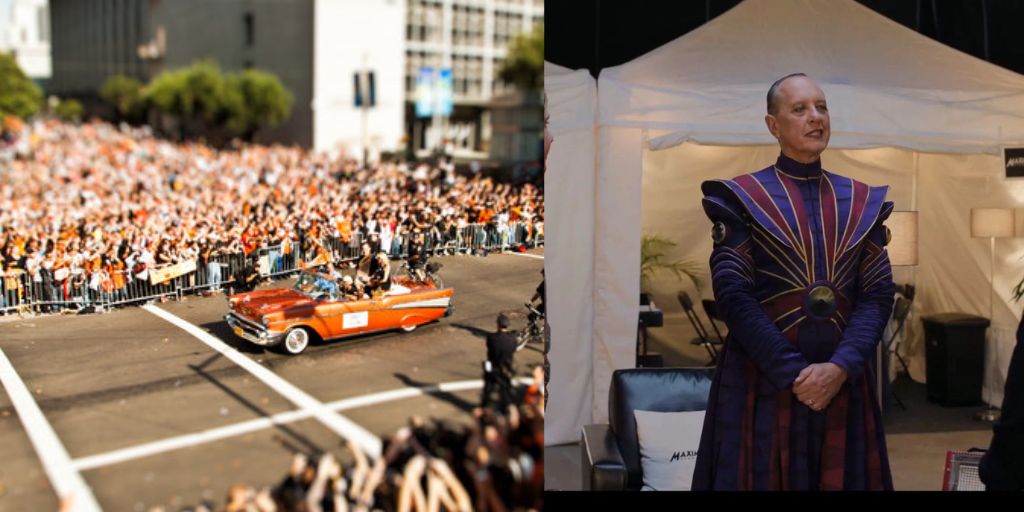
Still from The Franchise (Credit: Max)
Eric’s frustration grows as he has to follow through with the ridiculous request. But the real kicker is when he learns that this scene, which he believes is essential to the movie, is going to be excised from the final cut.
Eric, who has spent countless hours perfecting this emotional scene, is now forced to change it, only to see it cut from the movie entirely. This leads to a mix of dark humor and genuine sympathy for the character.
The Growing Tension and Petty Revenge
As if things couldn’t get worse for Eric, the episode also shows how the producers are using his frustration for their own amusement.
After Eric’s outburst in the previous episode, Pat and the mysterious “Shane” decide to get back at him by making him kowtow to the Chinese Communist Party.
Pat has no problem humiliating Eric, and he enjoys the power he has over him. Pat sees this as another opportunity to push the boundaries of absurdity in the film.
As the episode progresses, the ridiculousness of the situation only increases. Eric is already stressed out and emotionally drained, but Pat’s decisions make everything worse. The introduction of a second tractor – this time from a different movie studio – further adds to the absurdity.
In The Franchise, everything is about power, money, and making the most of whatever situation arises. And for Eric, this means constantly compromising his beliefs and values.
By the time we reach the episode’s climax, Eric has reached a breaking point. The scene in which he declares war on China is both shocking and hilarious. In a fit of rage, Eric takes aim at everything from sweet and sour sauce to pandas, Confucius, and Mulan.
It’s a bizarre rant that seems to come out of nowhere, but it’s also a reflection of how much the pressure has built up on him. Eric has had enough, and his outburst is a result of all the absurd compromises he’s been forced to make.
The Fallout of Eric’s Outburst
As expected, Eric’s rant doesn’t go unnoticed. The outburst is leaked to the press, and suddenly Eric is in the middle of a geopolitical controversy.
The studio quickly realizes they have a PR nightmare on their hands, and a carefully managed statement is put out in an attempt to calm things down. However, as the closing credits roll, we see that a simple statement is not enough to solve the problem.
In The Franchise, there’s always another crisis waiting to happen. Pat, ever the problem solver, comes up with a new plan.
Instead of letting the situation escalate further, he decides to insert a scene promoting a tainted baby milk brand that had been recalled for containing mercury.
This idea, while deeply unethical, seems like a quick fix to the situation. Rufus, a minor character, is given a line in the movie, and several bottles of the tainted milk are used in a scene.
While this may help solve the PR problem for the time being, it creates a new one for Rufus, whose physical health may now be at risk.
This development highlights the dark satire at the heart of The Franchise. The show doesn’t just poke fun at the absurdity of Hollywood; it also shows the ethical compromises that filmmakers and studios are willing to make for the sake of profit and convenience.
The fallout from Eric’s rant and the subsequent decision to promote a dangerous product are just two examples of how far the show is willing to go to highlight the ridiculousness of the entertainment industry.
The Franchise’s Continued Success
Despite the increasingly absurd situations, The Franchise continues to engage viewers with its sharp satirical edge.
The humor in Episode 5 is top-notch, and the series remains an entertaining scheme of the craziness that comes with making big-budget movies.
The show’s ability to take a simple concept – a movie production going wrong – and turn it into a multi-layered commentary on the entertainment industry is what makes it so unique.
In Episode 5, Eric’s journey is at the forefront, but the show also succeeds in making every character’s struggle feel personal.
Each decision, each ridiculous product placement, each absurd compromise, impacts the characters in a way that makes the show feel real, even when it’s pushing the boundaries of humor.
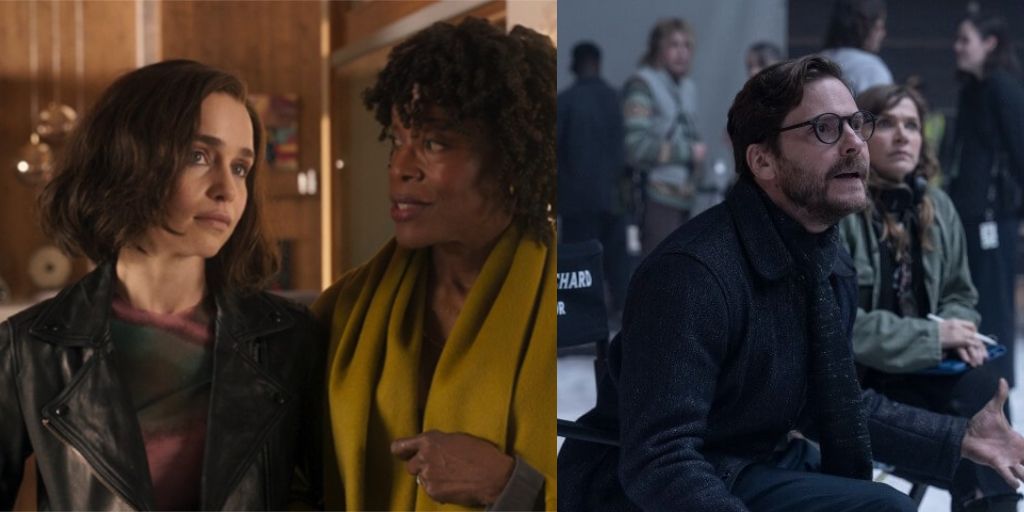
Still from The Franchise (Credit: Max)
The show’s success lies in its ability to combine absurdity with moments of genuine emotion, and Episode 5 is a perfect example of this balance.
The Franchise continues to push the limits of comedy and satire, making each episode more ridiculous than the last. Episode 5, “Scene 16: Eric’s Hospital Scene,” is a standout of the season, showcasing Eric’s descent from hopeful filmmaker to defeated ad man.
The product placement, the petty revenge, and the geopolitical controversy all come together to create a story that’s both hilarious and tragic.
Through it all, Eric remains the emotional anchor of the show, and his struggle to maintain some sense of dignity in the face of corporate greed is something that resonates with anyone who has ever felt the pressure of compromising their ideals for the sake of success.
In Tulsa King’s Season 2, Episode 8, titled “Under New Management,” shifts in leadership, loyalty, and life-altering choices take center stage.
The episode starts with a major shift in power among the families, businesses, and even unexpected characters, taking the show in bold new directions and causing devastating chain reactions.
This episode highlights the raw consequences of bad decisions in a tense, high-stakes environment. As familiar characters face unexpected turns, every scene piles on the tension, foreshadowing much darker days ahead.
Chaos in the Invernizzi Family and Beyond
The episode is packed with scenes showing the fallout from the previous gang conflicts, centering around a brutal shootout that altered the trajectory of everyone involved.
The main groups affected include the Invernizzi family, Thresher’s crew, and a few outlying figures in the Tulsa underworld. A lot of characters are facing losses that bring out extreme actions, creating an atmosphere of panic and volatility.
One of the major plot points involves Bill Bevilaqua’s capo, who was shot by Tyson in the prior episode but survived. While the injury wasn’t fatal, the action stirs tension with Kansas City.
It also leads to more significant repercussions, as Dwight and the Invernizzi family find themselves caught in a collision of competing motivations and betrayals.
Meanwhile, Jackie, once a minor figure, seizes the opportunity to push his agenda and emerge as a key player in the ongoing gang wars.
In the heart of this storm, somewhat surprisingly, stands Armand, whose journey takes on a central focus.
Armand’s Descent into Desperation
Armand’s story is especially poignant in “Under New Management.” Previously a side character with little depth, Armand is now at the forefront, representing how desperation can drive even well-meaning people to take extreme steps.
Armand started as a comic relief figure with a weakness for drink, but Season 2 gives him a complex and troubled arc, showing how misplaced loyalty and poor decisions can lead to severe consequences. His initial interactions with Thresher showed how easily he can be manipulated.
Thresher gains insight into Dwight’s movements through Armand, who initially shares information unknowingly and later under pressure. These actions set off a chain of events that spiral out of Armand’s control, leaving him isolated and vulnerable.
By this episode, Armand is pushed to the edge. He finds himself without allies, as Dwight no longer trusts him, Thresher discards him, and even his own family grows distant.
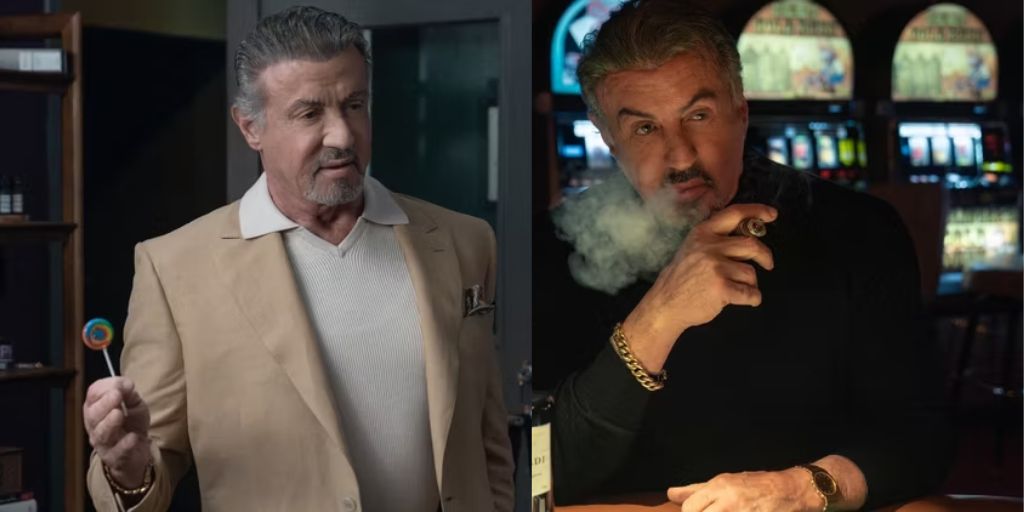
Still from Tulsa King (Credit: Paramount+)
His desperation leads him to consider the FBI’s witness protection program, knowing it would cut him off from his family, who are planning to move to Colorado without him. Armand’s drinking spirals out of control as he lashes out, making a series of impulsive decisions that only worsen his situation.
The climax of his arc in this episode is an ill-fated attempt to rob Dwight’s stash, leaving a tragic final voicemail for his family and taking Goodie hostage.
The Sad Complexity of Armand’s Character
Armand’s story is compelling because he’s not inherently malicious. His motivations come from a place of fear and survival rather than malice. This vulnerability makes his actions all the more heartbreaking as we witness him unravel.
His choices don’t reflect a true criminal mindset, yet his circumstances drag him into a life that demands ruthless behavior. His moral struggles and emotional outbursts show the viewer how even minor players in this world are caught in a system that punishes any missteps.
By the episode’s end, Armand becomes a tragic figure, setting him up as a cautionary tale and perhaps foreshadowing a fateful encounter with Dwight.
Vince Challenges Chickie for Control
Meanwhile, Tulsa King’s overarching story heats up with Vince finally challenging Chickie’s leadership in the Invernizzi family. This pivotal scene demonstrates a major shift in power dynamics. Vince bluntly informs Chickie that he’s been replaced as head of the family.
Chickie’s reaction is predictable, and his grudge against Dwight resurfaces. Chickie’s intense hatred for Dwight began when he was exiled to Tulsa, where his growing influence posed a challenge to the New York families. This resentment turns into a dangerous obsession, especially now that he’s no longer in power.
Despite his diminished authority, Chickie is not the type to give up easily. His scheming mind immediately begins to consider how he can regain influence, and it’s clear that Dwight’s family might become a target.
Chickie’s character contrasts with Armand’s; he is consistently selfish, spiteful, and willing to harm anyone in his way. Vince’s decision to strip Chickie of his power, while strategic, may backfire since leaving Chickie alive allows him to plot further chaos.
Vince’s takeover represents more than just a power move—it sets off a new cycle of revenge that could destabilize the entire crime network.
This development lays the groundwork for what could be an explosive showdown in future episodes, especially as Chickie contemplates targeting Dwight’s loved ones to force his hand.
Jackie’s Surprising Move and the Escalation of Gang Tensions
Another interesting twist in Episode 8 is Jackie’s calculated rise. He has managed to operate under the radar, and while Thresher’s arrogance made him dismiss Jackie as a threat, Jackie’s patience pays off in this episode.
Thresher’s assumption that Jackie’s financial inferiority meant submission was a grave error. Jackie uses Thresher’s oversight to his advantage, gradually positioning himself as a formidable player.
With access to resources and a loyal following, Jackie’s ambitions are now evident. His takeover of the weed operation is just the beginning; he’s eyeing Kansas City next, a target that would cement his control.
Thresher’s warning to Bill about Jackie is poignant, painting Jackie as more than just another ambitious gangster—he’s reckless, dangerous, and unafraid of confrontation.
Thresher admits that Jackie was behind a car bomb aimed at Tyson’s father, Mark, sparking an unnecessary conflict that now threatens all involved parties. Bill’s frustration is palpable, as he realizes he’s been drawn into a needless war with Kansas City and that the conflict has cost lives.
This storyline is a commentary on how ego and underestimation of others can lead to destructive outcomes. Jackie’s expansionist approach is more than a power grab; it disrupts the carefully constructed balance among the gangs and sets a brutal tone for the future.
With the car bomb incident, Jackie has crossed a line that could unleash retribution from multiple fronts. His brazenness adds fuel to an already volatile situation, ensuring that his role in future episodes will be impactful.
The First Strike in an All-Out Gang War
The final act of the episode signals a new phase in the gang conflict. Dwight, aware of the growing threats, has taken measures to protect his family by sending Tina and the kids away and shutting down his businesses.
His cautious approach reflects the calculated risk management typical of his character, but even Dwight can’t cover all his bases.
The turning point comes when Bill decides to act on the simmering tensions. Despite the tentative truce between Kansas City and Dwight after the Atlanta sit-down, the recent events undo this fragile peace. Tyson’s attack on Bill’s capo had been more of a warning, but it wasn’t a formal declaration of war.
That changes when Bill retaliates, marking the beginning of open hostilities between the two sides. The attack on Even Higher Plane, Dwight’s dispensary, leaves Jimmy the Creek dead, setting a dark tone for the bloodshed to come.
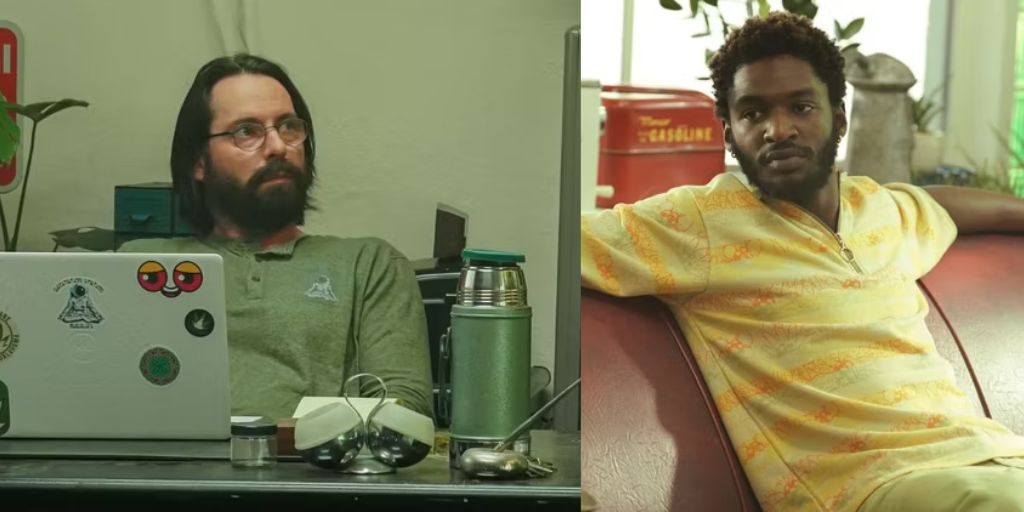
Still from Tulsa King (Credit: Paramount+)
Jimmy’s death might seem low-stakes, but it foreshadows a larger battle. As Bill’s men begin targeting Dwight’s crew, the episode makes it clear that Dwight’s peaceful intentions won’t prevent further losses.
The federal agents monitoring Bill reveal that they had overheard a hit being planned, highlighting the inevitable collision between Dwight’s crew and Kansas City. This federal intervention adds a new layer to the conflict, as law enforcement watches and waits for the gangs to weaken each other.
Dwight’s Dilemma and the Fallout to Come
The closing scenes of Episode 8 show Dwight’s vulnerability and the sacrifices he must make to protect his people. He is a hardened character, yet his concern for his family drives him to preemptive action, such as sending them away.
His survival instincts and connections keep him one step ahead, but even Dwight’s best efforts can’t fully prevent the encroaching danger. The FBI’s wiretap alert gives him some advantage, but it also indicates that he’s now firmly under federal scrutiny.
As he braces for the unfolding conflict, Dwight finds himself at a crossroads. His loyalty to his crew is unwavering, but the stakes are growing higher with each episode. The death of Jimmy signals the cost of this war, which is now unavoidable.
With Kansas City escalating tensions and the Invernizzi family in disarray, Dwight’s journey seems destined for greater turmoil. His decisions will likely define the future of Tulsa King, especially as he balances protecting his people against facing his enemies head-on.
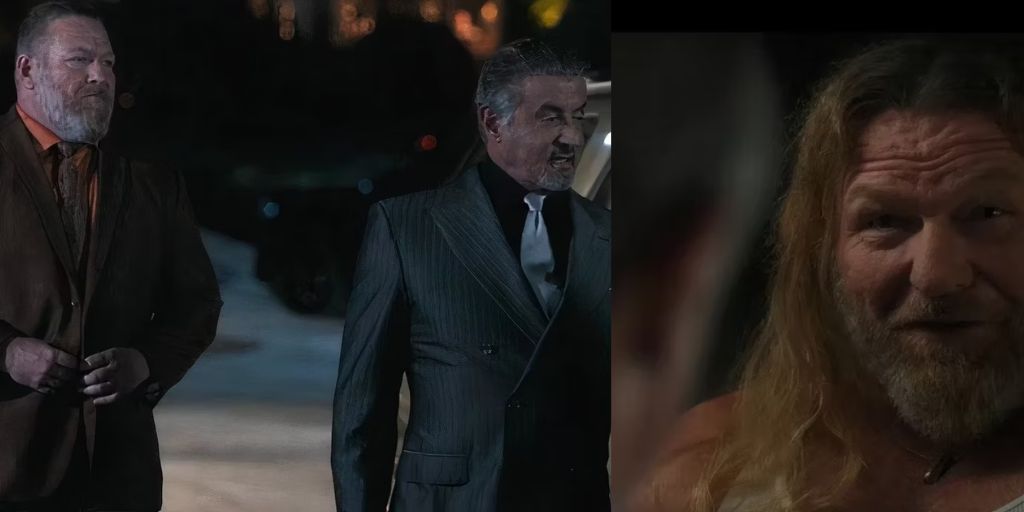
Still from Tulsa King (Credit: Paramount+)
Episode 8 of Tulsa King Season 2 is a masterclass in building suspense, setting the stage for dramatic confrontations.
It shows the themes of power, betrayal, and survival in a ruthless criminal underworld. Each character, from Armand to Dwight, faces challenges that test their resolve and loyalty, with disastrous consequences.
The episode’s ending leaves viewers on edge, with many questions unanswered and the fate of several characters hanging in the balance.
With gang wars looming, future episodes promise to deliver high-stakes drama and shifting alliances as the battle for control reaches new heights.
