NBC’s new drama, The Hunting Party, tells an exciting and intense story about Agent Rebecca “Bex” Henderson, played by Melissa Roxburgh. She is part of a special team assigned to capture serial killers who have escaped from a secret underground prison called “The Pit.”
A massive explosion destroyed the facility, allowing dangerous criminals to break free. While tracking down the escapees is terrifying enough, an even bigger mystery surrounds what was happening inside “The Pit” before it was destroyed.
The show has only aired one episode so far, but early clues suggest that the prisoners were being studied and possibly experimented on. This shocking idea raises a big question for viewers: Is “The Pit” based on a real place?
“The Pit” in The Hunting Party Is Not a Real Prison
Even though “The Pit” looks realistic, the creators of The Hunting Party have confirmed that it is completely fictional. Showrunners JJ Bailey and Jake Coburn explained that they wanted to avoid direct comparisons to real-life prisons like Guantánamo Bay.
They did not want the facility to resemble a “human rights violation” situation. Instead, they designed a unique setting where it seems believable that a large number of dangerous criminals could be locked away in one place.
Bailey also mentioned that their main goal for the series is to make it exciting. He described the show as “crazy, weird, and dark,” but also said it should always feel fun.
If “The Pit” had been modeled too closely after a real prison, the story would have felt much more serious and disturbing. By creating a fictional location, the show’s writers could focus on making the action and mystery entertaining.
Real Prisons Helped Shape the Idea of “The Pit”
Even though “The Pit” does not exist, the creators drew inspiration from real locations. In the United States, there are several high-security prisons known as supermax facilities, which house some of the most dangerous criminals.
Two well-known examples are ADX Florence in Colorado and Pelican Bay State Prison in California. These prisons hold inmates who are considered too violent to be kept in regular prison populations.
Supermax prisons use extreme security measures, including solitary confinement, high-tech surveillance, and strict control over prisoners’ movements. The way “The Pit” is portrayed in The Hunting Party shares some similarities with these facilities. Both are designed to keep dangerous individuals away from society and prevent any possibility of escape.
Another real-world element used in the show is the setting of “The Pit” inside an underground missile silo. In the story, the prison is located in an abandoned nuclear missile silo in Cheyenne, Wyoming. This concept is based on actual missile silos across the United States.
During the Cold War, the U.S. government built hundreds of these underground facilities to store and protect nuclear weapons. Many of them still exist today, though they are no longer in use.
Because these silos were built to withstand nuclear attacks, they have thick walls, underground tunnels, and strong security measures. This makes them a perfect setting for a secret prison. In real life, the U.S. has more than 400 missile silos scattered across the country.
Most people don’t know where they are because they are in remote areas and not open to the public. It is possible that one of these silos could be converted into a high-security prison, just like in The Hunting Party.
By basing “The Pit” on these real locations, the show adds a sense of realism. Even though it is fictional, the idea of a hidden underground prison feels believable. The fact that the facility was destroyed in an explosion adds even more mystery to the story.
What Really Happened at “The Pit”?
One of the biggest mysteries in The Hunting Party is what was actually happening inside “The Pit” before it was destroyed. The government may have been running secret experiments on the prisoners. Since these criminals were locked away from the rest of the world, authorities might have used them for testing.
This idea makes the escaped killers even more dangerous. If they were subjected to experiments, they may have changed in ways that no one fully understands. They were already violent criminals, but now they might have unpredictable new abilities or behaviors. This raises the stakes for Agent Bex and her team as they try to track them down.
A 2015 New York Times article described ADX Florence, as one of the most secure prisons in the United States. The prison’s former warden, Robert Hood, said, “This place is not designed for humanity… It’s not designed for rehabilitation. Period. End of story.”
This description suggests that some real-life prisons already treat inmates in extreme ways. If the government were secretly experimenting on criminals, it would make places like “The Pit” even more terrifying.
How Will the Story Unfold?
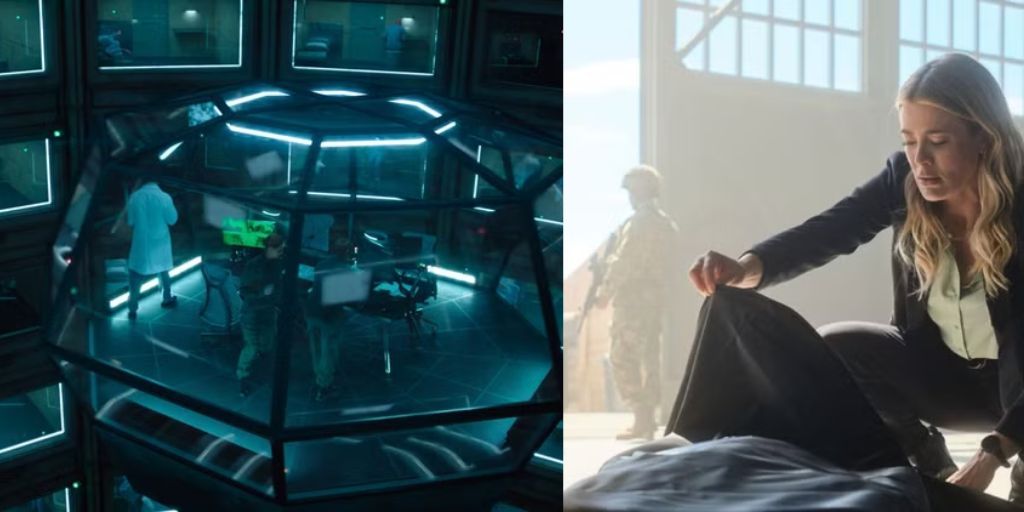
Still from The Hunting Party (Credit: NBC)
This storyline creates many possibilities. The escaped criminals could be more than just serial killers—they might have been changed by the experiments. The government might be hiding the truth about what was really going on inside “The Pit.” There may also be other secret facilities still operating that could pose even bigger threats.
Even though “The Pit” is fictional, the show’s connection to real places makes it feel realistic. The idea of an underground prison hidden from the public is fascinating, and the possibility of experiments on criminals adds an eerie element to the story.
The Hunting Party has already built a strong foundation for suspense and intrigue, and fans can expect more twists and surprises as the season continues.
New episodes of The Hunting Party air on Monday nights on NBC, and viewers in the U.S. can also stream them on Peacock.
Marrowbone (2017) stands as a deeply psychological horror film that explores intense themes of memory, trauma, and isolation, all communicated through a layered metaphor. Directed by Sergio G. Sánchez, this Spanish-language psychological horror film captures audiences with its compelling atmosphere and complex characters, despite receiving mixed reviews. The cast, including Anya Taylor-Joy, Mia Goth, George MacKay, and Charlie Heaton, delivers memorable performances, but it is the movie’s underlying message that leaves the most lasting impact.
The story is set in 1968 and follows the Fairbairn family, who move from England to Maine, taking up residence in the Marrowbone House, a grand mansion from the past. Led by matriarch Rose (Nicola Harrison), the family hopes to start over, but their peace is disrupted when Rose dies unexpectedly. This leaves the eldest son, Jack (MacKay), responsible for his siblings, all while he navigates a romance with local girl Allie (Taylor-Joy) and uncovers dark secrets hidden within their new home.
Marrowbone Ending Explained
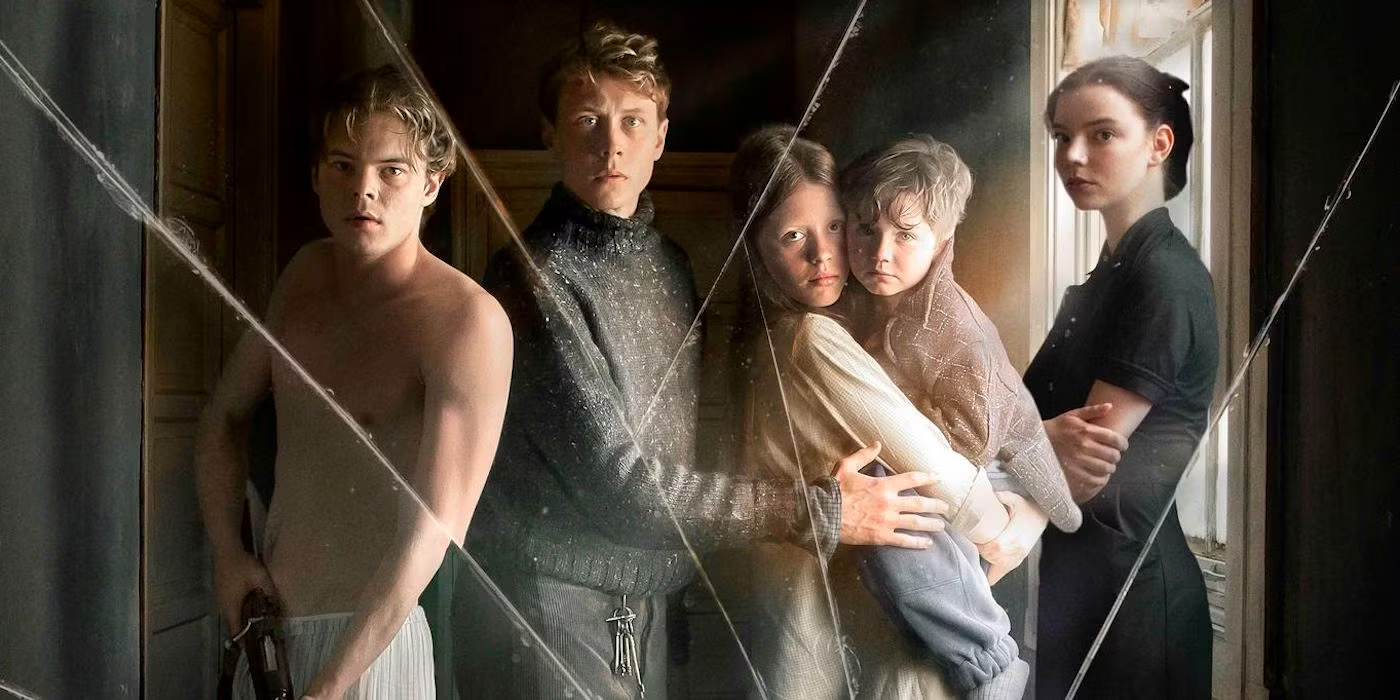
Marrowbone (Image via Getty)
The haunted house trope is hardly novel in horror films, having been explored in numerous classics since 1959’s House on Haunted Hill . Yet, in Marrowbone, the house transcends its typical role as merely a location. It becomes a living, breathing entity that reflects the turmoil of the characters inside. The mansion is initially depicted as a sanctuary—a place of retreat and safety after the Fairbairn family flees from an abusive patriarch in England. In this sense, it offers refuge, sheltering the family from their painful past.
However, as the story unfolds, it becomes clear that this sanctuary can also serve as a prison. The house gradually transforms into a place of confinement, as the characters’ own fears and traumas seep into its walls. The deeper metaphor emerges when considering how the house absorbs the emotions and histories of its inhabitants, becoming a vessel for their unresolved pain. This unspoken tension, hidden beneath the surface of the story, grows more apparent as the film progresses.
Jack and his siblings begin to sense a malignant force in the house, referring to it as a “ghost”—an embodiment of their collective fears and anxieties. However, these ghosts are not simply figments of their imagination. Jack’s decision to cover the mirrors in the house is symbolic of his effort to shield himself from his own reflection, his identity, and the disturbing truths that lie within. The mirrors, symbols of self-awareness and duality, are hidden in an attempt to avoid confronting the painful reality of their circumstances.
The Heartbreaking Truth Behind Marrowbone’s Ending
The true meaning of Marrowbone is revealed in its surprising twist, changing everything that the audience has witnessed up until that point. The plot takes a sharp turn when the town lawyer, Tom Porter (Kyle Soller), blackmails Jack to secure his family’s inheritance, threatening to reveal their secrets if Jack doesn’t comply. As Jack’s siblings learn of Tom’s intentions, they plan to meet with Allie in secret to expose the truth, but when she arrives, she finds only a diary—one that holds the key to understanding the horrifying past of the Fairbairn family.
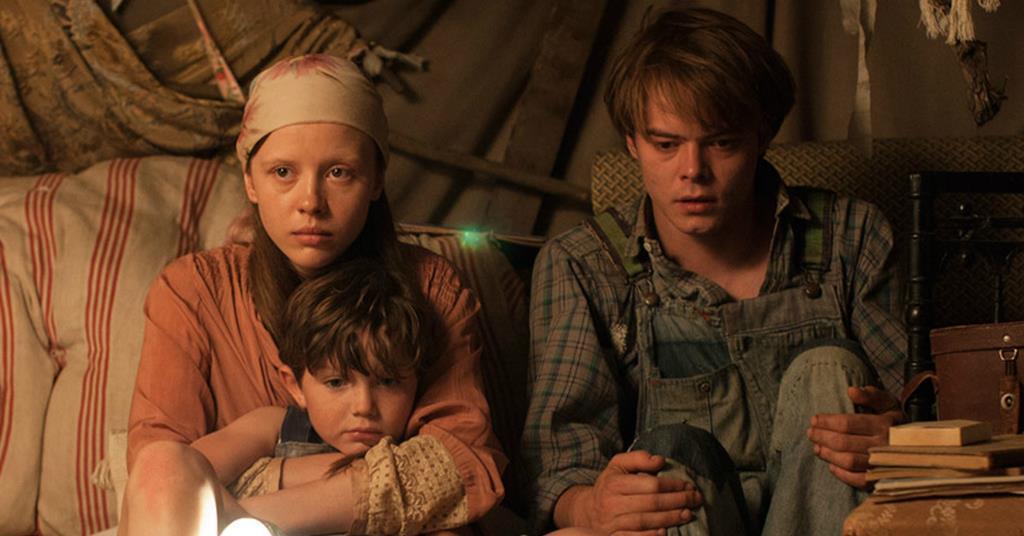
Marrowbone cast (Image via Getty)
The diary reveals that Jack’s father, Simon Fairbairn (Tom Fisher), a convicted serial killer, had returned to the Marrowbone house after their relocation. Jack, in an effort to protect his siblings, locked them away in the attic—a place that had remained boarded up throughout the film. Jack then confronts his father, but Simon determined to reclaim his family’s wealth, knocks Jack unconscious, returning to murder his children. Jack, traumatized by these events, seals both his father and his deceased siblings in the attic, constructing a new, delusional reality to cope with the unbearable loss.
Jack’s mental deterioration becomes a pivotal part of the film, as his trauma manifests through multiple personalities. These personalities, which include his deceased siblings, are what the audience has been witnessing. This explains why Allie has never met any of Jack’s siblings—because they are figments of his mind. To avoid facing the truth, Jack continues to hide the mirrors, sealing his painful memories in the Marrowbone house. The film culminates in a confrontation where Allie helps Jack snap out of his delusion, but not without a harrowing moment where Jack, in his altered state, allows his “Billy” personality to emerge and take control, ultimately killing his still-living father.
As the film reaches its conclusion, Jack is released from psychiatric care, and Allie is told to ensure he takes his medication. However, in a moment of silent defiance, Allie decides to leave Jack’s reality intact. She understands that he finds solace in believing his siblings are still alive, and it’s this acceptance of his delusion that offers him peace, even at the cost of truth. This revelation shifts the narrative and casts new light on the importance of the house, which is more than just a location—it is a symbolic container of Jack’s memories and trauma.
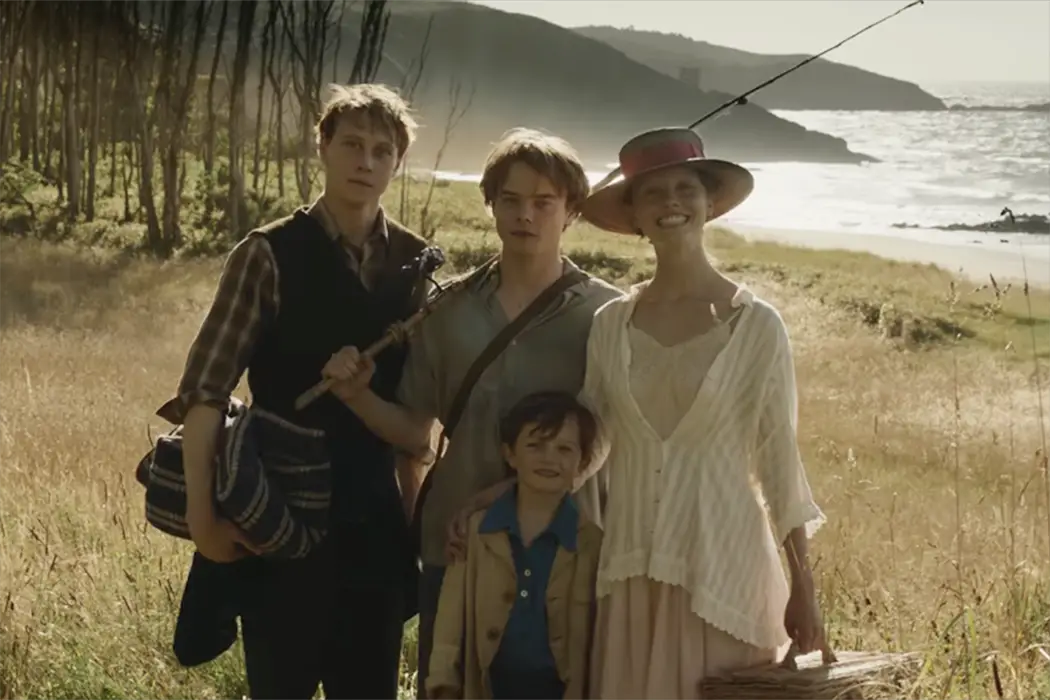
Marrowbone cast (Image via Getty)
A Love Story Hidden in the Shadows of Horror
While Marrowbone is often categorized as a psychological horror film, director Sergio G. Sánchez sees it primarily as a love story, with elements of both romantic and fraternal love driving the narrative. He explains that love is a central theme of the film, one that balances against the dark, horrific events unfolding around the characters. The film explores how love, in its many forms, is both a healing force and a source of resilience, allowing individuals to face their deepest fears and traumas.
At the heart of the film is the blossoming romance between Jack and Allie. Their relationship begins with misunderstandings, but their connection deepens as Allie becomes a guiding force in Jack’s journey to confront his past. Despite the tragedy that surrounds Jack, Allie remains steadfast by his side, working through his grief and trauma to understand the man he is beneath the layers of delusion.
Equally significant is the love between Jack and his siblings. This fraternal bond is so profound that Jack cannot bear to accept their deaths. Instead, he constructs a new reality, one in which his siblings are alive and with him. In Jack’s memory, they continue to exist, helping him navigate the overwhelming weight of their loss. This complex dynamic reveals that even in the depths of mental turmoil, the love between family members can transcend the boundaries of life and death, offering both comfort and conflict.
