The Rings of Power Season 2 culminates in a thrilling finale, one that masterfully weaves together threads of character development, epic confrontations, and pivotal moments of sacrifice.
Set in the vast and mythic world of J.R.R. Tolkien’s Middle-earth, the show’s second season built on the groundwork laid in the first, expanding on the political intrigue, personal stakes, and looming shadows of a greater evil.
The finale not only resolves key plotlines but also plants the seeds for future conflicts that promise to shape the destiny of Middle-earth.
The journey toward this point has been a mixed one for the show. While Season 2 offered visually stunning moments and intricate storytelling, it also struggled with pacing issues and juggling its sprawling cast of characters across multiple storylines.
However, as the finale shows, the payoff was worth the wait. It ties up several loose ends, delivers emotional climaxes, and propels key characters toward their destined roles in the larger Tolkien mythos.
As the season closes, we are left with a sense of both closure and anticipation. Sauron has fully emerged as a central antagonist, Galadriel’s quest for justice has led her to face hard truths, and the alliances between Elves, Dwarves, and Men are beginning to fracture under the pressure of impending doom.
In this article, we will go deep into the most critical aspects of the Season 2 finale, showing character arcs, thematic depth, world-building, and the broader implications for the future of the series.
Durin’s Stand: A Kingdom at the Edge
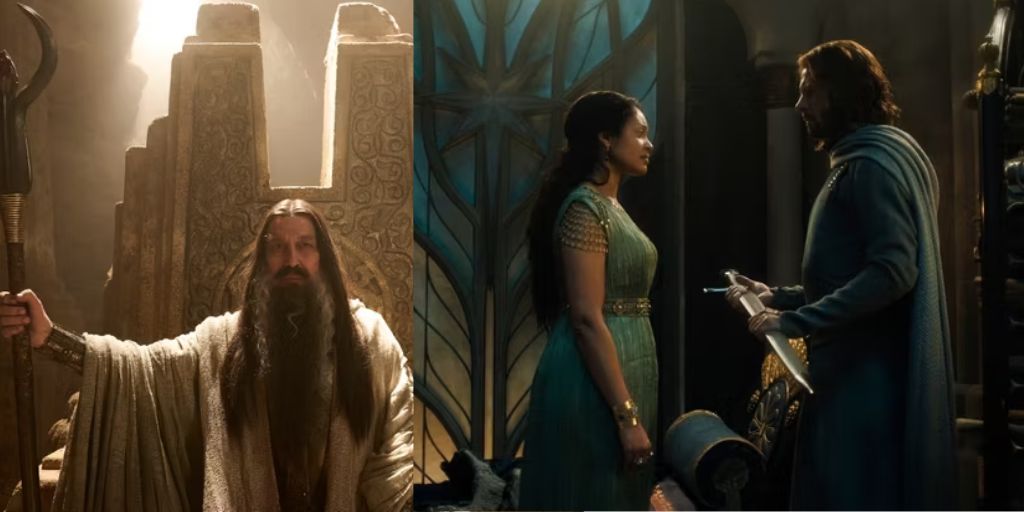
Durin IV’s arc throughout the season has been one of the emotional highlights. The tensions between him and his father, King Durin III, mirror the larger themes of legacy, duty, and sacrifice.
In the finale, Durin’s bold stand against his father, which sets the stage for the future of Khazad-dûm, is a deeply personal yet symbolic moment.
The conflict between the two Durins isn’t just about power or ambition; it’s a philosophical clash about the future of the Dwarves and their place in Middle-earth.
King Durin, a staunch traditionalist, is unwilling to accept the risk of mining further for mithril, even as the decay of the Elves hangs over them.
He believes that meddling too deeply in the earth could awaken ancient evils—a fear that proves tragically justified with the awakening of the Balrog.
His rejection of his son’s plea encapsulates the stubbornness and pride of Dwarven culture, even at the cost of their future.
Durin IV’s rebellion, supported by his wife Disa, is both heartbreaking and inspiring. He chooses to defy his father, knowing that his actions might cost him his claim to the throne, but he does so out of love for his people and his Elven friends.
This makes his character arc one of the most relatable in the show, as he must balance personal ambition with a sense of larger responsibility.
Still from The Rings of Power (Credit: Prime Video)
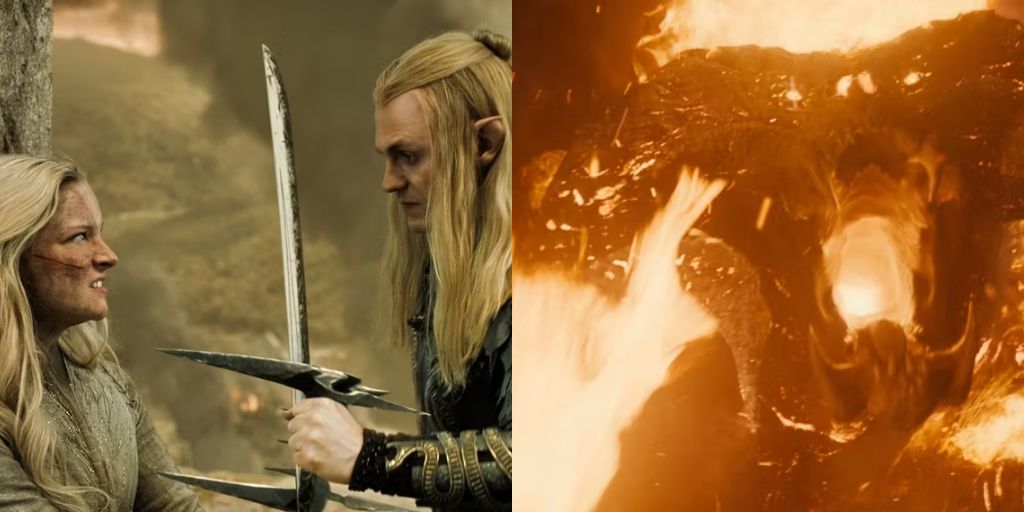
King Durin’s eventual fall in the finale marks a significant turning point for the kingdom of Khazad-dûm. His death, caused by a mining accident—one that unleashes the terrifying Balrog—creates a power vacuum that Durin IV must fill.
The visual reveal of the Balrog, fiery and ancient, lurking in the deep mines of the Dwarven kingdom, is one of the most visually striking moments of the season.
This awakening is both a literal and metaphorical consequence of the Dwarves’ unchecked greed for mithril and sets up what is sure to be a major conflict in future seasons.
Despite the tragedy, Durin and Disa’s relationship remains one of the emotional heartbeats of the show. Their love for each other and their shared vision for their people offer a glimmer of hope in a world increasingly dominated by darkness.
Together, they will face the monumental challenges that lie ahead, both in terms of leading their kingdom and dealing with the threat that lies beneath.
The Stranger’s Revelation: A Wizard’s Journey
One of the most compelling mysteries throughout Season 2 has been the identity of The Stranger, a mysterious figure whose arrival has sparked much speculation.
The finale confirms what many had long suspected: The Stranger is indeed Gandalf, though still in the early stages of becoming the wise and powerful wizard we know from Tolkien’s works.
The Stranger’s journey has been marked by uncertainty and fear. Throughout the season, he has grappled with his abilities and his purpose, at times fearing that he might be a force of destruction rather than a protector.
This inner conflict culminates in a tense showdown with the Dark Wizard in the finale, a confrontation that forces The Stranger to choose who he wants to be.
The Dark Wizard’s knowledge of Nori and Poppy by name adds a chilling layer to the confrontation, suggesting that their past is somehow tied to the wider conflict in ways that are yet to be fully revealed.
The Dark Wizard tempts The Stranger, offering him power and certainty in exchange for loyalty, but The Stranger rejects this path, choosing instead to protect his newfound friends and embrace the idea that he is meant to be a guide rather than a destroyer.
The final confirmation of The Stranger’s identity as Gandalf is a satisfying payoff to a season-long arc.
His acceptance of his role as a wizard, tasked with helping the peoples of Middle-earth, sets him on a path that will eventually lead him to the Fellowship of the Ring.
Still from The Rings of Power (Credit: Prime Video)
The quiet, emotional farewell between The Stranger and Nori is a bittersweet moment, as Nori decides to leave her people behind and journey with him into the unknown.
Their bond has been one of the more touching aspects of the show, and their departure marks a new chapter for both characters.
Númenor: A Kingdom on the Brink
While the Dwarves face internal strife and the Elves struggle with their dwindling resources, Númenor remains a powder keg of political intrigue and looming disaster.
The island kingdom, once a shining beacon of power and wisdom, is rapidly descending into darkness as its leaders grow increasingly corrupt and divided.
One of the most compelling arcs in the finale is that of Elendil, who is forced to confront his own beliefs and loyalties.
As a member of the Faithful, Elendil has always believed in the old ways and the friendship between Men and Elves, but his position within the kingdom becomes increasingly precarious as Pharazôn tightens his grip on power.
Pharazôn’s manipulations have sown seeds of division within Númenor, and his lies about the Elves and the Faithful have turned the people against each other.
The tensions in Númenor are further exacerbated by the blinding of Queen Regent Míriel, a tragic turn of events that symbolizes the kingdom’s descent into ignorance and hubris.
Míriel’s attempts to maintain peace are increasingly futile as Pharazôn’s influence grows, and her physical blindness becomes a metaphor for the kingdom’s moral blindness.
Elendil’s decision to finally pick up Narsil and embrace his destiny as a leader is a powerful moment, signaling that he will no longer stand on the sidelines but will actively fight for the survival of Númenor and Middle-earth.
The brewing conflict between the Faithful and the King’s Men is likely to explode in Season 3, setting the stage for Númenor’s eventual downfall—a catastrophic event that will have ripple effects across the rest of the story.
Still from The Rings of Power (Credit: Prime Video)
Pharazôn’s rise to power and his eventual betrayal of Númenor’s ancient alliances is one of the most significant plotlines in Tolkien’s lore, and the show’s careful buildup to this moment has been well-executed.
Galadriel vs. Sauron: The Clash of Titans
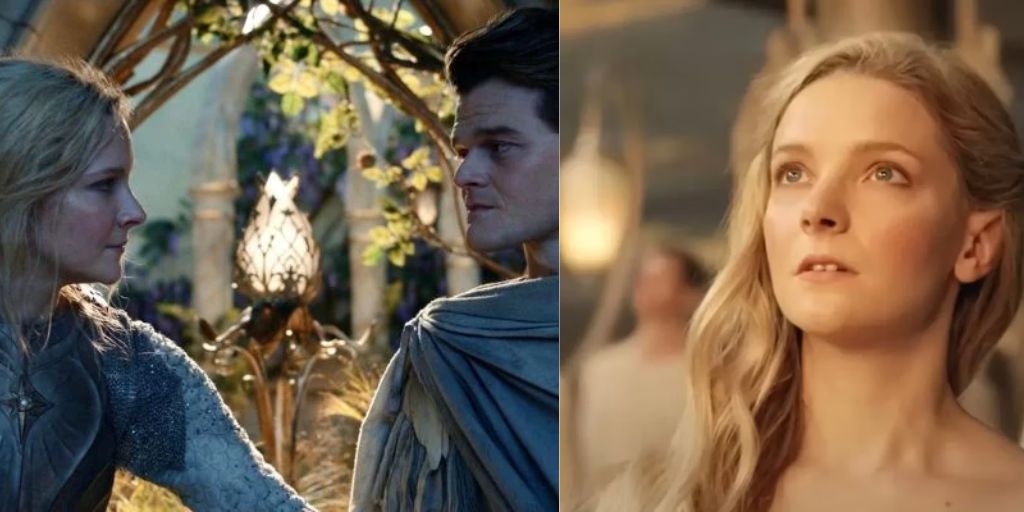
Perhaps the most anticipated moment of the finale was the long-awaited showdown between Galadriel and Sauron. Their clash is not just a battle of swords and sorcery but also a battle of wills and ideologies.
Throughout the season, Galadriel’s pursuit of Sauron has been driven by a desire for vengeance and justice, but as the finale reveals, this pursuit has also blinded her to the greater consequences of her actions.
Sauron’s manipulations throughout the season have been subtle but effective, and in the finale, he finally reveals the extent of his power.
His ability to shift faces and play on Galadriel’s fears adds a psychological dimension to their confrontation. Sauron’s offer to rule alongside him, a temptation that echoes his offer to Aragorn in the original trilogy, is a test of Galadriel’s resolve.
The duel between Galadriel and Sauron is visually stunning, with the choreography blending physical combat with magical elements.
However, it is the emotional stakes of the battle that truly make it compelling. Galadriel’s near-death experience, as she is thrown from the cliffside and left to drown, forces her to confront her own vulnerability and the limits of her power.
In the end, she is saved not by her strength but by her allies—a reminder that even the mightiest of heroes cannot face evil alone.
The cliffside confrontation also hints at the deeper connection between Galadriel and Sauron, one that transcends simple hero-villain dynamics.
Still from The Rings of Power (Credit: Prime Video)
Their shared history, their mutual understanding of power and sacrifice, adds a layer of complexity to their relationship. While Galadriel ultimately rejects Sauron’s offer, the encounter leaves her shaken and questioning her own role in the fight against darkness.
The Fall of Eregion: The Weight of Legacy
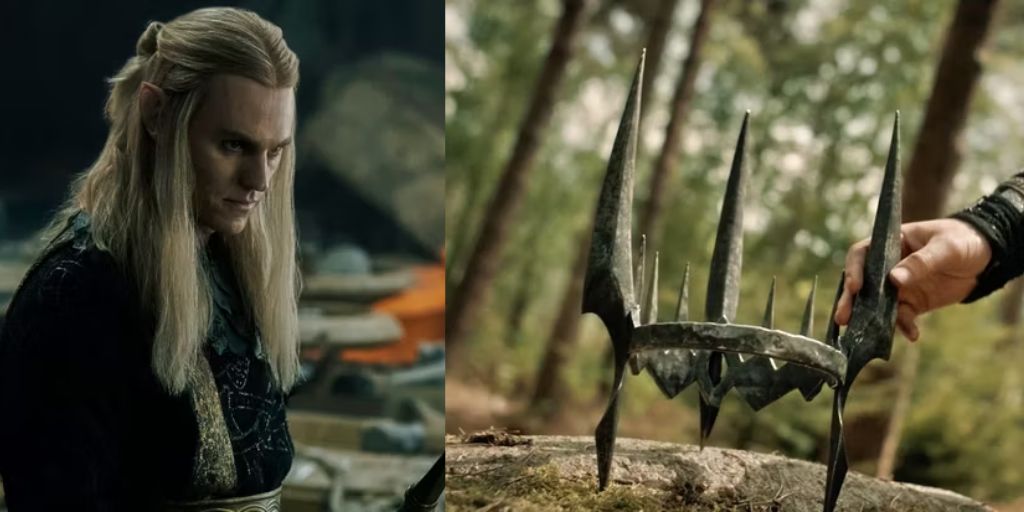
The fall of Eregion is one of the most tragic and pivotal moments of the finale. Celebrimbor’s role in the creation of the Rings of Power has been central to the overarching plot, and in the finale, we see the consequences of his ambition.
Sauron, disguised as Annatar, manipulates Celebrimbor into completing the Rings, and in doing so, sets in motion the events that will lead to the downfall of Eregion.
The destruction of Eregion, coupled with the forging of the Rings, marks the beginning of the end for the Elves in Middle-earth.
The visual effects used to depict the fall of the city are breathtaking, capturing both the grandeur and the tragedy of the event. As the Elves flee, their once-great city reduced to ruins, the weight of their legacy hangs heavy over the survivors.
Celebrimbor’s arc is one of the most tragic in the show. His desire to preserve the Elven race through the power of the Rings ultimately leads to their downfall.
His relationship with Sauron, built on a shared love of craftsmanship and creation, is a heartbreaking reminder of how easily great intentions can be twisted by evil.
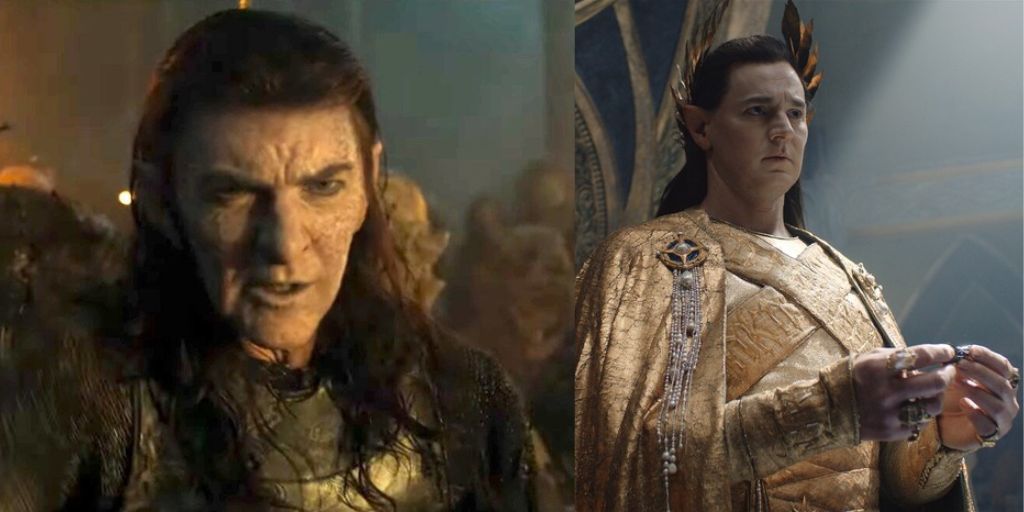
Still from The Rings of Power (Credit: Prime Video)
The finale leaves us with the image of the three Elven Rings, newly forged and imbued with both hope and dread.
While the Rings represent a possible salvation for the Elves, they also foreshadow the greater threat that Sauron will unleash with the creation of the One Ring.
This moment serves as a turning point in the series, marking the transition from the story of the Elves’ decline to the rise of Sauron’s empire.
Setting the Stage for Season 3
The Rings of Power Season 2 finale expertly balances resolution with anticipation. Major character arcs are brought to a satisfying close, while new conflicts are teased for future seasons.
The rise of Sauron, the awakening of the Balrog, and the political turmoil in Númenor all point to darker times ahead for Middle-earth.
Season 2’s finale leaves viewers with a sense of both fulfillment and longing. The visual spectacle, combined with deep character development and thematic resonance, makes this episode one of the standout moments of the series so far.
As we look ahead to Season 3, the stakes have never been higher, and the world of Middle-earth is poised for even greater challenges and revelations. The journey is far from over, and the shadow of Sauron continues to loom over all.
The finale of The Rings of Power Season 2 ties together character arcs, epic confrontations, and key sacrifices in J.R.R. Tolkien’s Middle-earth.
Durin IV’s rebellion against his father symbolizes the Dwarves’ struggle for survival, culminating in the awakening of the Balrog.
The Stranger’s reveal as Gandalf emphasizes his journey toward becoming a protector, culminating in a poignant farewell with Nori. Númenor faces political turmoil, with Elendil embracing his destiny amid the kingdom’s descent into darkness under Pharazôn.
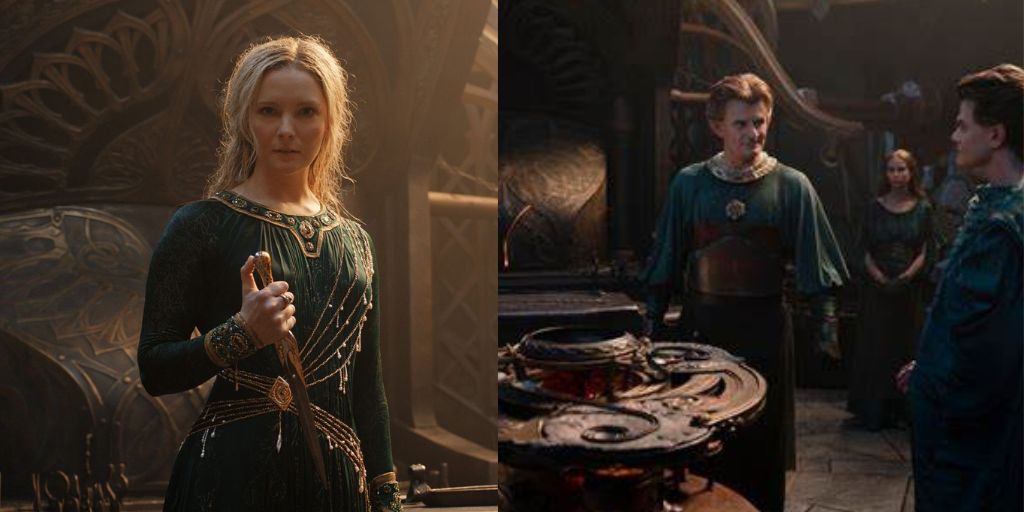
Still from The Rings of Power (Credit: Prime Video)
The climactic battle between Galadriel and Sauron shows themes of power, vulnerability, and shared history. The fall of Eregion showcases the tragic consequences of ambition, foreshadowing the creation of the Rings of Power.
The finale balances resolution with anticipation, setting the stage for Season 3 as Sauron’s rise, the awakening of the Balrog, and Númenor’s struggles promise darker times ahead for Middle-earth, leaving viewers eager for what comes next.
Episode 4 of Agatha All Along introduces some long-awaited character dynamics, especially with Rio Vidal’s (Aubrey Plaza) return, fiery trials, and backstory revelations for Alice (Ali Ahn).
As the coven moves deeper into their quest, Agatha (Kathryn Hahn) finds herself tangled in her own emotional web, straining between the past she shares with Rio and her current responsibilities.
With standout musical moments, tense confrontations, and a mix of humor and heartbreak, this episode lays the groundwork for the next phase of their journey while teasing deeper mysteries. Let’s break it down!
Who is the New Green Witch?
One of the key takeaways from Agatha All Along Episode 4 is the introduction—or reintroduction—of Rio Vidal. It’s safe to say that fans have been eager to see what this wild, flirtatious character would bring to the table, and her arrival doesn’t disappoint. After all, the coven desperately needed a new Green Witch following Sharon’s tragic demise.
The episode begins with a somber yet strangely distant acknowledgment of Sharon’s death. She lost her life during the water trial, and while most of the coven mourns, Agatha seems largely indifferent. This contrast highlights Agatha’s continued isolation from the others, who struggle to understand her coldness.
Of course, Agatha’s nonchalance over Sharon’s death isn’t necessarily malicious. Instead, it reveals more of Agatha’s “big picture” mentality. For her, the trials and challenges they face are dangerous, and casualties are inevitable.
“Come on,” Agatha scoffs at her fellow witches. “You can’t tell me you’ve never wanted one of your group project partners to bite the dust.”
Agatha’s dismissiveness towards Sharon’s death sets the tone for the episode: the Road is brutal, and not everyone will survive. The coven must adapt or face extinction.
Agatha coldly reminds them that the purpose of having the entire coven present was simply to open the Witches’ Road. Now that they’ve made it this far, Sharon’s absence is no longer an issue—at least to Agatha.
However, not everyone is so heartless. Teen, still recovering from the emotional high of finally reaching the Witches’ Road, takes it upon himself to bury Sharon. He gently adorns her grave with flowers, his actions in stark contrast to the petty bickering of the other witches.
Teen’s emotional openness is a recurring theme, making him somewhat of the emotional anchor for the group. His disillusionment with their journey becomes apparent when he admits he no longer wants to be part of the trials—he just wants to go home.
Agatha, upon hearing Teen’s desire to leave, becomes visibly concerned. Though she doesn’t say it outright, the implication is clear: she needs him, and his departure would jeopardize her plans.
The group channels this emotional tension into action, deciding to summon a replacement Green Witch. They are a coven of rule-breakers, so why not summon someone outside the traditional coven rules?
Teen cracks open his spellbook, and they perform a summoning spell with varying wishes for the new Green Witch.
Lilia (Patti LuPone) wants the newcomer to be wise and skilled, Agatha wants someone smart and not too annoying, Jen (Sasheer Zamata) hilariously hopes the witch is “hot,” and Alice simply prays for Advil.
In a fun twist, their summoning ritual succeeds—sort of. What they get is Rio Vidal, who emerges with a cheeky smile, offering Agatha a flower and saying, “Surprise, my lady.” Agatha’s immediate reaction is to lunge at Rio, setting up the kind of tension that suggests a deep and complicated history between these two witches.
The Return of Rio: Agatha’s Old Flame (Literally and Figuratively)
Rio Vidal isn’t just any Green Witch—she’s a problem for Agatha. From the moment Rio arrives, it’s clear that her presence disrupts the fragile balance within the coven.
The witches are unsure whether to be attracted to or terrified of Rio, and frankly, that’s a valid reaction. She’s chaotic, unpredictable, and playful in a way that suggests she’s always two steps ahead of everyone else.
Rio’s behavior throughout the episode oscillates between flirtatious and menacing. She refers to herself not just as a Green Witch but the Green Witch, which hints at a level of power and experience far beyond the coven’s understanding. The other witches aren’t sure if they can trust her, but they decide that the fact Agatha hates Rio is probably a good sign.
For Teen, Rio’s arrival signals a new level of danger. He immediately goes to Agatha, asking if Rio’s presence means more trouble for them. Agatha, ever the world, refuses to answer, choosing instead to disengage.
This moment signals Agatha’s increasing internal struggle—she’s keeping secrets from the group, and her history with Rio is clearly more complicated than she’s willing to admit.
The dynamic between Agatha and Rio is fascinating. Rio spends much of the episode teasing and toying with Agatha, trying to rekindle whatever relationship they once had.
Agatha, however, is having none of it. She resists Rio’s advances at every turn, trying to maintain control, but it’s clear that Rio’s presence rattles her.
At one point, Rio follows Agatha into a control room, revealing that she’s eager to stir up trouble. She tells Agatha she wants to cause some damage and hints that she’s losing patience.
Agatha, irritated, tells Rio that it’s too early for her to start causing chaos. This exchange implies that Agatha is planning something, and Rio’s premature arrival complicates those plans.
The tension between these two witches reaches a peak when Agatha turns on the intercom to let the rest of the coven hear Rio’s true intentions.
Rio casually suggests that Agatha should kill the witches—Agatha would gain their power, and Rio would get their bodies for whatever nefarious purpose she has in mind. The coven, understandably horrified, overhears the conversation, which was precisely Agatha’s plan.
In true Agatha fashion, she performs a dramatic protest, exclaiming, “Hey, that’s my coven you’re talking about! I’m not that kind of witch anymore!” This dramatic outburst, meant to further distance herself from Rio, is classic Agatha—always the performer, always manipulating the situation to her advantage.
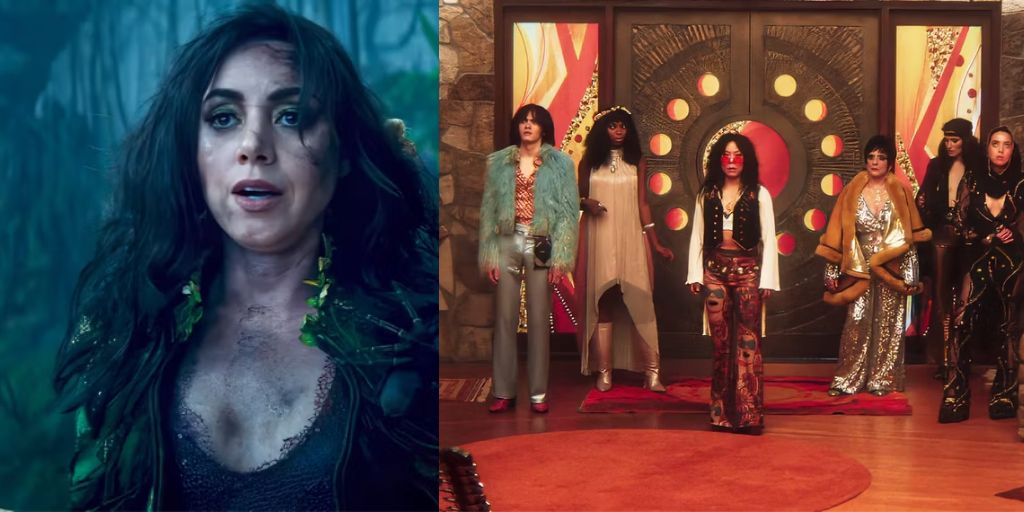
Still from Agatha All Along (Credit: Disney+)
But despite her best efforts to deflect Rio’s influence, the truth remains: Rio and Agatha share a complicated, possibly romantic, past. This history will no doubt come back to haunt Agatha in future episodes.
Alice’s Trial: Facing the Fire (Literally)
While Agatha and Rio dominate much of the episode’s intrigue, Alice’s backstory takes center stage during the fire trial.
Up until now, Alice has been a somewhat mysterious character. She’s reserved, keeping her distance from the coven’s more dominant personalities. But in Episode 4, we finally get a views into her tragic past, specifically her relationship with her mother, Lorna (Elizabeth Anweis).
Lilia (Patti LuPone) reminds Alice that her mother could still be somewhere on the Road, but Alice quickly dispels this idea as a myth.
In truth, her mother died in a hotel fire while on tour, leaving Alice with unresolved grief and guilt. Alice reveals that her mother always believed the Witches’ Road could save her, but Alice never bought into that belief—until now.
The fire trial is particularly poignant for Alice because it forces her to confront her deepest fears. When another mysterious house appears, and Alice recognizes it as hers, she knows she can’t escape the trial ahead.
The house, marked with a waxing moon on the door, signifies that they’ve arrived at the fire trial, a terrifying and painful experience for Alice, given her mother’s death.
Once inside, the coven splits up to search for clues, with each member reacting differently to the strange, psychedelic surroundings. Alice, however, is drawn to a photograph of her mother.
This moment reveals that Lorna, her mother, wasn’t just a musician—she was trying to open the Witches’ Road through her concerts. Her fans weren’t just fans; they were part of her coven.
However, this glamorous lifestyle wasn’t without its struggles. Alice remembers how her mother had to sell their belongings to keep a roof over their heads when Alice was a child.
As the trial progresses, the coven faces literal flames as burns begin to appear on their shoulders. Agatha accuses Alice of bringing a curse upon them, and Alice finally breaks down.

Still from Agatha All Along (Credit: Disney+)
She reveals that the mark on her shoulder wasn’t a birthmark, as she had always believed—it was a generational curse passed down from her mother. Lorna had the same mark, and she spent her life trying to protect Alice from the curse.
In a powerful moment, Alice realizes that her mother’s version of The Ballad of the Witches’ Road wasn’t just a song—it was a protection spell.
Lorna created the song to ensure that somewhere, someone would always be playing it, keeping Alice safe from the curse.
The Power of Music: Breaking the Curse
The climax of the fire trial comes when the only way to survive the flames is by playing Lorna’s ballad together. Each member of the coven grabs an instrument, and together they play, even as the fire rages around them.
Alice, now fully embracing her mother’s legacy, sings with all her might, confronting the curse head-on.
As Alice sings, the curse manifests as a terrifying winged creature. Though the creature sets Alice on fire, she doesn’t falter. In a triumphant moment, Alice expels the curse, proving that she has the strength to face both her past and her future.
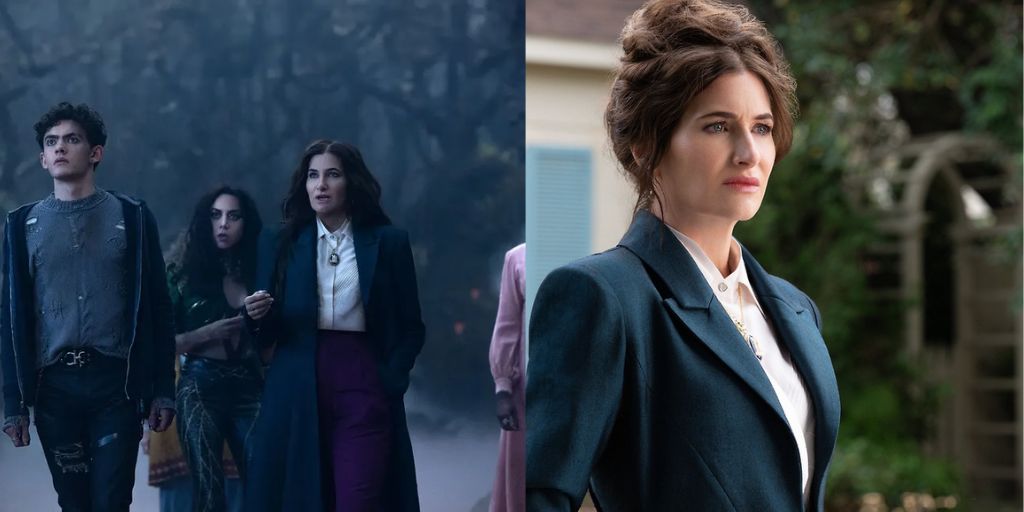
Still from Agatha All Along (Credit: Disney+)
Their victory is short-lived, however, when Teen is thrown through a wall, seriously injured. Agatha’s desperation to save him leads to a tense moment where Rio steps in, offering a healing potion. Miraculously, Teen recovers, but Agatha’s suspicious look at Rio suggests that there’s more to this healing than meets the eye.
What’s Next for the Coven?
The episode ends with the witches gathered around a campfire, reflecting on their experiences.
Jen shares a story about losing her power after being tricked, and Alice opens up about her complicated feelings towards her mother. Lilia offers words of comfort, reminding Alice that sadness is better than anger.
Agatha, always one to keep her emotions hidden, shares a funny story about a knitting needle injury, lightening the mood.
But the emotional weight of the episode lingers, especially as Rio reminds Agatha that the boy—Teen—isn’t hers, leaving the coven with more questions than answers.
Episode 4 of Agatha All Along masterfully blends humor, drama, and high-stakes magic. With Rio’s chaotic energy now in the mix, Alice’s heartbreaking confrontation with her past, and Agatha’s increasingly murky motives, the show continues to deliver complex character arcs and thrilling plot twists.
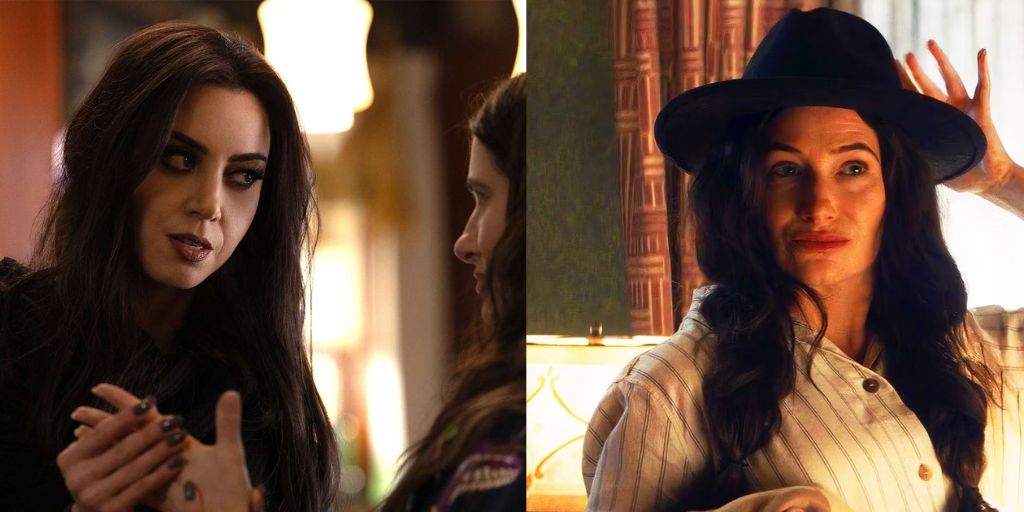
Still from Agatha All Along (Credit: Disney+)
The fiery trials may be over for now, but the emotional and magical challenges are only just beginning. Fans will no doubt be eagerly anticipating what comes next as the coven’s journey down the Witches’ Road grows darker and more dangerous.
