The documentary The Most Beautiful Boy in the World is a profound exploration of youth, fame, and beauty through the eyes of a boy who captured the world’s attention at an early age. This Swedish documentary takes the audience on a deeply personal journey, revealing the complexities behind the image of an innocent, angelic face that became synonymous with beauty. It examines the price of fame and the often-ignored emotional and psychological toll it takes on a person’s life.
Björn Andrésen, who became a sensation after his role in Luchino Visconti’s 1971 film Death in Venice , is at the heart of this poignant documentary. His stunning looks led him to be hailed as “the most beautiful boy in the world,” but this title was not a blessing. Instead, it marked the beginning of a lifelong struggle with identity, exploitation, and the emotional scars that followed him throughout his life. The documentary blends archival footage, intimate interviews, and stunning cinematography to reflect on the price of beauty and the hidden emotional consequences that often come with fame.
While the title might imply a lighthearted exploration of beauty, the film’s tone is anything but superficial. It goes beyond skin-deep aesthetics and explores the human costs of society’s obsession with appearance. The focus is not only on Andrésen’s meteoric rise to fame but also on his life afterward—a life where beauty and fame are both a blessing and a curse.

The Most Beautiful Boy in the World (Image via Getty)
The Rise to Fame: A Beautiful Yet Fleeting Moment
In 1971, Björn Andrésen’s life was forever changed. At just 15 years old, he was cast as Tadzio in Death in Venice , the film adaptation of Thomas Mann’s novel. The film, directed by the legendary Luchino Visconti, quickly became known for Andrésen’s portrayal of the beautiful, ethereal boy, whose beauty mesmerized not only the lead character, played by Dirk Bogarde, but audiences worldwide.
Andrésen’s delicate, angelic features, combined with his ability to convey both innocence and a profound depth of emotion, made him the perfect candidate for the role. His appearance in the film was iconic—his porcelain skin, golden hair, and intense gaze earned him the title of “the most beautiful boy in the world.” At the time, this was a title many would envy, but for Andrésen, it marked the beginning of a journey filled with public scrutiny and the personal consequences of being viewed as nothing more than a beautiful object.
While Death in Venice was lauded for its visual poetry and Andrésen’s stunning performance, the fame that followed quickly became overwhelming. As the years passed, Andrésen struggled to escape the shadow of his youthful beauty and the way society had pigeonhole him as just a pretty face.
The Struggles of Identity and Fame
The documentary captures Andrésen’s personal reflections on what it was like to be thrust into the limelight at such a young age. Growing up, he faced a society obsessed with appearances, where his identity was tied to his looks rather than his talent, personality, or individuality. His life post- Death in Venice was filled with challenges that most people never have to confront—dealing with the constant public perception of him as nothing more than a beautiful object.
Despite his early success, Andrésen struggled to find stable work in the film industry. The public’s demand for him to maintain the same youthful appearance added pressure. He often expressed frustration over the fact that people only remembered him for his looks and not for the person he had become. This imbalance—between how he was seen and how he truly was—became a defining struggle of his life.
Andrésen’s struggles with self-worth were exacerbated by his childhood experiences, which the documentary explores in depth. He opens up about the abuse he endured and how it shaped his views on beauty, sexuality, and his own body. The intersection of these formative experiences and his fame created an emotional and psychological burden that he carried for much of his adult life.

The Most Beautiful Boy in the World (Image via Getty)
Exploring the Cost of Beauty
What sets The Most Beautiful Boy in the World apart from other documentaries about fame and beauty is its deep exploration of the cost that beauty can impose on an individual. Andrésen’s story is a reflection of a society that often values physical appearance over substance. While his looks opened many doors for him professionally, they also brought an overwhelming amount of attention, which was not always positive.
The film examines how beauty, especially when it is viewed as a commodity, can strip away a person’s sense of self. Andrésen shares his discomfort with the label that followed him throughout his career and how it haunted him during his adult life. In one poignant interview, he reflects on the way people’s obsession with his image led him to feel isolated, despite the public adoration he received.
The documentary also touches on the darker side of fame. Andrésen’s relationships with directors, agents, and others in the industry were often strained, with many people treating him as little more than a marketable product. He was put in situations where his worth was reduced to his appearance, and his emotional needs were often neglected.
The Documentary’s Impact and Timeliness
The Most Beautiful Boy in the World is timely in its exploration of the damaging effects of beauty standards and the public’s obsession with youth. As society continues to grapple with the impacts of social media and the relentless pressure to conform to unrealistic standards of beauty, Andrésen’s story serves as a reminder of the human side of these issues.
The documentary is not just about the fleeting nature of fame, but also about the enduring human desire for identity and purpose. It’s a story about how beauty, while often celebrated, can be both a gift and a curse. Andrésen’s reflections offer a powerful commentary on how individuals can lose themselves in the pursuit of external validation, and how it can be not easy to reconcile who they are with how others see them.

The Most Beautiful Boy in the World (Image via Getty)
The film also shines a light on the way the industry, especially the entertainment world, often exploits young talent without regard for their well-being. By showcasing Andrésen’s personal struggles alongside his fame, the documentary sheds light on the emotional and psychological toll that comes with being viewed as a mere image rather than a whole person.
Final Thoughts: The Price of Beauty
The Most Beautiful Boy in the World is a haunting and thought-provoking documentary that challenges the traditional notions of fame, beauty, and identity. Through Björn Andrésen’s life and his reflections on his experiences, the film provides a nuanced perspective on the challenges faced by those thrust into the spotlight at a young age.
At its core, the documentary is about much more than just a beautiful boy who fascinated the world’s attention. It’s a story about the human cost of fame, the difficulties of living up to external expectations, and the emotional toll that beauty can exact on a person’s sense of self.
Ultimately, The Most Beautiful Boy in the World is a reminder that behind every image, there is a person with complex emotions, struggles, and desires. The film’s exploration of Björn Andrésen’s life is a powerful commentary on society’s fixation with beauty and the often-overlooked consequences it can have on an individual’s mental and emotional health.
[Updated: 04/20/2025]
From terrifying tyrants to mind-bending powerhouses, Dragon Ball has brought us some of the most iconic villains in anime history. But which one stands above the rest?
The Dragon Ball series has provided fans with epic battles, heart-stopping moments, and unforgettable villains. Whether it’s the menacing Frieza or the godlike power of Beerus, the franchise has no shortage of enemies who have tested Goku and his allies like never before. But which of these villains truly stands out as the greatest threat? From the original series all the way through Dragon Ball Super, we’ve seen a plethora of evil characters, each with their unique abilities, goals, and terrifying personalities.
In this, we will rank the top 10 most dangerous and impactful villains in Dragon Ball. These villains range from pure destructive forces to those who challenge the very fabric of the universe itself. While there’s no doubt that many are powerful in their own right, what truly sets them apart is their impact on the storyline and their significance to the characters within it.
So, without further delay, let’s take a closer look at the villains that have made a lasting impact on the Dragon Ball universe!
10. King Piccolo – The First Major Threat
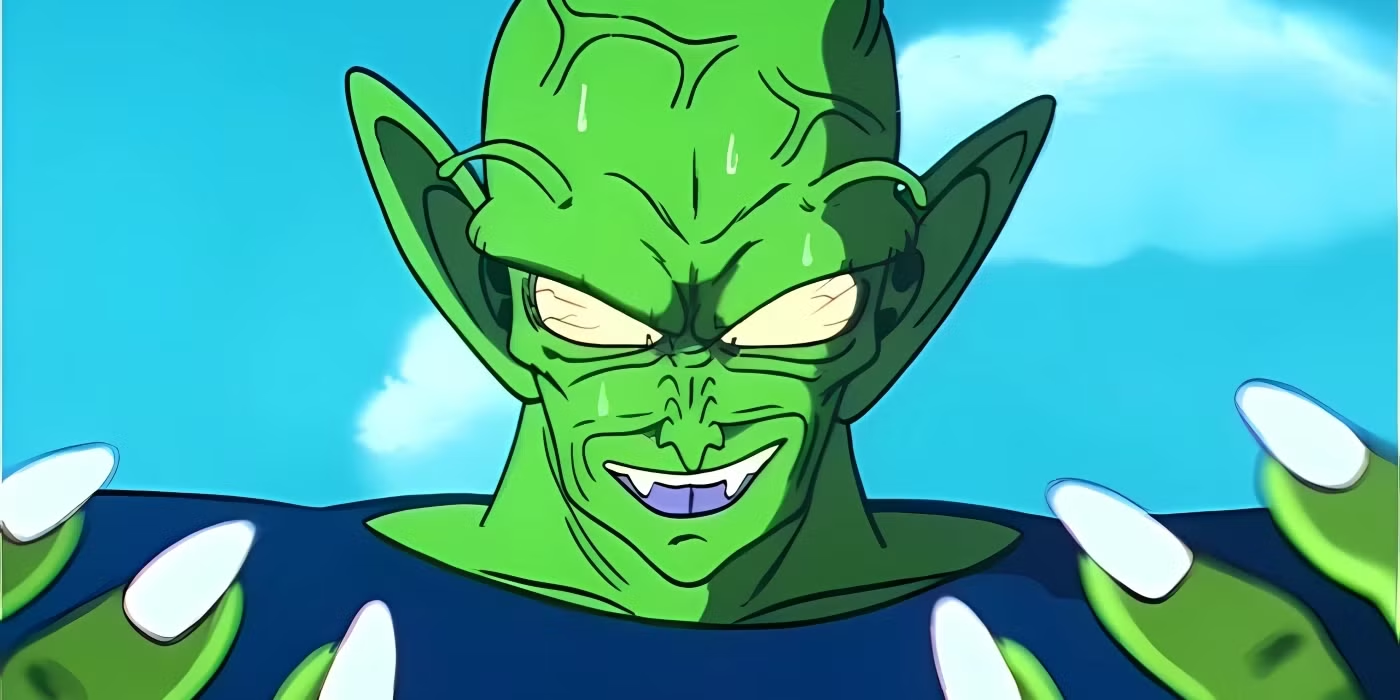
King Piccolo (Image via Getty)
King Piccolo made his debut in the original Dragon Ball series as one of the earliest formidable villains. As the first character to truly challenge Goku’s strength, King Piccolo left a lasting impression with his malevolent nature and ruthless pursuit of power. His desire to conquer the world by unleashing chaos and destruction put him at the forefront of the Z Fighters’ struggles.
Though his power doesn’t compare to the more powerful villains that would come later, King Piccolo’s legacy remains one of pure terror. His ability to spawn offspring like Tambourine and Cymbal, along with his devastating techniques, made him an iconic antagonist. And who could forget his ultimate act of revenge—killing Master Roshi and forcing Goku to grow even stronger?
9. Cell – The Perfect Bio-Android
Cell, the bio-engineered villain created from the cells of the strongest fighters in the universe, represents an ultimate fusion of power and intellect. With the ability to absorb others and increase his strength, Cell’s evolution from his imperfect form to his “perfect” state marked one of the most terrifying moments in Dragon Ball Z.
Cell’s Cell Games saga was a climactic event, testing the Z Fighters to their absolute limits. His smug arrogance, combined with his ability to take on any form, made him a truly dangerous adversary. His ultimate goal—to create the perfect world by annihilating the current one—was nothing short of terrifying. The perfect balance between intelligence, power, and ruthlessness makes him a standout villain in the franchise.
8. Majin Buu – The Ancient Destroyer
Majin Buu, with his childlike innocence hiding a horrifying, destructive force, is one of the most complex and dangerous villains in Dragon Ball. His forms evolve throughout the series, from the innocent, playful Buu to the menacing, evil version that poses a massive threat to the entire universe.
What makes Majin Buu so deadly isn’t just his destructive power; it’s his ability to regenerate and absorb others. This makes him a nearly unstoppable force, and he’s able to wreak havoc on both the physical and spiritual worlds. His battles with Goku and Vegeta test their strength in ways no other foe has before, especially when Buu’s destructive power reaches terrifying levels.
7. Beerus – God of Destruction
Beerus, the God of Destruction from Dragon Ball Super, represents a new level of power and authority in the series. His role in the multiverse as a destroyer tasked with maintaining balance by eradicating entire planets makes him a force to be reckoned with.
Though Beerus initially appears as a temperamental and capricious god, his strength is unmatched by most beings in the Dragon Ball universe. He’s able to take down Goku with ease, even in his Super Saiyan Blue form. Despite his somewhat playful nature, Beerus is an unpredictable and dangerous entity whose potential for destruction knows no bounds.
6. Frieza – The Emperor of the Universe
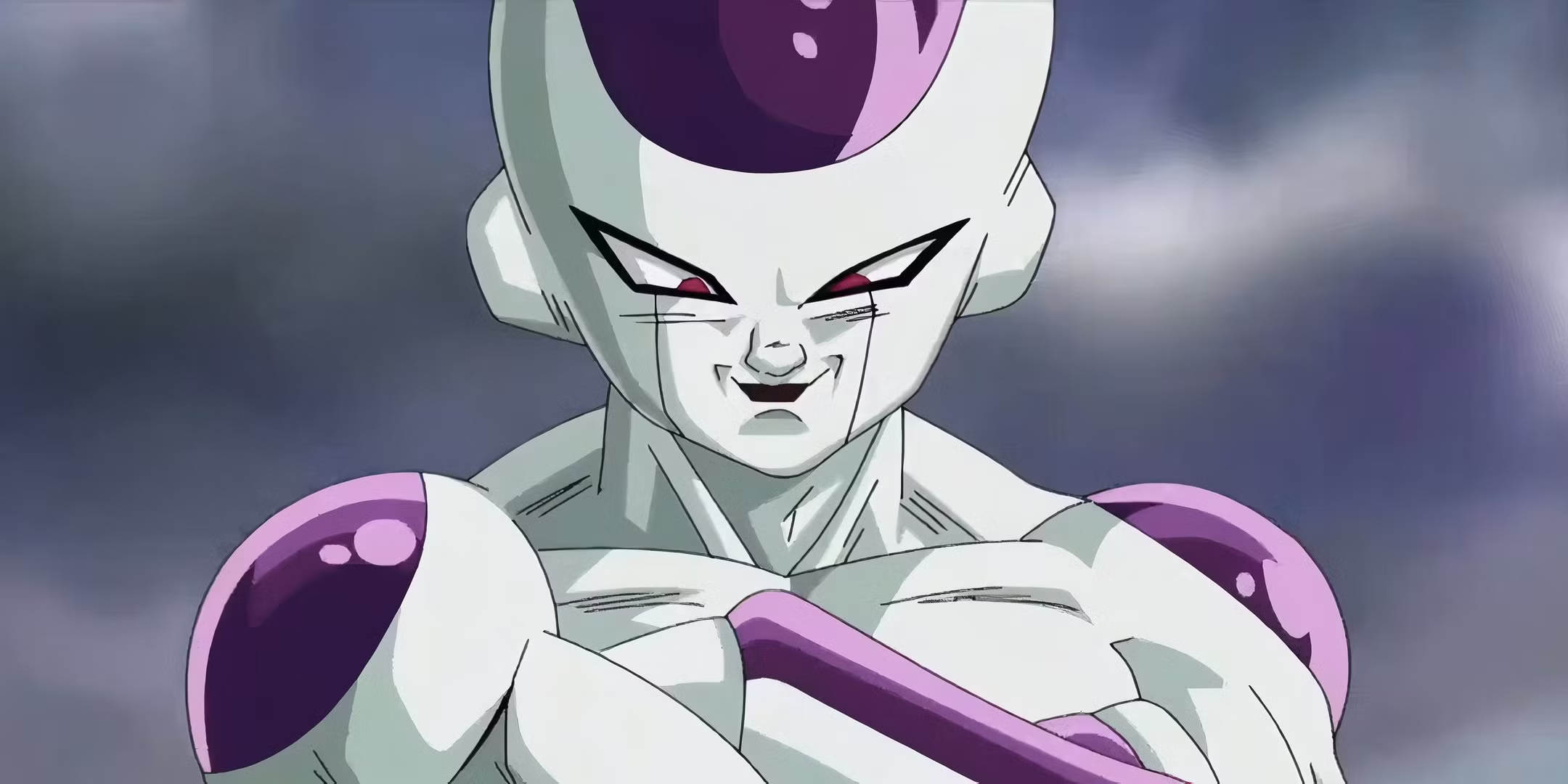
Frieza (Image via Getty)
Frieza, without a doubt, is one of the most iconic villains in anime history. The tyrannical ruler of the universe, Frieza, has held power through fear, cruelty, and manipulation. His role in the Dragon Ball Z storyline, especially during the Namek Saga, cements him as a legendary antagonist.
Frieza’s infamous moment, where he kills Goku’s best friend Krillin, marks one of the most emotional scenes in the series, pushing Goku to achieve his legendary Super Saiyan transformation. What sets Frieza apart is his relentless ambition and his ability to push those around him to their limits. Even years after his defeat, Frieza continues to return, stronger and more determined than ever.
5. Vegeta – The Reluctant Anti-Hero
Vegeta, the prince of all Saiyans, starts as one of the most dangerous antagonists in Dragon Ball Z. His pride, strength, and desire to be the universe’s strongest lead him to clash with Goku on multiple occasions. However, Vegeta’s journey from villain to anti-hero and ally shows the complexity of his character.
As an early rival to Goku, Vegeta’s pure aggression and pride made him a major threat. Even though he transitions into a more heroic role over time, his past actions, such as the destruction of Planet Namek and his ruthless pursuit of immortality, solidify his place as one of the top villains.
4. The Androids – The Unstoppable Machines
The Androids, specifically Androids 17 and 18, serve as one of the most terrifying threats in the Dragon Ball Z saga. They were created by Dr. Gero, the mad scientist, and their primary goal was to destroy Goku and dominate the world.
These androids are highly intelligent and nearly invincible, with incredible regenerative abilities that make them a nightmare for the Z Fighters. Their cold, emotionless nature makes them particularly ruthless, and their ability to absorb energy makes them almost unstoppable. Android 17, in particular, plays a crucial role in Dragon Ball Super’s Tournament of Power.
3. Goku Black – The Dark Side of a Hero
Goku Black, a version of Goku twisted by the evil Zamasu, takes the idea of a “hero turned villain” to a whole new level. Goku Black’s sadistic nature, combined with his ability to tap into Goku’s immense power, creates a terrifying adversary for Goku and his friends in the future timeline.
Goku Black’s ability to wield both Goku’s fighting skills and the power of the gods makes him a serious threat. His ruthless plan to destroy humanity and replace them with a divine race led to some of the most intense battles in Dragon Ball Super, cementing his legacy as one of the deadliest villains.
2. Zamasu – The God Who Desired Purity
Zamasu, a Kai who becomes obsessed with the idea of divine purity, is one of the most unique and complex villains in the Dragon Ball series. His belief that mortals are inherently flawed and should be eradicated led him to become the embodiment of divine wrath, making him an unpredictable and incredibly dangerous enemy.
His fusion with Goku Black only further amplified his power, and his plan to use the Super Dragon Balls to erase all mortals from existence made him a terrifying foe. Zamasu’s desire to reshape the entire multiverse in his image created an existential threat that shook the very foundation of Dragon Ball’s universe.
1. The Shadow Dragon (Omega Shenron) – The Ultimate Evil

Omega Shenron (Image via Getty)
The top spot goes to the terrifying Shadow Dragon, Omega Shenron, from the Dragon Ball GT series. As the physical manifestation of all the negative energy generated by the Dragon Balls, Omega Shenron represents a true existential threat to the entire universe. His ultimate power surpasses even that of the strongest foes that Goku has ever faced.
Omega Shenron’s ability to manipulate the very fabric of the Dragon Balls and his immense power make him an unparalleled threat. The fact that he is not only incredibly strong but also possesses intelligence and a deep hatred for Goku and the Dragon Balls makes him the ultimate villain in the Dragon Ball universe.
[Updated: 04/20/2025]

Young Goku, a strong boy with a monkey tail, teams up with teenage inventor Bulma on a quest to collect the seven Dragon Balls that summon Shenron (a wish‑granting dragon). Along the journey, they encounter allies and foes, including Master Roshi, Oolong, Yamcha, and the Pilaf Gang; Goku hones his skills through martial‑arts tournaments and battles against general‑purpose evil across the world.
