We have returned to the crime-filled streets of Gotham City, two and a half years after Matt Reeves’ The Batman. This time, we follow Colin Farrell’s character, Oz Cobb, in HBO’s new limited series, The Penguin.
Unlike the last time, when Robert Pattinson’s Batman fought against villains, we now see the story from the criminal’s perspective.
This shift allows viewers to show the darker side of Gotham, showcasing the power struggles and moral ambiguities that exist in the criminal underworld.
Episode 1: Oz Cobb Faces New Challenges
The first episode starts when we last saw Oz, looking over the flooded streets of Gotham. The aftermath of the Riddler’s chaos is evident. Gotham City One reports on the recovery efforts led by Batman and shows the new mayor-elect, Bella Reál (Jayme Lawson), promising to rebuild the city.
However, crime rates have surged significantly, with gangs taking advantage of the chaos to sell drugs. This spike in criminal activity is a direct result of the power vacuum left by the assassination of Carmine Falcone, which we learned about in The Batman.
The GCPD (Gotham City Police Department) struggles to maintain order, and the streets are filled with fear and desperation.
For Oz, the most significant news is the announcement that Carmine’s son, Alberto Falcone (Michael Zegen), will now lead the Falcone crime family. This news creates a sense of urgency for Oz. With Alberto stepping into his father’s shoes, the balance of power is shifting, and Oz must show these dangerous waters carefully.
Oz arrives at the damaged Iceberg Lounge, a symbol of his previous power, and retrieves a sledgehammer from his truck.
He uses it to open a safe hidden within the lounge. Inside, he finds incriminating photos of Johnny Vitti (Michael Kelly), the underboss of the Falcone crime family, with an unknown woman.
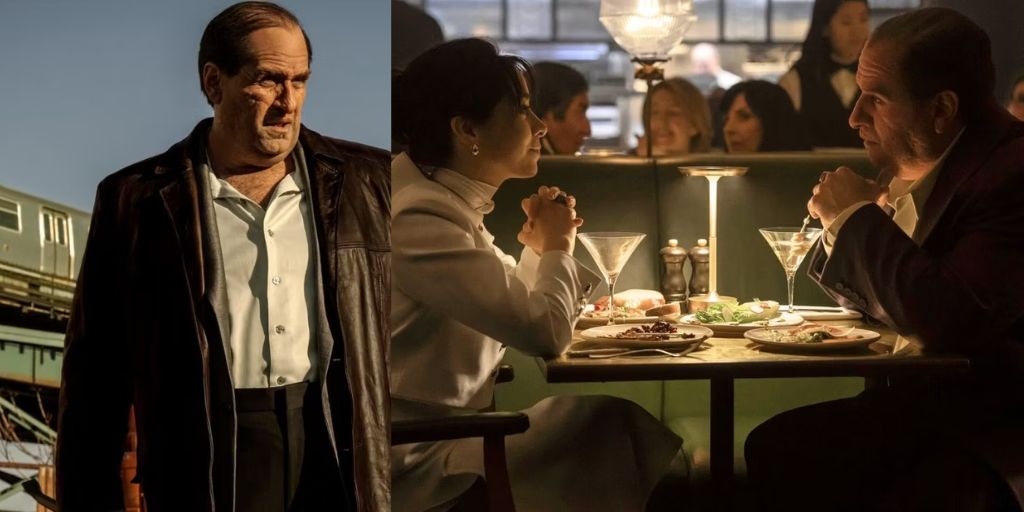
Still from The Penguin (Credit: Max)
These photos could be useful leverage in the future. As he examines some jewellery from the safe, Alberto enters, gun drawn, pointing it directly at Oz.
Tension Between Oz and Alberto
In this tense moment, Oz quickly resorts to deception. He pretends that he is bringing the jewels to Alberto, fulfilling what Carmine wishes. Oz continues to weave his web of lies, congratulating Alberto on his new position. Though Alberto is sceptical, he eventually settles down after Oz offers him a drink.
This scene highlights Oz’s manipulative nature. He is not just a thug; he has a cunning ability to read people and adapt to dangerous situations.
Oz attempts to pry into Alberto’s plans for drug-running, encouraging him to take advantage of the booming drug trade in Gotham. The city is in chaos, and there is a strong demand for illicit substances.
Alberto reveals his intentions to introduce a new, more potent drug that creates a different kind of high. He insists that Oz must keep this information secret, especially from Johnny Vitti.
At this moment, Oz’s agitation grows as Alberto flaunts a ring that belonged to the late mob boss Salvatore Maroni (Clancy Brown). This ring symbolizes power and legacy, and it drives Oz into a deeper state of jealousy and frustration.
When Alberto asks if he will be as good as his father, Oz seizes the opportunity to tell a story about a gangster from his childhood named Rex Calabrese.
Rex is portrayed as a protector of the neighbourhood, someone who knew everyone’s names and ensured their safety. Oz’s recounting of Rex’s death at a young age paints a picture of lost potential and community respect.
However, Alberto sees through Oz’s sentimental monologue, sensing that he is attempting to undermine his authority.
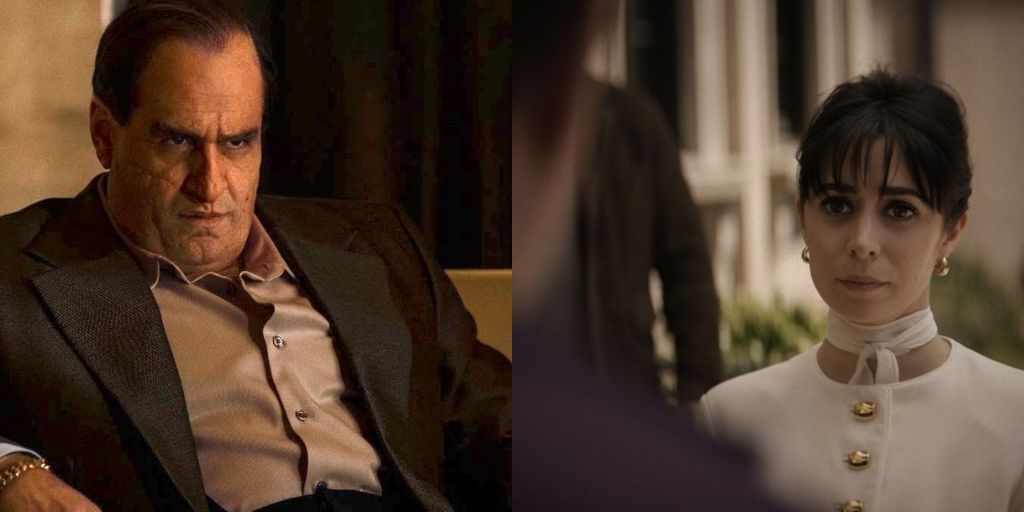
Still from The Penguin (Credit: Max)
This moment reveals Oz’s vulnerability; he desires respect and recognition but lacks the means to earn it genuinely. As their conversation intensifies, Alberto mocks Oz one last time, calling him “What a little bitch.” This provocation pushes Oz over the edge. In a shocking twist, he pulls out a gun and shoots Alberto dead.
A Defining Moment for Oz
Oz laughs nervously at what he has done, realizing he has crossed a line that cannot be uncrossed. He quickly stows Alberto’s corpse into a body bag, a clear sign that he is willing to do whatever it takes to maintain his position. The series cut to a title card, marking a dramatic turning point for Oz.
This moment is critical; it establishes him as a character who is erratic and unpredictable, driven by an insatiable hunger for power. He is not a traditional badass; he is a coward at heart, desperate for control yet constantly battling his insecurities.
As Oz waddles toward his car, he encounters a gang of teenagers attempting to steal hubcaps. The other boys flee, but Oz catches up to one of them, Victor Aguilar (Rhenzy Feliz), and threatens him at gunpoint. This interaction reveals Oz’s duality; he craves power and control yet struggles to command respect through fear.
Victor breaks down, leading Oz to lower his weapon and take his wallet instead. This moment of vulnerability leads Oz to force Victor to help him dispose of Alberto’s body. Oz orders Victor to be his driver for the night, making it clear that disloyalty will have dire consequences.
Oz’s Desperate Measures
As the night unfolds, Oz destroys Alberto’s phone, ensuring there is no evidence linking him to the murder. Victor drives him around Gotham, and they stop at the apartment of Eve Karlo (Carmen Ejogo). Oz asks her to provide him with an alibi for the entire night, further complicating his already tangled web of lies.
Later, while attempting to bond with Victor, Oz reveals his desperation to cover up the crime. They burn evidence of the murder in a scrapyard, emphasizing the lengths Oz will go to maintain his freedom.
The following morning, the two hide Alberto’s body in a random car, stealing Maroni’s ring off his finger in the process. Oz explains to Victor that knowing Alberto was part of the Falcone crime family puts him in danger. This moment shows Oz’s willingness to drag others into his chaotic life, reinforcing his lack of moral boundaries.
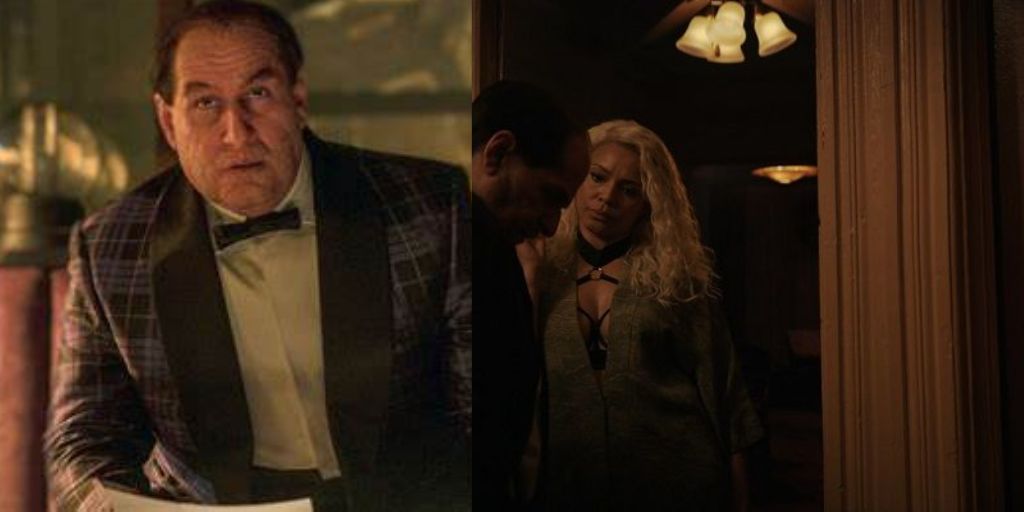
Still from The Penguin (Credit: Max)
Afterwards, Oz takes Victor to his apartment in Gotham’s Diamond District. Here, we learn that Oz’s unusual waddle results from a deformed foot, further complicating his character.
He hides Maroni’s ring for safekeeping and heads to a drop-ship warehouse. At the warehouse, he gives incriminating photographs to one of his runners, ordering him to leave the evidence with a councilman close to Bella Reál. This act demonstrates Oz’s ambition to manipulate political connections for his benefit.
Sofia Falcone’s Investigation
While Oz is busy with his schemes, Sofia Falcone (Cristin Milioti) enters the picture. She has recently been released from Arkham Asylum, but Oz is sceptical of her rehabilitation.
Against the wishes of Vitti and Grapa, she questions Oz about Alberto, who has not returned home since the previous night. This encounter creates palpable tension; Sofia is sharp and aware, making her a formidable adversary.
Oz lies once again, claiming that now that Alberto is the head of the family, he is likely very busy. However, Sofia does not buy this excuse. She insists that he have lunch with her, a request that further complicates Oz’s already precarious situation.
During their lunch, Sofia’s aggressive demeanour makes others uncomfortable. She eats ravenously, demonstrating her chaotic nature and providing a stark contrast to Oz’s more subdued yet deceptive character.
As they talk, Sofia reveals that Alberto mentioned plans to visit the Iceberg Lounge the night before. She confronts Oz, asking him how he knows about Alberto’s ambitions to revolutionize the drug business.
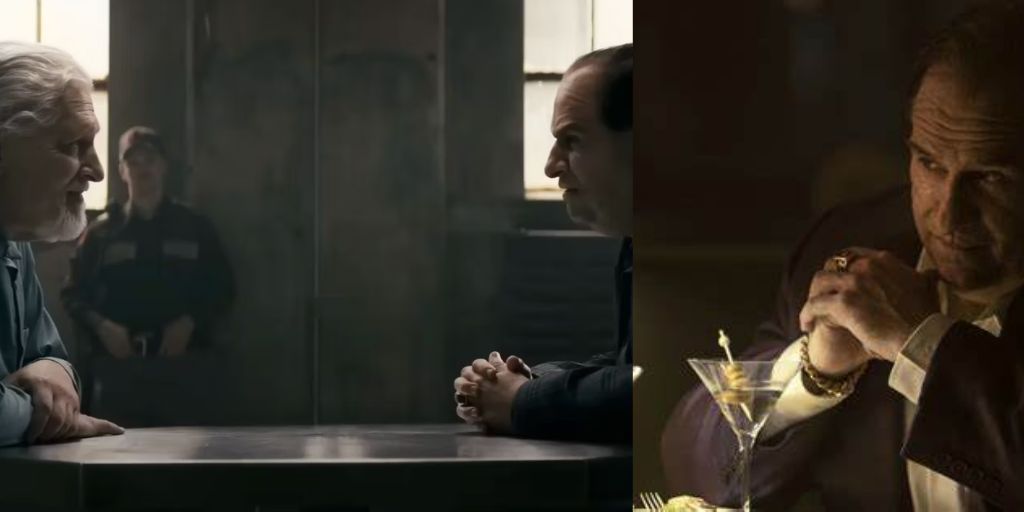
Still from The Penguin (Credit: Max)
This moment illustrates the high stakes involved; both characters are vying for control, and Sofia’s probing questions highlight Oz’s precarious position.
Oz continues to lie, claiming that he has been involved in the drug plot all along. He suggests that Alberto may be off on another drug binge, attempting to divert attention from himself.
As they part ways, Sofia tells Oz that she believes in his potential, even if others do not. Milioti’s performance is nothing short of sensational, making Sofia a character who exudes power and menace.
Oz’s Bold Moves
Feeling the pressure from Sofia, Oz and Victor decide to travel across the bridge from Gotham to evade her. They switch to a less fancy car, which immediately starts playing Dolly Parton’s “9 to 5.” This moment of levity contrasts sharply with the serious undertones of their situation. Oz, embarrassed by the music, quickly removes the CD.
They make a stop at Oz’s mother’s house, where he swears Victor to secrecy about this hidden aspect of his life. Oz gives his mother a piece of stolen jewellery, claiming they are going on a “vacation.”
However, he notices that she hasn’t been taking her medication. When confronted, Francis Cobb (Deirdre O’Connell) is startled to see Victor and claims that “the boys” messed with her medication.
Oz confesses to his mother that he shot and killed Alberto Falcone, revealing the gravity of the situation. He insists that they are in danger, especially now that Sofia is suspicious.
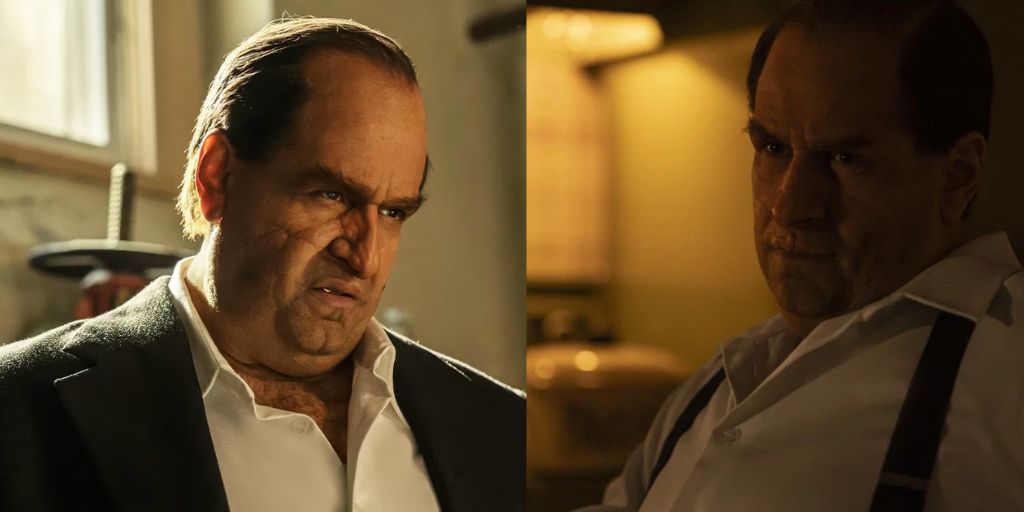
Still from The Penguin (Credit: Max)
Francis sees through Oz’s facade, telling him that he killed a man because he wants power, just like his father. This moment adds depth to Oz’s character; he is not just a coward but someone deeply influenced by his family legacy.
The next day, Oz travels to Blackgate Penitentiary to meet Salvatore Maroni. He tells Maroni that he is done doing business with the Falcons and wants to collaborate with him instead.
This conversation marks a significant shift in Oz’s alliances, hinting at his desire to change the power dynamics in Gotham. Maroni initially refuses, reminding Oz of their tumultuous history. However, Oz returns Maroni’s ring, a bold gesture that speaks volumes.
A Chaotic Encounter
On his way back, Oz encounters Sofia waiting for him at his apartment. He makes a desperate attempt to escape her clutches, but her men catch up with him. In a chaotic encounter, Oz fights back, stabbing one of Sofia’s enforcers. However, his bravery quickly crumbles when he is knocked out by another thug, illustrating his vulnerability.
When Oz wakes up, he finds himself tied up in the Falcone greenhouse, a place laden with symbolic significance. Sofia interrogates him about Alberto’s disappearance, revealing that she has kidnapped Victor as leverage. This moment adds a layer of complexity to their relationship; Oz has already involved Victor in his schemes, and now both are at risk.
Sofia’s threats become increasingly sinister, leading her to shoot the kidnapped boy to prove her point. As she prepares to torture Oz, chaos erupts outside when a car crashes into the fountain. This unexpected turn of events shifts the focus and tension within the scene, creating an opening for Oz to turn the situation in his favour.
A Shocking Revelation
Upon discovering Alberto’s body in the trunk, Sofia is enraged. His pinky finger is missing, and the word “payment” is scrawled inside the trunk.
This chilling moment underscores the brutality of Gotham’s criminal underbelly and serves as a stark reminder of the consequences of betrayal. As the episode concludes, Oz meets with Victor, revealing that they orchestrated the car crash to eliminate the evidence of their crime.
Oz praises Victor for executing their plan, though he expresses disappointment that Victor didn’t go further by disposing of the body. This moment reflects Oz’s ever-growing need for control, even over those he has dragged into his dangerous life. The episode ends on a cliffhanger, leaving viewers eager for more.
A Unique Spin on Gotham’s Crime Stories
Some may doubt the necessity of a spin-off centred on the Penguin, but The Penguin proves to be an attractive addition to the Gotham saga.
This series goes beyond merely following in the footsteps of Batman; it offers a rich view of character development and moral ambiguity. Much like The Sopranos, the series emphasizes vulnerability alongside criminality, making it a compelling watch.
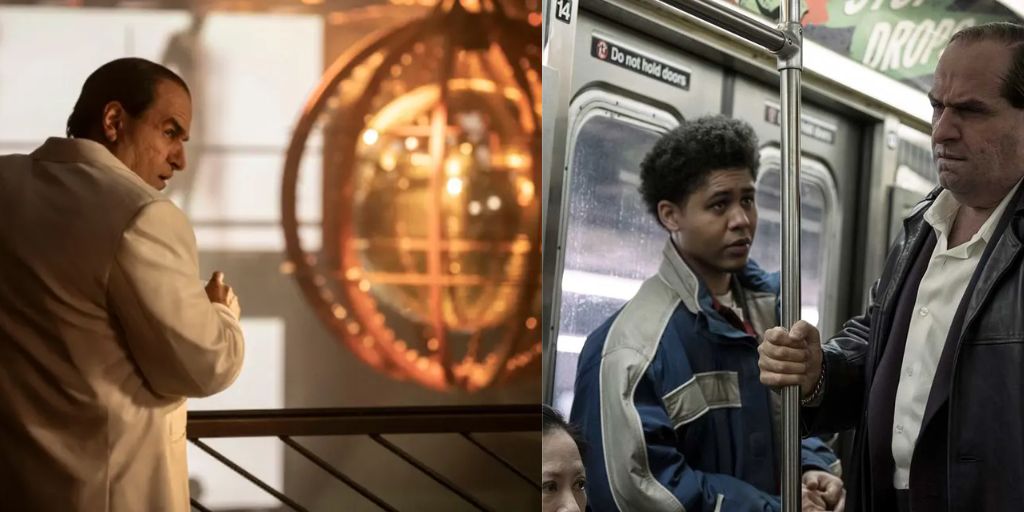
Still from The Penguin (Credit: Max)
Farrell and Milioti deliver outstanding performances, creating an exciting dynamic between their characters. Both are deeply flawed; Sofia is driven by a thirst for vengeance, while Oz is fueled by an unquenchable thirst for power. Their complex relationship promises to deliver riveting developments in future episodes.
Themes of Power and Morality
As the series unfolds, The Penguin goes into deeper themes of power, morality, and the choices that define us. Oz’s journey is one of constant conflict between his desires and the consequences of his actions.
Each choice he makes pulls him deeper into a web of lies and deceit, and the series invites viewers to consider what makes a villain in a world where moral lines are blurred.
The show also poses questions about loyalty and betrayal. As Oz shows the treacherous waters of Gotham’s criminal history, he finds himself increasingly isolated. His alliances shift, often based on necessity rather than trust. This shifting dynamic adds to the complexity of his character and creates a sense of suspense that keeps viewers engaged.
Conclusion
The Penguin is a thrilling view of crime, power, and the human condition, set against the backdrop of Gotham City. With its intriguing characters, complex narratives, and moral dilemmas, the series invites viewers to reflect on the nature of evil and the choices that lead to it.
As Oz Cobb continues his chaotic rise through the underworld, audiences can expect a rollercoaster ride of twists and turns that challenge their perceptions of morality in a world filled with darkness.
As the story unfolds, fans will likely find themselves invested in Oz’s journey, torn between rooting for him and recognizing the darkness within.
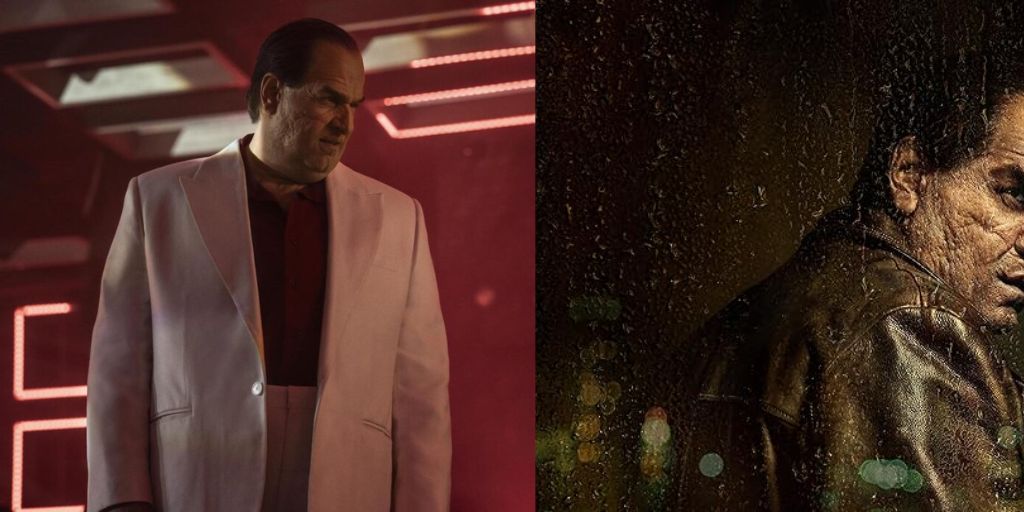
Still from The Penguin (Credit: Max)
With each episode, the stakes rise, promising an engaging narrative filled with unexpected developments. The first episode lays a solid foundation, setting the stage for an exhilarating view of Gotham’s underbelly.
The Penguin offers a compelling view of Gotham’s criminal underbelly through the eyes of Oz Cobb. As he shows betrayal, power struggles, and moral dilemmas, viewers witness his chaotic rise in a world filled with danger.
The dynamic between Oz and Sofia adds layers of intrigue, making this series a must-watch for fans of the Batman universe. Expect thrilling twists and deep character development in the episodes to come.
The Penguin is now available to stream on Max in the U.S., and fans of the Batman universe will undoubtedly find this new instalment an essential addition to their viewing experience.
In the first two episodes of Agatha All Along, the sharp and cunning Agatha Harkness (played by Kathryn Hahn) gathers a group of witches to face the challenges of the Witches’ Road.
Disney+’s latest Marvel series, created by WandaVision showrunner Jac Schaeffer, introduces several new characters, all drawn from Marvel Comics’ collection of powerful female magic users.
Most of Agatha’s recruits are hesitant about joining her, except for Teen (played by Joe Locke), but one of the more resistant members is Alice Wu-Gulliver (played by Ali Ahn). Alice, the daughter of a mystical musician, claims not to believe in magic.
With the group now stepping onto the Witches’ Road, Alice will soon have to accept the supernatural world and show her potential as a sorceress. Her character in the series is inspired by a Marvel Comics figure with an important legacy. So, who is Alice’s counterpart in the comics, and how does Agatha All Along change her?
Who Is Marvel Comics’ Alice Wu-Gulliver?
In the comics, Alice Gulliver was created by writer James Robinson and artist Mike Perkins during a storyline from the 2016 Scarlet Witch comic series. As a child, Alice witnesses the death of her mother, August Wu, who was a witch and the protector of Hong Kong.
August dies while battling a demon, and her magical powers, along with her unique pink hair, are passed on to Alice immediately after. Alice’s father, Detective Sergeant Adam Gulliver, is also killed not long after, leaving her an orphan.
Despite her grief, Alice chooses to honor both her parents’ legacies. She blends her mother’s sorcerer guardian role and her father’s law enforcement work to become the Wu, Hong Kong’s only witch detective. To keep her magical identity secret, Alice enhances her firearms and gadgets with magic.
She also wields a magical sword that, similar to Doctor Strange’s Sling Ring, allows her to open portals to different dimensions. This comes in handy as she fights against various demons.
Alice partners with Wanda Maximoff (Scarlet Witch) when Wanda visits Hong Kong to track down an evil magician named Tongji. Alice’s bullets prove useful, and after dealing with Tongji, she and Wanda share a peaceful tea break before parting ways as allies.
How Is Alice Wu-Gulliver Different in ‘Agatha All Along’?
In Agatha All Along, Alice Wu-Gulliver makes her debut in Episode 2. While similar to her comic book counterpart, this version of Alice is reimagined.
Agatha introduces Alice as a Protection Witch but adds that she’s also a Blood Witch due to her mother being Lorna Wu, a famous rock singer from the band Lorna Wu and the Coral Shore.
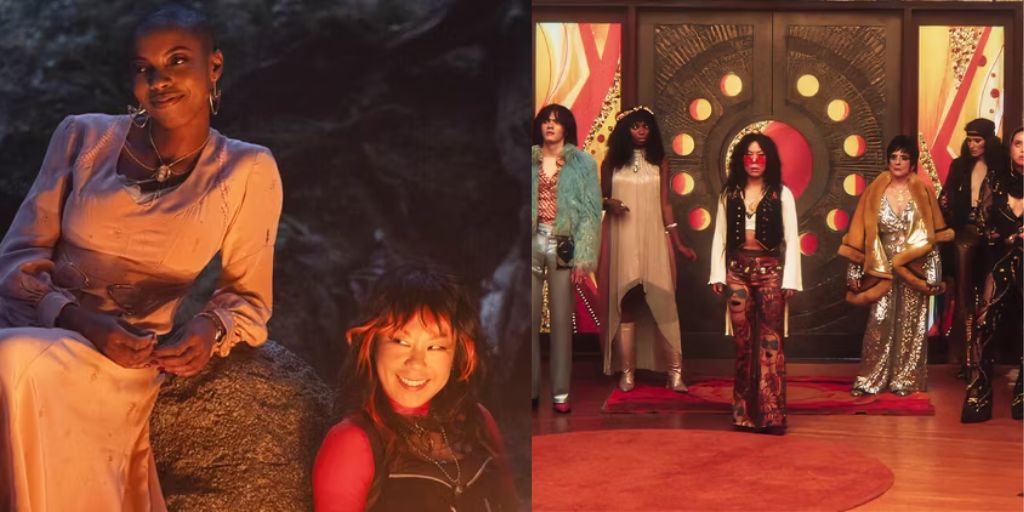
Still from Agatha All Along (Credit: Disney+)
Lorna is the creator of the “most famous version” of the “Ballad of the Witches’ Road,” the song sung by Agatha’s new coven during the episode’s final moments.
When Agatha mentions Lorna, Teen becomes excited, revealing that his mother attended Lorna’s last concert before the singer’s mysterious death. This small detail hints at a deeper connection between Teen and Alice. Agatha also adds more mystery to Alice’s backstory by stating that Lorna might have died on the Witches’ Road.
Why Does Alice Join Agatha Harkness’ Coven in ‘Agatha All Along’?
Agatha and Teen find Alice working as a security guard at the Westview mall, a far cry from her past as a police officer. Alice’s boss quickly fires her after Agatha tricks him with a shoplifting incident, calling her “nothing but bad luck.” This implies that Alice has faced a difficult life.
When Agatha and Teen first talk to Alice about the Witches’ Road, she dismisses it as just a song that sparked a “cult.” However, curious about her mother’s disappearance, she reluctantly decides to meet Agatha.
In an exclusive interview with media, Ali Ahn shared insights into Alice’s internal conflict: “I think the difference with Alice is that she’s really hiding from being a witch. She’s sort of disconnected with that part of herself, and I think Agatha coming to find her is genuinely surprising.”
The mysterious reputation of the Witches’ Road, combined with Alice’s desire to understand what happened to her mother and her unfamiliarity with her own powers, suggests that Alice’s journey will be filled with self-discovery and danger.
