In the dark and twisted streets of Gotham, the power dynamics among the crime families continue to shift. The latest episode of The Penguin, titled “Gold Rush,” showcases a significant turning point in the series. After the fall of the Falcone family, Sofia Gigante, played by Cristin Milioti, emerges as a powerful figure.
She discards her father’s surname and embraces her mother’s maiden name, Gigante. This decision marks her as a fierce competitor in Gotham’s underworld.
She takes brutal action by killing Johnny Viti, played by Michael Kelly, in cold blood, solidifying her ruthless reputation.
As Sofia rises, she forms an alliance with Salvatore Maroni, portrayed by Clancy Brown. Maroni is a formidable rival of her late father, Carmine Falcone.
This partnership creates more tension in Gotham, especially for Oswald Cobblepot, known as the Penguin, played by Colin Farrell. Oz is facing increasing danger, as Maroni now has a strong motive to eliminate him. Following a string of violent confrontations, Oz finds himself in hiding, trying to regroup and survive.
Oz’s Struggles and the Threat of Maroni
After losing key allies and facing violence, Oswald is hiding in a run-down apartment in Crown Point. He is not alone; he shares the space with his mother, Francis, played by Deidre O’Connell, and his loyal friend, Vic, portrayed by Rhenzy Feliz.
The episode picks up weeks after the intense events of the previous episode. Oz and Vic are desperately trying to find a way to distribute Bliss, a potent drug, in Gotham. Meanwhile, Sofia and Sal plot to take down the Penguin and establish their own criminal empire.
As the episode begins, we see the arrival of winter in Gotham, which symbolizes the cold reality of their lives. Snow begins to fall, adding to the grim atmosphere.
Oz narrates, recapping key events like Sofia’s decision to abandon the Falcone name and Sal’s escape from prison. He asks the audience, “Who’s got the power?” This question highlights the ongoing struggle for dominance among the crime families.
Oz and Vic’s new base of operations is thriving despite their challenges. They have transformed an abandoned trolley station into their headquarters, where they now sell Bliss themselves.
Oz informs his workers that every gang in Gotham will soon be looking to acquire their product. With a steady cash flow, he believes he can get his life back on track and regain his position in the criminal world.
The Gathering Storm
Vic arrives on his motorcycle and hands Oz a duffel bag filled with money. This moment highlights their growing success. However, Oz is aware that they need to win over more gangs to solidify their standing in Gotham.
He knows that the criminal world is rife with tension and animosity among gangs. It is essential for them to keep a low profile and avoid drawing attention to their operations.
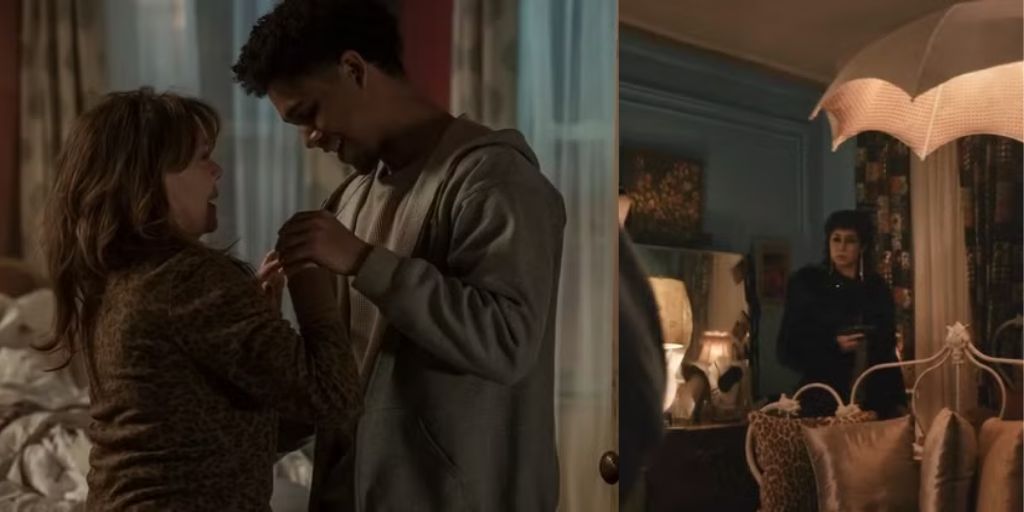
Still from The Penguin (Credit: HBO)
A crucial player in their plan is Zhao, the head of the Triad family, who shows interest in collaborating with Oz. Zhao’s partnership could open international avenues for their business.
However, they face challenges. The trolley station still has unreliable power, and City Hall is rationing electricity, favoring wealthy neighborhoods. To make matters worse, Sofia and Sal’s crew are on the lookout for them, increasing the danger.
Oz remains confident, believing that offering better pay to their workers gives them an advantage over their enemies. His determination to build his empire shines through, even as the threat looms closer.
Sofia’s Calculated Moves
Meanwhile, at the Falcone Gigante estate, Sofia is busy solidifying her power. She is involved with Dr. Julian Rush, played by Theo Rossi, but she is not interested in his assistance to eliminate Oz.
After dismissing him, she heads to the kitchen where Sal is cooking a family recipe. He reminds her that Oz has the upper hand in the drug supply, and if the neighborhood gangs are willing to buy from him, they must act quickly.
Sofia is undeterred. She believes they need to send a strong message to all the gangs about the consequences of dealing with Oz. Her ambition and ruthlessness become evident as she strategizes with Sal. They both know that to take down Oz, they need to be clever and ruthless.
Back in Crown Point, Francis struggles with her mental health. She begins to show signs of dementia, causing concern for Oz.
One morning, as Vic prepares breakfast, Francis has a breakdown, threatening to seek help from Rex Calabrese, a man who has been dead for years. This moment of chaos highlights the tension in their safehouse.
Shocking Developments
Oz receives alarming news when he learns that the Triads have backed out of their deal. A news report reveals three bodies found on the street, each missing a finger. Oz deduces that Sofia is behind this act of violence.
Rather than despairing, he formulates a bold plan: they will give away Bliss for free to ensure that the gangs realize the drug is already in their neighborhoods. This strategy aims to undermine Sofia’s plans while solidifying his presence in Gotham.
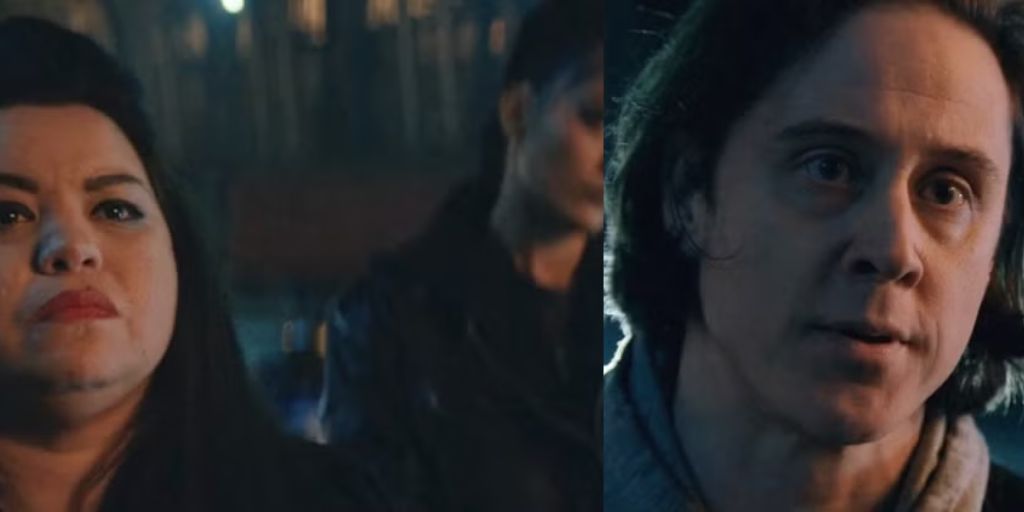
Still from The Penguin (Credit: HBO)
Vic encounters Squid, a local dealer he used to know, who notices Vic’s new shoes and questions him about his newfound wealth. Squid is curious and demands to join their operation.
This encounter raises the stakes for Vic, who is already grappling with the risks of their lifestyle. The tension mounts as Squid threatens to expose Vic and his mother if he doesn’t comply.
The Fallout of Violence
Meanwhile, Sofia and Sal continue their search for Oz. They break into his old apartment in the Diamond District, where they discuss targeting someone Oz cares about.
Sal begins to destroy Oz’s belongings, fueled by anger and vengeance. They find evidence of Oz’s past, including a childhood photo, which sparks memories of their enemy’s vulnerability.
At the same time, Oz is dealing with the aftermath of his mother’s deteriorating condition. He finds her in a freezing tub, realizing that she has been suffering alone.
In a tender moment, he promises her that he will end her life if her mind deteriorates beyond repair. This heartbreaking scene reveals the depth of their bond, even as they face the harsh realities of their world.
Oz attempts to balance his criminal activities with his personal responsibilities. He dresses Francis in a beautiful outfit, trying to bring some joy into her life. This moment showcases Oz’s softer side and his love for his mother despite the chaos surrounding them.
Vic’s Descent into Violence
After confronting the harsh realities of their lives, Vic returns to Oz to share his concerns about Squid. Vic is worried about the drug dealer’s threats and the potential danger he poses. However, Oz is preoccupied with fixing the generator and ensuring his mother’s well-being.
Sofia, meanwhile, is relentless in her pursuit of Oz. She searches for Eve Karlo, a woman tied to Oz’s past.
During her investigation, she encounters Roxy, who offers to help her find Eve for the right price. This encounter reveals Sofia’s determination to gain control over her enemies, even as she faces the dangers of the underworld.
Power Struggles and Confrontations
Oz takes drastic action when he confronts Councilman Hady, who has a past connection to Carmine Falcone. Oz demands that Hady restore power to Crown Point.
He threatens to use blackmail if Hady does not comply. This confrontation illustrates Oz’s desperation to regain control and ensure the safety of his territory. Hady eventually agrees but only after Oz applies pressure.
As tensions rise, Vic meets with Squid to resolve their issues. He attempts to pay Squid off, but Squid refuses the money and demands a meeting with Oz instead.
Feeling threatened, Vic panics and shoots Squid in the neck when he is vulnerable. This moment marks a significant turning point for Vic.
He is horrified by his actions, which adds to the emotional complexity of his character. Terrified, Vic flees the scene, leaving Squid to bleed out.
The Final Showdown
The episode builds to an intense climax as Sofia finds Eve, holding her at gunpoint. Despite the threat, Eve remains composed and reveals that she knows Oz is hiding in Crown Point. Sofia is fueled by anger and vengeance, driven by her desire to eliminate Oz once and for all.
In a parallel storyline, Oz gathers the local gang leaders for his “Gold Summit.” He hands out beers, trying to create a sense of unity among the factions.
During the meeting, he declares war on the rich and powerful, particularly targeting Sofia. The gang leaders are hesitant, but Oz’s boldness begins to sway them. He reveals that he was responsible for Alberto Falcone’s death, shocking the group. Slowly, they start to accept his leadership.
As the summit concludes, the electricity in their safehouse unexpectedly returns. Oz and Vic celebrate, dancing with Francis.
However, the audience is left with a chilling cliffhanger: Sofia has entered the apartment, brandishing a crowbar. This shocking ending sets the stage for future conflicts and intensifies the stakes for Oz and his allies.
Character Analysis
The characters in The Penguin continue to evolve throughout the episode. Oz Cobblepot embodies the complexity of a man trying to face the criminal world while maintaining his humanity.
His relationship with his mother, Francis, serves as a poignant reminder of his past and the emotional weight he carries.
Despite his violent actions, his love for Francis shows that he still has a heart. Sofia Gigante, on the other hand, represents ambition and ruthlessness. She is determined to carve out her own identity and assert her power in a world dominated by men.
Sofia Gigante: A New Kind of Power
Sofia Gigante, on the other hand, represents ambition and ruthlessness. She is determined to carve out her own identity and assert her power in a world dominated by men.
Her transformation into a figure willing to commit violent acts for control showcases the harsh realities of Gotham.
Despite her traumatic past, she becomes a symbol of empowerment, breaking free from the legacy of her father, Carmine Falcone, and embracing her mother’s name, Gigante.
This shift is not just about a name; it symbolizes her refusal to be a mere pawn in the game of crime. Instead, she emerges as a queen in her own right, ready to challenge anyone who threatens her new reign.
Her alliance with Salvatore Maroni, a character steeped in the history of Gotham’s crime families, adds another layer to her story. Sal is portrayed as a seasoned criminal, full of ambition and cunning, making him a perfect ally for Sofia.
Together, they represent a formidable force against Oz and anyone else who dares to challenge their growing empire.
Their partnership also illustrates the constant shifting of alliances within the criminal underbelly of Gotham. It serves as a reminder that trust is a rare commodity in this world, where betrayal often lurks around every corner.
The Emotional Core of the Episode
At its core, “Gold Rush” is not just a tale of crime and ambition; it also shows deep emotional themes. The relationship between Oz and his mother, Francis, stands out as a poignant thread throughout the episode.
Francis, played brilliantly by Deidre O’Connell, grapples with her declining mental health, revealing a vulnerable side of Oz that contrasts sharply with his ruthless exterior.

Still from The Penguin (Credit: HBO)
The tender moments between mother and son highlight the love that exists even in a world filled with violence.
Oz’s attempts to care for Francis while managing his criminal enterprise show the struggles of balancing familial responsibilities with the demands of a dangerous lifestyle.
He dresses her up, trying to bring a glimmer of joy into her life, and promises to help her find peace if her condition worsens.
These scenes evoke empathy for Oz, allowing the audience to see him not just as a villain, but as a flawed human being facing immense challenges.
The portrayal of dementia and its effects on families is handled with sensitivity, offering a stark contrast to the brutality of the crime world.
O’Connell’s performance is heartfelt, and her interactions with Oz carry a weight that deepens the viewer’s connection to both characters.
The Tension Builds
As the episode progresses, the tension mounts. The stakes rise not only for Oz and his crew but also for Sofia and Sal. The rivalries between the gangs in Gotham become increasingly dangerous, and the alliances formed are fragile at best.
The criminal show is marked by mistrust and shifting loyalties, making it clear that anyone could become a target at any moment.
Sofia’s investigation into Oz’s whereabouts leads her to confront Eve Karlo, and the tension in this scene is palpable. Eve’s calm demeanor in the face of danger reveals her own strength, and her willingness to divulge Oz’s location reflects the shifting loyalties in Gotham.
Eve knows that revealing this information could lead to dire consequences, but her own survival instincts kick in, emphasizing the cutthroat nature of their world.
At the same time, Oz’s gathering of gang leaders serves as a pivotal moment in the episode. His bold declaration of war against Sofia and the wealthy elite of Gotham is a strategic move designed to unite the gangs under his leadership.
It’s a classic example of how power dynamics can shift rapidly in Gotham. By leveraging his reputation and the fear he instills in others, Oz seeks to reclaim his position and establish himself as a dominant force once again.
The Aftermath of Violence
Vic’s descent into violence also adds another layer of complexity to the narrative. His decision to kill Squid signifies a turning point in his character arc.
Initially, Vic appeared to be a loyal friend to Oz, but the weight of his actions begins to bear down on him. The remorse he feels after taking a life showcases the internal struggle of someone caught in the brutal realities of the criminal world.
As Vic grapples with the consequences of his actions, he represents the moral dilemmas faced by those involved in crime.
The violent choices they make can have far-reaching consequences, not just for themselves but for their loved ones as well. This theme resonates throughout the episode, highlighting the emotional toll that living a life of crime takes on individuals and families.
The Power Play
The final moments of “Gold Rush” leave the audience in suspense. The climax of Oz’s meeting with the gang leaders and his declaration of war on Sofia sets the stage for future confrontations.
As he declares his intentions to unite the gangs against the wealthy elite, the atmosphere in the room shifts. The gang leaders’ acceptance of Oz’s leadership signifies a potential turning point in the power dynamics of Gotham.
Simultaneously, the chilling cliffhanger of Sofia entering Oz’s apartment with a crowbar heightens the tension. The scene encapsulates the ongoing battle for power and control within Gotham.
It leaves viewers questioning who will come out on top in this deadly game. Will Oz successfully unite the gangs against Sofia, or will her ruthless ambition prove to be too powerful?
Themes of Redemption and Loss
“Gold Rush” also shows themes of redemption and loss. Oz is a character searching for a sense of purpose amidst the chaos. His love for his mother and desire to provide for her reveal a softer side that contrasts with his violent actions. This duality makes him a complex anti-hero in the eyes of the audience.
As the episode unfolds, viewers witness the stark realities of life in Gotham. The characters are faced with choices that test their morals and alliances.
The constant struggle for power leads to violence, betrayal, and heartbreak. Yet, beneath the grim exterior, there are moments of hope and connection that remind us of the humanity that exists within even the darkest characters.
A Dark Future for Gotham
As The Penguin continues to unfold, the stakes grow higher for all characters involved. “Gold Rush” effectively showcases the complex dynamics of Gotham’s criminal underworld.
The alliances, betrayals, and personal struggles faced by Oz, Sofia, and the supporting cast highlight the intricacies of life in a city plagued by corruption and crime.
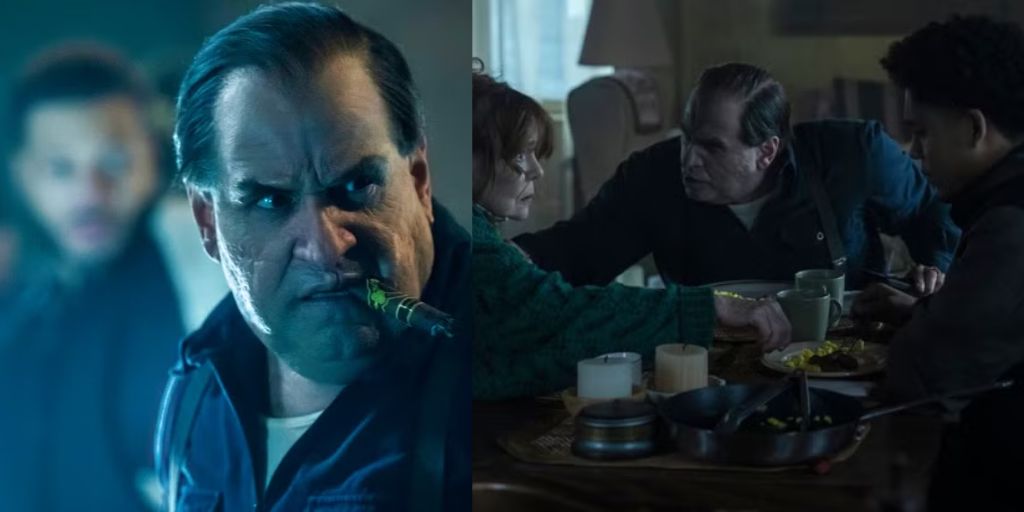
Still from The Penguin (Credit: HBO)
The episode encapsulates the essence of Gotham: a place where power is fleeting, trust is scarce, and survival often comes at a terrible cost.
As Sofia Gigante and Oswald Cobblepot continue to vie for control, viewers are left anticipating the next chapter in this gripping saga.
With an attractive blend of action, emotion, and complex character dynamics, The Penguin promises to keep audiences on the edge of their seats. The future of Gotham remains uncertain, but one thing is clear: the fight for power is far from over.
“Gold Rush” serves as a reminder that in Gotham, the game of crime is not just about survival; it’s also about showing the labyrinth of personal relationships and the consequences of one’s actions.
As the series progresses, viewers will continue to witness the evolution of these characters and the inevitable clashes that lie ahead in the dark alleys of Gotham.
Filmmaking is a field that requires a lot of creativity, experimentation, and, above all, a clear vision. Directors often try new ideas to push boundaries and engage audiences.
However, not every experiment turns out well. One recent film that exemplifies this is Krazy House, directed by Steffen Haars and Flip van der Kuil.
This Dutch action-horror comedy was supposed to be a unique and entertaining addition to the genre. Instead, it stands out as a major failure.
What could have been a fun and engaging short film became a long, painful viewing experience that left audiences confused and disappointed.
The film’s concept revolves around blending comedy with horror, drawing inspiration from various sources, including popular sitcoms from the 1990s.
The filmmakers aim to roast these shows, taking familiar tropes and turning them on their heads. Unfortunately, the execution falls short.
Krazy House tries to tackle heavy themes, such as religious zealotry and family dynamics, but does so without any real depth or clarity. Instead, viewers are treated to a disjointed narrative filled with cringe-worthy jokes, absurd situations, and a lack of coherence.
The Premise
Krazy House stars Nick Frost as Bernard “Bernie” Christian, an obsessively religious stay-at-home father. He wears self-knitted sweaters adorned with Christian symbols and believes deeply in living according to God’s rules.
This character is the central figure in a sitcom also called Krazy House, which the film presents in a way that mimics watching a television program from our childhoods. This concept offers a nostalgic feel, but it quickly devolves into chaos.
Bernie’s family consists of his wife, Eva, played by Alicia Silverstone, their daughter Sarah, portrayed by Gaite Jansen, and their son Adam, played by Walt Klink.
Eva works a vague corporate job, while Sarah is desperate for a boyfriend. Adam has chosen science over religious beliefs, setting up a clash of values within the household.
This family dynamic serves as the basis for the film’s comedy, echoing the lessons and humor found in classic sitcoms like Family Matters and Full House.
Bernie’s character embodies the humorous yet earnest traits of sitcom protagonists, complete with his own catchphrase: “Oh gosh, what a mess!” However, the humor feels forced, and the character’s naiveté quickly becomes grating rather than endearing.
Main Conflicts and Humor
The central conflicts in Krazy House arise from Bernie’s inability to effectively support and empower his family. The film attempts to create humor through Bernie’s absurd ideas and interactions with his family.
For instance, there are moments where his wife tries to accommodate his bizarre “invention” of attaching scrubbing brushes to his shoes. These moments are meant to be humorous but often come off as awkward and unoriginal.
Another source of humor stems from Adam’s mockery of his father’s faith. Bernie often responds to Adam’s skepticism with Bible verses, creating a comedic tension.
However, this humor falls flat, especially when the narrative shifts dramatically with the sudden arrival of Russian workers. These moments seem disjointed and lack the finesse needed to create a cohesive comedic experience.
As the film progresses, Bernie inadvertently destroys his family’s kitchen, setting the stage for the unexpected arrival of a trio of Eastern European workers. This sudden shift in tone is jarring and feels out of place within the established narrative.
Pjotr, played by Jan Bijvoet, along with his sons Dmitri and Igor, played by Chris Peters and Matti Stooker, respectively, begin demolishing Bernie’s house without any resistance from him. This situation further emphasizes Bernie’s passive nature and inability to protect his family.
Misguided Satire
One of the film’s significant missteps is its attempt to use satire. Haars and Kuil appear to confuse absurdity and stupidity, mistaking the latter for effective satire. Nick Frost’s performance, particularly his American accent, comes across as forced and distracts from the story.
While the filmmakers aim for a comedic critique of family sitcoms, they fail to deliver anything of substance. The set design draws inspiration from iconic sitcoms like Married With Children and Everybody Loves Raymond, but the humor is ten times sillier than anything those shows presented.
Haars and Kuil’s portrayal of sitcoms as silly and absurd may have potential, but it quickly deteriorates into an incoherent narrative.
The film’s humor, rather than being sharp and insightful, becomes a nonsensical collection of jokes that do not land. Frost’s portrayal of Bernie becomes a comedic black hole, pulling the humor into a void of confusion and discomfort.
Tone and Pacing Issues
The tonal shifts in Krazy House are abrupt and confusing. The film starts with a light-hearted, if not somewhat ridiculous, premise.
However, it quickly transitions into a dark and chaotic environment that leaves viewers disoriented. Haars and Kuil attempt to inject shocking elements into the film, hoping to elicit strong reactions from the audience. However, the lack of balance makes the storytelling feel reckless and disjointed.
Early scenes feature subliminal shots of a bloodied Bernie, teasing viewers about the chaos that is to follow. While this could have been a clever storytelling device, it instead feels like an attempt to manipulate audience expectations without any real payoff.
The filmmakers seem to aim for a shock factor akin to Adult Swim’s more experimental programming, but they do not possess a compelling story to justify their aggressive approach. Instead, viewers are left with a string of confusing events that fail to connect.

Still from the movie (Sundance)
Failure to Establish a Coherent Story
One of the most significant issues with Krazy House is its inability to establish a coherent and engaging storyline. The film lacks direction and clarity, leaving audiences frustrated and confused.
As the narrative progresses, it becomes increasingly challenging to follow the characters’ motivations and the overall plot. The comedy fails to feel organic, and the absurdity of the situations overshadows any potential for genuine humor.
The introduction of the Russian workers adds a layer of chaos, but it does not contribute meaningfully to the story. Instead, it feels like a forced attempt to inject tension and conflict.
The film’s reliance on shock value rather than coherent storytelling is detrimental to its overall effectiveness. As the audience, we are left wondering what the filmmakers were trying to convey and whether they had any real message to share.
Poor Execution of Themes
Krazy House also attempts to tackle heavier themes, such as the conflict between faith and science and the struggles of modern family life.
However, these themes are executed poorly and lack depth. Instead of engaging with these complex ideas, the filmmakers settle for shock tactics and exaggerated humor. The result is a film that feels shallow and unfulfilled.
While there are chances of potential within the character dynamics and family conflicts, these elements are overshadowed by the film’s chaotic tone and lack of focus.
The moments that could have been meaningful are instead lost in a barrage of absurdity. The film ultimately fails to provide any real commentary on the issues it seeks to address.
Missteps in Humor and Satire
The humor in Krazy House often misses the mark. The filmmakers aim for satire but end up relying on tired jokes and clichés that fail to resonate with audiences.
The comedic moments that are supposed to highlight the absurdity of sitcoms instead come off as forced and unoriginal. The film’s reliance on shock value over clever humor only serves to alienate viewers.
The filmmakers attempt to play with the audience’s expectations by presenting a familiar format only to subvert it in increasingly bizarre ways.
However, this approach feels more like a desperate attempt to be edgy rather than a thoughtful critique of the genre. The humor lacks the necessary wit and insight to make it effective, resulting in a disjointed viewing experience.
The film’s characters, particularly Bernie, lack the depth and development needed to engage viewers. Nick Frost’s portrayal of Bernie is meant to be humorous and relatable, but instead, it feels one-dimensional.
The character’s obsessive religiosity comes across as a mere gimmick rather than a meaningful aspect of his personality. This lack of character development makes it challenging for audiences to invest in the story.
The other family members, while providing some comedic moments, also lack depth. Eva’s corporate job is vague, and her character does not grow throughout the film.
Sarah’s desperation for a boyfriend becomes a running joke rather than a meaningful subplot. Adam’s choice to pursue science over faith is briefly mentioned but not covered in any meaningful way.
The introduction of the Russian workers further complicates the character dynamics without adding any real depth.
Pjotr and his sons serve as chaotic forces in the film, but they lack individual personalities or motivations. As a result, the film feels crowded with characters who do not contribute to a coherent narrative.
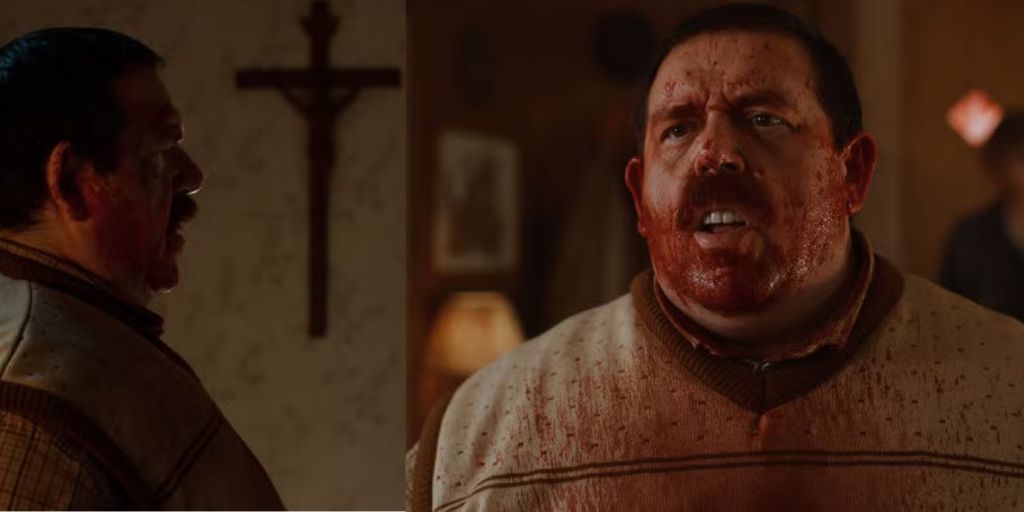
Still from the movie (Sundance)
Chaotic and Confusing Structure
The overall structure of Krazy House is chaotic and confusing. The filmmakers throw a series of random events at the audience without establishing a clear connection between them. This lack of coherence makes it difficult for viewers to follow the story, leading to frustration rather than amusement.
As the film progresses, it becomes apparent that Haars and Kuil are more interested in shocking their audience than in creating a cohesive narrative.
The chaotic structure ultimately detracts from any potential message the film might have had. Instead of a meaningful exploration of family dynamics or societal norms, viewers are left with a disjointed series of events that feel hollow.
Krazy House stands as a prime example of a film that fails to deliver on its ambitious premise. While the concept of blending comedy and horror holds potential, the execution falls flat.
The film’s disjointed narrative, lack of character development, and misguided humor result in a viewing experience that is more painful than enjoyable.
Haars and Kuil’s attempt to critique family sitcoms and find heavier themes ultimately lacks the depth and coherence necessary for a successful film.
Rather than engaging audiences, Krazy House leaves them bewildered and unsatisfied. While experimentation is essential in filmmaking, it is equally important to maintain a clear vision and direction.
In the end, Krazy House serves as a cautionary tale for filmmakers looking to push boundaries. Creativity and innovation are important, but without a solid foundation, even the most ambitious ideas can falter.
For audiences, this film is best approached with caution, as it represents a misguided attempt to blend genres in a way that fails to resonate. While there may be moments of potential, they are overshadowed by the film’s chaotic execution, leaving viewers wondering what went wrong.
In reflecting on Krazy House, it becomes evident that the film’s failure lies not just in its execution but also in its overall approach to storytelling.
The filmmakers, Steffen Haars and Flip van der Kuil, seemed to have a vision that could have resulted in a clever and entertaining film, yet they allowed the chaotic structure and forced humor to overshadow their intentions.
One important aspect that the film neglects is the opportunity for character growth and development. The potential for exploring the complexities of family relationships and individual beliefs exists within the narrative framework but is never fully realized.
Bernie’s journey, which could have been a poignant exploration of faith clashing with modern values, instead turns into a series of poorly executed gags. This lack of depth extends to the supporting characters, whose stories remain largely hidden, leaving the audience without relatable connections or emotional investment.
Moreover, the tonal inconsistencies detract from any message the filmmakers might have hoped to convey. The sudden shifts from light-hearted comedy to dark and chaotic scenarios create a disjointed viewing experience that feels more jarring than engaging.
This haphazard approach ultimately undermines the film’s ability to resonate with its audience. Viewers may find themselves questioning the film’s intentions rather than enjoying the absurdity of the situations presented.
The attempt to satirize familiar sitcom tropes is commendable in theory but fails in practice due to the reliance on shock value rather than genuine humor.
The filmmakers miss the mark in providing a thoughtful critique of family dynamics and societal norms, resulting in a film that feels empty rather than insightful.
This misstep serves as a reminder that satire requires careful consideration and sharp wit to be effective, neither of which are present in Krazy House.
Krazy House is a film that represents a series of missed opportunities. The ambition to blend comedy and horror within the framework of a family sitcom is commendable, but the lack of coherence, depth, and engaging storytelling ultimately leads to a disappointing experience.
For aspiring filmmakers, this film serves as a cautionary tale about the importance of a clear vision, strong character development, and a coherent narrative structure. It highlights that creativity should be balanced with substance to create a film that resonates with audiences.
While the concept may have shown promise, the final product is a convoluted mess that fails to deliver any meaningful commentary, leaving viewers with more questions than answers.
As a result, Krazy House stands as an example of what can happen when ambition outpaces execution, and it will likely be remembered as a cautionary tale in the domain of contemporary cinema.
