Lelouch vi Britannia was never meant to live in the world he sought to create. His journey in Code Geass was never about personal survival but about reshaping society, even if it meant becoming the villain in the eyes of the world. From the beginning, his mission was fueled by the desire to bring lasting peace, and in the end, his death was the ultimate step in ensuring it.
He understood that true change required a catalyst, something—or someone—that would unite people under a single cause. By painting himself as the ultimate enemy, he gave the world something to hate, something to destroy. His demise wasn’t just a tragic ending; it was a calculated necessity, the final move in his masterful game of chess.
The Price of Absolute Power
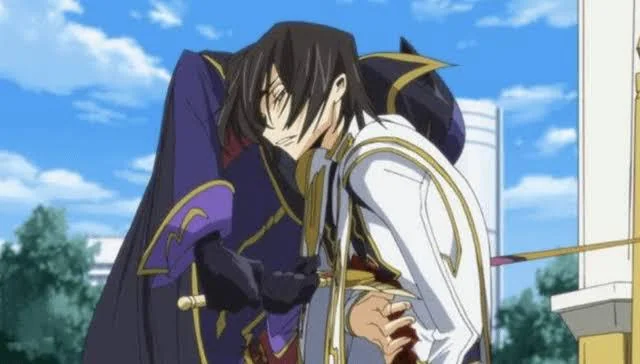
Lelouch From Code Geass
Lelouch’s story was always tied to the dangers of wielding absolute power. He gained strength through his Geass, but it came at a cost—lives were lost, entire nations were shaken, and he became the very tyrant he once opposed. His death served as a lesson that power alone isn’t enough to create a just world; true peace demands sacrifice, sometimes even the ultimate one.
His masterstroke, the Zero Requiem, was built on a single idea: peace through shared hatred. Lelouch became the world’s greatest villain, orchestrating chaos and tyranny so that his downfall would bring unity. By allowing himself to be assassinated in public, he created a symbol of justice in Zero and left the world with a lasting sense of order—one built on the illusion of victory.
Lelouch’s transformation from a rebellious prince to a feared ruler wasn’t just about power—it was about the weight of responsibility. Every decision he made carried a cost, and with each battle, he lost a part of himself. In the end, he accepted his role as the necessary villain, knowing that the world needed a monster to destroy in order to move forward.
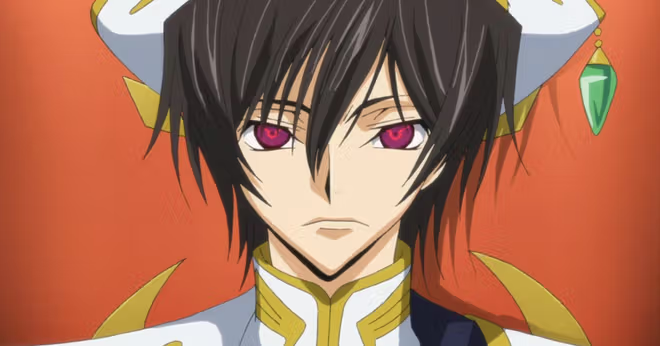
Lelouch From Code Geass
With Lelouch’s death, peace was finally possible. His sacrifice wasn’t about redemption or personal glory—it was a carefully laid plan to remove the greatest threat to the world: himself. He understood that true change required more than ideals—it needed an act so decisive that there could be no going back. His death was his final gift to the world he fought so hard to change.
Itachi Uchiha’s story is one of tragedy, deception, and sacrifice. To the world, he was a cold-blooded traitor who mercilessly slaughtered his entire clan. But beneath that ruthless exterior lay a painful truth—his actions were not driven by hatred, but by an overwhelming duty to protect the village and, most importantly, his younger brother, Sasuke. His decision was not one of choice but of necessity, a fate sealed by forces beyond his control.
A genius from a young age, Itachi was burdened with the weight of responsibility. He saw the deepening rift between the Uchiha clan and Konoha’s leadership and understood that a coup would lead to a devastating conflict. Faced with an impossible decision, he chose the path of suffering, bearing the weight of his clan’s destruction to prevent an even greater tragedy.
A Threat to the Village

Itachi Uchiha From Naruto
The Uchiha clan had long felt isolated and distrusted by Konoha’s leadership. Their powerful Sharingan made them both feared and revered, but suspicion over their role in the Nine-Tails attack had only worsened tensions. As whispers of rebellion grew louder, the village elders saw them as a growing threat. Itachi, caught between his clan and his duty to Konoha, was forced into an agonizing position.
Though Itachi followed orders, his actions were never without emotion. His love for Sasuke was the one thing that kept him going. By leaving his brother alive, he ensured that Sasuke would one day grow strong enough to uncover the truth. Itachi willingly became a villain in Sasuke’s eyes, accepting the burden of hatred so that his brother could forge his own path.
Despite his outward calm, Itachi carried the weight of his sins for years. Every step he took as a rogue ninja, every battle he fought, was a reminder of the sacrifice he made. He lived in pain, knowing that his brother despised him, but he never wavered in his mission. Itachi’s life was not one of victory, but of enduring agony in the hope that Sasuke would find his own way.
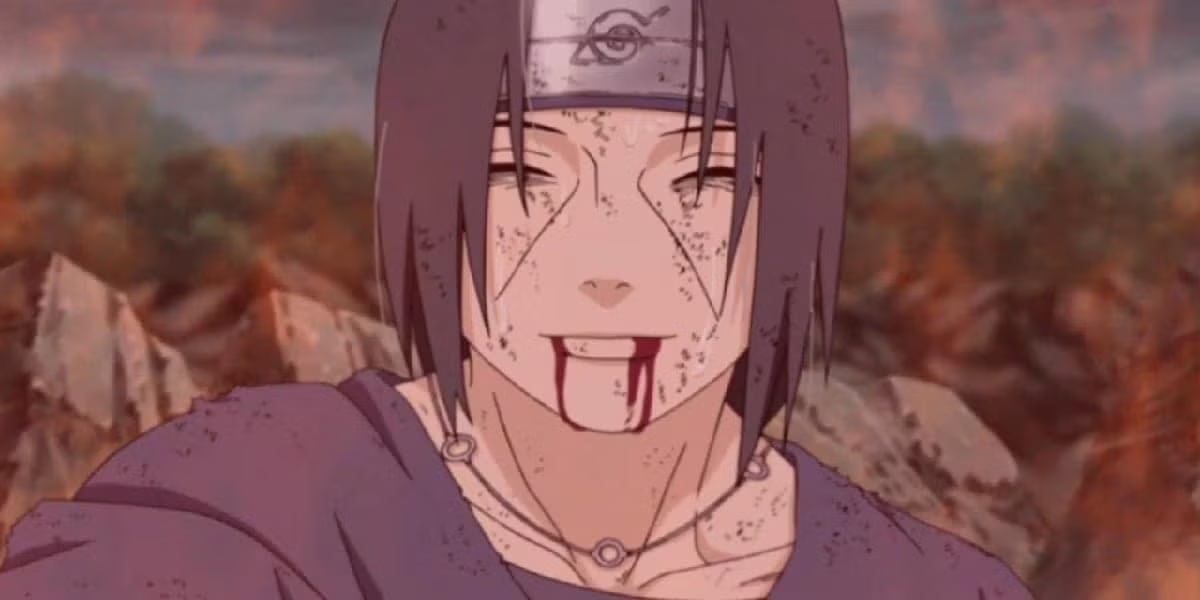
Itachi Uchiha From Naruto
Itachi’s story is a reminder that the line between hero and villain is often blurred. Though condemned for his actions, his sacrifice was what ultimately preserved peace. He did not seek recognition, nor did he hope for redemption. He was willing to be hated if it meant protecting the village and his brother. In the end, his legacy was not that of a murderer, but of a silent guardian.

Naruto centers on Naruto Uzumaki, an orphaned boy shunned by his village because of the Nine-Tailed Fox sealed inside him. Unaware of why he’s rejected, he yearns for acceptance and sets his sights on becoming Hokage, the village’s strongest ninja, in hopes of earning recognition and respect.
