Pain, known as Nagato, was not a villain who sought destruction for its own sake—his goal was peace. However, his vision of peace was one born from suffering, shaped by the tragedies he endured as a child. In a world defined by endless war, he believed that people would only understand true peace once they experienced deep and equal suffering. His philosophy was not one of cruelty but of forced enlightenment.
Rather than trusting in diplomacy or goodwill, Pain saw fear and anguish as the only reliable deterrents to war. By inflicting devastating pain on all nations, he believed he could unify people through shared suffering. His ideology was extreme, but in his eyes, it was the only solution to the endless cycle of hatred that had plagued the ninja world for generations.
A Childhood Marked by Tragedy
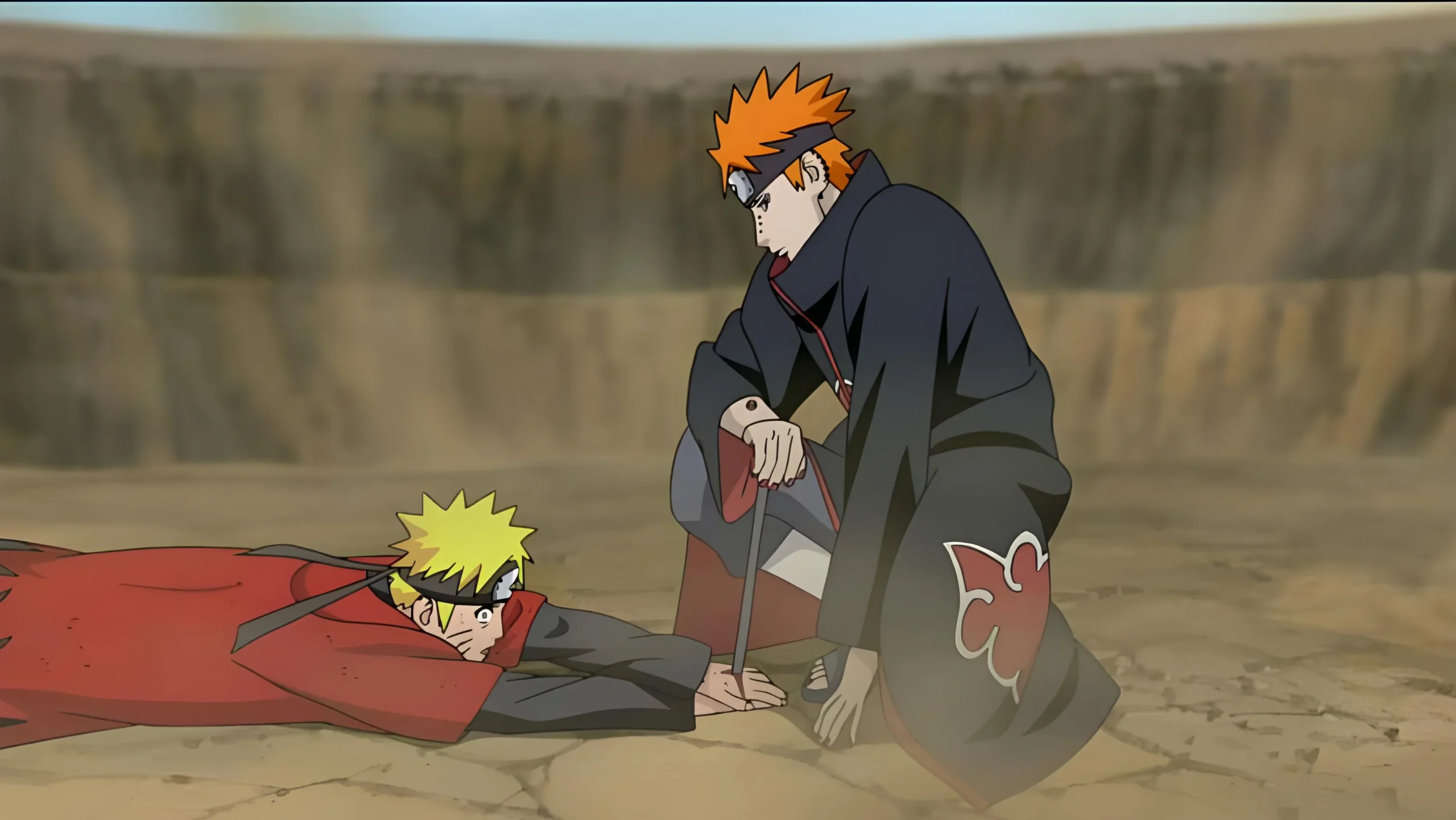
Pain (Credits: Pierrot)
Nagato’s outlook on peace was shaped by the horrors he witnessed in the war-ravaged Rain Village. From a young age, he experienced the brutality of war firsthand, losing his parents and struggling to survive in a world that had already given up on him. These experiences left deep scars, teaching him that suffering was inevitable and that only those who understood pain could truly value peace.
His tragic past was not just a personal burden—it became the foundation of his beliefs. He did not seek vengeance but instead a way to end the suffering he and countless others had endured. This belief would ultimately lead him down a dark and violent path.
Pain’s core ideology revolved around one chilling concept—peace could only be achieved through shared suffering. He believed that if every nation experienced the same level of devastation, they would become less likely to engage in future wars. His ultimate goal was to create a cycle where pain itself would act as a deterrent, forcing humanity to think twice before repeating its mistakes.
To him, suffering was not just a consequence of war—it was the only thing capable of stopping it. By making the world feel the same agony he had known, he hoped to instill fear powerful enough to prevent further bloodshed.
Pain’s use of the Six Paths technique was not just a demonstration of his immense power but also a reflection of his ideology. Each of the six bodies he controlled represented a different form of suffering, reinforcing his belief that pain was a universal force that shaped all life. Through these bodies, he carried out his vision, ensuring that his message would be felt by all.
Every action he took was designed to prove his point—that true peace could only be achieved when the world understood suffering on a grand scale. His methods were ruthless, but in his mind, they were necessary to break the cycle of hatred.

Naruto And Sasuke (Credits: Pierrot)
Pain was not driven by greed, revenge, or power—he was driven by a vision of a better world, albeit one achieved through terrifying means. His belief that control and fear were the only ways to bring peace set him apart from other villains. He was not seeking chaos but rather an end to it.
His philosophy was flawed, but it was born from genuine pain and a desire to change the world. While his methods were extreme, they raised a haunting question—can true peace ever be achieved without suffering?

Naruto centers on Naruto Uzumaki, an orphaned boy shunned by his village because of the Nine-Tailed Fox sealed inside him. Unaware of why he’s rejected, he yearns for acceptance and sets his sights on becoming Hokage, the village’s strongest ninja, in hopes of earning recognition and respect.
Itachi Uchiha was not the cold-blooded murderer that Sasuke believed him to be. Instead, he was a man burdened by an impossible choice—one that forced him to sacrifice everything, including his own reputation, to protect both his brother and the Leaf Village. Telling Sasuke the truth would have shattered the very purpose of his painful decision.
Rather than revealing the real reason behind the Uchiha massacre, Itachi chose to let Sasuke hate him. He knew that only through anger and vengeance could Sasuke grow strong enough to survive in the cruel world of shinobi. His actions were never meant to be understood—only to serve as a catalyst for his brother’s evolution.
A Silent Guardian of the Hidden Leaf
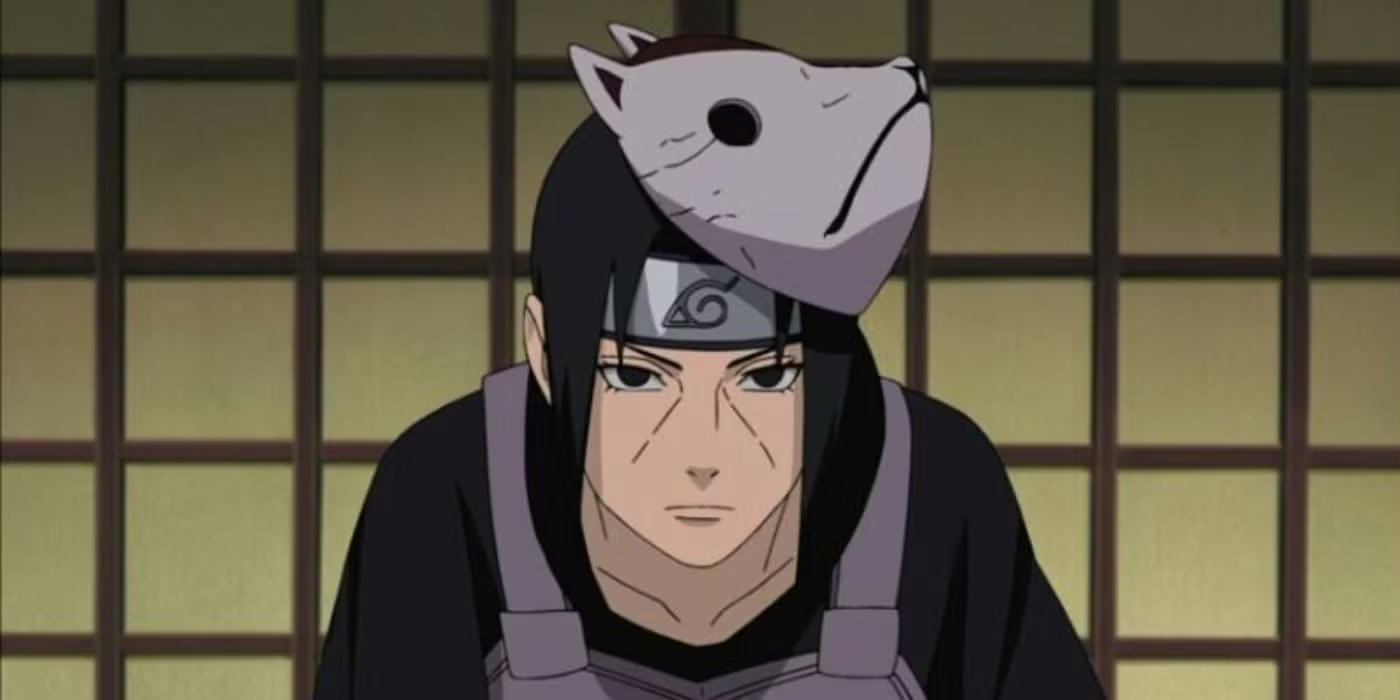
Itachi Uchiha From Naruto
Itachi’s decision to eliminate the Uchiha clan was not made out of malice but necessity. The clan had been planning a coup that would have plunged the village into a devastating civil war. To prevent this, Itachi took on the burden of exterminating his own people, ensuring peace at the cost of his own honor.
However, the truth was too dangerous to share. If Sasuke had known, he might have resented the village instead, jeopardizing everything Itachi had worked for. The only way to keep both Sasuke and the village safe was to become the villain in his brother’s eyes.
By allowing Sasuke to believe he was a ruthless killer, Itachi forced him onto a path of relentless training and self-improvement. He knew that only through hardship and pain would Sasuke develop the strength to protect himself in the dangerous ninja world. This approach ensured that Sasuke would one day be powerful enough to stand against any threats, even those that Itachi himself couldn’t foresee.
Sasuke’s hatred was a tool—it kept him focused, determined, and always striving for more power. Itachi never wanted his brother to be consumed by darkness, but he also knew that a life free of struggle would leave him unprepared for the realities of their world.
Itachi’s silence wasn’t just about protection—it was about ensuring that Sasuke had the freedom to walk his own path. If Sasuke had known the truth, he might have been paralyzed by the weight of his family’s past, unable to forge his own destiny. Instead, Itachi gave him a reason to push forward, even if it meant being hated in return.
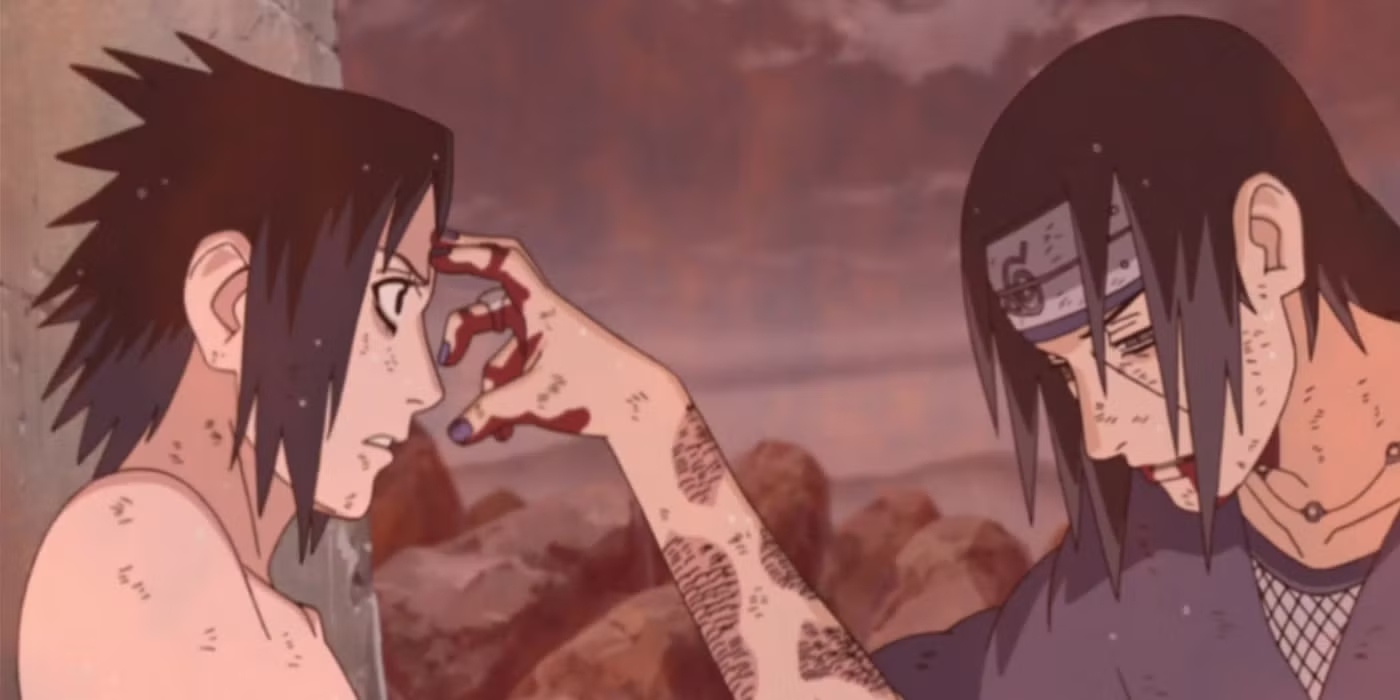
Itachi Uchiha And Sasuke Uchiha From Naruto
He bore the pain of being seen as a villain so that Sasuke could one day become a hero. His sacrifice was never about recognition—it was about ensuring that the last surviving Uchiha would be strong enough to protect himself and the world around him.
Itachi’s actions may have seemed cruel, but they were born from love. Every decision he made was to shield Sasuke from a truth too heavy to bear at a young age. His silence was not a betrayal, but a final act of devotion—one that only Sasuke would come to understand after it was too late.
Naruto centers on Naruto Uzumaki, an orphaned boy shunned by his village because of the Nine-Tailed Fox sealed inside him. Unaware of why he’s rejected, he yearns for acceptance and sets his sights on becoming Hokage, the village’s strongest ninja, in hopes of earning recognition and respect.
