The Naruto series has a long history of shocking deaths that leave fans emotionally invested. While many of these deaths have been meaningful, others, such as Neji Hyuga’s, felt underwhelming and unnecessary. Kishimoto has often made bold choices with his characters, but Neji’s demise stands out as one of the least impactful, leaving fans disappointed by how his arc was handled.
Neji was introduced as an incredibly skilled ninja from the prestigious Hyuga clan. His talents earned him praise from even the likes of Sasuke and Kakashi. Fans anticipated his growth and development, expecting Neji to play a larger role in the story. However, his untimely and poorly executed death during the Fourth Great Ninja War felt like a missed opportunity for the character.
Neji’s Rise to Jonin and Early Development
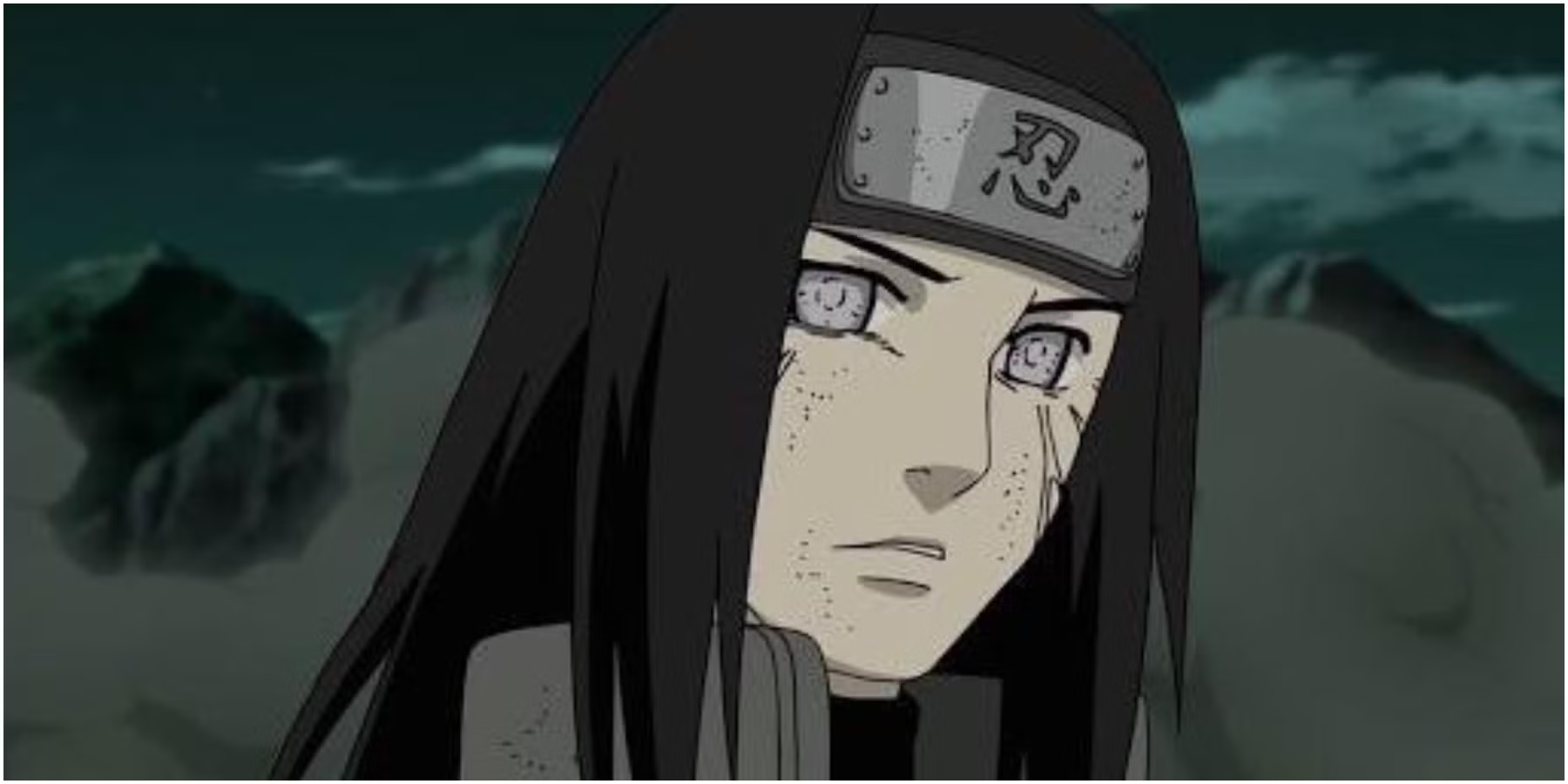
Neji Hyuga (credits: Kishimoto)
Neji, a member of the prestigious Hyuga clan, was introduced as an incredibly talented ninja. He was recognized as a genius by his peers, with even Sasuke and Kakashi acknowledging his skill. His rapid rise to Jonin was a testament to his abilities, putting him on a pedestal among the Konoha 11. Fans eagerly anticipated his continued development, expecting him to play a significant role in the later arcs.
However, after a brief but impactful presence during the Fourth Great Ninja War, Neji’s character was sidelined. His death came unexpectedly when he sacrificed himself to protect Hinata and Naruto during the Ten-Tails’ assault on the Shinobi Alliance. While his sacrifice was meant to evoke strong emotions, it felt rushed and underdeveloped, leaving fans disappointed. By the time of his death, Neji had become a flat character, making the emotional impact of his passing minimal.
The Controversial Reason Behind Neji’s Death
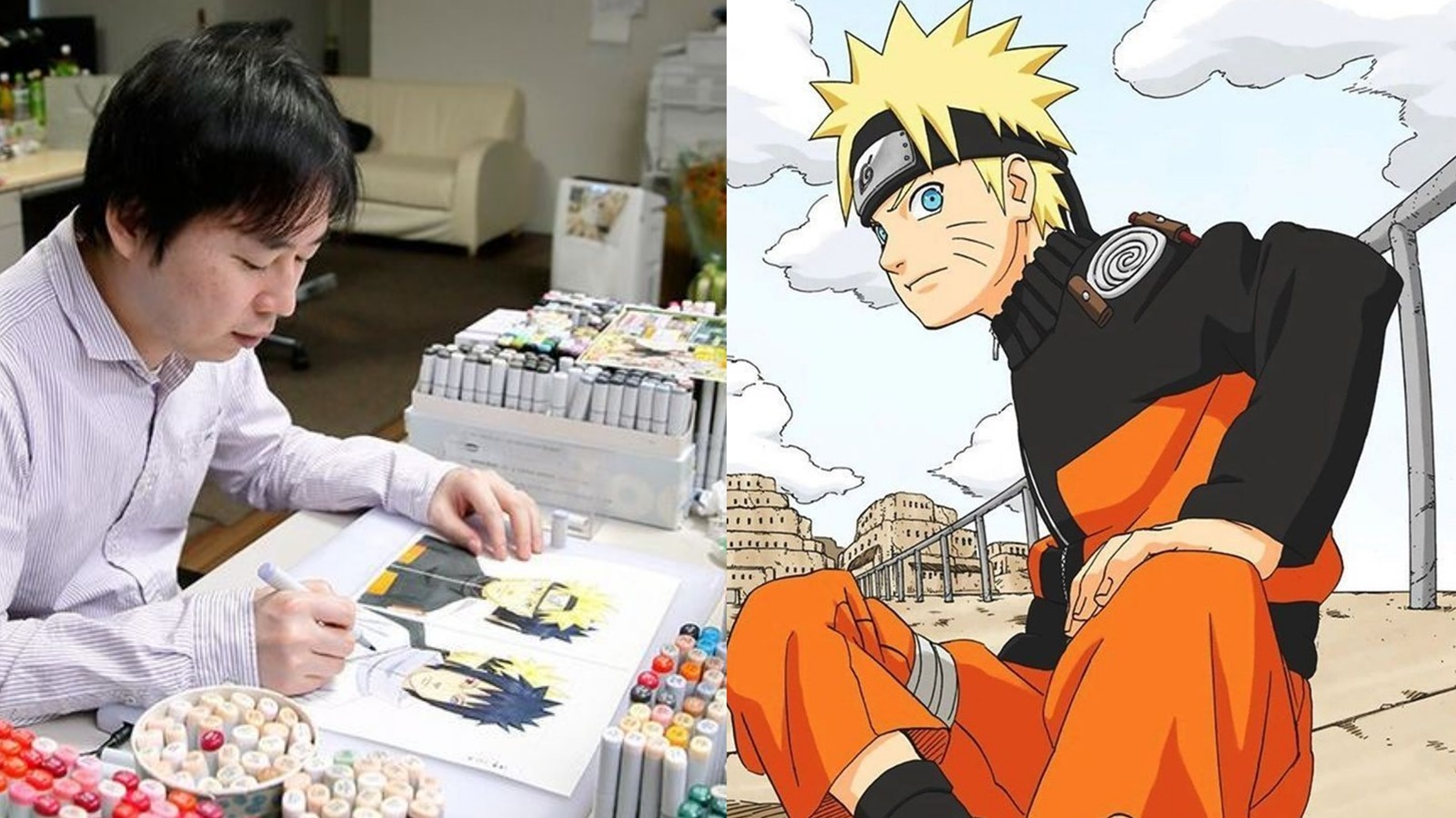
Masashi Kishimoto and Naruto (Credits: Masashi Kishimoto)
Kishimoto later revealed that Neji’s death was a narrative choice meant to bring Naruto and Hinata closer together. This revelation was disappointing for many fans, as it suggested that Neji’s character arc had been sacrificed for a romantic subplot. Though some argue that his death represented the completion of his character arc and his freedom, the manner in which it was executed felt cheap and contrived. Neji’s death had little significance beyond advancing the relationship between Naruto and Hinata.
For many, Neji’s death is seen as one of the worst-written moments in the entire series. His character had immense potential, and his sacrifice could have been meaningful if it had been handled differently. The deaths of other characters, such as Kushina and Minato, had far more weight, beautifully contributing to the plot. Neji’s death, by contrast, felt hollow, making his potential and legacy feel like a missed opportunity.
In the end, Neji’s character is largely forgotten by the current generation of Naruto fans, with his legacy reduced to a minor mention in Boruto. Despite this, his battles early in the series were memorable, showcasing his true potential. Unfortunately, his untimely and underwhelming death left fans questioning whether his character had ever been fully realized.
Eren Yeager’s journey in Attack on Titan marks one of the most compelling character transformations in anime history. Starting as a hopeful, vengeful young man, his arc takes him through intense emotional and psychological shifts, revealing how vengeance and idealism can lead to darker paths. Eren’s descent from a symbol of hope to a genocidal antihero is central to the series’ emotional impact and leaves viewers grappling with the complexities of morality.
From the beginning, Eren was driven by a singular mission: to avenge his mother’s death and destroy the Titans. His early years were filled with rage and vengeance as he joined the Scouts to fight the creatures that stole his freedom. His idealism framed his worldview as black-and-white, with Titans as the enemy and himself as humanity’s savior. But as Attack on Titan progressed, his character slowly evolved, and the layers of complexity began to emerge. By the final season, Eren was no longer the idealistic hero—he had become a monster willing to sacrifice everything to ensure his people’s survival, even if it meant becoming the villain.
Eren’s Heroic Beginnings
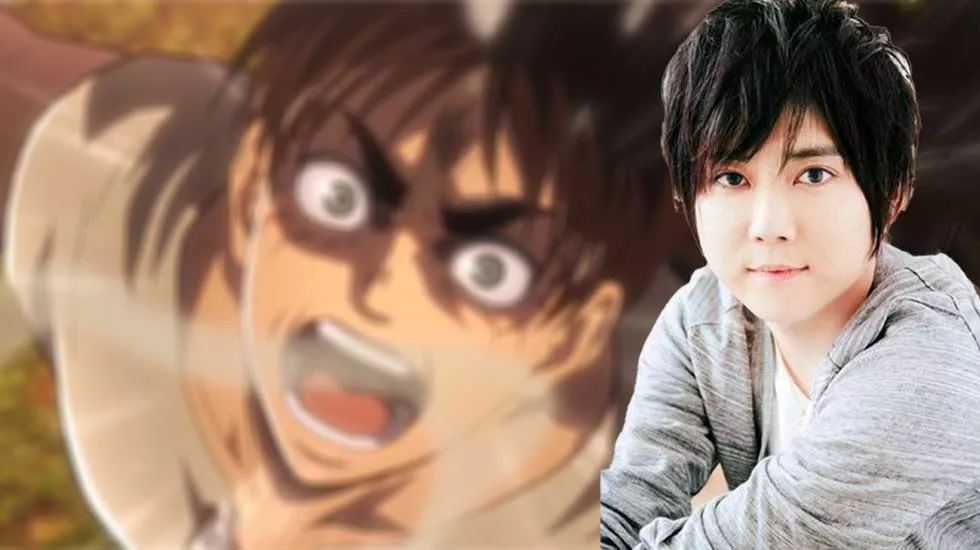
Yuki Kaji (Credits: Kodansha)
Eren’s early character in Attack on Titan was defined by his intense hatred of the Titans. After witnessing the tragic death of his mother, he made it his mission to rid the world of these creatures. This personal vendetta led him to join the Scouts, a group dedicated to fighting the Titans. Seasons 1 and 2 painted him as a symbol of hope and defiance, fighting not just for survival but for vengeance. His fiery personality and impulsiveness hinted at the darker, more complex journey ahead.
As the series progressed, Eren started facing deeper existential questions about identity and responsibility. The discovery of his Titan-shifting ability only made him more crucial to humanity’s battle, and he slowly realized that the Titans were not as mindless as they seemed. However, it was during this time that Eren began to question the black-and-white morals he had clung to. The loss of simplicity in his worldview foreshadowed the difficult decisions ahead.
The World Beyond the Walls
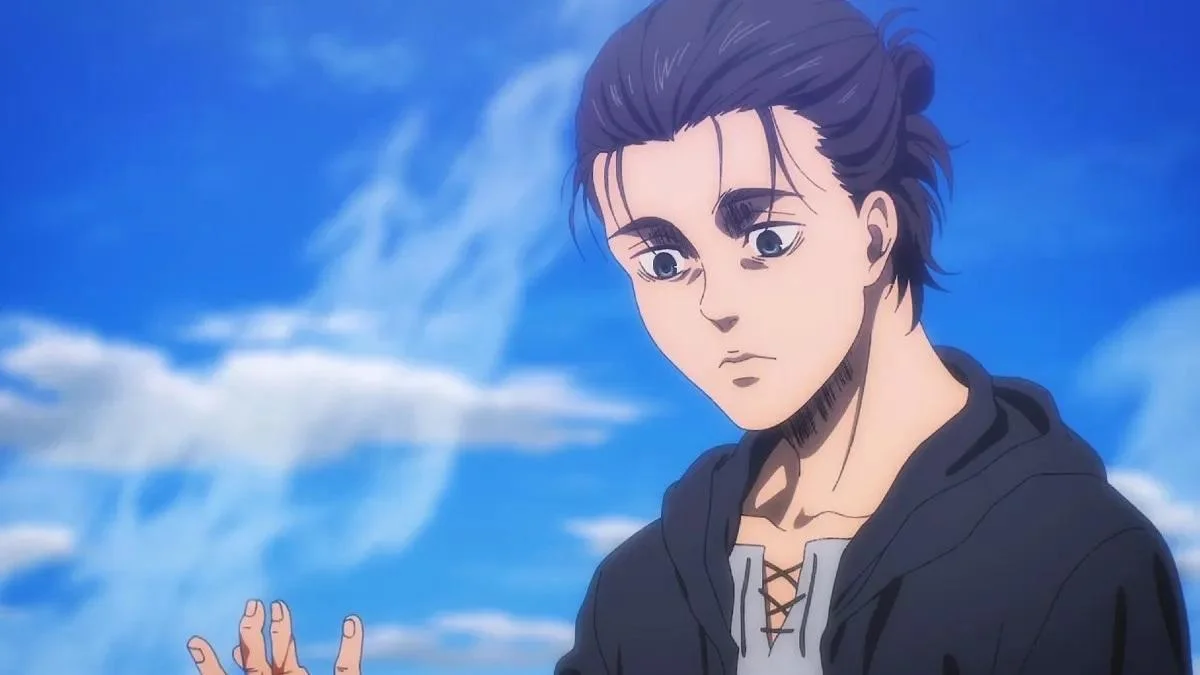
Eren (Credits: Mappa)
By Season 3, Eren’s understanding of his enemies expanded beyond the Titans. He learned that the Titans were once humans themselves, manipulated by a larger political plot. The introduction of Marley and the Eldians, and the truth about the world’s system, shook Eren to his core. This revelation marked a significant turning point for Eren. He was no longer just fighting for humanity’s survival but now had to confront the complexities of the world outside the walls, particularly the oppressive system created by Marley.
In the later parts of Season 3, Eren’s growing disillusionment with the system and his guilt over the violence between Marley and Eldia began to shape his worldview. Though still focused on protecting his people, his methods were beginning to change. This shift in his ideals signaled the beginning of the villainous path that Eren would eventually walk, setting the stage for the ultimate tragedy of his character arc.
Eren’s Darkest Path: The Rumbling
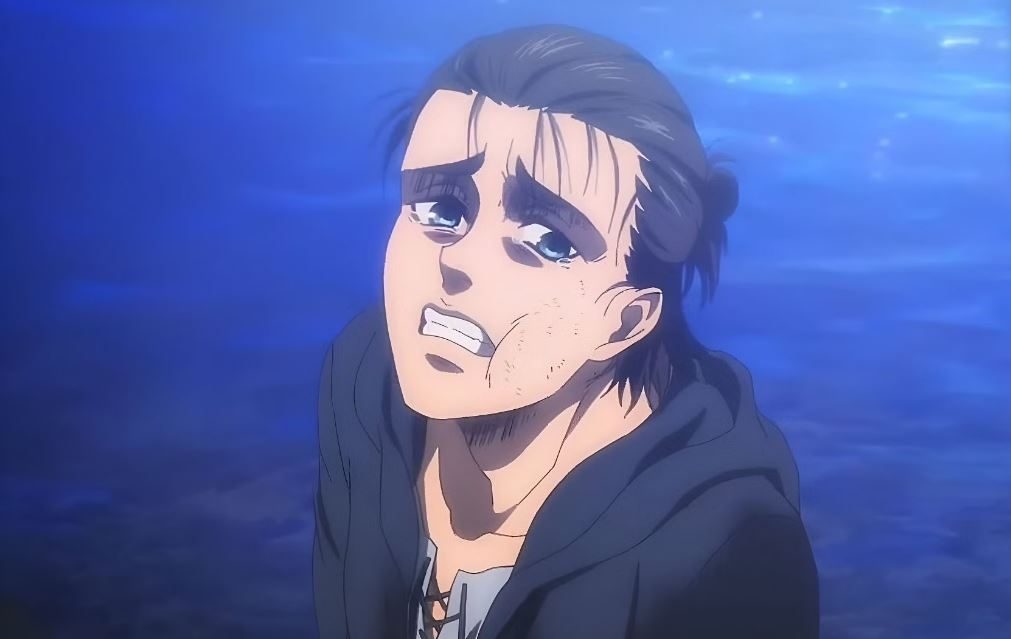
Eren (Credits: Mappa)
The fourth season marked Eren’s complete transformation into the antagonist of Attack on Titan. Now an adult, he carried the weight of the world’s truths and a brutal decision to make. The plan known as “The Rumbling,” designed to eradicate Marley and the rest of the world, was born from Eren’s belief that only by exterminating all threats to Eldia could he secure freedom for his people. This plan, which involved genocide, was a direct contrast to the young man who once fought for justice and revenge.
Eren’s willingness to sacrifice his humanity for his people placed him in direct opposition to his former allies, including Mikasa and Armin. As Eren isolated himself and carried out his devastating plan, the former Scouts were forced to confront their old friend-turned-enemy. The emotional impact of this shift was significant, as Eren’s journey came full circle, from hero to villain in a tragic twist.
Eren’s story in Attack on Titan is not just one of a fall from grace, but a gradual transformation driven by the harsh realities of the world around him. His desire to protect his people and secure freedom for future generations led him down a path of destruction, making him one of anime’s most tragic figures. Whether Eren is remembered as a hero or a villain depends on perspective, and this ambiguity is what makes his arc unforgettable.

Attack on Titan is set in a dystopian world where humanity lives behind massive walls to protect itself from giant humanoid creatures known as Titans, who devour humans seemingly without reason. The story begins when a colossal Titan breaches one of the walls, destroying protagonist Eren Yeager’s home and triggering a violent chain of events.
