The 1991 thriller The Silence of the Lambs , directed by Jonathan Demme, is known for its complex characters and haunting conclusion. The film follows Clarice Starling, a young FBI trainee, as she works with Dr. Hannibal Lecter, a notorious cannibalistic serial killer, to catch another killer, Buffalo Bill. Although Lecter is not the central villain, his chilling presence and psychological battles with Clarice drive the plot. Buffalo Bill, on the other hand, is the more immediate threat, capturing women to make a suit from their skin. Despite their unusual partnership, there’s mutual respect between Clarice and Hannibal, especially by the end of the film.
The Silence of the Lambs Ending Explained
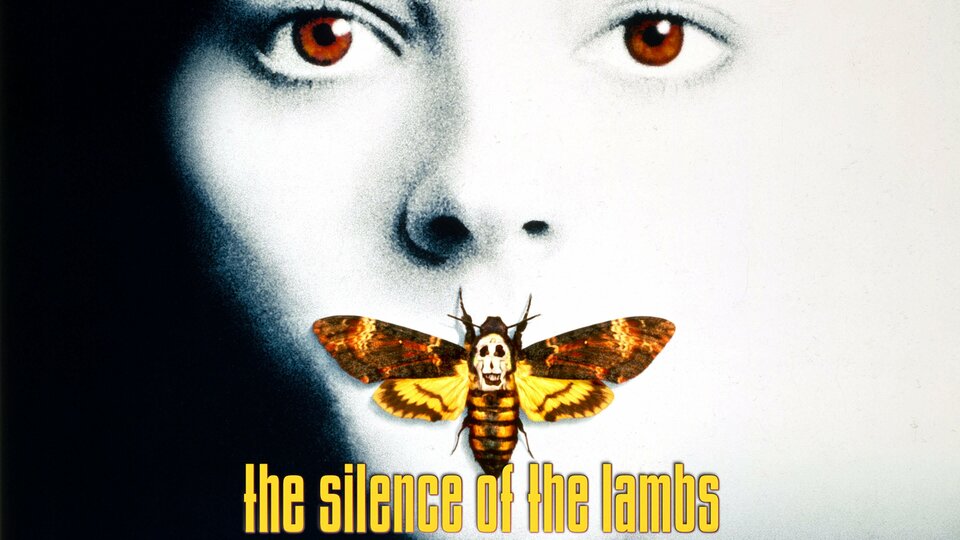
The Silence of the Lambs (Image via Getty)
The film’s closing moments occur after a tense sequence involving Clarice’s pursuit of Buffalo Bill. The FBI has tracked the killer to a location in Chicago, while Clarice is sent to Ohio to investigate a new lead tied to Buffalo Bill’s first victim. Eventually, Clarice finds herself at Buffalo Bill’s home. When she realizes where she is, a dangerous chase begins, culminating in a tense moment in Bill’s dark basement. Bill, wearing night-vision goggles, tries to hunt her down, but his gun’s clicking noise betrays his position, allowing Clarice to shoot and kill him.
While this victory marks the end of the Buffalo Bill case, the final shot shifts focus to Hannibal Lecter. Now free from custody, he is seen stalking a new victim, Dr. Chilton, signaling that Hannibal has resumed his killing spree. Clarice, having successfully solved the case, graduates from the FBI academy and earns the title of Special Agent. As she celebrates, Hannibal calls her, reminding her that he knows exactly where she is and what she’s doing. His phone call is both a warning and a hint that their paths will cross again.
The Meaning of “The Silence of the Lambs”
The title The Silence of the Lambs refers to a traumatic event from Clarice’s childhood. As a young girl, she heard the desperate cries of lambs being slaughtered at her family farm, a memory that haunts her throughout her life. The lambs symbolize innocence and suffering, representing the victims Clarice seeks to save in her career. In a vulnerable moment with Hannibal, she reveals that she once tried to save a lamb from the slaughter, but was unsuccessful. This failure represents her inability to protect the innocent, something she still feels deeply.
The “silence” of the lambs, therefore, stands for Clarice’s desire to stop the suffering of others. However, to truly achieve this, she must “silence” her own emotional responses and learn to make tough decisions in the line of duty. The lambs metaphorically embody all the helpless victims she encounters, and just like them, Clarice feels driven to protect those who cannot protect themselves.
The Moth Symbol: A Sign of Transformation
The film also uses the image of a moth, particularly the Death’s Head Hawkmoth, to symbolize transformation. Buffalo Bill is obsessed with the moth, particularly its potential for metamorphosis, which mirrors his own twisted desire to transform his identity. Bill’s killings and his skin suit are part of his misguided attempt at changing himself, just as a pupa transforms into a butterfly. By placing moths inside the throats of his victims, Bill signifies the end of their transformation into something he believes is a new identity for himself.

The Silence of the Lambs cast (Image via Getty)
The Death’s Head Hawkmoth, which is featured on the film’s poster, becomes a significant clue for the FBI. The moth’s skull-like pattern represents death and destruction, and it is linked to Bill’s signature method of killing. His use of moth symbolism, especially leaving a cocoon in his victims’ throats, reveals his obsession with change. This foreshadows his disturbing goal of using his victims’ skins to create a new persona.
Clarice’s Path to Buffalo Bill
Clarice is able to track down Buffalo Bill through Hannibal’s cryptic clues. During her investigation, Clarice travels to Belvedere, Ohio, where she learns more about Bill’s first victim, Frederica. A conversation with Frederica’s friend leads Clarice to the address of Buffalo Bill’s home. This scene, which is skillfully edited for suspense, shows Clarice entering Bill’s house unaware of the danger she’s in. When she spots a moth and other suspicious items, she draws her weapon and confronts Bill.
Hannibal’s influence is crucial in Clarice’s discovery of Bill’s whereabouts. He intentionally gives misleading information to the FBI, knowing they will be delayed. However, his clues to Clarice are more helpful, and some argue that his assistance is a way of ensuring her success. By guiding her to Buffalo Bill, Hannibal may be attempting to up Clarice’s standing within the FBI, or perhaps he simply cares enough about her to help her succeed.
The Complex Relationship Between Hannibal and Clarice
Hannibal Lecter’s interest in Clarice goes beyond mere manipulation. He seems to respect her intelligence and wit, recognizing her as a worthy intellectual adversary. Unlike others, he views Clarice not as a threat but as a challenge to engage with. Throughout the film, Hannibal gives her subtle hints and riddles, enjoying the mental sparring. He seems genuinely interested in her ability to solve the puzzles he presents.
In addition to her intelligence, Hannibal appears to respect Clarice’s moral compass. He admires her empathy and her dedication to helping the innocent, which contrasts with the apathy of the medical staff at the facility where he is held. Hannibal’s admiration for Clarice is further exemplified in his protective behavior towards her, such as when he punishes another inmate for being rude to her. His feelings for her, however, are complex, blending respect, affection, and a desire for intellectual connection.

The Silence of the Lambs cast (Image via Getty)
The Final Scene: Hannibal’s Next Move
In the film’s last moments, Hannibal calls Clarice from an undisclosed location. He teasingly mentions that he’s “having an old friend for dinner,” a phrase that, in Hannibal’s case, carries a deadly meaning. While he doesn’t reveal his exact location, it is clear that he is planning to kill again, with Dr. Chilton being his likely next victim. The film cuts to a scene where Hannibal is watching Chilton disembark from a plane, hinting at the horrors to come.
Though some fans speculate that Hannibal is headed to Florence, Italy, the setting of the final scene appears to be the Bahamas. The ambiguity surrounding Hannibal’s location and his precise plans adds to the film’s sense of unease and leaves the audience wondering about his next moves.
The Ending’s Deeper Significance
The final moments of The Silence of the Lambs leave Clarice’s journey far from over. While she has successfully taken down Buffalo Bill, Hannibal’s escape signals that the battle against evil continues. His phone call to Clarice is a chilling reminder that he is still out there, a free man capable of more violence. The film ends with a sense of unresolved tension, reinforcing the idea that the struggle against evil is an ongoing, never-ending fight.
Randy Travis is an American country music and gospel singer, songwriter, actor, and writer with an estimated net worth of $12 million.
Over his multi-decade career, Travis has sold more than 25 million albums and charted over 20 number-one singles including classics like “Forever and Ever, Amen,” “Too Gone Too Long,” “Whisper My Name,” and “It’s Just a Matter of Time.”
Known for his deep baritone voice and traditional country sound, Travis played a pivotal role in reviving country music’s popularity in the 1980s and 1990s. His contributions earned him a place in the Country Music Hall of Fame in 2016.
Early Life and Troubled Beginnings
Randy Travis was born Randy Bruce Traywick on May 4, 1959, in Marshville, North Carolina. Raised by his mother, Bobbie, who worked in a textile factory, and his father, Harold, who owned a construction business and bred turkeys, Randy grew up with five siblings.
From a young age, Randy was drawn to music, singing in the church choir and learning guitar by age 8. By age 10, he and his brother Ricky formed the Traywick Brothers, performing at local clubs and talent contests.
However, his teenage years were tumultuous. Travis dropped out of high school and had multiple run-ins with the law, including arrests for burglary and auto theft.

Randy Travis (Credit: YouTube)
His life took a turn in 1975 when he won a talent contest at a Charlotte nightclub, Country City USA.
The club owner, Elizabeth “Lib” Hatcher, became his manager and legal guardian, ultimately playing a vital role in shaping his music career.
Music Career
Breakthrough and Mainstream Success (1980s-1990s)
Randy Travis released his debut album, “Live at the Nashville Palace,” under the stage name Randy Ray in 1982. Shortly after, he signed with Warner Bros.
Records Nashville and released “Storms of Life” (1986), a 3× Platinum success that produced hits like “On the Other Hand” and “Diggin’ Up Bones.”
He followed this with “Always & Forever” (1987), which went 5× Platinum and included multiple chart-topping singles. Throughout the late 1980s and early 1990s, Randy released several platinum albums, including:
- “Old 8×10” (1988)
- “No Holdin’ Back” (1989)
- “Heroes & Friends” (1990)
- “High Lonesome” (1991)
Randy became a Grand Ole Opry member in 1986, cementing his legacy in country music.
Shift to Christian Country and Continued Success (2000s)
In the 2000s, Travis transitioned into Christian country music, releasing “Inspirational Journey” (2000). His album “Rise and Shine” (2002) went Gold and featured the hit “Three Wooden Crosses,” which topped the country charts.
Randy continued to release faith-based and traditional country albums such as:
- “Worship & Faith” (2003)
- “Around the Bend” (2008)
- “Influence Vol. 1 & 2” (2013-2014)
His collaboration with Carrie Underwood on “I Told You So” earned him another Grammy and chart success in 2009.
Acting Career
Randy Travis has appeared in numerous films and television series throughout his career, showcasing his versatility. Some of his notable appearances include:

Randy Travis (Credit: X)
- Films: The Rainmaker (1997), Baby Geniuses (1999), Texas Rangers (2001), National Treasure: Book of Secrets (2007)
- TV Shows: Matlock (1992-1993), Touched by an Angel (1994-2003), Sesame Street (1991)
- Miniseries: Texas (1994)
His acting roles often drew on his country image, further expanding his popularity.
Personal Life and Health Struggles
Marriages and Relationships
Randy Travis married his longtime manager, Elizabeth Hatcher, in 1991. Their marriage ended in divorce in 2010. He later married Mary Davis in 2015, who has been a central figure in his life, especially during his health crises.
Legal Troubles
Randy’s personal life was marred by legal issues, including arrests for public intoxication and DWI. Notably, in 2012, he was found naked by police after crashing his car and threatening officers.
Health Crisis and Stroke
In 2013, Randy suffered from viral cardiomyopathy, which led to a massive stroke while in a medically induced coma. He was given a 1% chance of survival. Miraculously, he survived but suffered permanent health damage, including limited speech and mobility.
Despite these challenges, Travis made a public comeback performance singing “Amazing Grace” at his Country Music Hall of Fame induction in 2016.
The Randy Travis Foundation and Memoir
Randy and his wife Mary founded The Randy Travis Foundation, focusing on stroke and cardiovascular disease awareness. In 2019, Travis released his memoir, “Forever and Ever, Amen: A Memoir of Music, Faith, and Braving the Storms of Life,” sharing his battles and resilience.
Awards and Accolades
Throughout his career, Randy Travis has earned:
- 7 Grammy Awards
- 11 Academy of Country Music Awards
- 10 American Music Awards
- 5 Country Music Association Awards
- 8 GMA Dove Awards
- He received a star on the Hollywood Walk of Fame (2004) and a guitar on the Music City Walk of Fame (2008).
His signature album “Always & Forever” and other works remain milestones in country music history.
Real Estate
Randy Travis has made significant real estate investments. In 2002, he built a 20,000-square-foot ranch in New Mexico, reflecting his love for rural living and Western lifestyle.
Legacy
Randy Travis’ influence on country and gospel music is profound. With a career spanning over four decades, he remains a symbol of traditional country music’s heart and soul. Despite his health setbacks, his music and legacy continue to inspire fans worldwide.
