The first season of the upcoming Ryan Murphy-produced series, FX American Sports Story, dramatizes the life of Aaron Hernandez, a former NFL star. He was convicted of first-degree murder and suspected of a double homicide. Tragically, he took his own life in prison in 2017.
The series, premiering on September 17, brings attention to one of the most shocking stories in sports this century.
Over a decade after the murder of Odin Lloyd, more details about Hernandez’s life have emerged. Before American Sports Story, Hernandez’s life was shown in the 2020 Netflix documentary Killer Inside: The Makers shows in the Killer Inside: The Mind of Aaron Hernandez.
This documentary examines various aspects of Hernandez’s life, including his abusive childhood, struggles with repressed sexuality, and the immense pressure of professional football. Documentaries often bring more clarity to these complex stories than dramatizations.
What Happened to Aaron Hernandez?
Netflix has many true crime documentaries. This genre has grown in popularity over the last ten years and has become a key feature in Netflix’s offerings. Directed by Geno McDermott, Killer Inside combines true crime and sports, a field Netflix has been expanding into.
Aaron Hernandez, a tight end for the New England Patriots, seemed to have it all. Drafted in the fourth round out of the University of Florida at the age of 20, Hernandez quickly proved to be one of the best players in his position.
He played with stars like Tom Brady and Rob Gronkowski. In 2012, after scoring a touchdown in the Super Bowl, he earned a $39 million contract extension, which included a $12.5 million signing bonus. This was the largest signing bonus ever received by an NFL tight end.
But this seemingly perfect life fell apart. In June 2013, Hernandez was arrested for the murder of his friend, Odin Lloyd, a semi-professional football player who was dating Hernandez’s fiancée’s sister. Hernandez had previously faced behavioral issues off the field, but no one could have predicted this.
After his arrest, police found a silver SUV linking Hernandez to an unsolved 2012 double homicide in Boston, meaning he played an entire NFL season after allegedly killing two people.
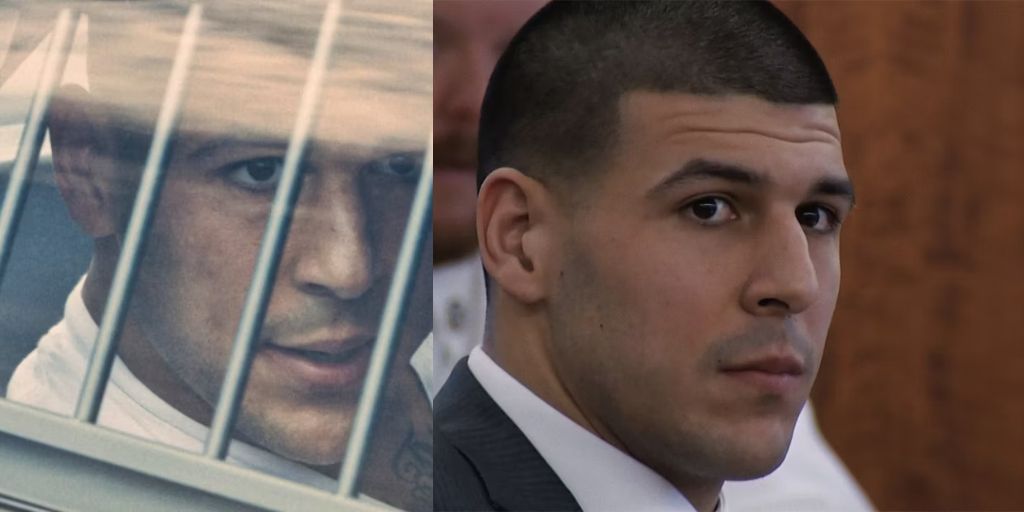
Still from Killer Inside The Mind of Aaron Hernandez (Credit: Netflix)
He was eventually acquitted of the double murder, but a few days later, while serving his sentence for Lloyd’s murder, Hernandez was found dead in his cell. Rather than focusing on the trial, Killer Inside digs deeper into Hernandez’s life, trying to understand what led him to commit such terrible crimes.
Hernandez’s Troubled Background
The Netflix series sheds light on aspects of Hernandez’s life that the Patriots’ scouts and front office may have missed when evaluating his character and criminal history.
Hernandez grew up in Bristol, Connecticut, in a sports-focused family led by his father, Dennis, a former football player with abusive tendencies. From a young age, Hernandez witnessed frequent fights between his parents, which often turned violent.
Beneath his cheerful and likable exterior, Hernandez harbored deep psychological wounds and showed paranoid tendencies. He reacted violently if he felt threatened. Throughout his football career, he carried the weight of living a double life.
He couldn’t show vulnerability due to the tough demands of professional football. The documentary uses phone conversations between Hernandez and his fiancée, Shayanna Jenkins, to highlight his deep insecurities.
Hernandez’s downfall became even more shocking because so much about his background remained hidden. After his 2013 arrest, the Patriots distanced themselves from him.
Coach Bill Belichick instructed players not to speak about Hernandez, and the team offered refunds to fans who had bought Hernandez jerseys.
It seemed like no one wanted to discuss what had led Hernandez to such a tragic end. Although the documentary is sometimes overly analytical, it sheds light on hidden parts of Hernandez’s life that contributed to his downfall.
As a child, Hernandez faced constant pressure to excel in sports, made worse by his father’s drunken outbursts. His decisions, especially regarding college, also hurt his well-being.
Instead of following the expected path of attending the University of Connecticut, Hernandez graduated high school early to play for the University of Florida, a top football school led by coach Urban Meyer. Immature and unprepared for college life, Hernandez got involved with the wrong crowd.
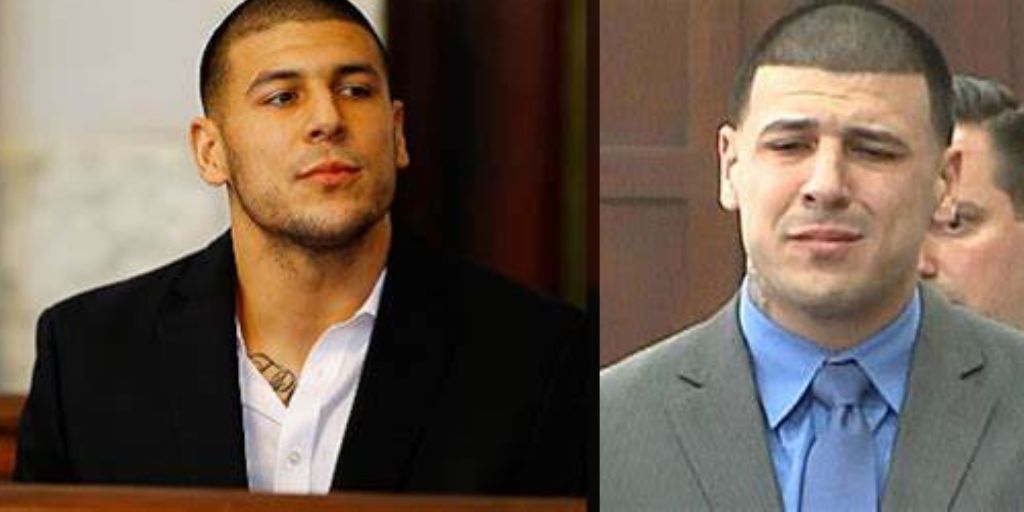
Still from Killer Inside The Mind of Aaron Hernandez (Credit: Netflix)
While in Florida, he faced a felony battery charge for a bar fight and was suspected in a separate shooting. Along with these incidents and failed drug tests, Hernandez’s draft stock fell, causing him to be selected in the fourth round of the NFL draft. It seemed that perhaps the Patriots, known for their professionalism, could help Hernandez turn his personal life around.
Complex Issues Behind ‘Killer Inside’
Killer Inside addresses two important aspects of Hernandez’s life: his possible sexual repression and brain damage. Dennis Sansoucie, Hernandez’s high school quarterback, claims he had a sexual relationship with Hernandez starting in seventh grade and continuing through high school.
After Hernandez’s trial, rumors about his sexual orientation began to spread, with some speculating that Hernandez took his own life after being outed on a Boston radio show.
The documentary avoids disrespectful discussions about Hernandez’s alleged homosexuality while acknowledging its impact on his mental health. Repressed feelings of homosexuality are often linked to the hypermasculine culture surrounding football.
The NFL has faced many controversies, but none have been as damaging as the issue of player safety and concussions. Some viewers might feel that Killer Inside unfairly blames the NFL’s safety policies for Hernandez’s actions, as the documentary emphasizes the severe brain damage Hernandez suffered from Chronic Traumatic Encephalopathy (CTE).
This is a degenerative brain condition linked to repeated head injuries. While some moments in the documentary may seem exaggerated, it asks viewers to consider all external factors without excusing Hernandez’s crimes.
The NFL has tried to downplay the long-term effects of head injuries, but Killer Inside pushes for accountability. It highlights the dangers of head trauma and its possible impact on Hernandez’s violent behavior.
Killer Inside tells the tragic story of Aaron Hernandez’s life, from his troubled childhood to his death in prison. While Hernandez never reached the same level of fame as O.J. Simpson, their stories share similarities beyond just their football careers.
Like Simpson, Hernandez’s story is a powerful example of a life that fell apart in a public way. In 2012, after signing his big contract, Hernandez donated $50,000 to charity in honor of Patriots owner Robert Kraft’s late wife. Kraft and the Patriots had considered Hernandez part of their family, but less than three years later, Kraft gave damaging testimony at Hernandez’s trial.
The Netflix series provides a detailed view of Hernandez’s life, even though it doesn’t give a clear answer to why he became a murderer. Sometimes, the most tragic stories don’t have easy explanations.
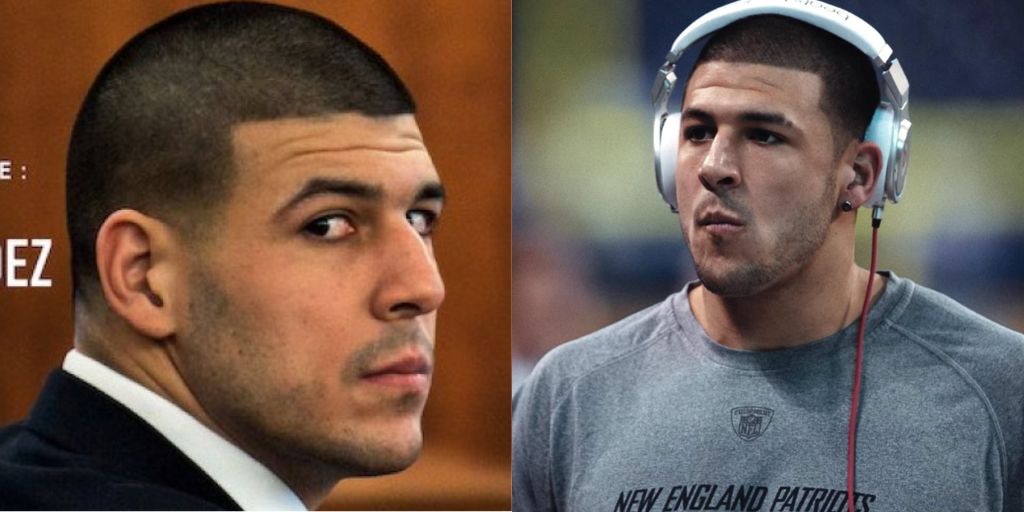
Still from Killer Inside The Mind of Aaron Hernandez (Credit: Netflix)
The upcoming series FX American Sports Story shows the dramatic life of Aaron Hernandez, a former NFL star convicted of first-degree murder and suspected of another double homicide before his suicide in 2017. Premiering on September 17, the series highlights the shocking events surrounding Hernandez’s downfall.
Before this, Netflix’s Killer Inside: The Mind of Aaron Hernandez examined his troubled life, including an abusive childhood and struggles with repressed sexuality.
The documentary also discussed Hernandez’s severe brain damage from head injuries. Both the series and documentary reveal the complexities behind Hernandez’s tragic story, challenging viewers to understand his actions.
Killer Inside: The Mind of Aaron Hernandez is available to stream on Netflix in the U.S.
An old rivalry is about to ignite in The Lord of the Rings: The Rings of Power. In Season 2, Episode 5, titled “Halls of Stone,” Ar-Pharazôn (played by Trystan Gravelle) speaks to his son, Kemen (Leon Wadham), about seeing the shores of Valinor from Númenor. His words are filled with bitterness.
He resents that Elves live forever in the Undying Lands, while Men must face their mortality. This growing dislike for Elves is spreading across Númenor, but why do the people of this island dislike Elves so much? They once fought together, so what changed?
Númenor’s History Is Linked to the Elves
Listening to Ar-Pharazôn’s harsh words about Elves, it seems surprising that Númenor’s origins are tied to them. In the third episode of The Rings of Power, titled “Adar,” we see Galadriel (Morfydd Clark) and Elendil (Lloyd Owen) showing Númenor’s archives.
They discover information about Elros, the first king of Númenor and the brother of Elrond (Robert Aramayo). Both Elros and Elrond are half-Elven, meaning they were given the choice by the Valar to live as either Elves or Men. Elros chose to be a Man, while Elrond chose to live as an Elf.
The relationship between Elves and Men dates back to long before Númenor’s founding. In the First Age, Elves and Men had good relations.
There were even two important couples from both races, Beren and Lúthien, and Tuor and Idril, from whom Elros and Elrond are descended. At that time, Middle-earth was larger and included the continent of Beleriand, where many Elves and Humans lived.
However, the First Age was also a time of constant battles between the Free Peoples of Middle-earth and Morgoth, the Dark Lord. Elves and Men often fought together but were only able to defeat Morgoth when the Valar left Valinor to join the fight.

Still from Rings of Power (Credit: Prime Video)
This conflict, known as the War of Wrath, caused so much destruction that Erú Ilúvatar, the god-like creator of all in Tolkien’s world, decided to sink Beleriand, reshaping the geography of Middle-earth.
Rewards and Rivalries: The Changing Relationship Between Elves and Men
After the War of Wrath, both Elves and Men were rewarded for their bravery. The Elves, known as the Eldar, were allowed to return to the Undying Lands of Valinor. Meanwhile, the Humans who had helped fight Morgoth were called the Edain, and the Valar gave them the Isle of Elenna, where they founded the kingdom of Númenor.
The Edain were also blessed with longer lives and greater strength than other Humans. With their own kingdom and enhanced abilities, it seemed the Edain had everything they could wish for.
In the beginning, the people of Númenor kept close ties with the Elves, especially those from Eressëa in Valinor and from Middle-earth, like Gil-galad’s Elves in Lindon.
The Númenóreans learned much from them, including wisdom, craftsmanship, and knowledge about the world. Their friendship was considered valuable. Early Númenórean kings and their people were loyal to the Valar and continued to help Middle-earth in its fight against Sauron (Charlie Vickers).
But this did not last. As time passed, pride and corruption started to take over Númenor’s leaders and people. They began to envy the Elves’ immortality and resent their own mortality. Ar-Pharazôn’s bitter words in “Halls of Stone” reflect this growing tension.
The division between the Faithful, who remained loyal to the Valar and Elves, and the King’s Men, who envied and hated them, grew deeper. This schism became more pronounced after Ar-Pharazôn led Númenor in a war against Sauron and brought him to the island as a prisoner.
Sauron, however, soon manipulated Ar-Pharazôn and became his trusted advisor. Under Sauron’s influence, many Númenóreans began worshipping Morgoth, the first Dark Lord, further corrupting the island’s society.
Eventually, Ar-Pharazôn set his sights on Valinor, intending to conquer it and gain immortality. Erú Ilúvatar, seeing this as a threat, intervened once again.
He sank the Isle of Elenna, just as he had done with Beleriand, and reshaped the world to prevent Men from reaching Valinor. Before this event, the world of Arda (Middle-earth’s planet) was flat. Erú changed it into a sphere and separated the continent of Aman, where Valinor is located, from the rest of the world.
The Faithful’s Survival and the Elves’ Continued Role
After Ar-Pharazôn’s conversation with Kemen in The Rings of Power, we see Tar-Míriel (Cynthia Addai-Robinson) and Elendil discussing the visions revealed by the Palantir. Míriel has seen Númenor’s destruction many times, and she knows the island’s future is grim.
While she goes into seclusion, Elendil and the Faithful are labeled as outlaws. In Tolkien’s books, Elendil and his sons, Isildur (Maxim Baldry) and Anárion manage to escape Númenor during its fall, taking the Faithful with them. Guided by a storm sent by the Valar, they arrive safely in Middle-earth.

Still from Rings of Power (Credit: Prime Video)
After losing their homeland, the Faithful rely on the Elves for assistance in Middle-earth. With their help, Elendil establishes the northern kingdom of Arnor, while Isildur and Anárion create the southern realm of Gondor.
By the time of the Third Age, most of the Edain are gone, and the Faithful’s descendants are known as the Dúnedain. Among them, the most famous is Aragorn (Viggo Mortensen), who is a direct descendant of Isildur, making him the rightful heir to both Arnor and Gondor.
Season 2 of The Rings of Power is streaming on Prime Video in the U.S., with new episodes available every Thursday.
