In 1999, Colin Farrell became a well-known actor when he starred in the movie Tigerland. This film was directed by Joel Schumacher, a director known for his work in Hollywood. Before Tigerland, Farrell had not acted in many films, but this role made him a star.
Tigerland is about a training camp in Louisiana where soldiers prepare for the Vietnam War in 1971. The film shows the tough experiences of young men who do not want to go to war. They find themselves in a difficult situation as they train for combat.
Colin Farrell did not know much about Tigerland when he first heard about the auditions in London. He learned about the film’s story only later. However, he decided to go to the audition anyway. His charm and natural acting ability impressed the casting directors.
Farrell was called back for a second audition, which is often a sign that the directors liked what they saw. He was chosen to play the character Roland Bozz, a rebellious draftee. Bozz is an interesting character because he does not follow orders like the other soldiers. Instead, he questions authority and stands up for what he believes in.
The story of Tigerland is different from other films about the Vietnam War. Most Vietnam War movies show the fighting in Vietnam, but Tigerland focuses only on the training in the United States. The action takes place at Fort Polk, Louisiana, where soldiers prepare for their deployment. The film tells the story of the soldiers’ struggles during training and the harsh treatment they receive from their superiors.
The screenplay for Tigerland was based on true experiences. Co-screenwriter Ross Klavan wrote the script along with Michael McGruther. Klavan served in the Army Reserves and completed his Advanced Infantry Training at Tigerland. He based the character of Bozz on a fellow soldier he met during his training.
This personal connection gave the film a sense of authenticity. Director Joel Schumacher found the screenplay interesting because it told a small, personal story about rebellion in a crazy situation. He felt it was important to show the experiences of soldiers who were facing an uncertain future.
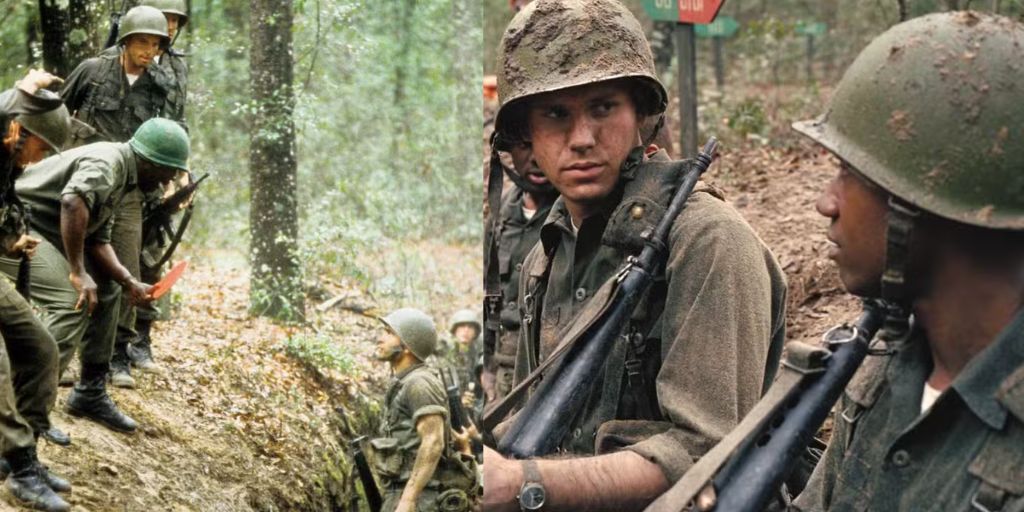
Still from the movie (New Regency Productions)
Filming for Tigerland took place over twenty-eight days in Florida. The crew chose a military base as the location to give the film a realistic feel. Cinematographer Matthew Libatique worked hard to capture the intense emotions and experiences of the characters. The cast participated in two weeks of infantry training before filming started. This training helped them understand what their characters would go through.
To make the film feel even more authentic, the actors did not have trailers or amenities during the shoot. They lived like real soldiers to capture the true spirit of military life. This commitment to realism made the final product more powerful. The film was released in 2000 and received attention for its unique approach to the Vietnam War story.
The plot of Tigerland begins in September 1971, at Fort Polk. The young men in the platoon are mostly draftees who do not want to be there. Many of them are frightened and confused. They have just completed boot camp, where they learned the basics of being a soldier.
Now, they must face Advanced Infantry Training before they are sent to Vietnam. The training is difficult, and the soldiers feel the pressure from their sergeants and commanders. The way the sergeants treat the young men can be very harsh. Sometimes, their treatment is cruel. The situation is similar to what prisoners experience, which makes the soldiers feel dehumanized and powerless.
The story is narrated by Jim Paxton, played by Matthew Davis. Paxton is a young man who dreams of becoming a writer. He believes that going to war will give him valuable experiences to write about. He is idealistic and wants to document what he sees during his time in the army.
Paxton becomes friends with Bozz, who is different from the other soldiers. Bozz is an iconoclastic character who does not believe in the ideals that the army represents. He is a pacifist who questions the purpose of the war. He often gets into trouble because he refuses to follow orders. He is determined to leave the army on his own terms, which makes him a unique character in the story.
Bozz is also very clever. He acts as a barracks lawyer, helping other soldiers find ways to get discharged. He cares about the men around him, especially those who feel overwhelmed and helpless. Ironically, he does not try to help himself escape.
Instead, he challenges authority and stands up against those who believe in the army’s ideals. One of his main adversaries is Wilson, a soldier played by Shea Whigham. Wilson is racist and has a violent personality. He is not fond of Bozz and often tries to provoke him.
As the story progresses, many of the other soldiers begin to admire Bozz. They see him as a symbol of rebellion and hope in a hopeless situation. This admiration angers the platoon commander, Saunders, played by Nick Searcy.
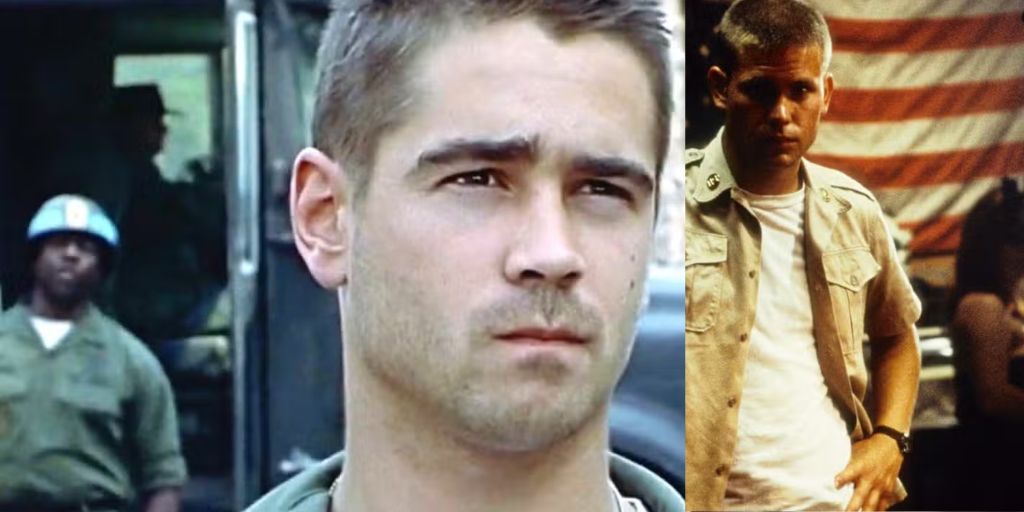
Still from the movie (New Regency Productions)
Saunders represents the strict authority of the army, and he does not like Bozz’s influence on the other men. When Bozz is temporarily appointed as the platoon leader, he shows strong leadership and impressive shooting skills. This makes Wilson and Saunders even more angry.
One notable scene occurs on the firing range, where Wilson threatens Bozz with a loaded gun. However, the gun jams, which saves Bozz’s life. Bozz tries to persuade Saunders to take action against Wilson, but Saunders promises to handle the situation himself. This lack of action shows the challenges faced by the soldiers. They often feel powerless against the authority figures who are supposed to protect them.
For their final week of training, the platoon is sent to Tigerland, a location designed to simulate Vietnam. The training ground is hot, humid, and uncomfortable. It represents the harsh conditions that the soldiers would face in real combat. During the war games, Wilson pretends to be an enemy soldier, further complicating the already tense situation.
Paxton, who is eager to prove himself, realizes that Saunders has lied to them about dealing with Wilson. He understands that Saunders placed Wilson against him and Bozz in a dangerous duel. This realization brings the story to a critical point. Paxton’s idealism is challenged, and he must confront the harsh realities of the situation he is in.
Colin Farrell’s portrayal of Bozz is compelling. He brings charisma and strong emotions to the role. His intense eyes and confident demeanor make him fascinating to watch. After Tigerland, Farrell’s career took off. He starred in Phone Booth in 2002, also directed by Schumacher, and later appeared in Minority Report with Tom Cruise.
Since then, he has acted in nearly fifty films, showcasing his range as an actor. As of 2023, many critics agree that while Farrell has been in a few bad movies, he has never given a bad performance.
Screenwriter Klavan explained the mindset of the soldiers during that time. He said, “After six years of American involvement in Southeast Asia, few of the men held any illusions about their prospects. There was a lot of fatalism about the war. There wasn’t a lot of patriotism.
Guys went because they had no choice.” This statement highlights the feelings of despair and resignation among the soldiers. Most of them were young men, often drafted against their will, who faced a future filled with uncertainty.
Tigerland focuses on the doomed and helpless soldiers, but it also tells the story of one man who refuses to accept his fate. Bozz’s rebellion, whether successful or not, is his way of asserting his identity and feeling alive. His struggle against the army’s authority becomes a central theme in the film.
The U.S. ended the draft in 1973, transitioning to an all-volunteer military. This change occurred partly because the draft had many failures during the Vietnam War. The majority of draftees were 18 and 19 years old, poor, uneducated, and often non-white.
As the war progressed and public support diminished, the draft became desperate, accepting anyone who could be sent to serve. The film tells the stories of some of these young men who faced these difficult circumstances.
Despite the powerful storytelling and strong performances, Tigerland has its downsides. Some viewers find the film hard to follow, especially in the first third. The dialogue is often rushed, making it difficult to catch every word. Additionally, the chaotic and disjointed action can be confusing.
The soldiers’ identical appearances also create a challenge for viewers. With their shorn heads and matching uniforms, it is sometimes hard to tell them apart. The film does not always provide names or close-ups, which could help clarify who is who.
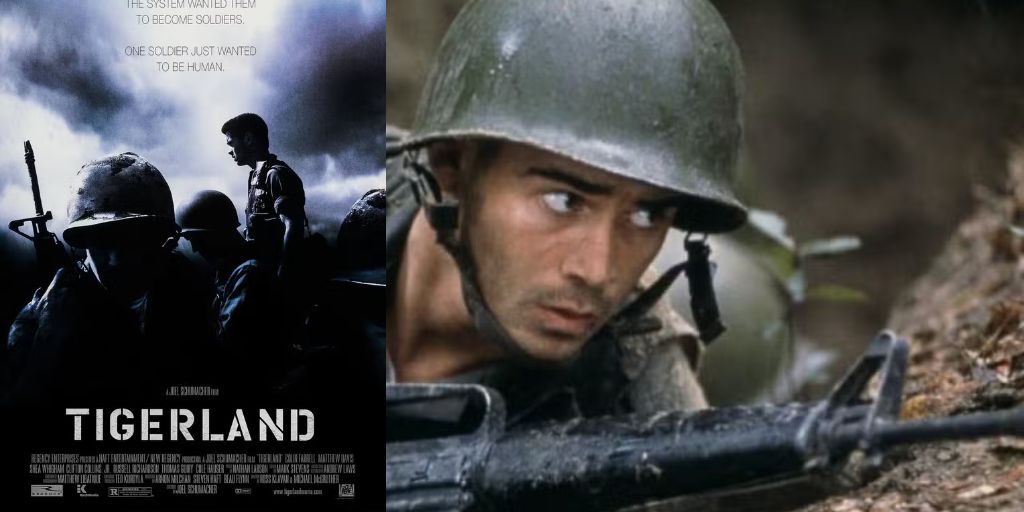
Still from the movie (New Regency Productions)
For instance, if a viewer does not recognize Private Cantwell, played by Tom Guiry, it is challenging to understand why Sergeant Thomas, played by James Macdonald, beats him up in a later scene.
On the positive side, Tigerland feels authentic. It may be an ugly film to watch, but the performances are remarkable. The actors convey the raw emotions of young men facing a difficult situation. Their struggles resonate with audiences, adding depth to the film’s message.
Despite receiving positive reviews for its outstanding performances and realistic portrayal of military life, Tigerland did not do well at the box office. This initial failure could have ended Farrell’s career before it truly began. However, it actually marked the beginning of a successful journey for him in Hollywood. The film is currently recognized for its unique take on the Vietnam War story and has earned a 77% rating on Rotten Tomatoes.
Tigerland remains an essential film that finds the themes of rebellion, authority, and the experiences of soldiers during a turbulent time in American history. It captures the struggles and fears of young men facing the unknown as they prepare for war.
The film’s powerful storytelling and character development resonate with audiences, making it a significant part of Colin Farrell’s career and a notable entry in the war film genre.
Tigerland is a film that combines powerful storytelling with strong performances. Colin Farrell’s portrayal of Bozz stands out, making him a memorable character in film history. The movie covers themes of rebellion and authority, showing the struggles of young soldiers in a difficult time.
Even though it did not perform well at the box office, Tigerland has gained recognition over the years for its authenticity and depth. It tells an important story about a challenging period in American history and captures the spirit of rebellion among soldiers facing their fate.
Tigerland serves as a poignant finding of the lives of young soldiers during a tumultuous time in American history. Through Colin Farrell’s compelling performance as Roland Bozz, the film highlights the themes of rebellion and authority, illustrating the internal and external struggles faced by those drafted into military service.
The unique setting of Fort Polk, Louisiana, provides a backdrop for the harsh realities of army training, where the characters grapple with fear, disillusionment, and a sense of helplessness. The film captures the emotional depth of its characters, especially Bozz, who embodies the spirit of defiance against an often oppressive military system.
Despite its initial lack of commercial success, Tigerland has earned critical acclaim over the years for its authenticity and raw portrayal of the Vietnam War experience. The narrative not only reflects the personal stories of the soldiers but also addresses broader issues regarding the morality of war and the consequences of forced conscription.
By focusing on the training phase rather than combat, the film offers a fresh perspective on the Vietnam War, reminding viewers that the psychological battles fought by soldiers often begin long before they reach the battlefield.
Tigerland stands out as a significant film that continues to resonate with audiences. Its coverage of rebellion, the quest for identity, and the harsh realities of military life contribute to its lasting impact. As a defining moment in Colin Farrell’s career, Tigerland not only launched his rise to stardom but also remains an essential piece of cinema that encourages reflection on the sacrifices made by those who serve.
The film’s powerful message and memorable performances ensure its place in the canon of war films that challenge viewers to confront the complex nature of duty, courage, and resistance.
When compared to major events like World War II and the Vietnam War, fewer movies focus on the American Civil War. This could be because the Civil War did not attract as many viewers from other countries. Additionally, the conflict had some very ugly motivations that make it harder to portray.
Showing slavery in films can be difficult, as filmmakers must treat the topic with great sensitivity and respect. It is tough to find something positive in such a dark time in history. However, the powerful Civil War movie Glory brought an important true story to life. This film helped Denzel Washington win his first Academy Award for Best Supporting Actor.
Glory is based on the true bravery of the 54th Massachusetts Infantry Regiment. This group became one of the first all-Black divisions in the Union Army during the Civil War. The regiment was commanded by Captain Robert Gould Shaw, played by Matthew Broderick. Shaw’s job was to train the new soldiers, including John Rawlins (Morgan Freeman), Jupiter Sharts (Jihmi Kennedy), Silas Trip (Washington), and Thomas Searles (Andre Braugher).
Shaw motivates the soldiers by informing them that the Confederacy plans to execute any Black men who try to escape slavery in response to President Abraham Lincoln’s Emancipation Proclamation. Despite this motivation, Trip begins to feel uncertain about his service. He struggles with the idea of supporting a country that does not see him as a citizen and does not allow him to vote.
Glory is known for some of the most impressive Civil War battle scenes in film history. This is largely due to the talent of director Edward Zwick. While Zwick may not be as famous as directors like Martin Scorsese or Quentin Tarantino, he has a special ability to showcase real-life conflicts dramatically. He later directed movies like Legends of the Fall and The Last Samurai.
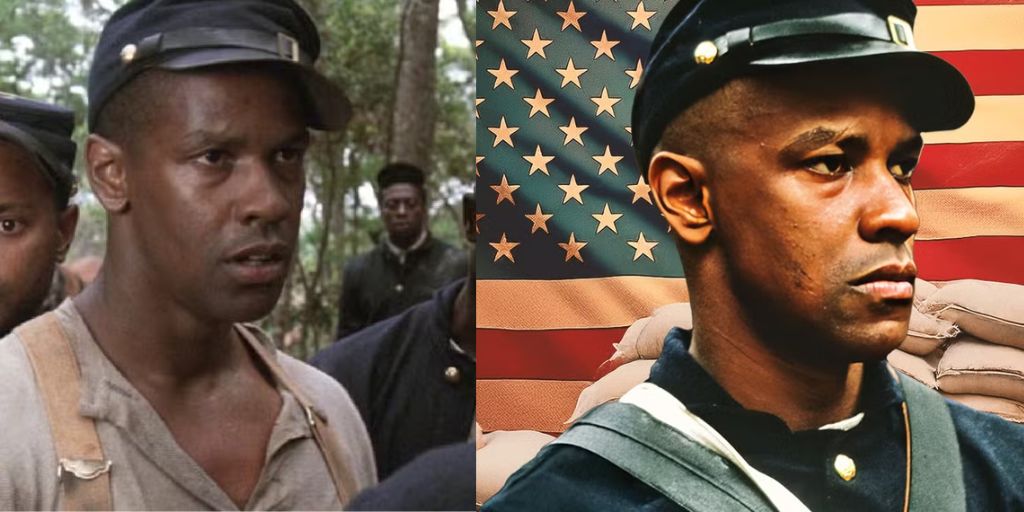
Still from the movie (Prime Video)
Glory effectively shows the harshness of the Civil War. The invention of new types of ammunition meant that battles lasted for many days, which was tough for soldiers in the 54th Regiment. These soldiers received fewer resources and supplies compared to white divisions.
The film highlights the complex experiences of Black soldiers during the Civil War and does not shy away from addressing the racism that the 54th Regiment faced. Even soldiers like Shaw, who believe they are honorable, still see the Black men under their command as lesser citizens. They can never fully understand the suffering that these men have experienced.
The film does an excellent job of illustrating the different perspectives within the Black experience. For example, Searles is a free man who feels a stronger loyalty to Shaw. In contrast, Trip is more skeptical and even refuses to carry the regiment’s flag at first because he is upset about how former enslaved people are treated.
A heartbreaking scene shows Trip getting flogged for what seems like an attempt to desert, which is one of the most disturbing moments in war films. Despite its strengths, Glory has received some criticism. For instance, film critic Roger Ebert pointed out the problem of using a white protagonist, Shaw, as the main focus of the story.
Additionally, some viewers might find it hard to feel inspired by the movie’s ending. While there is a powerful moment when Trip rallies his fellow soldiers during a battle, the film does not address the harsh treatment that many Black men who fought for the Union faced after the war ended.
Still, Glory marked a significant turning point in Washington’s career. He had already received praise for his role in Cry Freedom, but Glory established him as a major star of his generation.
The story of Glory goes beyond just the characters and their experiences in battle. It serves as a reminder of the struggles faced by Black soldiers during the Civil War and the ongoing issues of racism and injustice. The film highlights how the heroes of the 54th Massachusetts Infantry Regiment bravely fought for a country that often treated them poorly.
The struggles of soldiers like Trip and Searles are central to the film’s message. They show how the fight for freedom and equality was not just about the battles they faced on the battlefield but also about the recognition and respect they deserved as individuals. The film brings to light the sacrifices made by these men and the difficult choices they had to make.
In the context of history, Glory plays an essential role in representing the contributions of Black soldiers. It helps viewers understand that their participation in the Civil War was significant in shaping the future of the United States. The bravery and resilience shown by the 54th Massachusetts Infantry Regiment are honored through the film’s storytelling.
While some critics question the film’s perspective, many agree that it effectively portrays the emotional and physical challenges faced by Black soldiers. The combination of thrilling battle scenes and deep character development makes Glory a standout film in the war genre.
The cinematography and score enhance the movie’s impact, immersing viewers in the Civil War experience. The film’s attention to detail, from the uniforms to the weaponry, helps create a realistic portrayal of the era. These elements combined with powerful performances from the cast bring the story to life.
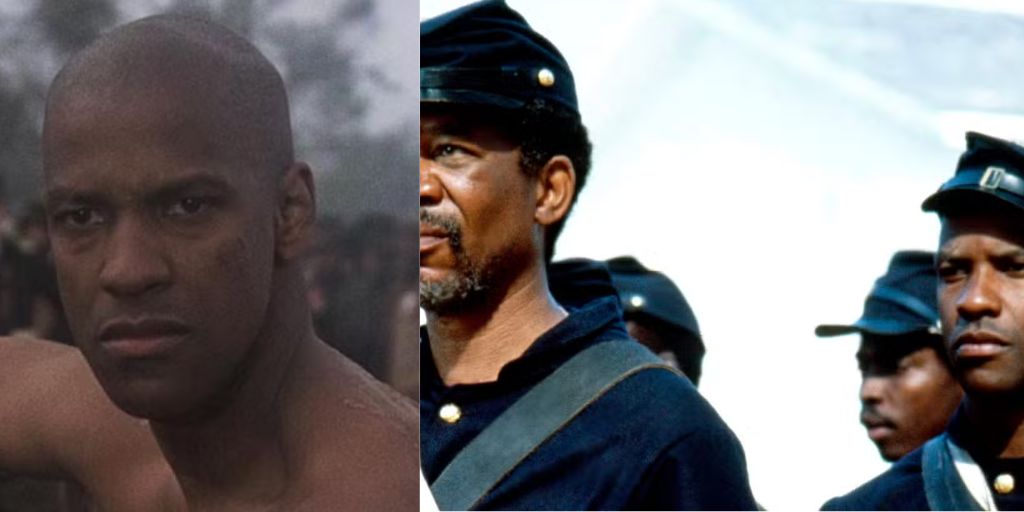
Still from the movie (Prime Video)
The relationship between Shaw and his men is important to the narrative. Shaw’s initial naivety transforms as he learns more about the realities his soldiers face. He begins to recognize their struggles and the importance of their fight for freedom. This character development adds depth to the film, showcasing how understanding and empathy can grow through shared experiences.
The moments of camaraderie and friendship between the soldiers provide a counterbalance to the harshness of war. They show that even in the midst of conflict, strong bonds can form. These relationships emphasize the importance of community and support during difficult times.
Glory also examines the theme of honor in battle. The characters grapple with what it means to fight for a country that does not honor them. This moral conflict is especially poignant for Trip, who struggles with the notion of loyalty and sacrifice. His journey throughout the film highlights the personal battles soldiers face alongside the physical ones.
In the end, Glory stands as a powerful reminder of the sacrifices made by Black soldiers in the fight for freedom. The film shines a light on their courage, resilience, and the ongoing struggle for equality. By telling this important story, Glory helps to ensure that the legacy of the 54th Massachusetts Infantry Regiment is not forgotten.
As Glory continues to be recognized and celebrated, it serves as a source of inspiration for future generations. The film encourages viewers to reflect on the past while considering the ongoing challenges related to race and equality in society today. The stories of courage and determination from the soldiers of the 54th Regiment remain relevant as we continue to strive for justice and understanding.
Glory is more than just a war movie; it is a vital piece of history that captures the spirit of an important moment in the fight for freedom. The film’s powerful storytelling, emotional depth, and historical significance make it a must-see for anyone interested in the complexities of the Civil War and the role of Black soldiers in American history.
Through its engaging narrative and unforgettable characters, Glory leaves a lasting impact on its audience, encouraging reflection and discussion about the past and its relevance today.
Glory serves as a profound coverage of the sacrifices and struggles faced by Black soldiers during the American Civil War. By telling the true story of the 54th Massachusetts Infantry Regiment, the film not only honors their bravery but also sheds light on the complexities of their experiences.
It captures the dual fight these soldiers faced: the physical battles on the battlefield and the emotional turmoil of fighting for a country that often did not recognize their humanity or worth.
The film’s portrayal of Captain Robert Gould Shaw’s growing understanding of his men underscores the importance of empathy and awareness in leadership. Shaw’s journey reflects the broader societal challenges of recognizing and respecting the contributions of marginalized groups.
Through powerful performances, particularly by Denzel Washington, the film evokes deep emotions and invites viewers to reflect on the ongoing issues of race and equality in America.
Moreover, Glory plays a critical role in educating audiences about the significant contributions of Black soldiers in shaping U.S. history. It challenges viewers to confront the painful realities of racism and injustice that persisted during the Civil War and continue to resonate today.
The film serves not just as a reminder of past injustices but also as a call to action, urging society to acknowledge and rectify historical wrongs. Glory is more than just a war film; it is a poignant narrative that emphasizes the need for recognition, respect, and understanding of the sacrifices made by Black soldiers.
As we reflect on their courage, we are reminded of our responsibility to continue advocating for equality and justice. The film’s legacy endures as it inspires future generations to engage with history and strive for a better, more inclusive society.
