Hayao Miyazaki ‘s The Wind Rises is his most adult-centered film. Not to say it can’t be enjoyed by young audience members, Miyazaki actually commented on this, saying this film is a little harder than others, but children who see it will one day understand it.
Hayao Miyazaki’s The Wind Rises is an excellent film. Miyazaki’s reputation for innovating Anime is absolutely remarkable. The Wind Rises was seen as Miyazaki’s last anime film, and I am highly impressed and hoping to view more of his films.
The film is a historical biopic on Jirô Horikoshi, the chief engineer of several different Japanese air fighter designs during World War II. And in this article, we’ll talk about a lot of aspects of the film and understand the beauty and the message behind the entire film.
The Wind Rises Explained
The Wind Rises anime documents the life of Jirô as a young boy who dreams of creating spectacular aircraft vehicles to his final creation of the Mitsubishi A6M0 fighter plane. As a young boy, his dream is rooted in his fascination with Giovanni Caproni aircraft designed by one of Italy’s most renowned aircraft engineers.
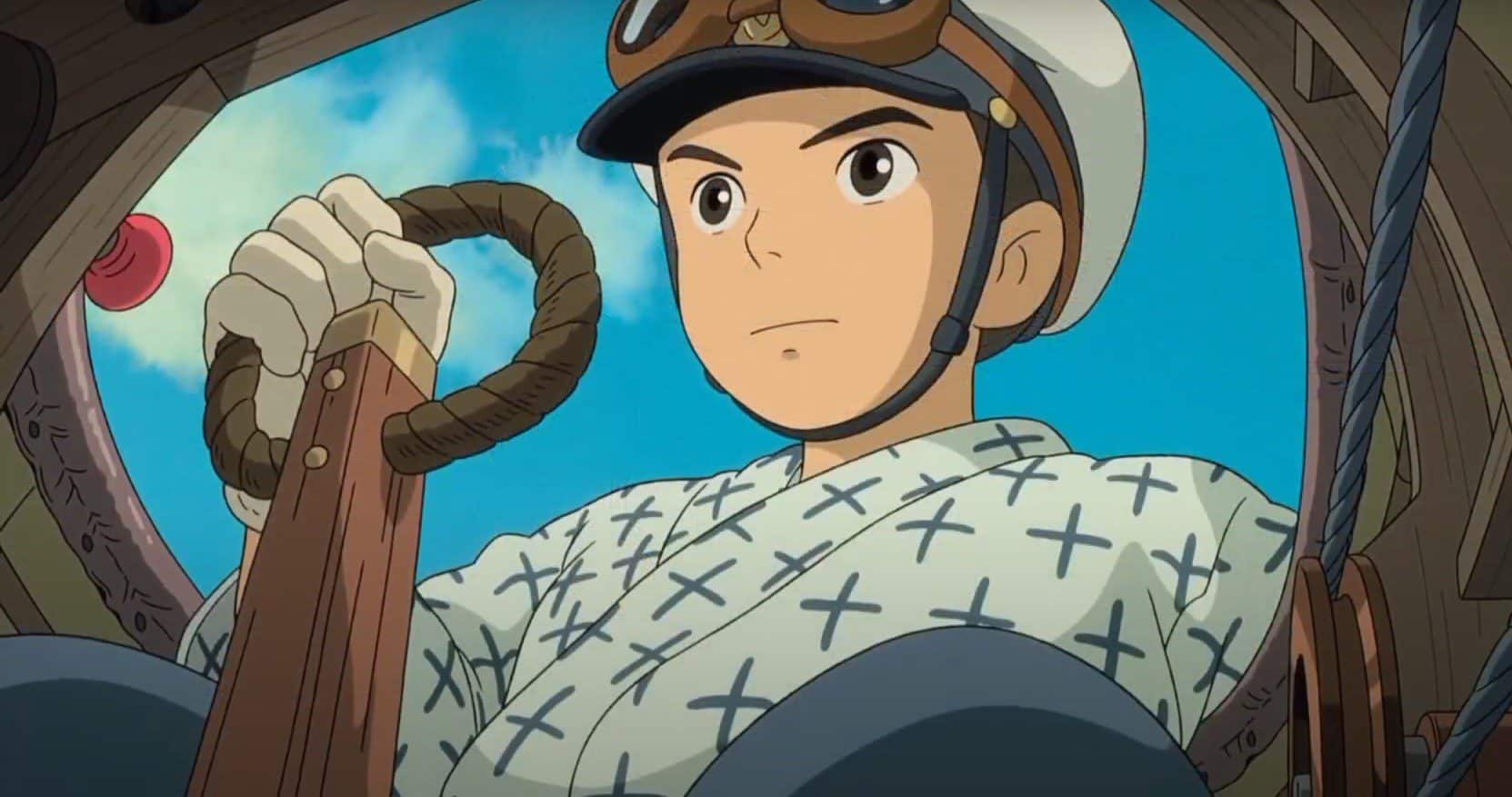
Is Jirô The Hero Or The Villain
During Jirô’s adult years, he is assigned to work on improving Japan’s fighter planes that will be used for warfare. This upsets Jirô, who would rather have his creations be left out of warfare due to his anti-war beliefs. Despite being anti-war, Jirô continues to build warplanes for Japan because he only views them as magnificent planes, willing to ignore their involvement in the war.
Jirô even mentions during a meeting that to reduce the weight of a plane, removing guns which would drastically help reduce the aircraft’s weight. While the scene is initially played off for laughs, it actually is one of the only times the hero voices some sort of distaste for Japan’s involvement. This mentality wasn’t still in Jirô when he was a child during a scene when he saw a small boy being bullied and rushed in to rescue him.
After the incident, his mother informs Jirô that fighting is never justified. Unfortunately, when the hero is an adult, he is surrounded by people who only view his skills as a means to improve Japan’s military aircraft.
Jirô’s Dreams
It’s established early in the film that Jirô is a dreamer. This is often referenced by his fellow engineers, including his friend Hanji, who jokes about how obsessed he is with his work. During his dream sequences, he interacts with Caproni as they fly. Miyazaki reinforces the dreamlike atmosphere by creating over-the-top landscapes that contribute to the overall dreamy environment. Beautiful clouds fill the sky, along with perfect sunsets. This is also shown by the usage of flying itself.
As shown in Miyazaki’s Spirited Away , flying is used as a visual element to help show magical and fantastic aspects that create an atmosphere of wonder and awe in each scene they are shown in. This, too, is used for the wind rises that capture both Jirô and Caproni’s level of amazement and joy by riding one of his aircraft.
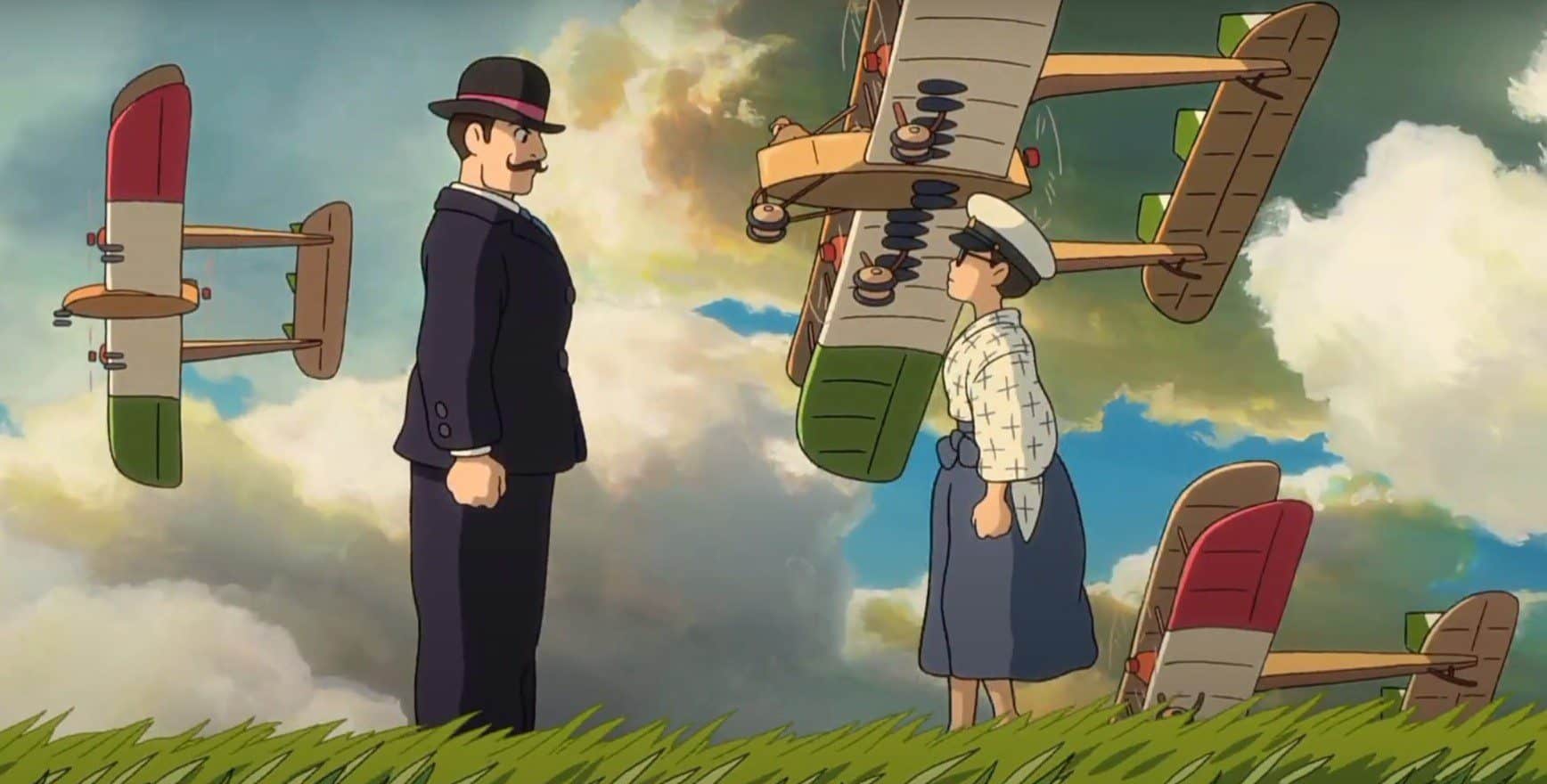
Jiro’s dream
In these dream sequences, instead of riding fighter planes, most of what Jirô rides are regular planes used for carrying passengers reinforcing Jirô’s pacifist nature. He is purely focused on building aircraft that align with his ambitions as a design engineer, though ultimately, his skills are used to create Japanese warplanes.
Jirô’s dream of crafting beautiful planes is ultimately corrupted by his designs being used to fight in World War II, though we only see glimpses of Chihiro speaking out against the war, who seems to turn a blind eye in order to continue pursuing his dream. This idea is showcased throughout the film with constant reminders that Japan is bombing countries such as China and the United States.
Jirô is well aware of the atrocities Japan is committing and seems to believe that his country is flawed when witnessing a Gestapo raid while stationed in Nazi Germany.
Jirô Looking The Other Way For His Dreams
During one of Jirô’s dreams, he is asked by Caproni if he would prefer to live in a world with or without pyramids. This statement is symbolic due to the implication behind it. That being, would Jirô look the other way because of the destruction and chaos attached to his creations if he was able to never let his dream die?
Caproni explains he would want a world with pyramids, to which Jirô responds by saying he only just wants to build beautiful planes. Jirô’s statement further explains the relationship he has with acknowledging his corrupt dream and delaying the confrontation with his morality.
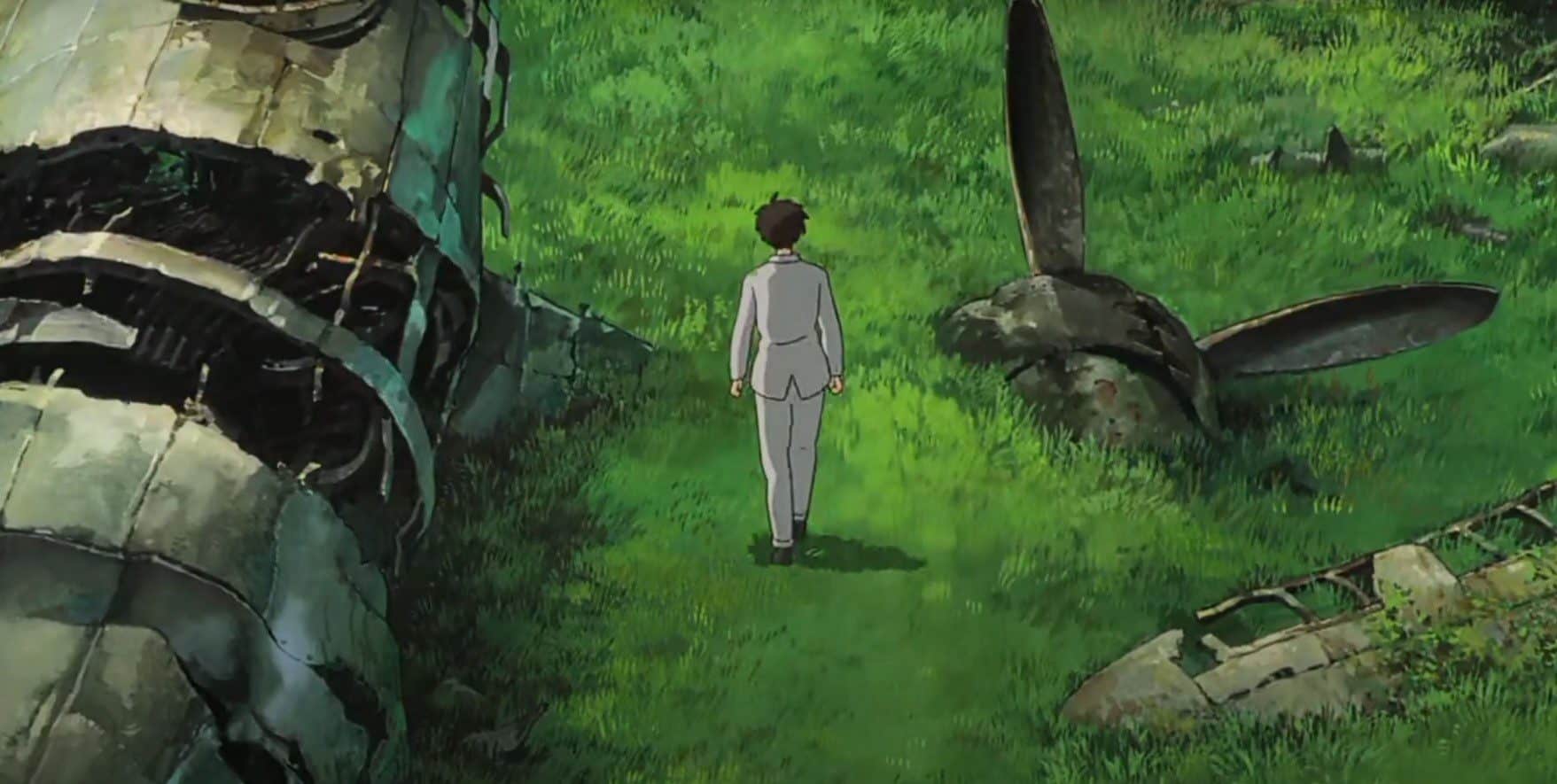
Is Jirô The Hero Or The Villain
Jirô was a magnificent engineer and artist though his deafness towards his morality is at times relatable and unjustifiable. Although Jirô was a pacifist who would never directly harm anyone, his contribution to Japan led to the creation of a vehicle that would kill thousands of people. However, the film leaves it up to interpretation if Jirô is forgiven. He is portrayed in the film as the main protagonist and the hero for the audience to root for. Though by examining his actions in the narrative, his underlying motives present the characters as having villainous qualities.
Is Jirô The Hero Or The Villain?
In several of Miyazaki’s films, protagonists and antagonists fall somewhere in between a morally grey area. Many of the villains in the story are more fallacious than evil. Jirô is blinded by his passion for planes and is unwilling to confront his moral ambiguity. He has watched Japan suffer from economic depression and massive earthquakes that have both brutally ripped the country apart.
My speculation is that as a result of these disasters, he continues to work on Japan’s board plans due to the belief that he will be replaced and decides to continue his dream. This is made more clear when jihiro stays at a hotel and meets Castrop. A Jewish man who appears to be connected with the nazi party, though he seems to condemn the Government.
Castrop and Jirô reference several different atrocities committed by Japan and Germany, though they choose not to act upon them. The hotel itself appears to represent a symbolic escape from the reality of war. Both characters are separated from their responsibilities, and it has hinted that they only have a short period of time here.
Miyazaki expertly crafts Jirô as a complex character who is neither good nor evil. His innocent dream of building gorgeous planes, just like his hero Caproni is manipulated by engineers who would rather use his skills for war.
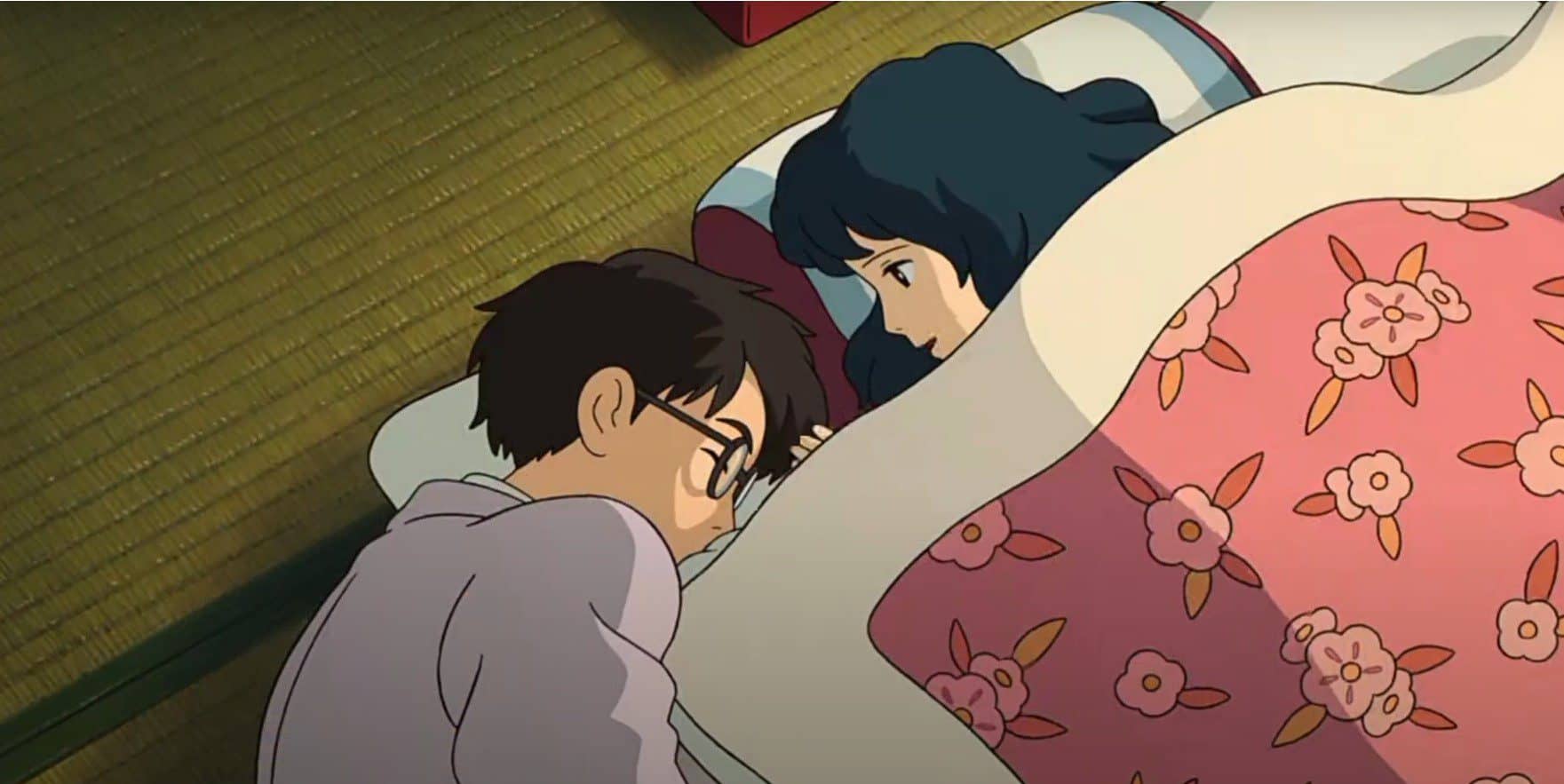
Jirô’s Relationship With Naoko
Jirô’s Relationship With Naoko Explained
During the second act of the film, Jirô is introduced to Naoko, a young girl whom he originally met during an earthquake. The two fall in love and eventually get married. Although she reveals, she has contracted tuberculosis. The romance is designed to mirror Jirô’s love for planes. Naoko is often blunt about her health which causes Jirô to view things at face value. Unlike avoiding moral confrontation with his love for planes, Jirô’s love for Naoko is based on the foundation of human connection. Both characters help each other become stronger through their interactions and motivations.
Jiro is corrupted by his love for designing planes. However, his love for Naoko is a positive influence on his character because of her moral purity. Naoko’s battle with tuberculosis mirrors Jirô’s fight with completing his project due to both of their ambitions to live together.
What’s interesting is how they both seem to end up in the same way. Naoko loses her fight with her illness, and Jirô’s warplanes are basically a means to an end. Eventually culminating in Japan’s total surrender. Overall, Jirô’s love for Naoko, while viewing it under a microscope, is stronger than his love for planes and acts as a representation of a positive love in his life.
The Wind Rises Ending Explained
In Jiro’s first dream, Caproni encourages Jirô to learn to build planes since his near-sightedness prevents him from becoming a pilot. The second dream contains a warning; Caproni muses on the fact that planes inevitably become tools of war. This is one of my favorite lines in the movie, and it captures the story’s essence by showing how tainted this world is.
Naoko leaves
No matter how pure Jiro’s intention is, no matter how beautiful his dream is, it cannot stay that way. Jiro can’t build planes without building weapons of war. His love for aircraft can only be beautiful in his mind.
As the dream takes form as plans are drawn, and an aircraft I built becomes a curse, a tool of death and destruction. The same dwindling light is shown in life and health through Jiro’s wife, Naoko. Years after the earthquake, a chance encounter at a countryside hotel reunites. The two forge a beautiful summer romance that results in deep love and betrothal, and like anything else in this story, death sinks its feigns when Naoko learns she has tuberculosis.
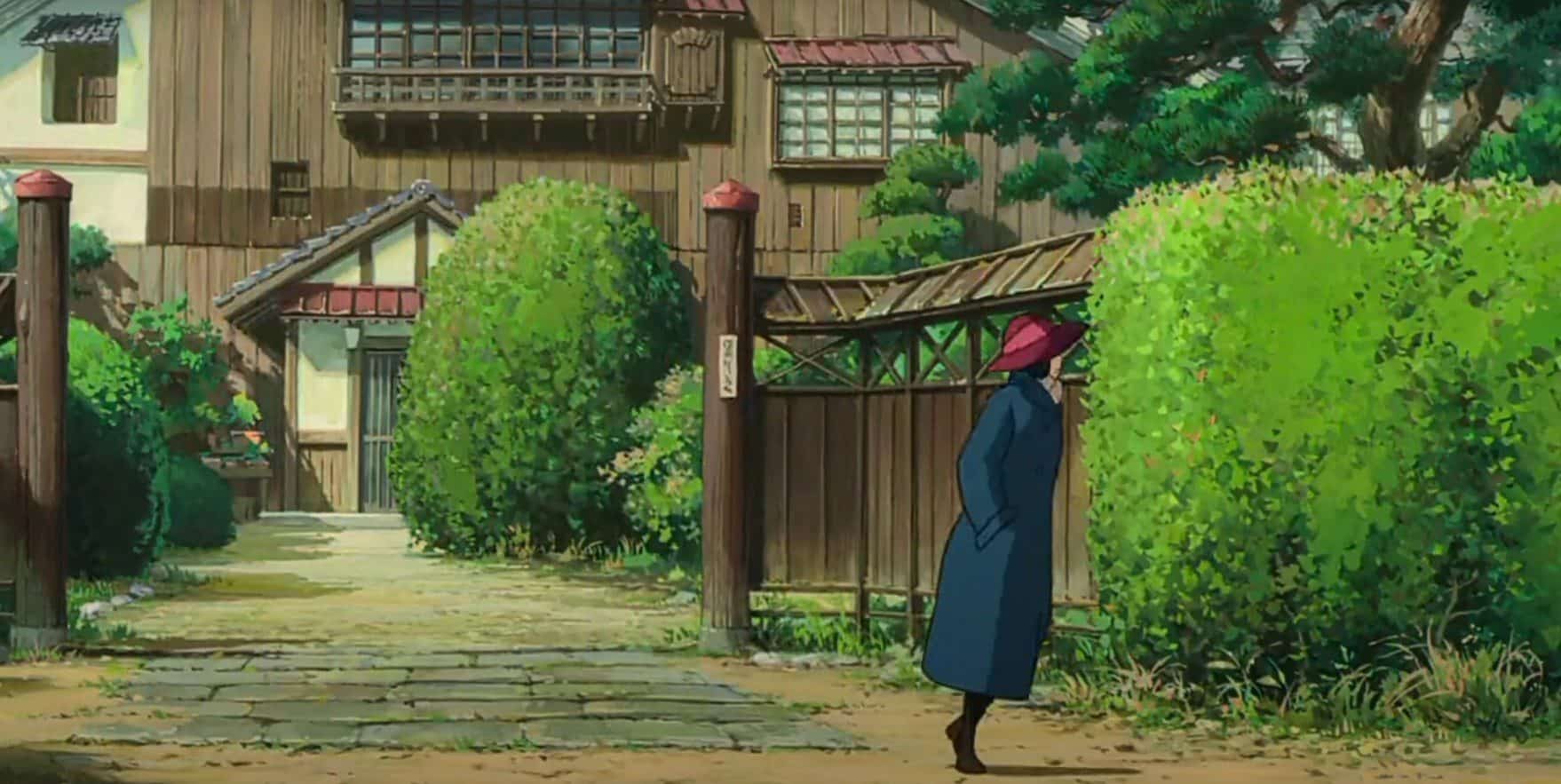
As Jiro and Naoko marry and move in together, her health dwindles. As her health fails, Naoko makes a decision and leaves Jiro, and she returns to a mountain sanatorium to preserve herself in his mind.
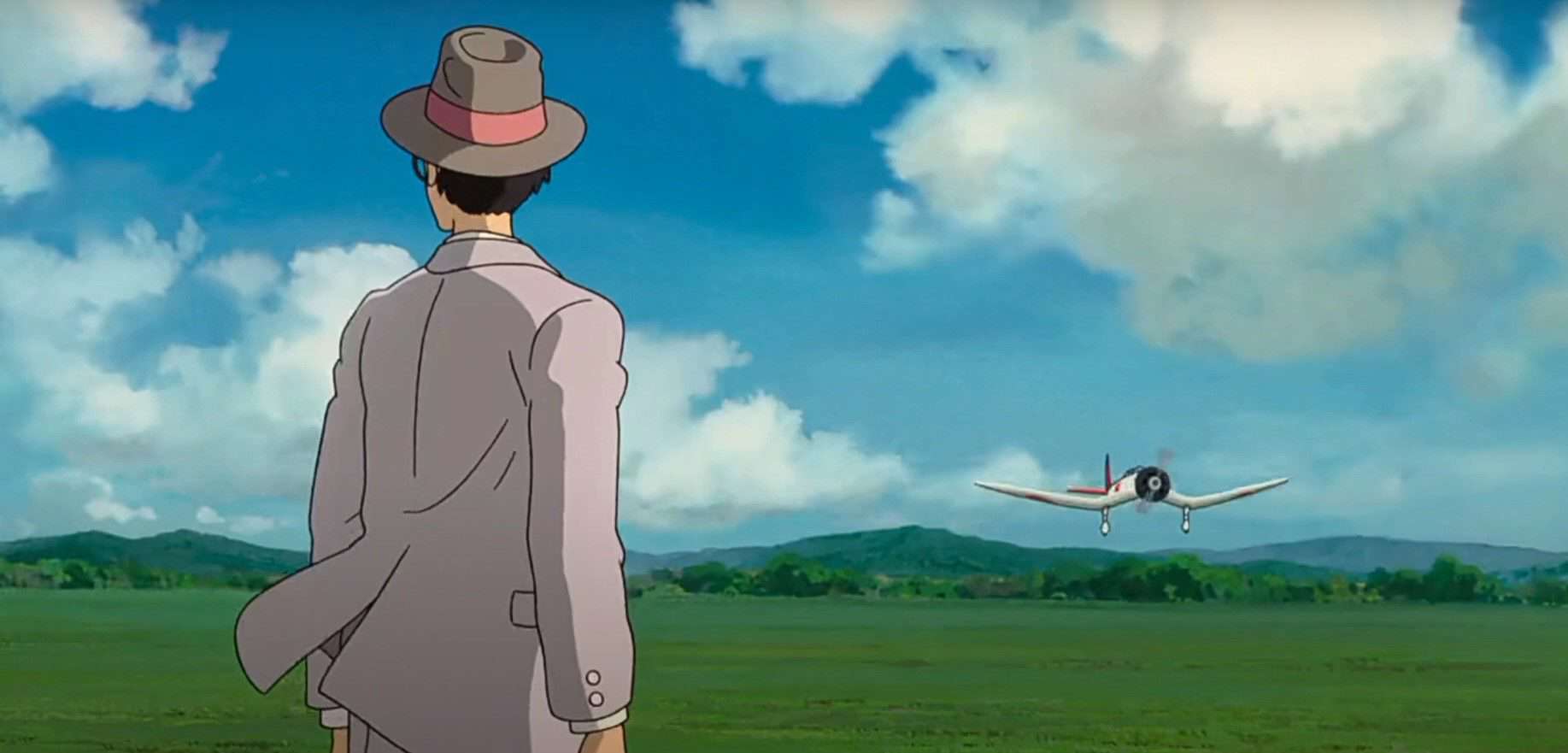
At the test run for the 02, there’s a gust of wind and a whisper from the mountains that tells Jiro that Naoko has passed. At the same moment, the 02, his plane, his dream flies, but his eyes can’t find the sky. Even at the height of his triumph, the power of death tends to this grand moment. His co-workers need to drag his attention back to the success of the 02. At every moment, this film takes a tragic turn in this war stream world, death and illness hain over everything.
Beauty Is Fragile
But this film is not just endless sorrow. The darkness that hugs the corners and occasionally takes center stage does not do so just to depress but to exemplify the brightness that shows an equal, if not greater, strength. The very world and The Wind Rises hum with life alongside its anger. It’s not just a sparkle in the eye of the people either. Many of the planes are accompanied by sound effects that can only imagine or created with a human mouth. Gurgles and hums that sound like the planes are speaking to us, and we could make it out if we listened just a little bit closer.
Naoko is dead
Even the earthquake imparts the idea of the earth living. The earth doesn’t just crap. The world roils beneath Tokyo. It ripples and stretches and groans like an old man tossing beneath the covers with a bad back. It’s a brief scene but imparts the idea of a weary world, and our characters have no choice but to inhabit; where else would they live their lives?
Jiro’s unique perspective on the world helps to sell this beauty. He’s a dreamer, a romantic even; he chases the sublime beauty of an elegant aircraft that glides with the wind.
Jiro sees beauty everywhere; he eats mackerel for lunch every day just to look at the bone, to see the simple gleaming curve. He appreciates the beauty of aircraft, of course, but also that of a simple radiator and sponge cape and, of course, Naoko. While his work often consumed his time, Jiro still came home for her. He dashed across the country to her bedside when she was ill, despite the risk as the police hunted him.
One of the most interesting insights “The Kingdom of Dreams and Madness” gave was how the ending of The Wind Rises changed. In Miyazaki’s original story and the one that got released. Jiro reunites with Naoko in his dream world alongside Caproni. In Miyazaki’s first ending, she tells him to come with her, and Jiro dies. But in the new ending, Naoko tells Jiro to live. This change marks the true meaning of The Wind Rises. The movie’s title comes from a Fench quote “The wind rises, we must try to live.” The quote opens the story before we see a single image.
One’s Dream Leads To The Deaths Of Thousands
The message of this film is clear and simple “beauty is fragile; our lives, our dreams, and our health are mere flickers of time in a weary world.” But that doesn’t mean we shouldn’t look at the rising wind and hide our heads before it. We should hold our heads high into the gale and stand strong because while beauty may be fragile, creativity may fade, and health will die, and it is ours to have and appreciate while it exists, even though it might blow away like a summer breeze.
One’s Dream Leads To The Deaths Of Thousands
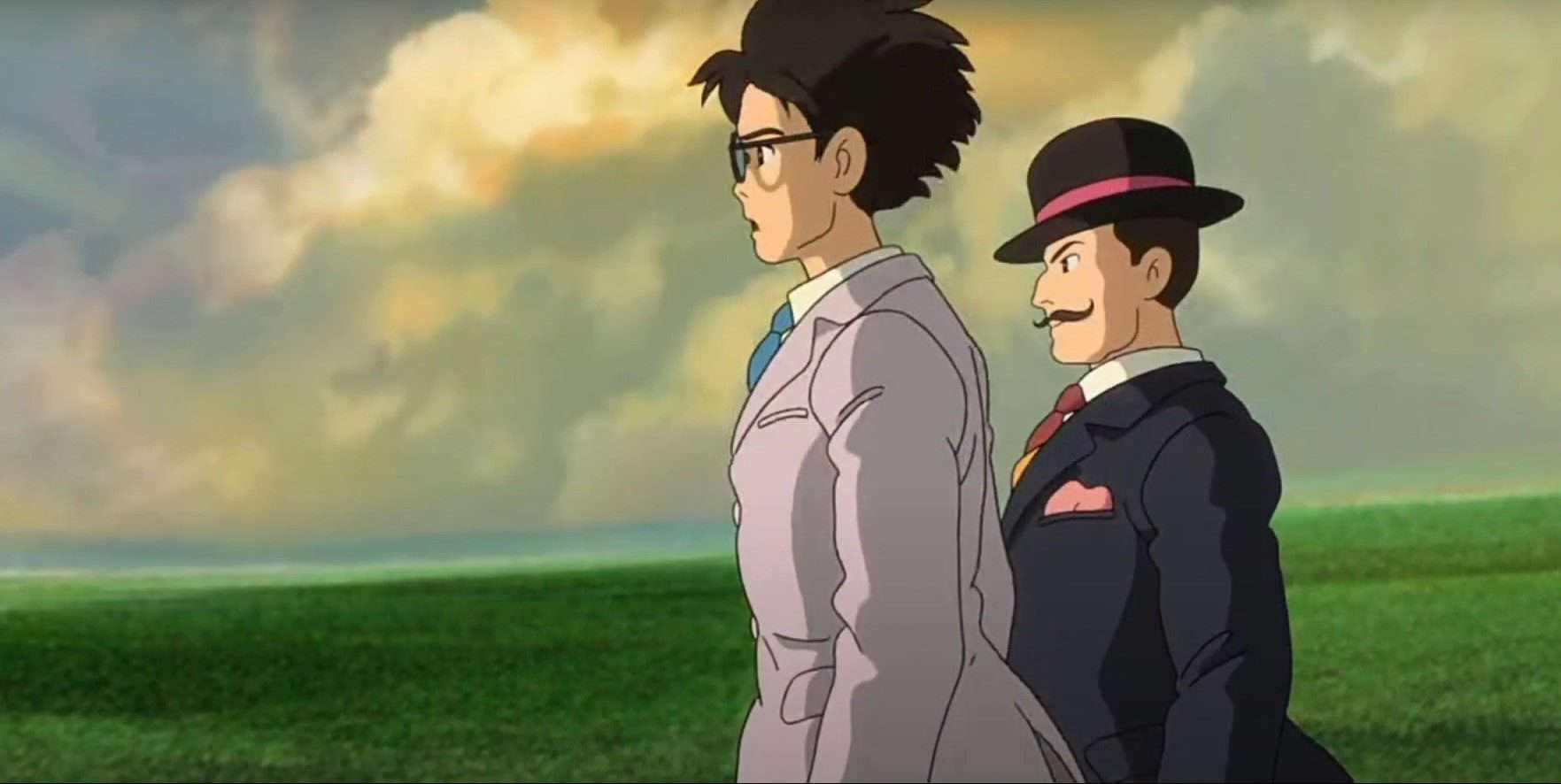
Jirô is a masterfully crafted character whose dreams have caused the destruction of thousands of people. It’s not until the end of the film do we catch a glimpse of Jirô acknowledging his involvement in the war. After his plane is finished and his test run is successful. Jirô glances at the countryside for an extended period of time.
As his co-workers cheer and celebrate, Jirô realizes his plans were ultimately built for the sole purpose of war which will lead to the deaths of innocent people. This scene mirrors the dream sequences he previously had, only now the magical elements of his planes are gone, and the film ends in a melodramatic way. However, proves to stand on its own compared to the rest of the film. In conclusion, the wind rises is a spectacular film that demonstrates Miyazaki’s legendary skills for the final time.
Deku is the successor to All Might’s “One For All” Quirk. But along with this Quirk, the successor also gets the quirks of the previous wielders of “One For All.” And Deku learned this when he got his second Quirk, “Blackwhip.” This Quirk belongs to the Rambunctious, loud-mouthed, lariat-loving, Hellboy-inspired whipping boy of the nine heroes of hope Daigoro Banjo.
Maybe you haven’t seen the episode, or maybe you have seen the episode. Either way, we will talk about What Episode Does Deku Get His Second Quirk? And analyze all the aspects of Deku’s second Quirk, Blackwhip. We will talk about the Quirk’s ability, its advantages, weaknesses, potential, and how you can be Spider-Man if you have this Quirk.
This is Deku’s Second Quirk, “Blackwhip,” Explained:
What Episode Does Deku Get His Second Quirk?
Deku Get His Second Quirk, Blackwhip, in the My Hero Academia Season 5 Episode 10 of the anime and Chapter 210 of the MHA manga . During the Izuku squad’s match, in the Joint Training Arc, against the Monoma team, which had Hitoshi among its members, Daigoro and Izuku engaged in direct conversation for the first time. Neito Monoma uses foul language to provoke Izuku and lure him into a trap.
Deku meets Banjo
Izuku becomes furious and charges at Neito, ready to use a focused Delaware Smash, but just as he is about to fire, Izuku’s arm starts to glow once more as One For All goes insane. Tendrils of dark energy suddenly start to emerge from his body and start wreaking havoc.
Izuku struggles with suffering while ordering everyone to take cover since he is unable to manage the new sensation. Ochaco Uraraka holds to Izuku to stop him and calls for help to Hitoshi. Izuku is subjected to Hitoshi’s Brainwashing Quirk, which causes him to lose consciousness and cause his powers to cease to function.
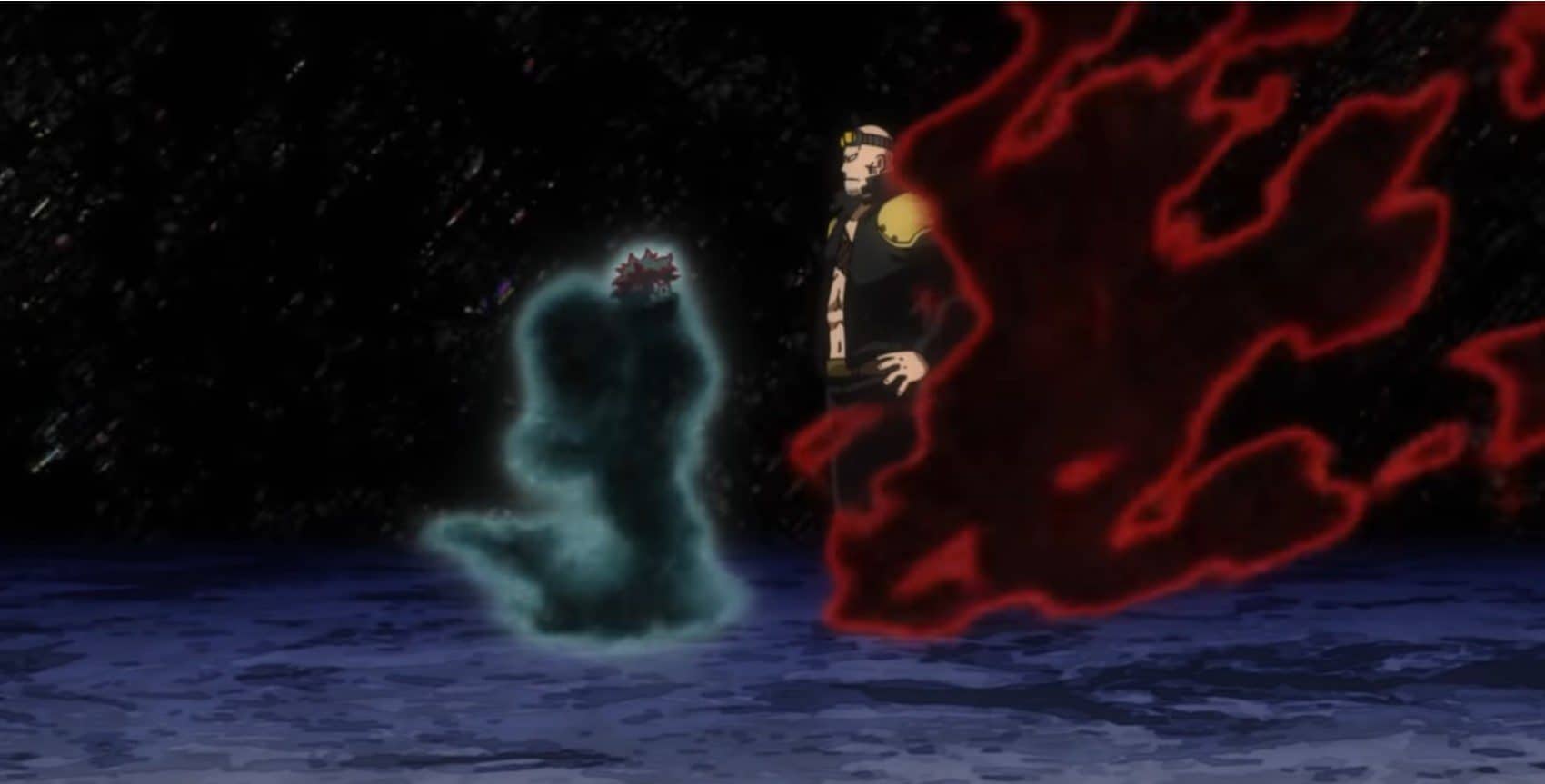
Daigoro comes in front of Izuku while he is still unconscious and informs him that although his Quirk has finally appeared, he is using it incorrectly. Izuku is urged by Daigoro to make more effort to control the Quirk. Izuku is still being lectured by Daigoro, who informs him that his earlier black tendrils were actually the expression of his Quirk, Blackwhip.
Blackwhip Quirk Explained
Blackwhip is an emitter-type quirk that grants its user the ability to produce black energy tendrils from any part of their body and command them at will. The strength of this Quirk seems to be directly connected to the user’s emotions, primarily the emotion of anger. Meaning the angrier the wielder gets, the stronger the Quirk becomes
Funnily enough, the first time we see this Quirk, it isn’t used by Mr. Banjo himself, but it’s actually used by everyone’s favorite protagonist boy Izuku Midoriya, who, like a typical teenage boy having their own sort of awakening, uncontrollably blasts the tendrils everywhere upon the first activation.
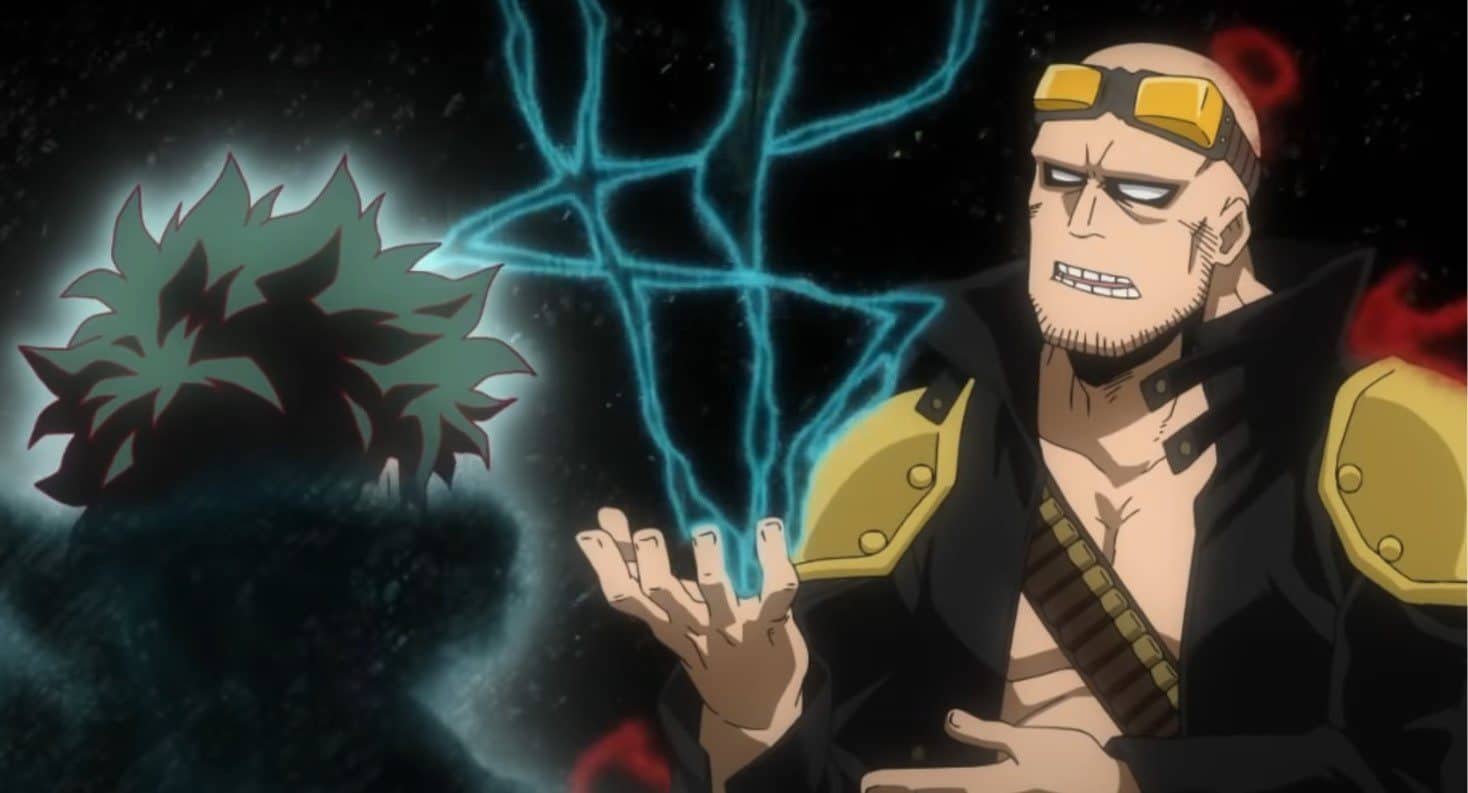
Banjo explains Blackwhip to Deku.
Now The tendrils the user of this quark produces are made up of some form of black energy, and it hasn’t been stated what type of energy this exactly is. Whether it’s some scientifically groundbreaking new form of energy Lord Horukoshi has discovered in his free time, or just some made-up superhero mumbo-jumbo is unclear. But what we do know is that it seems to share characteristics with Mr. Izawa’s binding cloth in that it is extremely durable, has a huge amount of tensile strength, and is malleable enough to easily be wrapped and tightened around almost any physical object whether that be a person or a thing.
So basically, this Quirk just gives you the ability to use Izawa’s capture scarf in black energy form. Although I will say the physics behind it are probably easier to explain than that scarf. Seriously what is happening here? It’s legit just floating and has a mind of its own, and also, now it’s committing child abuse; for the love of god, someone stops it.
Blackwhip Abilities
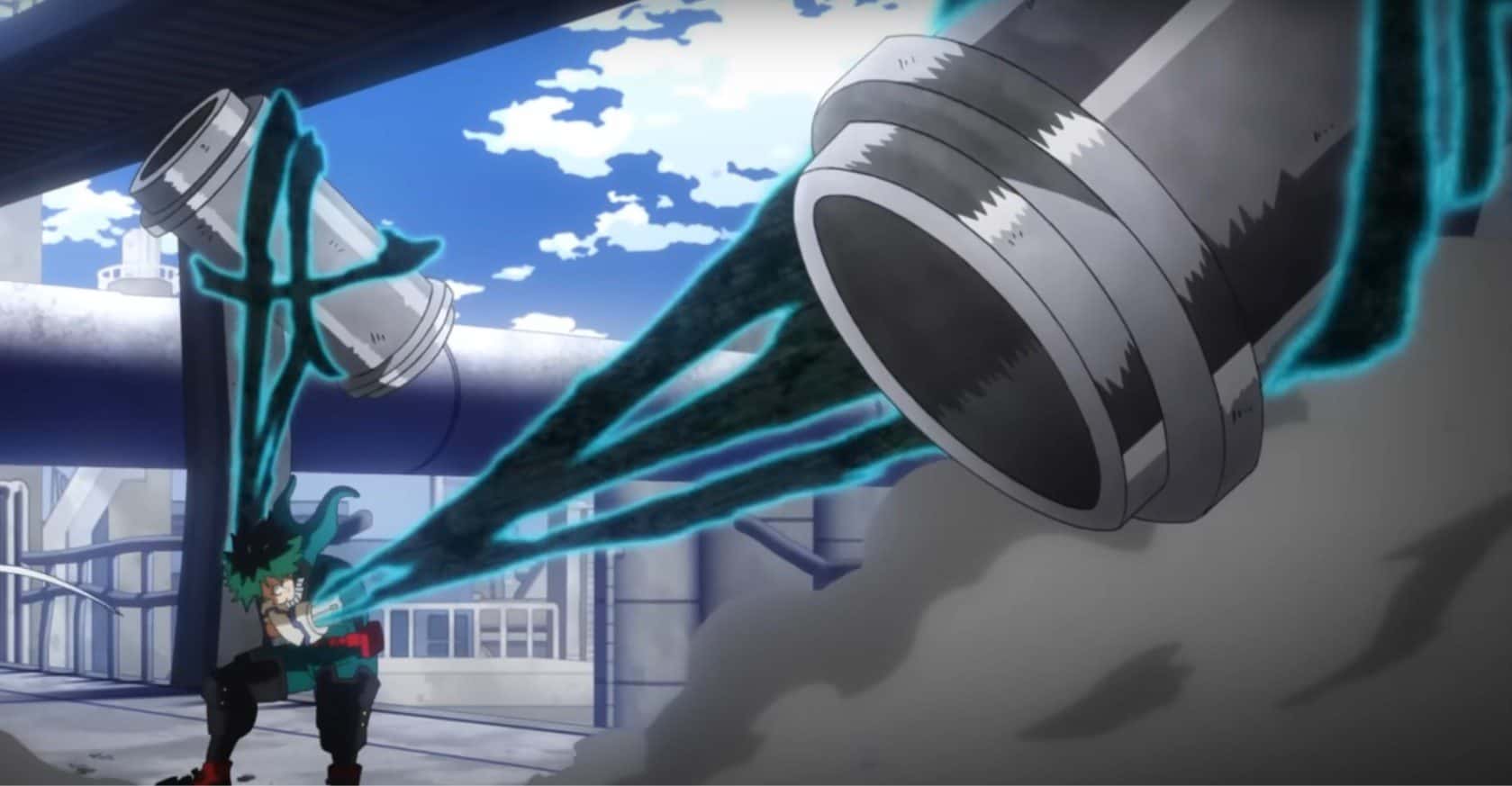
Now it’s time to talk about this quick’s abilities, for which there actually are quite a few. Firstly we have this Quirk’s combat usage. Similar to how Izawa uses his scarf or how Sero uses his tape, the user of this Quirk can wrap and trap their opponent in their energy tendrils, greatly reducing their opponent’s mobility and potentially immobilizing them indefinitely.
This gives the user a major upper hand in mid to close-range combat. All they have to do is wrap their tendrils around their opponent fast enough, and then there’s practically no escape. But if your opponent happens to be too big or too fast to be wrapped completely in Blackwhip however, then the user can instead focus on grabbing a single body part.
If your opponent primarily uses punches, you could quickly grab your arm with this Quirk, temporarily preventing them from performing a full swing, or you could grab your leg or foot, causing them to trip up, giving you an opportunity to land a devastating or finishing blow. Just like every lonely man after now, not November, all you need is a tight grip and one good pull, and boom, problem solved.
Blackwhip Support
Support
Support-wise, Deku’s Second Quirk also has some pretty good benefits. Blackwhip can be used to catch large incoming projectiles stopping them in their tracks and preventing them from making an impact. This is great for not only stopping an incoming barrage of projectiles but it is also good for rescue scenarios, where the user of this Quirk can catch the following debris about to land on civilians or even safely catch multiple cars full of people which were used as projectiles by a villain. The latter of which tends to happen a lot more than you would think.
Blackwhip can also prove to be useful in evacuation situations, where it can be used to grab onto and pick up multiple people at once. Lifting them away from danger and making them far easier to carry. Inversely you could also use this Quirk to pick up your enemies, and instead of lifting them to safety, you could just eat them into danger or into another villain, whatever boats your float.
Mobility
As for mobility wise, Deku’s Second Quirk is ideal for mid-air maneuverability. Similar to how Sero uses his tape quirks to stick onto buildings and swing around like Spider-Man, the user of Blackwhip can also do the very same. All the user of this Quirk has to do is shoot a tendril toward a building or structure, let it grab onto that building or structure, and there you have it. You can swing through the air like a friendly neighborhood bug human genetic hybrid.
Now, this does come with all of the typical advantages you would expect. Enhanced movement speed, increased vertical and air maneuverability, advantages in both combat and rescue scenarios, the new strange impulse to make comedic jokes and remarks, and the Insufferable feeling of guilt and dread over the death of a loved one for which you’re action caused. But it also vastly increases disc quirk’s versatility. Not only is the black whip great for restraining and capturing opponents, but with the addition of this enhanced movement, it also makes the user themselves extremely hard to pin down.
Unique Abilities
Two Unique Abilities
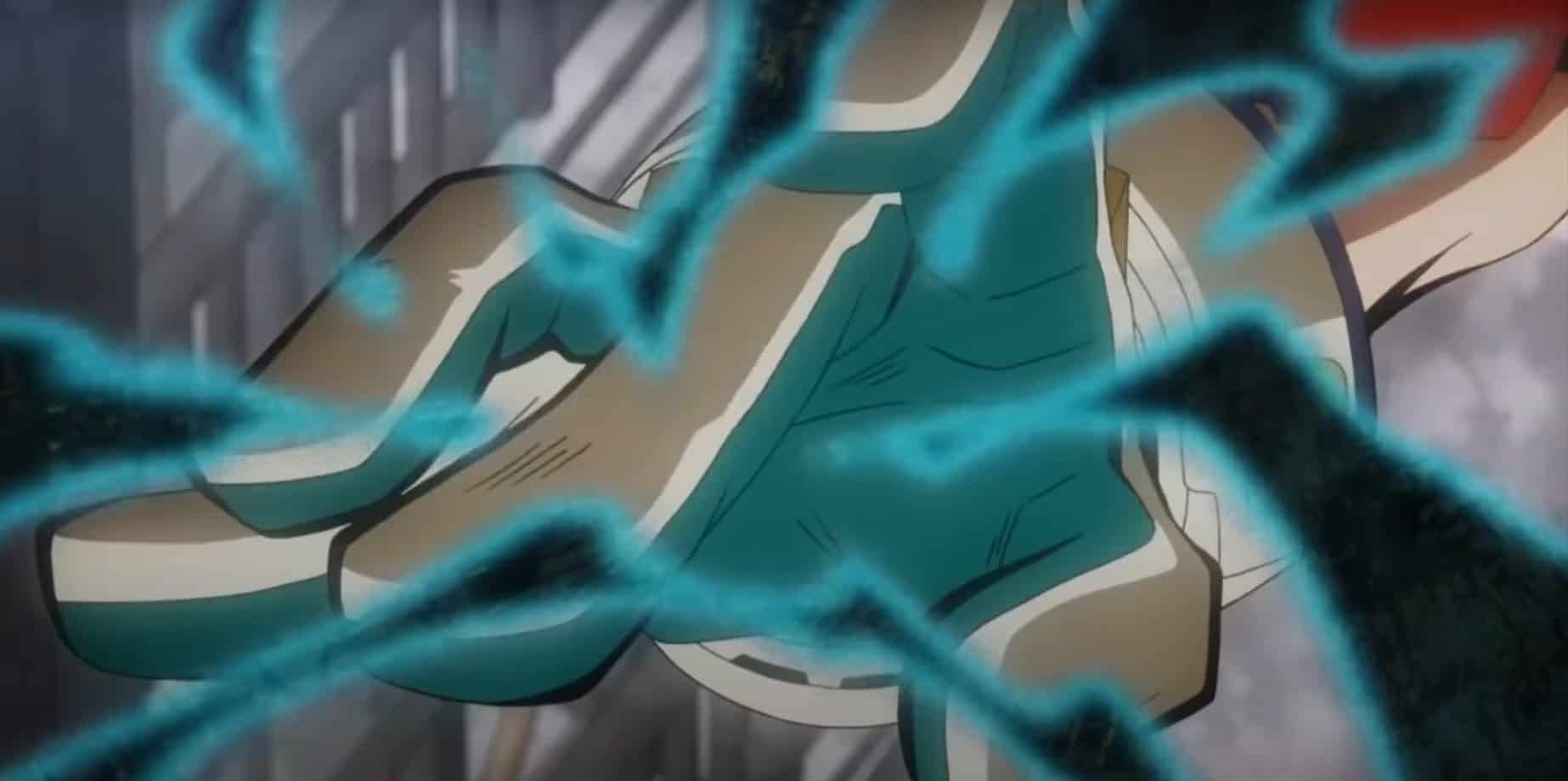
As for named super moves, this Quirk doesn’t really have any as of yet. However, it does have two pretty unique abilities. The first of which is recoil absorption; for this move, the user wraps black whipped tendrils around their forearm, resulting in them acting as a recoil buffer to reinforce the user’s arm from the inside out. This helps reduce any recoil damage to the user’s forearm may suffer.
The other unique move actually has a name, and it’s called floppy style, in which the user just shoots a black tendril out of their mouth, similar to how Asui would use her tongue. The only real difference between this move and any other usage of this Quirk is the location the tendril is being produced from. Now, if you ask me, a real power move would be if the user made a tendril shoot out of their ass or from their private frontal area; there ain’t nobody who wants to be wrapped in that Blackwhip.
Blackwhip’s Weakness
Now, unfortunately, just like every other Quirk in the series Deku’s Second Quirk does come with its fair share of weaknesses. The first, the most notable of which is the Quirk’s connection to the user’s emotions. Not only is the strength of Blackwhip directly correlated to the user’s level of anger. Meaning that if the user isn’t an irritable person or just isn’t angry, the Quirk won’t be able to reach its full strength.
Blackwhip’s Weakness
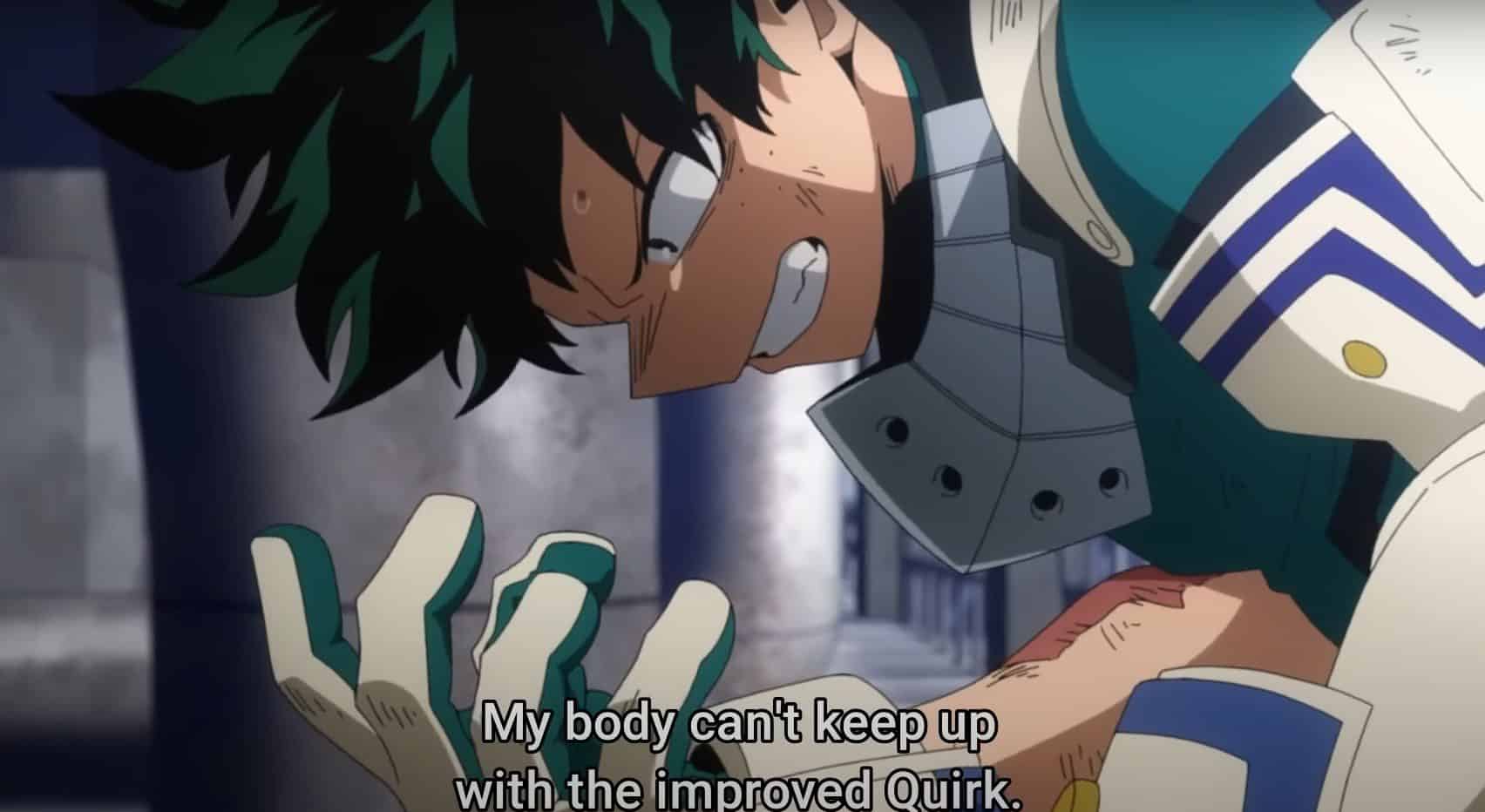
But if the user of this Quirk becomes emotionally unstable, they may also lose control over the Quirk entirely. This weakness is first seen when Midoriya first activates Blackwhip in the joint training arc, where he gets overwhelmed by his emotions, and Blackwhip begins to uncontrollably and sporadically shoot out of his body against his will. So if you’re a very complacent or emotional person, this Quirk might not be for you.
Another weakness this Quirk holds is the fact that the tendrils the user produces must remain attached to the user’s body. Now, this actually results in a couple of problems. Unlike Sero’s tape, if you have a hold on an enemy using this Quirk, you can’t let go if you want to keep them restrained. Basically, you can’t just tie someone up with this Quirk and walk away. You have to remain focused on keeping them trapped in your bind. It’s like tying someone up to a rope, but as soon as you let go of the rope, it disappears. If you want to keep the person restrained, you can’t let go.
This also leads to problems when you’re trying to grapple your opponents with this Quirk. If you wrap Blackwhip around an enemy’s arm and they are stronger than you, then instead of you pulling them or holding them back, they could instead overpower you and fling you around or pull you towards them.
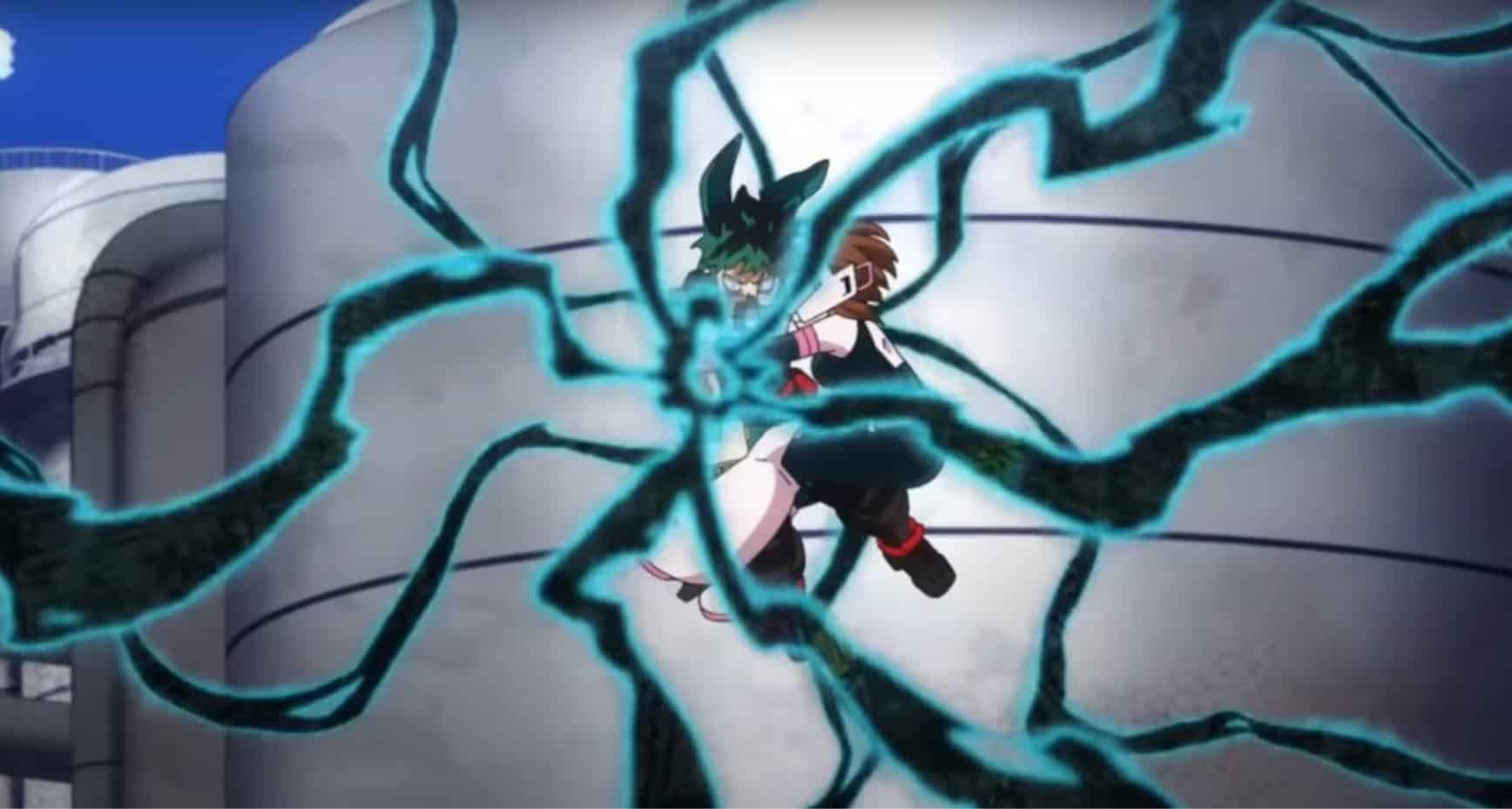
Blackwhip depends on anger.
In fact, this quirk strength is also heavily dependent on the user’s physical strength as well. If you wanted to pick something up with this Quirk or throw something you grab with it over a distance, you would have to be physically strong enough to do so. So if you’re not the most physically blessed Giga Chad, then this Quirk certainly wouldn’t be as beneficial as you’d like. People often forget that one of the Spider-Man superpowers is enhanced strength; it ain’t easy swinging around cityscapes.
Blackwhip’s Potential
But weaknesses aside, Deku’s Second Quirk still does have some potential. Firstly the user could use a black whip like a whip. So far, we’ve only seen this Quirk used for grappling and for movement. But if the user actually used the black tendrils like whips, it would give them an insane advantage when it comes to combat. I mean, all they would have to do is just have a few tendrils appear from their back, and boom, you have multiple controllable limbs that you can swing at high speeds for some serious damage. Just think of Tamaki Amaziki’s vast hybrid chimera Kraken special move, except with Blackwhip.
If the user wanted to perform long-ranged attacks, then they could do so by using Blackwhip to launch projectiles. By standing a bit away from the object they want to throw and then grabbing onto it with Blackwhip, the user could then use centripetal force to launch the object at high speeds toward their target. Think of it like a super-powered hammer troll, you grab onto the object, you spin around, and then you let go launching it with insane power.
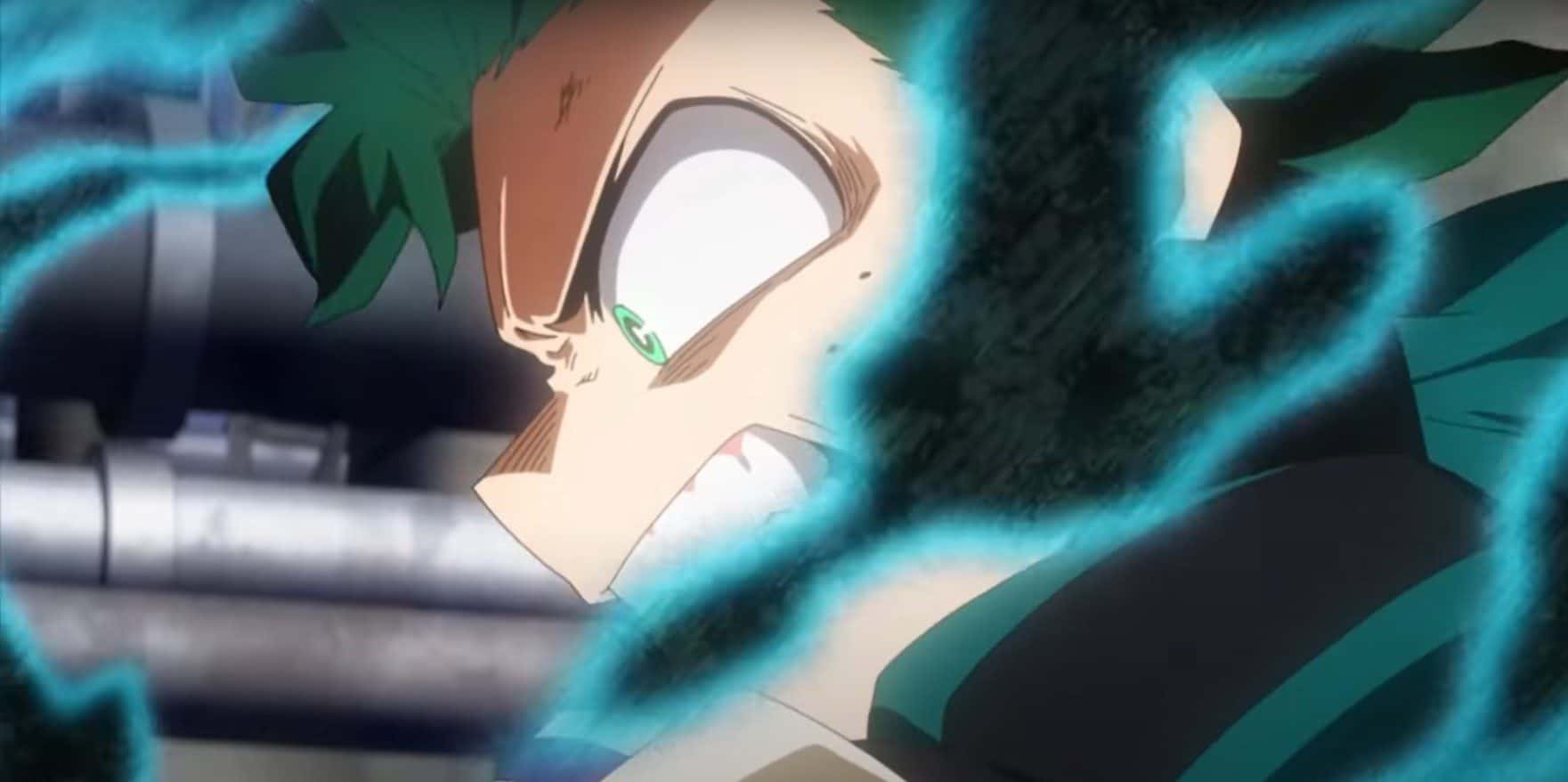
Blackwhip’s Potential
Deku’s Second Quirk also has some great potential for physical defense. We know that the tendrils this creates are extremely durable and that the user can wrap the tendrils around themselves. So if the user was capable of producing enough of the tendrils, they could potentially cover their entire body with the black energy, giving them an extra layer of durable armor. Not only would this give the user an incredible defense, but a suit of armor made of black energy tendrils would also look pretty badass.
But the greatest potential Deku’s Second Quirk offers is the ability to turn its user into a human spider, and no, I don’t mean like Spider-Man. If the user of this Quirk gained full control over this ability, they could potentially use the tendrils like spider legs. Lifting up the user’s body off the ground and allowing them to crawl around on almost any surface like a spider. And when their prey gets in range, they can shoot out more tendrils at your target, grabbing them and trapping them like a bug in a web; now that’s a terrifying ultimate move.
And that’s everything you need to know about the Quirk Blackwhip. Overall it’s a pretty amazing ability. While not being super strong on its own, it certainly makes up for it with a hell of a lot of versatility. It’s definitely one of the better quirks out there, and in everyday life, it would also be super useful.
