Colter Shaw, portrayed by Justin Hartley, is a resourceful tracker known for his skill in finding missing persons. In Season 2, Episode 4 of Tracker, titled “Noble Rot,” he is joined by Reenie Green, played by Fiona Rene.
The episode takes them to a vineyard wellness retreat in Napa Valley, where they become entangled in a case involving a missing woman, Quinn Ridgely.
The narrative unfolds with a blend of suspense, drama, and shocking revelations about the darker side of the seemingly serene setting.
The episode begins with an intense scene that sets the stage for the mystery. A woman, played by Jessica Sutton, is seen running through the lush grapevines under the cover of night. She is clearly frightened and is being chased by an unknown assailant.
The audience feels her panic as she deals with the maze of vines, desperately trying to escape her pursuer. This opening scene immediately draws viewers into the action, creating a sense of urgency and intrigue.
Fast forward ten hours later, Colter arrives in Napa Valley to investigate Quinn Ridgely’s disappearance.
Quinn is the owner of a software company, and she is at the vineyard attending a corporate leadership summit with her wife, Gray, who is played by Sofia Hirt.
However, Quinn has gone missing, leaving Gray in a state of distress. In an effort to find her, Gray has offered a substantial reward of $50,000 for any information regarding Quinn’s whereabouts. This high-stakes situation adds pressure to Colter as he goes on the investigation.
Colter’s involvement in the case is personal. He knows Gray well, and his loyalty to her drives him to take on the challenge of locating Quinn. Upon arriving at the vineyard, he quickly realizes that he is stepping into a web of secrets and lies.

Still from the episode (Disney+)
The serene beauty of the Napa Valley stands in stark contrast to the tension that simmers beneath the surface. Colter’s expertise as a tracker comes into play as he begins to piece together the clues surrounding Quinn’s disappearance.
As he goes deeper into the investigation, Colter is joined by Reenie, who serves as his partner in solving the case. Reenie is skeptical about the idea of corporate kidnapping.
While Gray and the security personnel at the vineyard believe that Quinn has been taken against her will, there is no ransom note or any indication that someone is demanding money for her return.
After some initial investigative efforts, Colter agrees with Reenie’s assessment. He suspects that the situation may be more complicated than a straightforward kidnapping.
During their investigation, Colter and Reenie visit Gray and Quinn’s villa. Here, Colter observes several details that raise red flags.
He notices blankets on the couch, suggesting that Gray and Quinn may have slept apart the night before. When he confronts Gray about it, she reluctantly admits to having had a fight with Quinn over the direction of their company.
This admission adds another layer of complexity to the case. If there was tension between the couple, could it have led to Quinn’s decision to leave? Colter’s intuition tells him that there is more to the story than meets the eye.
As they continue their inquiries, Colter encounters William Locke, the owner of the vineyard, played by Neil Jackson. Locke is a smooth-talking businessman who seems to have a hidden agenda. His demeanor raises suspicion in Colter’s mind.
Coupled with the head of security, Peter Reynolds (played by Roshawn Franklin), Locke appears to be withholding important information about Quinn’s disappearance. Colter’s instincts tell him that these two men are not being entirely truthful.
Reenie, using her skills of persuasion, distracts a security guard to give Colter the chance to check the CCTV footage.
They hope to find any clues that might lead them to Quinn. With the help of Bobby (played by Eric Graise), they uncover a troubling discovery: the footage that shows Quinn speaking to someone right before her disappearance has been deleted.
This action raises serious questions about the integrity of the security personnel and the owner of the vineyard. Why would they delete footage that could be essential in locating Quinn?
As the investigation unfolds, Colter confronts William Locke about the deleted footage. Locke, trying to downplay the situation, admits that Quinn sought him out to obtain “toad venom,” a substance used in some psychedelic experiences.

Still from the episode (Disney+)
He seems to deflect any serious concern regarding her disappearance. This revelation adds another twist to the plot, leading Colter to believe that Quinn might have gotten into trouble due to her search for the drug.
Colter’s investigation leads him back to the spot where Quinn was seen running in fear during the episode’s opening scene.
Following her tracks, he arrives at a construction site, where he makes a shocking discovery: Quinn’s glasses, discarded in a boarded-up hole. The significance of this find cannot be understated, as it indicates that she was indeed there and something went horribly wrong.
While searching the site, Colter stumbles upon a severed human foot in the same hole where Quinn’s glasses were found. The gruesome find sends a chill down his spine. He realizes that it has been there for quite some time, ruling out the possibility that it belongs to Quinn.
Instead, it suggests that there are more sinister activities happening in the area. Colter’s mind races with the idea that multiple bodies could be buried at this construction site, which raises the stakes in the investigation.
With a renewed sense of urgency, Colter and Reenie follow tire tracks to a nearby maintenance shed. It is here that Colter encounters Rona, the woman who works at the construction site (played by Gloria Garayua).
He questions her about the construction and some barrels that appear to have been recently moved. As they talk, Colter remains cautious. He senses that Rona might know more than she is letting on.
After leaving Rona, Colter instructs Bobby to track her phone to discover who she is communicating with. Bobby quickly locates her phone, revealing an alarming connection that further complicates the investigation. Colter’s instincts prove correct when they discover more bodies stored in barrels on the property.
The sight of these bodies solidifies his fear that something deeply criminal is taking place at the vineyard. The beautiful exterior of the vineyard now feels like a façade hiding dark truths beneath.
As Colter and Reenie go deeper into the case, they encounter escalating danger. A man attacks Colter unexpectedly, leading to a tense struggle.
Colter, however, uses his training to regain control of the situation and learn the identity of the contractor behind the hidden horrors at the vineyard: Jesse Pardue.
The plot thickens as it becomes clear that Jesse and Rona are behind Quinn’s kidnapping. This shocking turn of events reveals the extent of the depravity at the vineyard.
It is revealed that after a heated argument with Gray, Quinn took hallucinogenic drugs in an attempt to calm down.
In her altered state, she stumbled upon the construction crew hiding the bodies of migrant workers who had died in various accidents over the years. The revelation that Quinn unwittingly uncovered such a dark secret raises the stakes, making her plight all the more urgent.
While Colter and Reenie search for her, Quinn finds herself tied up at another one of Jesse’s job sites. She tries to bargain for her life, offering Jesse money from her company and her personal bank account.
However, Jesse realizes that Colter is closing in on him and decides that the only way to cover his tracks is to kill Quinn. His plan to dispose of her body in a wood chipper showcases his ruthless nature.
The tension escalates to a breaking point when Colter arrives at the scene. He is aided by Velma’s quick thinking, who conducts an online search to track Quinn down. Just when it seems that all hope is lost for Quinn, Rona unexpectedly turns against Jesse.
In a moment of bravery, she shoots him, giving Quinn the chance to escape. This act of defiance from Rona shifts the power dynamic and illustrates the complexity of the characters involved.
The situation reaches its climax when Jesse, in a frantic attempt to regain control, stumbles backward into the wood chipper.
The audience witnesses the horrifying scene as his bloody remains are expelled from the machine. This graphic moment, while shocking, serves as a fitting end for a character who embodies the darker aspects of the human experience.
Once the dust settles, Quinn is finally safe, and Colter has successfully completed his mission. Yet, this victory is bittersweet. On a personal level, Reenie’s journey takes a new turn as she overcomes her romantic life amid the chaos.
Throughout the episode, she has developed a connection with Elliott Rush, a former coworker she introduces to Colter. Their relationship is still in its early days, and while they may not yet share deep affection, they exhibit a sense of teamwork that hints at potential growth.
As Colter processes the events of the day, he reflects on his feelings for Reenie. He approaches her with questions about her dinner with Russell, highlighting the uncertainty and complexities of their relationships.
Reenie expresses surprise that Colter knows about her plans but clarifies that Russell is not the type to be a plus-one for her.
Instead, she chose to invite Elliott, emphasizing that her relationship with him is not romantic yet. This moment highlights the nuances of their friendships and romantic entanglements, reminding viewers that personal connections can be just as complicated as the cases they solve.
At the end of the episode, Reenie stops by to say goodbye to Colter and deliver his payment. Colter sits on the vineyard, drinking a beer, an act that symbolizes his need for rebellion and relaxation after the intense day he has faced. Elliott compliments Colter on his reputation, revealing that he has heard much about him from Reenie.
Colter, acknowledging the budding relationship, tells Reenie he hopes Elliott knows how fortunate he is to be with her. Their interaction is layered with unspoken feelings, showcasing their understanding of each other despite the romantic distance.
As they part ways, Colter smiles sadly, recognizing the bond he shares with Reenie, even as their lives take different paths.
The episode concludes on a reflective note, leaving viewers with the impression that while Colter and Reenie may not be together romantically at the moment, their connection is strong and meaningful.
If circumstances were different, they could easily have been a couple. However, they both seem content with where they stand, suggesting a maturity in their relationship.
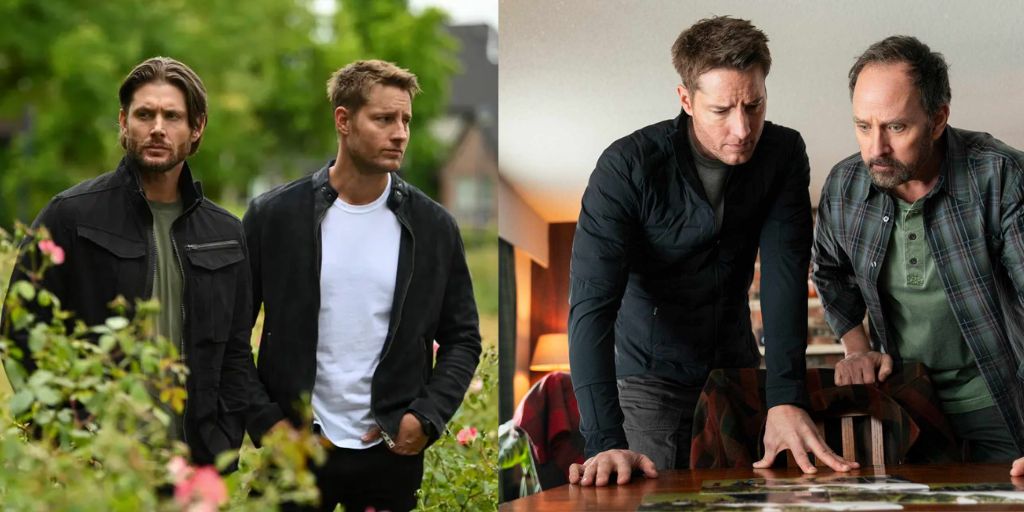
Still from the episode (Disney+)
“Noble Rot” serves as a compelling episode that blends thrilling action, mystery, and character development. The investigation into Quinn’s disappearance exposes not only the dark secrets lurking beneath the surface of the vineyard but also the complexities of relationships among friends and colleagues.
The narrative invites viewers to reflect on the nature of loyalty, love, and the moral choices we make in the face of danger.
As the episode unfolds, it delivers a powerful message about the impact of our actions on others and the importance of standing up for what is right, even when faced with terrifying challenges.
Tracker continues to impress with its ability to weave intricate stories filled with suspense and emotion. The characters, particularly Colter and Reenie, are relatable and well-developed, drawing viewers into their lives and struggles.
As they overcome personal dilemmas and the pursuit of justice, the series keeps audiences engaged, eager to see what twists and turns await them in future episodes.
The episode “Noble Rot” in Tracker contains a gripping blend of suspense and character find that resonates with viewers long after the credits roll.
As Colter Shaw and Reenie Green deal with the dark underbelly of the vineyard wellness retreat, they confront not only the physical dangers that lurk in the shadows but also the emotional complexities of their relationships
Colter, as the skilled tracker, embodies the relentless pursuit of truth. His determination to find Quinn Ridgely drives the story forward, revealing the lengths to which he will go to help a friend. However, his quest also forces him to confront the personal costs of his profession.
The emotional weight of his connection with Reenie adds depth to his character. Their interactions reflect a profound understanding of each other, rooted in shared experiences and mutual respect.
As they work together to uncover the sinister secrets of the vineyard, their bond is tested, highlighting the tension between professional duties and personal feelings.
Moreover, the episode sheds light on the often-ignored issues surrounding the treatment of marginalized communities, particularly migrant workers. The revelation of bodies buried at the construction site speaks to the dark realities faced by those who are often invisible in society.
It serves as a stark reminder of the consequences of exploitation and the importance of acknowledging the humanity of all individuals, regardless of their background.
This theme resonates powerfully in contemporary discussions about social justice, making the episode not only thrilling but also relevant.
The climax, marked by Rona’s courageous decision to turn against Jesse, symbolizes the potential for redemption and the importance of standing up against wrongdoing.
Rona’s actions shift the power dynamics, demonstrating that even in the face of danger, individuals can choose to do what is right. The brutal conclusion, with Jesse meeting his demise, underscores the consequences of a life rooted in violence and deceit.
Noble Rot challenges viewers to reflect on the nature of relationships and the ethical dilemmas faced in times of crisis. The characters’ struggles illuminate the complexities of human behavior, revealing that motivations are often entangled with personal history and moral choices.
As Colter and Reenie emerge from this harrowing experience, the audience is left contemplating the balance between duty and compassion, the quest for truth, and the resilience of the human spirit in the face of adversity.
The episode stands as a testament to Tracker’s ability to deliver compelling storytelling that resonates with real-world issues, ensuring that viewers remain engaged and invested in the characters’ journeys as they overcome the often treacherous waters of life and love.
The question of what is happening with Fatima’s (Pegah Ghafoori) pregnancy has lingered in the minds of viewers since the start of Season 3 of “From.”
This mystery has become more intense as the episodes unfold. In Episode 6, a surprising twist complicates the situation dramatically.
The beginning of Episode 7, titled “These Fragile Lives,” picks up right where we left off, with the shocked faces of Fatima, Ellis (Corteon Moore), and Boyd (Harold Perrineau) as they learn the startling news that Fatima is not pregnant.
At least, not in the conventional sense. The ultrasound shows no baby, and Fatima’s unsettling cravings only add to the mystery. This leads to two terrifying possibilities.
As confusion erupts in the hospital room, Fatima and Ellis return to Colony House filled with despair. Boyd feels a strong responsibility to figure out what is happening. He turns to Kristi (Chloe van Landschoot) and insists that she must find a solution to this strange problem.
However, they are all still uncertain about the true nature of the issue. Later, Boyd speaks with Donna (Elizabeth Saunders) about Fatima’s condition, emphasizing the need for transparency as they lead their community. Boyd shares his fears about Fatima’s situation.
He worries that she could be genuinely pregnant, but with something that does not appear on the ultrasound.
This could be a manifestation of the terrifying, supernatural elements of their environment—much like when a bus crawled under Boyd’s skin in Season 2, an image that only he could see.
The second, more psychological possibility is that Fatima’s mind is being influenced by their surroundings. The dreadful atmosphere may be starting to penetrate her thoughts, just as it did with Boyd’s wife and Sarah (Avery Konrad).
This psychological horror adds a layer of complexity to the narrative, making the audience question what is real and what is a product of the characters’ fears.
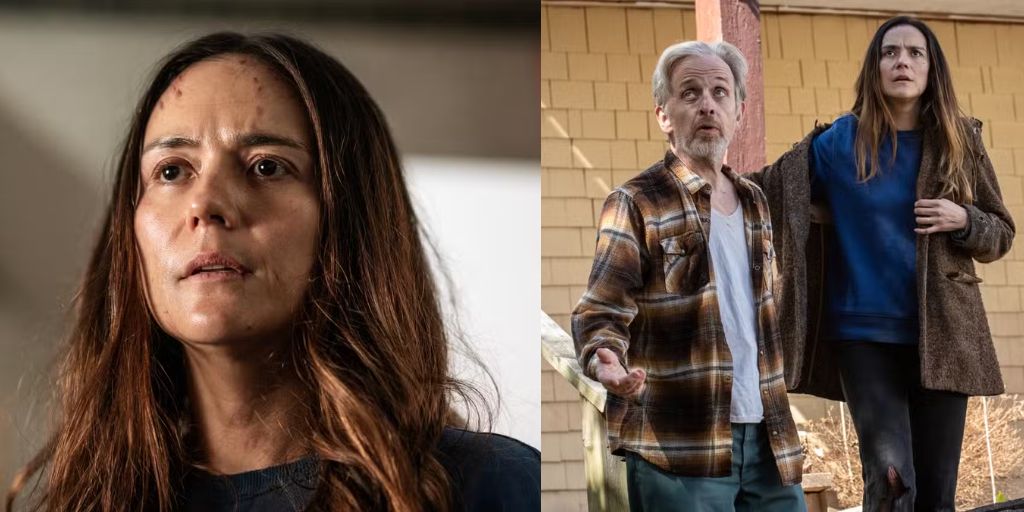
Still from From Season 3 (Credit: MGM)
Each of these possibilities implies that doom and death are imminent. Because of this, Donna insists that they need to move out of Colony House to safeguard the other residents.
Boyd understands her concern but is left feeling frustrated. The delicate balance between leadership responsibilities and personal emotions is tested as they deal with this chaotic situation.
Meanwhile, the final scenes of Episode 6 show Tabitha (Catalina Sandino Moreno) recalling a haunting dream from her childhood. In this dream, she runs from an unknown entity at the homestead, a location filled with creepy mannequins and ominous red rocks.
This episode also features Tabitha, Ethan (Simon Webster), and Jade (David Alpay) as they decide to return to the homestead in search of answers. As Jim (Eion Bailey) is gathering crops with other residents, he sees Tabitha and becomes worried.
He tries to dissuade her from pursuing her investigation. Jim is deeply concerned about how she is linked to this dreadful place, fearing that going into its mysteries could lead to horrific consequences. This concern adds depth to Jim’s character, showcasing his protective instincts toward those he cares about.
However, Jim eventually relents, allowing Tabitha to follow her instincts. This leads to a disturbing conversation with Jade. Jim shares his theory that Tabitha’s dreams about this strange place as a child may have sealed her fate.
He believes she was always destined to encounter that tree, implying that fate has played a cruel hand in her life.
This discussion highlights the show’s ongoing theme of destiny and the inescapable nature of the characters’ circumstances. The past and present are intertwined, affecting their decisions and ultimately their fates.
A new character, Acosta (Samantha Brown), enters the scene with an eager desire to find answers. She shows signs of what some may call “I’m going to solve this” syndrome, and Kenny (Ricky He) quickly notices this when he talks to her in the diner.
Acosta feels slighted by Boyd’s authority and his rejection of her ideas. During her conversation with Kenny, she expresses her frustration.
When he tries to discuss the situation with her, she retaliates against his acceptance of the current events, further voicing her dissatisfaction. Acosta storms out of the diner with a renewed determination to escape the town.
Just as she leaves, Bakta (Angela Moore) enters and suggests reopening the diner. This moment captures the tension within the group as they each pursue their own goals, reflecting the fragmented dynamics among the residents.
Later, Acosta confronts Boyd again, this time demanding her gun back. After a heated argument, Boyd reluctantly agrees to return the weapon but chooses to keep the bullets. He tells her that he will give them back once she has proven herself deserving of them.
This interaction shows Boyd’s growing approach to leadership. He is learning to overcome the pressures that come with leading a community under duress, while also trying to maintain personal relationships with the other residents.
In another storyline, Jullie (Hannah Cheramy) is nurturing her budding connection with Randall (A.J. Simmons) by accompanying him on a walk.
During their time together, she reveals that she does not have her driver’s license yet. This disclosure inspires Randall to teach her how to drive using the town’s emergency vehicle.

Still from From Season 3 (Credit: MGM)
This leads to a light-hearted joyride, offering a brief moment of relief amidst the ongoing tension in the show.
However, their carefree moment is interrupted when Randall is once again attacked by his hallucinations of locusts. In a panic, he jumps out of the car, with Jullie closely following him.
As they run through the forest, they stumble upon the ruins that were shown in Season 2. This is the same place where Boyd found Julie, Randall, and Marielle (Kaelen Ohm) when they were trapped in a comatose state caused by the cursed music box.
Julie feels an eerie connection to the ruins and expresses a desire to find them further, but Randall urges her to reconsider.
Their choice to walk away from the potential danger showcases one of the more rational decisions in horror history, emphasizing the theme of survival that permeates the series. They are faced with the decision to confront their fears or avoid the unknown horrors that lie ahead.
In Season 3, Episode 7, trouble arises in the relationship between Victor (Scott McCord) and his father, Henry (Robert Joy).
After Victor retrieves the ventriloquist dummy, Jasper, he becomes frustrated with Henry’s silence. Henry grows uncertain about Victor’s obsession with the puppet and tries to distance him from it, causing tension between father and son.
Victor decides to take Jasper to Sarah’s house, using her basement as a space for Jasper to potentially reveal his secrets. This subplot adds emotional depth to the characters, finding the dynamics of their relationships amid the chaos around them.
Meanwhile, Henry finds himself sharing a drink with Donna at the bar. During their conversation, he opens up about his internal struggles. For a brief moment, he expresses regret about coming to the town with Tabitha.
He contemplates whether it would have been easier if he still believed Victor was dead, indicating the emotional burden he carries. This moment sheds light on the psychological toll that their experiences have had on him, as he grapples with feelings of loss and guilt.
Back at Colony House, Elgin (Nathan D. Simmons) provides a poignant moment in Episode 7. He creates a handmade crib mobile for Fatima’s unborn child, showcasing his nurturing side. However, the delicacy of this scene is soon disrupted by a memory of the camera he acquired in a previous episode.
The camera prints out a polaroid depicting the doors of the bunker that viewers saw in Seasons 1 and 2. This revelation compels Elgin to investigate further. He discovers doors within the bunker that lead to a boarded wall.
Just as he is about to give up, he hears ominous knocking from behind the wall. As he moves a piece of furniture, he uncovers another door that opens into a small room, revealing a decaying skeletal corpse in the corner.
In this chilling moment, Elgin turns to the illusory kimono lady who had promised to save them, and he questions, “Is this really what happens?” This inquiry encapsulates the essence of the series, where characters are continually forced to confront their fears and uncertainties.
Elgin’s discovery adds yet another layer of mystery to the narrative, leaving viewers to ponder the implications of this newfound information and what it means for the characters.
Returning to the central mystery surrounding Fatima in this episode, she finds herself on the brink of losing her grip on reality.
She wrestles with the implications of the ultrasound and pleads with Ellis to believe that something is genuinely inside her. She struggles to cope with the thought that all the chaos and horror surrounding them may stem from her.
At the same time, Ellis and Boyd are left questioning what they should be preparing for or fearing. They ponder whether Fatima is experiencing a psychological breakdown or if there is a supernatural entity growing within her.
This uncertainty heightens the tension, as the characters grapple with their own fears and anxieties while trying to understand the nature of their reality.
Marielle hooks Fatima up to an IV drip to provide her with nourishment. However, in a disturbing twist, Fatima’s body rejects the nutrients and instead craves things that are far from alive.
The situation takes a horrifying turn when Fatima sees her stomach cave in and begins to writhe in agony on the bed, releasing excruciating wails of pain.
When Ellis enters to comfort her, he becomes increasingly alarmed by her condition. In a desperate attempt to help, he seeks anti-psychotic medication from the hospital, but Kristi intervenes, claiming that it could worsen Fatima’s state. Boyd, recognizing the emotional turmoil Ellis is experiencing, steps in to mediate.
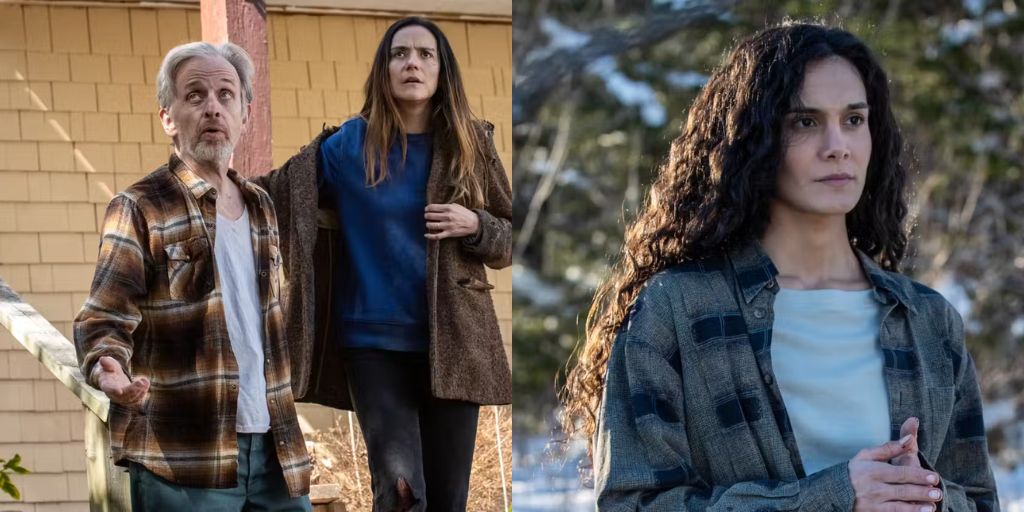
Still from From Season 3 (Credit: MGM)
Despite the chaos, Ellis remains calm but distressed as he slowly returns to Fatima. He has already confided in Tillie (Deborah Grover) about Fatima’s uncertain status regarding her pregnancy.
Tillie, an older woman with cancer, expresses her desire to help, motivated by her appreciation for a good love story.
She seeks to support Fatima in her time of need, showcasing her compassionate nature. When Tillie finds Fatima in the greenhouse, she approaches her in an attempt to provide comfort. However, Fatima, overwhelmed by her sensations and confusion, lashes out in fear and desperation.
In a shocking turn of events, Fatima grabs a pair of shears and violently stabs Tillie in the chest. This act of aggression leaves Ellis to walk into a horrific scene where Fatima is crying over Tillie’s lifeless body. Tillie, even in her final moments, urges them to run away from the situation.
This violent act encapsulates the show’s themes of fear, desperation, and the consequences of unchecked supernatural forces.
The emotional impact of this moment leaves viewers in shock, solidifying the idea that the characters’ struggles are not only against external horrors but also their own inner demons.
The complexities of the relationships and the psychological battles they face add depth to the narrative, creating a gripping atmosphere of suspense.
As the story unfolds, the audience is left pondering the fates of Fatima, Ellis, and the rest of the Colony House residents. Each character faces their own challenges, grappling with personal fears and the dark forces that threaten their existence.
Throughout the series, the writers expertly weave together elements of horror, psychological drama, and mystery. The twists and turns keep viewers engaged, as each revelation adds another layer to the story. The characters’ interactions highlight their resilience in the face of overwhelming odds, making them relatable and compelling.
The question of what is truly happening with Fatima’s pregnancy remains unanswered, adding to the tension of the show.
Viewers are left anxiously awaiting further developments as the characters overcome the challenges posed by their environment. The supernatural elements continue to intrude upon their lives, forcing them to confront their worst fears and ultimately question their own realities.
As Season 3 progresses, the stakes continue to rise. The characters are pushed to their limits, both emotionally and physically, as they strive to survive in a world filled with unknown dangers.
The emotional connections between them deepen, and their struggles resonate with audiences, making them invested in the outcome.
Each episode builds upon the last, creating a rich collection of storytelling that impresses viewers. The blending of horror and psychological elements allows for a unique viewing experience, drawing audiences into a world where nothing is as it seems.
As the mysteries unfold, the characters’ journeys become increasingly intertwined, leading to a crescendo of suspense and emotional turmoil.
“From” Season 3 presents a gripping narrative filled with shocking twists and emotional depth. The story covers the complexities of relationships and the impact of supernatural forces on the characters’ lives.
As the series continues, audiences are left eagerly anticipating what lies ahead for Fatima, Ellis, and their companions in the Colony House.
The questions raised by their experiences challenge viewers to consider the nature of fear, destiny, and the lengths one will go to protect those they love.
As “From” Season 3 unfolds, the intertwining narratives of the characters deepen the mystery surrounding Fatima’s unsettling condition, presenting viewers with a haunting tale of fear, identity, and the unknown.
The series masterfully blends psychological horror with supernatural elements, compelling the audience to confront the thin line between reality and the psyche.
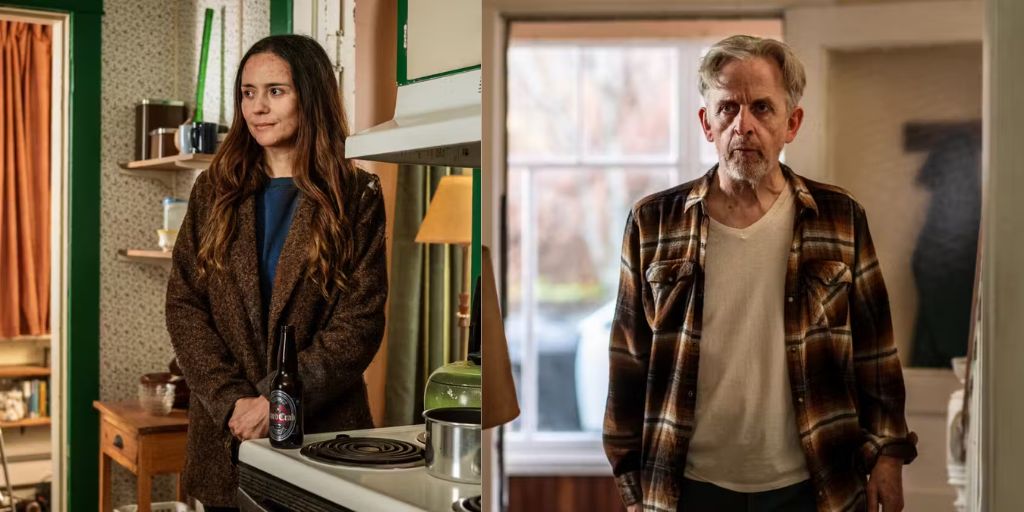
Still from From Season 3 (Credit: MGM+)
One of the pros of this episode is its ability to create intense emotional moments, particularly during Fatima’s shocking actions, which highlight the characters’ vulnerabilities. Additionally, the suspenseful pacing keeps viewers engaged, eager to uncover the next twist in the plot. However, a con is that some viewers may find the plot increasingly complex, leading to confusion about the overarching narrative.
Fatima’s plight, marked by her agonizing cravings and the terrifying implications of her supposed pregnancy, serves as a potent metaphor for the broader struggles faced by all the residents of Colony House.
As they grapple with their inner demons and the external horrors of their environment, viewers are left on the edge of their seats, eagerly anticipating how these intricate threads will converge.
With each episode, the stakes rise, revealing the fragile nature of hope and the enduring power of human connection in the face of overwhelming darkness.
As the season progresses, fans can only wonder what fate awaits Fatima and her companions as they overcome this treacherous terrain, leaving us hungry for answers and immersed in the chilling atmosphere that defines “From.”
