When Lost was popular, the surprise of polar bears on a tropical island grabbed viewers’ attention. Fast forward 15 years, and the mystery of polar bears is still attractive, especially for fans of AMC’s The Terror.
This show takes a real-life story of Captain Sir John Franklin’s 19th-century voyage to find a route through the dangerous Northwest Passage and adds a twist. The crews of HMS Erebus and HMS Terror are hunted by a huge, mysterious creature.
At first, the show keeps the creature hidden, which makes it even scarier. Showing the monster in the fifth episode might seem too early, though. The real fear in the show comes from isolation, harsh conditions, and people’s behavior, rather than just a mythical beast.
There is much to learn about The Terror’s monster, which is not just an ordinary polar bear. We’ll look at its mythological and prehistoric background soon, but first, let’s revisit the Tuunbaq, the show’s intriguing creature.
What Is the Creature in ‘The Terror’ Season 1?
The crew of Erebus and Terror face many dangers like hunger, thirst, cold, sickness, and madness. On top of that, they deal with a giant creature that seems determined to kill them. It starts with the destruction of supply sleds and gets worse after the death of an Inuit shaman.
The creature is not just killing crew members, including Captain Franklin (Ciarán Hinds), but doing it in clever, almost surgical ways. This mysterious monster fuels fear, letting the imaginations of the crew and viewers run wild.
We learn about the term “Tuunbaq” from Lady Silence (Nive Nielsen). Her team only managed a rough translation from a similar “Russian America” term meaning “spirit.”
The Tuunbaq is linked to Inuit shamans. Lady Silence’s father had ties to the Tuunbaq, so after his death, the creature seeks revenge. Lady Silence cuts off her tongue and offers it to the Tuunbaq in a ritual to connect with and control it.
Cornelius Hickey (Adam Nagaitis) briefly saw this bond when he tried to capture Lady Silence and witnessed the death of Henry Collins (Trystan Gravelle), where the Tuunbaq seemed to take his soul.
Hickey tries to tame the Tuunbaq in the season finale by cutting out his own tongue and offering it, but ends up killed. The giant, polar bear-like creature also faces its own end after many fights with poisonous invaders.
How Was the Tuunbaq Created in ‘The Terror’ Season 1?
VFX supervisor Frank Petzold explained how the Tuunbaq was made. It started with an illustration by Neville Page (Star Trek: Discovery, Goosebumps, Falling Skies). The VFX team and animators then brought the Tuunbaq to life. Petzold said:
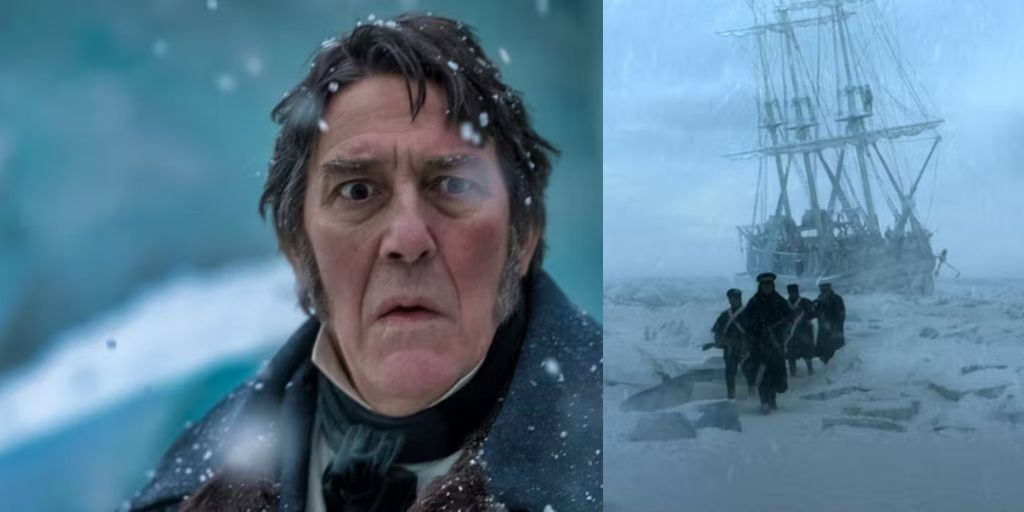
Still from The Terror (Credit: Netflix)
“We all started with an illustration by the creature designer Neville Page. He got the creature approved by David [Kajganich] and Soo [Hugh]. That was just an early look at the creature. We then translated it into the computer, not just the model but also the character and its nature.
When animating a creature, you don’t just see it as a tool; you give it a name and discuss it. People often say, ‘Oh no, he wouldn’t do that.’”
The creature and the crew’s fates are shown side by side as the series progresses. The crew suffers from hunger, cold, and personal terror, while the creature is also attacked, shot at, and burned. It deteriorates along with the crew. By the end, viewers may feel some sympathy for the creature.
The Tuunbaq is not just an animal; it has disturbing human traits, confirmed by co-showrunner Soo Hugh:
“We never wanted to scare the audience. We wanted to make sure he looks human.” This human-like design aims to make viewers feel compassion for the creature and adds to its mysterious mythology.
What Inspired the Tuunbaq in ‘The Terror’?
The Terror could have taken a realistic approach with an apex predator that survived the harsh Arctic conditions and became part of local mythology. Polar bears come to mind.
Weighing up to 1,500 pounds and about 8 to 10 feet long, modern polar bears would be a fearsome predator, especially against humans from the 19th century with limited weapons. Polar bears are well-suited to the Arctic, where stalking humans would be easier than chasing seals.
Alternatively, there could have been some prehistoric creatures in the Arctic. The largest bear ever, Arctotherium angustidens, weighed around 3,500 pounds and was larger than modern bears.
It was isolated to South America, far from The Terror’s setting. Other possibilities include the cave bear or the giant short-faced bear, but there’s also Ursus maritimus tyrannus, or King Polar Bear, known as a top predator.
In the series, the Tuunbaq is both a physical and supernatural entity. It is a creation of Dan Simmons, based heavily on Inuit mythology.
While its appearance is inspired by polar bears and humans, its essence reflects the “tupilaq,” a vengeful spirit in Inuit beliefs. Shamans would create these spirits to target enemies, but experienced enemies could send them back. The Tuunbaq may not have been created for vengeance specifically, but its role in tracking and hunting fits this idea.
The Tuunbaq’s Symbolism in ‘The Terror’ Season 1
The Tuunbaq’s role is to create deep fear among the explorers, affecting their mental health as the series progresses. In the end, the Tuunbaq consumes the poisoned sailors and eventually dies.
Lady Silence feels the Tuunbaq’s death, and a fellow shaman informs their tribe. Lady Silence then leaves to live alone, as expected in their culture, which Crozier (Jared Harris) must accept.
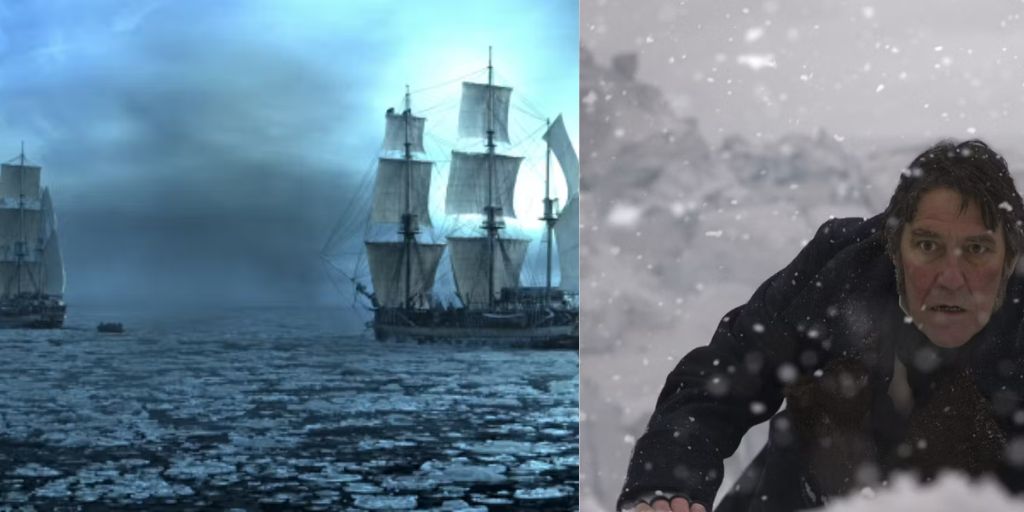
Still from The Terror (Credit: Netflix)
The Tuunbaq represents a spirit maintaining the natural balance, revered in Inuit culture. Initially, it targets the crew for revenge, but their presence disrupts the balance of nature.
The Tuunbaq symbolizes resistance against colonialism and the exploitation of nature by humans. As it consumes poisoned souls, it reaches its limit and dies from the toxins, underscoring its role in protecting nature’s balance.
The Terror Season 1 is available to stream on Netflix in the U.S.
At the Emmy Awards tonight, Anna Sawai won the award for Best Actress in a Drama Series for her remarkable role in FX’s Shōgun. She stood out among a strong group of nominees, proving herself as a significant talent in television.
Shōgun, adapted from James Clavell’s famous novel, has caught the attention of viewers with its depiction of feudal Japan. Sawai’s victory highlights both her exceptional acting skills and the show’s ability to blend historical drama with deep character development.
In Shōgun, Sawai plays Toda Mariko, a character who faces the difficult political and cultural obstacles of 17th-century Japan. Her performance has been praised for its emotional depth, as she skillfully portrays both strength and vulnerability.
Both fans and critics have appreciated her ability to breathe life into this historical series, bringing a sense of humanity to a world set in the past. Sawai’s win is a major achievement for FX and strengthens the network’s standing for producing top-quality drama series.
Who Were the Other Nominees for Best Actress in a Drama Series?
The competition for Best Actress in a Drama Series was tough. One of the nominees was Jennifer Aniston (The Morning Show, Apple TV+), who is known for her role as a morning news anchor. Her character faces the high-pressure world of media and power struggles.
Aniston’s work has remained popular in awards circles because she tackles complex themes within the news industry. Another nominee, Carrie Coon (The Gilded Age, HBO/Max), gave a strong performance as a socialite in 19th-century New York. Her portrayal drew viewers into a world of luxury and social politics, offering a layered and commanding performance.
Maya Erskine (Mr. and Mrs. Smith, Prime Video) brought a fresh take to the screen with her role in this action-packed reboot. She skillfully combined comedy, drama, and action, showing her range as an actress.
Imelda Staunton (The Crown, Netflix) delivered an outstanding performance as Queen Elizabeth II, highlighting the personal and public challenges of the monarch.
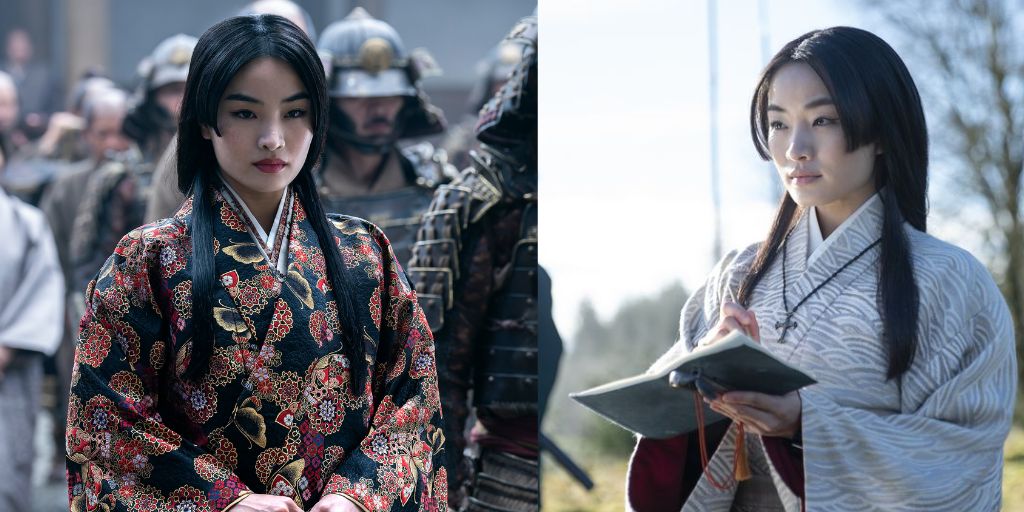
Still from Anna Sawai (Credit: FX)
Her role has been applauded for its emotional complexity and depth. Lastly, Reese Witherspoon (The Morning Show, Apple TV+) earned a nomination for her portrayal of a morning show host dealing with personal and professional issues. Her character’s journey this season has been intricate, further showcasing her acting talent.
With this award, Sawai has truly set herself apart in a fiercely competitive category. Her win adds to the success of Shōgun and positions the series as one of the most engaging dramas of the year. The victory reflects Shōgun’s remarkable blend of historical detail and powerful storytelling, which continues to impress both audiences and critics alike.
