When James Cameron made the original Terminator movie in 1984, it surprised many by becoming a classic sci-fi horror film. At that time, it seemed unlikely that there would ever be a direct sequel. However, when Terminator 2: Judgment Day was released, it changed everything.
The sequel flipped the story of the killer cyborg and set a new standard for action movies. Yet, the time travel aspect of the story has puzzled fans for years. The Terminator franchise is known for being confusing. It features cyborgs from the future who travel back in time to eliminate the future leader of the human Resistance.
With the release of the latest anime series, Terminator Zero, on Netflix, the ending makes time travel seem even more complicated. But is it really? Well, sort of. It also depends on which part of the series you are watching.
The Original Films Introduce Time Travel Mechanics
The original Terminator film does not provide much detail about how time travel works. We learn from Kyle Reese, a character played by Michael Biehn, that nothing “dead” can go through time travel. Additionally, there is no simple way back to the future without the Time Displacement Equipment.
Cameron’s first film in the Terminator series is quite straightforward. It still resonates well with audiences after many years. In the story, Arnold Schwarzenegger plays a T-800 cyborg sent to the past to kill Sarah Connor (played by Linda Hamilton).
The goal is to prevent her son, John Connor, from being born. This premise suggests that Skynet, the AI antagonist, believes it is possible to change the future, maybe even in real-time.
The film raises intriguing questions, such as: Was Kyle Reese always John’s father in a paradoxical way? Or did he change the past by creating a new John Connor with Sarah? Unfortunately, we do not have clear answers to these questions.
Terminator 2: Judgment Day continues to show these themes by introducing a new T-800 and the T-1000, portrayed by Robert Patrick. In this sequel, these two opposing Terminators are sent to protect the young John Connor (played by Edward Furlong) or eliminate him. It becomes clear that the main idea of the Terminator series is that the future can indeed change.
There is a famous quote from the movie that states, “there is no fate but what we make for ourselves.” This leads to the question of whether changing the past overlaps with the future and rewrites reality. Terminator 2 suggests that this is indeed the case.
Cameron even filmed an alternate ending where an older Sarah enjoys the future she helped create by defeating Skynet in the past. However, the mystery of time travel is likely one reason the film concludes with John and Sarah on the open road, leaving their fate to the audience’s imagination.
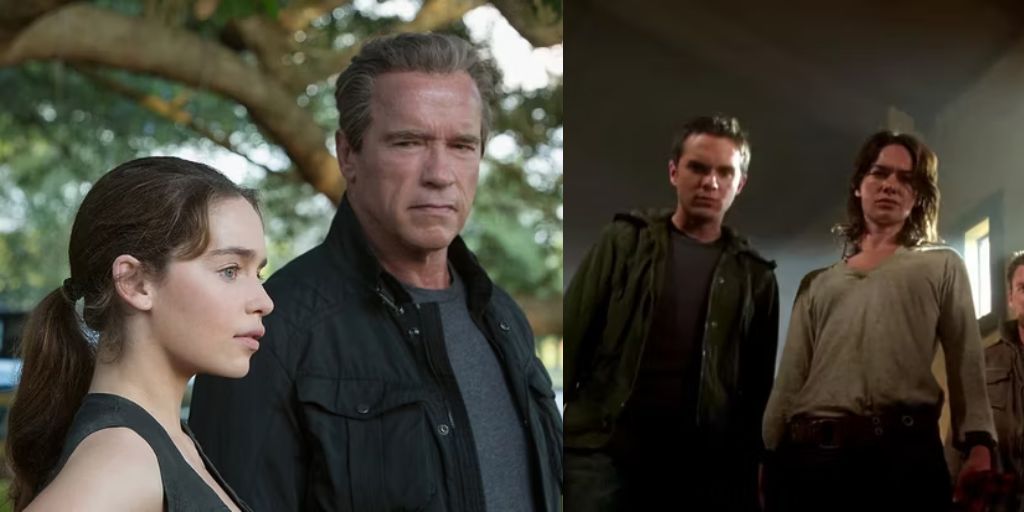
Still from Terminator (Credit: Fox)
Similar to the explanation in Avengers: Endgame, time travel in the Terminator universe does not imply that the past, from which someone traveled, did not occur.
Even if Kyle Reese came from a bleak future, his successful mission to destroy all of Cyberdyne’s research in Terminator 2 may have eliminated that future entirely, leading to a new one. This does not mean Kyle no longer exists (assuming he survived the first film). Instead, it implies that events in time can change.
The concept does not function like Back to the Future, where altering past events raises questions about existence. Instead, Kyle Reese retains memories of his past, while the future no longer follows the same path he knew. That is how we might understand it.
Terminator: The Sarah Connor Chronicles and Alternate Timelines
The simplicity of James Cameron’s initial approach to the Terminator story is what kept fans engaged in the franchise (excluding T2-3D: Battle Across Time, which altered his time travel rules). Whether through film sequels, TV shows, books, comics, or video games, fans encountered many possible timelines.
Thus, when Terminator: The Sarah Connor Chronicles debuted on Fox in 2007, it significantly changed the narrative. Instead of focusing on one timeline, The Sarah Connor Chronicles addresses multiple timelines.
In the series, Derek Reese (played by Brian Austin Greene) kills one of the Skynet inventors in the past, which creates an active new future. This new future is the timeline from which Jesse Flores (played by Stephanie Jacobsen) comes back. Initially, Derek believes she is his Jesse.
However, he soon realizes that her timeline is different from his. The show implies that multiple futures can coexist, with characters like the Terminator Cameron (played by Summer Glau) and the T-1001 Catherine Weaver (played by Shirley Manson) returning from various points in differing timelines to fight for their survival.
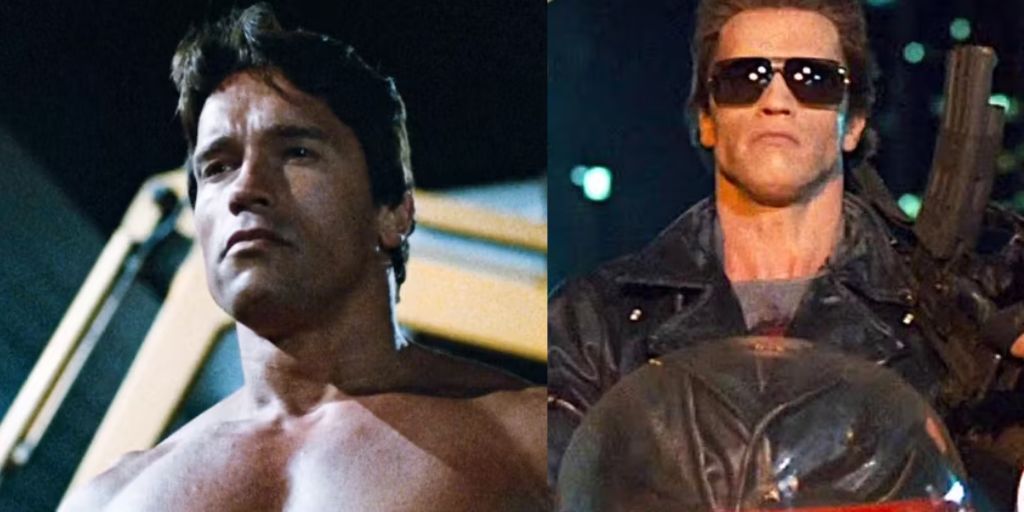
Still from Terminator (Credit: Fox)
The number of Resistance fighters and Terminators traveling back in time makes it difficult to know what future is unfolding for the characters. This uncertainty adds excitement to the show.
In the impromptu series finale titled “Born to Run,” John Connor, played by Thomas Dekker, ventures into the future, only to discover that no one recognizes who John Connor is.
In this way, The Sarah Connor Chronicles reinforces the idea that altering the past impacts the future directly, leading to the erasure of any other active timelines. By skipping over Judgment Day and not being present to guide the Resistance, John’s existence is altered at the beginning of the Future War.
This shift ultimately changes his fate by the end of the series, unless he travels to a different alternate timeline. If only we could change the timeline ourselves to prevent Fox from canceling this show to find out more!
Post-Cameron Terminator Sequels Present a Different Perspective
As we analyze the franchise, it is essential to address Terminator 3: Rise of the Machines and Terminator Salvation. Terminator Salvation was released after The Sarah Connor Chronicles had already been canceled. Since this installment primarily takes place in the future, there is no time travel aspect to discuss.
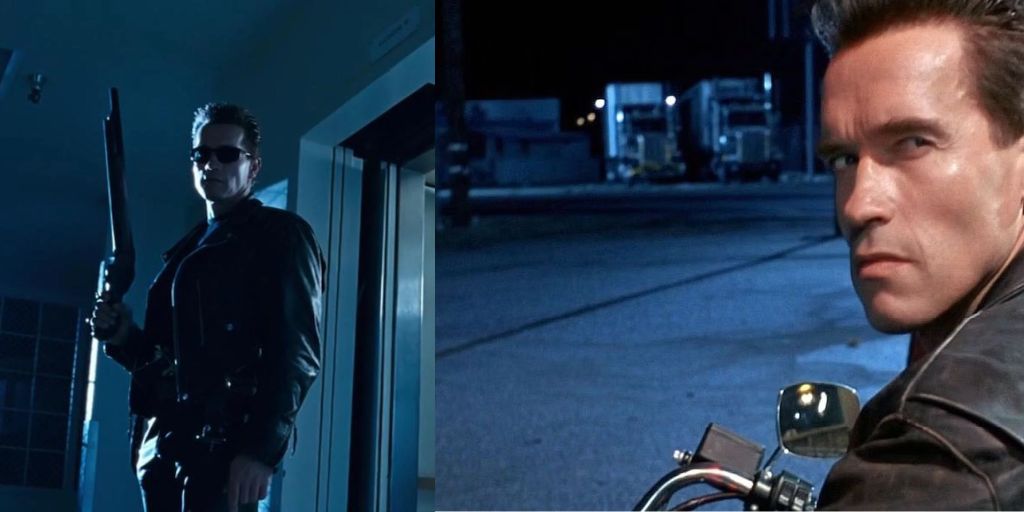
Still from Terminator (Credit: Fox)
On the other hand, Terminator 3 presents a contrasting viewpoint compared to other installments. Instead of suggesting that the heroes can fight against the future, Rise of the Machines asserts that Judgment Day is unavoidable.
While the date might change, the Future War will happen regardless. Fate exists in this narrative. The film ends with Skynet launching a nuclear attack, and because the program had developed over time, it integrated into cyberspace, making it harder to eliminate.
This is an intriguing concept, but much of the time travel simply reinforces the idea that fate cannot be changed. While Skynet does send the T-X (played by Kristanna Loken) back in time to kill John’s lieutenants, the full future remains intact.
The franchise takes another intriguing turn with the first official reboot, Terminator Genisys. In this reboot, the events of previous Terminator films still take place, but in alternate timelines.
In this particular timeline, Kyle Reese (played by Jai Courtney) travels back to the past, but his journey is disrupted by Skynet (voiced by Matt Smith), which sends a Terminator-infected John Connor (played by Jason Clarke) back in time to ensure its own survival.
Additionally, a mysterious Resistance faction sends a T-800 back to rescue a young Sarah Connor (played by Emilia Clarke) and raises her as his own daughter.
This movie is filled with time travel, and while characters frequently travel back and forth through time, a notable aspect is that Kyle can remember changes to his own past.
He does this by recalling the shifts through the eyes of his younger self. This indicates that time itself is fluid and can be altered or adjusted. Unfortunately, the planned Genisys trilogy was canceled, leaving fans without a proper resolution.
When James Cameron returned as a producer for Tim Miller’s Terminator: Dark Fate, many of the complex time travel mechanics introduced in The Sarah Connor Chronicles were set aside. Dark Fate returns to the straightforward approach of time travel, indicating that Terminator 2 successfully stopped Judgment Day and prevented the birth of Skynet.
However, Skynet had still sent multiple Terminators into the timeline. One of them manages to kill John, despite the alterations in the timeline. This reinforces the idea that, although the future can change, it remains connected to the past for time travelers. Like Terminator 3, Dark Fate presents a more cynical view, suggesting that Judgment Day must still occur in some form, this time through a new AI named Legion.
Terminator Zero and Its Unique Time Travel Concept
The recent anime series Terminator Zero adds complexity to the time travel concept once more, but it may not be as complicated as it seems.
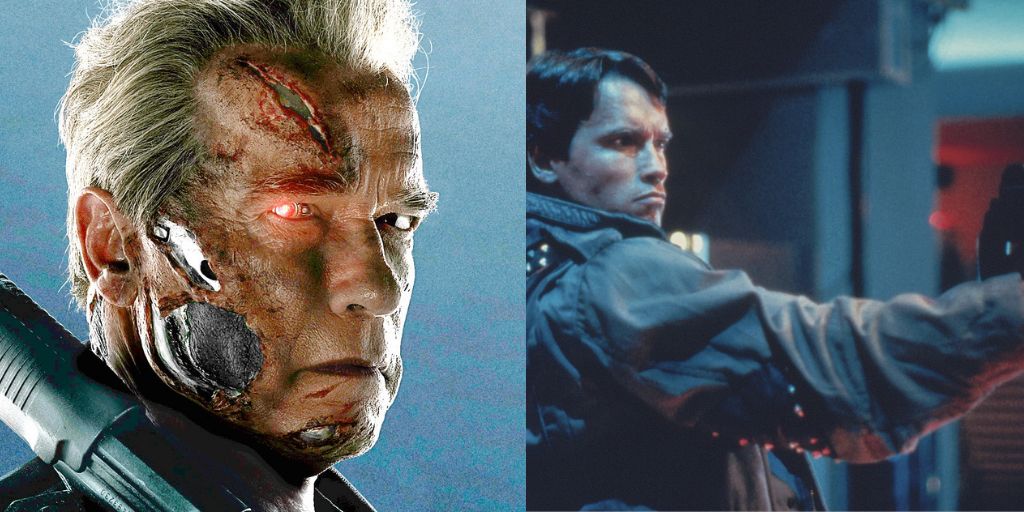
Still from Terminator (Credit: Fox)
In this series, Malcolm Lee (voiced by André Holland/Yuuya Uchida) travels back from the Future War to the past, accompanied by his cyborg friend Misaki (voiced by Sumalee Montano/Saori Hayami). Together, they create Kokoro (voiced by Rosario Dawson/Atsumi Tanezaki), a new artificial intelligence designed to stop Skynet from triggering Judgment Day.
While fans have speculated that another version of Kyle Reese traveled back in time previously, creating a paradox, Terminator Zero takes this idea further.
It reveals that Eiko (voiced by Sonoya Mizuno/Toa Yukinari), a Resistance fighter, is actually Malcolm’s mother, although she is unaware of this fact at first.
When Eiko communicates with the future Prophet (voiced by Ann Dowd/Mari Yokoo), who appears to be an elderly version of Eiko, she learns that every time someone travels back in time, they go to a different past that is not their own.
Unlike Kyle Reese’s mission to return to his original past and prevent the future from being rewritten, Terminator Zero creates more branching realities instead of replacing them. This means that even if Eiko alters the past, saves Malcolm and his children, and allows Kokoro to become a new protector, each of these events exists in a different timeline.
The unique aspect of this series is that it emphasizes how traveling through time changes not just the traveler’s future, but also the past from which they come. It suggests that no future is fixed, and that time is a series of multiple branches rather than a single path.
Conclusion: The Complexity of Time Travel in the Terminator Franchise
The Terminator franchise is rich with complex and intriguing time travel themes, with multiple timelines and paradoxes that keep fans guessing. From the straightforward rules introduced by James Cameron to the branching realities of the more recent series, the concept of time travel remains a fascinating subject.
While some films lean toward the idea of fate being unchangeable, others propose that altering the past can create entirely new futures. Terminator Zero adds an exciting twist, presenting the idea that time travel leads to branching realities instead of erasing original timelines.
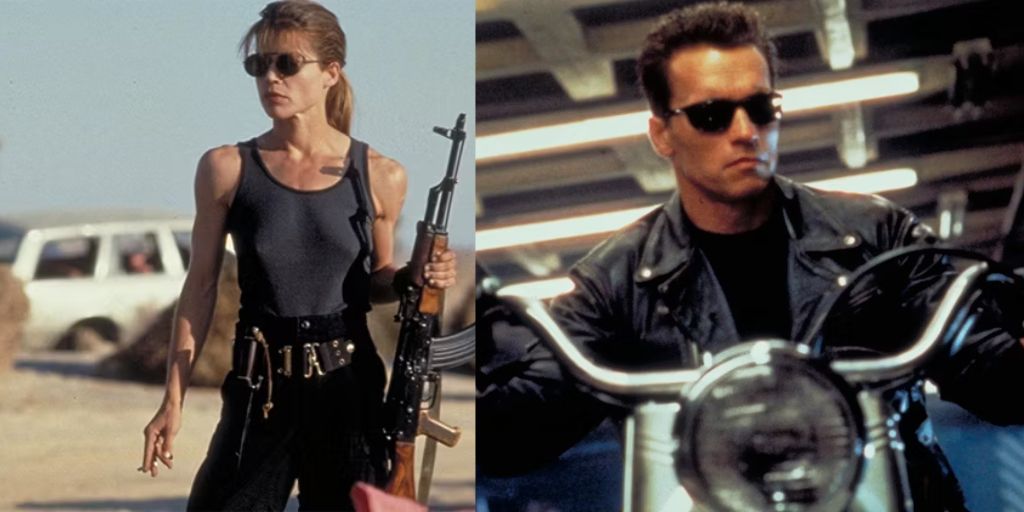
Still from Terminator (Credit: Fox)
As we continue to show the nuances of time travel in the Terminator franchise, one thing remains clear: the relationship between past, present, and future will always be an essential aspect of the story.
Whether the characters can truly change their destinies or whether they are destined to follow the same paths remains an open question. Each installment of the franchise enriches the lore, offering fans the chance to ponder the possibilities and complexities of time travel.
Every reality TV show raises questions about how real it is. Recently, when Julie Chen Moonves left the live episode of Big Brother 26, Jerry O’Connell shared his excitement about filling in for her on social media. He posted a picture of a script, and many people questioned why there was a script for an unscripted show.
This incident showed how some people misunderstand what “unscripted” means. Both Jerry O’Connell and Julie Chen Moonves receive scripts to help guide their narration during episodes.
The script even had the word “alt” written on top, which led viewers to ask why there were multiple drafts. On a show like Big Brother, especially during eviction night, there can be two possible outcomes, leading to different versions of questions and commentary for the host.
This confusion about reality television is common. People often assume that because a show is labeled as “reality,” everything is spontaneous and without any planning. However, most reality shows involve careful planning and editing to create engaging content for viewers.
It raises the question: what does it mean for a show to be “unscripted”? The truth is, while the events may be real, the storytelling often involves scripts and planning. Now, with a documentary-style reality show like Deadliest Catch, many people wonder if there is any scripting involved.
The History of Deadliest Catch
Deadliest Catch is one of the reality shows that changed the genre. It started in 2005 and has now entered its twentieth season. The show follows the lives of deep-sea crab fishers in the Bering Sea. As a docu-follow show, it aims to show viewers the real challenges of the fishing industry.
However, many fans have questioned how real the show is. They want to know if the scenes are staged or if the drama is genuine.
When Deadliest Catch first aired, viewers were eager to see the high-stakes lives of the fishing crews. At that time, there was no reason to doubt the reality of what they saw on screen. But as reality TV evolved, questions about authenticity began to arise.
This cast doubt on Deadliest Catch as well. Mandy Hansen, a crew member, addressed this on Facebook in 2020, saying, “People ask if Deadliest Catch is fake…yo you really think we’re in Hollywood in front of a green screen? There’s a job to be done; it just happens to be filmed.” This quote highlights how real the crew’s experiences are.
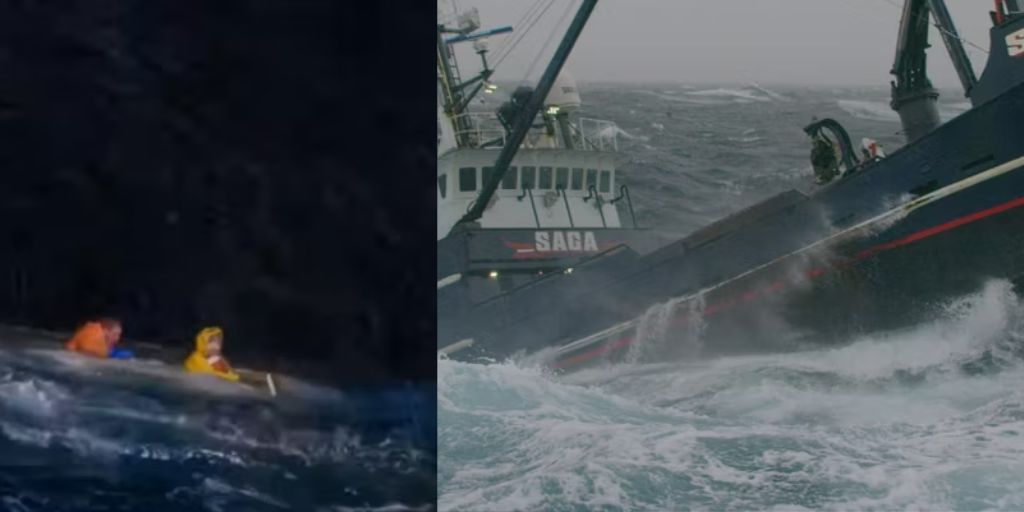
Still from Deadliest Catch (Credit: Discovery Channel)
In an interview, Captain Sig Hansen discussed how the crew adjusts their language during filming. He explained, “There is editing, and you will hear a lot of ‘bleeps’ on the screen. But I think that is one reason the film crew wanted to stay with our boat – we are pretty natural.”
While he was talking about language, he confirmed that the crew is genuine and not creating a story just for entertainment. But are the moments shown really what happens?
Crew member Jack Bunnell claimed in a feature with The Seattle Times, “You got to make it exciting, somehow,” explaining that hauling pots 24 hours a day can be dull. This statement raises important questions about how producers keep the audience engaged.
The Editing Process and Its Impact
Editing plays a crucial role in shaping the narrative of reality TV shows like Deadliest Catch. The crew films thousands of hours of footage, capturing both the thrilling and mundane aspects of life at sea. However, only a fraction of that footage makes it to the final cut.
Producers sift through the material, selecting the most dramatic moments to present to the audience. This can lead to a skewed perception of reality, as viewers only see the highlights rather than the day-to-day struggles faced by the crew.
Captain Sig Hansen noted that not all moments are included in the final product. “They shoot thousands of hours of footage, and I can understand that they are trying to put a storyboard together and make it fit.
Everything that they film is accurate, but you will see a lot more foul weather as opposed to the calm days; I suppose that’s what sells, but the bad weather is a reality.”
This comment illustrates how producers prioritize drama over the everyday reality of crab fishing. While this approach is effective for entertainment, it can create misunderstandings about the true nature of the work.
When Nature Interferes
No one can control a massive storm in the middle of the ocean just to capture the best footage. The cold weather can also affect the cameras. So what happens when a crucial storytelling moment gets interrupted by Mother Nature?
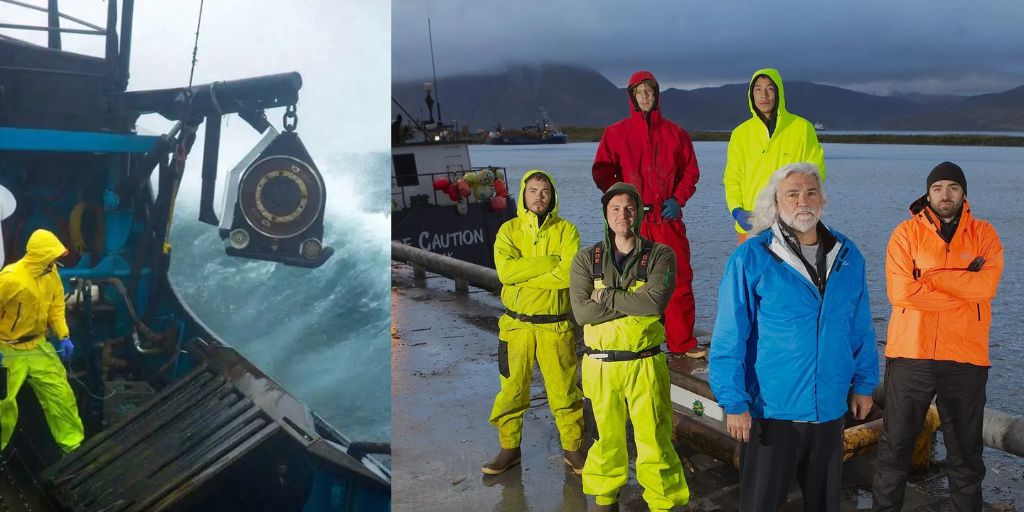
Still from Deadliest Catch (Credit: Discovery Channel)
In 2008, it was revealed that while the crew does not do re-enactments, they do film pick-up shots. This is a common practice in reality TV, and it should not surprise fans that everything is real but might not always show the complete picture. In an early season, the F/V Wizard had a leak combined with footage of a big wave hitting the boat.
At that time, John Ford, president and general manager of Discovery, explained, “The thing we didn’t have on camera was the actual wave that struck the Wizard. That was shot at a separate time on the same journey and was an insert edit from the show.
We did that for story continuity because we didn’t have a boat-to-boat shot.” He further explained, “Everything that you see in the show happened. Nothing is made up and nothing needs to be made up. The Wizard was struck by a big wave, and that wave caused the leak you see in the show.
The show is 100% authentic.” He added, “For certain things, we do pickup shots for continuity. If the camera didn’t run properly when the captain was boarding the boat, they have the captain back up and board the boat again.” This honesty about the editing process helps viewers understand that while the show is based on real events, some moments are enhanced for clarity and storytelling purposes.
Making the Show Interesting
Sometimes, the weather is too nice, so the producers need to find ways to create excitement. Although a promotional photo, The Seattle Times reported a scene where Captain Sig Hansen walked out of Dutch Harbor airport while a crew member sprayed water over him to simulate bad weather.
The producers stated that for promotional and marketing shots, on “very rare occasions,” hoses are used to “mirror the real-life conditions.” This practice raises eyebrows among viewers who expect complete authenticity from the series.
Despite the criticisms, the use of promotional techniques like these is not uncommon in reality TV. Many shows employ similar tactics to enhance their visual appeal. While it can seem deceptive, these strategies are often used to attract viewers and create an engaging atmosphere. This begs the question: how much production is acceptable in a reality show?
A Star Reveals the Truth
In Season 19, Linda Greenlaw, a well-known figure in fishing, joined Captain “Wild” Bill Wichrowski on the F/V Summer Bay. Greenlaw was famous for surviving the 1991 “Perfect Storm,” which inspired the book and movie.

Still from Deadliest Catch (Credit: Discovery Channel)
In an interview with Spectrum News, she revealed that filming Deadliest Catch was “more scripted than Swords: Life on the Line.” She said, “Hey 19 seasons in, the show has to be more than catching crabs or not! The popularity of the show speaks for itself.” Her remarks spark discussions about the nature of reality television.
While Greenlaw’s experience in TV may explain her views, it raises questions about whether Deadliest Catch creates scenes to keep the audience entertained. Captain Sig Hansen shared that calmer moments in crabbing might not be included in the show.
He explained that thousands of hours of footage are filmed, and producers select the most thrilling parts for viewers. “They shoot thousands of hours of footage, and I can understand that they are trying to put a storyboard together and make it fit. Everything that they film is accurate, but you will see a lot more foul weather as opposed to the calm days; I suppose that’s what sells, but the bad weather is a reality.”
This perspective highlights the fine line between reality and entertainment. As the show progresses, many fans wonder if the focus on drama and excitement takes away from the true essence of crabbing.
Heroes and Villains
In reality TV, characters often fit into categories of heroes and villains. This idea is not surprising when crew members claim some edits are manipulative. Sometimes, a crew member like Elliot Neese can be portrayed as a villain, while at other times, he can appear as a hero.
This storytelling technique works for television but does not always reflect reality. Viewers often become attached to specific characters based on how they are portrayed, leading to debates about authenticity.
For instance, the portrayal of conflicts between crew members can create a narrative that feels scripted. Fans enjoy the drama but may not realize that the situations are sometimes exaggerated for entertainment. This dynamic contributes to a sense of excitement but can lead to misunderstandings about the relationships between the crew members.
Questions About Season 20
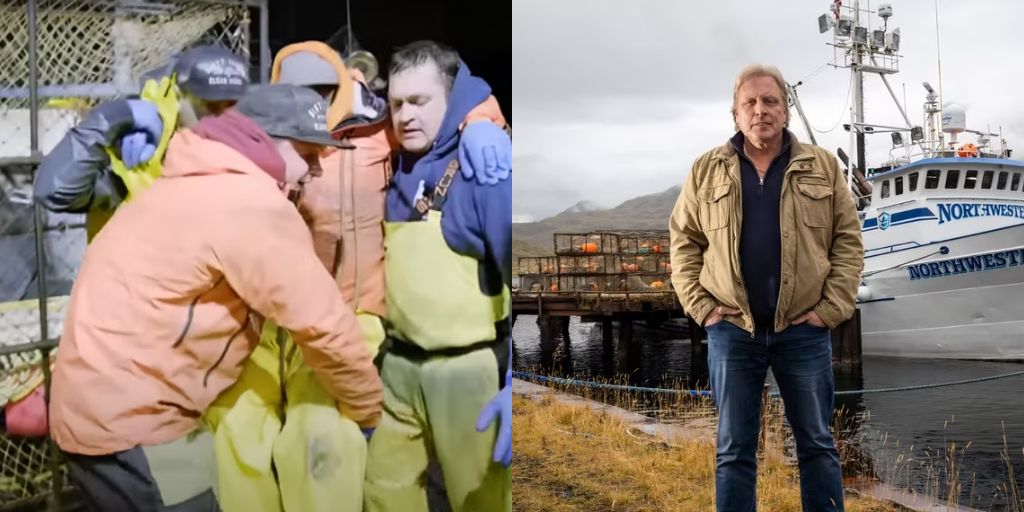
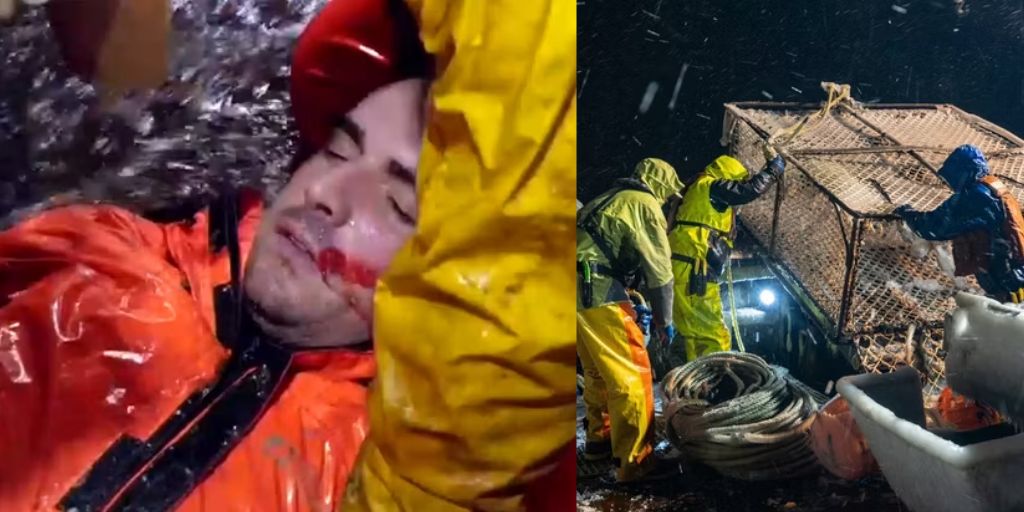
Recently, there were questions about the authenticity of a scene on the fishing vessel Northwestern in Season 20. Viewers saw Captain Sig Hansen’s son-in-law, Clark Pederson, fall overboard, along with a camera operator.
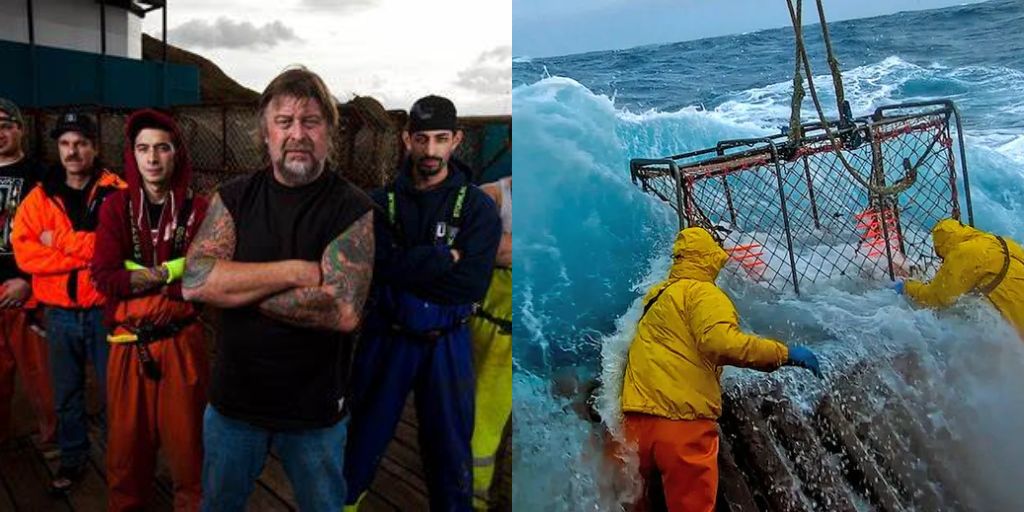
Still from Deadliest Catch (Credit: Discovery Channel)
This moment turned into a dramatic rescue, where both were saved. However, fans began to wonder if this was a stunt, if it was staged for drama, or if it was a re-enactment of a tense moment.
Some loyal viewers wondered if it was just a safety drill. If it was planned, why not be transparent about it? Safety should always be a priority, especially when working in such dangerous conditions.
The lack of transparency makes those questioning Deadliest Catch feel justified. After almost 20 years on air, the same questions about the show’s reality remain. The cast can deny script accusations, but some fans will always look for proof of a lie.
The incident sparked discussions on social media, with viewers expressing their opinions about the authenticity of the situation. Some argued that such dramatic moments are essential for keeping the audience engaged, while others felt it undermines the integrity of the show. It raises an important question about how far producers should go to create compelling content.
The Balancing Act of Reality TV
Ultimately, Deadliest Catch operates in a unique space between reality and entertainment. The show highlights the dangers and challenges of the fishing industry while also incorporating elements of storytelling that can create suspense and drama.
This balancing act is essential for maintaining viewer interest, but it can lead to questions about the authenticity of what is presented.
As Deadliest Catch continues to evolve, producers must show the fine line between delivering genuine experiences and creating attractive television. The series has established itself as a staple of reality TV, but the ongoing discussions about its authenticity remind fans that reality can be more complicated than it seems.
The Future of Deadliest Catch
Looking ahead, the future of Deadliest Catch remains uncertain. With nearly two decades on the air, the show has faced challenges in keeping the content fresh and engaging. As viewers demand more authenticity, producers must find ways to maintain the excitement without sacrificing the core elements that make the show special.
Still from Deadliest Catch (Credit: Discovery Channel)
Moreover, the introduction of new cast members and storylines can help breathe new life into the series. While long-time fans may have strong attachments to the original crew, fresh perspectives can offer a new dynamic and open up new opportunities for storytelling. This could help to keep the audience engaged and invested in the show’s ongoing journey.
Additionally, as technology and production techniques advance, Deadliest Catch can show new ways to tell its story.
Innovations in camera work, sound design, and editing can enhance the viewing experience and offer audiences a deeper understanding of the realities faced by the fishing crews. By embracing these advancements, the show can continue to resonate with both loyal fans and new viewers alike.
Final Thoughts
Despite any claims of staged moments, Deadliest Catch keeps its loyal fanbase. The show remains popular on the Discovery Channel because of its content, not just because of how reality is produced.
Still from Deadliest Catch (Credit: Discovery Channel)
Viewers are drawn to the raw emotion and adrenaline of the fishing industry. They connect with the struggles and triumphs of the crew, which speaks to the power of storytelling, regardless of how it is crafted.
New episodes of Deadliest Catch air on Discovery Channel every Tuesday at 8:00 PM. All episodes are available to stream on Max. As the show continues, audiences will be watching closely to see how the narrative unfolds and whether the authenticity of the experience remains at the forefront.
