The Penguin, Oz (Colin Farrell) stands out as the most watchable character, yet Sofia Falcone (Cristin Milioti) proves to be the most intriguing one. From her first appearance, Sofia attracts the audience with her complexity and depth.
Each scene featuring her reveals something new about her past, motives, and desires. While she embodies a frightening presence, there are moments when we can genuinely feel sorry for her.
A prime example is the poignant scene where she speaks to her cousin at Alberto Falcone’s (Michael Zegen) wake. In this moment, the isolation and sorrow she experiences become palpable.
In the latest episode of The Penguin, titled “Inside Man,” we witness a chilling aspect of Sofia’s character: self-inflicted scars on her neck that she reveals after waking from a nightmare. These scars signify more than just physical damage; they contain the immense trauma that Sofia carries with her.
The scars contribute to her characterization, transforming her into a multifaceted threat. As viewers, we start to understand her motives and the pain that drives her actions. This complexity makes Sofia a compelling character, echoing Oz’s vulnerability as a gangster.
The Origin of Sofia’s Scars
The first clear picture of Sofia’s scars occurs after she wakes from a nightmare. The unsettling image of her sleeping in a closet links back to her earlier therapy session at the episode’s opening. During that session, she articulates her feelings of unsafety, claiming she isn’t safe because she is “home.”
This statement sheds light on the deep-rooted trauma she carries from her past experiences. As the episode progresses, we catch brief look of these scars as they peek out from under her collar after she emerges from hypnosis.
Craig Zobel, the director, explained to Cinema Blend that this scene aims to illustrate the considerable trauma Sofia has endured during her time in Arkham. This trauma appears to manifest in the form of self-harm, suggesting that her scars are not merely for show; they represent her internal struggles and the pain she cannot escape.
Earlier in Episode 1, Sofia frequently wears scarves to cover her scars, revealing her embarrassment and shame about them. This detail highlights the anguish these scars carry, adding another layer of complexity to her character.
In Episode 1, Sofia describes how she and other patients faced the humiliating experience of being stripped naked every morning. This traumatic memory suggests a profound level of gaslighting she experienced during her time there.
This aspect of her history re-emerges during a tense moment with Oz when she threatens him, daring him to challenge her. The scars could also reference her nickname, The Hangman, indicating that she feels her crimes and trauma are metaphorically choking her.
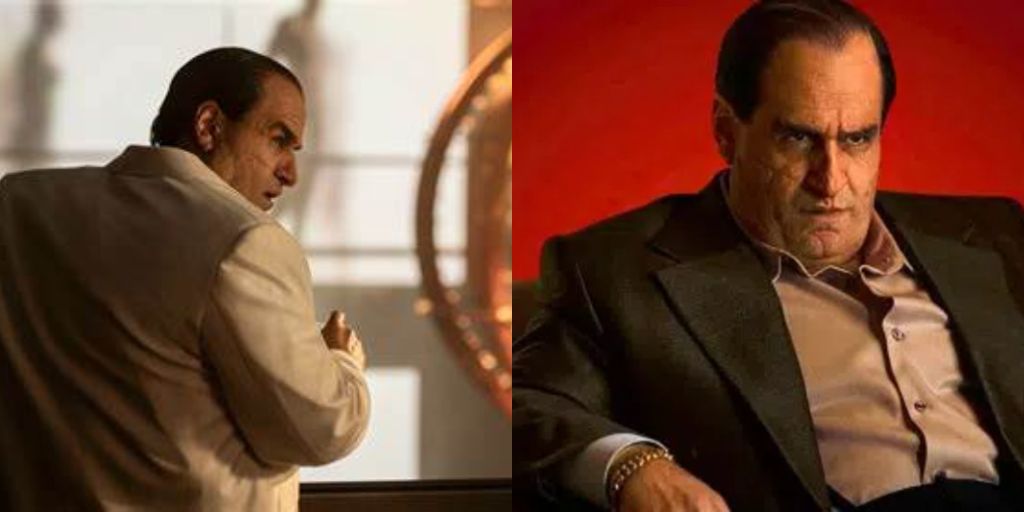
Still from The Penguin (Credit: HBO)
The way she claws at her throat reveals her desperate need for release, underscoring the psychological battle she faces. She often relies on her therapist, Dr. Julian Rush (Theo Rossi), to remind her to “breathe,” emphasizing her struggle for emotional control.
Sofia’s Danger to Oz
The significance of Sofia’s scars extends beyond their physical representation; they illustrate the extent of her danger to Oz and others. Unlike many typical villains who bear scars merely to appear evil, Sofia’s scars reveal a deep-seated trauma.
One of her critical connections to her trauma is through Alberto, who frequently visited her and provided a sense of comfort. In her conversation with Oz, she mentions that Alberto always came to see her, reinforcing the idea that their relationship was a source of support for her amidst her suffering.
As Craig Zobel mentioned in the interview, Alberto was a “true ally” to Sofia, and his death resonates deeply with her. This loss transforms her into a more motivated threat, as she has little left to lose. Her trauma becomes a powerful catalyst for her actions, fueling her desire for vengeance.
With everything she cared for stripped away from her, she becomes a character who operates from a place of deep emotional pain, making her unpredictable and dangerous.
The scars on her neck serve to intensify her threat level. They do not just make her a scarred villain; they imbue her with a sense of vulnerability that makes her actions even more compelling. When Sofia walks into Alberto’s wake, we see how her past continues to haunt her.
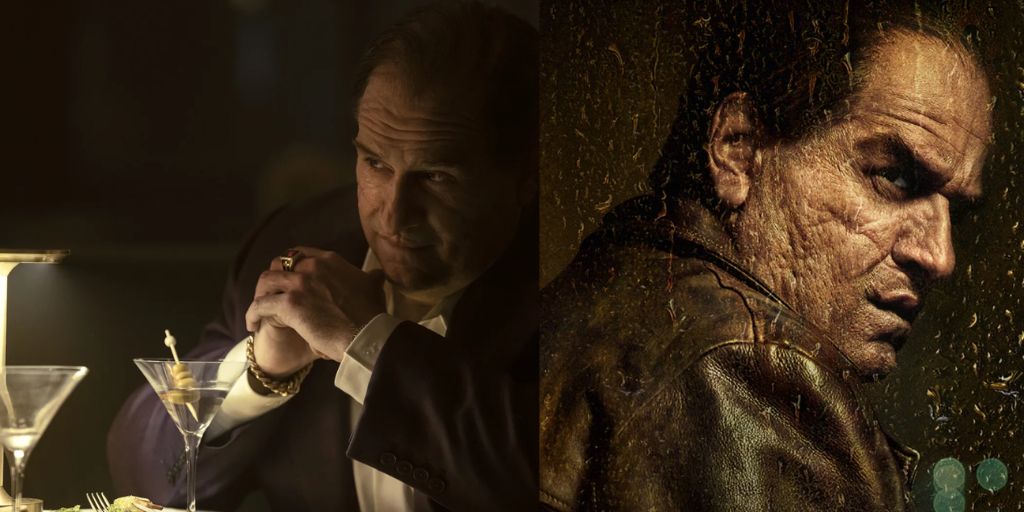
Still from The Penguin (Credit: HBO)
The tension in that moment is palpable; everyone around her is aware of her capability for violence. At the same time, it is genuinely heartbreaking to witness her yearning for connection and love. With Alberto gone, the only person who truly cared for her, she becomes increasingly dangerous, driven by grief and rage.
The Complexity of Sofia’s Character
Sofia Falcone’s scars contribute significantly to her character development. They provide her with the same treatment as Oz, imbuing her with a vulnerability that allows the audience to engage with her on a deeper level.
This complexity makes their violence more frightening because we understand the motivations behind it. It is essential to highlight that Sofia’s violent tendencies are not glorified; rather, they are presented as a product of her suffering.
For instance, her desire to find her brother’s murderer serves as a driving force behind her actions. While her methods may be violent and extreme, they stem from a place of genuine hurt. As she searches for answers and seeks revenge, her past continues to inform her decisions.
Each violent act becomes a reflection of her pain and desire for closure, making her actions more relatable, even if they are morally questionable.
Sofia’s scars also act as a reminder of her history and the trauma she has endured. They signify her struggle to reconcile her past with her present. Despite her fearsome reputation, the audience witnesses her fragility and vulnerability, allowing us to empathize with her journey.
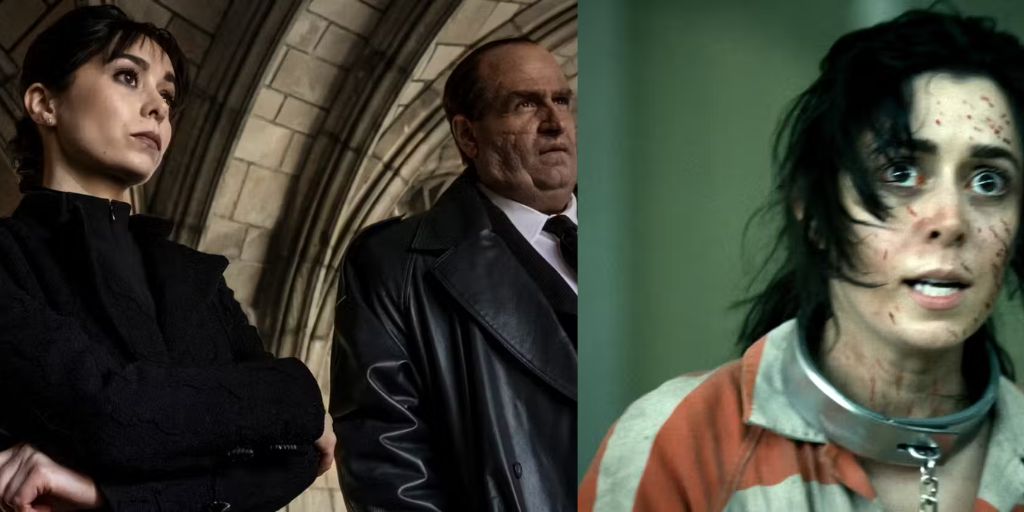
Still from The Penguin (Credit: HBO)
The way she internalizes her pain and reflects it onto herself speaks volumes about her character. Her scars do not merely make her a villain; they create a character filled with depth and complexity.
The Intersection of Love and Violence
One of the most intriguing aspects of Sofia’s character is the intertwining of love and violence. Her violent tendencies are often rooted in her quest for love and connection.
For Sofia, love becomes a double-edged sword; it provides her with comfort and motivation while simultaneously driving her to desperate and dangerous actions. Her desire to avenge her brother’s death is not just about revenge; it is also about reclaiming the love she has lost.
This theme becomes evident during her interactions with others. The loss of Alberto, the one person who cared for her, leaves her feeling isolated and desperate. As she shows her grief, her actions become increasingly volatile.
The scars on her neck symbolize the emotional toll this loss has taken on her, as well as the lengths she will go to find a sense of belonging and purpose. Her quest for vengeance is not merely a quest for justice; it is an attempt to fill the void left by the people she has lost.
As the audience witnesses her struggle, it becomes clear that Sofia’s violence is often fueled by a desire for love and acceptance.
This duality creates a fascinating dynamic within her character. While she poses a significant threat to Oz and others, she also elicits sympathy and understanding. Her scars remind us that her journey is not solely one of violence; it is also a journey of seeking healing and reconciliation with her past.
The Depth of Sofia Falcone
In the end, Sofia Falcone’s scars serve a significant purpose. They represent her trauma and pain without glorifying it. Through her character, we genuinely feel sorry for someone who, just a short time ago, threatened to harm Oz.
The audience witnesses her profound hurt, which influences her decisions and actions. As she internalizes that pain and reflects it onto herself, her understanding of suffering deepens, making the threat of her inflicting it on others all the more chilling.
Sofia’s journey in The Penguin is not just about violence and revenge; it is also a poignant way of love and loss. Her scars serve as a physical representation of her emotional struggle, reminding viewers of the complexity of her character. As she searches for her brother’s murderer, we see how her past continues to shape her present.
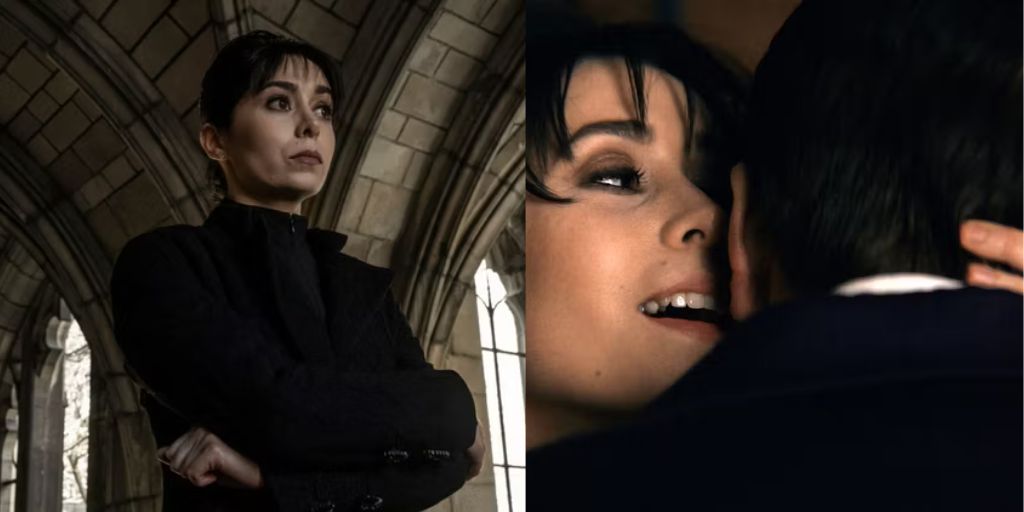
Still from The Penguin (Credit: HBO)
Sofia Falcone is not just a villain; she is a character filled with depth, vulnerability, and pain. Her scars tell a story of trauma and resilience, making her both fascinating and tragic to watch.
The combination of her desire for love, her violent tendencies, and her complex backstory creates a character who is far more than just a threat. Instead, she embodies the complexities of human emotions, showcasing how love and pain can intertwine in unexpected ways.
As The Penguin progresses, Sofia’s journey promises to be one of self-discovery, healing, and the quest for justice, leaving viewers eagerly anticipating what lies ahead.
The Season 2 finale of The Lord of the Rings: The Rings of Power ends with a huge battle, bringing big changes to Middle-earth. The Elves suffer a terrible defeat, with the loss of their stronghold, Eregion, and one of their greatest leaders, Celebrimbor (Charles Edwards).
Sauron (Charlie Vickers) emerges as a powerful force, taking control of Mordor and leading the Orcs. Meanwhile, the Nine Rings of Men are lost, and Sauron’s grip over Middle-earth tightens.
The destruction of Eregion in the series differs significantly from J.R.R. Tolkien’s original legendarium. In the books, the events surrounding Eregion’s fall are more complex and detailed, involving characters and events that the series has altered or left out.
For instance, Adar (Sam Hazeldine) does not exist in the books, and Sauron is already well-established in Mordor. In the books, Sauron has already forged the One Ring by this time and is likely wearing it during the battle, though the show doesn’t mention it explicitly.
The Rings of Power gives a slightly different interpretation, but the general story of Sauron attacking Eregion for the Rings of Power remains the same.
In Tolkien’s version, after creating the One Ring, Sauron discovers that Celebrimbor secretly made the three Elven Rings. Realizing he’s been tricked, Sauron immediately moves to take control of the Rings.
He launches an assault on Eregion, aiming to seize the Rings of Power. At the same time, the Elves feel the One Ring’s power and understand that they have been betrayed.
Sauron’s forces overwhelm the region. Gil-galad, the High King of the Elves, doesn’t personally join the battle but sends Elrond (Robert Aramayo) with reinforcements.
However, Sauron’s army is too large, and Elrond is blocked from reaching Eregion. He is forced to retreat north with his forces, unable to help the Elves still defending Eregion.
The defense of Eregion falls to Celeborn, who leads the last Elven forces. Celeborn, husband of Galadriel (Morfydd Clark), is fighting to save the kingdom, but it is too late. He and his troops also have to retreat to the north. Sauron’s army wins a crushing victory.
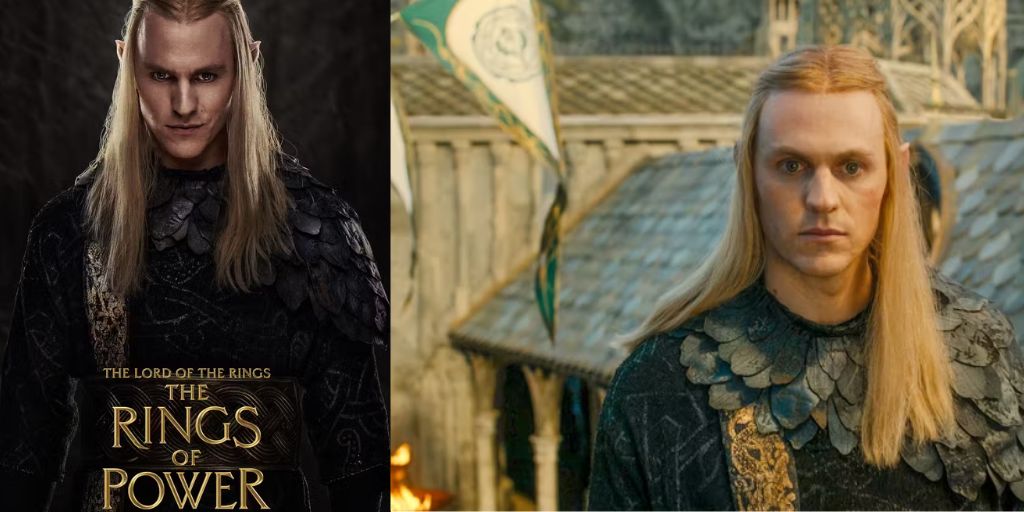
Still from the show (Prime Video)
They destroy Eregion, kill Celebrimbor after torturing him for information about the Rings, and learn that the three Elven Rings have been hidden in Lindon.
Sauron, furious at not finding the Rings he sought, uses Celebrimbor’s body as a gruesome banner during the battle.
Although The Rings of Power changes some of these details, it still captures the essence of Sauron’s victory and the destruction of Eregion. In both the books and the series, Sauron’s forces ultimately prevail, and the Elves are forced to flee.
The Dwarves of Khazad-dûm help the Elves escape, much like they do in the series, though their assistance does not last long.
Sauron moves on from Eregion and begins to lay waste to Eriador, a region that remains under his control for a long time. Eventually, Gil-galad, with the help of Númenor, launches a counterattack, driving Sauron back to Mordor.
The adaptation may have taken liberties with some of Tolkien’s lore, but the changes serve to enhance the story’s emotional and dramatic weight.
For example, the introduction of Adar, a character not present in the original works, adds complexity to the narrative. Adar is a dark, yet compelling character. As the leader of the Uruks, he is driven by a desire to free himself and his Orcs from Sauron’s control.
His internal conflict, knowing that true freedom is impossible as long as Sauron exists, adds an extra layer of tension to the storyline.
His right-hand Orc, Glüg (Robert Strange), worries that Adar has lost sight of his original goal. Glüg thinks that if the Orcs are doomed to die fighting Elves, they might as well join forces with Sauron, who could offer them a chance at controlling Middle-earth.
This betrayal of Adar by his own Orcs echoes the sadness of Celebrimbor’s death. It also brings back memories of the opening scenes of Season 2, when Adar led the Orcs in rebellion against Sauron in Forodwaith, early in the Second Age.
This act of defiance created an intriguing character arc for Adar, as someone who, though evil, seeks a form of independence from an even darker force.
In both the books and the series, the fall of Eregion has a lasting impact on Middle-earth. Elrond and his forces are driven north by the Orcs, eventually finding refuge in a secluded valley on the western side of the Misty Mountains. This place is known as the Valley of Imladris, or Rivendell, which becomes Elrond’s new seat of power.
In the original lore, Rivendell replaces Eregion as the key Elven stronghold in the region, alongside Lindon.
Meanwhile, Galadriel and Celeborn cross the Misty Mountains to establish Lothlórien, where they will rule for most of the Second Age.
At the same time, Sauron consolidates his power. In The Rings of Power, Sauron seizes Morgoth’s crown and claims the Nine Rings of Men. In the books, he gains control over the seven Rings of the Dwarves and the Nine Rings of Men.
With these Rings, Sauron sets his plan into motion to dominate Middle-earth. Only the Elves and Númenor stand in his way, with Númenor being the force Sauron fears the most. Over the years, Sauron gives the Rings to their bearers, knowing that they will eventually fall under his control.
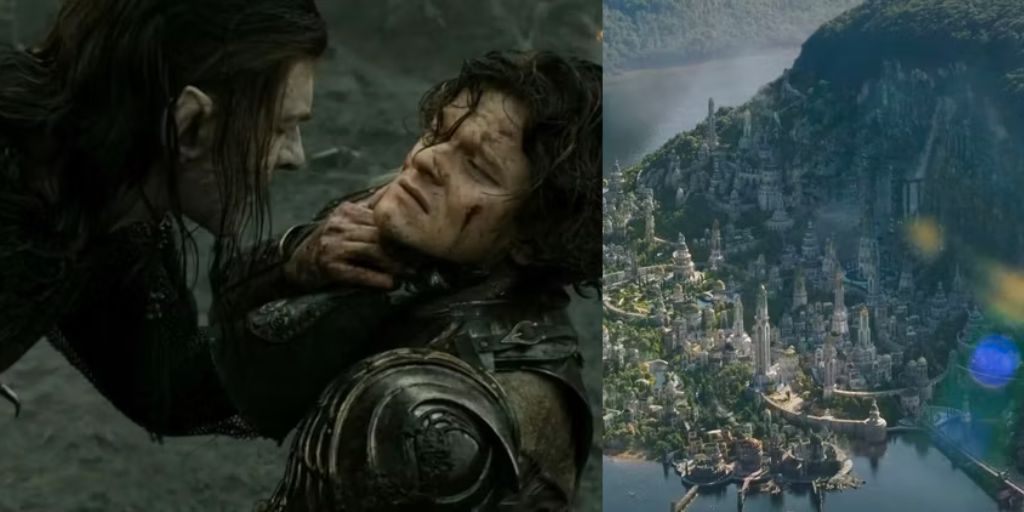
Still from the episode (Prime Video)
The series has made some significant changes to the story of the Rings of Power, but it remains true to the central themes of Tolkien’s work.
The story of Sauron’s rise to power, the fall of Eregion, and the scattering of the Rings is one of tragedy, betrayal, and the slow, inevitable domination of Middle-earth by the Dark Lord. These elements are present in both the books and the show, even if the details differ.
Adar’s character brings an interesting new perspective to the lore, especially as he struggles to break free from Sauron’s influence. His tragic downfall, betrayed by his own Orcs, adds emotional depth to the series.
The relationship between Adar and his Orcs also introduces a fresh dynamic, showing the internal struggles of even the “evil” characters in the story. These changes and additions enrich the narrative and provide new layers of meaning for viewers, even if they deviate from Tolkien’s original text.
In the end, the Sack of Eregion is a turning point for Middle-earth. The loss of Eregion and Celebrimbor, the rise of Rivendell, and the looming threat of Sauron’s control set the stage for the conflicts that will follow.
As the series continues, viewers can expect to see even more of Sauron’s plan unfold, as he moves closer to his goal of dominating the Free Peoples of Middle-earth.
The devastating fall of Eregion marks a significant shift in the power dynamics of Middle-earth. The Elves, who once wielded great influence, are now on the defensive. As Rivendell rises from the ashes of Eregion, it becomes a refuge and a new center of Elven strength.
Meanwhile, Sauron’s conquest of Eriador brings a wave of darkness that spreads throughout the land. The creation of the Nine Rings for Men sets his plans into motion, as he seeks to corrupt and control the rulers of Middle-earth, inching closer to his ultimate goal: complete dominion.
