Only Murders in the Building has officially wrapped up its fourth season, and fans are left with a lot to think about.
As the credits rolled, many viewers found themselves wondering about various unanswered questions that linger from the beginning of the season.
The show’s format has always centered around a single murder each season, where the characters work together to solve it by the end. This time, the murder of Sazz Pataki, played by Jane Lynch, has been resolved.
The trio of Charles-Haden Savage (played by Steve Martin), Oliver Putnam (played by Martin Short), and Mabel Mora (played by Selena Gomez) successfully uncovered the truth behind Sazz’s death.
However, as they solved this case, they also stumbled upon a much larger and more complicated mystery that leaves many threads hanging.
Sazz was murdered by her former protégé, Marshall P. Pope, who was known as Rex Bailey before he became a screenwriter. The show reveals that Sazz had written a script that Marshall stole from her.
To keep her quiet about the theft, he ultimately killed her. While this resolution brings justice to Sazz’s character, it opens up a new set of mysteries.
The show’s main characters point out some major holes in the ongoing storyline, especially concerning past events from previous seasons.
Unanswered Questions from Previous Seasons
One of the most significant aspects of the show is how it weaves in mysteries from earlier seasons.
Throughout Season 1, there were strange notes left for the trio, and the poisoning of Winnie, Oliver’s dog, went unexplained. These mysteries have resurfaced in Season 4, complicating the narrative further.
The unresolved nature of these plot points creates a sense of tension as the show prepares for its fifth season. Viewers are left to wonder about the connections between these past events and the current plot.
This new layer of mystery poses a significant question: Who is behind the mysterious notes and Winnie’s poisoning?
As the characters piece together their findings, it becomes clear that this is not just a simple case of a murder or two. The trio suspects that this mysterious figure has a personal vendetta against them and has resurfaced to further their agenda.
What We Know About the Mysterious Person
So far, the show has hinted at some details about this mysterious individual. In Season 1, they poisoned Winnie, trying to pressure Oliver into stopping the podcast. They also left a chilling note for Jan, which read, “I’m watching you.”
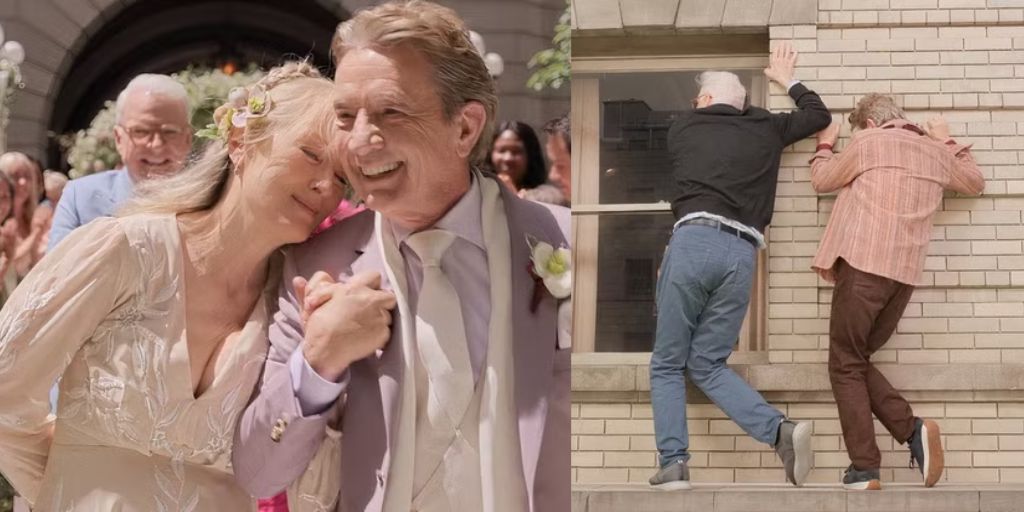
Still from Only Murders in the Building (Credit: Hulu)
This same message was texted to the trio in Season 4, indicating a continuous threat. Additionally, it has been revealed that this person is left-handed and does not appear to be connected with Marshall, suggesting they operate independently.
During the middle of the season, the audience speculated that this person might have been involved in the murder of Dudenoff (Griffin Dunne).
Dudenoff’s death seemed linked to their attempts to sabotage the podcast. However, as the story unfolded, this theory hit a dead end.
It was revealed that Dudenoff was terminally ill and chose to end his life on his own terms.
This twist was frustrating for many viewers because it closed off the most promising lead to explain the mysteries from Season 1. Yet, it also opened the door to even more complex developments for the show.
The end about Dudenoff allows the series to go into deeper narratives beyond just solving seasonal murders.
The best explanation now seems to be that there is a murderer within the building who wants to stop the podcast. This ongoing threat raises the stakes for the main characters and sets up an engaging narrative for future seasons.
Are All Murders Connected?
The reappearance of this overarching mystery begs another question: Are all the murders within the show interconnected?
If they are linked, it would explain the frequency of murders happening at The Arconia, the building where the main characters reside. However, the likelihood of this connection seems low.
Each murder committed in the series appears to have been driven by personal motives. For example, Jan killed Tim (Julian Cihi) out of passion, while Poppy/Becky (Adina Verson) murdered Bunny (Jayne Houdyshell) to advance her career.
Donna (Linda Emond) poisoned Ben (Paul Rudd) to protect her son’s career, and Cliff (Wesley Taylor) murdered to safeguard his mother. Finally, Marshall killed Sazz to protect his own career as a writer.
While it is possible that a mastermind could be manipulating these murderers, this scenario feels unlikely. Such a reveal might disappoint viewers, as it would seem too convenient and neatly tied together.
The richness of the story comes from the complexity of human motivations rather than a single villain pulling the strings behind the scenes.
Who is the Mysterious Person?
As the season progresses, the mystery surrounding the identity of this individual deepens. Many fans speculate that this person is likely someone the audience has encountered since Season 1. They may even be a resident of The Arconia, adding an extra layer of tension.
It’s also possible that the mysterious figure could be someone like Cinda Canning (Tina Fey) or a character like Detective Williams (Da’Vine Joy Randolph), who has become a beloved part of the show.
As of now, there are numerous unanswered questions regarding this figure. For instance, did this person install the cameras in the trio’s apartments?
How much of what happened this season was a result of their actions, and how much was due to Marshall’s involvement? These questions create a web of intrigue that keeps viewers engaged and eager for answers.
The Complexity of Storytelling in Only Murders in the Building
Only Murders in the Building has always excelled at combining humor with mystery. This unique storytelling style draws viewers in and keeps them on the edge of their seats.
The show balances lighthearted moments with dark themes, creating a rich narrative that feels both entertaining and thought-provoking.
The relationship between Charles, Oliver, and Mabel is a central aspect of the show. Their dynamic provides much of the comedic relief, yet it also emphasizes the gravity of their investigations.
Each character brings their own strengths and weaknesses to the table, making their teamwork essential to solving the murders. As they face various challenges, their bond grows stronger, showcasing the importance of friendship in difficult times.
The series also pays homage to classic murder mystery tropes while adding modern twists. The setting of The Arconia—a beautiful, historic building—adds a sense of intrigue and charm.
The cast of quirky supporting characters, each with their own secrets, enriches the plot. This combination of classic and contemporary elements makes the show appealing to a wide audience.
Looking Forward to Season 5
As Only Murders in the Building heads into its fifth season, fans eagerly anticipate how the writers will address the numerous unanswered questions left by Season 4.
The unresolved mysteries, combined with the show’s clever humor and engaging characters, set the stage for an exciting continuation of the story.
The introduction of new characters and further development of existing ones could provide fresh angles on the unfolding narrative.
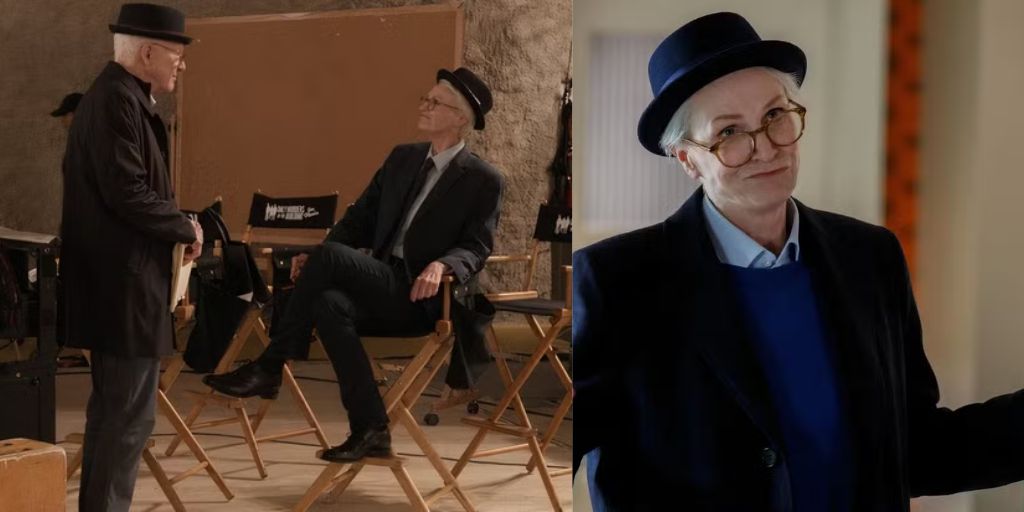
Still from Only Murders in the Building (Credit: Hulu)
The series has done an excellent job of keeping viewers guessing, and the expectation is that Season 5 will continue this trend. The lingering threat of the mysterious person adds a new layer of tension that the characters must show, making their journey even more compelling.
While the fourth season of Only Murders in the Building has brought some mysteries to a close, it has also opened up many more questions.
The resolution of Sazz Pataki’s murder highlights the show’s ability to engage audiences with its clever plot twists.
However, the unresolved mysteries concerning the enigmatic figure and their connection to past events leave viewers eagerly anticipating the next installment.
As the characters continue their investigations, fans can look forward to more humor, suspense, and unexpected revelations.
The combination of well-developed characters, intriguing plotlines, and a richly detailed setting ensures that Only Murders in the Building remains a standout series in the murder mystery genre.
With the promise of more thrilling twists ahead, viewers can’t help but stay tuned for what Season 5 has in store.
Richard McGuire’s graphic novel Here is an ambitious work that tells a big story about life and change. The book presents a beautiful yet jarring view of a small slice of our planet over millions of years.
It focuses on one specific corner of Earth without ever changing its viewpoint. This allows readers to see how our world shifts through time.
The story moves from when dinosaurs roamed the Earth to the building of a modest home. Then, it jumps to a future where students in spacesuits come to study our destroyed planet.
McGuire’s story captures the staggering amount of change that happens over time. It emphasizes that certain moments in our existence are cyclical, and it offers reassurance that everything will eventually die and change.
Here feels like the kind of massive story that would appeal to a filmmaker like Robert Zemeckis, especially the Zemeckis of the 1980s and ’90s. In those decades, Zemeckis was known for his boldness and creativity.
He blended animated and real worlds in Who Framed Roger Rabbit. He pushed the limits of special effects with Forrest Gump. He also creatively moved back and forth through time with the Back to the Future trilogy.
However, the 21st century has not been as kind to Zemeckis. He has had more misses than hits in his recent work. The films The Polar Express, Beowulf, and A Christmas Carol used strange motion-capture animations that many viewers found unsettling.
He also made odd adaptations of existing films like Welcome to Marwen, The Witches, and the poorly received Pinocchio in 2022.
Occasionally, he showed glimmers of his former greatness in films like Flight, The Walk, and Allied, he struggled to capture the magic he once had.
With Here, Zemeckis takes a bold and ambitious swing that we have not seen from him in a long time.
The film is messy and scattershot at times, but it also has moments that remind us of Zemeckis’ talent for creating movie magic. He attempts to bring the grandiosity of life to the screen, even if the execution is not always successful.
What Is ‘Here’ About?
Like McGuire’s graphic novel, the film Here shows us life from one small piece of the world without changing its viewpoint.
The story takes place largely in the living room of a Colonial-style home in New England. It reveals the lives of different families who have lived in this home for over a century.
We also meet an aspiring pilot (Gwilym Lee) and his wife (Michelle Dockery), who fears that her husband’s passion for flying might lead to his death.
Other characters include an inventor of a reclining chair (David Fynn) and his pin-up model partner (Ophelia Lovibond).
As time moves forward in the story, we see the home’s first new owners in years, the Harris family (Nikki Amuka-Bird and Nicholas Pinnock), who are raising their teenage son (Cache Vanderpuye).
However, the main focus of the story is on the Young family. Al Young (Paul Bettany), a World War II veteran, moves into the home with his wife Rose (Kelly Reilly). Before long, they start a family, including their oldest son, Richard Young (Tom Hanks).
When Richard is still a teenager, he brings home his new girlfriend, Margaret (Robin Wright). Soon, they are preparing to have a child while still very young themselves.
They get married and put their own dreams aside to support their growing family. The couple stays in the family home until they can save enough money to afford a place of their own—a dream that feels like it may never come true.
While the Young family’s story unfolds mostly in chronological order, there are also vignettes of those who lived in the area before and after them. This structure allows the film to reflect on how life changes over time in this one house.
‘Here’ Reunites the Cast and Crew of ‘Forrest Gump’
The film Here brings back some of the magic from the team behind Forrest Gump. McGuire’s graphic novel is largely impersonal, for better or worse.
However, Roth’s other grand tales, like Forrest Gump and The Curious Case of Benjamin Button, try to add emotional depth to material that is often indifferent. Here attempts to do the same.
At times, Here feels like a mix of a holiday commercial and a theme park ride, with a hint of Terrence Malick’s The Tree of Life.
What worked well on the page does not always translate effectively to film. The movie often comes across as too obvious, with moments that feel forced.
For example, one scene featuring the song “Our House” feels especially out of place. Other aspects, like a plot that tries to include COVID, do not land as intended, making the film feel silly at times. The one-location setting also gives the film a stagey quality.
‘Here’ Has Some Beautiful, Tender Moments About Life
Despite its flaws, Here manages to capture moments of pure heart. The film lacks cynicism and is earnest in its approach. Its effort to express emotion openly helps to carry it through the more awkward moments.
The smaller stories within the film feel like little shorts that are added to the narrative but do not significantly contribute to the main plot.
However, when the film focuses on the Young family’s history, Zemeckis and Roth create beautiful moments. The relationship between Richard (Hanks) and Margaret (Wright) is not a typical love story.
Instead, it reveals heartbreaking truths about our dreams and the ones that will never come true.
It also shows the beauty that can emerge from lives we did not expect for ourselves. Several characters note how quickly time passes, and with Richard and Margaret, we see this truth vividly as the years fly by, leaving behind hopes that fade into the background as life moves on.
Their relationship does not always follow an easy path, and the use of de-aging techniques is surprisingly effective without being distracting.
Al’s story (played by Bettany) is particularly moving. He has one of the most significant character arcs, showing us how he evolves from a young soldier fresh from war to the later days of his life.
His character does fall into cliché at times, but it is powerful to watch how his relationships with Richard and Margaret change over the years.
When the film focuses on this family, it successfully reveals the complexities of life and how we change—not just how the location changes over time.
‘Here’ Is a Reminder of the Power of Robert Zemeckis’ Older Work
While the film shows these other secondary stories, it also holds Here back at times. It is interesting to see how certain moments resonate over time, but this structure disrupts the narrative without truly adding depth. For example, the inventor’s story and his wife’s experience largely repeat the same theme.
The Harris family’s storyline, which touches on the pandemic and police brutality, feels sudden and lacks the necessary setup to fully show these topics.
Because of the film’s structure, which jumps back and forth in time, Here often feels like an interesting experiment rather than a fully developed story.
Instead of capturing the majesty of life and its complications, it focuses more on how remarkable our world is, even within such a limited scope. This focus is impressive, but it does not always deliver the emotional impact that the film aims for.
Yet, when Here works, it can evoke feelings reminiscent of the best Zemeckis films. This sense of excitement has been rare in his recent work. The film stands out as his best effort in almost a decade, although that is not saying much given his recent track record.
The film’s dynamic creates a push and pull. It is an experiment that works only sporadically. However, when it does work, there is beauty in those rare moments.
Tom Hanks, Robin Wright, and Paul Bettany deliver strong performances, even with a presentation that could have easily hindered them.
Zemeckis and Roth strive to show the ordinary beauty in everyday life, and they sometimes succeed in this goal. Nevertheless, odd storylines, a sprawling narrative, and awkward choices detract from what could have been a truly impressive film.
Here hints at a masterpiece hidden within its DNA. We see flashes of this potential too infrequently throughout the finished product, even though the attempt is commendable.
It is encouraging to see Zemeckis still willing to take creative risks after so many years. However, Here reminds us that time moves quickly, and perhaps the time for Zemeckis to effectively create films like this has passed.
Final Thoughts on ‘Here’
Here is a film that tackles big themes of life, change, and the passage of time through the lens of one home in New England.
It tries to capture the essence of McGuire’s graphic novel while adding layers of emotional depth. The film has its share of flaws, including an uneven narrative structure and awkward moments.
Yet, it also has beautifully poignant scenes that resonate with audiences, reminding us of the fleeting nature of time and the complexities of our lives.
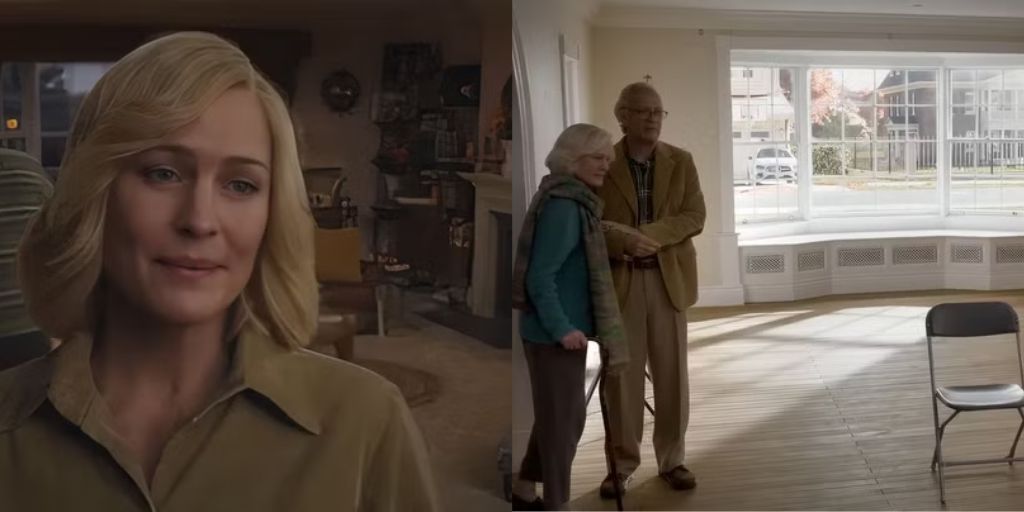
Still from Here (Credit: Sony)
Zemeckis’s return to ambitious storytelling is commendable, and while Here may not fully realize its potential, it offers glimmers of the magic that once defined his career.
As we watch the characters face the trials and triumphs of life, we are left with a sense of hope and reflection on our own journeys.
Here serves as a reminder that while life is often unpredictable, there is beauty in the experiences we share and the love that endures, even as everything else changes around us.
Here is currently playing in theaters, inviting viewers to witness its ambitious storytelling and emotional depth.
The film challenges us to consider our own lives, the dreams we hold, and the memories we create, making it a worthwhile watch for anyone seeking a meaningful cinematic experience.
