In the early 2000s, Warner Bros. had a tough time bringing their most well-known comic book characters to the big screen. Despite their massive catalog of superhero stories, they faced many challenges turning those tales into successful films.
Movies based on their most popular characters like Superman and Batman either struggled at the box office or didn’t meet audience expectations. However, while the studio couldn’t always capture the magic of traditional superheroes, they managed to find success in adapting graphic novels from their Vertigo Entertainment imprint.
Vertigo is a brand known for more mature, darker, and complex stories compared to traditional superhero tales. These stories often dealt with moral gray areas, darker themes, and grittier characters.
What worked for Warner Bros. during this time was that these films didn’t require the same kind of deep knowledge of superhero mythology. Instead, they could be marketed as stand-alone crime thrillers, making them easier for general audiences to connect with.
Films like Road to Perdition (2002) and A History of Violence (2005) were not just successful, but also received glowing reviews. These films even garnered nominations at the prestigious Academy Awards. They stood out by presenting raw, human dramas wrapped in crime narratives, without being tied to the fantastical worlds of superheroes that many audiences struggled to connect with.
However, no adaptation created more anticipation than V for Vendetta. Directed by James McTeigue and executive produced by Lana and Lilly Wachowski, V for Vendetta generated a great deal of excitement among fans and critics alike.
The Wachowskis had been given near-complete creative freedom by Warner Bros. after the massive success of The Matrix trilogy, a rare opportunity in Hollywood that allowed them to create almost anything they wanted. This film had all the makings of another blockbuster hit.
V for Vendetta—The Story and Themes
Set in a dystopian future where a far-right authoritarian political party known as “Norsefire” has taken control of the government, media, and police, V for Vendetta tells the story of a resistance led by a mysterious vigilante named V, played by Hugo Weaving.
The Norsefire party has a firm grip on society, with the wealthiest members supporting its policies, while most citizens remain unaware of the corruption and lies they are being fed through state propaganda. The citizens live under a regime of fear, as the government uses constant surveillance, media control, and outright violence to maintain control.
The story follows Evey Hammond, portrayed by Natalie Portman, who works for the state-run television network. Evey’s parents were political activists who spoke out against the government before being silenced by Norsefire.
Even though she is aware of her parents’ resistance, Evey has avoided becoming involved in activism herself, mainly out of fear for her safety. However, her life takes a drastic turn when she encounters V, a vigilante bent on overthrowing the corrupt government. V saves Evey from a dangerous situation and slowly pulls her into his plot to bring down Norsefire.
The film presents itself as a revolutionary thriller, full of visually stunning scenes of rebellion against an oppressive regime. However, compared to the original graphic novel by Alan Moore, the film strips away much of the novel’s complex political and philosophical layers.
In the graphic novel, V is an anarchist fighting against a fascist government, symbolizing a larger struggle between oppressive systems and true freedom. However, in the film, these themes are simplified. The battle is reduced to a more straightforward fight between liberalism and conservatism, instead of the more radical ideas of anarchy versus fascism.
Why V for Vendetta Was Hard to Adapt
Adapting Alan Moore’s graphic novel V for Vendetta was no easy task. Moore is a legendary figure in the comic books world, known for creating complex, layered stories that challenge societal norms and question the role of heroes in popular culture.
His works often goes into darker themes, and his characters aren’t the clean-cut, virtuous heroes seen in many other comic books. Instead, they operate in shades of gray, making difficult moral choices that don’t always fit neatly into good or bad categories.
This complexity made V for Vendetta difficult to translate into a mainstream action film. The graphic novel shows themes like anarchy, fascism, and personal freedom in a deeply philosophical way. However, the Wachowskis, who were responsible for shaping much of the film’s direction, made some significant changes to the story that altered its tone and message.
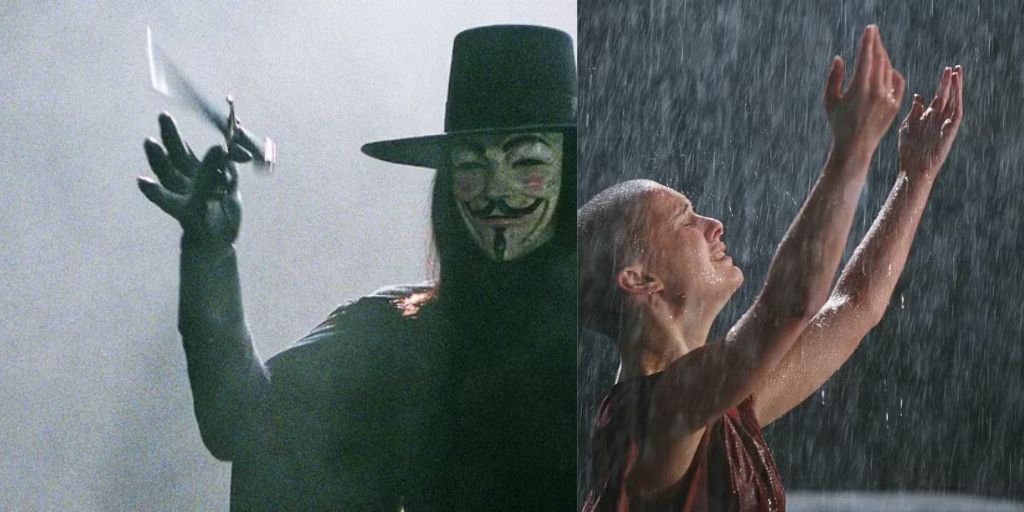
One of the most significant changes was turning V into a more traditional hero figure. In the graphic novel, V is portrayed as an anarchist with a somewhat darker and more mysterious agenda.
His methods are extreme, and his goals are not always clear-cut. He doesn’t fight simply for the good of others, but rather for a complete destruction of the existing system, with no guarantee of what will replace it.
Still from V for Vendetta (Credit: Prime Video)
In the film, however, V is transformed into a noble, straightforward hero. He is painted as someone fighting purely for the good of the people. One scene, in particular, exemplifies this change.
V takes Evey to his underground hideout and compares himself to the character in The Count of Monte Cristo, going as far as to say that it is his favorite film. This shift in V’s character makes him more relatable to a broader audience, but it also waters down the more radical elements of his personality that made him so fascinating in the original story.
Simplified Villains and Politics
Another key difference between the graphic novel and the film adaptation lies in how the villains are portrayed. In the graphic novel, Moore goes to great lengths to humanize even the most reprehensible characters. The leaders of the fascist Norsefire government, like High Chancellor Adam Sutler and Peter Creedy, are undeniably evil.
However, Moore gives them layers, showing how they manage to gain power by appealing to a certain portion of the population. They use their charisma and manipulative skills to radicalize ordinary people, making their evil even more terrifying because it feels plausible.
In the film, these villains are reduced to one-dimensional characters who come across as typical “bad guys” without much depth. Adam Sutler, played by John Hurt, and Peter Creedy, played by Tim Pigott-Smith, are portrayed as mustache-twirling villains, more fitting for a cheesy action movie than a serious political drama.
This oversimplification removes much of the nuance from the story, making it feel more like a traditional good-versus-evil tale rather than a complex scheme of fascism and radicalism.
The film also oversimplifies the political themes of the original graphic novel. While the film references important issues like racism, sexism, and homophobia, it doesn’t go into much depth in showing these topics.
These are only touched on briefly, and the film doesn’t make a strong effort to examine how these forms of discrimination play into the larger societal problems it portrays. In contrast, Moore’s graphic novel goes deeply into these issues, making it a much more layered and thought-provoking piece of work.
Evey’s Character Arc and the Anarchist Themes
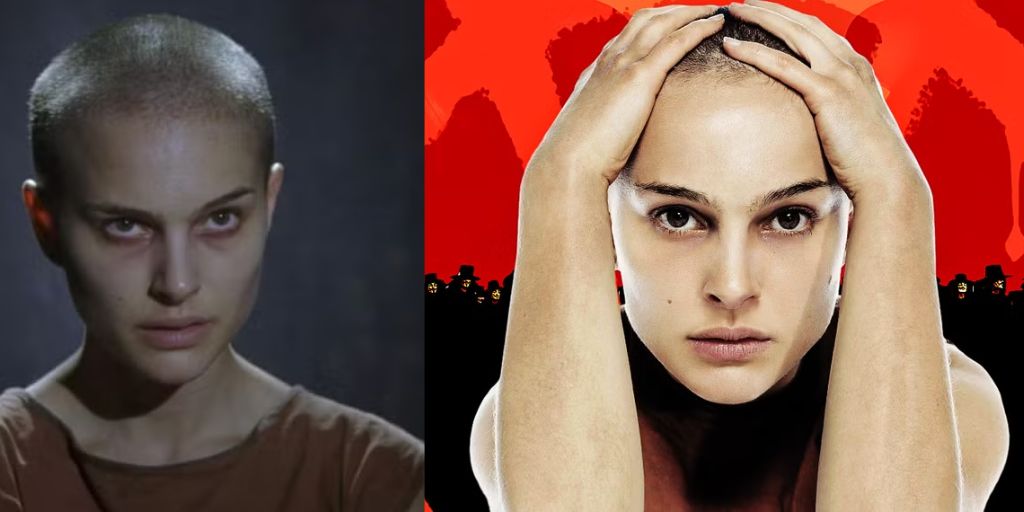
Evey’s character arc also differs significantly between the graphic novel and the film. In the original story, Evey undergoes a profound transformation after being kidnapped and tortured by V. Through this experience, she becomes a stronger, more independent person, eventually embracing V’s anarchist philosophy.
Her journey is one of personal growth, as she learns to question the existing power structures and reject the idea of replacing one form of government with another. Instead, she begins to see that true freedom lies in breaking down these systems altogether.
In the film, however, Evey’s transformation is less radical. While she does experience trauma at the hands of the Norsefire regime, her ultimate goal is not to dismantle the government entirely. Instead, she seeks to replace the current regime with a more democratic and fair system.
This shift makes her character less revolutionary than in the graphic novel, where she fully embraces anarchist ideals. In the film, she seems more like a moderate reformer than someone fighting for a complete societal overhaul.
This change in Evey’s character arc reflects a broader shift in the film’s message. The anarchist themes that are central to the graphic novel are largely absent from the film.
Instead of advocating for the total destruction of the system, the film suggests that a better version of the same system can be achieved through reform. This is a significant departure from the original story, where Moore presents anarchy as the only solution to a corrupt, fascist state.
The Challenges of Condensing a Complex Story
One of the biggest challenges in adapting V for Vendetta into a film was condensing the complex narrative of the graphic novel into a two-hour action movie. Alan Moore’s original work is dense with themes, character development, and political commentary, making it difficult to capture all of that in a 133-minute film.
While the film is visually impressive and delivers plenty of action, it struggles to balance the need for entertainment with the deeper philosophical and political ideas that made the graphic novel so impactful.
The film focuses more on drawing parallels to contemporary politics than on showing the timeless themes present in Moore’s work. While the graphic novel’s themes of resistance, oppression, and the abuse of power are relevant in any era, the film seems more concerned with making statements about the political climate of the early 2000s, particularly during the Bush administration.
This gives the film a sense of immediacy, but it also limits its broader applicability. Moore’s graphic novel, on the other hand, remains relevant regardless of the political context in which it is read because it tackles universal themes of power, control, and resistance.
V for Vendetta—A Missed Opportunity
While V for Vendetta is a visually stunning and entertaining film, it ultimately falls short of fully capturing the depth and complexity of Alan Moore’s graphic novel.
The film’s simplification of characters, themes, and political messages makes it feel more like a traditional Hollywood blockbuster than a radical, thought-provoking piece of political art.
Still from V for Vendetta (Credit: Prime Video)
While it remains a fan favorite and has achieved a certain cultural status, particularly in the use of the Guy Fawkes mask as a symbol of resistance, it doesn’t quite live up to the legacy of the original graphic novel.
For viewers who have not read the graphic novel, the film may still be an exciting and engaging experience. However, for those familiar with Moore’s work, it is likely to feel like a missed opportunity to bring one of the most powerful political stories in comic book history to life in a way that does justice to its original message.
Conclusion
V for Vendetta was a bold attempt by Warner Bros. to adapt a complex, politically charged graphic novel into a mainstream film. While the film succeeded in many areas, particularly in its visual style and action sequences, it ultimately simplified the story’s deeper themes and characters.
The result is an entertaining but less radical version of Alan Moore’s vision. For fans of the original graphic novel, the film is a fascinating but imperfect adaptation that doesn’t quite reach the heights of its source material.
Saturday Night Live (SNL), one of the longest-running and most influential comedy shows in television history, has officially entered its 50th season. Created by Lorne Michaels, SNL has been a cornerstone of American culture since its debut on October 11, 1975.
The show has consistently pushed boundaries with its satirical take on politics, pop culture, and everyday life, all while launching the careers of some of the biggest names in entertainment.
As the series celebrates its golden anniversary, it continues to leave an indelible mark on television, influencing both comedy and society.
The Beginning: A Revolutionary Format
When Saturday Night Live premiered, the television view was vastly different. Sketch comedy had been around, but it was rare to see it in a live format on a major network like NBC. Lorne Michaels, a young producer with a vision, brought the idea of a live, late-night comedy show to the network.
He wanted to create a platform where comedians could perform without the constraints of traditional television rules. The result was a unique blend of sketch comedy, live performances, and celebrity hosts that would become a television institution.
The first episode of SNL was hosted by George Carlin, a stand-up comedy legend known for his sharp wit and countercultural humor.
Carlin was the perfect choice to set the tone for the show. His ability to blend humor with social commentary resonated with the audience, establishing a template for what SNL would become. Jason Reitman’s upcoming film Saturday Night will portray this historic moment, adding another layer to the show’s legacy.
A Legacy of Awards and Acclaim
Over the past 50 years, SNL has amassed a staggering 84 Emmy Awards, more than any other television program in history.
The show has been consistently praised for its ability to stay relevant while adapting to the ever-changing view of entertainment. From its early days in the 1970s to today, SNL has remained at the forefront of satire and comedy, a feat no other show has achieved for so long.
The show’s format, which features a mix of regular cast members, celebrity hosts, and musical guests, has allowed it to remain fresh.
Every episode is a unique experience, blending current events with timeless humor. SNL has become a platform for actors, musicians, and comedians to showcase their talents, and over the years, it has grown into a cultural touchstone.
The Impact on Careers: SNL as a Launchpad
Perhaps one of the most remarkable achievements of SNL is the sheer number of careers it has launched. From the very beginning, the show has been a breeding ground for comic talent, and its alumni list reads like a who’s who of Hollywood.
Still from Saturday Night Live (Credit: NBC)
In the 1970s, SNL helped make stars of John Belushi, Dan Aykroyd, and Bill Murray. Belushi’s manic energy and Aykroyd’s deadpan delivery made them instant fan favorites. Together, they created iconic characters like the Blues Brothers, which later became a hit movie. Bill Murray, who replaced Chevy Chase after the first season, went on to have an illustrious film career, starring in movies like Ghostbusters and Groundhog Day.
The 1980s saw the rise of Eddie Murphy, who became one of SNL’s biggest stars. Murphy’s characters, such as Buckwheat and Gumby, were beloved by audiences, and his success on the show catapulted him to Hollywood stardom.
Other major stars from this era include Julia Louis-Dreyfus, who later found success on Seinfeld, and Billy Crystal, who became known for his impersonations and sharp comedic timing.
As the show moved into the 1990s, a new wave of comedians took the stage. Mike Myers, Dana Carvey, Chris Rock, and Adam Sandler all honed their comedic skills on SNL.
Myers and Carvey’s Wayne’s World sketch was so popular that it became a successful movie franchise. Sandler, known for his offbeat humor, transitioned from SNL to become one of the biggest comedy movie stars of the 2000s.
The list of stars who got their start on SNL in the 2000s and 2010s is just as impressive. Will Ferrell, Tina Fey, Amy Poehler, and Kristen Wiig all went on to have massive success in both television and film.
Fey and Poehler, in particular, became beloved for their work on 30 Rock and Parks and Recreation, respectively, while also continuing to collaborate on various projects.
SNL has not only been a platform for comedians to showcase their talents, but it has also allowed them to create lasting characters and sketches that resonate with audiences long after they leave the show.
Creating Iconic Sketches and Memorable Characters
What makes SNL so special is its ability to create sketches and characters that become part of the cultural zeitgeist. Over the years, the show has produced countless memorable moments that fans continue to quote and reference. From political parodies to bizarre, off-the-wall characters, SNL sketches have left an indelible mark on comedy.
One of the show’s most famous recurring sketches is “Weekend Update,” a satirical news segment that has been a part of SNL since its inception.
Over the years, many cast members have taken on the role of anchor, including Chevy Chase, Tina Fey, Amy Poehler, Seth Meyers, and, currently, Colin Jost and Michael Che. “Weekend Update” has been a platform for sharp political commentary, often making headlines for its irreverent take on current events.
Another iconic SNL creation is the Blues Brothers, played by John Belushi and Dan Aykroyd. Originally conceived as a musical sketch, the Blues Brothers quickly became a fan favorite, leading to a full-length feature film in 1980. The success of the film proved that SNL had the power to extend beyond television and into other mediums.
In addition to the Blues Brothers, SNL has produced other fan-favorite sketches that have been adapted into feature films, such as Wayne’s World, Coneheads, MacGruber, and most recently, Please Don’t Destroy: The Treasure of Foggy Mountain. These films not only expanded the reach of the show but also demonstrated its ability to connect with audiences on multiple levels.
SNL’s Cultural and Political Influence
Throughout its history, SNL has been known for its satirical take on politics. The show has never shied away from poking fun at politicians, often creating exaggerated caricatures that become as famous as the real-life figures themselves.
One of the most iconic examples is Tina Fey’s portrayal of Sarah Palin during the 2008 presidential election. Fey’s impersonation became so popular that it was credited with influencing public perception of Palin.
Similarly, Alec Baldwin’s impression of Donald Trump during his presidency became one of the most talked-about aspects of the show in recent years.
Baldwin’s exaggerated version of Trump was both hilarious and biting, capturing the absurdity of the political climate at the time. SNL has always used humor as a way to engage with political issues, making its commentary accessible to a wide audience.
But SNL’s influence isn’t limited to politics. The show has also had a significant impact on pop culture. Its musical guests, in particular, have played a major role in shaping the music industry.
From established legends to emerging artists, SNL has featured performances from some of the biggest names in music, often giving a platform to musicians who would go on to have legendary careers.
The 50th Season: Looking Back and Moving Forward
As Saturday Night Live enters its 50th season, the show continues to reflect the times while maintaining its unique blend of humor and social commentary. The season’s host lineup so far has included comedy legend Jean Smart and stand-up comedian Nate Bargatze, showing that SNL is still attracting top talent from various corners of the entertainment world.
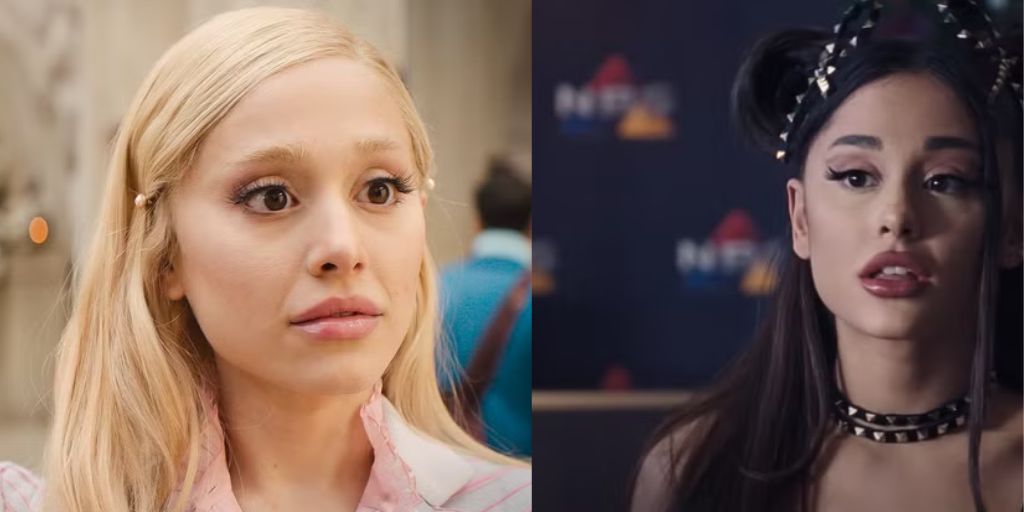
This week, pop sensation Ariana Grande will take the stage as the host. Grande, who has previously appeared on the show as both a musical guest and a host, has established herself as a major figure in both the music and entertainment industries.
Her hosting gig is highly anticipated, especially since it marks the first time she will host without also performing as the musical guest. Grande’s career, which began in acting before she transitioned to music, has seen her achieve tremendous success, including two Grammy Awards and numerous nominations.
The musical guest for this week is none other than rock icon Stevie Nicks. Nicks, who first performed on SNL in 1983, returns to the stage as one of the most revered figures in the history of rock music.
Best known for her work with Fleetwood Mac, as well as her solo career, Nicks continues to be a major influence in the music world. Her performance on SNL is sure to be a highlight of the season.
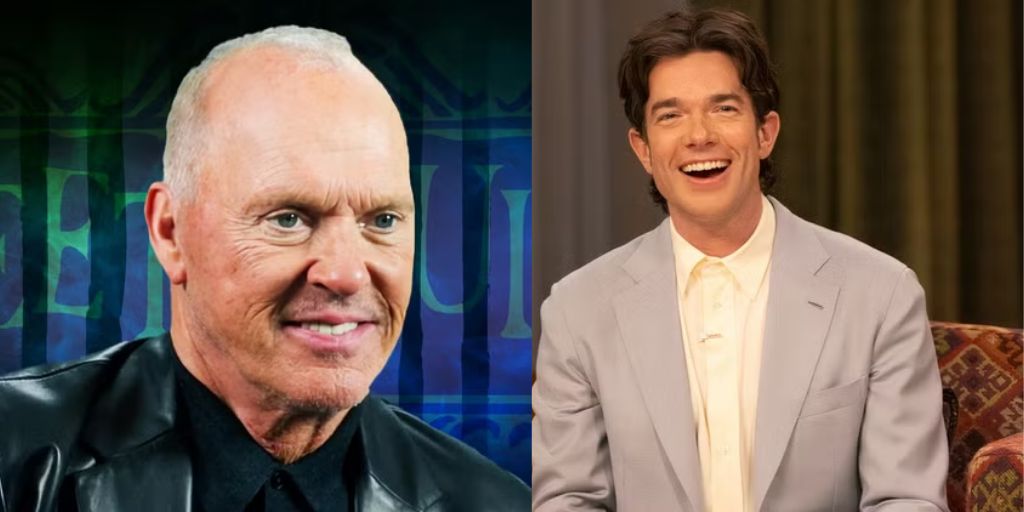
Looking ahead, the season will also see Beetlejuice star Michael Keaton return to host on October 19, with musical guest Billie Eilish, followed by stand-up comedian John Mulaney on November 2, with musical guest Chappell Roan making her debut.
The Cast and Writers of the 50th Season
As with any long-running show, SNL’s cast has changed over the years. The current cast of season 50 includes both established veterans and newcomers.
Regular cast members, also known as “repertory players,” include Mikey Day, Andrew Dismukes, Chloe Fineman, Heidi Gardner, Marcello Hernandez, James Austin Johnson, Michael Longfellow, Ego Nwodim, Sarah Sherman, Kenan Thompson, Devon Walker, and Bowen Yang.
Weekend Update continues to be hosted by Colin Jost and Michael Che, who have become fan favorites for their quick-witted, topical humor.
Newcomers to the show this season include featured players Ashley Padilla, Emil Wakim, and Jane Wickline, who are already making their mark with fresh, exciting performances.
The show’s writing team, led by Lorne Michaels, also includes the comedy trio Please Don’t Destroy (Martin Herlihy, Ben Marshall, and John Higgins), who have gained a following for their digital sketches that often feature the host of the week.
Still from Saturday Night Live (Credit: NBC)
In addition to the regular cast, Maya Rudolph is set to make special appearances during the season, reprising her role as Vice President Kamala Harris. Andy Samberg and Jim Gaffigan will also appear alongside her in the lead-up to the 2024 presidential election, portraying Doug Emhoff and Minnesota Governor Tim Walz, respectively.
Conclusion: The Continuing Legacy of Saturday Night Live
As Saturday Night Live celebrates its 50th season, it remains as vital and relevant as ever. The show’s unique ability to adapt to the times while maintaining its original spirit is a testament to its enduring appeal.
Over the years, SNL has become more than just a television show—it is a cultural institution that continues to shape comedy, launch careers, and provide sharp, witty commentary on the world around us.
Whether it’s through iconic sketches, memorable characters, or groundbreaking musical performances, SNL continues to entertain and inspire audiences around the world.
