ITV’s latest crime drama Joan showcases Sophie Turner in the role of real-life criminal Joan Hannington, often referred to as the “godmother” of Britain’s criminal underworld. The series brings to light the story of Hannington’s journey from an abused mother to one of the most notorious jewel thieves in 1980s London.
Throughout the show, Turner portrays the different sides of Hannington’s character as she climbs to the top of Britain’s criminal hierarchy. The show draws viewers into the fascinating life of a controversial figure who made a name for herself in the underworld.
The series Joan is based on Hannington’s memoir, I Am What I Am: The True Story of Britain’s Most Notorious Jewel Thief, which was released in 2004. It begins with Joan’s life just before she makes the decision to leave her abusive partner and place her young daughter in foster care in the early 1980s.
In the first episode, we see Turner’s character leave her sister’s house and take a job at a local jewelry shop. While working there, Joan learns the tricks of the jewelry trade. Viewers quickly discover that Joan has a unique method for stealing diamonds—she swallows them to avoid detection.
Not long after her first successful theft, Joan meets her future husband and criminal partner, Ronald Thomas Hannington, who is also known by the alias Benny Boisie, played by Frank Dillane. Joan’s encounter with Boisie marks the beginning of her life as a criminal.
Together, they live a thrilling life of crime, which Joan seems to enjoy. However, she also faces the challenge of trying to be a good mother and finding a way to get her daughter back from foster care.
Joan Hannington’s early life is a difficult one. She was born in 1957, one of six children in a working-class Irish family. She ran away from home at 13 because of abuse from her father, who was a former boxing promoter. At 17, Joan married Ray Pavey, a convicted armed robber, although the character of Ray is replaced by “Gary” in the TV series, portrayed by Nick Blood.
Joan suffered more abuse at the hands of Pavey, who once threw ammonia into her face, causing lasting damage to her eye. On another occasion, Pavey threw Joan out of a moving car. This toxic relationship eventually led Joan to place her daughter in foster care and leave Ray for good.
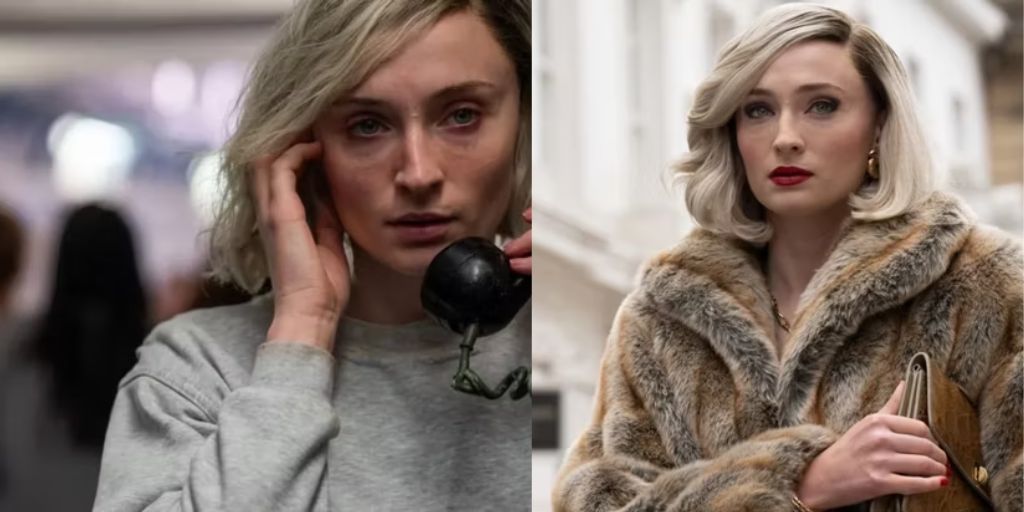
Still from Joan (Credit: CW)
In an interview with The Sun, Joan described how she was determined to get her daughter back but knew she needed money and a stable place to live in order to do so. She lied her way into a job at a jewelry shop in London’s West End, where she would begin her career as a jewel thief. Although the show changes the circumstances around Joan’s first diamond theft, the core facts remain the same.
In the series, Joan stumbles upon an open safe in the shop’s back room where there were no CCTV cameras. Seizing the opportunity, she swallowed the loose diamonds to hide them, a move that would change her life. In real life, Joan swallowed diamonds worth around £800,000. After the gems passed through her system, she retrieved them, cleaned them, and stored them for sale later.
Unlike the show’s version of events, Joan didn’t quit her job at the jewelry shop immediately after her first theft. She continued working there for a few more months before she met Boisie, a high-class thief and antique dealer who was 17 years her senior. Boisie became not only her lover but also her mentor. He taught Joan how to commit various types of fraud, including check and credit card fraud.
Together, Boisie and Joan built a multimillion-dollar criminal empire. They dealt in counterfeit checks and fake antiques, and Joan’s love for diamonds and precious stones continued to grow. Joan had a particular method for stealing jewelry. Dressed in luxurious fur coats and arriving in a rented luxury car, she would visit high-end jewelry stores pretending to be a legitimate buyer.
She studied the jewelry she wanted and later returned with a fake copy. Joan would discreetly swap the fake piece for the real one, swallowing the original and leaving the fake behind. She would then make a deposit using either a stolen credit card or a forged bank check.
Thanks to their criminal activities, Boisie and Joan lived a lavish lifestyle, complete with expensive cars, fur coats, and stays in fancy hotels around the world. At one point, Joan owned 11 fur coats and over 2,000 pairs of shoes. In 1987, Joan and Boisie had a son, Benjamin Hannington. Benjamin makes an appearance in the first episode of Joan as a bartender serving drinks to Boisie and Joan.
However, Joan’s life of crime came with its own set of challenges. In 1980, at the age of 24, Joan was arrested for using a stolen checkbook and was sentenced to 30 months in prison. She had been arrested once before for stealing a car, an event that is also portrayed in the TV series. She stole the car in an attempt to visit her daughter in foster care. Despite these setbacks, Joan continued her criminal activities until tragedy struck.
In 1990, Boisie died in a freak explosion while trying to set fire to a warehouse in an insurance scam. His death left Joan vulnerable. She became a target for one of Boisie’s former associates, who put a hit out on her. Joan was also robbed of £1 million by a man she had been dating.
After these events, Joan decided to leave behind her life of crime. She had gained a reputation as “the godmother” of the British underworld, but she knew it was time to change. She now lives a quiet life on the south coast of England with her two dogs and is a grandmother to her son Benny’s daughter.
Her son, who is a rapper, performs under the name Benny Banks. Despite her past, Joan was unable to regain custody of her daughter, who remains in the care of social services.

Still from Joan (Credit: CW)
Joan hasn’t been involved in criminal activity for over 40 years and prefers to keep a low profile. However, she worked closely with ITV on the making of Joan to ensure the series accurately reflected her life. She collaborated with screenwriter Anna Symon, who adapted the show from Joan’s memoir.
Sophie Turner, best known for her role in Game of Thrones, is well-suited to bring Joan’s complex personality to life on screen. The series captures not only the excitement of Joan’s criminal activities but also her personal struggles as a mother.
The TV series Joan stands out as a gripping crime drama. It successfully blends the thrilling elements of Joan’s criminal life with the emotional depth of her journey as a mother. The show takes viewers through the highs and lows of Joan Hannington’s life, providing a window into a world where crime, family, and survival intersect.
Joan’s story is one of resilience. She overcame an abusive childhood, escaped an abusive marriage, and transformed herself from a struggling young mother into a powerful figure in the criminal underworld. Despite the dangers of her lifestyle, Joan managed to build a successful career in crime and create a better life for herself and her children.
While Joan highlights the allure of the criminal world, it also shows the consequences that come with it. Boisie’s death was a harsh reminder for Joan that the world she had chosen was filled with danger and betrayal. Her decision to leave the criminal world behind after Boisie’s death was a turning point in her life. She chose to prioritize her safety and her family over the thrill of her illegal activities.
In the end, Joan’s story is one of survival, determination, and transformation. Her life may have been filled with danger, but she was able to rise above it and create a new path for herself. The ITV series Joan does an excellent job of portraying the many facets of her life, making it a must-watch for fans of crime dramas.
Joan offers a compelling portrayal of the complex and dangerous life of Joan Hannington, skillfully brought to the screen by Sophie Turner. The series captures Joan’s journey from a struggling, abused mother to a cunning and successful jewel thief, all while balancing her desire to provide for her daughter.
The show doesn’t just highlight her criminal exploits but also goes into her personal struggles, creating a well-rounded depiction of a woman dealing with both motherhood and the criminal world. Through her relationship with her mentor and partner, Benny Boisie, Joan rises to the top of Britain’s criminal underworld, yet she ultimately faces the harsh consequences of her choices.
The series masterfully showcases the high stakes and danger that come with a life of crime, while also underscoring Joan’s resilience and determination to survive. After tragedy strikes with Boisie’s death, Joan chooses to leave behind her criminal past, seeking peace and privacy in her later years.
Joan is a powerful reminder of the complexities of human life, where survival and ambition often collide, making it a must-watch for fans of crime dramas and stories of personal transformation.
“Joker: Folie à Deux,” the highly anticipated sequel to 2019’s “Joker,” has quickly become one of the major disappointments of 2024. The film, directed by Todd Phillips and starring Joaquin Phoenix, was expected to be a big success, but it hasn’t met the high expectations that many had for it. With a poor Rotten Tomatoes score and a disappointing box office performance in its first few days, the movie is far from being the blockbuster many had hoped for.
Despite these challenges, the movie has still managed to attract attention, although some of that attention may come from the curiosity of viewers who want to see if the poor reviews are justified. With big names like Joaquin Phoenix, who won an Oscar for his role in the first “Joker” film, and the film’s intriguing concept, people are still interested in seeing it, even if it’s out of curiosity about how a once highly praised franchise could fall so far.
Box Office Numbers So Far
Despite its weak start, “Joker: Folie à Deux” has managed to enter an important box office list. As of now, the movie has earned more than $37 million at the domestic box office, putting it in the top 30 movies of 2024. When you add the international earnings, which total $75 million, the movie’s worldwide gross sits at over $110 million after its opening weekend.
These numbers, while not terrible, are far below what many expected from the sequel to one of the most successful films in recent history. The movie that had to give up its spot in the top 30 because of “Joker: Folie à Deux” is Lionsgate’s “The Strangers: Chapter 1,” which had earned a total of $35 million at the domestic box office. As “Joker: Folie à Deux” continues to make more money, it’s likely that it will continue to rise on the box office charts.
Thanks to its established fan base, recognizable IP (intellectual property), and the star power of Joaquin Phoenix, the film still has the potential to perform well in the coming weeks.
If “Joker: Folie à Deux” can manage to double its current domestic earnings, which seems quite possible, it would land in the top 20 movies of the year. It could even surpass “Longlegs,” which has been one of 2024’s surprise box office hits. While this is still a big “if,” the power of the Joker franchise and its connection to a larger comic book universe could help it achieve these goals.
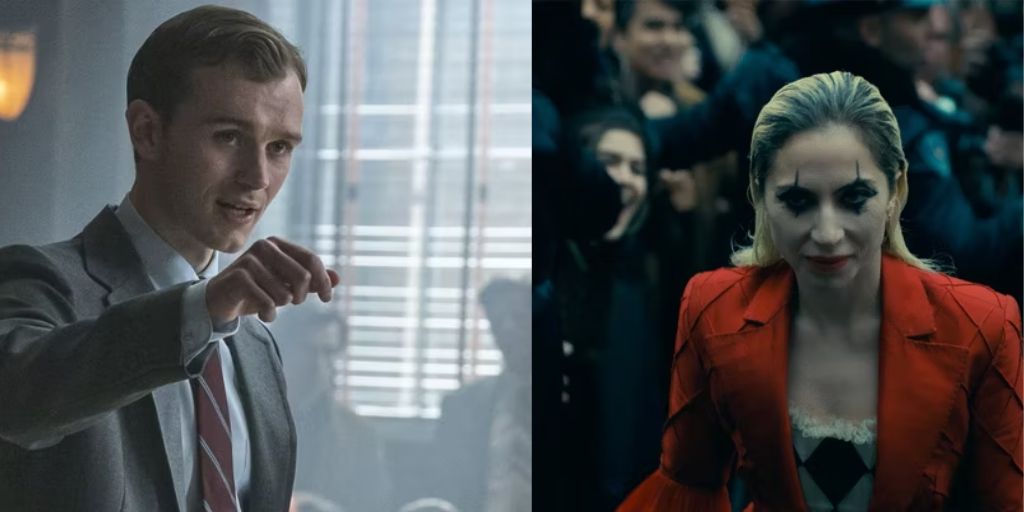
Still from Joker Folie a Deux (Credit: Warner Bros.)
Mixed Reactions to the Musical Format
One of the most controversial aspects of “Joker: Folie à Deux” is the decision to turn it into a musical. This creative choice was a bold move, especially considering the dark and gritty tone of the original film.
For some fans and critics, the musical numbers were an exciting addition that brought a fresh perspective to the Joker character. But for many others, this approach didn’t land as well as intended.
The film’s musical sequences have been described as a missed opportunity by many reviewers. While some moments had the potential to be truly spectacular, the execution fell flat. One major issue was the placement of the musical numbers within the story.
Rather than integrating these sequences seamlessly into the narrative, most of the musical moments are confined to dream sequences. This decision lessened their impact, making them feel disconnected from the rest of the film.
Furthermore, the lack of proper choreography in the musical scenes also left viewers disappointed. For a film as ambitious as this one, many expected more dynamic and visually impressive dance numbers. However, with only one standout tap dance sequence from Phoenix’s character Arthur Fleck, the film didn’t deliver the kind of show-stopping musical moments that could have made the concept work.
Critics’ Feedback on the Musical Format
One critic who voiced his frustrations with the musical format was Martin Tsai, who reviewed the film for Collider . In his review, Tsai explained how the musical concept had a lot of potential but ultimately felt underdeveloped. He highlighted how the idea of turning Joker’s famous stair descent from the first film into a musical moment could have been an iconic scene, but in “Joker: Folie à Deux,” the musical numbers failed to live up to that potential.
Tsai also criticized the way the musical sequences clashed with the overall tone of the movie. While it’s possible to blend musicals with darker, more serious films (as seen in Dancer in the Dark ), Tsai argued that director Todd Phillips wasn’t able to make this work in “Folie à Deux.”
Even during the fantasy sequences, which allowed for some creative freedom, Phillips didn’t bring the energy and style that musical numbers typically require. The lack of choreography and the failure to capture the “razzle-dazzle” of the musical genre ultimately left many viewers and critics disappointed.
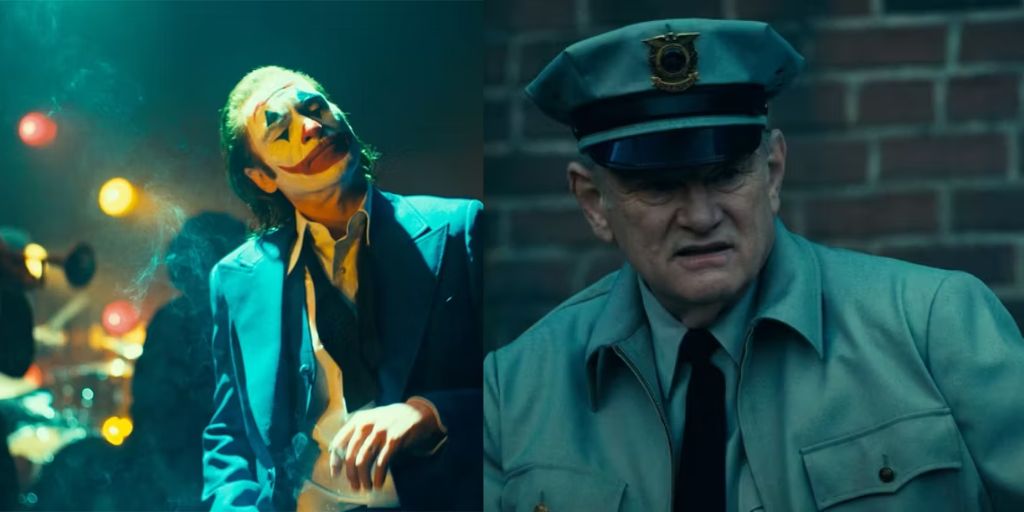
Still from Joker Folie a Deux (Credit: Warner Bros.)
Audience Divides Over the Sequel
The mixed reception to the musical aspect of “Joker: Folie à Deux” has created a divide among viewers. Some fans appreciate the bold direction the film took, seeing it as an attempt to push the boundaries of the comic book genre. For these viewers, the musical sequences add a new layer of complexity to the Joker character, who is known for his chaotic and unpredictable nature.
Others, however, felt that the musical numbers clashed too much with the tone of the movie and took away from the gritty realism that made the first “Joker” film so compelling. While the idea of combining musical elements with the dark themes of Joker’s story might sound interesting on paper, the execution didn’t match the expectations of many fans and critics.
Impact on the Film’s Legacy
It’s too early to say how “Joker: Folie à Deux” will be remembered in the years to come, but its mixed reception has certainly put a dent in the once untouchable reputation of the Joker franchise. The original 2019 film was a massive success, earning over $1 billion at the global box office and winning multiple awards, including an Oscar for Joaquin Phoenix. “Joker: Folie à Deux” hasn’t had the same level of impact, and it’s clear that many viewers feel let down by the sequel.
That said, the film still has the potential to perform well over the long run, especially if word-of-mouth improves and more people become curious about the unique musical direction. The power of the Joker character and the strong performances by Joaquin Phoenix and Lady Gaga (who plays Harley Quinn in the film) could help draw in more viewers, even if they come with lower expectations due to the film’s early reviews.
The Role of Star Power
One factor that continues to draw audiences to “Joker: Folie à Deux” is the star power of its lead actors. Joaquin Phoenix’s portrayal of Arthur Fleck (the Joker) in the first film was highly praised, and many fans were excited to see him reprise his role. His intense, transformative performance in the original movie set a high bar, and while the sequel’s musical direction may not have been as well-received, Phoenix’s acting remains a major draw.
Additionally, the inclusion of Lady Gaga as Harley Quinn has also generated a lot of buzz. Gaga, who is known for her dynamic stage presence and strong acting abilities, was a perfect fit for the musical sequences in “Folie à Deux.”
While the film as a whole may not have impressed, her performance has been highlighted by some as a bright spot. Gaga’s portrayal of Harley Quinn offers a fresh take on the character, and her chemistry with Phoenix’s Joker is one of the more interesting aspects of the film.
Potential for Future Success
While “Joker: Folie à Deux” may not have had the explosive start many were hoping for, it’s important to remember that box office performance can fluctuate over time. The film still has a chance to pick up more momentum as more people see it and share their opinions. Positive word-of-mouth, particularly about the performances of the lead actors, could help boost the film’s success in the coming weeks.
The film also has the potential to perform well internationally. While it has faced challenges domestically, the Joker character has a global fanbase, and international markets could help boost the movie’s total earnings. The unique concept of a Joker musical may also appeal to different audiences who are interested in seeing something out of the ordinary.
Joker: Folie à Deux may not have lived up to the high expectations set by its predecessor, but it’s still a film that has captured the interest of viewers around the world. Its bold choice to incorporate musical elements has been both praised and criticized, but it’s clear that the movie has sparked conversations and debates among fans and critics alike.
The film’s box office performance, while not extraordinary, shows that there’s still an audience for the Joker character and the complex stories surrounding him. As more people watch the movie and share their thoughts, Joker: Folie à Deux could still find success, even if it takes a different path than its predecessor.
