Ted Bundy’s execution on January 24, 1989, is one of the most infamous moments in American criminal history, a culmination of years of horrific violence that shocked the nation.
Known for his charismatic demeanor and good looks, Bundy was responsible for the brutal murders of at least 36 young women across several states during the 1970s.
His charm allowed him to manipulate and evade law enforcement for years, ultimately leading to a manhunt that captivated the public.
On the morning of his execution, Bundy was held in Florida State Prison, a facility that became the backdrop for a national event as hundreds of people gathered outside to witness the end of his life.
Protesters held signs with slogans like “Burn, Bundy, burn!” and many celebrated the impending execution, viewing it as a form of justice for the countless lives he destroyed.
The atmosphere was charged with emotion, as many felt that Bundy’s death would finally bring closure to the families of his victims.
In the days leading up to his execution, Bundy had several conversations with his mother, during which he reportedly expressed a range of emotions, from remorse to defiance. On the night before his death, he had the opportunity to choose a last meal.
Interestingly, Bundy declined to specify any special requests, instead opting for the standard prison fare of steak, eggs, hash browns, and toast.
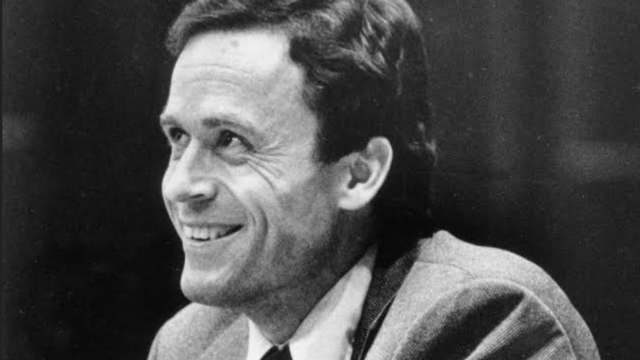
Ted Bundy (Credit: YouTube)
He barely touched the meal, perhaps overwhelmed by the gravity of the situation he faced.
As the execution approached, the prison staff prepared for the procedure, which was shrouded in a sense of grim finality.
At around 7 a.m., Bundy was led to the execution chamber. Witnesses reported that he seemed calm, albeit with a noticeable hesitation when asked if he had any final words. His last statement was a poignant reminder of the duality of his nature:
“I’d like to give my love to my family and friends.”
This final declaration stood in stark contrast to the monstrous acts he committed, leaving many observers stunned.
The execution itself was carried out with a precision that belied the horror of Bundy’s actions.
A heavy black veil was placed over his face, and straps secured him to the chair. With a final signal from the prison superintendent, an anonymous executioner activated the electric chair.
Witnesses described a brief moment of tension as Bundy’s body tensed, and a small plume of smoke rose from his leg, signifying the deadly current coursing through him. Just minutes later, Bundy was pronounced dead at 7:16 a.m.
After the execution, Bundy’s body was cremated, and his ashes were scattered in the Cascade Mountains of Washington State, a location that held haunting significance, as it was where he had disposed of several of his victims.
This act of scattering ashes brought a symbolic closure, yet the legacy of his violence continues to resonate deeply within American culture.
In the aftermath of his death, researchers sought to understand the mind of Ted Bundy. His brain was examined for any abnormalities that might have contributed to his violent tendencies, yet no conclusive evidence was found.
This lack of definitive explanations left many questions unanswered and only deepened the mystery surrounding his life and actions.
Bundy became emblematic of the “invisible psychopath,” a seemingly normal individual capable of unimaginable cruelty.
The public fascination with Bundy persists, fueling a myriad of true crime documentaries, books, and films that explore the complexities of his personality and the brutal nature of his crimes.
His story serves as a chilling reminder of the potential for darkness that can lie beneath the surface of ordinary life.
The discussions around Bundy also raise critical questions about mental illness, criminal psychology, and the societal factors that can contribute to such heinous behavior.
Ultimately, Ted Bundy’s death marked not just the end of a notorious criminal but also a moment of reflection for a society grappling with the horror of his actions and the nature of evil itself.
Decades later, his legacy continues to provoke thought and discussion, making him one of the most infamous figures in the annals of American crime.
Somara Theodore is a highly regarded meteorologist whose career has taken her through several prominent news stations and recently brought her to ABC News in New York.
Born and raised in the United States, Somara developed a passion for the sciences at a young age, particularly in atmospheric science and meteorology.
This fascination with weather and the natural world led her to pursue a formal education in meteorology at Penn State University, renowned for its strong program in the field.
There, she earned her Bachelor of Science in Meteorology, equipping her with a robust understanding of weather patterns, climate change, and the technical aspects of forecasting.
Somara’s professional journey began at WJCL-TV in Savannah, Georgia, where she served as a weekend meteorologist.
This initial role provided her with invaluable experience and served as a stepping stone for her future success.
After her time in Savannah, she transitioned to Cleveland, Ohio, where she worked as the morning meteorologist at WEWS-TV. During her tenure there, her outstanding coverage of a tragic plane crash in Akron earned her an Emmy Award, highlighting her ability to deliver critical news under pressure.
Following her success in Cleveland, Somara moved to Washington, D.C., where she spent six years at WRC-TV.
In this role, she was responsible for delivering weekend forecasts and contributing to the station’s website, while also providing updates on WTOP Radio and NBC’s Weekend Today.
Her experience in the capital was marked by significant events, including extensive live coverage of Hurricane Ian for MSNBC, where her expertise and poise in the face of a major natural disaster were prominently showcased.
In her recent role at ABC News, Somara joins a team of esteemed meteorologists, including Ginger Zee and Rob Marciano, focusing on enhancing the network’s weather and climate change reporting both nationally and internationally.
Her work at ABC News includes reporting on severe storms affecting various regions and providing forecasts for significant weather events, further solidifying her reputation as a trusted voice in meteorology.
Beyond her broadcasting career, Somara is committed to education in her field. She has taken on the role of an adjunct professor at the University of Maryland, where she teaches a course in broadcast meteorology.
This position is particularly noteworthy as it is the first of its kind at the university, and she was specifically chosen to lead it, reflecting her expertise and dedication to nurturing the next generation of meteorologists.
Through her multifaceted career, Somara Theodore has proven to be more than just another weather forecaster; she is a dynamic figure in the realm of meteorology, making significant contributions both on screen and in the classroom.
Her journey continues to inspire others, showcasing her commitment to both her craft and education.
