The USA National Academy of Sciences states that around 45,000 years ago, prehistoric humans first traced their hands on cave walls and drew pictures of animals like pigs using ochre. From then on, humans have used various forms of art to express themselves.
Whether it was through drawing, painting, sculpting, or telling stories, people found ways to make sense of the world. As time passed, humans also created music and poetry, adding architecture and films to their ways of telling stories. Art has always been a tool for humans to express their emotions and experiences.
While other animals may show emotions or even mourn, creating art is something special to humans. It’s what separates us and makes us uniquely human. Emotions, especially grief, play a central role in the creation of art.
Icelandic filmmaker Rúnar Rúnarsson has tackled the complex emotion of grief in his film When the Light Breaks (Ljósbrot in Icelandic). It stands out this year as one of the best examples of how art can help process loss.
What Is When the Light Breaks About?
The film begins with two young university students, Una (played by Elín Hall) and Diddi (played by Baldur Einarsson), enjoying a peaceful moment on the rocky shores of Iceland. As they watch the sunset, they talk about life, school, and their plans for the future.
Diddi mentions that he plans to end his long-distance relationship with his girlfriend, Klara (played by Katla Njálsdóttir), so that he and Una can be together. They laugh, share a cigarette, and express their love for each other. The next morning, everything changes when Diddi dies in a tunnel accident caused by an explosion.
Una’s world falls apart as she struggles to comprehend what has happened. The audience follows her through the overwhelming emotions of confusion, denial, and shock. We feel her panic as she searches for friends and family amid the chaos, and we sense her intense anger and deep sadness.
The film draws viewers into Una’s experience of loss, forcing them to share in her emotions as she and her loved ones try to show the first 24 hours after Diddi’s death. The raw emotions and pain are impossible to avoid, as the movie takes viewers through the first steps on a long road to healing.
Una tries to lean on her friends and family as they all come together to deal with the loss. Together, they face the reality that their lives will never be the same. Una finds herself unexpectedly sharing her grief with Klara, Diddi’s girlfriend. Though Diddi was planning to break up with her, he never got the chance to do so.
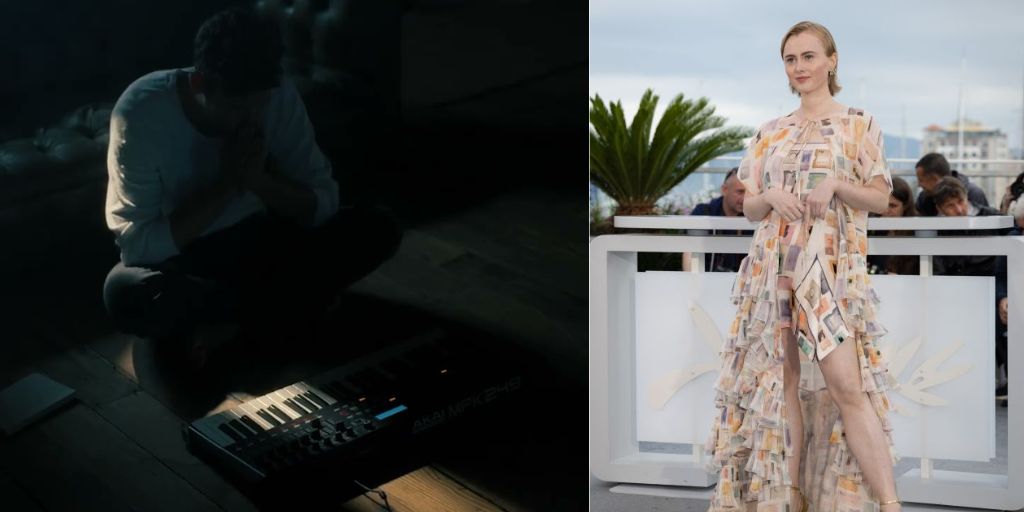
Still from When the Light Breaks (Credit: Compass Films)
At first, this makes the situation uncomfortable, but over time, Una and Klara bond through their shared sorrow. They both loved Diddi, and now they mourn him together.
This connection, born out of a painful loss, is just one example of how Rúnarsson portrays the deep and often unexpected beauty that can come from shared grief. It shows how pain can bring people together in profound ways.
A Powerful Cast of New Actors
One of the most striking things about When the Light Breaks is its cast of mostly new and first-time actors. Their performances are raw and authentic, making viewers feel as though they are witnessing something deeply personal and private.
Director Rúnar Rúnarsson does not shy away from uncomfortable moments. Instead, he forces the audience to confront the characters’ pain and suffering directly. This intense storytelling approach is heightened by cinematographer Sophia Olsson’s work, which beautifully captures Iceland’s rugged scenery alongside the raw emotions of the actors.
Her work highlights both the physical and emotional storms that the characters experience. The film’s soundtrack, featuring music by Jóhann Jóhannsson, and its sharp editing by Andri Steinn Guðjónsson, also add to the power of the story. Together, these elements create a moving and intimate portrayal of grief that feels both personal and universal.
Reflecting on Human Grief and Art
When the Light Breaks offers a deep reflection on human emotions, particularly grief, and how people use art to process their feelings. For anyone who has experienced a sudden loss, the film is a reminder of how deeply personal yet universally understood grief can be.
Rúnarsson’s storytelling shows the strange and unpredictable nature of loss. He takes a specific human experience and makes it relatable for everyone who watches the film. At less than 90 minutes, the film manages to capture the many emotions that come with losing a loved one—confusion, regret, second-guessing, and the constant “what ifs.”
Like Una, we experience moments where tears turn into laughter, and sometimes, laughter turns into tears. We also see how important it is to have others around to support and understand us during such difficult times.
The film portrays the wild and uncontrollable nature of human emotions when faced with loss. During such moments, the usual calmness and self-control people display in everyday life disappear. Instead, raw, animal-like reactions come to the surface.
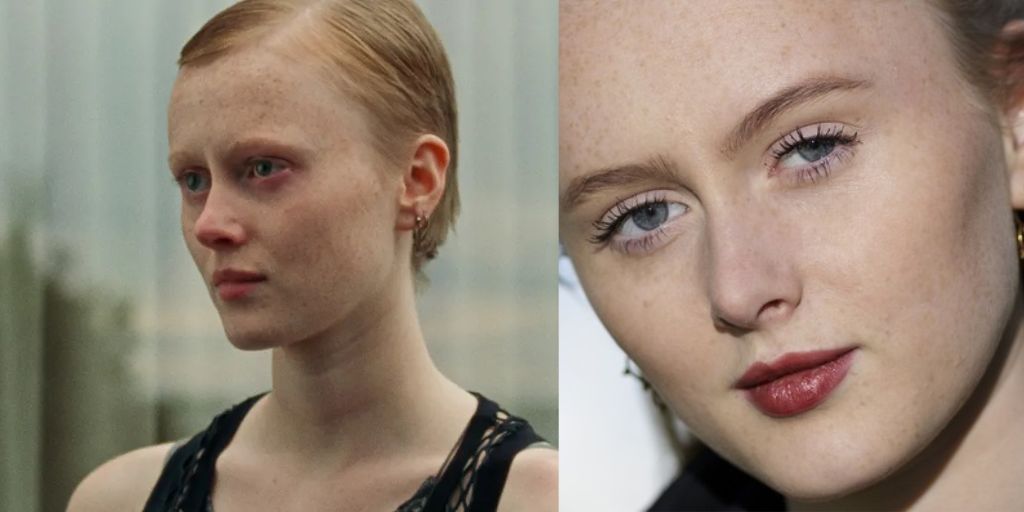
Still from When the Light Breaks (Credit: Compass Films)
As the mind tries to make sense of the situation, the heartaches, the throat tightens, and numbness sets in. Yet, as Rúnarsson shows, these painful and chaotic emotions are what make us human. And just as humans have done for thousands of years, we turn to art to help us cope with these feelings.
Perhaps, long ago, a person grieving a loss carved images into stone as a way to express their sorrow. Today, a filmmaker like Rúnarsson can take his experience of tragedy and create a film like Ljósbrot. Both are forms of art that help us deal with the pain of loss, whether they are ancient carvings or modern films.
Art, in all its forms, has always been a way for humans to express their emotions and share their experiences. It connects us through time, showing that no matter how much we evolve, our need to express ourselves through art remains the same.
With the new Max series The Penguin set to premiere soon, fans of the DC universe are curious about how the show will connect to The Batman and its much-awaited sequel, The Batman Part II.
In an interview with Collider’s Steve Weintraub, director, producer, and writer Matt Reeves explained what fans can expect when it comes to the connections between the movies and the upcoming series.
Reeves shared that while The Penguin is a direct spin-off from The Batman and will feature The Penguin (once again played by Colin Farrell in a nearly unrecognizable look), the series will mostly stand on its own.
It will offer extra insight into the new Batman universe, but watching it is not a requirement to understand the storyline of the movies. However, Reeves did emphasize that watching The Penguin will offer some benefits:
“Here’s the thing: I think that, in terms of it being like an epic crime saga, it is something that’s deepened by watching all of it. But the truth of the matter is that each one, of course, needs to live on its own. So The Batman lives on its own. The Penguin series lives on its own.
The Batman 2 will live on its own, but it will be deepened by your having. You won’t have to be prepared for what happens.
You’ll just understand that that’s the entry point of where this character is coming in and the events that unfold are unfolding in a way where it’s not like, oh, gee, I needed to see those eight episodes of that show or I won’t understand what’s going on. It’s not it doesn’t work that way.”
The Penguin’s Journey to Rule Gotham
Based on what Reeves shared, it appears that no major events in The Penguin series will drastically impact the larger storyline of The Batman trilogy. However, many DC fans will still want to watch the series while they wait for the next movie in the Batman saga.
Since the sequel doesn’t yet have a filming start date, it may be a while before we see Robert Pattinson return as Batman. Also, as far as it’s known, Bruce Wayne is not expected to appear in The Penguin.
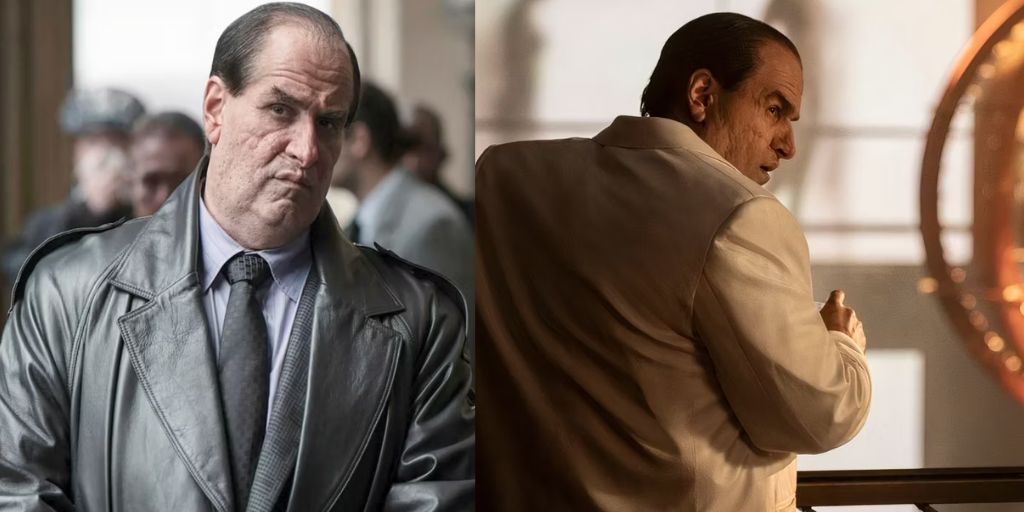
Still from The Penguin (Credit: Max)
The Penguin will focus on Oz Cobb’s rise to power in Gotham City’s criminal underworld following the death of Carmine Falcone.
In addition to Farrell, the show’s cast includes Cristin Milioti (How I Met Your Mother), Theo Rossi (Sons of Anarchy), David H. Holmes (High Fidelity), Myles Humphus (The Equalizer), and Hunter Emery (Orange is the New Black).
The Penguin will debut on Max on September 19.
