Voldemort, played by Ralph Fiennes, is clearly the most evil character in the Harry Potter series. His cruelty, ambition, and desire to control the wizarding world make him feared by nearly everyone.
However, there is one character who rivals even Voldemort in terms of how much she is despised by fans—Dolores Umbridge, played by Imelda Staunton.
While Voldemort represents pure evil, Umbridge is often considered the most hated character because of her cruel and manipulative behavior, hidden behind a sweet and prim exterior.
Imelda Staunton’s Perfect Portrayal of Dolores Umbridge
Imelda Staunton’s performance as Dolores Umbridge is unforgettable. She brings the character to life in a way that makes her both detestable and fascinating. Every movement, every smile, and every word from Umbridge is filled with arrogance and condescension.
Staunton manages to capture this balance perfectly, making the character one of the most memorable villains in the Harry Potter series.
Unlike Voldemort, whose evil is open and obvious, Umbridge hides her dark side behind a mask of politeness and sweetness. She wears her pink outfits and places cute kitten plates on her office walls, all while enforcing cruel rules and punishing students at Hogwarts.
This contrast between her outward appearance and her cruel actions makes her even more disturbing. Staunton’s portrayal of this duality adds depth to Umbridge, making her a character fans love to hate.
Umbridge’s Role in “Harry Potter and the Order of the Phoenix”
Umbridge plays a significant role in “Harry Potter and the Order of the Phoenix.” As the Defense Against the Dark Arts professor at Hogwarts, she quickly establishes herself as the most disliked teacher.
Instead of teaching students how to defend themselves, she forces them to study only theory, denying them any practical skills they might need in real battles. This decision puts Harry and his friends in danger, as they are facing real threats outside the classroom.
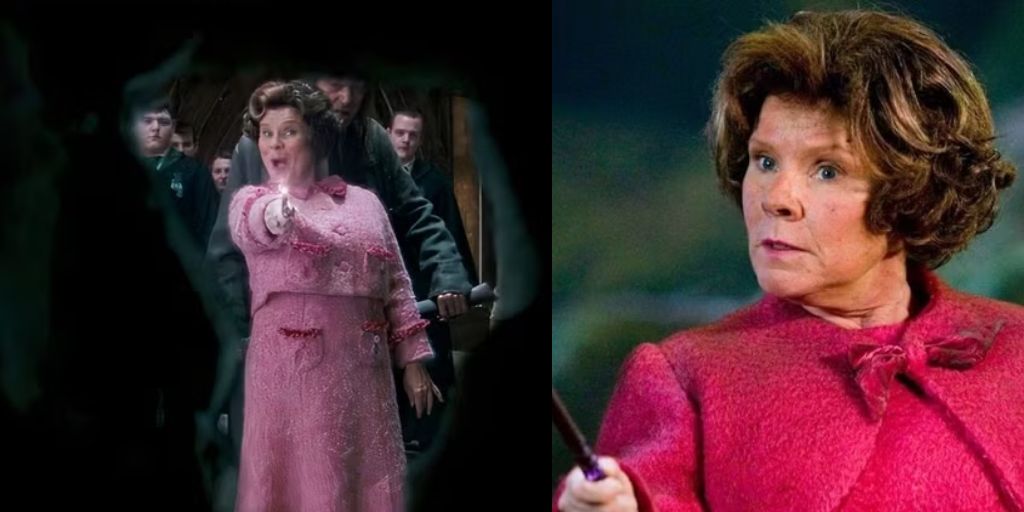
Dolores Umbridge (Credit: HBO)
Her cruelty becomes clear when she punishes students who defy her. Harry, in particular, is subjected to a painful punishment when she forces him to write lines with a magical quill that carves the words into his skin. This method of punishment shows her sadistic side, as she takes pleasure in controlling and hurting students.
Umbridge’s belief in absolute authority and her willingness to use cruel methods to enforce her rules make her a character who is universally hated by both the characters in the story and the fans of the series.
Umbridge’s Involvement with Voldemort’s Regime
While Dolores Umbridge is not a Death Eater, she plays a crucial role in supporting Voldemort’s regime during his takeover of the Ministry of Magic.
In “Harry Potter and the Deathly Hallows,” she becomes the head of the Muggle-Born Registration Commission, where she helps Voldemort’s followers persecute Muggle-born witches and wizards. Under her leadership, many innocent people are captured, tortured, and imprisoned simply because of their blood status.
Her belief in the superiority of pure-blood wizards aligns her with Voldemort’s ideology, even if she does not openly support him. She uses the authority of the Ministry to carry out her cruel actions, hiding behind the law to justify the harm she causes. This makes her even more dangerous, as she represents the kind of evil that hides behind rules and regulations to oppress others.
What Happened to Umbridge After the Battle of Hogwarts?
After the Battle of Hogwarts in “Harry Potter and the Deathly Hallows: Part 2,” many fans were left wondering what happened to Dolores Umbridge. She played a significant role in Voldemort’s regime, yet her fate was not shown on screen. However, J.K. Rowling answered this question on her website, Pottermore, in 2015.
According to Rowling, Umbridge was put on trial for her crimes after Voldemort’s downfall. She attempted to escape from her trial, but she was caught and sentenced to life in Azkaban. This was her punishment for her role in Voldemort’s regime and for the persecution and torture of many innocent people.
However, unlike many other prisoners in Azkaban, Umbridge did not have to face the Dementors, the creatures that feed on fear and despair. Even though she was sentenced to life imprisonment, she avoided the worst of the punishment that her victims had to endure.
Umbridge’s Punishment on the New Universal Ride
While J.K. Rowling revealed Umbridge’s fate in 2015, fans of the Harry Potter series will soon get to experience her trial and punishment in a more interactive way. Universal Studios is opening a new ride at their Epic Adventure theme park called “Harry Potter and the Battle at the Ministry.”
This ride will allow visitors to take part in Umbridge’s capture and trial after the Battle of Hogwarts. Imelda Staunton will reprise her role as Dolores Umbridge for this ride, giving fans the chance to finally see her character brought to justice.
The ride is set to open in 2025, and visitors will play an active role in helping to capture Umbridge as she tries to escape from her trial. This interactive experience is sure to be exciting for fans who have long waited to see Umbridge face the consequences of her actions.
Her role in persecuting Muggle-borns and enforcing Voldemort’s cruel laws makes her one of the most hated villains, and her eventual imprisonment in Azkaban provides a sense of closure for those who felt she escaped justice for too long.
Why Umbridge’s Punishment Was Not Shown in the Films
Some fans have argued that Dolores Umbridge’s punishment was not shown enough in the films. Given the amount of pain and suffering she caused, they feel that her downfall should have been more clearly depicted.
However, others believe that not showing her punishment fits with the themes of the Harry Potter series.
The Harry Potter story is not about revenge. While many characters do face justice for their actions, the series is focused on the power of love, friendship, and standing up to evil without becoming evil yourself.
Showing Umbridge being punished in a violent or brutal way would have gone against the message of the story. Instead, the films leave it up to the audience to imagine what happens to her, trusting that justice is served.
In “Harry Potter and the Order of the Phoenix,” Umbridge is taken away by the centaurs, and we never see exactly what happens to her after that.
This decision reflects the idea that some things are better left to the imagination. The audience does not need to see her suffering in order to know that she got what she deserved.
Similarly, her trial and imprisonment after the Battle of Hogwarts provide a sense of closure without indulging in cruelty for the sake of satisfaction.
Umbridge as a Representation of Different Forms of Evil
One of the reasons Dolores Umbridge is such a memorable character is that she represents a different kind of evil than Voldemort. While Voldemort is the embodiment of pure, open evil, Umbridge’s evil is more subtle.
She hides behind her authority and uses the law to justify her actions. This makes her character even more disturbing because it reflects the kind of evil that can exist within systems of power.
The Harry Potter series shows the idea that evil can take many forms. Umbridge is a reminder that not all villains are like Voldemort.
Some people commit evil acts in the name of doing what they believe is right, or because they are following the rules.
Umbridge’s cruelty and lack of empathy show that evil can exist in everyday situations, carried out by people who believe they are simply doing their duty.
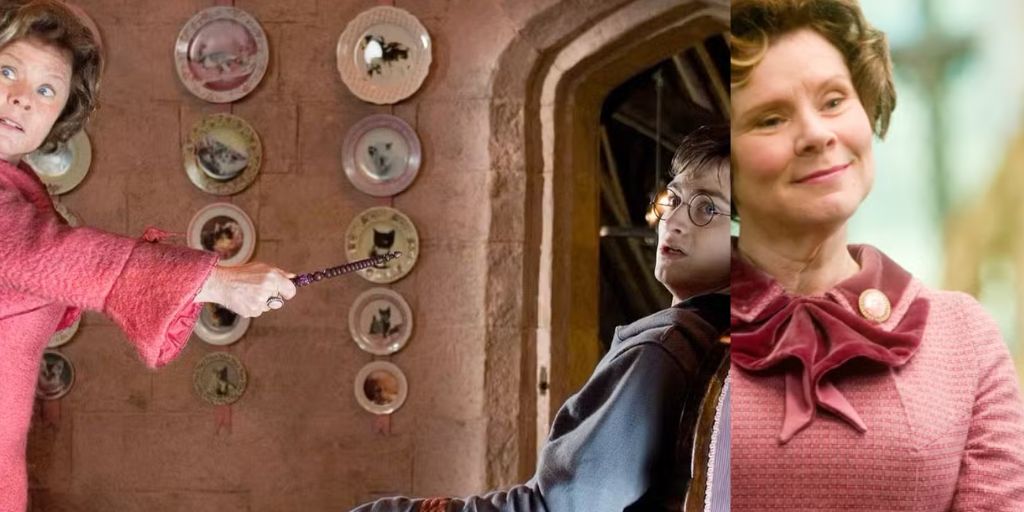
Dolores Umbridge (Credit: HBO)
This makes Umbridge’s character even more hated by fans. She is not driven by a desire for power or immortality like Voldemort, but by a belief that she is always in the right. Her willingness to hurt others in the name of her own version of justice makes her a villain who feels disturbingly real.
Conclusion: Umbridge’s Legacy as a Villain
Dolores Umbridge will always be remembered as one of the most hated characters in the Harry Potter series. Her cruelty, arrogance, and manipulation make her a villain who stands out, even among other iconic characters like Voldemort.
While she was not a Death Eater, her role in persecuting Muggle-borns and enforcing Voldemort’s laws makes her a key figure in his regime.
The fact that she was eventually brought to justice after the Battle of Hogwarts provides a sense of closure for fans. Her imprisonment in Azkaban is a fitting end for a character who caused so much pain and suffering throughout the series.
With the upcoming ride at Universal Studios, fans will finally get to see her fate in a more interactive way, bringing her story to a satisfying close.
In neat, handwritten letters, a title card encourages those who have faced similar traumas to take a moment and breathe. “This has helped me many times,” Shiori Itō admits.
She feels that her story is important to share, but she understands it will not always be easy for her audience.
This is how Black Box Diaries begins, a powerful film that details her multi-year journey to highlight problems in the Japanese justice system, along with sharing her own experience of assault.
It is a deeply personal story that connects to high levels of Japanese politics, creating a bold narrative of one woman’s fight to share her truth.
What Is Black Box Diaries About?
In the spring of 2015, Shiori Itō was a young and ambitious journalist. With strong English skills, she had studied in New York and returned to Japan to start her promising career in journalism. In April 2015, she met with Noriyuki Yamaguchi, a prominent journalist, to discuss possible job opportunities.
Yamaguchi was the Washington Bureau chief for the Tokyo Broadcasting System and was a close friend and biographer of Shinzo Abe, the then-Japanese president. This connection made Yamaguchi very influential within Japan’s closed system of power.
After their dinner, security footage shows Yamaguchi’s driver taking Itō back to the hotel, dragging a clearly intoxicated and reluctant passenger past the doorman, up through the lobby, and into his room.
According to Itō, she was blacked out for the entire trip. She only woke up to find Yamaguchi on top of her, pressing down on her abdomen and engaged in sex when she was in no position to give consent.
Shiori Itō’s Fight Against Japan’s Outdated Justice System
This moment marked the start of a long and painful process. Itō filed police complaints charging rape, but they were initially dismissed. Arrest warrants were overturned by police leaders who had close ties to powerful figures like Abe. She faced many challenges from Japan’s outdated sexual assault laws.
Despite the risks, Itō took the rare step of publicly discussing her case, going against the advice of her family and friends. She became a reluctant but powerful voice for many women who had been silenced after their own assaults.
Black Box Diaries documents Itō’s journey into the spotlight and the writing of a book that shares the same title as the film. The book not only outlines her experience of assault but also serves as a tool for change in Japan. Itō connects her struggles to the #MeToo movement, which emerged after the Harvey Weinstein cases.
However, the social and political complexities of Japan’s highly structured society make her situation even more complicated, and in some ways, transformative.
The film is an extension of her book, unfolding like a memoir. It features recordings of various people involved in her case, including “Investigator A,” who assisted with her case, as well as witnesses and others who helped support her story and fill in the gaps from her blacked-out experience.
One particularly powerful interview is with the driver from that night. He admits that he saw Itō ask to be dropped off at home, but Yamaguchi overruled her request. Many viewers might be shocked to learn that a clearly intoxicated female passenger’s request was ignored in favor of a powerful man’s orders.
This incident highlights the subtle complexities of Japan’s strict social and work structures, which often diminish the safety and concerns of women like Itō while benefiting more powerful, usually male figures.
Black Box Diaries: A Compelling and Emotionally Rich Story
The film is told in a visually poetic yet emotionally impactful way. Itō shares her story from her own perspective. While the film presents some details about the legal aspects of her case, the primary focus is on Itō’s thoughts and feelings.
For those looking for a more neutral examination of the allegations or the complexities of the Japanese political class, they might be disappointed. The film centers on giving Itō’s voice a platform without any compromise or censorship.
Itō’s film is not merely an exercise in self-centeredness. Instead, it shows her desire to seek justice not only for herself but also for others. In a meeting with female journalists, many from older generations, Itō hears similar stories that have gone underreported by those who are supposed to tell the truth.
This evidence shows how societal and cultural practices have strangled these stories. Thanks to Itō and others, attitudes are finally beginning to shift toward a better understanding of these issues.
Black Box Diaries is not an easy watch, but it is an immensely compelling and emotionally rich film. Itō shows great courage in her fight to tell her story. She is also a talented storyteller, making the film accessible to audiences while being unflinching in its honesty.
There are moments where Itō reveals her vulnerability, showing that she is not just a stone-hearted hero unaffected by her trauma. Beyond the legal and political ramifications, this is one woman’s story that deserves to be told, shared by someone capable of guiding the complex narrative without oversimplifying it.
Thanks to Itō’s determination and focus, Black Box Diaries tells her powerful and haunting story. It provides a richly drawn portrait of one woman’s fight for justice that aims to inspire change in Japan and beyond.
Shiori Itō’s Courage and Impact
Shiori Itō’s journey is remarkable, and her courage in sharing her experience is inspiring. She faces significant personal and societal challenges in a culture that often silences victims.
In Japan, where discussing sexual assault is still taboo, her decision to speak out publicly is brave. Itō understands that her story is not just about her; it is about the many women who feel unheard and invisible. By sharing her experience, she hopes to empower others to speak out.
The film portrays Itō’s life and the impact of her trauma. It shows the toll that her experience takes on her mental health and well-being. Throughout her journey, she faces not only the external battles with the justice system but also internal struggles with her identity and sense of self. This duality adds depth to her story, making it relatable to many who have faced similar challenges.
Itō also sheds light on the broader cultural issues that contribute to the difficulties faced by assault victims in Japan. The film illustrates how societal norms and expectations often pressure women to remain silent, forcing them to carry their burdens alone. Itō’s bravery helps break down these barriers, paving the way for more open conversations about sexual assault and consent.
The Importance of Support Networks
In her journey, Itō highlights the importance of having a supportive network. Throughout the film, we see how the support of her friends, family, and fellow journalists plays a crucial role in her ability to show the challenges she faces. This support is vital for survivors of trauma, helping them regain their voices and seek justice.
Itō’s story emphasizes that survivors do not have to face their battles alone. Her connections with other women who share similar experiences create a sense of community and strength. This network becomes a lifeline for Itō, reminding her that she is not alone in her fight.
Moreover, the film showcases the importance of allies in the movement for change. Allies can help amplify the voices of survivors and create spaces where these stories can be told. Itō’s interactions with her legal team and journalists show how collaboration can lead to greater awareness and action.
Cultural Shifts and Changing Narratives
As Itō continues her fight, she also contributes to a larger cultural shift. The release of Black Box Diaries coincides with a growing movement in Japan to address issues of sexual violence and harassment. Many women are starting to speak out against their experiences, inspired by Itō’s courage.
The film serves as a powerful reminder that change is possible. It demonstrates that by sharing their stories, survivors can challenge societal norms and inspire others to do the same.
Itō’s work encourages a shift in the narrative around sexual assault, moving away from victim-blaming and toward a more compassionate understanding of the complexities involved.
Itō also highlights the importance of education and awareness in creating lasting change. The film addresses the need for better education on consent and healthy relationships, especially for young people.
By fostering a culture of understanding and respect, future generations may be better equipped to prevent violence and support survivors.
The Lasting Legacy of Black Box Diaries
Black Box Diaries is not just a film; it is a call to action. It encourages viewers to reflect on their own beliefs and biases regarding sexual assault and consent. Itō’s story resonates with many, urging them to take a stand against injustice and support survivors.
The film’s release marks a significant moment in Japanese cinema and society. It brings attention to the ongoing struggles faced by survivors and the need for systemic change. Itō’s courage in sharing her experience helps shine a light on the dark corners of society, forcing conversations that have long been ignored.
As the film reaches audiences worldwide, its impact is expected to grow. Itō’s story is universal, speaking to the experiences of survivors around the globe. By sharing her truth, she opens doors for dialogue, healing, and ultimately, change.
Looking Forward
As Black Box Diaries premieres in theaters, Itō hopes it will inspire others to share their stories. She believes that every voice matters and that by coming together, survivors can create a powerful movement for change. Itō’s fight is far from over, but her determination and resilience serve as a beacon of hope for many.
In the face of adversity, Itō stands tall, refusing to be silenced. Her journey is a testament to the strength of the human spirit and the power of storytelling. With each passing day, she continues to push for justice, not just for herself, but for all who have suffered in silence.
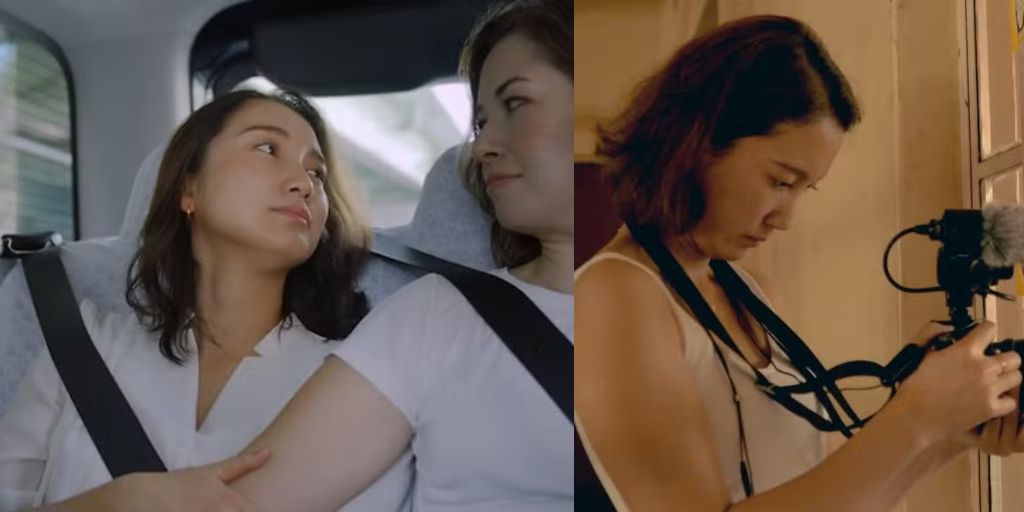
Still from Black Box Diaries (Credit: MTV)
Black Box Diaries is a vital contribution to the conversation about sexual violence, justice, and empowerment. It reminds us that every story matters and that by sharing our truths, we can create a better world for future generations.
Black Box Diaries stands as a powerful testament to Shiori Itō’s courage and resilience in the face of overwhelming challenges.
Her journey from a young journalist to a vocal advocate for survivors of sexual assault encapsulates the struggle many individuals face in seeking justice within a system that often favors the powerful over the vulnerable.
By sharing her personal story, Itō not only highlights the systemic issues within the Japanese justice system but also sheds light on the broader societal attitudes toward sexual violence.
The film is more than just a personal narrative; it is a clarion call for change. Itō’s bravery in confronting her trauma and publicly discussing her experiences resonates deeply with audiences, encouraging others to find their voices and stand against injustice.
As more survivors come forward to share their stories, a cultural shift is underway, challenging long-held beliefs and practices that have kept many silent for too long.
Black Box Diaries is a crucial piece of work that invites viewers to reflect on the importance of empathy, understanding, and support for survivors.
It emphasizes the need for systemic reforms in how sexual assault cases are handled and highlights the significance of education on consent and healthy relationships.
The impact of Itō’s story extends beyond Japan, serving as a source of inspiration for individuals worldwide who seek to confront similar injustices.
As audiences engage with Itō’s narrative, they are reminded of the power of storytelling to ignite change. Her fight for justice not only transforms her own life but also paves the way for a more equitable future for all survivors.
Through Black Box Diaries, Itō’s voice becomes a beacon of hope, illuminating the path toward justice and healing for many.
