After years of anticipation, Yellowstone, Paramount Network’s popular neo-Western drama, is finally back. As the series nears its conclusion with the final batch of episodes, it’s time to remember where Season 5A left off. The mid-season finale, titled “A Knife and No Coin,” aired on January 1, 2023, and many important events happened before it.
With the Duttons facing the potential loss of everything they have worked for, there’s no better time than now to catch up, especially with the second part of Season 5 premiering on November 10. If this is the end of the Dutton family’s journey, we are in for a wild ride.
John Dutton’s Governorship Faces Major Challenges
In the opening of Season 5, John Dutton (played by Kevin Costner) is sworn in as the new Governor of Montana. John’s main goal as governor is to use his political power to protect the Yellowstone Dutton Ranch. Originally, John had planned to pass this responsibility to his son Jamie (Wes Bentley), but after losing trust in him, he took on the position himself.
John immediately takes action by signing an executive order that cancels funding for the Paradise Valley-based airport and ski resort, a project that Market Equities had been pushing for. This decision puts the land in legal jeopardy and could lead to a major lawsuit. To make things more complicated, John also places the land in a conservation easement, which restricts how the land can be used, adding more legal risks to the state.
Although John claims he is acting for the benefit of Montana, much of his actions are aimed at protecting the Dutton Ranch. The Dutton family has spent over a century building the ranch into an empire, and John is determined to ensure that his grandson Tate (Brecken Merrill) and his unofficially adopted grandson Carter (Finn Little) will inherit it.
His power, however, leads him to make questionable decisions, such as using his influence to free his lover, Summer Higgins (Piper Perabo), from prison. This move creates tension between Summer and John’s daughter, Beth (Kelly Reilly), though the two women eventually resolve their issues through a physical fight.
In a series of flashbacks, a younger version of John Dutton (played by Josh Lucas) works with a teenage Rip Wheeler (Kyle Red Silverstein) to cover up the murder of Rowdy (Kai Caster), a fellow cowboy who insulted Beth. The flashbacks reveal how Rip became involved with the Duttons and why he chose to stay with the ranch.
It also explains the bond he shares with John. Meanwhile, present-day John finds out that his cattle are being poisoned by the phone companies, leading to a fight to keep the water on the ranch safe.
Beth and Jamie’s Rivalry Reaches New Heights
Since Beth returned to Montana, she has had a bitter relationship with her brother Jamie. Years ago, Jamie took Beth to get an abortion, which led to her sterilization, leaving Beth unable to have children. Beth has held this grudge against Jamie ever since, vowing to make his life as miserable as possible.
Even though Jamie admits that taking her to the clinic was a mistake, Beth can’t forgive him. She later discovers that Jamie has a child, and she becomes determined to ruin his relationship with the child.
The tension escalates when Jamie calls for the impeachment of their father, John. He argues that John’s actions have opened Montana up to dangerous legal consequences. The call for impeachment gains support, putting John’s position as governor in jeopardy.
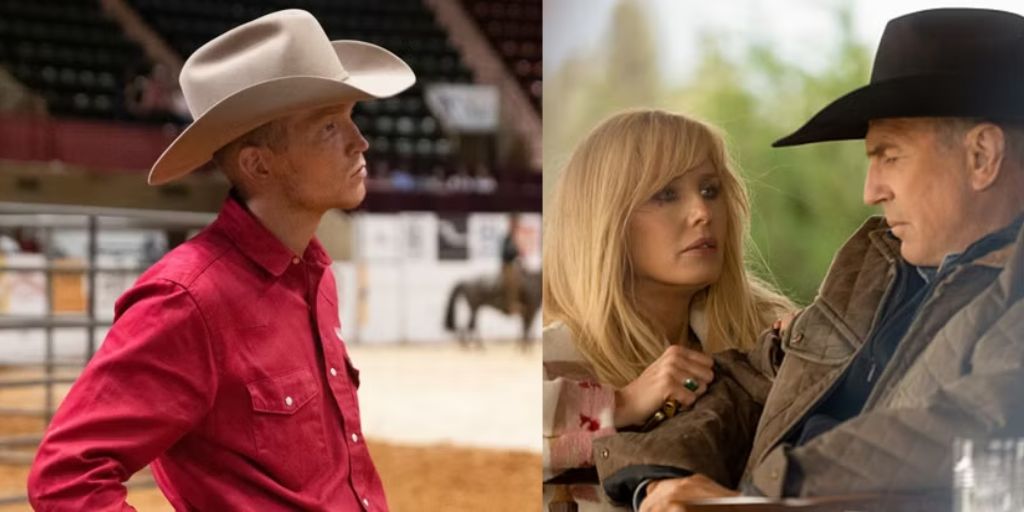
Still from Yellowstone (Credit: Peacock)
This makes Beth furious, and she threatens to expose the fact that Jamie killed his biological father, Garrett Randle (Will Patton). In retaliation, Jamie reveals Beth’s secret: she doesn’t know the location of the bodies that John and Rip have hidden, which they call the “train station.” Jamie threatens to expose this information if Beth retaliates against him.
The rivalry between Beth and Jamie could end violently, with both willing to kill each other. In the mid-season finale, Jamie asks Sarah Atwood (Dawn Olivieri) if she knows how to have Beth killed secretly. Beth, on the other hand, tells John that it’s time to silence Jamie once and for all. John, who cares for Jamie like an adopted son, is clearly uncomfortable with this idea.
Kayce and Monica Face Tragedy and Hard Choices
The couple most sidelined in Yellowstone so far, Kayce (Luke Grimes) and Monica Dutton (Kelsey Asbille), also face difficult situations this season. After working with the Montana Livestock Commission to help rescue missing horses near the U.S.-Canada border, Kayce receives a call from Monica saying that she is going into labor with their second child, who is born prematurely.
On the way to the hospital, Monica and Tate are in a car accident and narrowly avoid hitting a bison. Unfortunately, their baby only survives for an hour, leaving the family heartbroken. They name the child John, after Kayce’s father.
With John now serving as governor, he signs the Dutton Ranch over to Kayce to avoid conflicts of interest. While Monica grieves their son, Kayce tries to manage the ranch. The loss leads them to question whether this is the end of their relationship, something Kayce had foreseen in Season 4.
Despite this, they decide to bury their son on the ranch, further cementing their connection to the land. The tragedy also brings Kayce closer to his father John, and Monica finds comfort in him as well. However, with Rip and several ranch hands heading to Texas at the end of Season 5A, Kayce is left to run the ranch with the help of Lloyd (Forrie J. Smith) and the remaining ranch hands.
The Duttons Face More Challenges in Texas and Other Fronts
As Rip heads to Texas in the mid-season finale, he recruits several cowboys to join him. Among them are Walker (Ryan Bingham), Ryan (Ian Bohen), Teeter (Jennifer Landon), and Jake (Jake Ream). Their mission is to deal with a brucellosis outbreak that is threatening the cattle.
This opens up the possibility of a significant crossover with Yellowstone’s spin-off series, 6666. Rip and the crew are heading to the Four Sixes Ranch in Texas, which is where the spin-off takes place. Fans can expect to see more of this ranch, which is owned by Yellowstone creator Taylor Sheridan in real life.
Back at the Dutton Ranch, more issues arise when some ranch hands find a pack of wolves that have been attacking the Duttons’ livestock. Upon closer inspection, they discover that the wolves wear tracking collars from Yellowstone National Park, where wolves are protected by law.
To cover up the evidence, Rip tries to get rid of the collars by attaching them to logs and sending them down the river. However, the news gets out, and this issue could come back to haunt the Duttons.
On the Broken Rock Indian Reservation, tension continues to rise over a new pipeline. Chief Thomas Rainwater (Gil Birmingham) and Mo (Moses Brings Plenty) are in a battle with Angela Blue Thunder (Q’orianka Kilcher), who supports the pipeline. Rainwater believes it will harm the land and the people, while Blue Thunder believes it will bring benefits. John Dutton has sided with Rainwater, but the outcome of this conflict remains uncertain.
The Duttons Prepare for a New Era After Kevin Costner’s Exit
With Kevin Costner leaving the show before Season 5 Part 2, there is a major question surrounding how Yellowstone will address John Dutton’s absence. Some fans speculate that Josh Lucas, who plays a younger John in flashbacks, might take over the role, while others think the character could be written out, possibly killed off-screen.
Regardless of how John’s exit is handled, actress Kelly Reilly has confirmed that John’s absence was always planned as part of the show’s ending. The story had always intended for John’s departure, but it will now happen differently than originally planned.
As Yellowstone moves toward its conclusion, the Duttons’ fates hang in the balance. Fans are eager to see how the story wraps up and what will become of the Yellowstone Ranch after everything the Duttons have been through.
Conclusion
As Yellowstone nears its conclusion with Season 5 Part 2, the stakes for the Dutton family have never been higher. John Dutton’s tenure as governor has opened new political and legal battles, threatening everything the Duttons have built over the years.
actions, though intended to protect the family ranch, have created a precarious situation for Montana and the Duttons themselves. Meanwhile, the deepening conflict between Beth and Jamie, rooted in years of resentment and betrayal, is on the verge of reaching a deadly conclusion.
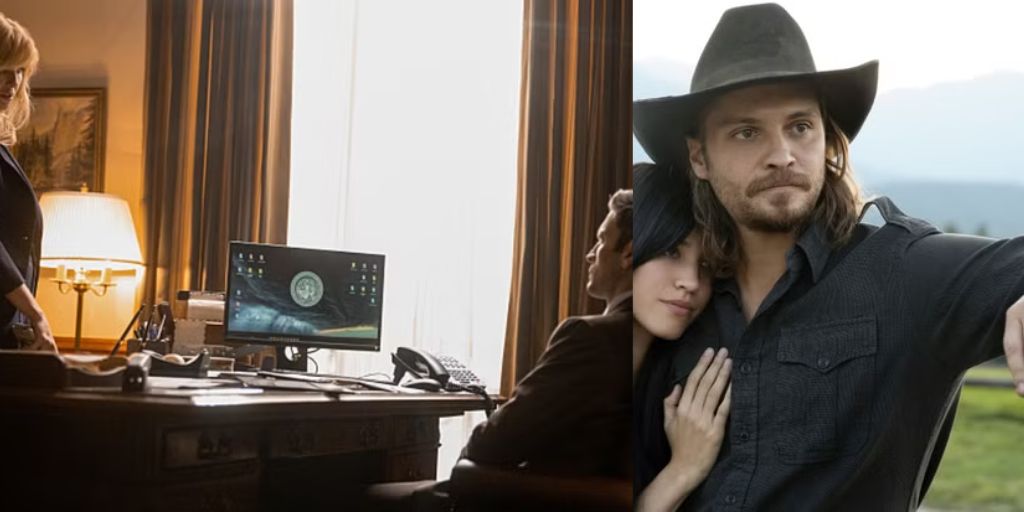
Still from Yellowstone (Credit: Peacock)
Kayce and Monica’s heartbreaking loss adds an emotional layer to the drama, while the growing tensions on the Broken Rock Reservation and the Dutton Ranch set the stage for a powerful finish.
As Kevin Costner prepares to exit the series, the question of how the show will address John Dutton’s absence looms large. Whether the character will be replaced or written off, fans are eager to see how the final chapters unfold.
With unresolved conflicts and a shifting power dynamic, Yellowstone is set to deliver a dramatic and unforgettable end. The Duttons have faced countless challenges, but as the story wraps up, it remains to be seen who will come out on top and what will ultimately become of the Yellowstone Ranch.
Season 5 Part 2 of Yellowstone returns to the Paramount Network on November 10, and fans can stream previous seasons on Peacock.
Heretic is a psychological horror film by A24 that leaves viewers with a lot to think about, particularly regarding the themes of religion, control, and personal faith. The story is centered on two Mormon missionaries, Sister Paxton (Chloe East) and Sister Barnes (Sophie Thatcher), who find themselves trapped in a house owned by the sinister Mr. Reed (Hugh Grant).
Throughout the film, Mr. Reed forces them to confront their religious beliefs, manipulating them with strange and unsettling scenarios. However, the film does not offer a straightforward answer to the questions it raises about faith. Instead, it presents a deeper scheme of the nature of belief, control, and self-determination.
The film opens with Sister Paxton and Sister Barnes, two young missionaries, being assigned to their new post. They are enthusiastic about their faith and eager to spread their beliefs. However, things take a dark turn when they find themselves caught in Mr. Reed’s home, with no way out. Mr. Reed is an enigmatic and manipulative character, and he has a plan to break the missionaries’ faith.
Throughout the film, he forces them into a twisted game, presenting bizarre tests of faith and belief. The central theme of these tests is the idea of control—Mr. Reed argues that religion is ultimately about controlling people, and he will do everything in his power to convince Sister Paxton and Sister Barnes of this.
Mr. Reed’s Argument: Religion as a Tool of Control
The film reaches a crucial point when Mr. Reed delivers his final argument to Sister Paxton. He claims that religion is merely a tool for control, something that is used by powerful people to manipulate the masses.
He argues that all the missionaries’ faith is built on lies and that their beliefs are based on nothing more than a false sense of security. His proof lies in the so-called “prophets” that he has created, figures who have been kept in cages, malnourished, and manipulated into believing they are divine messengers.
Mr. Reed’s explanation is chilling in its simplicity. He argues that people in a weakened state are easier to control, and this applies to everyone—regardless of religion, status, or power. In his view, every belief system, whether religious or secular, is just a way for those in power to maintain control over the masses.
His argument is terrifying because it suggests that the very thing people hold most dear—their faith—can be twisted into a means of manipulation.
This perspective is reinforced through Mr. Reed’s behavior throughout the film. He does not just argue against religious beliefs; he actively works to break the missionaries down, using every trick he can to undermine their faith.
The scenes involving his “prophets” are particularly disturbing, as they show how far Mr. Reed is willing to go to prove his point. He shows the missionaries the bodies of these men, weak and emaciated, and forces them to confront the idea that the people who claim to be chosen by God are nothing more than victims of manipulation.
Mr. Reed’s final argument represents the culmination of his beliefs. It is here that he makes his most significant statement about control. He insists that religion, in all its forms, is merely a way to keep people in line.
He argues that, like the missionaries, everyone is vulnerable to the same manipulation, and that the idea of a higher power is nothing more than a fabrication to keep people from questioning their place in the world.
Sister Paxton’s Response: Faith and Personal Belief
In response to Mr. Reed’s argument, Sister Paxton stands firm in her faith, offering a powerful counterpoint to his bleak view of the world. Her argument is not just about the truth of religion, but about the importance of personal belief and the power of self-determination.
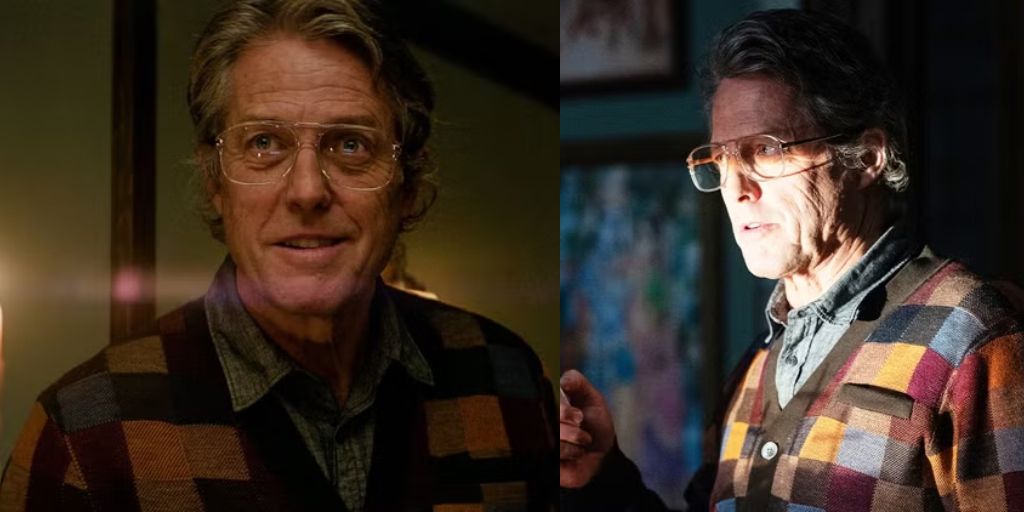
Still from Heretic (Credit: A24)
She tells Mr. Reed that her belief is about her own control, not about forcing others to accept her perspective. Her faith is something that she has chosen for herself, and it is not something that anyone, not even Mr. Reed, can take away from her.
Sister Paxton’s response to Mr. Reed’s argument is one of the most important moments in the film. She acknowledges that her prayers may not always work, but she continues to pray because it is an act of love, not a transaction with a higher power.
This statement reflects a key theme of the film—the idea that faith is not about certainty, but about choosing to believe in something beyond the self. Her belief in prayer, even when it seems ineffective, is a sign of her conviction and her refusal to be controlled by anyone, not even Mr. Reed.
Later in the film, Sister Paxton experiences a moment of symbolic significance. She has previously expressed a desire to be reincarnated as a butterfly, and when she escapes from the house, she finds a butterfly on her finger. At first, it seems like a moment of personal triumph, a sign that her beliefs are being validated.
However, the film quickly undercuts this moment by showing that the butterfly is not real and that Sister Paxton is staring at a lonely, empty finger. This moment reflects the film’s theme of belief versus reality. It suggests that, while what we believe may not always be tangible or provable, it still holds meaning and power.
In a sense, Sister Paxton’s faith is not about proving what is real or not, but about embracing the power of belief itself. Her ability to maintain her faith, even in the face of Mr. Reed’s manipulation, is a testament to the strength of her character. She does not need to convince anyone else of the truth of her beliefs—she simply needs to hold on to them for herself.
Sister Barnes’ Revenge: Shattering Mr. Reed’s Illusion of Control
The final blow to Mr. Reed’s argument comes from Sister Barnes, who seemingly returns from the dead to take revenge on her captor. The scene is dramatic and shocking, as Sister Barnes drives a nailed board into Mr. Reed’s skull, killing him and saving Sister Paxton.
Some viewers may interpret this moment as a miracle, a divine intervention that disproves Mr. Reed’s claims about the impossibility of supernatural occurrences. However, another interpretation is that Sister Barnes’ return is not a miracle, but a result of her sheer will to survive and seek justice.
In this light, Sister Barnes’ return is a powerful symbol of defiance against Mr. Reed’s control. It shows that, even in the face of death, the human spirit can fight back. Mr. Reed’s illusion of control is shattered in that moment, as he is ultimately defeated by the very people he sought to manipulate.
Sister Barnes’ revenge is not just a personal victory, but a repudiation of Mr. Reed’s worldview. It shows that, while we may not have control over everything in our lives, we do have control over how we respond to the challenges we face.
This moment also speaks to the film’s broader themes of resistance and empowerment. Throughout the story, the missionaries are forced to confront their beliefs and their sense of powerlessness in the face of Mr. Reed’s manipulations. But in the end, they prove that they are not entirely at the mercy of others.
Their actions, particularly Sister Barnes’ final act, demonstrate that they have the strength to resist, to fight back, and to reclaim their agency.
The Ending: A Reflection on Control, Belief, and Faith
The ending of Heretic is deliberately ambiguous, leaving viewers with a lot of questions about the nature of faith, control, and the supernatural. Is religion just a means of control? Are we all caught in a cycle of searching for the truth? And most importantly, is there a higher power, or is it all just an illusion?
These are some of the existential questions that Heretic raises, but the film does not provide definitive answers. Instead, it suggests that the answers to these questions may not matter as much as the choices we make in response to them.
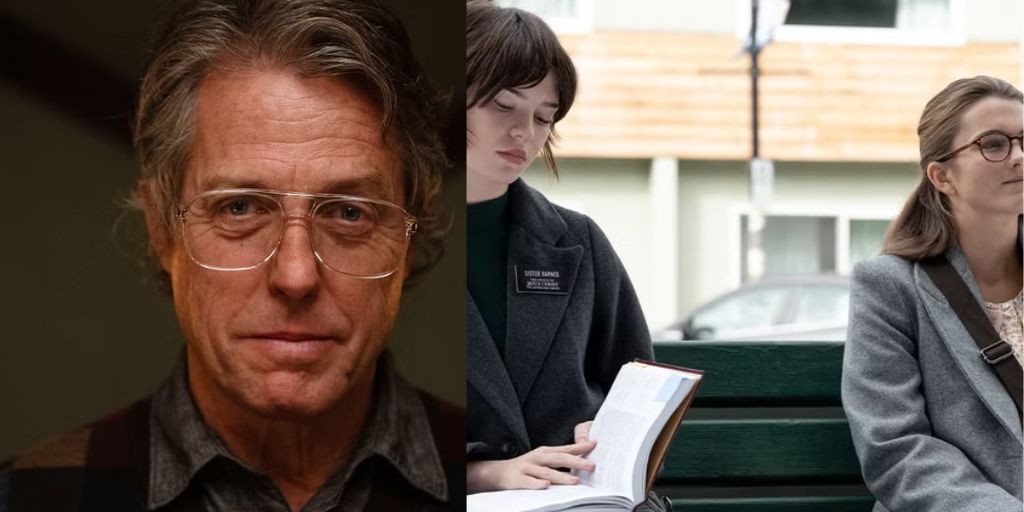
Still from Heretic (Credit: A24)
The film encourages viewers to reflect on their own beliefs and how those beliefs shape their actions. It suggests that the power of belief lies not in proving what is real or not, but in the way it empowers us to live our lives.
The missionaries in Heretic do not need to prove the truth of their faith to anyone else—they simply need to hold on to it for themselves. In doing so, they find strength, purpose, and agency in a world that often seems indifferent to their beliefs.
Heretic is now playing in theaters in the U.S.
