In the recent ending of the Jujutsu Kaisen manga, the final battle against Ryomen Sukuna saw Yuji Itadori landing the decisive blow on the King of Curses.
This moment was monumental, not only because it brought closure to the epic saga but also because it signaled the incredible growth and transformation of Yuji as a character.
Throughout the series, fans had witnessed Yuji’s development, but the climax of this arc showcased him reaching an unprecedented level of power, one that allowed him to stand toe-to-toe with Sukuna, the most feared entity in the cursed world.
While Yuji’s new techniques and sheer willpower during the battle were enough to illustrate his growth, some fans on Reddit have noticed a subtle, yet significant, change in his character design that hints at something more profound.
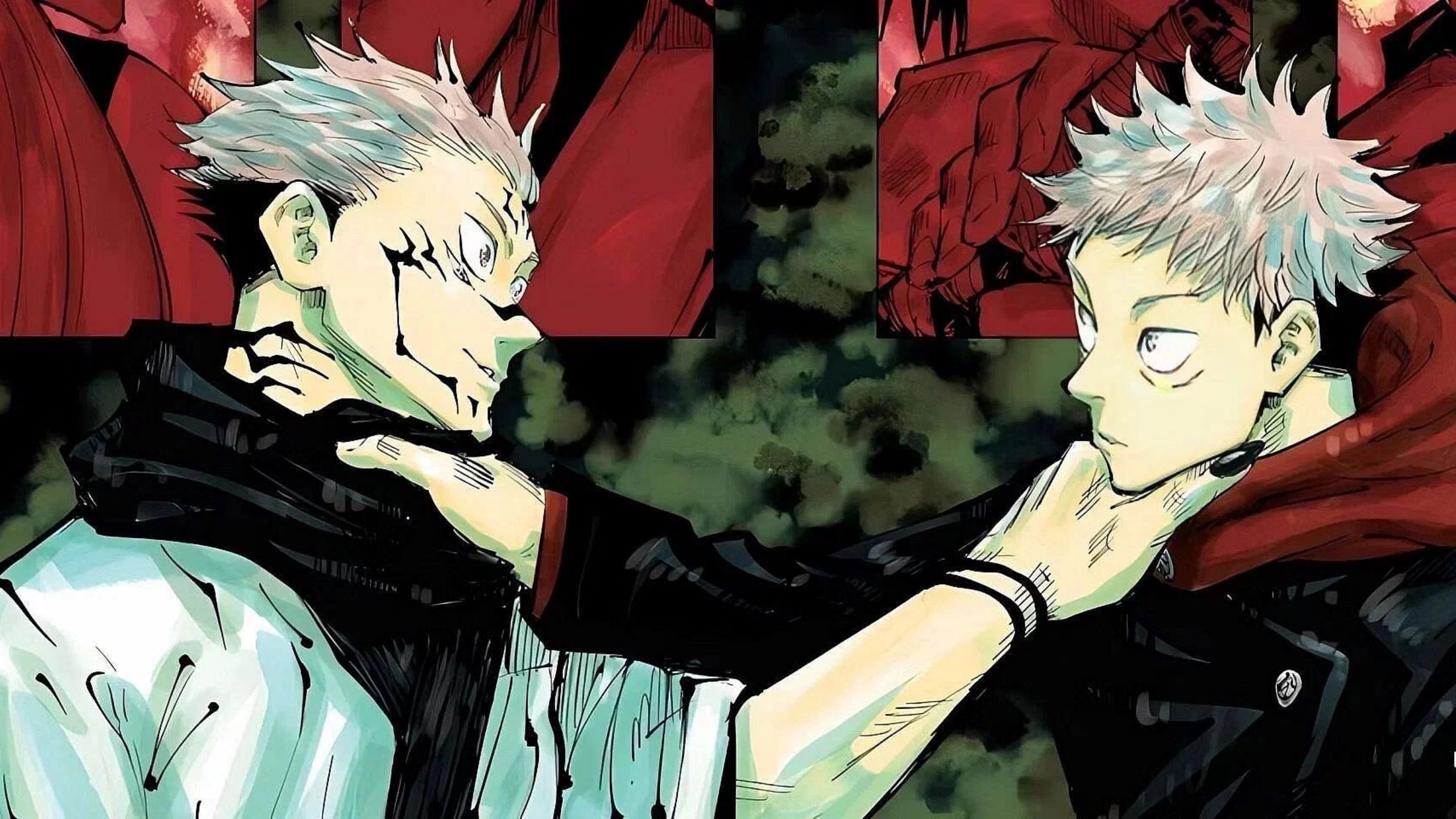
Sukuna and Yuji (Image via Shueisha)
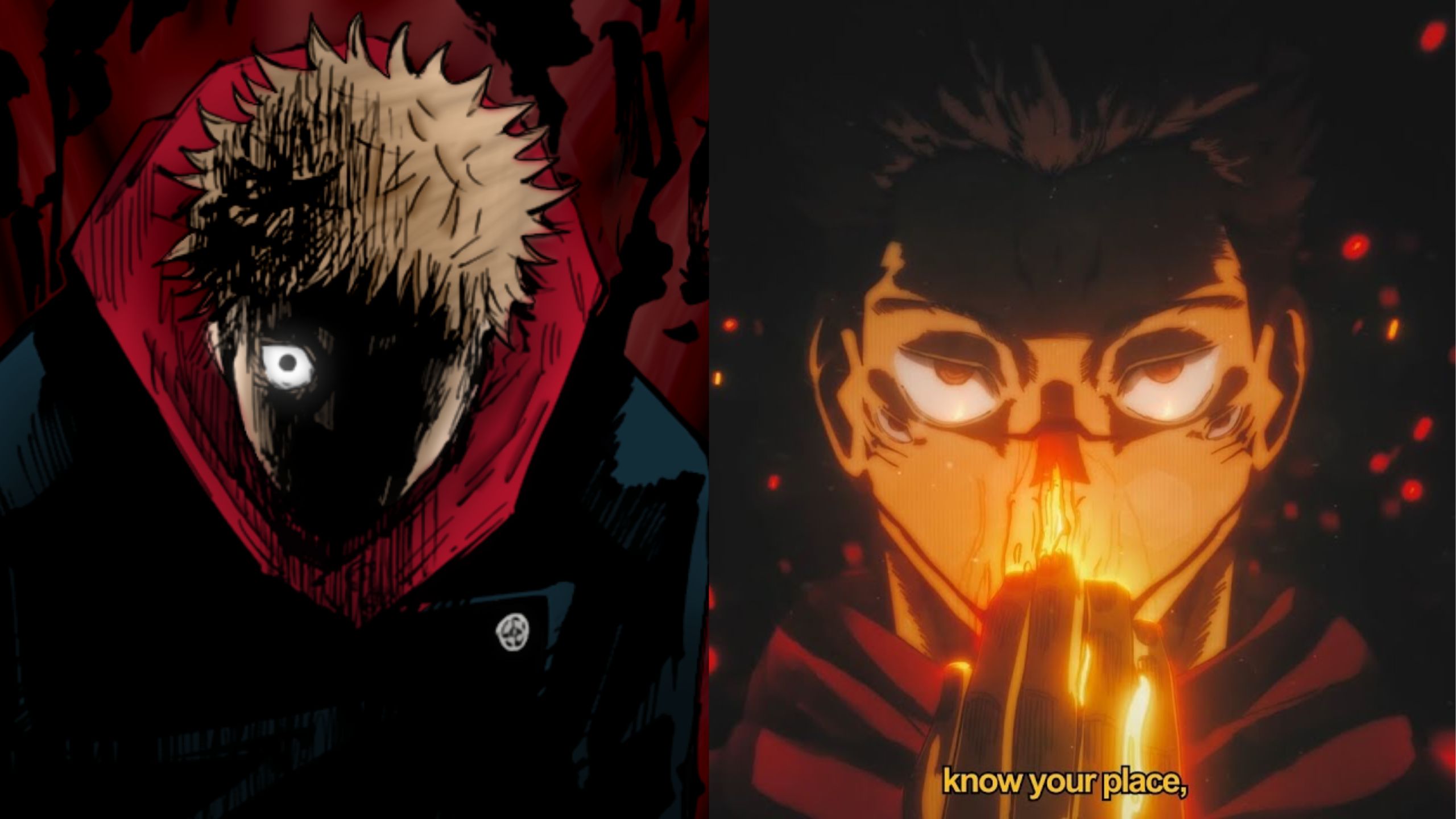
This shift in his design is most evident in his eyes, which have undergone a notable transformation during the final battle.
Whereas Yuji’s eyes traditionally appeared with a yellowish hue, in the climactic scenes, they resemble the eyes of Sukuna now red and marked with multiple circular irises.
This alteration in Yuji’s appearance has stirred up a lot of discussion among fans. Some see it as a mere stylistic choice by the series’ creator, Gege Akutami.
However, others believe that this change in his eyes could represent something far deeper perhaps a symbol of Yuji’s evolution as a sorcerer and his final ascension to a level of strength that rivals Sukuna’s.
The Transformation of Yuji’s Eyes: A Visual Indicator of Growth
Throughout most of the Jujutsu Kaisen manga, Yuji Itadori’s eyes have consistently been depicted with brown tones and slight hints of yellow, particularly when the pages are colored.
This color scheme has been relatively consistent, helping to distinguish Yuji’s more grounded and human nature from the more ominous and threatening appearances of the curses he fights.
In contrast, Ryomen Sukuna’s eyes have always been much more menacing red, with several distinct circular irises.
The design of Sukuna’s eyes effectively conveyed his overwhelming power and malevolent nature.
However, during the intense final battle between Yuji and Sukuna , this clear visual distinction between the two begins to blur.
Yuji’s eyes shift to a reddish hue and adopt a design similar to Sukuna’s, with the same multi-iris pattern.
This is an intriguing detail, as it suggests that Yuji has not only grown in terms of physical strength and combat ability but also in terms of his inherent connection to Sukuna.
yuji’s eyes changing once he decided it was time to lock back in was a beautiful detail #JJK265 pic.twitter.com/izcbfUAW5D — baeli 💫 (@BIGDADDYGOJO) August 5, 2024
Fans have taken to Reddit and other online forums to discuss the possible implications of this design choice.
Some argue that this change in Yuji’s eyes is a stylistic decision by Gege Akutami, perhaps intended to visually enhance the intensity of the final battle.
Others, however, see it as a symbolic representation of Yuji’s growth. By the end of the fight, Yuji has reached a new plateau as a sorcerer one that puts him on equal footing with the King of Curses.
This transformation could be a way of showing that, after everything he’s endured, Yuji has finally become powerful enough to challenge Sukuna directly, not just as a vessel but as a fighter in his own right.
This change in Yuji’s eyes also evokes comparisons to other pivotal moments in the series, such as Satoru Gojo’s battle with Toji Fushiguro.
That fight allowed Gojo to unlock new levels of power and cemented his status as the strongest sorcerer of the modern era.
In a similar vein, Yuji’s battle with Sukuna might be his defining moment, the point at which he transcends the limitations that have held him back and fully realizes his potential as a sorcerer.
A Deeper Connection Between Yuji and Sukuna
While the change in Yuji’s eyes could be seen as a purely stylistic decision or a representation of his growth, there is another layer to consider Yuji’s familial connection to Sukuna.
As revealed in the manga, Yuji’s father, Jin Itadori, is Sukuna’s twin brother. This revelation adds an entirely new dimension to Yuji’s character and the story as a whole.
It means that Yuji is not merely Sukuna’s vessel by chance; there is a deeper, more intrinsic connection between the two that goes beyond their current circumstances.
The transformation of Yuji’s eyes during the final battle could be interpreted as a manifestation of this blood connection.
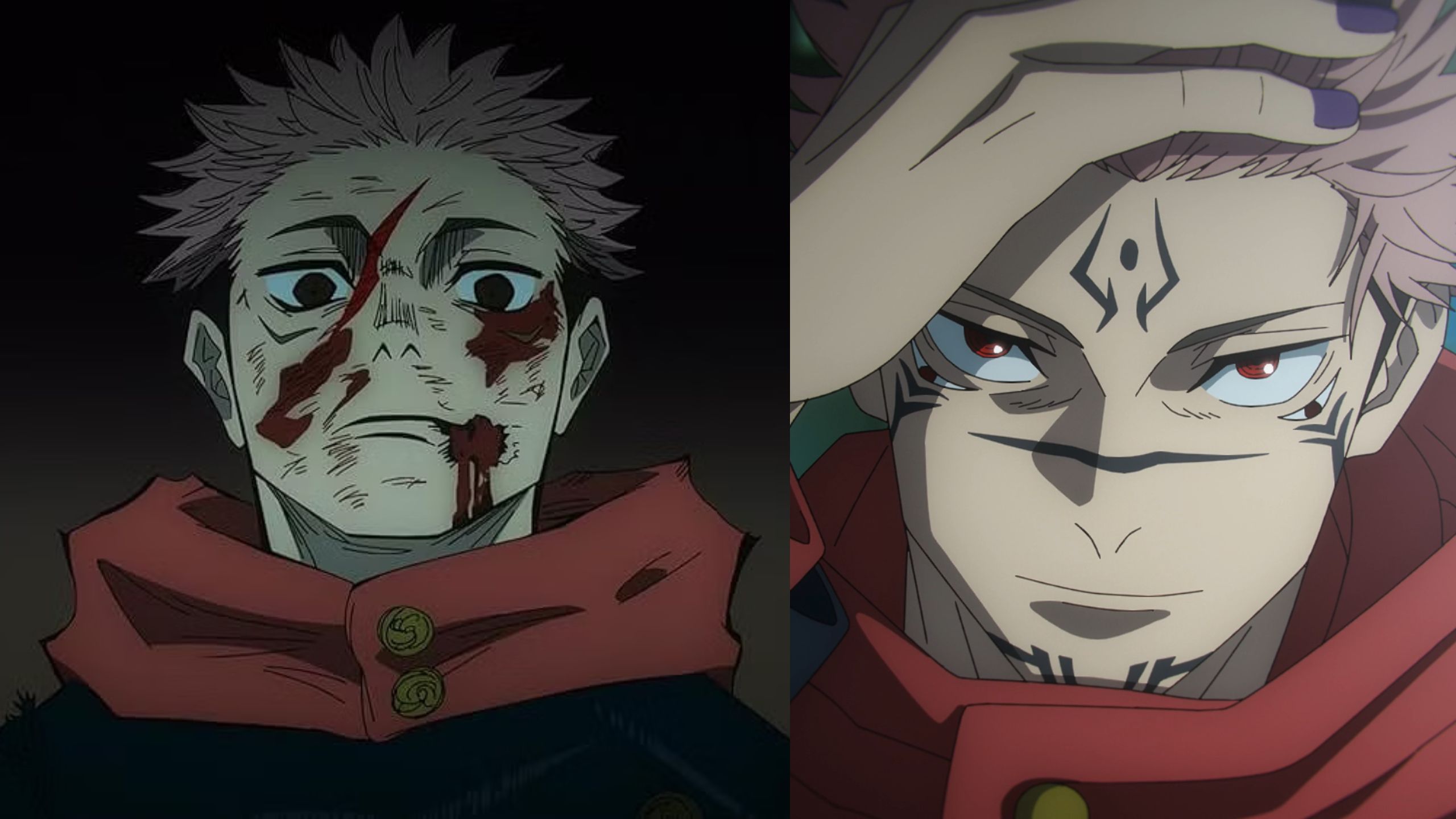
Itadori Yuji And Sukuna (image via MAPPA)
Just as Sukuna’s eyes have always symbolized his immense power and malevolence, Yuji’s eyes changing to resemble Sukuna’s might indicate that he is tapping into the same primal power that runs through their shared bloodline.
This idea aligns with the broader themes of Jujutsu Kaisen, where lineage and inherited power play significant roles in shaping the abilities and fates of the characters.
In this context, Yuji’s eye transformation is not just a visual representation of his growth as a sorcerer but also a reflection of his acceptance of the power that comes with his heritage.
Throughout the series, Yuji has struggled with the burden of being Sukuna’s vessel, often seeing it as a curse rather than a blessing.
However, in this final battle, he seems to embrace the power that comes with his connection to Sukuna, allowing him to fight on equal terms with the King of Curses.
The Role of Yuji Itadori as the Protagonist
Yuji Itadori’s journey in Jujutsu Kaisen has been anything but straightforward. While he is undeniably the protagonist of the series, there have been numerous moments where his role in the story has been overshadowed by other characters.
This is particularly evident in the Culling Games arc, where much of the focus shifts away from Yuji to characters like Megumi Fushiguro and Yuta Okkotsu.
Even during the earlier stages of the conflict with Sukuna, Yuji often takes a backseat to other key players, such as Satoru Gojo and Sukuna himself.
This narrative choice has led to some criticism from fans, who feel that Yuji’s role as the protagonist has not always been fully realized.
In many ways, Yuji’s journey has been more of a slow burn, with his growth and development unfolding gradually over the course of the series.
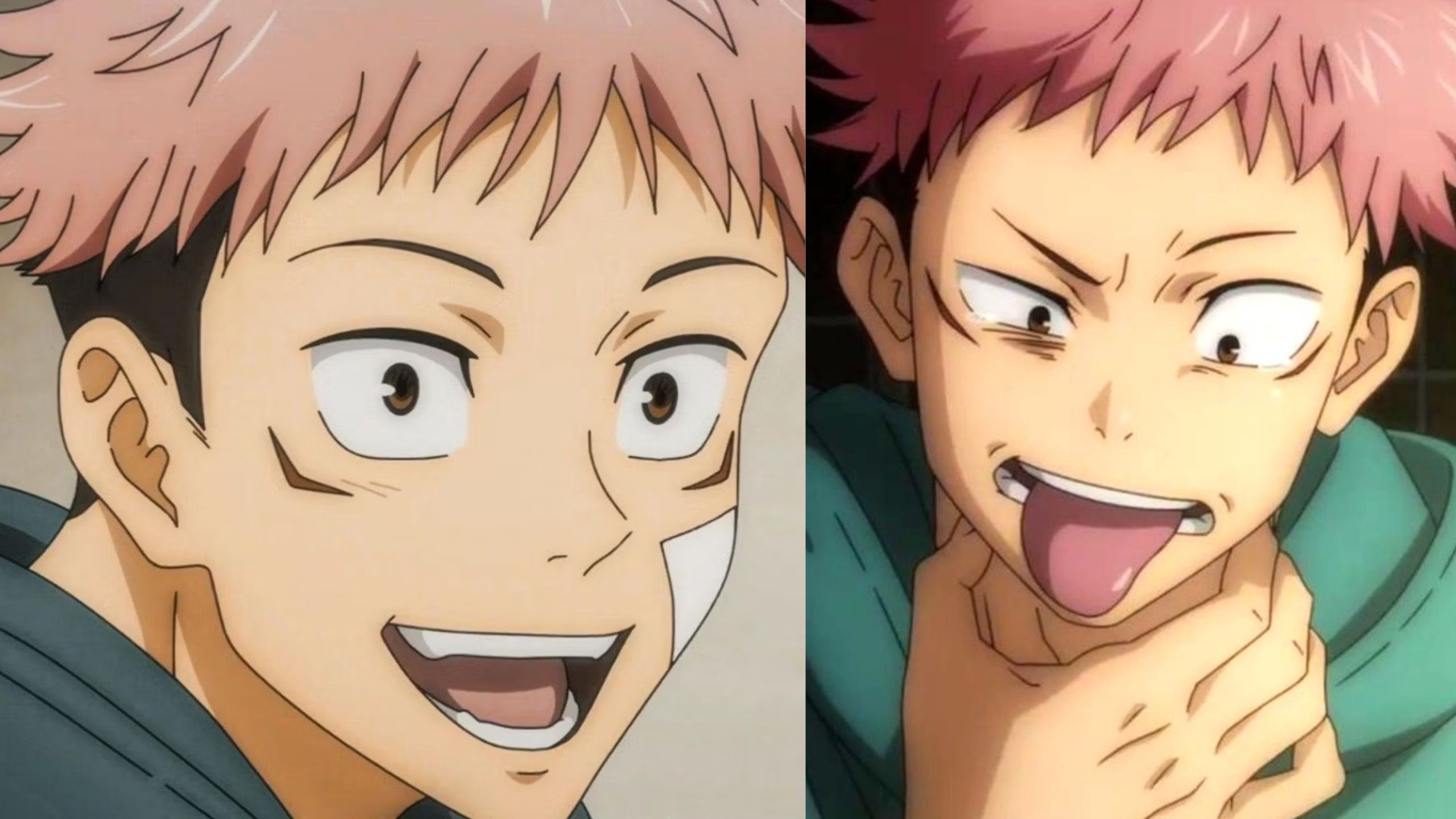
Yuji Iatdori From Jujutsu Kaisen (MAPPA)
This is in stark contrast to characters like Gojo, who are presented as fully realized from the start, or Megumi, whose potential is hinted at early on.
However, despite these criticisms, it is important to recognize that Yuji’s conflict with Sukuna has always been the driving force behind the story.
From the moment Yuji consumed Sukuna’s finger, setting the stage for their complex relationship, the tension between the two has been at the heart of Jujutsu Kaisen.
While other characters may have taken the spotlight at times, Yuji’s journey has always been central to the overarching narrative.
The final battle against Sukuna serves as the culmination of this journey. By defeating Sukuna, Yuji not only resolves the central conflict of the series but also proves his worth as a protagonist.
His growth, both in terms of power and character, is fully realized in this moment. The change in his eyes, whether symbolic or literal, is a testament to how far he has come since the start of the series.
Duality of Yuji and Sukuna
One of the most fascinating aspects of Yuji’s character is the duality he shares with Sukuna.
From the beginning of the series, Yuji has been portrayed as a kind-hearted and selfless individual, someone who cares deeply about the people around him and is willing to sacrifice himself for the greater good.
In contrast, Sukuna is the embodiment of malevolence, a curse who cares for nothing but his own power and desires.
This stark contrast between the two has been a key element of the series, as Yuji constantly struggles with the burden of housing Sukuna within him.
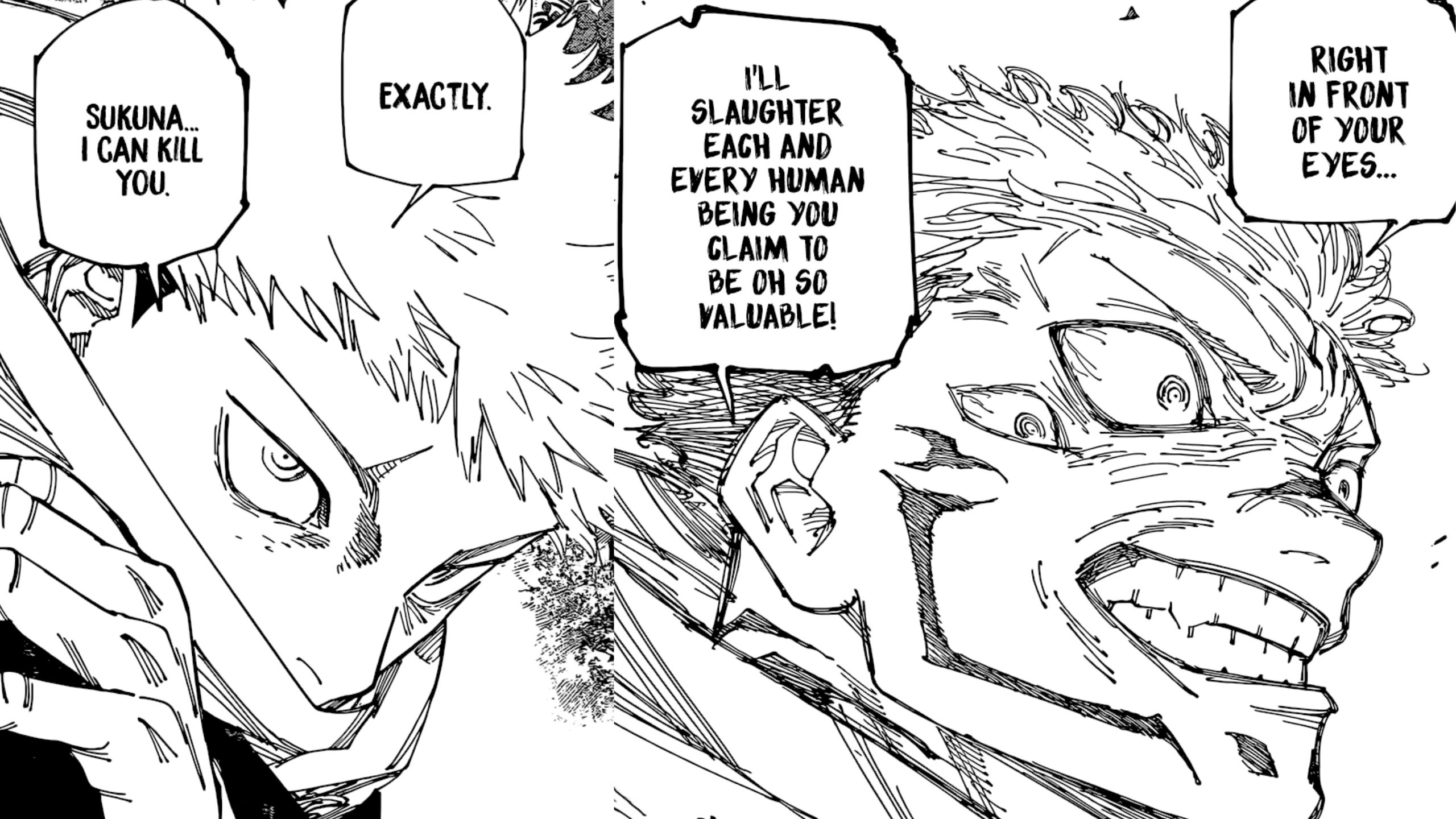
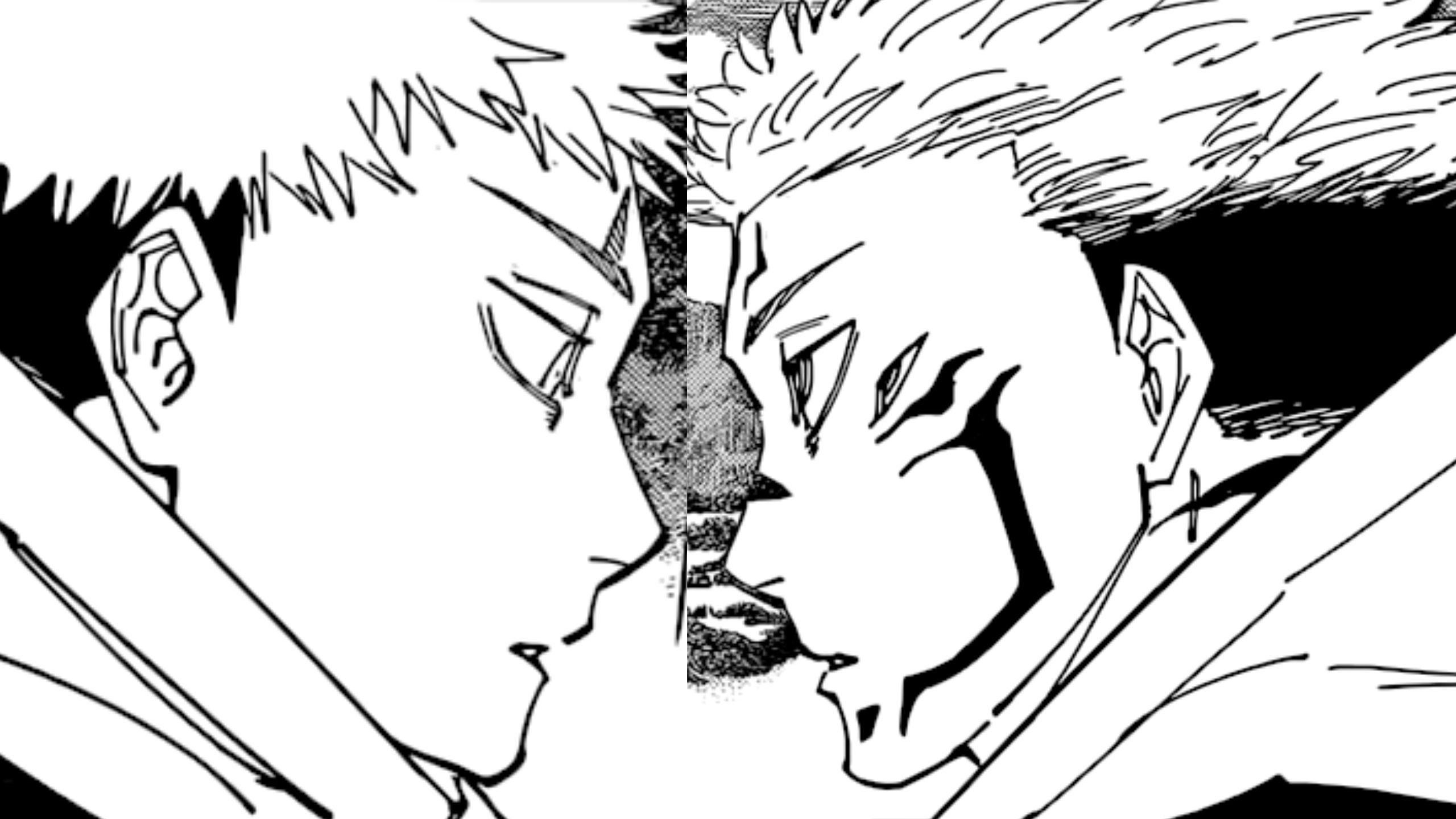
Yuji (Left) And Sukuna – Chapter (Right) (Via Jump Comics)
At times, it seems as though Yuji’s kind nature is at odds with the darkness that resides inside him. However, as the series progresses, it becomes clear that this duality is not as simple as it initially appears.
In many ways, Yuji and Sukuna are two sides of the same coin. Both characters are defined by their immense strength and their ability to overcome seemingly insurmountable odds.
However, whereas Sukuna revels in his power and uses it for his own gain, Yuji’s strength is always directed toward helping others.
This contrast highlights one of the central themes of Jujutsu Kaisen the idea that power in itself is neither good nor evil; it is how that power is used that defines its nature.
The transformation of Yuji’s eyes during the final battle can be seen as a visual representation of this duality.
On the surface, Yuji may appear to be growing more like Sukuna, adopting his visual traits and perhaps even tapping into the same source of power.
However, unlike Sukuna, Yuji uses this power for a noble purpose. This duality is a key part of Yuji’s character and serves as a reminder that even in a world filled with curses and malevolence, there is still room for compassion and selflessness.
A Symbolic Passing of the Torch
The ending of Jujutsu Kaisen and Yuji’s defeat of Sukuna can also be seen as a symbolic passing of the torch.
Throughout the series, Sukuna has represented the pinnacle of power in the curses world.
Yuji Itadori And Sukuna (MAPPA)
His strength is unmatched, and his presence has loomed large over the story, even during moments where he was not directly involved in the action.
For Yuji to defeat him is not just a personal victory but also a shift in the balance of power within the jujutsu sorcery world.
By defeating Sukuna, Yuji has proven that he is now the one who holds that power. He is no longer just a vessel or a pawn in the larger game; he has become a force to be reckoned with in his own right.
The change in his eyes could be seen as a visual marker of this passing of the torch, as Yuji takes on the mantle of strength that once belonged to Sukuna.
This moment is significant not only for Yuji’s character but for the series as a whole. Jujutsu Kaisen has always been a story about the balance between strength and compassion, power and selflessness.
With Sukuna’s defeat, Yuji represents a new kind of strength one that is not defined by cruelty or domination but by the willingness to protect and care for others.
In this way, Yuji’s transformation is not just a personal victory but a victory for the values he has embodied throughout the series.
Yuji’s Journey to Power
The hidden change in Yuji’s character design during the final battle with Sukuna serves as a powerful symbol of his growth throughout Jujutsu Kaisen.
Yuji Itadori (Left) And Sukuna (Right) (Via Jump Comics)
Whether this change in his eyes is purely a stylistic choice or a deeper reflection of his connection to Sukuna, it is clear that Yuji has reached a new level of strength by the end of the series.
Throughout his journey, Yuji has struggled with the burden of being Sukuna’s vessel, but in the end, he proves that he is more than just a pawn in the cursed king’s game.
By defeating Sukuna, Yuji not only resolves the central conflict of the series but also solidifies his place as one of the strongest sorcerers in the Jujutsu Kaisen world.
His transformation in the final battle is a testament to how far he has come and serves as a fitting ending to his character arc.
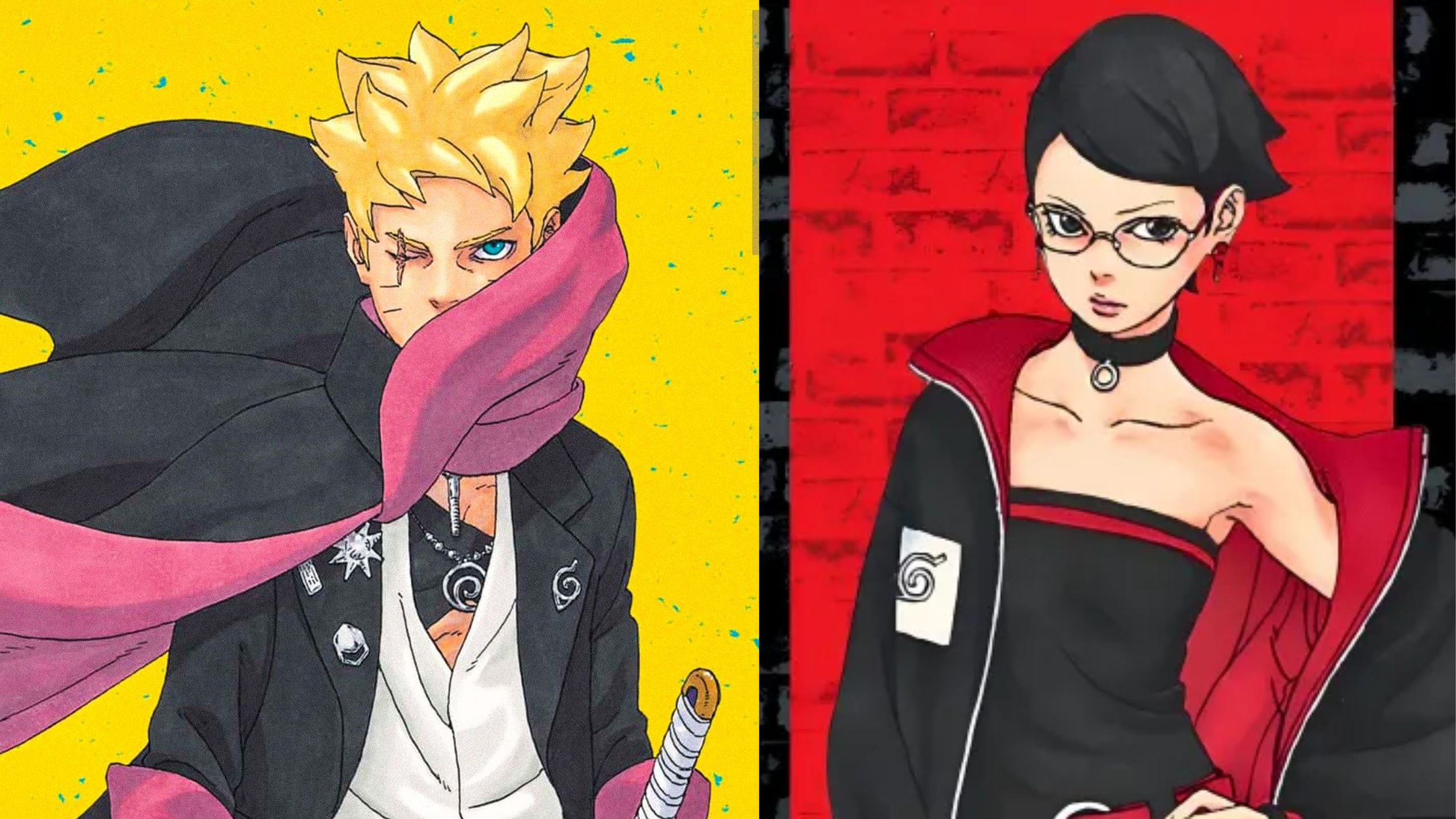
Since the inception of Boruto: Two Blue Vortex , fans have been grappling with the evolving roles of the characters in this next generation of the Naruto universe.
As with many sequels, spin-offs, or continuations of beloved franchises, fans have mixed emotions and confusion about how their favorite characters from the previous series fit into the new storylines.
In the case of Boruto: Two Blue Vortex, the central character, Boruto Uzumaki, is evidently the protagonist, much like his father Naruto was in the original Naruto series.
However, the roles of other characters are less clear, leaving fans puzzled.
One of the most perplexing aspects for fans has been determining the identity of the primary antagonist in the story.
Boruto And Sarada From Boruto: Two Blue Vortex (Shueisha)
While Boruto: Two Blue Vortex has been serialized for over a year, the identity of the true villain remains ambiguous.
The storyline has introduced several potential antagonists, leaving readers and viewers speculating. Is the villain Kawaki, Boruto’s friend-turned-foe? Could it be Code, a mysterious character with unclear motives?
Perhaps the ominous Divine Trees that were integral to the plot of Boruto and Naruto hold the key to the larger conflict? Or could there be an entirely new villain who has yet to fully reveal their intentions?
Despite the confusion surrounding the antagonist, fans recently received clarity regarding another important aspect of the series the role of the main female character.
According to a recent comment from Naruto and Boruto creator Masashi Kishimoto, Sarada Uchiha is officially the main female character of Boruto: Two Blue Vortex.
This confirmation provides fans with some much-needed insight into the character dynamics of the series and sheds light on Kishimoto’s intentions regarding Sarada’s role.
Masashi Kishimoto Confirms Sarada’s Role in Boruto: Two Blue Vortex
For long-time fans of Naruto and Boruto, the involvement of Masashi Kishimoto and his insights into the series are always eagerly anticipated.
Kishimoto is the original creator of the Naruto manga, and his continued presence and contributions to the Boruto series serve as a guiding force, ensuring the continuity and consistency of the narrative and character development.
Recently, both Kishimoto and Boruto manga illustrator Mikio Ikemoto made a special appearance at the Kana event in France.
This appearance was highly anticipated by fans, as it offered the creators an opportunity to speak about the Naruto and Boruto series directly to an international audience.
During this event, they discussed various aspects of the series, touching on themes, characters, and their respective roles in both manga.
One of the highlights of this event was Kishimoto’s reflection on the differences between Naruto and Boruto, particularly in the way the characters are portrayed.
Masashi Kishimoto mentioned Sarada Uchiha in the interview as the main female character who has been graphically successful 🔥 Stated in an article written by journalist Arnaud TRUCHET, in a French newspaper, La Nouvelle République pic.twitter.com/28Xpf3YTua — Sky🥗 (@sarada_holic) September 2, 2024
Fans have often debated how the next generation in Boruto compares to their parents in Naruto.
These discussions extend to both their powers and abilities as ninjas and their personalities and character development.
Kishimoto admitted that, while he felt that he succeeded in portraying Sasuke Uchiha as a well-rounded deuteragonist in the Naruto series, he struggled to achieve the same level of success with Sakura Haruno, who was supposed to be the central female character of Naruto.
In his candid remarks, Kishimoto stated that he found it challenging to fully understand and convey the complexities of a young woman’s heart.
This lack of understanding led to Sakura being underdeveloped as a character, especially when compared to her male counterparts.
In Naruto, Sakura was meant to play an essential role, yet her character’s development often felt sidelined.
While she was undoubtedly a key member of Team 7 alongside Naruto and Sasuke, her personal growth and backstory did not receive the attention fans had hoped for.
According to Kishimoto, this failure to properly flesh out Sakura’s character is something he now acknowledges.
Kishimoto also pointed out that this lack of character development was reflected in Sakura’s backstory, or rather, the lack thereof.
Unlike Naruto and Sasuke, who both had rich, tragic backstories that helped shape their identities, Sakura’s past was never explored in great detail.
Fans never got to learn much about her family or her life before becoming a ninja. This absence of depth in her background further diminished her character’s potential in the final narrative.
However, when it comes to Sarada Uchiha , Sasuke and Sakura’s daughter, Kishimoto expressed a different sentiment.
Sarada From Boruto (Image via Crunchyroll)
He believes that Sarada has been handled much better than her mother ever was in the Naruto series.
This is largely due to the efforts of Boruto manga artist Mikio Ikemoto, who has succeeded in portraying Sarada as the central female character in Boruto: Two Blue Vortex .
Sarada Uchiha: A More Developed Character Than Sakura
Unlike Sakura, Sarada has been depicted as a more independent and fleshed-out character. From the very beginning of Boruto,
Sarada’s character has stood out. She is not only a skilled ninja but also someone who has strong convictions and a clear sense of self.
This has resonated well with fans, many of whom appreciate how Sarada is not defined solely by her relationships with other characters but by her own personal journey.
One of the key aspects of Sarada’s character that has been praised is her self-reliance.
While she cares deeply about her family and friends, Sarada is not portrayed as someone who is overly dependent on others.
This marks a significant departure from the portrayal of her mother, Sakura, especially in the early parts of Naruto.
Sakura, particularly in the early days of Naruto, was often criticized for being too dependent on others, especially on Sasuke and Naruto, which made her appear less capable as a ninja and a character.
Sarada, on the other hand, is a character who has been shown to have her own goals and aspirations.
Her dream is to become the Hokage, the leader of the Hidden Leaf Village, which is a significant ambition that drives her character forward.
This ambition is reminiscent of Naruto’s own goal of becoming Hokage, creating an interesting parallel between Sarada and the titular character of the original series.
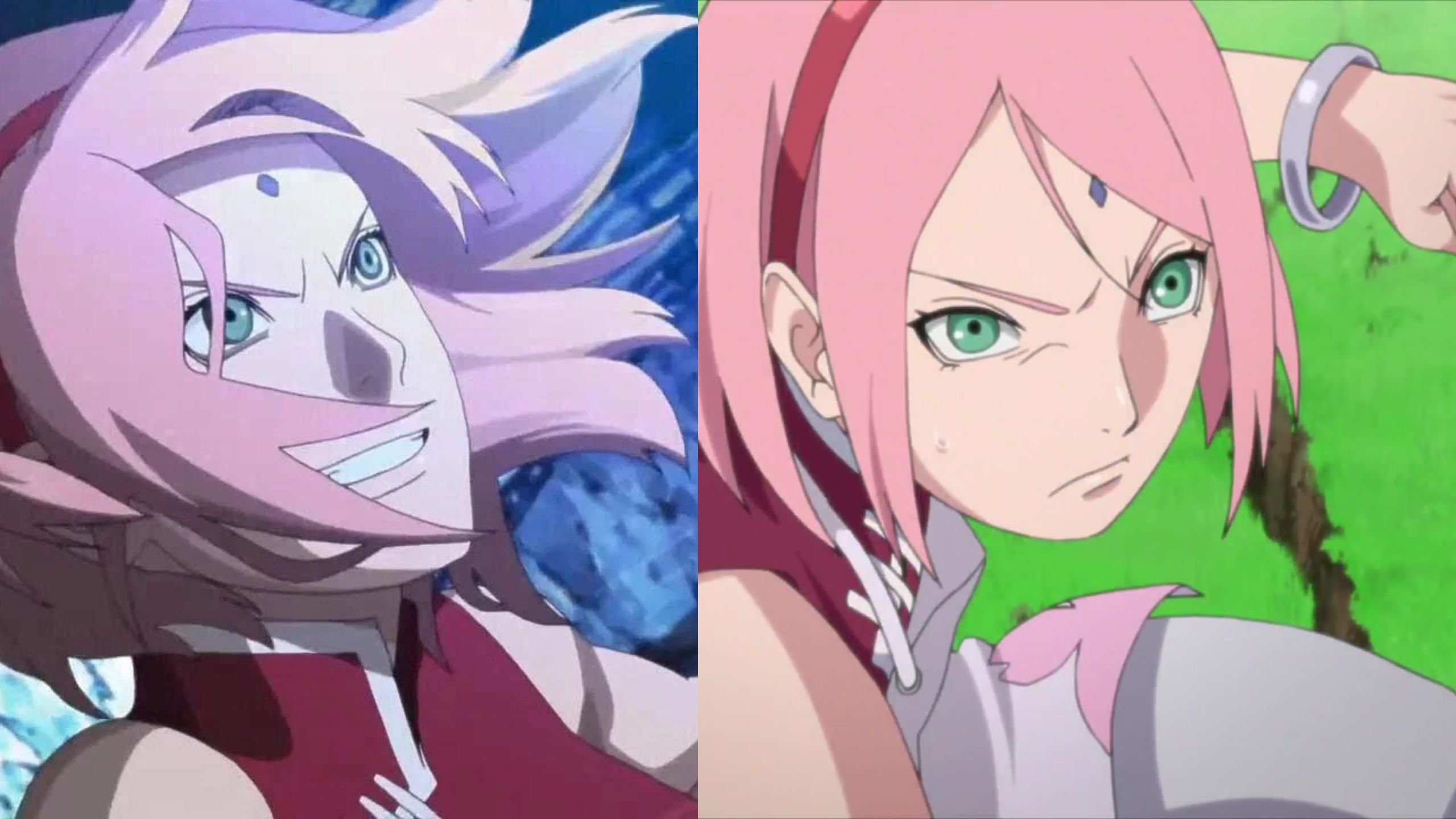
Sakura Haruno From the Boruto (Studio Pierrot)
However, while Naruto’s journey was often driven by his desire to be acknowledged and to overcome his difficult past, Sarada’s journey is more about proving her capabilities and leadership qualities in her own right.
Moreover, Sarada’s relationship with her parents, Sasuke and Sakura, has been depicted in a nuanced and touching manner.
Fans have had the opportunity to see Sarada’s interactions with both her parents, which has allowed for a more rounded view of her family life.
Her bond with her father, Sasuke, is especially interesting. Unlike Naruto, who grew up without his parents, Sarada has the benefit of knowing both her mother and father.
However, Sasuke’s long absences due to his missions create a dynamic where Sarada both admires and feels distant from him.
This complex relationship is something that has added layers to Sarada’s character. The relationship between Sarada and her mother, Sakura, is also well-developed.
Sakura, who was often portrayed as somewhat insecure in Naruto, comes across as a more mature and confident character in Boruto, largely due to her role as Sarada’s mother.
The growth in Sakura’s character in Boruto is, in part, a reflection of her relationship with Sarada, who looks up to her mother as a strong and capable woman.
Sarada’s Design and Personality: A Success for Mikio Ikemoto
Kishimoto’s praise for Sarada does not stop at her character development and relationships. He also highlighted Mikio Ikemoto’s success in handling Sarada’s character design.
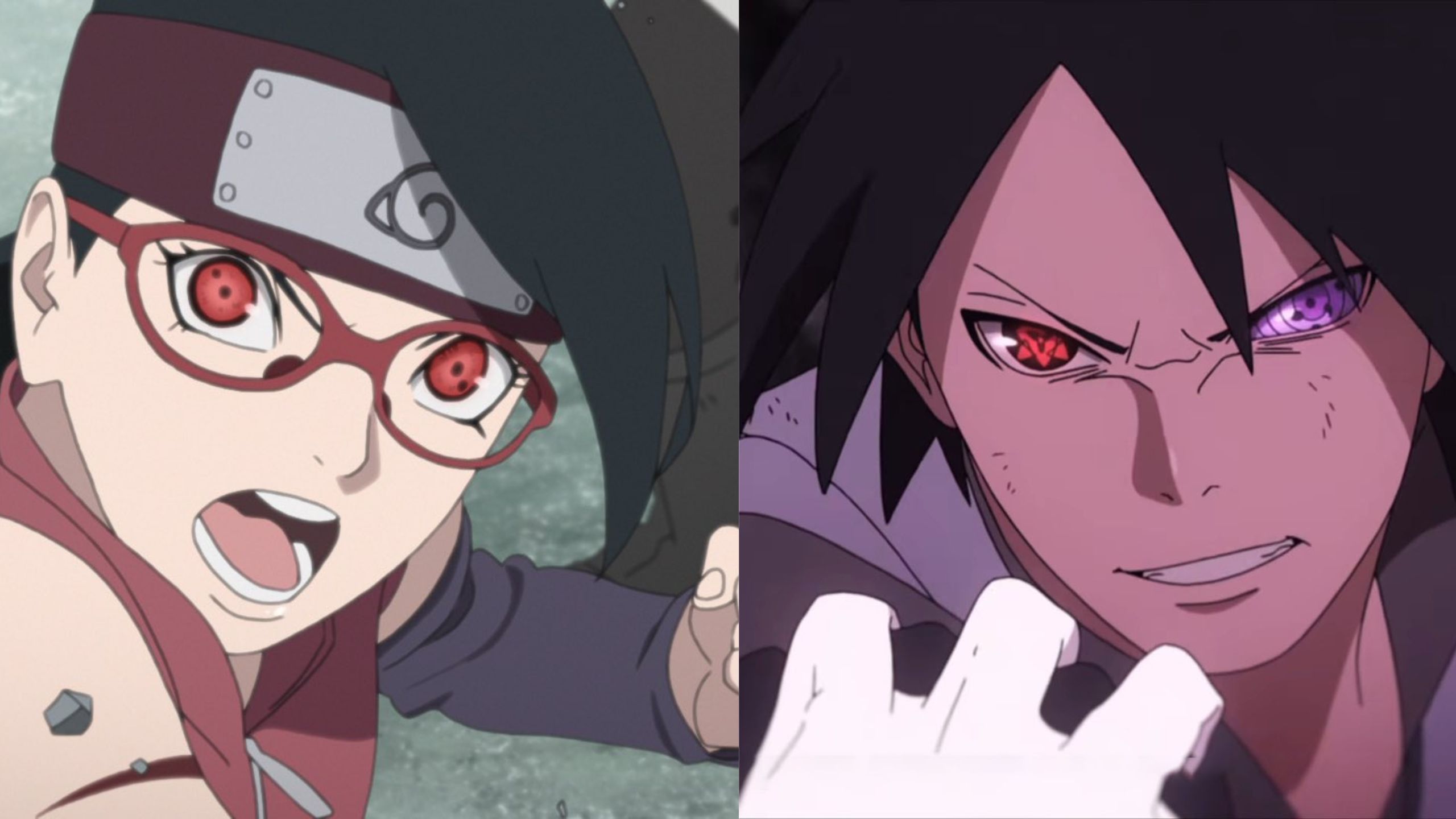
Sarada Uchiha And Sasuke Uchiha From Boruto (Studio Pierrot)
According to Kishimoto, Sarada is one of the best-designed characters in Boruto, both in terms of her physical appearance and her personality traits.
He referred to her as a standout character at the “graphic level,” which speaks volumes about how much care and thought has gone into crafting her visual identity.
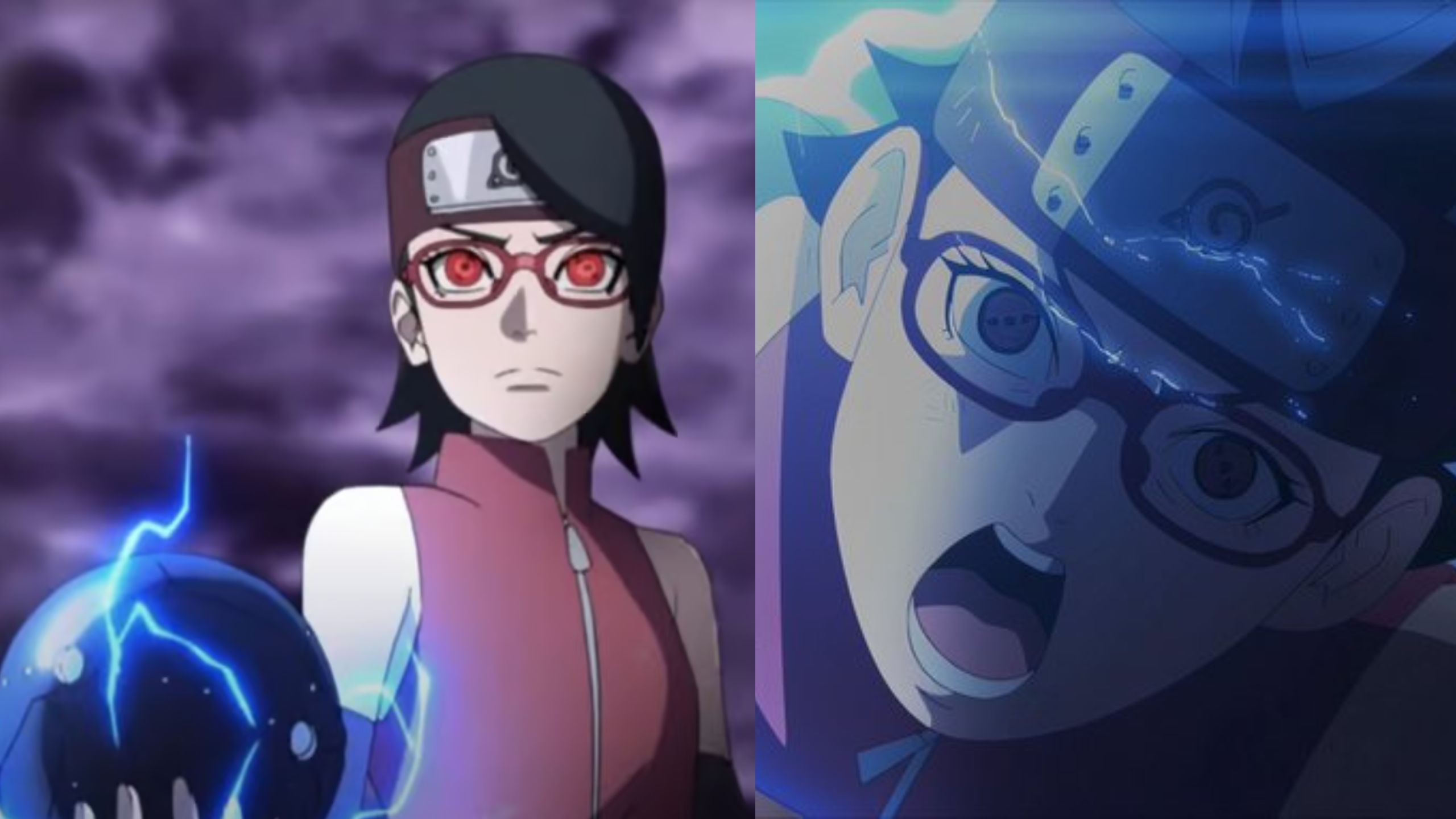
Sarada’s design reflects both her Uchiha heritage and her own individuality. She has inherited the iconic Uchiha Sharingan, a powerful eye technique that is a hallmark of her clan.
However, her physical appearance also incorporates elements that set her apart from her father and other Uchiha clan members.
Sarada’s glasses, for example, are a distinctive feature that makes her easily recognizable.
In a world where many characters have similar ninja attire, her glasses are a small but significant detail that contributes to her unique design.
Beyond her appearance, Sarada’s personality is another area where Ikemoto has succeeded. She is portrayed as level-headed, intelligent, and compassionate.
Unlike some of her peers who may be more impulsive or hot-headed, Sarada often takes a more measured approach to challenges.
This makes her a natural leader, even among her friends and teammates. Her intelligence and strategic thinking are qualities that she likely inherited from her father, Sasuke, who is known for his analytical mind.
At the same time, Sarada has shown herself to be empathetic and caring, qualities that are often associated with her mother, Sakura.
This blend of traits from both her parents makes Sarada a well-rounded character who feels grounded and relatable, despite her extraordinary abilities as a ninja.
Sarada’s Role in Boruto: Two Blue Vortex
With Kishimoto’s confirmation that Sarada is the main female character of Boruto: Two Blue Vortex, fans now have a clearer understanding of her importance in the series.
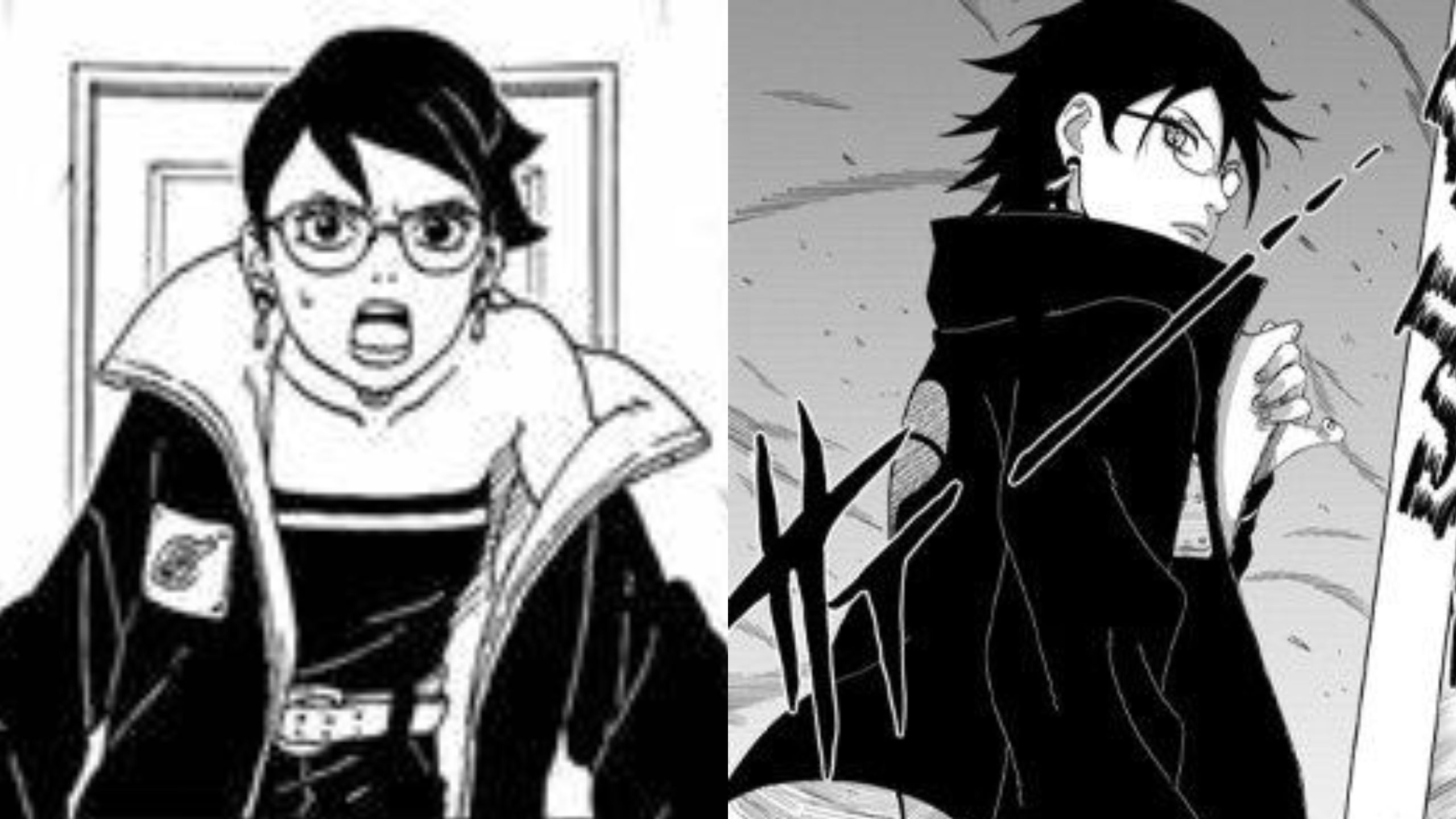
Sarada Uchiha From Boruto Two Blue Vortex manga (Shueisha)
While other characters may have ambiguous or evolving roles, Sarada’s place as the central female figure is secure.
This recognition from Kishimoto validates the positive reception that Sarada has received from fans and solidifies her status as a key player in the Boruto storyline.
In the grand narrative of Boruto: Two Blue Vortex, Sarada’s role is likely to continue evolving. As the story progresses, her ambition to become Hokage and her personal growth will be central to the plot.
Her relationships with Boruto, Mitsuki, and other characters will also play a significant role in shaping the future of the series.
While fans may still be debating the identity of the main antagonist in Boruto: Two Blue Vortex, one thing is now certain: Sarada Uchiha is the main female character of the series.
With Masashi Kishimoto’s acknowledgment and Mikio Ikemoto’s careful handling of her character, Sarada has become one of the most beloved and well-developed characters in the Boruto universe.
As the story continues to unfold, fans can look forward to seeing more of Sarada’s journey and her impact on the world of Boruto.
